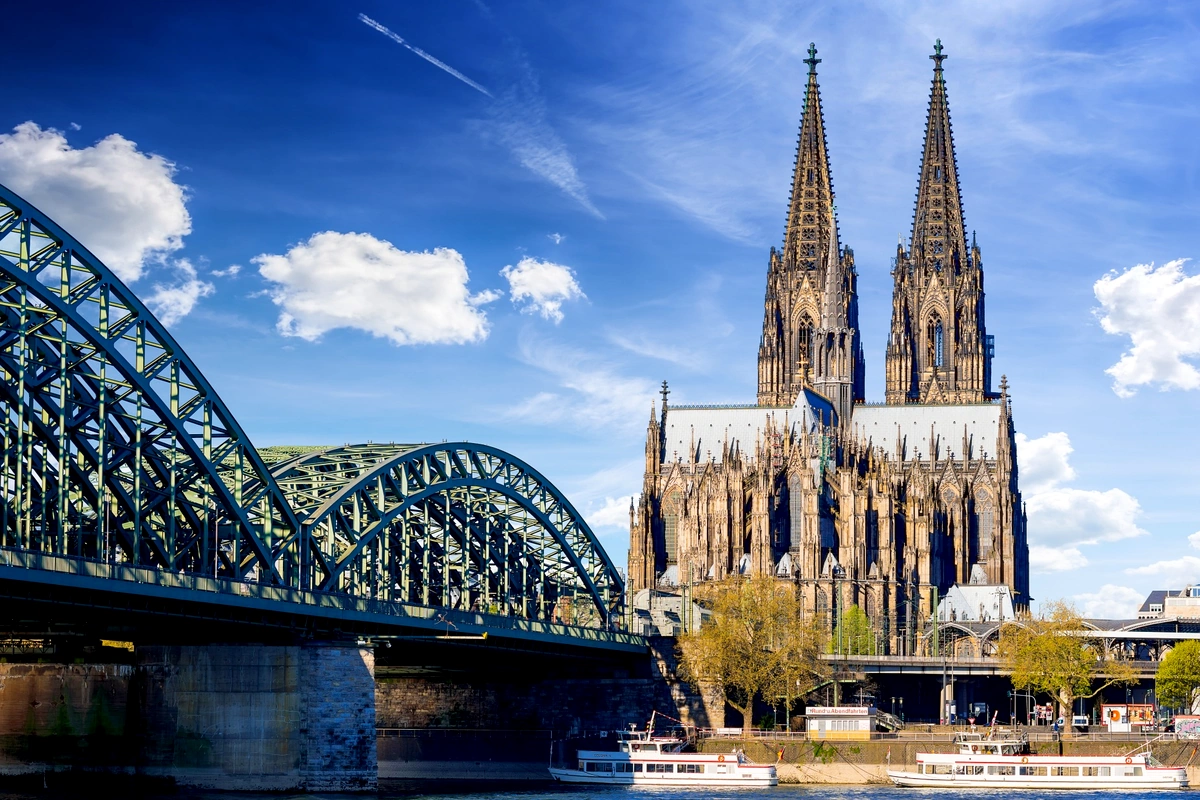
Going back in time to 50 AD, the origins of Cologne Cathedral (Kölner Dom, officially named in Latin as Hohe Domkirche St. Petrus) have deep roots in an ancient Roman outpost. This location was originally a colony named “Colonia Claudia Ara Agrippinensium,” established under the patronage of Empress Agrippina the Younger—the powerful wife of Roman Emperor Claudius I. Through the ups and downs of human history, the proud Gothic architectural structure standing today is not merely an independent work, but in reality a superimposed entity—a magnificent cultural stratum preserving multiple layers of ancient heritage from the Roman period and the Carolingian dynasty. Beneath the cathedral floor still lie the remains of the 4th-century ancient basilica, religious structures from the Merovingian and Carolingian eras dating from the 6th to 8th centuries, alongside the “Old Hildebald” cathedral directed by Archbishop Hildebald and solemnly consecrated in 873.
The fateful turning point propelling Cologne into one of Europe’s greatest religious pilgrimage centers occurred in 1164. At that time, Holy Roman Emperor Frederick I (commonly known in history as “Redbeard” – Barbarossa) presented the relics of the Three Magi (东方三博士聖髑) to Archbishop Rainald von Dassel. This sensational event triggered a massive wave of pilgrimages from across the entire Old Continent toward the banks of the Rhine, demanding a sacred space worthy of housing this priceless treasure. On August 15, 1248, under the auspices of Archbishop Konrad von Hochstaden, the cornerstone-laying ceremony for the new grand cathedral was celebrated under the design direction of the legendary master architect known as “Master Gerhard.”
However, the historical trajectory of this grand masterpiece was an epic spanning many stormy centuries. Construction during the medieval period lasted for over two and a half centuries, but by 1473, depleted finances alongside the decline of the times forced the project to a sudden halt. The humble wooden crane atop the southern tower thus stood proudly, becoming a nostalgic symbol for four centuries, deeply engraving itself into the hearts of Cologne’s citizens as an unfinished promise to the heavens. It was not until 1842, under the resolute patronage of Prussian King Friedrich Wilhelm IV, that the hammers and chisels of stonemasons rang out once more. Under the talented hands of two architects, Ernst Friedrich Zwirner and Carl Eduard Voelchel, original medieval design blueprints were seamlessly combined with modern steel-frame engineering and traditional stone-carving artistry. Finally, on October 15, 1880, in the solemn presence of Emperor Wilhelm I of the German Empire, Cologne Cathedral was officially declared complete, standing tall and piercing the clouds in the heart of Europe.
Tragedy continued to test the resilience of this heritage amidst the ruthless flames of World War II. Kölner Dom endured fierce bombardment, with 14 heavy bombs and thousands of incendiary bombs raining down upon its vaults and surrounding spaces. Although the primary load-bearing structure miraculously stood firm against the destructive force of munitions, the interior suffered severe damage. Decades of subsequent scientific restoration revived every stone block and every magnificent stained-glass window. To this day, the cycle of maintenance and restoration continues unceasingly year-round, spawning a folk and historical adage: “The grand masterpiece that never reaches completion”—a living testament to an architectural masterpiece enduring alongside the endless flow of time.
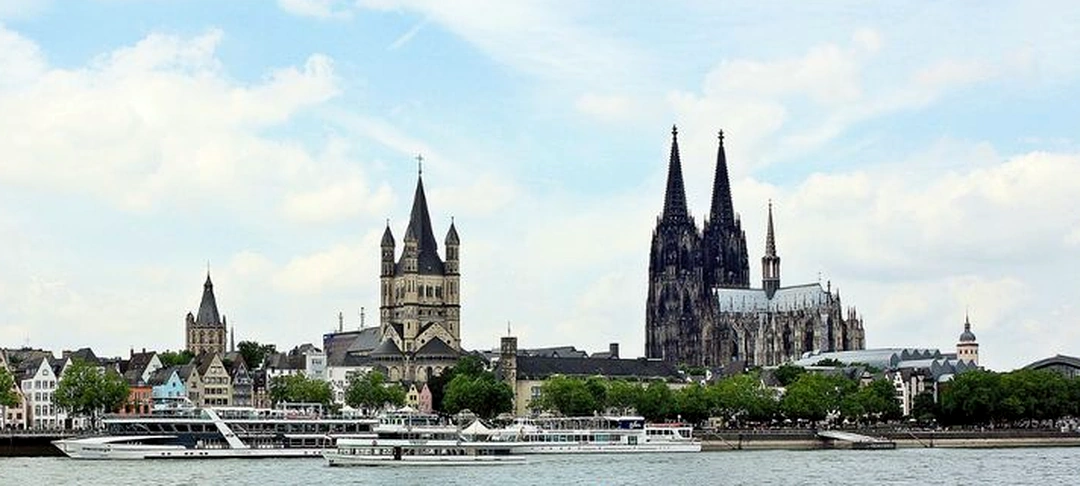
Standing majestically at precise coordinates 50°56′29″ North and 6°57′29″ East atop an elevation of roughly 37 meters above sea level, Cologne Cathedral (Kölner Dom, Chinese: 科隆大教堂) emerges not only as a pinnacle masterpiece of high Gothic architecture but also as a vivid testament to Germanic medieval urban planning philosophy, where the doctrine of “hydrographic intersection and divine authority residing centrally” is expressed most fully and impeccably. Stepping onto this land, cultural researchers and distant travelers are immediately captivated by how the monument presides over the western terraced banks of the Rhine River, some 250 meters from the water’s edge, where this historic river meanders in a soft curve resembling a silk ribbon, forming a natural convergence point of cosmic energy and vitality according to traditional East Asian Feng Shui concepts as well as ancient Western philosophies of sacred site selection.
This topographical choice was by no means accidental; rather, it resulted from meticulous calculation regarding spatial and geographical strategy, transforming the cathedral into a “Stadtkrone”—the crown of the city, a title urban geographers use to denote structures dominating all surrounding space. Structurally and religiously, this grand masterpiece strictly adheres to the traditional Western Christian “Orientierung” (East orientation) principle, wherein the chancel area is oriented squarely toward the east, facing the holy city of Jerusalem, where the first dawn light illuminates the spiritual soul of the structure. Conversely, the western facade block featuring twin piercing spires confronts the thoroughfare axis extending from the ancient Roman Empire era, establishing a cross-temporal dialogue between imperial heritage and the eternal power of Christianity through every breath of history.
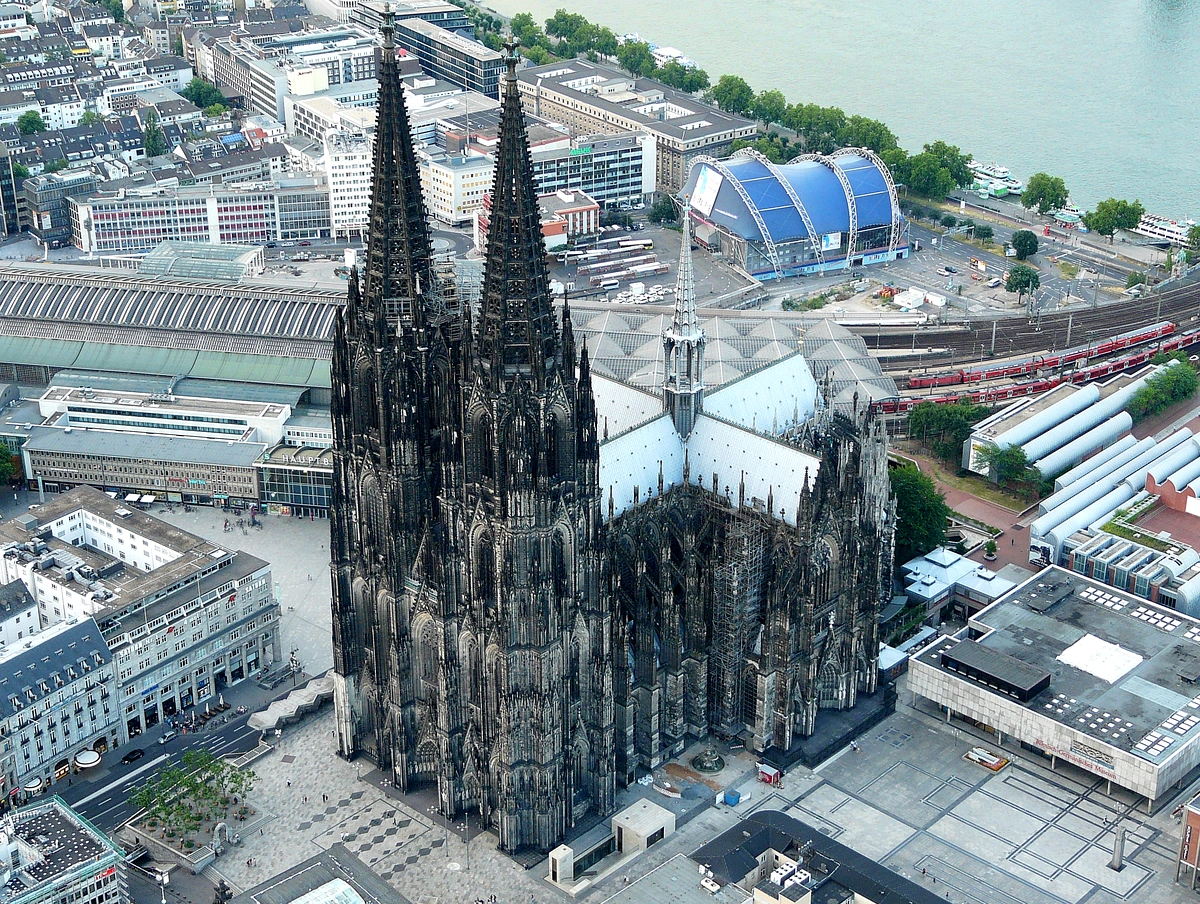
Urban planning surrounding the cathedral throughout the medieval era maintained unprecedented strict regulations, explicitly stipulating that no civil or commercial building within the inner city was permitted to surpass the height of the grand cathedral, ensuring the unchallenged, unshakeable supremacy of this spiritual symbol across Cologne’s skyline. Stepping into the pulse of the industrial and modern era, the landscape surrounding the cathedral underwent dramatic transformations when Cologne Central Station was planned and constructed directly adjacent to its northern flank. This intersection creates a dramatic yet harmonious contrast between bustling crowds, the relentless movement of modern high-speed trains, and the tranquility, solemnity, and eternity of the cathedral space, demonstrating the superb adaptability of a world heritage site within a contemporary metropolis.
Stepping into the space of Cologne Cathedral (Kölner Dom), anyone knowledgeable in Western art history must tip their hat to a human masterpiece where exquisite architecture, spatial composition, and supreme craftsmanship converge completely within a grand religious edifice. Acknowledged as one of early classical Europe’s most scaled and flawless representations of Gothic architecture, this cathedral is the living embodiment of the skeleton structure philosophy—an engineering revolution that permanently transformed medieval construction. From a geometric and practical scale, the structure is planned on a strict Latin cross floor plan, stretching across a total length of 144.5 meters and a width of 86.5 meters. The defining highlight mesmerizing every gaze from the foundation stretching toward Germany’s sky is the twin spire pair soaring to a record height of 157.38 meters, while the nave volume reaches a dizzying height of 43.3 meters from the floor surface, ranking third globally in cathedral nave height. This grandeur is not merely a collection of lifeless numbers but the outcome of a spatial geometry problem calculated meticulously down to the millimeter to guide humanity toward eternity.
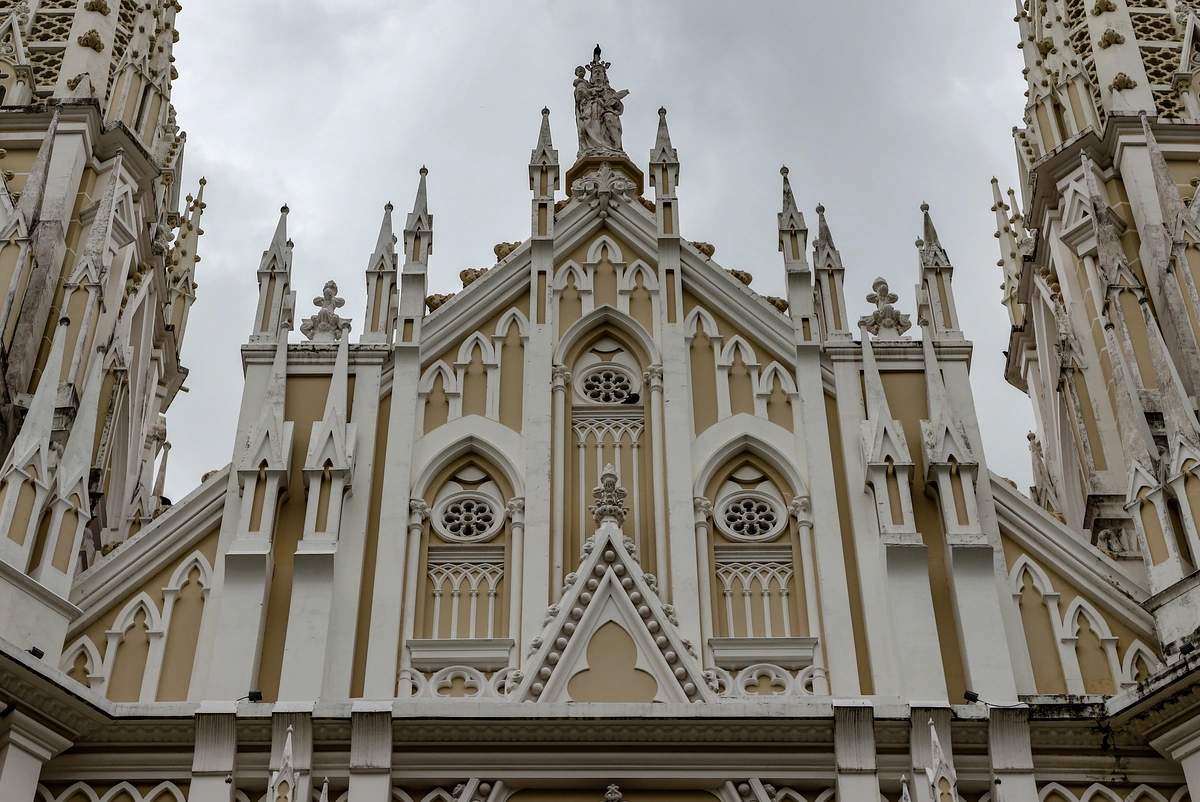
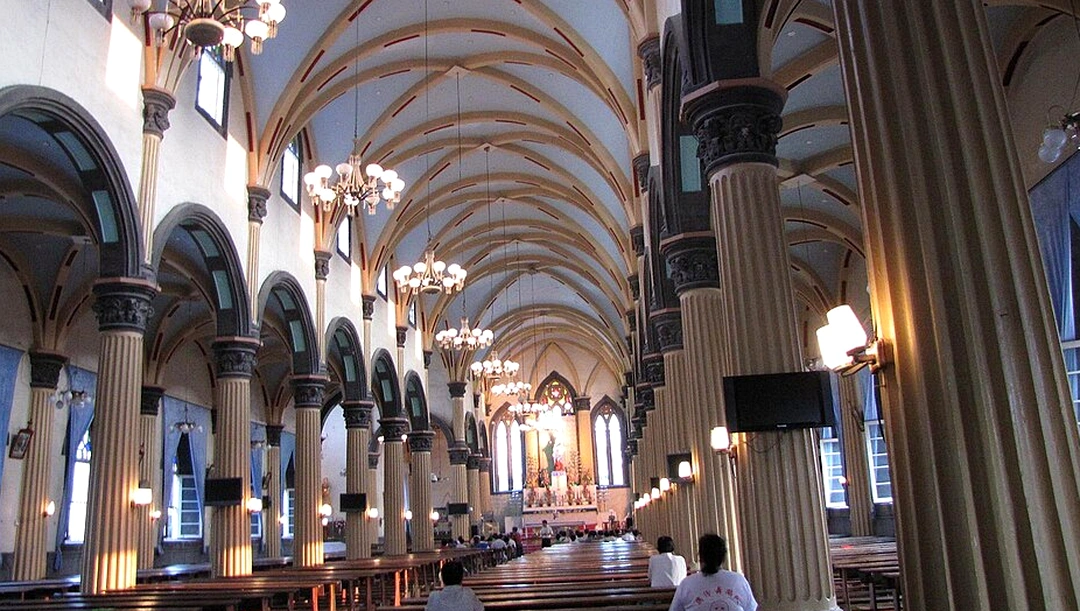
To support and release such colossal weight, Cologne Cathedral’s material and load-bearing structural systems must achieve extraordinary precision. Material-wise, most exterior walls and primary load-bearing structures are built from distinctive greenish Triadic sandstone quarried from the Drachenfels region, flexibly combined with Ruhr River basin sandstone and durable shell limestone over time. Notably, during the restart phase in the 19th century, engineers boldly applied industrial revolution technical advancements by introducing modern cast iron and wrought iron truss systems to replace traditional flammable wooden roofs, further reinforcing the solidity of the entire grand structure. Gothic architectural masters skillfully utilized flying buttresses along with ribbed vaults to neutralize and disperse massive pressure from the vaults down to dense exterior buttress piers. Thanks to this genius engineering solution, traditional heavy stone walls were entirely liberated, replaced by open stained-glass spaces under the aesthetic maxim “the wall is the window,” allowing natural sunlight to penetrate inward, generating a magical, sacred, and dynamic atmosphere shifting throughout the day.
Crossing the threshold to enter the sanctuary’s heart, visitors plunge into a living art museum preserving priceless medieval goldsmithing and sculptural masterpieces of humanity. This venue houses Europe’s largest continuous and oldest medieval stained-glass ensemble, including the “Bavarian Window” crafted in 1508 featuring vibrant hues bearing early Renaissance hallmarks, alongside contemporary pixel-style abstract stained glass designed by renowned artist Gerhard Richter in 2007, composed of 11,500 identically sized colored glass squares arranged randomly to refract light in an entirely novel rhythm. Venturing deeper toward the rear chancel, Cologne’s most sacred treasure hiện hữu as the “Shrine of the Three Kings,” a supreme medieval goldsmithing and metalwork masterpiece executed by Nicolas de Verdun between 1181 and 1230, intricately chased in gold, silver, and precious gems to enshrine the relics of the three Magi who came to worship the Christ Child. Furthermore, the northern sanctuary section preserves the “Gerardinicus Cross” dating to around 970, honored as the oldest surviving large wooden crucifix sculpture north of the Alps. Every nook, stone grain, glass pane, or carving at Cologne Cathedral whispers tales of enduring faith, human intellect, and architectural supremacy across centuries.
When night falls over the city beside the Rhine, Cologne Cathedral (Kölner Dom Germany) – 科隆大教堂 – does not sink into eternal slumber but transforms into a breathtaking visual and acoustic art space, where modern nightlife seamlessly merges with seven centuries of historical depth. The nighttime lighting system of this grand architectural masterpiece is a peak urban planning marvel, coordinated synchronously and delicately between the city of Cologne and the local church. The flawless combination of modern radiant LED technology and high-pressure sodium lamps creates a magical lighting cloak enveloping every grain of stone of the monumental edifice. Through elaborate lighting design, beams are adjusted precisely down to the millimeter, striking directly upward along vertical sandstone ribs and intricate carvings across the facade. Emitted light features warm amber tones with a color temperature around 3000K, celebrating solemn beauty while highlighting ancient volcanic sandstone materials weathered by rain and sun through history. Notably, the twin spire summits are equipped with narrow-beam spotlight arrays boasting exceptional transmittance, making the soaring 157-meter spires reach straight into the nocturnal sky, generating sharp, majestic silhouettes against boundless space. At that moment, the ancient spire shining brightly in warm golden light contrasts and harmonizes completely with the bustling, vibrant activity of Cologne Central Station right beside it, producing a magical visual fusion between subdued medieval heritage and Germany’s dynamic, modern future.
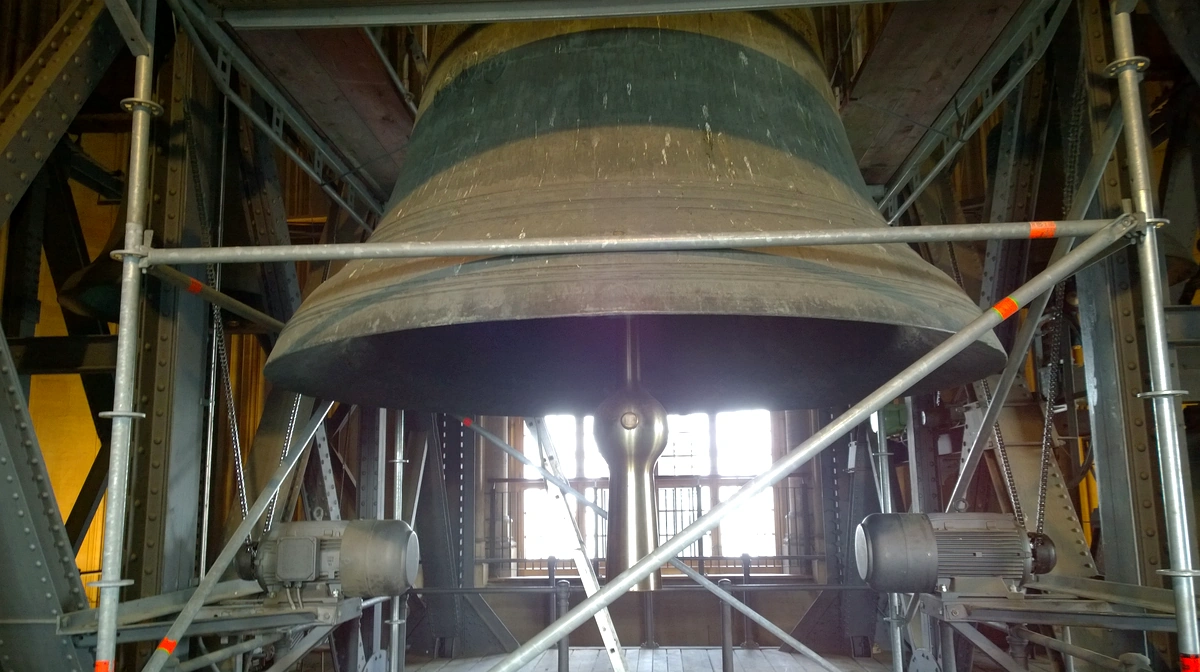
Crossing the grand portals to plunge into the interior space at nightfall, visitors are immediately overwhelmed by a world-class acoustic tier, where sound and space intertwine to generate echoes stirring the soul. The grand cathedral’s acoustic environment is shaped by two world-class pipe organ masterpieces built by famed craftsmen Klais and Rieger, totaling over 10,000 pipes. With this grandiose scale, the cathedral interior possesses a reverberation time stretching from 4 to 5 seconds, transforming this venue into the supreme sanctuary for performing classic religious polyphonic compositions, particularly the timeless fusions of Johann Sebastian Bach. Whenever musical notes rise, sound does not merely disperse but seems to weave through soaring vaulted ceilings, embracing magnificent stained-glass windows and settling within the space with indescribable solemnity and magic. Beyond that, Cologne’s nightlife and art space are defined by resonant bell chimes from a major ring of 12 large bells hung in the bell towers, totaling 51 tons in weight. Among them, the “St. Peter” bell (commonly called “Fat Peter”) weighs up to 24 tons, holding the record as the world’s second-largest medieval bell still operating via free-swinging mechanisms. This deep, resonant tone laden with historical weight rings out solely during solemn church feasts, spreading majestic echoes across the entire Cologne basin as an eternal reminder of an architectural masterpiece’s enduring vitality that triumphed over war’s destruction to stand proudly amidst modern Europe.
Stepping out from the majestic and magnificent shadow of Cologne Cathedral, where eternal skies seem pierced by twin spires reaching white clouds, the heritage landscape continues across the surrounding Altstadt old town. This venue preserves medieval architectural layers while functioning as a vibrant space for Rhineland culinary culture, where centuries-old heirloom recipes are cherished and nurtured like community treasures. Standing amid historic alleys, one is immediately seduced by rich aromas wafting from traditional eateries, evoking a localized gastronomic world where each dish narrates tales of the gentle yet powerful Rhine riverbank.
One of the most classic and unique culinary experiences here is “Himmel un Äd,” poetically meaning “Heaven and Earth” in the local dialect. This dish is a wonderful fusion of humble ingredients crafting a magical taste harmony. Resting at the base of the dish is smooth mashed potato representing “Earth,” topped with sweet apple sauce symbolizing “Heaven.” Accompanying this taste canvas is blood sausage (blutwurst) pan-fried until crisp outside while retaining rich creaminess inside, combined with crisp golden onion rings. The flawless cross between blood sausage’s savory profile, potato’s nutty richness, and apple sauce’s clean sweet-tart balance redefines Cologne’s rustic yet refined popular culinary art.
Furthermore, the city’s traditional banquet cannot omit “Kölsche Haxe,” Cologne-style pork knuckle, a true challenge for fans of rich, hearty dishes. Following traditional preparation methods passed down generations, the knuckle is boiled until tender or simmered in fragrant herbal broth before light roasting until outer skin turns crisp golden-brown amber, while interior meat remains moist, sweet, and melting on the tongue. Enjoying this dish with pungent mustard and sweet-sour sauerkraut is the secret to balancing the palate, banishing the biting cold of Rhine winter seasons.
Nevertheless, Cologne’s culinary culture and social experience apex belongs to the golden beverage strictly protected by the European Union: Kölsch beer. Bearing PGI (Protected Geographical Indication) certification, this drink carries a supreme rule that only pale top-fermented ale brewed within a 50 km radius around Cologne may bear this prestigious name. Kölsch is an ingenious blend, possessing the fresh fruity aroma characteristic of ale while delivering the refreshing, crisp finish of lager, perfectly suited for enjoyment across festivities stretching from dusk until late night.
The ritual of enjoying Kölsch at historic old taverns like Früh am Dom or Gaffel am Dom is an unmistakable cultural ritual. Rather than being served in heavy, bulky beer mugs, this beverage is poured into slender cylindrical glassware holding merely 0.2 liters named Stange. Utilizing this small glass format ensures beer maintains ideal chill and fresh creamy foam across every sip. Servers here, called Köbes in traditional blue aprons, circulate constantly among tables carrying a special round beer tray named Kranz. They observe keenly to proactively lift patrons’ empty glasses and replace them instantly with a fresh, foam-crowned beer without waiting for verbal orders.
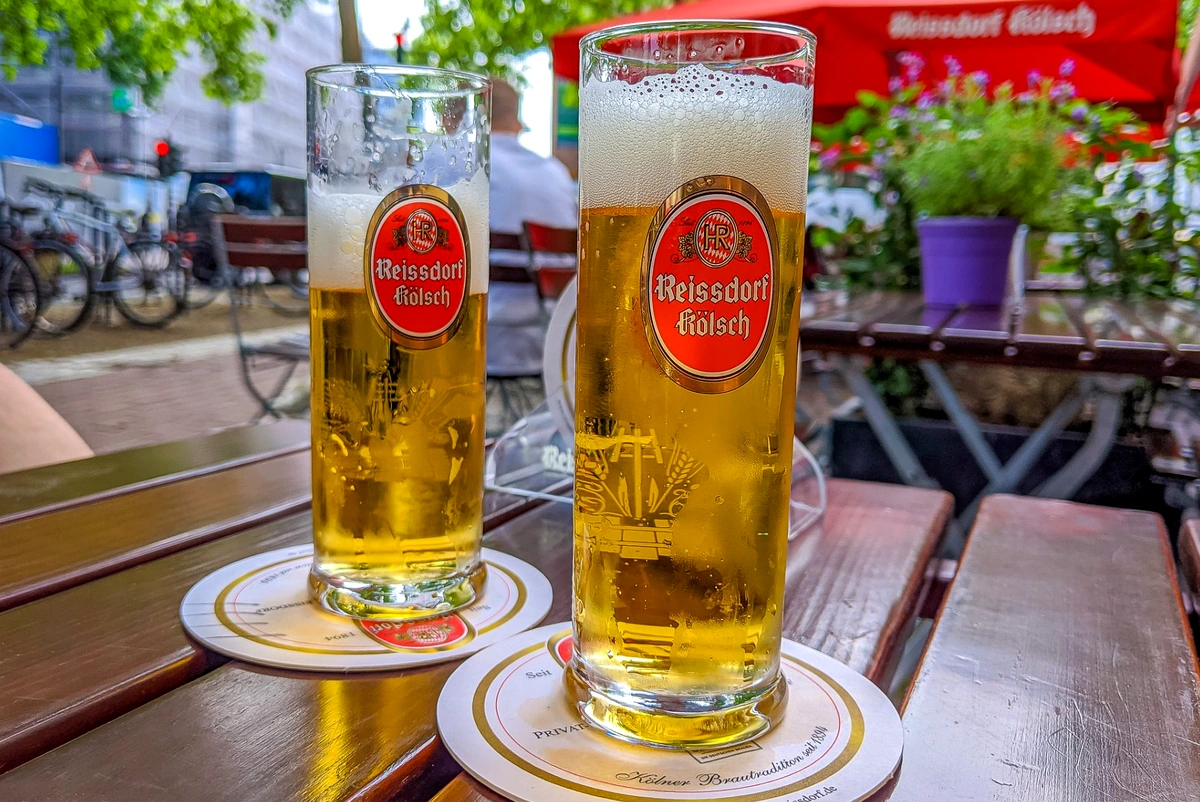
This thoughtful, community-bonding loop halts solely when diners place their cardboard beer coaster atop their glass. That coaster, termed Kölschdeckel, marks consumed beer quantities via pencil tallies noted directly on paper while serving as a silent cultural pact between server and drinker. The grace of dedicated service, tavern coziness, and open communicative culture uniting people over chilled Kölsch elevates dining beyond ordinary meals into an invaluable intangible cultural heritage of the entire Rhineland region.
Concluding this soaring journey across vibrant stained-glass tiers and subdued stone histories of the grand Gothic masterpiece beside the Rhine, the following practical guide provides a comprehensive key helping travelers optimize experiences when visiting this sacred German symbol. To plan a flawless itinerary, mastering opening hours, optimal transport, and strict cultural etiquette rules is prerequisite for a perfect journey, balancing reverence for sacred grounds with personal safety amidst monumental century-old architecture.
Regarding schedules and admission costs, the grand church space (Kirchenraum) welcomes the public from 6:00 AM to 8:00 PM daily, extending to 9:00 PM during peak summer. Main space entry is entirely free; however, management encourages voluntary donations to maintain restoration and upkeep for this priceless human heritage. Conversely, conquering the southern tower (Turmbesteigung) to survey the old city and winding Rhine requires purchasing tickets around €6.00 for adults and €3.00 discounted for students, operating from 9:00 AM and closing at 4:00 PM or 6:00 PM seasonally. Note that tower ascent features zero elevator support; visitors must conquer 533 spiral stone steps with steep inclines and narrow spaces; thus, individuals with cardiac histories, hypertension, or claustrophobia must avoid attempting it. Additionally, the Treasury (Domschatzkammer) housing priceless relics opens with admission around €6.00.
Regarding transport connections, this monument enjoys Europe’s premier location directly beside the central railway station (Köln Hbf). Visitors easily access it by landing at Cologne/Bonn International Airport (CGN), then taking suburban rail or ICE high-speed trains straight to the central station. Exiting the southern station exit reveals a vast plaza and the towering twin spires, with zero distance from station exit to cathedral doors, eliminating navigation hassles.
To maximize visit efficiency, visitors should follow a scientific spatial circulation order: begin by viewing the western facade’s grandeur, entering grand portals to sense nave scale, moving east to revere the Shrine of the Three Kings, turning north to view Richter’s modern stained glass, and concluding with southern tower climbing if health permits. Since this is an active religious cathedral, visitors entering must adhere strictly to dress codes: men must remove hats, and attire for all must be modest and polite, strictly prohibiting backless garments, shorts, or E-length skirts above knees. Photography is permitted in the grand church nave, but flash and tripods are strictly prohibited to prevent high-intensity light and mechanical damage to ancient frescoes, fragile stone walls, and priceless medieval stained glass.
To prepare more thoroughly for comprehensive European exploration along with similar pinnacle historic and artistic destinations, you may reference further detailed info via the all-inclusive tour program to secure soaring, completely reassured experiences across heritage trails.