Tracing back through time to the mid-20th century, when Europe was struggling to rise from the devastated ruins of World War II, an intense aspiration for renaissance and an absolute belief in science and technology blossomed in the peaceful lands of Brussels. Stretching across the tranquil Heysel Park situated in the northwestern outskirts of the Belgian capital, a grand monument of the atomic age was officially conceived, carrying the strategic vision of a Europe transforming powerfully. The Atomium Brussels, or as preserved in local memory under the Chinese characters 布鲁塞尔原子球塔, is not merely a stark architectural work, but a living witness recording the pivotal moment in human civilizational history where science ascended to the highest position to shape the future of an entire continent.
This bold idea originated from a special socio-political context when the Kingdom of Belgium prepared to host the 1958 World Exhibition, the first major post-war international event named Expo 58. Amidst a world watching technological races alongside the infinite potential and destructive power of nuclear energy, talented Belgian engineer André Waterkeyn conceived a genius structural concept: magnifying an iron crystal by 165 billion times to bring it into reality. With the collaborative efforts of renowned architect brothers André Polak and Jean Polak, the design drawings were swiftly transformed from mathematical calculations on paper into an existing, flesh-and-bone marvel. The unique name of the structure was impromptu yet exquisitely patched together from the Latin root “Atom” combined with the suffix “-ium,” serving as a resounding declaration opening the “Atom Age” and the strong resurgence of metallurgy and steel manufacturing industries in Europe after years of slumbering amidst wartime smoke and fire.
In the late 1950s, when Expo 58 officially opened, Atomium Brussels instantly became the center of global attention, drawing over 41 million tourist visits from around the world to marvel at it. The structure was not only a symbol of peace and international cooperation in researching and utilizing nuclear energy for peaceful purposes, but also the pinnacle of mid-century modernism architectural style. However, the flow of time has never been a smooth path for transitional architectural heritage. By the late 20th century, as the aluminum panels cladding the exterior of the spherical shells began to degrade severely under harsh weather impacts alongside strict new safety standards of the modern era, Atomium Brussels once faced the risk of complete demolition to the profound regret of architecture history enthusiasts.
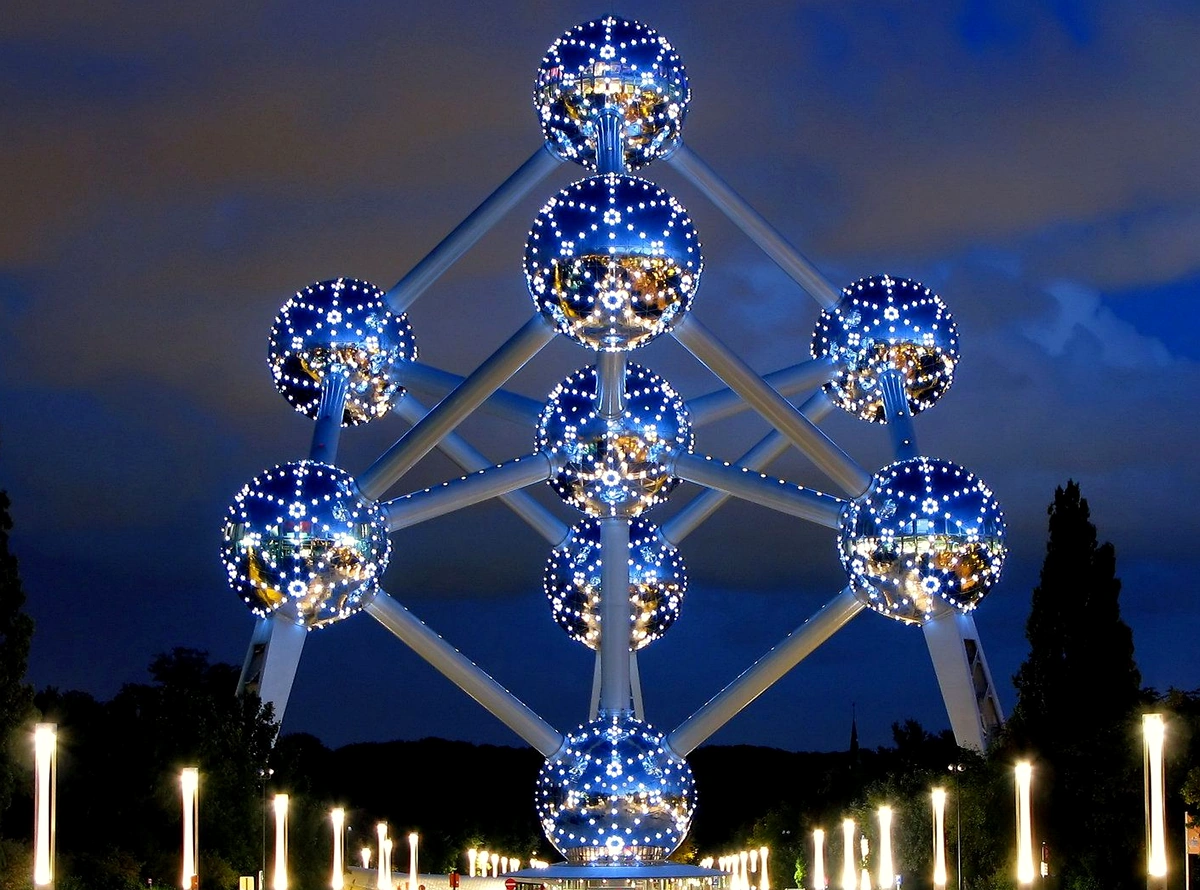
Faced with the challenges of fluctuating times, the determination to preserve cultural heritage triumphed. Between 2004 and 2006, a historic restoration campaign spearheaded by the European Union and the Belgian Federal Government was injected with robust resources, reaching a colossal budget of 26 million euros. Every aged aluminum panel was stripped away and completely replaced by bright, durable stainless steel panels that resist the test of time, helping the structure reclaim its full majesty, splendor, and initial halo. This major restoration event not only saved an architectural icon from the tragedy of oblivion, but also reaffirmed the eternal value of Atomium Brussels within contemporary cultural life. Navigating historical fluctuations, the structure continues to stand proud and steadfast in the heart of the Belgian capital, continuing to shine as a monument to courage, the boundless creativity of human intellect, and the civilization’s aspiration to reach for the stars.
Tracing time and space back to the northwestern peripheral lands of the capital Brussels, where the Heysel plateau proudly sits upon the gentle slopes of the basin, we are entering a geographical space deeply imprinted with 20th-century urban planning philosophy. At this expansive, panoramic topographical coordinate, the Atomium atomic structure rises high with its 102-meter milestone, proudly occupying and dominating the visual skyline of the vast surrounding plains. Choosing the Heysel plateau as the foundation for a grand scientific symbol is not merely an impromptu architectural decision, but a testament to modern Western spatial planning philosophy. It represents a flawless combination of axial symmetry and the aspiration to master spatial geometry, creating a proud dialogue with Art Deco structures renowned from the 1935 World Exhibition, thereby weaving a grand, magnificent international exhibition axis in the northern sector of the city.
Viewed through the lens of landscape feng shui and urban ecology, the Atomium’s location is entirely nestled within Heysel Park, where nature and artifice harmonize in a rare unified entity. Surrounding that cold, sharp metallic architectural mass is the Laeken royal estate complex alongside temperate deciduous forests evergreen year-round, forming an exceptionally soft ecological buffer. The exquisite fusion of gleaming steel atomic geometric shapes and pristine natural ecosystems profoundly reflects the dialectical relationship between humanity’s scientific rationality and nature’s organic life. From the perspective of cultural history researchers, this terrain not only provides an expansive vista unblocked by urbanized reinforced concrete blocks, but also honors the sustainable development philosophy latent since the mid-previous century, where humanity reaches for the vast cosmos while maintaining a flesh-and-blood connection with Mother Earth and perennial flora.
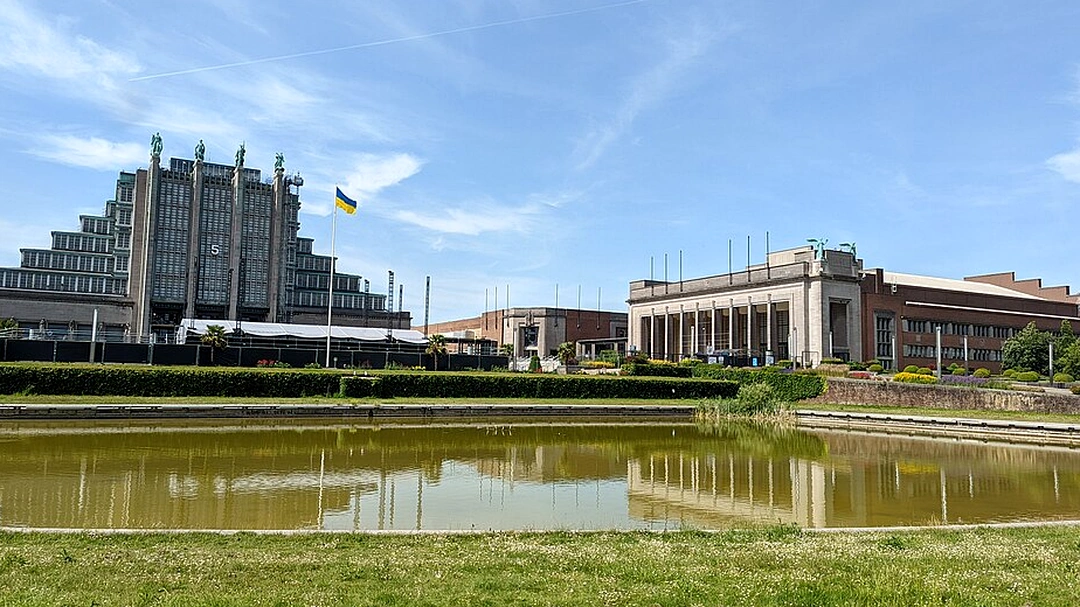
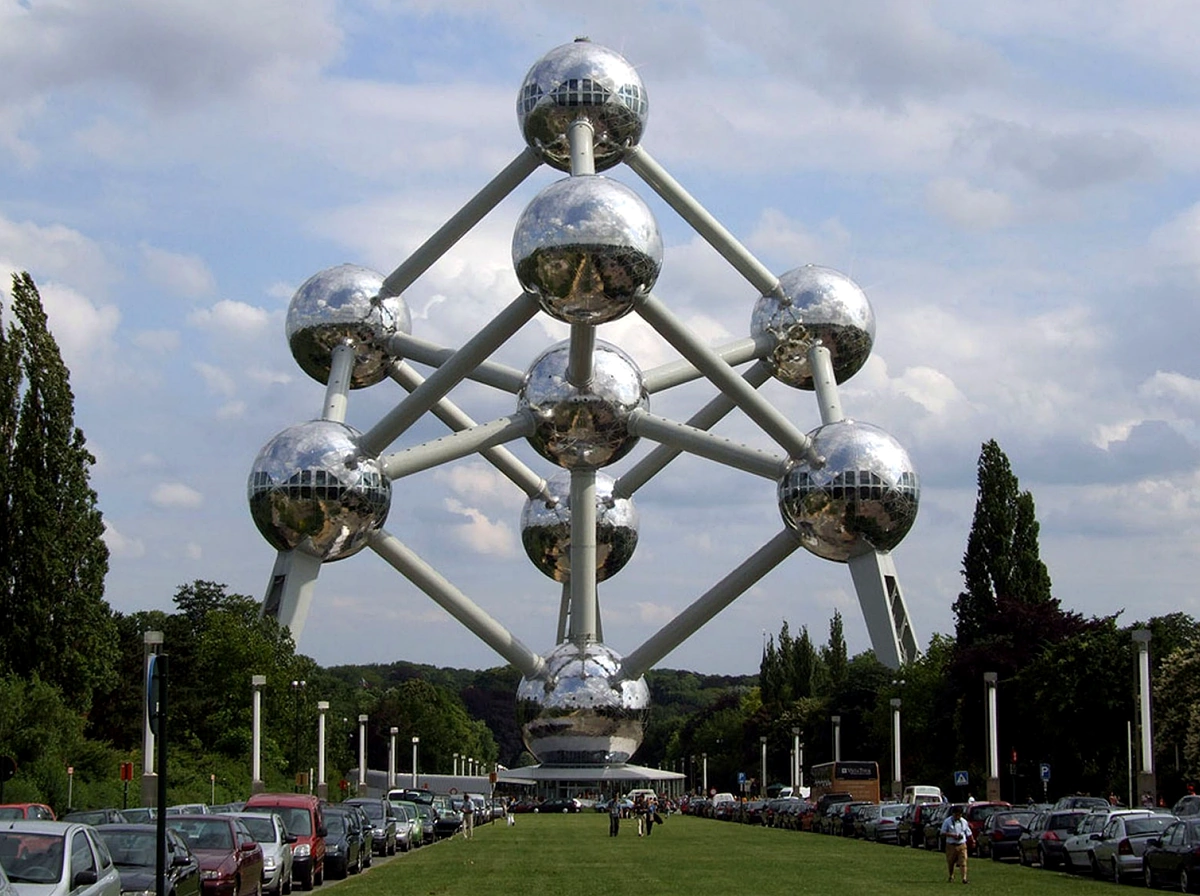
Stepping past the lush green lawns of Heysel Park in the capital Brussels, visitors encounter not merely a symbolic work of the atomic age, but a grand engineering marvel distilled from the bold spatial geometry thinking of architect André Waterkeyn and two engineers André and Jean Polak. Atomium Brussels, or as academic circles often remember it 布鲁塞尔原子球塔, is precisely a magnified model of a Body-Centered Cubic Lattice—the microscopic structure of alpha-iron magnified up to 165,000,000,000 times. The fusion of surrealist sculpture and pinnacle material science transformed an abstract physical concept into a real architectural work standing proudly across European skies, defying all construction engineering limits of the 1950s.
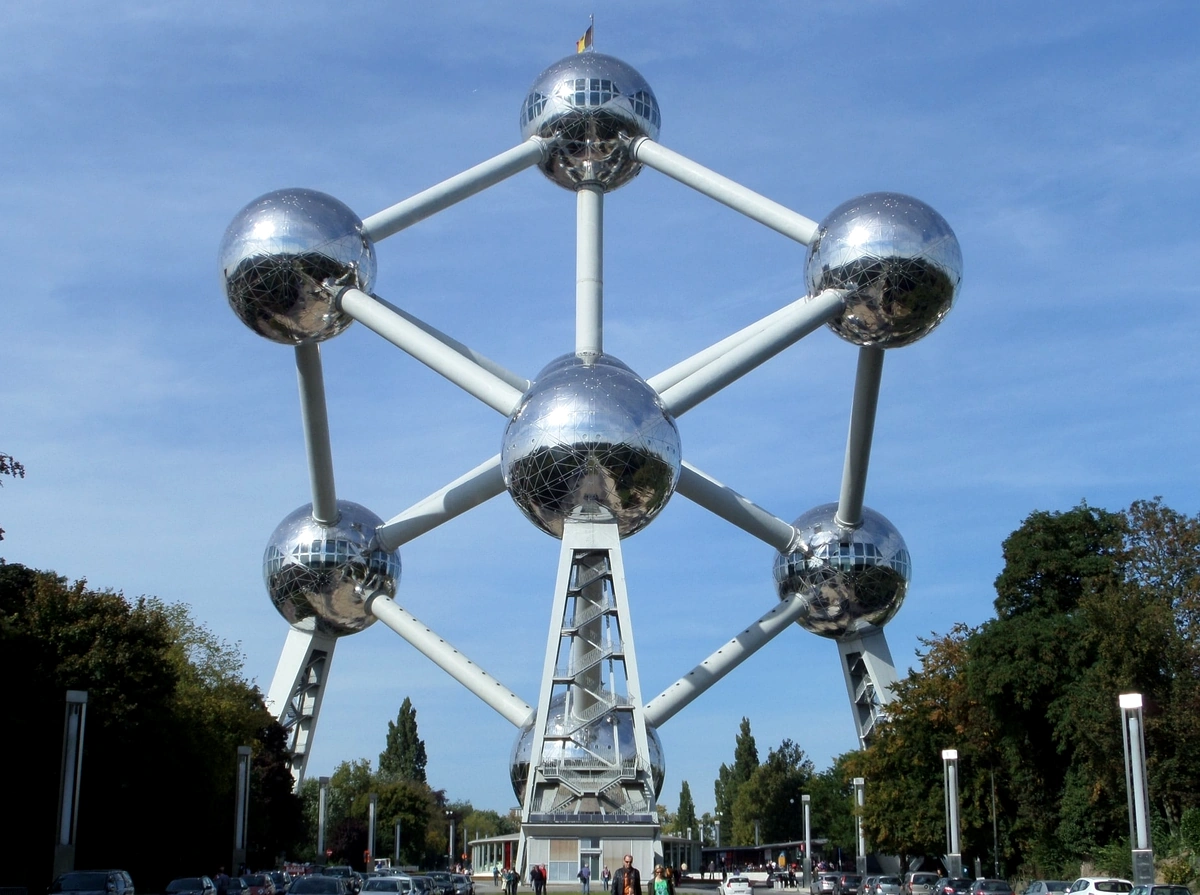
Considering its actual scale and spatial structure, this work possesses technical parameters that would make any modern engineer tip their hat in admiration. The entire Atomium rises 102 meters high, resembling a science-fiction fortress with a total weight approximating 2,400 metric tons. The overall structure is firmly anchored by a sturdy reinforced concrete pile foundation system underground, bearing the entire system of 9 gigantic hollow metal spheres, each with a standard diameter reaching 18 meters. These nine spheres symbolize the nine atoms of the iron crystal lattice, linked and securely bound together by a system of 20 hollow cylindrical tubes measuring 3.3 meters in diameter. These tubes do not merely act as spatial load-bearing frameworks but also serve as underground transit arteries where streams of people move back and forth between “atoms” within the grand structure.
Inside the central vertical pillar of the structure once lay a point of European technological pride of that era: the ultra-speed elevator system designed with travel speeds reaching 5 meters per second, whisking visitors up to the highest floor in a split second. Through the major large-scale restoration project in 2006, the exterior appearance of the Atomium became even more resplendent and eternal thanks to a new cladding layer crafted from bright, durable duplex stainless steel panels, replacing the original aluminum skin worn by the years. This advanced alloy layer not only helps the structure endure harsh Belgian weather conditions but also reflects the Brussels sky and passing clouds, creating a magical optical effect that shifts continuously throughout the day.
The interior space within the atomic spheres represents a flawless crossover between architectural history and contemporary visual art. The lower spheres and connecting tubes are planned as permanent exhibition spaces recreating the entire history of the Expo 58 World Exhibition, accompanied by contemporary art exhibition areas and temporary thematic displays. To navigate between these spatial floors, visitors traverse modern escalator systems and luminous light tunnels named “时光隧道” (time-travel journeys), where sound effects and digital lighting create sensations of journeying through cosmic dimensions.
The pinnacle of the architectural experience at the Atomium lies in its highest sphere—home to a luxurious panoramic restaurant and a 360-degree observation deck. From this height exceeding one hundred meters, the entire panoramic picture of Brussels ranging from ancient old quarters to modern avenues is fully captured, opening an exceptional dialogue space between past heritage and Belgium’s future vision. Every weld, every steel beam, and the calculation of magnification ratios for the iron crystal lattice demonstrate a golden era of human creative thinking where science and art share no boundaries, merging to create an immortal legend along the temporal flow of continental Europe.
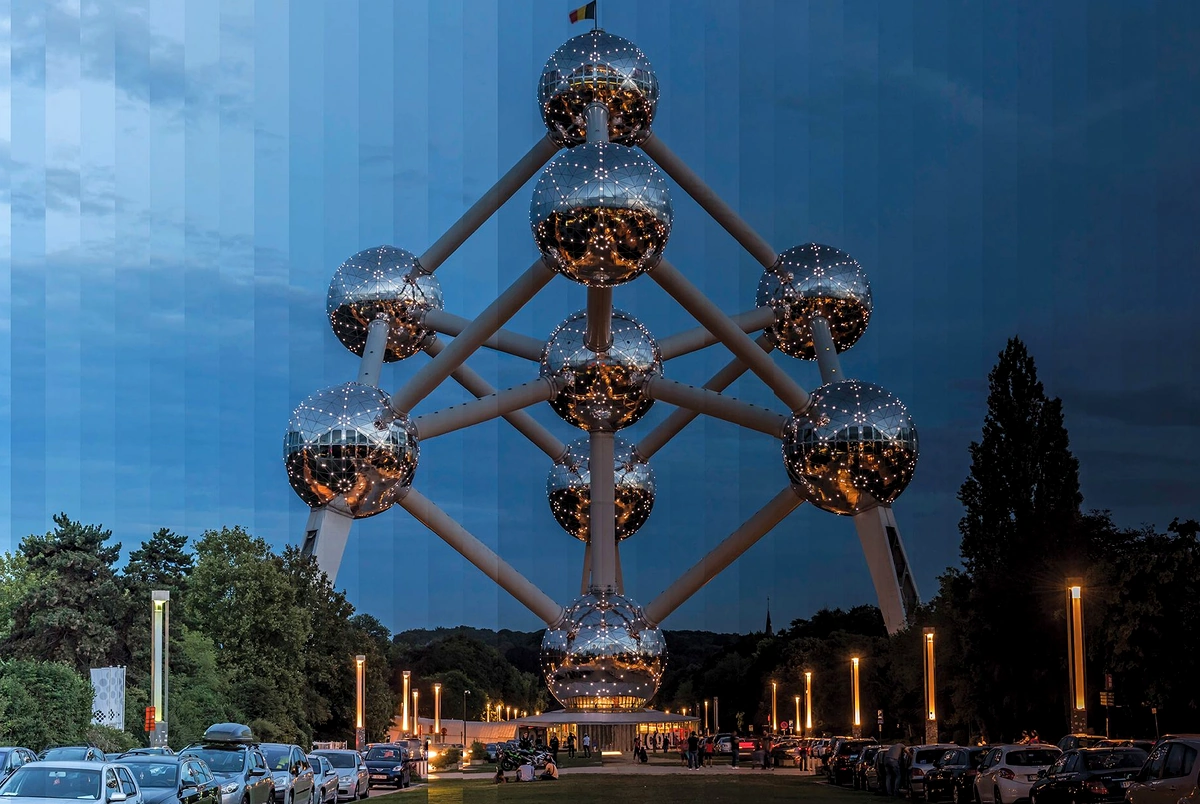
As the sunset gradually descends over the skies of the capital Brussels, concluding a long day of bustling crowds exploring historical exhibition spaces, the Atomium icon enters an entirely different, resplendent, and magical chapter cloaked in contemporary light art. Honored as a pinnacle masterpiece of modern architectural lighting engineering, the nighttime illumination system here is not merely decorative lighting strips but a meticulously calculated visual work down to the millimeter. Following comprehensive major restoration and upgrading, the nocturnal appearance of this gigantic atomic structure has been infused with a vibrant new energy, transforming it into a technological lighthouse in the heart of Belgium.
Enveloping the nine gigantic spheres alongside the cylindrical connecting tube system are nearly 3,000 independent LED light points, controlled by intelligent microchip systems with absolute precision. When night blankets with dense density, these light points simultaneously awaken, creating a magnificent light dance resembling constellations sparkling across the Milky Way. Notably, the placement and movement of light streams perfectly simulate the orbits of electrons revolving around atomic nuclei, visually and authentically reproducing the microscopic structure of matter right upon a macroscopic structure. The fusion of steel architecture’s monumental scale and cutting-edge optical control engineering kindles a sci-fi atmosphere, transforming the Atomium into a science-fiction masterpiece stepping out of realist literature.
Yet the nighttime appeal of the Atomium does not stop at exterior light shows. Entering the interior spheres at night immerses visitors in an entirely different visual arts dimension hosting premier European contemporary visual exhibitions. A prime example is premier audio-visual art programs such as the exhibition titled Centrale, where projection mapping technology is pushed to new heights. By employing high-capacity laser projectors combined with all-dimensional holographic sound systems, the cold interior space of steel tubes and spherical blocks transforms into a gigantic sensory theater. There, boundaries between reality and illusion dissolve, yielding to electronic music sublimation, 3D optical effects, and generative digital art.
Art appreciation experiences here thus carry high interactivity, comprehensively stimulating participants’ senses as they navigate high-speed elevators or step across floating corridors in midair. Nightlife around the Atomium zone thus bears multidimensional beauty: solemn and quiet like a historical monument, yet brimming with avant-garde, dynamic breaths of a sleepless cultural center. Amidst enchanting light and sound spaces, visitors not only admire an iconic architectural work but touch the future of digital performance art, leaving indelible impressions of a modern, creative Brussels in motion.
Transcending the limits of an architectural work embodying scientific and artistic iconographies of the 20th century, exploring Atomium Brussels in the capital of the Kingdom of Belgium remains incomplete without addressing indigenous culinary culture—a refined flavor world cultivated through centuries of blending renowned traditions with contemporary innovation. Present impressively at the prime location inside the highest sphere of the structure, The Atomium Restaurant opens a premier dining experience where diners embrace panoramic Brussels views from over a hundred meters high while enjoying masterpieces blending classical French culinary techniques and modern Belgian-infused creative thinking. Here, each dish is not simply a combination of premium ingredients but a storytelling narrative via flavors, reflecting the slow-living spirit, respect for ancestral culture, and refined aesthetic tastes of Flanders and Wallonia residents.
Among iconic unmissable dishes at this rooftop restaurant stands Carbonnade Flamande, or Flemish-style beef stew, a quintessential national dish bearing deep temporal imprints of the Low Countries. To craft authentic, profound flavors for this dish, chefs at The Atomium Restaurant strictly adhere to family recipes, selecting the finest tenderloin beef simmered for hours with traditional brown abbey beer. The mild, sweet, pungent fermentation of this long-brewed artisanal beer, when blending with the natural sweetness of concentrated onions, a touch of mild mustard, and aromatic herbs, produces a smooth, amber-rich gravy embracing tender meat melting upon the tongue, recalling cozy firesides among both Belgian aristocracy and commoners across generations.
Alongside robust beer-stewed beef flavors, the highest tier of the atomic symbol charms diners with Moules Marinières, familiar as North Sea white wine mussels. Fresh mussels harvested from cold northern seas preserving salty oceanic sweetness are quick-fried with aromatic minced garlic, rich fresh butter, and local white wine, highlighting refined yet captivating flavors. This dish has long formed an inseparable pairing with traditional Belgian hand-cut fries (frites), thick-cut and double-fried for exterior crispness while retaining inner fluffiness and tenderness, dipped in signature mayonnaise. This combination proves a rustic yet exquisite culinary philosophy where freshest natural ingredients are honored through culinary artisans’ talented hands.
Departing the restaurant’s luxurious ambiance to immerse in Heysel Park’s expansive atmosphere surrounding the Atomium, the sensory journey guides visitors to classic street foods cementing Belgian gastronomy globally. Leaving out authentic Brussels waffles (Gaufre de Bruxelles) is unthinkable—a signature treat featuring square geometric structures with deep pockets, thin crispy outer crusts, and cloud-like soft, fluffy interiors. Dusting with powdered sugar or pairing with fresh berries and whipped cream made this waffle a sweetness symbol linked to capital childhood memories. Furthermore, exploring surrounding areas reveals long-standing traditional artisanal chocolate shops (Pralines & Chocolats) where master confectioners craft pralines with hazelnut, buttercream, and ganache melting upon impact. Culinary experiences at Atomium Brussels thus transcend palate satisfaction into profound cultural voyages where history, art, and flavor unite.
Atomium Brussels stands as a grand architectural icon bearing the Belgian Kingdom’s epochal imprint; mastering practical experiences, transit guides, and opening hours secures smooth exploration. To best prepare, daily operating hours run from 10:00 AM to 6:00 PM, with physical ticket counters closing early at 5:30 PM. To avoid lengthy queues during changing Brussels weather, managing authorities recommend pre-booking timed electronic tickets via official websites: atomium.be.
Regarding transit, public transport is synchronized and modern. Metro Line 6 to Heysel or Heizel station offers rapid access, followed by a 5-minute walk through green grounds. Tram lines 7 and 51 stop near Centenaire station. Personal cars or rental vehicles utilize Parking C nearby.
Approaching the periphery, strolling around the campus reveals complex spatial geometry. Entering the grand hall, documentaries recount Expo 58 before high-speed elevators ascend to the top sphere for panoramic views downward across contemporary art exhibitions.
Comfortable walking shoes with good traction are mandatory for spiral stairs and metal floors. Handheld cameras are permitted, but tripods and flash photography are strictly prohibited. These principles transform visits into unforgettable European milestones. Consult all-inclusive tour packages designed by expert teams.