Tracing back to the turbulent late medieval era of Europe’s Low Countries, the iconic statue known as Manneken Pis in Dutch or Le Petit Julien in French—revered in Chinese-character scholarship as 布鲁塞尔于连·彼得像—carries deep historical roots tied to the development of urban water systems. Based on archival research from Brussels’s municipal financial records, the earliest written trace of the monument appears between 1451 and 1452, even though local lore and other records push the date back further to 1388 under the rough name “Menneken-Pis.” Its original form was not intended merely as art for art’s sake, but served as a metal fountain structure vital to medieval community water supply, functioning as a water tower and key distribution point along the “Wasserkanale” network. This early bronze work was crafted by skilled coppersmith Jehan de Brussels, who laid the first stones of an urban legend destined to endure for centuries.
Through the shifting tides of European feudal history, this small statue witnessed changing dynasties and felt the direct influence of the era’s most powerful figures. Under the Habsburg dynasty, Emperor Charles V laid the groundwork for the world’s singular “wardrobe tradition” of outfits for the urinating boy, issuing decrees and dressing rituals that tied the symbol to royal and diplomatic occasions. Another major upheaval struck in 1695, when forces of French King Louis XIV launched a heavy bombardment that devastated much of Brussels. The destructive force of wartime cannon fire reduced the antique bronze to ruins, prompting city authorities to restore and recast it. In 1619, renowned sculptor Jérôme Du Quesnoy (known as Jérôme Du Quesnoy the Elder) breathed new life into public space by creating the refined bronze version that travelers around the world still admire today.
The march of time carried the statue into the modern era amid pan-European political events. In 1811, Emperor Napoleon Bonaparte, while visiting and reshaping regional administration, bestowed splendid aristocratic outfits upon the little figure—elevating the statue’s status from an ordinary public fountain into a cultural mascot symbolizing the resilience of Brussels’s people. Yet Manneken Pis’s history has not been all smooth sailing; it also bears marks of theft and vandalism driven by greed or wartime fervor. In 1747, a group of French soldiers boldly stole the statue, sparking widespread outrage that was eased only when King Louis XV himself granted a golden sword and the Order of Knighthood to make amends with the city. Later, in 1817, a fugitive named Lienaers cruelly sawed the statue in half, causing severe damage before skilled local craftsmen repaired, joined, and restored the iconic figure to its rightful form.
Stepping into Brussels’s historic center, amid the towering Gothic and Baroque landmarks of the Kingdom of Belgium, visitors can easily overlook a micro-wonder named Manneken Pis (布鲁塞尔于连·彼得像 – Statue of the Urinating Boy). From the perspective of an urban historian paired with spatial anthropology, the statue’s placement is no mere accident or sculptural whim, but a living example of medieval hydrological planning and local geomantic sensibility. Viewed from ancient geography, Brussels was settled and built across the alluvial valley of the Zenne River, where terrain alternates between river terraces and uneven rises. The statue’s exact spot—at the junction of two historic lanes, Rue de l’Étuve (Stoofstraat) and Rue du Chêne (Eikstraat)—sits on a gentle slope descending from the old town core toward the Zenne valley basin. This subtle drop in elevation creates a distinctive micro-topography where natural groundwater flow and hydraulic pressure historically shaped water distribution for the surrounding quarter.
Examining this location through the lens of East Asian feng shui—a tradition focused on land contours and energy flow—reveals an intriguing alignment with principles of gathering vitality and prosperity. In classical feng shui texts, water governs wealth: where water gathers, vitality collects, and moving water keeps energy circulating. In terms of urban infrastructure history, the crossroads where Manneken Pis stands stood at the end of a natural spring/water line—or, earlier still, as a public fountain and water-pressure point serving residents of Flanders. Water flowing down from higher ground along natural gradients converged here, forming a focal point of water flow in keeping with the classic maxim that gathered waters bring abundant resources. Moreover, placing a lighthearted, slightly irreverent figure right at a street intersection—a spot where streets cross and converge—acts like a subtle energy filter, holding incoming vitality while animating the lively commerce of nearby traditional markets through the ages.
Refinement in urban layout extends beyond water flow into the area’s micro-spatial design. Choosing a tucked-away corner where two narrow alleys meet rather than a sweeping, breezy plaza reflects a subtle architectural ethos of Flanders: turning modest scale into outsized character and gently subverting pompous authority. In a medieval European city setting often favoring grand monuments honoring monarchs, saints, or proud feudal lords, a bronze boy barely under sixty centimeters tall standing humbly near street level creates a compelling spatial contrast. Rather than being hemmed in by massive concrete blocks, the space around the statue is framed by old brick facades in traditional masonry, producing a natural acoustic and visual resonance. The gentle trickle of water falling from the fountain into its basin is not drowned out by city noise thanks to the enclosing alley walls, creating a distinct, quiet acoustic pocket rich in storytelling.
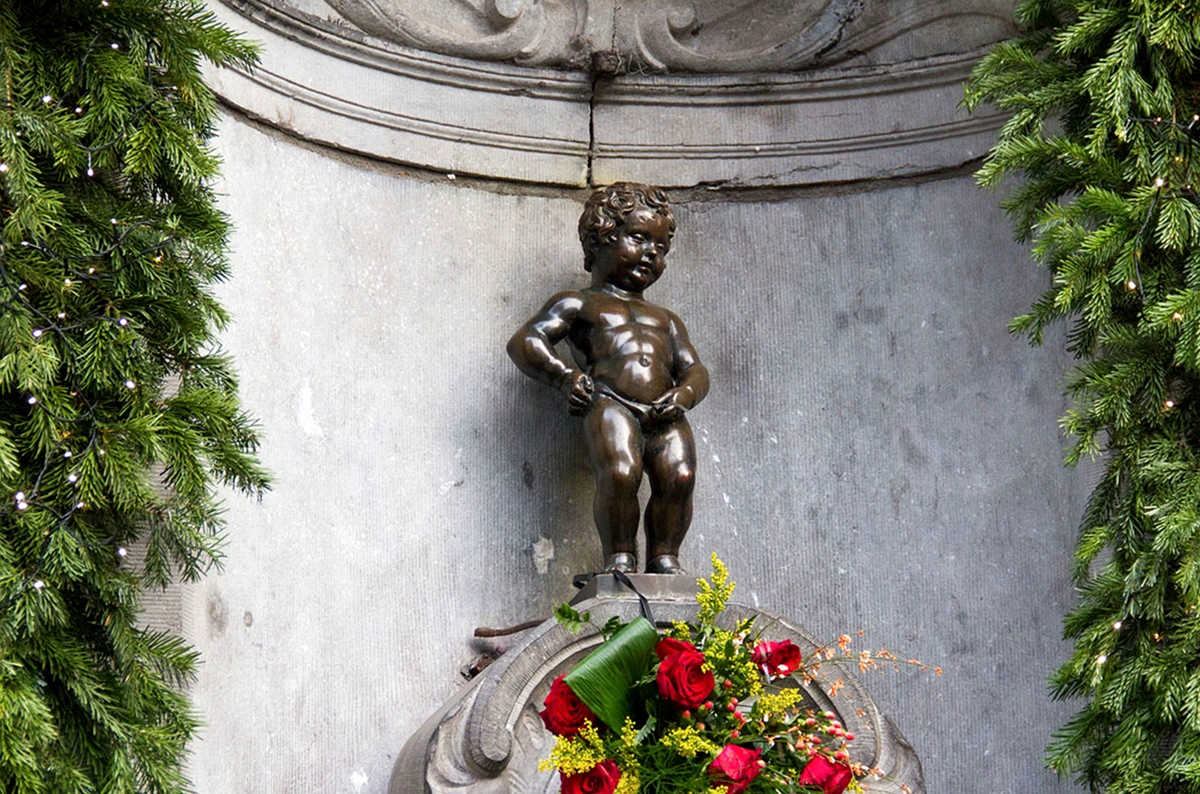
Looking closer at craft techniques and landscape design across eras, Manneken Pis began not merely as a static sculpture, but as a working link in the city’s public water network. Before taking solid bronze form at the hands of sculptor Hieronymus Duquesnoy in the early seventeenth century, the site held a medieval stone structure serving as a much-needed water fountain for merchants, pilgrims, and artisans traveling between the palace and central market. Underground supply pipes of that era relied on communicating-vessel principles—simple yet effective—using natural elevation pressure from neighboring hills to keep water flowing continuously. This required urban engineers of the time to have a solid grasp of local hydrology, calculating flow rates, gradients, and material durability so water could run reliably through freezing winters and dry summer spells in Northern Europe.
Across centuries of historical change, the streetscape around Manneken Pis has seen many shifts, from religious conflicts to nineteenth-century industrial-era urban restructuring. Even so, the core spatial layout of this small alley junction remains largely preserved as a living record of human-scaled city planning. Rather than bulldozing narrow lanes for wide avenues in extreme nineteenth-century modernization, Brussels’s authorities and citizens kept much of its medieval street grid intact, respecting local character and terrain. This culturally mindful preservation keeps the statue’s corner from being swallowed by surrounding glass towers, anchoring it instead as a steady time-marker where ancient water history and modern travel life weave together seamlessly.
Wandering through the mossy historic lanes of Brussels, where brisk modern life meets centuries of history, visitors are often surprised to come face-to-face with one of the world’s smallest and most distinctive cultural icons: the Manneken Pis statue, also noted in East Asian scholarship as 布鲁塞尔于连·彼得像. Standing before it, what catches the eye first is neither a soaring monument nor a gleaming marble hall, but an unassuming artistic figure carrying enduring vitality. In sharp contrast to the monumentality often seen in classical European sculpture—where deities, monarchs, or great heroes are cast in imposing grandeur—Duquesnoy’s work takes a playful, natural path close to everyday life.
In terms of materials and craftsmanship, the surviving statue is cast from pure bronze. Across historical shifts and centuries of weathering, a natural patina has settled over the metal in a muted dark greenish-black hue, lending an antique, dignified, yet lively presence. Standing modestly at roughly 55.5 centimeters tall including its base, the work exemplifies Flemish folk realism from the early Baroque era. Under the sculptor’s skilled hands and observant eye, a child’s form is never stiff or rigid; instead, the artist captures a lively, relaxed, and mischievous childhood moment—body slightly angled, head turned toward onlookers, and eyes gleaming with innocent playfulness that bridges high art and everyday passersby.
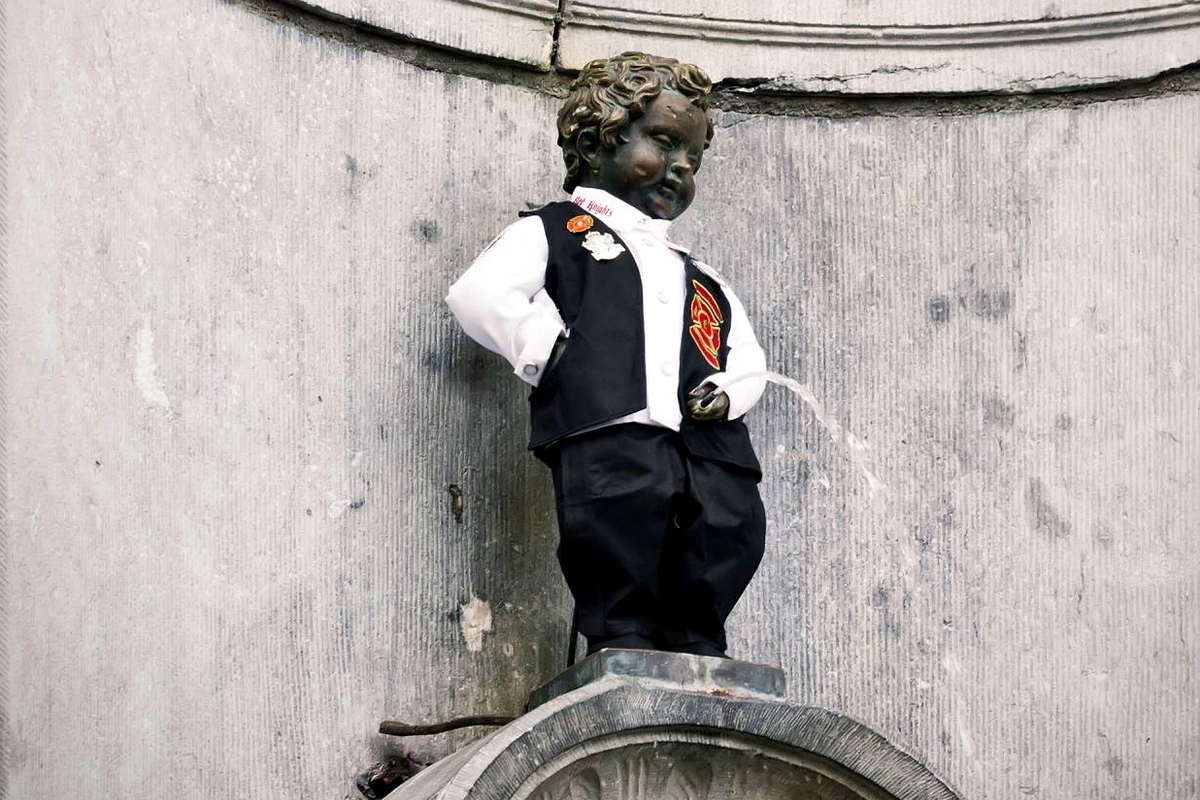
Beyond sculptural form, the hydraulic mechanism inside the statue is also a miniature feat of early mechanical craft. Originally, water feeding the stream came directly from the municipal water system through internal bronze pipes. Today, to ensure long-term stability and heritage conservation, the flow is regulated by a modern recirculating pump system that controls pressure and output smoothly. As a result, the stream arcs gracefully into a small carved natural-stone basin shaped with Baroque detail. Pairing water engineering with sculpture gives the bronze figure a quiet sense of motion within its urban corner.
Within the broader architectural setting, Manneken Pis does not stand alone in a wide square or atop a towering pedestal, but is tucked neatly into the city’s fabric. The statue sits inside a wall niche set into the corner of a seventeenth-century-style brick building, framed by classical moldings, decorative wrought-iron scrollwork, and a protective iron grille. This placement creates an unexpected focal point when turning the corner between Rue de l’Étuve (Stoofstraat) and Rue du Chêne (Eikstraat), reflecting a European streetscape sensibility where art lives right inside everyday communal space. Together, the weathered bronze, Flemish Baroque touch, water mechanism, and corner setting form an unmistakable emblem of Belgium.
When night falls, Brussels’s historic center sheds its daytime bustle for a quieter, more nostalgic medieval mood shaped by thoughtful lighting standards. Municipal authorities apply strict lighting guidelines in the historic core to protect architectural heritage while highlighting longtime cultural landmarks. At the quiet corner of Rue du Chêne and Rue de l’Étuve, Manneken Pis stands out rather than fading into darkness thanks to restrained, well-aimed architectural lighting. Instead of harsh white glare, urban lighting designers use warm-white spotlights placed low and angled gently upward across the aged bronze. This brings out subtle tones across the metal surface while giving the slender stream of water a soft golden glint, turning a tiny sculpture into an engaging focal point after dark.
Around Manneken Pis at night, the atmosphere takes on a cinematic quality reminiscent of old-world evenings, enhanced by lantern-style streetlamps inspired by traditional gas lights with curved wrought-iron brackets. Warm light spilling from glass lanterns reflects off damp cobblestones, evoking an older European street scene amid modern city life. Rather than loud commercial nightlife, the immediate corner hums with quieter sounds—visitors chatting softly, glasses clinking in traditional pubs tucked beside stepped gables, or mellow jazz drifting from a nearby cafe—blending history, architecture, and everyday evening life into a memorable visit.
More than a stationary sculpture or evening sight, Manneken Pis also anchors a lively local tradition through its famous collection of costumes. Few realize the little figure has a wardrobe of more than 1,000 outfits drawn from cultures, professions, historical moments, and legendary figures worldwide, carefully preserved and displayed nearby at the Garde-Robe Manneken Pis museum. On major Belgian occasions—such as National Day, big folk festivals, or commemorations of notable cultural figures—the corner around the statue becomes an open-air community gathering spot.
Costume-change ceremonies for Manneken Pis follow formal traditions overseen by the Order of Friends of Manneken Pis (Ordre des Amis de Manneken Pis). On these occasions, members in ceremonial attire dress the statue while crowds of locals and visitors fill the narrow streets, often accompanied by brass marching bands playing lively tunes or national melodies. Blending costume traditions, live music, and shared street celebration gives Manneken Pis a spirit of good-natured humor, freedom, and multicultural warmth that resonates across Belgium.
Stepping away from the lively corner of Manneken Pis, visitors quickly enter another sensory realm where Brussels’s food scene shines through narrow alleys and bustling squares. Around this area—especially along historic streets like Rue des Bouchers and open spaces near the central boulevards—lies a well-known showcase of Belgian dining. Here, dishes reflect centuries of Flemish culinary tradition, where good food and unhurried enjoyment sit at the heart of local life.
At the forefront of Flemish classics is Moules-Frites—a generous pot of North Sea mussels paired with fries. In traditional restaurants near Manneken Pis, fresh mussels are cooked over high heat with white wine, sliced onions, crisp celery, and butter to build a savory, fragrant broth. The meal is rounded out with Belgian fries (“frites”), prized for their traditional double-frying method: a first cook at moderate temperature to tenderize the inside, followed by a hotter second fry right before serving for a crisp, golden exterior and fluffy interior.
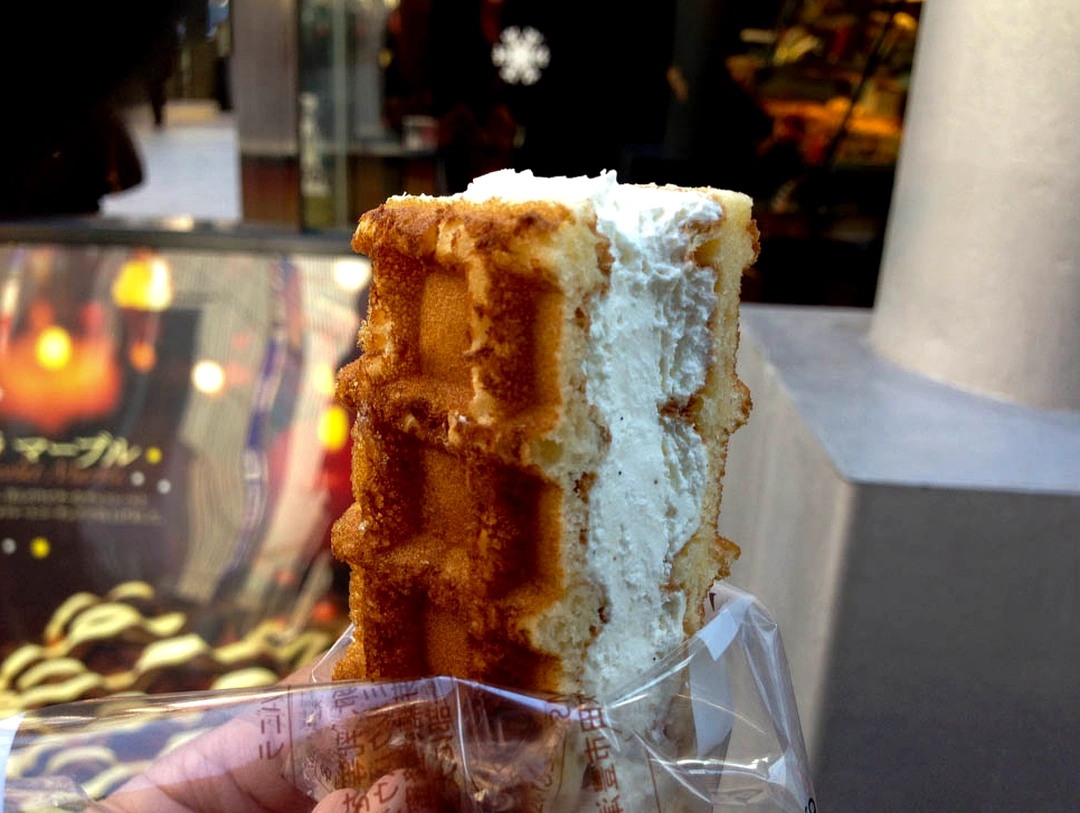
Stopping by a street cart or cozy pastry shop along the way brings another signature treat: the Brussels waffle (Gaufre de Bruxelles). Unlike the denser, pearl-sugar-rich Liege waffle, the Brussels waffle has a rectangular shape with a light, airy crumb and deep pockets. Traditionally, it is dusted lightly with powdered sugar—or topped with fresh strawberries and whipped cream—offering a light, crisp bite that feels indulgent without being overly heavy.
Alongside these dishes is Belgium’s celebrated craft-brewing culture, recognized by UNESCO as Intangible Cultural Heritage of Humanity. Inside traditional taverns tucked around the historic quarter, visitors can sample authentic Trappist beers such as Chimay, Orval, or Westmalle, brewed within abbey walls using traditional fermentation methods and bottle conditioning. Each sip unfolds layered notes—from creamy head and malty warmth to ripe fruit hints and a gentle spiced finish. Paired with an aged Flemish cheese like Le Vieux Bruxelles, it offers a rich taste of local culinary heritage.
Having practical details on hand makes visiting this distinctive Belgian landmark straightforward. Unlike large museums or monuments requiring advance tickets, the Manneken Pis statue in Brussels (布鲁塞尔于连·彼得像) sits right out in public space as part of daily street life. Because it is an outdoor public sculpture in the city center, it is accessible free of charge 24 hours a day, 365 days a year, without tickets or reservations. If you would also like to see his collection of more than a thousand outfits, the nearby Garde-Robe Manneken Pis museum typically welcomes visitors Tuesday through Sunday from 10:00 AM to 5:00 PM, showcasing how clothing traditions intersect with cultural exchange and history.
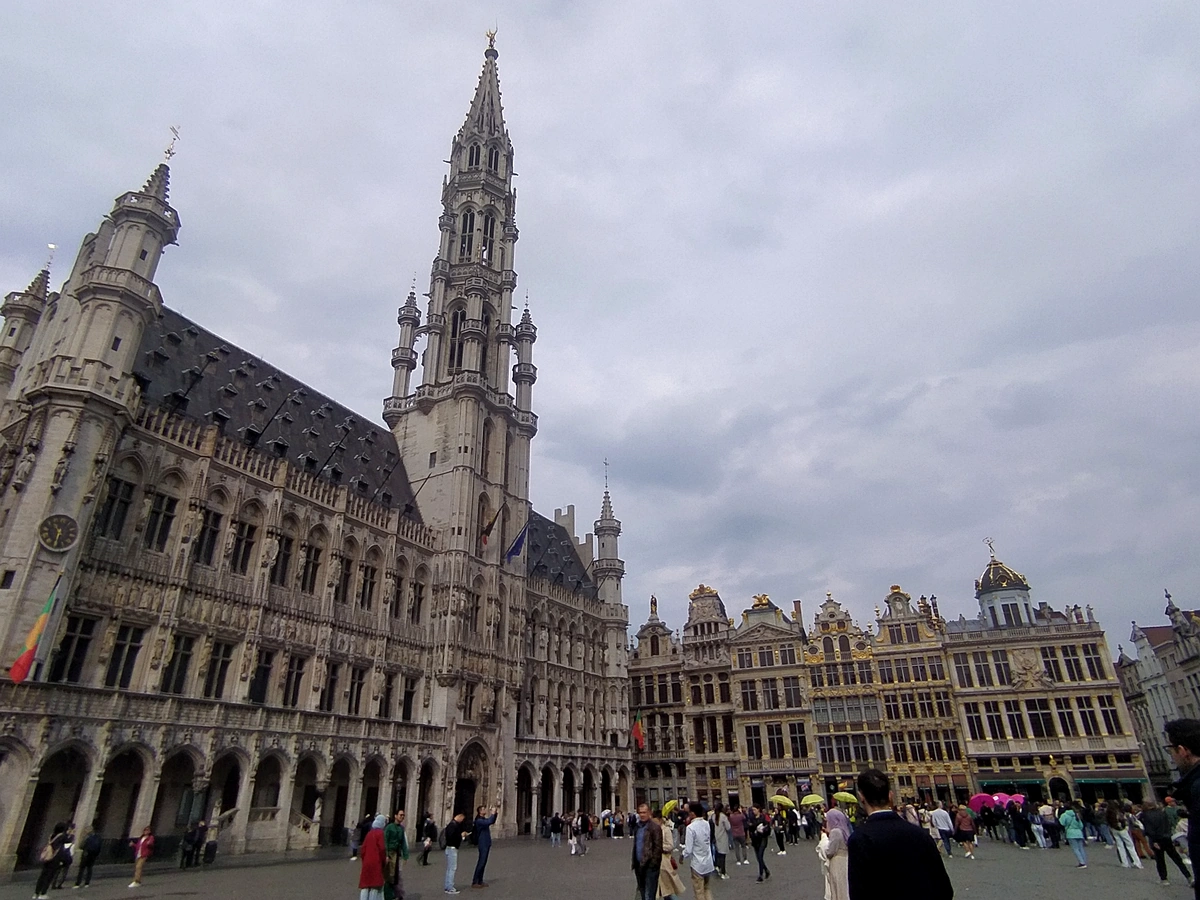
Getting there is straightforward thanks to Brussels’s central public transit network. Travelers can take Metro Line 1 or Line 5 to De Brouckère or Gare Centrale (Central Station), then walk about 5 to 8 minutes through historic streets to reach the statue. It also sits roughly 200 meters southwest of the Grand Place—about a 3-minute walk—making it easy to pair the two. Many visitors start at the Grand Place and stroll south along Rue de l’Étuve, taking in the Western Europe street atmosphere before reaching the statue’s corner. Nearby, you can also visit his “little sister,” Jeanneke Pis (installed in 1985), tucked in the narrow Impasse de la Fidélité for a lighthearted companion stop.
Before going, setting realistic expectations helps avoid surprises. Many first-time visitors are struck by how small the statue actually is—at around 55 centimeters tall, it is much more compact than grand monuments might suggest, which is part of its approachable charm. Because the surrounding streets are narrow, the corner often gets crowded during peak hours. Cobblestones and stone paving add historic character but can be uneven or slick, so comfortable flat shoes with good grip are smart for a day of walking. Busy pedestrian spots also call for standard big-city awareness—keeping bags zipped and valuables secure, including passports and electronics. For travelers who prefer a smoothly paced trip with lodging and itinerary logistics handled in advance, you can explore a complete tour package to travel with experienced guides across Western Europe and beyond.