Nestled in the far west of Kim Bang district, Ha Nam province, the Tam Chuc historical, cultural, and spiritual heritage complex emerges as a monumental wonder amidst the Nam Son Nam heritage region. Spanning across Ba Sao town and Kha Phong commune, this grand scenic spot occupies a strategic location deeply rooted in traditional feng shui, converging the quintessential values of picturesque rivers and mountains. For millennia, nature has blessed this land with a unique geological structure, forming a pristine limestone valley embraced by a majestic arc of mountains surrounding the vast waters of the Luc Ngan lake, opening up a meditative space that is both grandiose and tranquil, steeped in the Buddhist realm. Going back in time to the 11th century under the Ly dynasty, this sacred land was chosen by eminent high monks to propagate Buddhism. Historical records and local archaeological discoveries, such as greenstone column bases and bricks bearing Ly-Tran art styles, serve as eloquent testimonies to the ancient founding era of the historic Tam Chuc Pagoda. It is intertwined with the legendary tale of “Six Bells in Front, Seven Stars Behind,” carrying a profound spiritual significance of six golden bells falling into the waters ahead and seven stars shining eternally on the cliffs behind. This magical combination of natural topography and folk mythology has transformed Tam Chuc into a convergence point of heaven and earth’s vital energy, where visitors can easily find peace and harmony with the universe. Through numerous historical upheavals and devastating wars, the original ancient pagoda sank into oblivion, leaving only ruins hidden deep within the earth and cliff faces. Yet, those original values and historical vigor have never faded. At the beginning of the 21st century, built upon the sacred foundations of our ancestors, the Tam Chuc complex was restored and constructed on a monumental monastic scale, becoming one of the largest Buddhist centers in Southeast Asia and a source of pride for Vietnamese tourism culture when it proudly hosted the United Nations Day of Vesak in 2019. The revival of Tam Chuc is not merely the recreation of a grand architectural space, but also the continuation of the nation’s millennia-old cultural and historical lineage. This cultural landscape is deeply imbued with the marks of historical figures, from Zen Master Nguyen Minh Khang—an enlightened high monk and renowned physician of the Ly dynasty—to the founding patriarchs of the Truc Lam Yen Tu Zen lineage. They chose the rugged, secluded terrain of the Tam Chuc valley to build meditation hermitages, creating an invaluable spiritual pilgrimage route connecting Huong Pagoda, Tam Chuc, and Bai Dinh Pagoda. Today, visiting Tam Chuc allows travelers not only to admire a magnificent architectural work featuring precious original greenstone pillars and scripture columns, but also to immerse themselves in a pristine geological and cultural heritage space, where a glorious past and a prosperous present blend into one, affirming the enduring vitality of the Vietnamese soul across time.
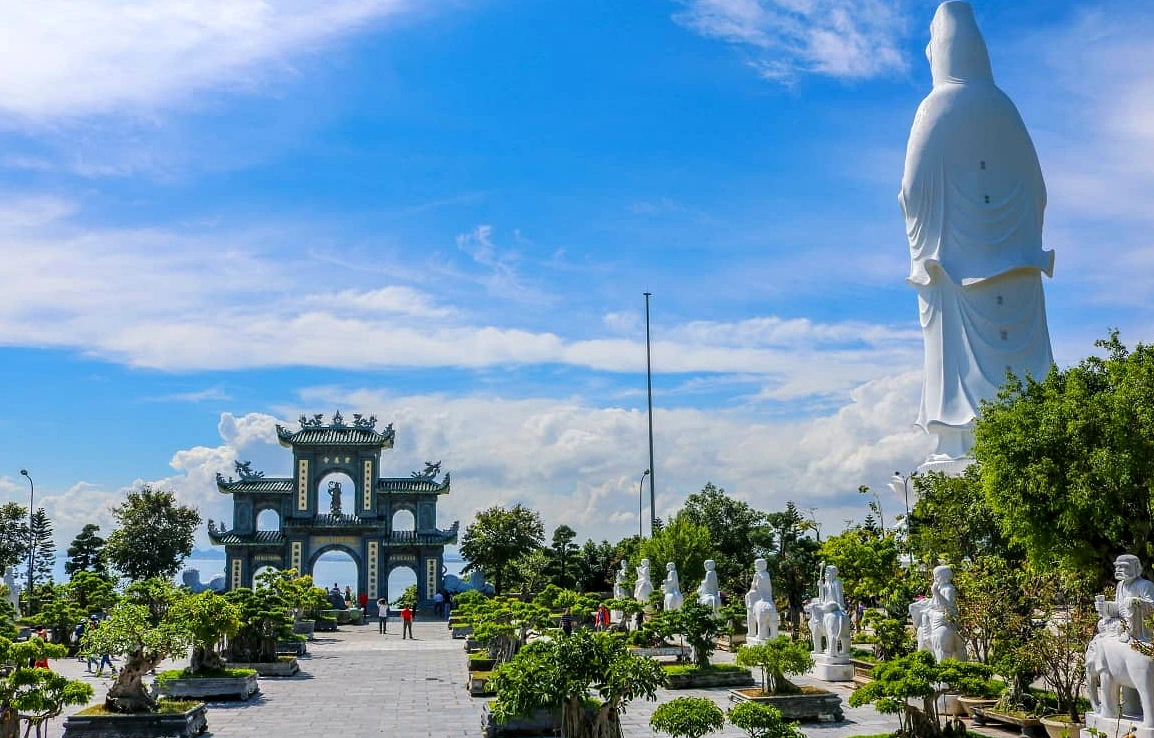
Stepping into the Tam Chuc Historical, Cultural, and Spiritual Heritage Complex, visitors feel as though they are wandering into an earthly Buddhist paradise, where earth, sky, water, and Buddhist architecture blend exquisitely. Possessing the unique terrain of “Six Bells in Front, Seven Stars Behind,” the pagoda is nestled against a series of overlapping arc-shaped limestone mountains, with its facade facing the vast Tam Chuc lake where six mountains rise from the middle like heaven-sent bells. The landscape here is a majestic natural setting, adorned by calm, clear blue waters reflecting the cloudy sky, wisps of early morning mist, and year-round lush primary vegetation, creating a serene, elegant, and deeply mystical space.
The architectural masterpiece of Tam Chuc is the pinnacle combination of traditional art and modern construction techniques, highlighted by millions of black volcanic stone bricks and monolithic green stones directly imported from Indonesia and meticulously carved by hand by thousands of skilled artisans. Venturing deeper into the inner courtyard, century-scale structures emerge with solemnity and splendor. The towering Inner Tam Quan Gate features upturned curved roof corners deeply characteristic of Vietnamese Buddhist architecture, leading visitors through the grand Sutral Pillar Garden housing dozens of giant greenstone pillars up to 14 meters high, engraved with intricate scriptures. Next are the Tam The Hall, the Phap Chu Hall, and the Quan Am Hall—which preserve giant wall murals made from the sacred mud of the Ganges River, alongside statues of Buddha weighing dozens of tons cast in pure copper, radiating a halo of compassion and wisdom.
To capture the most precious moments in this sacred sanctuary, professional photographers and travel journalists frequently share two “million-view” shooting angles that should not be missed. The first angle is located at the boat pier and along the lakeside corridor opposite the Tam The Hall; the golden hour to capture the perfect frame is at sunrise (from 5:30 AM to 6:30 AM). At that time, the rising sun behind the limestone mountains paints the water pink, and early morning mist lingers over the tower peaks, creating a hazy, magical atmosphere resembling a Buddhist realm emerging in the clouds. The second angle is located on the high balcony of Tam The Hall looking out toward Tam Chuc lake and the Tam Quan Gate; the ideal time is during sunset (from 5:00 PM to 6:00 PM).
The descending sunset at Tam Chuc brings a melancholic, nostalgic, and deeply touching beauty. From this elevated viewpoint, visitors can embrace the entire mirror-like calm surface of the lake sparkling with the golden light of the fading sun, blending with the majestic silhouettes of the grand halls and six floating water hyacinth islands glowing in the evening lights. Every intricate carved architectural detail and towering stone pillar becomes more mystical and sacred than ever, offering travelers a sense of peace and tranquility, washing away all the hustle and bustle of the mundane world to immerse themselves in the eternity of nature and spirituality.
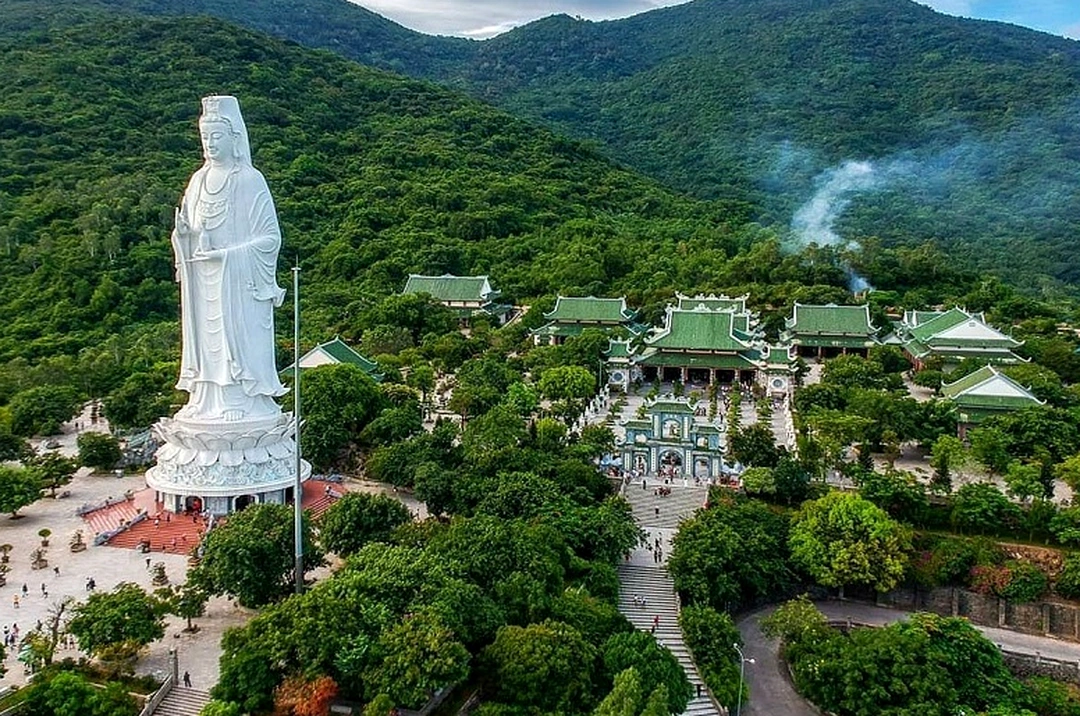
Arriving at the Tam Chuc historical, cultural, and spiritual heritage complex, visitors are instantly drawn into a majestic space where sky, clouds, mountains, waters, and Buddhist architecture merge into one. The most valuable initial practical experience is the journey floating on the waters of the Luc Luc lake aboard a hydraulic boat or high-speed motorboat. Sitting on the boat and gazing into the distance, you will feel small amidst the surrounding overlapping limestone mountain ranges rising proudly from the mirror-flat water. A cool breeze carrying the fresh scent of water dispels all the worries and stresses of daily life, guiding the traveler’s soul back to its inherent tranquility and peace.
As the boat docks, the spiritual pilgrimage journey unfolds with truly breathtaking emotions. Passing through the majestic Tam Quan Gate, visitors will successively admire the Tam The Hall, Phap Chu Hall, and Quan Am Hall, boasting architectural scales that rank among the largest in Southeast Asia. The highlight that leaves everyone in awe is the millions of volcanic stone mosaic pictures meticulously pieced together on the walls, vividly recounting the previous lives of the Buddha. The feeling of stepping up each cool greenstone step and looking up at the giant bronze statues weighing hundreds of tons radiating compassionate light allows visitors not only to sense the grandeur of modern-era architecture but also to calm their minds before the sacred, solemn Buddhist realm.
To complete the experience, an unmissable challenge is climbing up to the Tam The Hall located at the highest position halfway up the mountain. Although your legs may feel slightly tired after climbing the long stone steps, reaching the peak and turning back to look offers a reward that is well worth it. The entire scenery of the Tam Chuc valley unfolds breathtakingly like a majestic natural painting: the lake glittering in the sunlight, small green islands protruding, and curved temple roofs hidden in the mist. Standing before this expansive space, taking a deep breath of the fresh mountain air, all sorrows seem to vanish, giving way to freedom, ease, and overwhelming awe.
Concluding the journey of exploring Tam Chuc, experiencing local culture through cuisine brings unforgettable lingering flavors. Stopping by the restaurants along the lake or around Ba Sao town, travelers can savor renowned specialties of Ha Nam province such as clay-pot braised fish richly flavored with traditional spices, fragrant fermented fish paste, or dishes prepared from tender, firm mountain goat meat. Sipping a warm cup of tea, enjoying rustic countryside flavors, and watching the sunset gradually descend over the Tam Chuc waters, visitors will fully appreciate the vibrant, deep, and lingering beauty of local culture that stays in their hearts on every step back home.
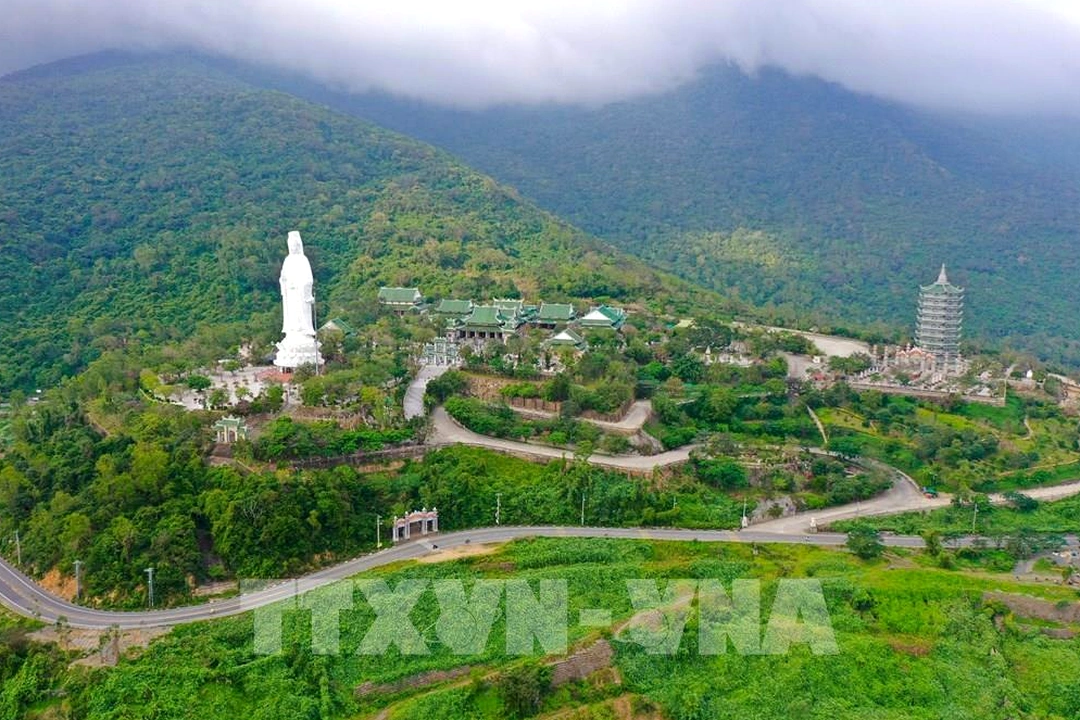
Tam Chuc Pagoda is not merely a sacred place carrying profound historical and archaeological values, but also a premier pilgrimage and sightseeing destination in Northern Vietnam. To ensure your journey exploring this grand monastery is complete and smooth, readers can refer to the comprehensive pocket guide featuring complete practical information below.
Regarding operating hours, the heritage complex is open to welcome visitors for sightseeing and worship every day of the week, from early morning to late afternoon (typically from 6:00 AM to 6:00 PM). Regarding costs, the management board of the tourist area currently does not charge an entrance fee for general sightseeing. However, to travel deeper into the spiritual areas on the lake or shorten travel time between shrines, visitors can choose electric car or boat services with clearly listed ticket prices at the ticket booth, suitable for all types of travelers.
The travel route and transportation from central Hanoi to Tam Chuc Pagoda are extremely convenient. Covering a distance of nearly sixty kilometers, travelers can proactively drive a car or motorbike along the Phap Van – Cau Gie expressway, turn onto National Highway 1A and National Highway 21 to reach Ba Sao town, Kim Bang district, Ha Nam province. The average travel time takes just over an hour. Additionally, limousine bus services running the Hanoi – Ha Nam route are a popular, safe, and maximally comfortable option for passengers.
As a spiritual space deeply imbued with Buddhist cultural identity combined with vast mountainous and valley terrain, visitors coming to Tam Chuc should pay attention to choosing polite, modest attire appropriate for the customs of a sacred place (such as wearing sleeved shirts, long pants, or skirts below the knee). Since the complex covers an extremely large area with numerous stairs, hills, and outdoor spaces, you should prioritize wearing comfortable sneakers or flat shoes to facilitate long-distance walking.
The ideal time of year to visit this pagoda is from the first to the third lunar month, when the spring weather is cool, natural scenery is fresh, and many unique Buddhist cultural festivals take place. Alternatively, the period from September to November is also a beautiful golden autumn season with fresh air and mirror-like calm Luc Luc lake waters, highly favorable for sightseeing, worshiping, and capturing meaningful commemorative moments.
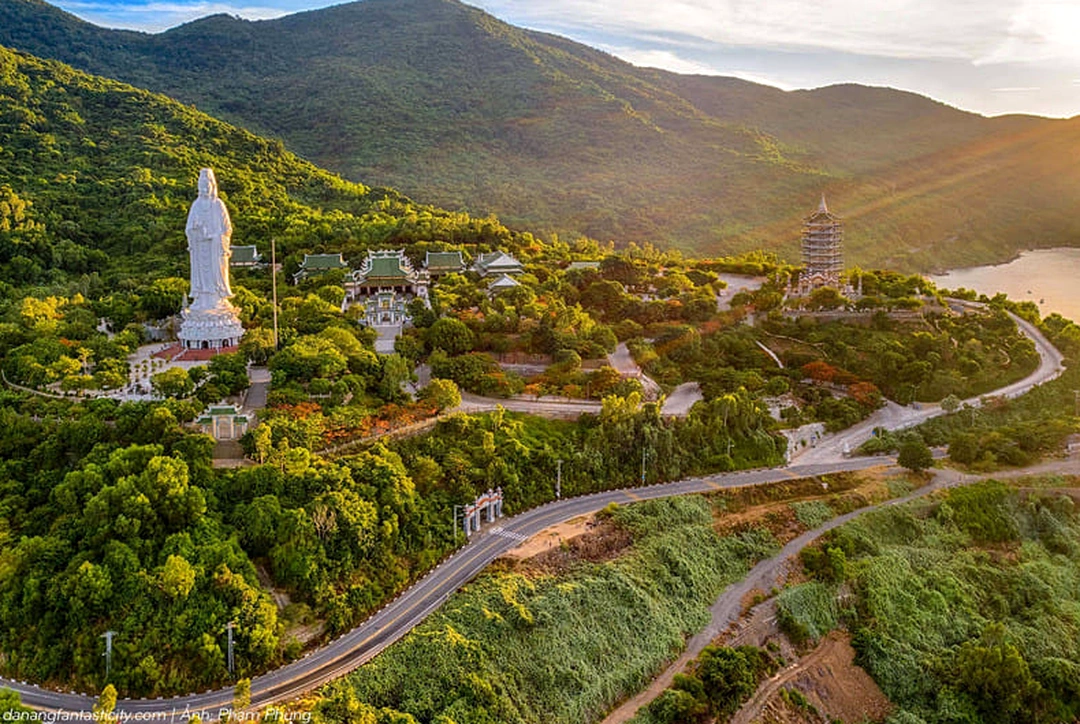
To enjoy a complete vacation and fully admire the beauty of Tam Chuc Pagoda without worrying about arranging transportation, booking tickets, or scheduling travel itineraries, visitors can choose premium all-inclusive Kim Bang, Ha Nam tour packages from VDS Travel. Each tour is optimally designed to check in when the scenery is most vibrant, accompanied by a team of professional tour guides thoroughly knowledgeable about local culture and top-tier hotel and culinary service standards.