Stretching beneath the radiant sunlit skies of South Central Vietnam, Ninh Phuoc district in Ninh Thuan province emerges as a uniquely distinct geo-cultural destination, capturing the deep historical layers of a space that once belonged to the legendary Panduranga principality. In terms of geographical coordinates and geomantic positioning, Ninh Phuoc holds a rare vantage point, embraced by the Dinh River (Lu River) basin system and wind-blocking high mountain ranges, creating one of the most distinctive semi-arid equatorial microclimates in Indochina. This ancient sandy-gravel terrain, combined with the lowest average rainfall in the country and year-round sunshine, inadvertently sculpted a fertile “mini-desert,” turning this region into the only ecological cradle in Vietnam capable of nurturing and thriving with grapevines—a temperate crop notoriously finicky about soil conditions. Looking back through time, the historical trajectory of this land is a vibrant and enduring epic of cultural exchange. Since the ancient Champa era, this area served as the lifeblood of dryland agricultural civilization, featuring sophisticated terraced irrigation systems such as Muong Cu and Muong Sat, standing as testaments to the Cham people’s remarkable wisdom in adapting to nature. By the 17th century, amid the shifts of the Southward Expansion and the Viet-Cham cultural integration under the Dai Viet period, this land welcomed new waves of settlers bringing a resilient pioneering spirit. The convergence of indigenous water-management expertise and Vietnamese farming techniques laid the very first cornerstones for shaping a specialized agricultural economic zone. Despite carrying deep historical sediments, the true essence of Ninh Phuoc’s “grape kingdom” was written by an empirical scientific spirit and the tireless efforts of modern generations. Contrary to common misconceptions of an ancient local specialty, grapevines officially arrived on this strip of land in the 1960s with initial experimental varieties; however, it was not until the 1985–1990 period, marked by the defining milestone of the Nha Ho Research Institute for Cotton and Agricultural Development based in Ninh Phuoc, that viticulture truly took deep root. Dedicated generations of agronomists, such as the late Prof. Dr. Mai Van Hao alongside agricultural experts, tirelessly bred and successfully domesticated the Red Cardinal grape variety and later the NH 01-48 green grape variety. They are the unsung “historical figures” who transformed arid sandy lands into lush green carpets. Today, through the lens of the press and heritage management agencies, Ninh Phuoc’s vineyards are no longer merely a renowned economic raw-material zone, having risen to become one of the most unique eco-cultural heritages in Vietnamese travel and tourism. The seamless blend of distinctive geological soil, the diligent hands of Kinh and Cham communities, and advanced scientific thinking has sculpted a symbol of prosperity amidst this sun-drenched, windswept land. Visiting Ninh Phuoc today is a journey to touch the roots of an agricultural legend, where trellises heavy with fruit hold not just the sweet flavors of heaven and earth, but also an enduring story of the Vietnamese people’s aspiration to conquer nature.

The Ninh Phuoc vineyards in sun-drenched, windswept Ninh Thuan emerge as a breathtakingly unique natural vista, where harsh elements transform into a magnificent landscape masterpiece under human care. Stretching across ancient sandy-gravel slopes accumulated over centuries, the grape trellises are methodically laid out, reaching boldly across the vast expanse of the country’s most distinct semi-arid microclimate. The gently sloping terrain creates expansive, tiered open spaces that embrace the undulating limestone mountain ranges in the distance. Viewed from above, the network of grape trellises interlocks into lush green checkerboards, contrasting sharply against the brilliant golden sunlight and characteristic dark red soil, forming a powerful visual structure completely distinct from the agricultural regions of the Mekong Delta or the Northern plains.
Venturing deeper into the cultivation spaces, visitors cannot help but marvel at the rustic yet deeply artistic architecture of the trellis support systems. Sturdy reinforced concrete pillars uphold tightly woven steel wire grids, forming a natural canopy over two meters high—just the right height for ripe, plump clusters of grapes to hang right at eye level. Beneath the dark green canopy shielding against the sweltering heat hang thousands of heavy, juicy grape clusters, ranging from the alluring crimson-pink of the Red Cardinal variety to the pure jade-green of the NH 01-48 line. The Y-shaped and extended overhead trellis cultivation technique not only optimizes sunlight filtering through every leaf gap, but also crafts winding natural tunnels that draw the eye deep inside, evoking classic wine cellars in Southern France while retaining the unmistakable indigenous cultural breath of this Viet-Cham crossroads.
To capture the most prized moments in this green paradise nestled in the heart of the desert, professional photographers and leading travel magazines frequently recommend two iconic camera angles not to be missed. The first angle lies deep within the central “grape tunnels,” where long rows of pillars create an extraordinary visual depth effect, giving photos an infinite pull beneath a green canopy sparkling with sunbeams piercing through the foliage. The second angle sits at the outer edge of the vineyard looking toward the horizon, framing Mount Chua or distant salt fields and Cham towers in the haze, creating a harmonious blend between untamed nature and enduring human labor.
Regarding ideal lighting times, mornings from 6:00 AM to 8:00 AM are perfection, when gentle dawn light casts golden rays onto morning dewdrops clinging to leaves and fruit skins, imparting a fresh, crystal-clear vibrancy. Conversely, the sunset window from 4:30 PM to 6:00 PM bathes the entire space in golden twilight, reflecting warm, deep red hues onto ripe grape clusters to create a contemplative, mystical, and profoundly romantic emotional depth for every million-view frame.

When the brilliant golden sunlight of the South Central coast begins carpeting the ancient sand slopes, stepping into Ninh Phuoc (Ninh Thuan) feels like entering an entirely different world, where a unhurried pace of life intertwines with the fierce vitality of nature and people. From the very moment you part the lush green curtain of leaves to step beneath trellises heavy with fruit, an immediate sense of awe washes over you. Before your eyes hang not merely plump grapes with glossy skins turning deep crimson or jade green, but the miraculous triumph of biological adaptation between a temperate vine and the harsh sun and winds of the Panduranga region. Touching grape clusters still kissed by morning dew and inhaling the rich, sweet aroma of mother earth and living sap melts away all fatigue from a long journey, giving way to sheer exhilaration.
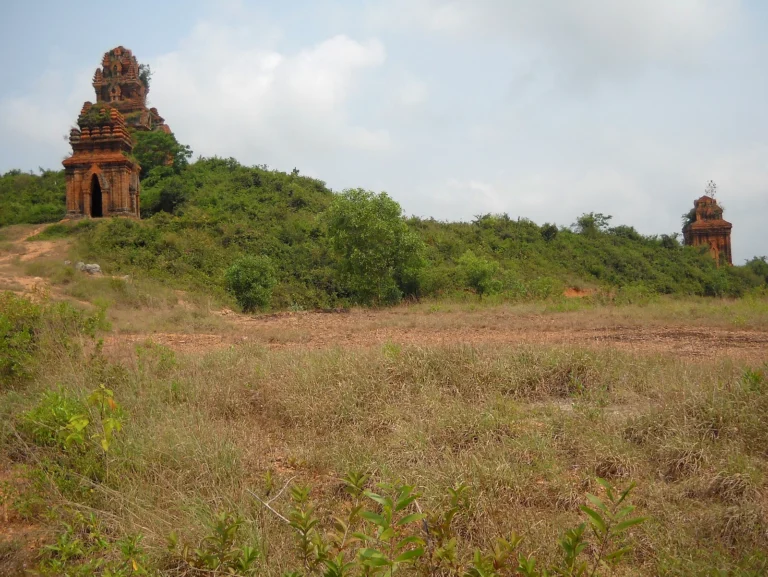
Beyond touring the grounds and savoring sweet, fresh grapes picked straight from the vine, exploring Ninh Phuoc unlocks countless rewarding hands-on experiences. Travelers can challenge themselves along trails climbing undulating sand dunes to take in a panoramic vista of the endless lush green grape valley cradling peaceful villages. In the distance, the Dinh River meanders gently like a soft silk ribbon nourishing the Cham-Viet cultural lifeblood across centuries. To fully soak in this serene beauty, a leisurely boat ride drifting along the cool waters carries you back in time, letting you contemplate ancient irrigation canals and listen to the whisper of mountain winds rustling past moss-covered Cham towers peeking out behind coconut groves.
The allure of this land also anchors visitors’ hearts through its mystical spiritual culture and remarkably rich local cuisine. Stopping by ancient temple towers in the region, visitors immerse themselves in sacred worship spaces while learning about the age-old customs and traditions of the Cham and Kinh communities living in harmony side by side. When sunset descends, painting the vineyards in rosy hues, hunger calls for renowned local specialties. The crisp crunch of apricot-anchovy salad (goi ca mai), the rich aroma of sizzling banh xeo and clay-molded banh can fresh off the griddle, paired with a glass of pure, delicately sweet-and-tannic grape wine, create an unforgettable symphony of flavors. All these authentic, vivid experiences do more than soothe the soul—they leave every traveler with a lingering, heartfelt fondness for the resilient and warm-hearted land of Ninh Phuoc.

Exploring Ninh Phuoc’s grape capital becomes even more fulfilling and seamless when travelers equip themselves with practical tips on timing, costs, and transportation. Regarding the ideal time to visit, this South Central region enjoys warm, sunny weather year-round, enabling vineyard owners to harvest continuously three to four crops annually. However, the best time to admire trellises laden with plump, glistening grapes under golden sunlight is during the dry season months or right before peak harvest periods. Visitors should prioritize the hours from 7:30 AM to 9:30 AM or 3:30 PM to 5:30 PM to enjoy soft natural lighting—perfect for capturing stunning check-in photos while avoiding the intense midday heat of this semi-arid microclimate.
Most traditional vineyards and high-tech farms in Ninh Phuoc district welcome visitors from 7:00 AM to 6:00 PM every day of the week, including public holidays and Tet. Regarding admission fees, the majority of large vineyards affiliated with the Nha Ho Research Institute or model family farms offer free admission for visitors to tour, take photos, and learn about cultivation processes. Tourists only pay when purchasing fresh fruit picked directly from the vine, sampling grape-derived products such as grape syrup, wine, and raisins, or ordering food and refreshments available on the farm premises.
To reach the Ninh Phuoc vineyards from the center of Phan Rang – Thap Cham city, the most optimal and flexible modes of transport are motorbikes or private cars, covering a route of about 10 to 15 km south. Starting from the city center, travelers follow National Highway 1A toward Ninh Phuoc district, then turn according to directional signs leading toward Phuoc Thuan commune or the area surrounding the Nha Ho Research Institute. This route is exceptionally smooth and well-paved, opening up vistas of lush green rice paddies, herds of sheep grazing leisurely, and the signature sand dunes of this sun-drenched, windswept land.
Due to the sandy-gravel terrain and open-air farming environment, travelers should take care to choose suitable clothing and accessories. Opt for active, comfortable, breathable attire paired with sneakers or flat shoes to walk easily across sandy ground—strictly avoid high heels. Additionally, since the open vineyards sit directly beneath the characteristic Central Vietnam sun, bringing a wide-brimmed hat, sunglasses, a sun umbrella, and sunscreen is essential. In particular, when visiting vineyards located near traditional Cham cultural spaces or historical scientific research facilities, visitors should dress neatly and modestly, and strictly follow orchard rules—such as refraining from snapping branches, picking fruit without permission, or littering—to preserve the pristine natural scenery and local cultural beauty.

To enjoy a complete getaway and fully admire the beauty of Ninh Thuan Vineyards without worrying about arranging transportation, booking sightseeing tickets, or planning transit schedules, travelers can choose premium all-inclusive Ninh Phuoc, Ninh Thuan tour packages by VDS Travel. Every itinerary is optimized for check-in timing when the scenery is at its most vibrant, accompanied by a team of knowledgeable tour guides deeply versed in local culture alongside top-tier hotel and dining service standards.