Nestled in the heart of the breezy Lam Vien Plateau, where mist perpetually lingers among deep green pine slopes, Da Lat Railway Station emerges as a timeless architectural icon—a historical witness bearing the distinct imprint of Vietnamese-French cultural fusion from the first half of the 20th century. Located at 1 Quang Trung Street, Ward 10, Da Lat City, Lam Dong Province, this landmark occupies a unique geographical coordinate tied to a strategic transportation artery of a tumultuous era. While the coastal city of Nha Trang served as the primary maritime and logistics hub receiving heavy materials and technical equipment for transit up into the highlands during the French colonial period, it was this final terminus in Da Lat that brought together the pinnacle of construction engineering and colonial architectural artistry.
From a geomantic and geological landscape perspective, the station sits on an elevated stretch of land, backed by the sturdy mountain terrain of the Langbiang Plateau and facing the open expanse of the City of a Thousand Flowers. This setting not only held strategic military and economic significance in linking the central coastal plains (Thap Cham, Nha Trang) with the high mountains, but also fostered a signature microclimate: ethereal, drifting, and poetic. Under the reign of Emperor Bao Dai—the last monarch of the Nguyen Dynasty—and with the backing of the French protectorate authorities, construction began in 1932 and was officially completed in 1938. This was the era when Da Lat was planned as the summer resort capital (Ville d’été) for all of Indochina, where royal palaces and European-style villas blended seamlessly with untouched native wilderness.
The origin of the station’s name and its creation are closely linked to a monumental engineering feat: the over-84-kilometer Thap Cham–Da Lat cog railway, which traversed some of the most treacherous mountain passes on the Indochinese peninsula, including Ngoan Muc Pass. To realize the ambition of conquering altitudes exceeding 1,500 meters above sea level, talented French engineers Moncet and Reverchon left an enduring mark through an architectural style inspired by the traditional peaked-roof villages of Normandy (France), artfully combined with the silhouette of the three peaks of legendary Langbiang Mountain or modeled after traditional Central Highlands communal houses (nha rong). This refined synthesis transformed the station into a monumental sculpture set amidst nature.
Through the vicissitudes of history, war, and time, Da Lat Railway Station has not only preserved the original technical value of its Mikado steam locomotives and its world-unique cogwheel railway system, but has also been honored by heritage authorities and domestic as well as international press as the oldest and most beautiful railway station in Vietnam. It preserves the soul of an era of heritage travel culture, where every roof tile, stained-glass window frame, and echoing train whistle evokes a profound, heroic, and proud past of the southern highlands.
Conceived by the skilled hands of French architects Moncet and Reverre, Da Lat Railway Station stands as a one-of-a-kind architectural masterpiece amidst the misty Lam Vien Plateau. The structure represents a seamless fusion of modern Western Art Deco and the traditional nha rong roofs of the Central Highlands’ indigenous peoples, creating an architectural emblem that is at once grand and imposing yet intimate and poetic. The station’s strongest visual focal point is its cluster of three soaring pointed gables—modeled after the three peaks of legendary Langbiang Mountain—paired with multicolored mosaic stained glass imported directly from France. When morning sunlight streams through the large rose window on the facade, the interior waiting hall comes alive with shimmering, ethereal rays of light that highlight every intricate carving on the antique pinewood columns and massive load-bearing timber beams.
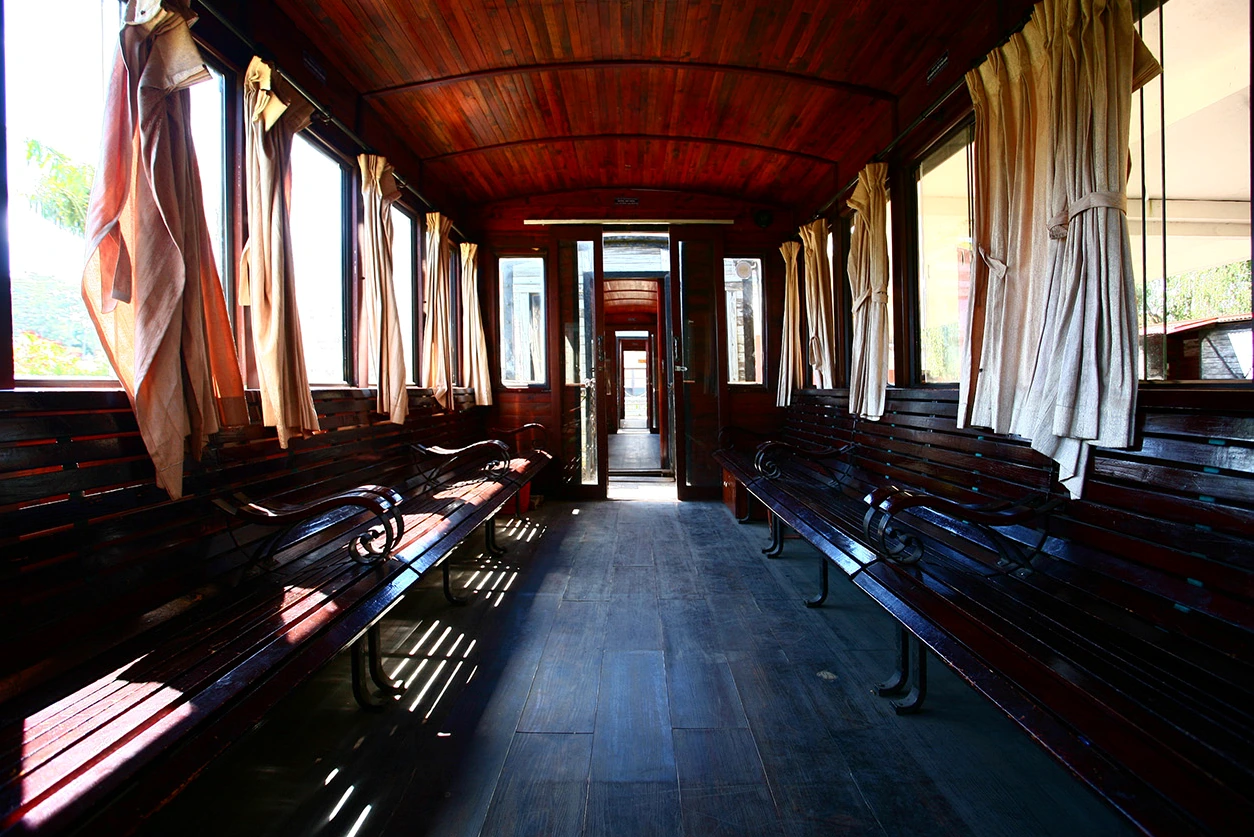
Surrounding this magnificent architectural work is a deeply nostalgic natural landscape where time seems to stand still. Set amidst whispering pine hills and year-round blooming hydrangea beds, the station rests on a gently sloping terrain that opens out to sweeping views of the crisp highland sky. This scenic tableau gains even greater vibrancy and historical depth from the presence of the unique cogwheel steam locomotive and the vintage Y-shaped railway track. Weather-worn wooden sleepers and French-style wooden carriages painted in nostalgic yellow sit quietly beside the platform, forming a picturesque backdrop reminiscent of a golden age in Indochinese architecture and transport engineering.
To capture the most prized shots at this architectural heritage site, professional photographers and travel journalists typically favor two classic camera angles. The first is from the center of the station forecourt looking straight toward the three-gabled facade, allowing you to frame the building’s flawless symmetry in its entirety; the ideal window is during the morning golden hour from 7:00 AM to 8:30 AM, when soft angled sunlight accentuates the mustard-yellow paintwork and moss-tinted red roof tiles. The second angle lies at the far end of the Y-shaped track and the antique locomotive, where shooting along the length of the train toward the pine hills yields remarkable spatial depth. As dusk falls and warm amber-orange light blankets the entire station, it creates the ultimate setting for cinematic, vintage, and deeply evocative photographs.
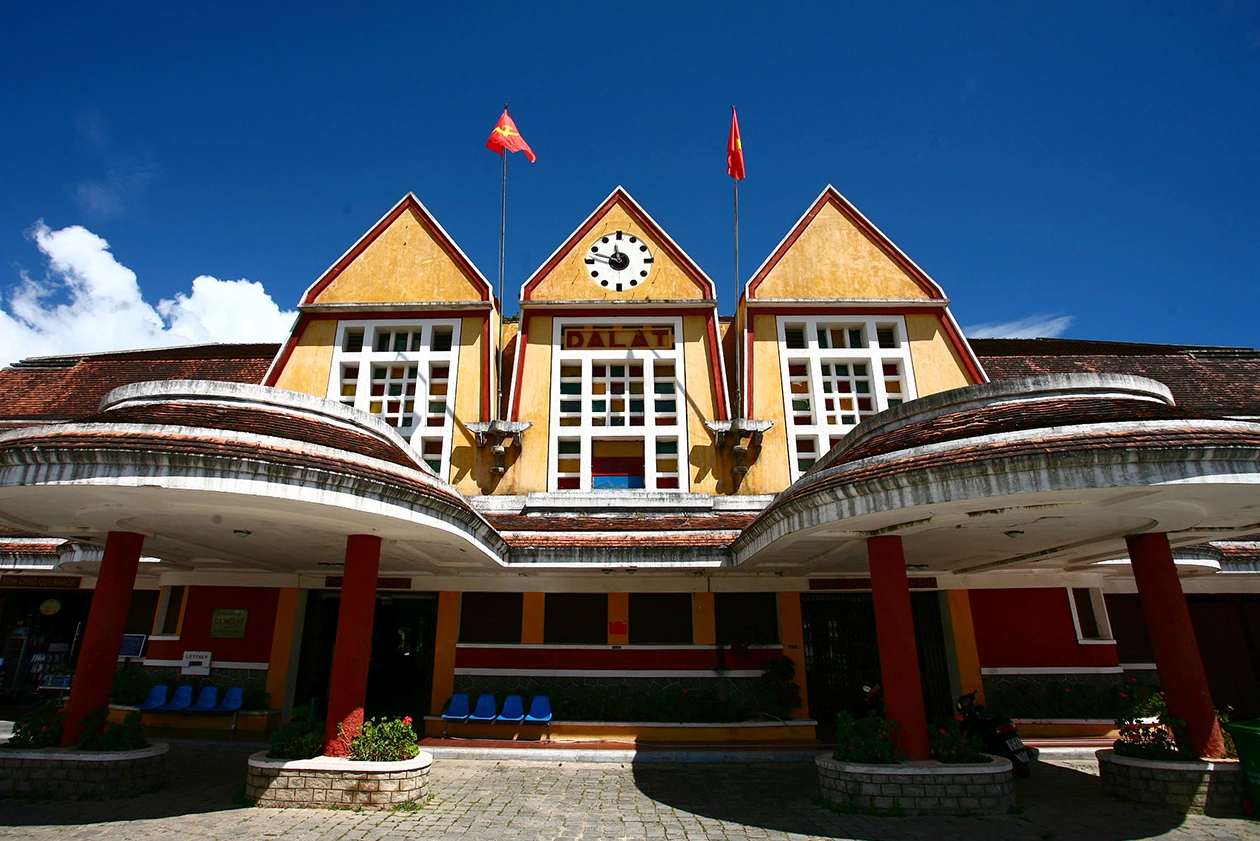
Stepping onto the grounds of Da Lat Railway Station, visitors are immediately captivated by an antique architectural masterpiece infused with Indochinese character and French alpine style. Gazing at the three sweeping gables symbolizing majestic Lang Biang Peak, standing beside the world’s only cogwheel steam locomotive and rails weathered with rust over the decades, a powerful wave of nostalgia and emotion washes over you. The setting feels like a time machine transporting visitors back to the early decades of the 20th century, where time appears suspended in the crisp, wistful air of this mountain town.
Beyond the nostalgic confines of the station, exploring the surrounding local culture unfolds equally rewarding, hands-on experiences. Visitors can start the morning with a short heritage train ride up to Trai Mat, gliding past endless flower greenhouses and lush green valleys. Upon arrival, a spiritual visit to Linh Phuoc Pagoda (the Glass Bottle Pagoda)—renowned for its intricate, stately ceramic mosaic architecture—brings a sense of calm and inner peace. Gazing out from above, the entire panorama of the Lam Vien Plateau reveals itself in breathtaking splendor, with murmuring pine hills and white clouds drifting lazily over rooftops.
To fully immerse yourself in the rhythm of local life, embracing nature-based activities and regional cuisine is an absolute must. Travelers can tackle gentle hiking trails to discover primeval pine forests veiled in morning mist, or enjoy a leisurely boat ride across romantic Xuan Huong Lake right in the city center. When night falls, the brisk highland chill provides the best excuse to wander among roadside stalls and savor celebrated local specialties such as piping-hot, crispy Vietnamese grilled rice paper (banh trang nuong), fragrant steamed rice rolls with chicken offal (banh uot long ga), or a steaming cup of rich, creamy hot soy milk.
Every experience here—from the nostalgic train whistle echoing from the past to the bold flavors of mountain-town cuisine—leaves an indelible impression on travelers. This is far more than an ordinary sightseeing trip; it is an emotional journey where vibrant local culture harmonizes effortlessly with rich layers of history, leaving behind a deep affection and an unforgettable longing for this misty highland land.
Welcoming visitors year-round, Da Lat Railway Station continues to affirm its status as an unmissable architectural heritage icon and cultural landmark in the City of Mist. To ensure your visit to this time-honored monument goes as smoothly and rewardingly as possible, keep the latest practical information in mind. Regarding operating hours, the station is open continuously for sightseeing from 7:30 AM to 5:00 PM every day of the week, including weekends and public holidays. For those wishing to ride the nostalgic heritage train from Da Lat Station to Trai Mat, scheduled trains operate daily at fixed departure times, though booking tickets in advance is recommended to avoid sellouts during peak tourist seasons.
As for admission fees, the exterior grounds and outdoor architectural spaces of Da Lat Railway Station are completely open and free of charge to visitors. You are welcome to stroll freely along the platform, admire the vintage steam locomotive, and take souvenir photos beside the original wooden carriages at no cost. However, if you wish to enter the historic station building to view archival exhibits or purchase tickets for the scenic train ride along the Trai Mat pass, ticket prices are clearly posted at the ticket counter according to each specific service offered by the railway authority and heritage management unit.
Getting from the city center (around Da Lat Market or Xuan Huong Lake) to Da Lat Railway Station is remarkably convenient and quick thanks to well-developed local roads. Located at 1 Quang Trung Street, Ward 10, the station is only about 3 km from downtown. The most convenient ways to get there are by personal motorbike, taxi, or ride-hailing app, with the best route following Tran Hung Dao Street straight onto Quang Trung Street. Not only is this thoroughfare wide and easy to navigate, but it is also lined with mature pine trees and classic French-style villas, offering a relaxing scenic drive on your way to the landmark.
When visiting Da Lat Railway Station, travelers should choose attire suited to both the cultural heritage setting and the hilly stone terrain. Because this is a historical architectural monument of high conservation value, neat, respectful clothing is recommended—avoid overly revealing or inappropriate outfits. Additionally, since the platform is paved with antique stone tiles and features raised railway tracks, visitors—especially women—should wear comfortable sneakers or flat shoes rather than high heels to ensure safe, effortless walking and photo-taking throughout the visit.
Finally, the best time of year to visit Da Lat Railway Station is during the dry season from November to April, when the weather is crisp and dry with golden sunshine and clear blue skies—ideal for artistic photography and outdoor exploration. Arriving early in the morning between 8:00 AM and 9:30 AM gives you the chance to see wisps of mist still clinging to the antique tiled roofs while enjoying a peaceful, uncrowded atmosphere before larger tour groups arrive around midday and in the afternoon.
To enjoy a seamless getaway and take in the full beauty of Da Lat Railway Station without worrying about arranging transportation, booking tickets, or planning itineraries, travelers can opt for VDS Travel’s premier all-inclusive Nha Trang tour packages. Every itinerary is thoughtfully timed so you can capture the scenery at its most radiant, accompanied by knowledgeable local guides well-versed in regional culture alongside top-tier hotel and dining standards.