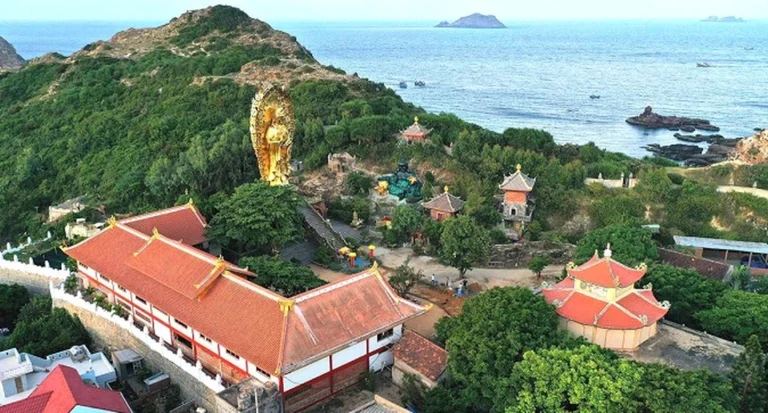
Located along the sun-drenched and windswept central coast, the Bai Dua Relic Complex and Historical-Cultural Space (Quy Nhon City, Binh Dinh Province) emerges as a singular destination where the quintessential geological, scenic, and historical values of the Xu Nau region converge. From a physical geography standpoint, Bai Dua boasts a rare, majestic feng shui setting, backed by towering granite mountain ranges formed over millions of years and facing directly out onto the vast Quy Nhon Bay with its emerald-green waters and gentle waves lapping against fine sandy shores day and night. The terrain here is sheltered and wind-protected, interwoven with coastal forest ecosystems and distinctive native vegetation, creating a fresh, tranquil microclimate completely detached from the bustle of urban life.
The name Bai Dua (Pandanus Beach) has long been woven into community memory and local geographical chronicles, originating from the vast expanses of wild pandanus trees alongside a rich array of medicinal flora that once grew wild across the hillsides and cliffs. Through the passage of time, this rustic name not only evokes a pristine ecosystem but also encapsulates a proud history of land reclamation and coastal defense. According to archaeological records and in-depth studies by the Vietnam Institute of Cultural Heritage & History, the Bai Dua area fell within the strategic sphere of influence of the Champa Kingdom from the 11th to the 15th centuries—evidenced by ancient pottery fragments and architectural foundations scattered around Thi Nai Lagoon, establishing its role as an important maritime lookout post or anchorage in antiquity.
Entering the Dai Viet era under the Early Le and Revival Le dynasties—following the 1471 milestone when King Le Thanh Tong personally led a southward campaign to establish Quy Nhon Prefecture—Bai Dua continued to serve as a naval patrol station and a familiar stopover for merchant vessels and inspecting mandarins thanks to its rugged, secluded terrain. In particular, the heroic spirit of this land reached its zenith during the Tay Son Dynasty (1771–1802). Under the reign of Emperor Quang Trung (Nguyen Hue), owing to its bottleneck position overlooking Quy Nhon Bay and bordering the vital waterway leading into Thi Nai Lagoon, Bai Dua was chosen by eminent generals such as Admiral Vo Van Dung and Tran Quang Dieu as a strategic ambush site and naval garrison, playing a crucial role in safeguarding the Imperial Citadel capital (Thanh Hoang De).
During the Nguyen Dynasty (1802–1945), Bai Dua’s presence continued to be documented in imperial chronicles such as the Dai Nam Thuc Luc (Veritable Records of Dai Nam) and Dai Nam Nhat Thong Chi (Comprehensive Gazetteer of Dai Nam), affirming its dual significance as both a coastal military defense line and a spiritual space deeply intertwined with the religious life of local fishermen. Today, through the lens of the press and heritage management agencies, Bai Dua is recognized not merely as a unique geological landmark featuring fascinating sedimentary rock formations, but also as a living museum preserving the sacred soul of the land—an unmissable cultural travel rendezvous for anyone seeking to reconnect with the heroic historical roots of Binh Dinh, a land renowned for its sacred geography and extraordinary people.

Nestled along the deep blue coastline of Quy Nhon City, the Bai Dua relic complex and historical space appears as a magnificent sculptural masterpiece of nature, where the seamless harmony between rugged mountains and the vast ocean creates a captivating landscape painting. The topography here is remarkably distinctive, with imposing granite ridges jutting out into the open sea; millions of years of weathering have sculpted sheer, majestic cliffs interspersed with natural caves and small stretches of fine sand gleaming golden under the sunlight. Viewed from above, Bai Dua resembles a formidable natural fortress generously bestowed by nature, exuding both the untamed, mysterious beauty of bygone eras and the vibrant vitality of coastal vegetation, with lush clusters of wild pandanus swaying in the salty sea breeze.
Stepping into this architectural and scenic space, visitors cannot help but marvel at the intricate natural contours carved into the stone by time and wind-whipped waves. Massive boulders stacked atop one another form natural stairways leading down to crystal-clear waters where the seabed is visible, teeming with vibrant coral reefs and colorful marine life. Nature’s spontaneous yet remarkably harmonious arrangement turns every corner of Bai Dua into a living work of art. From this vantage point, gazing out into the distance reveals the vast expanse of Quy Nhon Bay dotted with distant sails and the brisk rhythm of offshore fishermen at work, creating a sense of spatial depth that is both expansive and steeped in the nostalgia of a land rich in ancient cultural layers.
To capture the breathtaking beauty of this scenic masterpiece, photographers and seasoned travel enthusiasts frequently share top-tier shooting coordinates that should not be missed. The first “million-view” photo spot is the elongated, ship-bow-shaped rocky outcrop on the eastern side of the relic site, where ocean waves crash incessantly, sending up plumes of white foam. The most ideal time to capture unforgettable shots here is at sunrise, when the first golden rays of the new day pierce through the thin morning mist, tinting the entire expanse of sea and sky in shades of pink and illuminating the ancient cliffs to create a truly ethereal and grand lighting effect.
The second stunning vantage point lies on the elevated rock plateau, which commands a panoramic view of the bay while embracing the lush greenery of the shoreline flora. This scenery reaches absolute perfection at dusk, as the Quy Nhon sky gradually transitions from fiery orange to the contemplative purple of twilight. The soft, golden light at day’s end casts a warm glow over the rugged rock surfaces, accentuating their dramatic weathered textures and evoking a sense of profound peace infused with epic grandeur. The seamless blend of awe-inspiring natural scenery, layered historical value, and premier artistic vantage points is guaranteed to leave anyone who sets foot in Bai Dua with unforgettable visual and emotional experiences.

Arriving at the Bai Dua Relic Complex and Historical-Cultural Space, visitors are immediately drawn into a rewarding, hands-on journey where untamed nature and deep-rooted local culture merge into one. Begin your morning by climbing the rugged, moss-covered stone steps, each stride taking you back in time toward historical origins. Standing perched amid the expansive sea and sky of Quy Nhon brings an indescribable sense of awe, as the rhythmic murmur of waves crashing against rocky shoals combines with brisk, salty ocean breezes to awaken every sense and wash away the hustle and bustle of modern life.
Continuing the journey, taking a boat ride across the waves offers an entirely fresh perspective on Quy Nhon Bay and the legendary mouth of Thi Nai Lagoon. Sitting aboard a gently bobbing basket boat, visitors witness firsthand the towering sheer cliffs that once bore witness to the glorious naval victories of the Tay Son fleet. Amid that vast expanse of open water, a quiet stillness settles over the soul as one envisions ancestral warriors standing proud to defend the nation’s frontier. The setting is both heroic and deeply nostalgic, stirring a poignant appreciation for the enduring legacy of history.
Leaving the water for the spiritual realm, visitors should not miss paying respects at the coastal shrines tucked beneath the canopies of ancient trees. The solemn aroma of incense mingling with the distant tolling of temple bells creates a sacred, serene atmosphere. Here, listening to local elders recount folk legends about reverence for deities and the traditional ethos of honoring one’s roots (“drinking water, remembering its source”) allows travelers to gain a deeper understanding and appreciation of the intangible cultural heritage of Binh Dinh—a land celebrated for both martial arts and literature.
The highlight of the expedition is standing at Bai Dua’s highest vantage point and taking in a sweeping panorama of the coastal city of Quy Nhon. Unfolding before your eyes is a breathtaking natural tableau: a crescent of golden sand embracing emerald-green waters, with anchored boats in the distance resembling peaceful musical notes within the symphony of the sea. Especially at sunset, golden-orange sunlight paints an entire corner of the sky crimson, etching a magical, heart-stirring scene that leaves every onlooker in wonder.
Capping off the exploration of Bai Dua is indulging in the renowned culinary specialties of Quy Nhon. Savoring the rich flavors of crispy jumping-shrimp pancakes (banh xeo tom nhay), fragrant coastal fishcake noodle soup (bun cha ca), or sipping a glass of fiery Bau Da rice liquor alongside freshly caught seafood straight from the bay lets travelers taste the very essence of this land and sea. All of these vivid, authentic experiences endow Bai Dua with an irresistible allure, making it an unforgettable destination in the hearts of all who cherish Vietnamese heritage and culture.

Welcoming travelers from near and far, the Bai Dua Relic Complex and Historical-Cultural Space in Quy Nhon City, Binh Dinh Province has become an increasingly popular destination thanks to its seamless blend of pristine natural scenery and heroic historical value. To ensure your journey of discovery goes smoothly, completely, and seamlessly, the pocket guide below provides the latest up-to-date information.
Regarding operating hours, the Bai Dua relic and scenic area is open freely to visitors every day of the week, from 6:00 AM to 6:00 PM. Notably, the relic management board currently offers completely free admission to all domestic and international visitors coming to explore, pay respects, and learn about its history. The most ideal time of year to visit Bai Dua is annually from March to September. During these months, Quy Nhon enjoys dry weather, bright golden sunshine, and calm seas, creating optimal conditions for outdoor travel and exploring the coastal rocky terrain.
Getting from downtown Quy Nhon to Bai Dua is highly convenient and takes only about 15 to 20 minutes. Departing from the city’s central square, you can head down the extended An Duong Vuong Street and continue along the scenic coastal roads toward Ghenh Rang – Tien Sa. A motorbike or private car is the optimal mode of transport, giving you the flexibility to stop and admire the views at your leisure. If you are unfamiliar with the roads, ride-hailing motorbike services and taxis in Quy Nhon are readily available at very reasonable rates.
Because the terrain combines rugged coastal rocky outcrops with spiritual shrine spaces, visitors to Bai Dua should opt for neat, modest, and respectful attire suited to a cultural and religious site. For footwear, prioritize sneakers or hiking shoes with good grip to ensure safety when navigating the rocky shoals. Additionally, be sure to bring sun protection items such as a hat, sunglasses, sunscreen, and personal drinking water for the most fulfilling exploration of this sacred historical land.

To enjoy a seamless getaway and take in the full splendor of Bai Dua without having to worry about arranging transportation, booking tickets, or planning an itinerary, travelers can opt for VDS Travel’s premium all-inclusive Quy Nhon tour packages. Every itinerary is thoughtfully designed to optimize photo-op timing when the scenery is at its most radiant, accompanied by knowledgeable local guides well-versed in regional culture alongside top-tier hotel and dining standards.