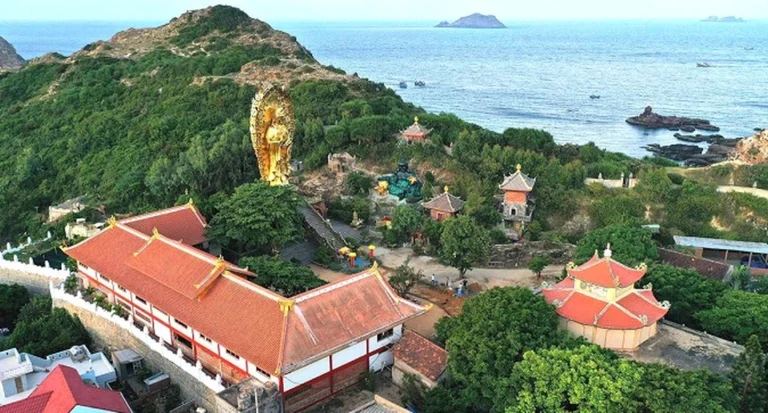
Standing proudly in the heart of the tranquil coastal city of Quy Nhon, the Twin Towers—also known by their ancient name, Kalan Hung Thanh—emerge as a steadfast stone witness to the golden era of the Champa Kingdom. This unique architectural complex occupies a gentle mound in Dong Da Ward, right alongside the peaceful Dao River as it flows toward Thi Nai Lagoon. Its feng shui setting embodies the sacred principles of indigenous culture: nestled along a spiritually auspicious vein of land and facing the abundant energy of waterways and the sea, it creates an atmosphere that is both serene and epically grand.
From a cultural-historical and archaeological perspective, the monument does not originate from the Dai Viet dynasty; rather, it is a masterpiece of religious architecture erected by Champa artisans between the late 12th and early 13th centuries. This marked a remarkable transitional period between the Binh Dinh and Thap Mam styles, when the Champa Kingdom achieved brilliant heights in the profound synthesis of Hinduism and Mahayana Buddhism while absorbing strong influences from magnificent Angkorian architecture. The name “Twin Towers” derives directly from the complex’s distinctive layout of two parallel towers: the larger tower, soaring roughly 20 meters high, symbolizes the masculine (yang) principle, while the slightly shorter tower beside it represents the feminine (yin) principle, reflecting the cosmology and primordial fertility beliefs of the ancient inhabitants.
Through centuries of historical upheaval and the ravages of time—from 1471, when the Vijaya region was officially incorporated into Dai Viet territory under Emperor Le Thanh Tong, through years of devastating warfare—the Twin Towers once lay in moss-covered ruins. Yet the enduring vitality of this heritage never faded. In the eyes of historians and heritage conservationists, the Twin Towers are far more than a pinnacle of fired-brick artistry featuring seamless masonry and intricate bas-reliefs of the mythical bird Garuda, celestial Apsara dancers, guardian deities, and undulating Naga serpents; they also preserve layered cultural histories, spiritually uniting the indigenous Cham community with generations of Vietnamese settlers.
Today, along the central Vietnam heritage trail, Quy Nhon’s Twin Towers have become an enriching cultural destination where visitors not only admire the majestic, contemplative beauty of ancient architecture but also connect with the sacred spirit of the former Do Ban land. Every brick, archway, and carved detail whispers the story of a brilliant civilization, affirming the timeless value of this monument within Vietnam’s cultural and historical tapestry.
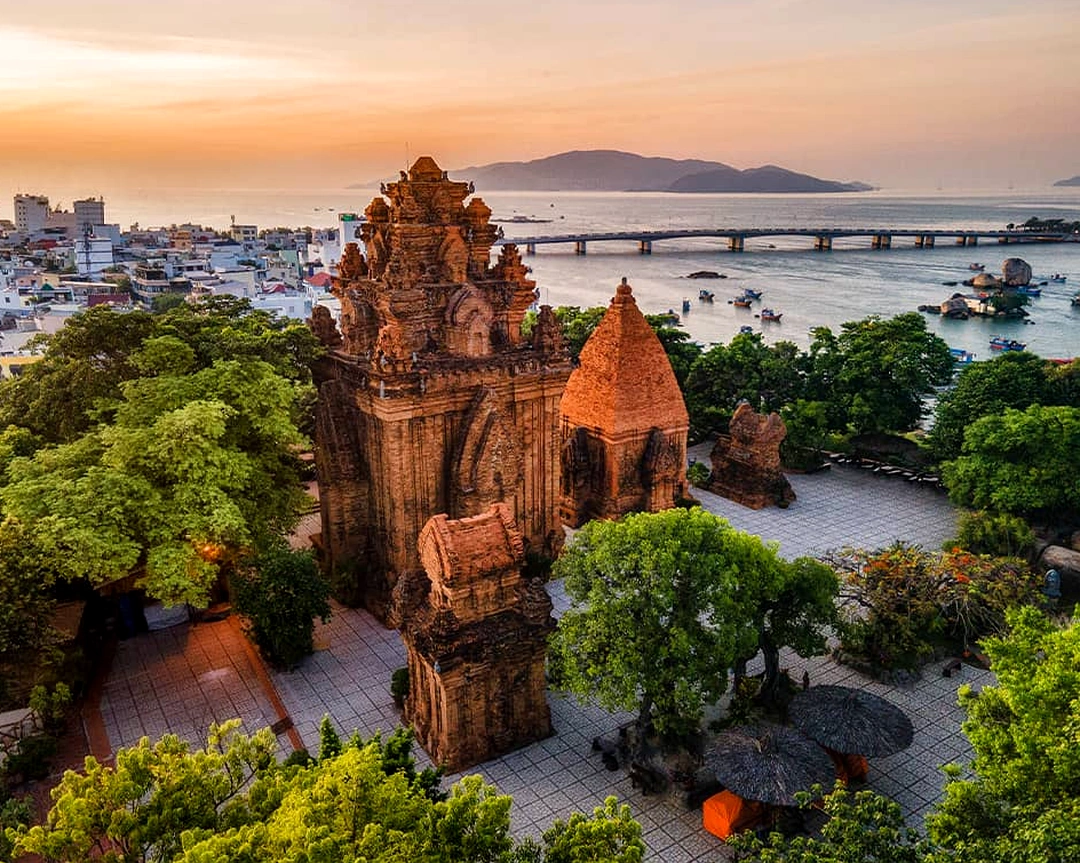
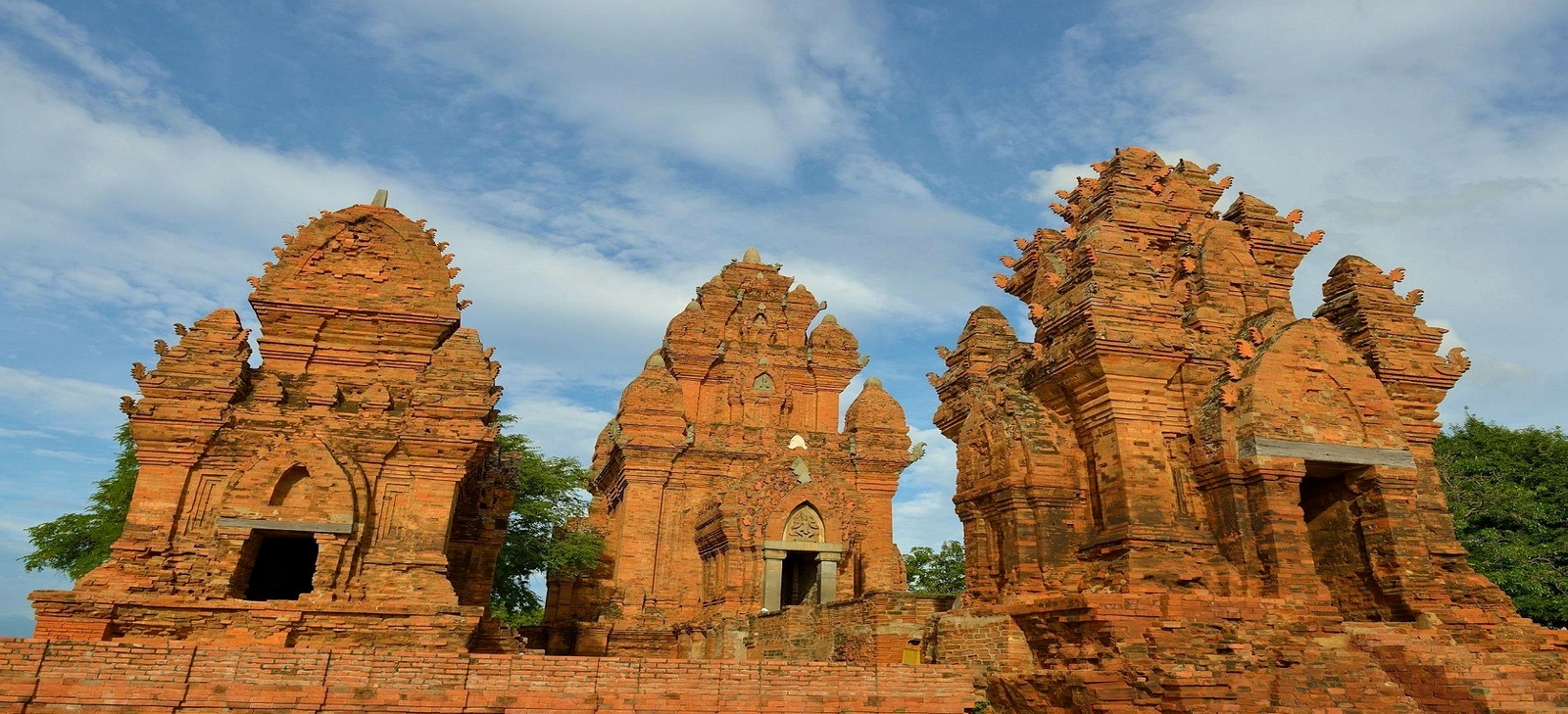
Tucked quietly along bustling Tran Hung Dao Street in central Quy Nhon, the Twin Towers complex appears like a grand open-air sculpture museum, bearing testament to the pinnacle of craftsmanship and architectural artistry in ancient Champa culture. The entire complex consists of two stately towers standing side by side like an inseparable pair, with the larger tower rising approximately 20 meters and the smaller one slightly lower at around 18 meters. Their setting is remarkably distinctive: resting on a level earthen mound surrounded by lush green lawns and towering coconut palms characteristic of the South Central Coast, the grounds evoke a tranquil yet timelessly mystical ambiance.
What truly captivates visitors about this architectural marvel is its extraordinary construction technique: the entire structure is built from dark, time-weathered fired bricks joined seamlessly together with a specialized adhesive whose exact formula still eludes modern scientists. Unlike typical Cham towers crowned with three-tiered roofs tapering toward the summit, the tops of Quy Nhon’s Twin Towers reflect the Angkor Wat artistic style, featuring square tower blocks with gently curved, exquisitely carved roof corners. From a distance, these seamless, gap-free brick walls look as though they were cast from a single monolithic block, standing resilient against wind and weather through centuries of history.
Stepping closer, visitors are awestruck by the vibrant bas-reliefs and decorative motifs carved directly into the brick surfaces. Signature Cham spearhead-shaped arched doorways are framed by stylized scrolling vine patterns. Notably, the cornices and tower corners showcase commanding carvings of sacred creatures, including the mythical bird Garuda spreading its wings in protection, graceful Apsara dancers caught mid-celebration, and the sinuous, powerful forms of multi-headed Naga serpents. Together, they compose a monumental sculptural tableau reflecting the deep cosmological worldview and rich spiritual life of the ancient Champa people.
To capture the most memorable shots in this magnificent setting, leading photographers and travel magazines recommend several “million-view” vantage points. The first classic angle is from the spacious southeastern courtyard, framing both parallel towers in full while using vibrant flower beds in the foreground to add depth, resulting in a composition that feels both grand and soulful. A second striking angle looks obliquely from the smaller tower toward the larger one, capturing the crisp carved details of the main arched entrance as sunlight filters through the foliage. For optimal lighting, early morning between 6:00 AM and 8:00 AM bathes the moss-kissed bricks in soft golden rays, creating a serene, sacred palette. Alternatively, at sunset, fading twilight casts warm shadows across the towers’ edges, lending a nostalgic, ethereal, and deeply evocative beauty to anyone who visits.
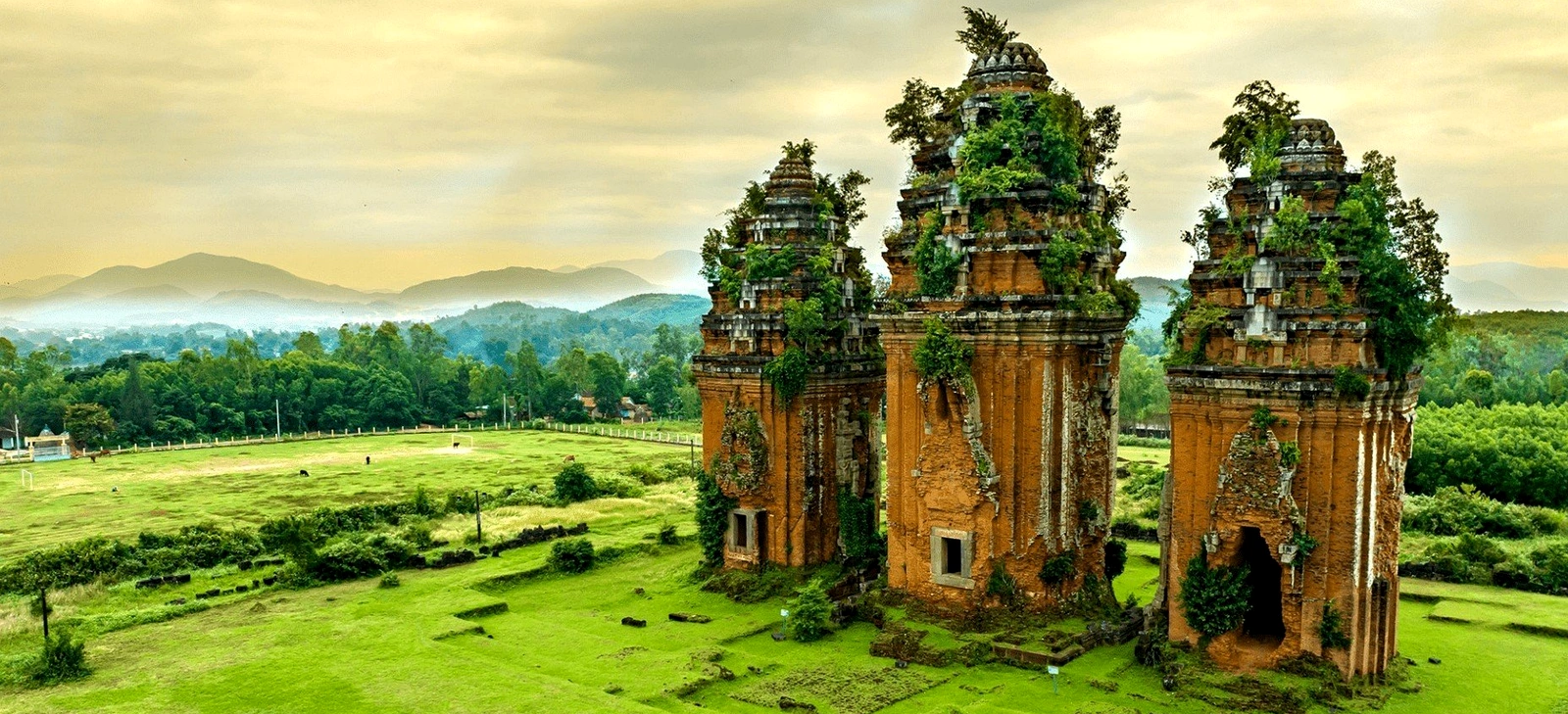
Arriving at the Quy Nhon Twin Towers complex on a sun-drenched golden afternoon, visitors are immediately drawn to the stately, contemplative beauty of the two timeless towers. From your very first steps along the tree-lined, blossom-filled grounds, a wave of awe washes over you. Standing before you is no mere inanimate historical relic, but a true masterpiece of crimson fired brick—where each brick is fitted tightly together using the mysterious bonding technique of the ancient Cham, standing proud amidst a modern city across centuries of history.
Exploring this site goes far beyond admiring its exterior architecture; it offers deeply rewarding on-site experiences. Visitors can stroll leisurely along winding stone-paved pathways and take in panoramic views of the towers soaring into the deep blue sky. Standing at the base of the larger tower, gazing up at the spearhead-curved arches, and tracing the intricate reliefs of Apsara dancers, guardian deities, Garuda birds, and Naga serpents, you can palpably feel the flow of history whispering through every weathered grain of brick.
The atmosphere inside the Twin Towers also carries a remarkably serene spiritual depth. Stepping into the dimly lit, mystical interior, the faint aroma of incense mingles with soft shafts of light filtering through the arched doorway, creating an air of profound sanctity and stillness. Here, visitors often pause for a few quiet moments to light an incense stick in reverence, pray for peace and good fortune, or simply let go of everyday worries while immersing themselves in the enigmatic spiritual world of the once-glorious Champa Kingdom.
After concluding your cultural and spiritual exploration, sampling the local cuisine around the Twin Towers will round out your visit to perfection. Surrounding the landmark is Quy Nhon’s celebrated culinary scene, brimming with bold flavors from sun-drenched Central Vietnam. Nothing beats savoring a steaming bowl of fish cake noodle soup (bun cha ca), rich with the natural sweetness of the sea, or enjoying crispy leaping-shrimp savory pancakes (banh xeo tom nhay) rolled with rice paper, fresh herbs, and a tangy, spicy-sweet dipping sauce. These local specialties, paired with the lasting impressions of awe and tranquility from the Twin Towers, create vivid, unforgettable memories for everyone visiting this land of martial arts and literary heritage.
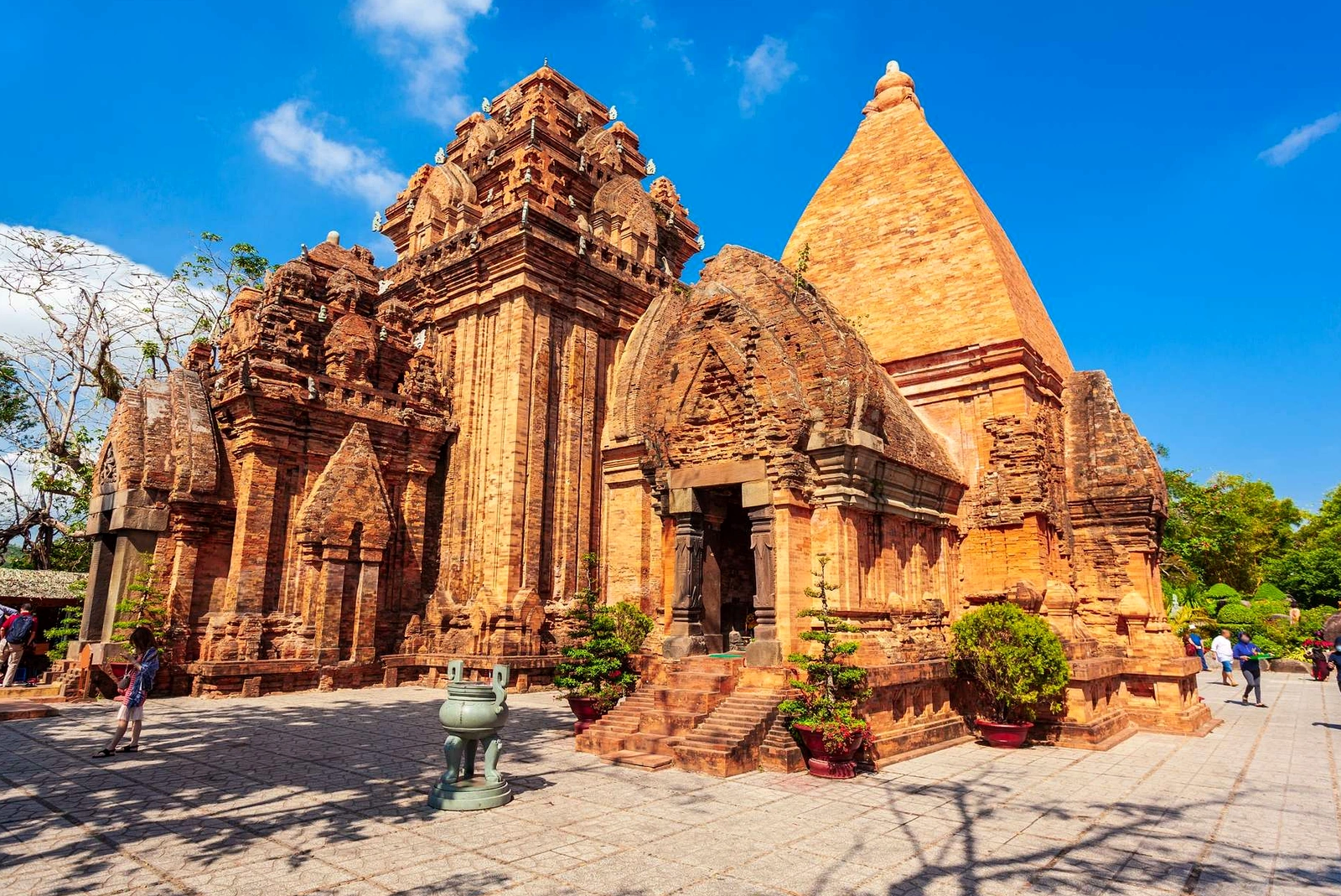
To ensure a smooth and rewarding visit to the Twin Towers architectural complex (Kalan Hung Thanh), travelers should keep in mind essential details regarding opening hours, ticket prices, transportation, and appropriate attire. As for operating hours, the monument welcomes visitors daily—including public holidays and Tet—typically from early morning (around 07:00) until late afternoon (around 17:30 or 18:00). Admission fees are very budget-friendly for both domestic and international visitors, set at a nominal rate to support heritage conservation (usually around 20,000 to 25,000 VND per adult), while children and students often enjoy discounted or free entry in accordance with site management regulations.
Regarding transportation and directions, the Twin Towers are located directly on Tran Hung Dao Street in Dong Da Ward, roughly 3 kilometers northwest of Quy Nhon city center. Thanks to the short distance and convenient road access, visitors can easily get there by motorbike, taxi, or ride-hailing motorbike service. If departing from the central square or Quy Nhon Beach, simply follow the main Nguyen Tat Thanh extension road, turn onto Tran Hung Dao Street, and continue straight for a short stretch—you will spot the majestic ancient towers right beside the road, making them effortless to find with no risk of getting lost.
The best times of day to visit the Twin Towers are early morning (from 07:30 to 09:30) or late afternoon (from 15:30 to 17:00). During these windows, the sunlight is gentle and casts diagonal rays across the fired-brick architecture, bringing out a rich, mystical crimson hue ideal for sightseeing, historical appreciation, and artistic photography. Seasonally, the dry season (from March to September each year) offers sunny skies and minimal rainfall, making it the most convenient time to combine this heritage site with other scenic attractions across the coastal city.
Because the Twin Towers are an ancient religious monument of deep spiritual significance, visitors should dress respectfully and modestly, avoiding overly short or revealing outfits out of respect for the sacred space and local beliefs. Additionally, as the grounds feature high brick steps, uneven architectural corners, and natural earth pathways, wearing comfortable sneakers or flat shoes is strongly recommended over high heels. Finally, always follow site regulations—never touch the ancient brick walls directly, refrain from climbing on the tower structures, and help keep the grounds clean to preserve this thousand-year-old cultural treasure for generations to come.
To enjoy a seamless holiday and experience the full splendor of the Twin Towers without worrying about transportation logistics, entrance tickets, or itinerary planning, travelers can opt for VDS Travel’s premium all-inclusive Quy Nhon tour packages. Each itinerary is thoughtfully timed for photo stops when the scenery is at its most radiant, accompanied by knowledgeable local guides well-versed in regional culture and top-tier hotel and dining standards.