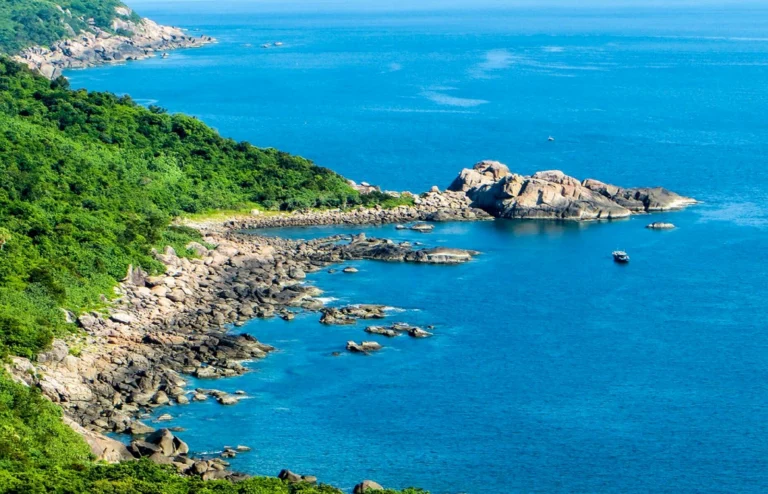
Nestled within the serene embrace of the golden sands of Ghenh Rang winding along the Quy Nhon coastline, Ngoc Hoa Monastery stands as a unique spiritual landmark where the millennia-old rhythm of crashing waves blends seamlessly with the resonant heartbeat of Dang Trong history. Geographically, the monastery is located in Ghenh Rang Ward, Quy Nhon City, Binh Dinh Province—an exceptional feng shui setting backed by magnificent geological rock formations sculpted by Mother Nature over millions of years, facing directly out onto the deep blue waters of Quy Hoa Bay. This classic “mountain-backed, sea-facing” position not only provides a tranquil, secluded sanctuary ideal for monastic practice, but also creates an architectural landscape deeply marked by the harmony between forested mountains and ocean waves.
Turning back the clock to the mid-20th century, Vietnam’s religious history recorded a major milestone when the Mendicant Sect (He phai Khat si)—an indigenous Buddhist tradition founded by Patriarch Minh Dang Quang in 1944 in Southern Vietnam—expanded its teachings into the central region. Amid the turbulent times under the Republic of Vietnam in the Year of the Fire Rooster (1957), Most Venerable Thich Giac An, one of the Patriarch’s most eminent disciples, arrived in the martial land of Binh Dinh and chose the unspoiled sandy shore of Ghenh Rang as his base for propagating the Dharma. From a humble thatched-roof, earthen-walled hermitage exposed to coastal winds and sea spray, through compassionate vows and the united devotion of monks, nuns, and lay Buddhists, he founded the monastery and laid the groundwork for the majestic Ngoc Hoa Monastery we see today.
The name “Ngoc Hoa” itself embodies the profound philosophy of the sect: “Ngoc” (Jade) symbolizes an enlightened, pure bodhi mind unstained by worldly desires, while “Hoa” (Harmony) reflects the spirit of the Six Harmonies and the graceful fusion of Mendicant Buddhism with the centuries-old spiritual and cultural traditions of Binh Dinh, renowned as a land of martial arts and literature. Unlike ancient pagodas belonging to the Linji (Lam Te) or Caodong (Tao Dong) Zen lineages that took root in the 17th and 18th centuries under the Nguyen Lords, the arrival of Ngoc Hoa Monastery brought a fresh spirit, affirming the richness and inclusivity of coastal religious life.
Through the vicissitudes of history and time, this legacy has been carried forward by senior monastics, notably the late Most Venerable Nun Thich Nu Hue Lien, who dedicated immense effort alongside the monastic community to restoring and preserving this sacred space. In particular, the monumental twin statue of Avalokiteshvara (Quan The Am) gazing out toward the open sea is not merely a contemporary architectural landmark of high artistic value, but also a spiritual anchor watching over local fishermen venturing out to sea. Honored by cultural authorities, the press, and travelers as one of Binh Dinh’s signature cultural and tourism heritage sites, Ngoc Hoa Monastery remains a sacred place of reflection where a proud past and a serene present converge along an eternally wave-washed shore.

Situated along the Ghenh Rang sandy shore in Quy Nhon City, Binh Dinh Province, Ngoc Hoa Monastery emerges as a peaceful realm where earth, sky, ocean, and distinctive spiritual architecture unite in complete harmony. Blessed with sacred terrain—its back firmly anchored against curving mountain cliffs and its front looking straight out across the vast, wave-swept waters of Quy Nhon—the monastery exudes both grandeur and deep stillness. From the very first step inside, visitors feel a remarkable shift in atmosphere: all the noise and hustle of the outside city seem to fade away, giving way to brisk sea breezes, the endless murmur of waves, and clean air faintly scented with incense.
The most iconic and captivating architectural centerpiece of Ngoc Hoa Monastery is the towering twin statue of Avalokiteshvara (Quan The Am) looking out toward the open ocean. Meticulously sculpted by skilled artisans, the double statue depicts two Bodhisattvas standing back-to-back: one facing south with a gentle expression watching over coastal fishermen, and the other facing north with a compassionate gaze offering universal salvation to all sentient beings. Every architectural detail, from the soft, flowing folds of their robes to their intricately carved crowns, radiates sacred majesty. This pinnacle of sculptural art not only affirms the deep spiritual values of the Mendicant Sect, but also creates an artistic masterpiece set against the dramatic natural scenery of Binh Dinh.
To capture the most artistic shots, professional photographers and seasoned travelers frequently share two must-visit “million-dollar view” angles at the monastery. The first spot lies right in the courtyard looking straight up from the base of the twin Buddha statue: from here, your lens can capture the full grandeur of the colossal monument rising into the sky, paired with the deep blue sea below to create remarkable spatial depth. The second angle runs along the seaside walkway inside the monastery grounds, where visitors can frame the rugged, unspoiled rock formations of Ghenh Rang in the foreground while encompassing the entire dignified silhouette of the monastery in a sweeping, open composition.
When it comes to the ideal lighting for soaking in the scenery and taking unforgettable photographs, seasoned travelers recommend visiting Ngoc Hoa Monastery at sunrise or sunset. As dawn casts its first golden rays across the surface of the twin Avalokiteshvara statue, the entire monastery grounds glow with a pure, luminous, and uplifting beauty. Conversely, at sunset, twilight hues of amber and crimson wash across the sky and the waters of Quy Nhon, creating a mystical, contemplative scene imbued with Zen serenity. This seamless blend of dramatic nature, distinctive spiritual architecture, and exquisite light makes Ngoc Hoa Monastery a scenic masterpiece that captivates everyone who visits.
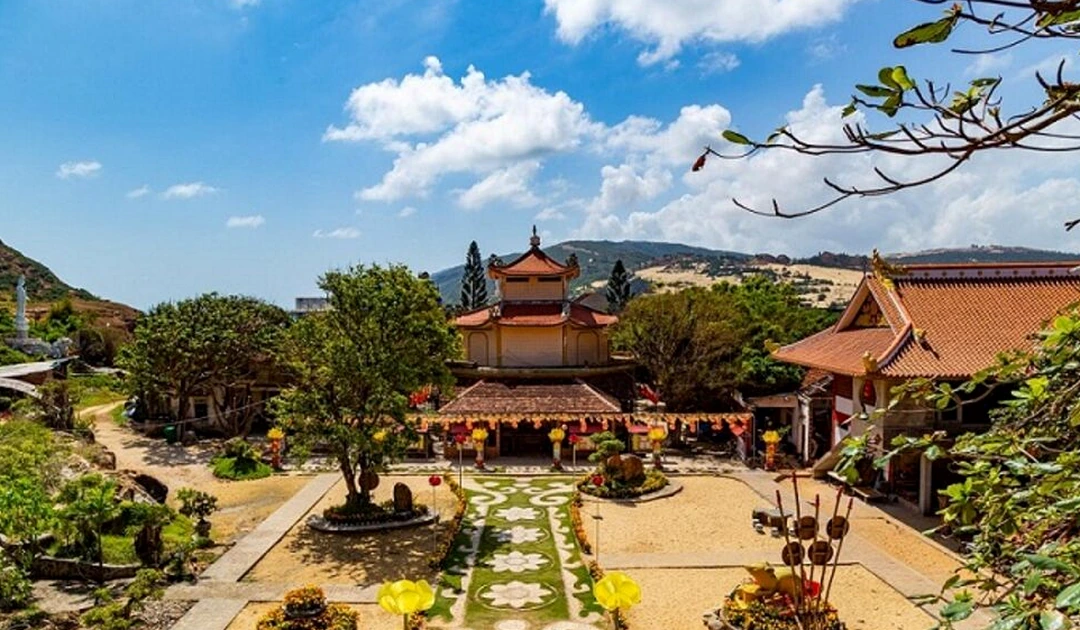
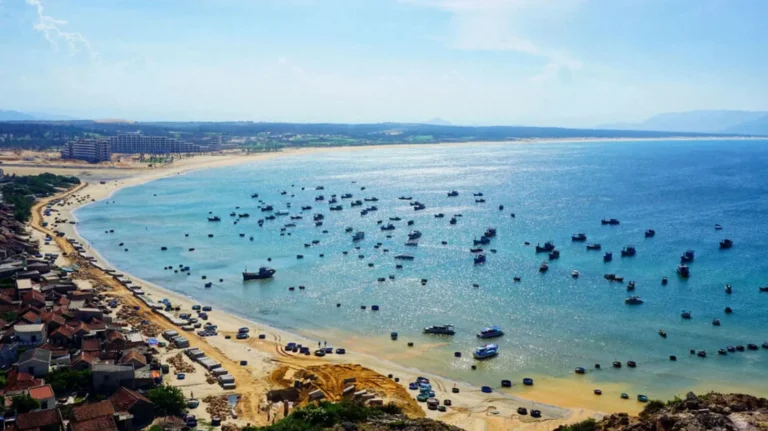
Stepping onto the grounds of Ngoc Hoa Monastery along the poetic slopes of Ghenh Rang, your journey of discovery goes far beyond dry historical records or timelines dating back to 1957. The site opens up a rewarding hands-on experience where dramatic nature and local culture intertwine, leaving visitors with unforgettable emotions. Early in the morning, the journey begins by climbing the winding stone steps up the hillside while breathing in crisp, salty sea breezes blowing in from Quy Nhon Bay. Any lingering urban fatigue quickly melts away, replaced by a refreshing sense of freedom as your gaze sweeps across an endless expanse of blue sea and sky, dotted with bobbing basket boats and a crescent of golden sand curving along the surf.
Beyond exploring on land, an unmissable way to appreciate the monastery’s full splendor is renting a boat to admire the coastline from offshore. Seen from the crystal-clear water, the monastery rises majestically against the sky, crowned by the towering twin statue of Avalokiteshvara gazing out over the East Sea. Gently swaying with the rhythm of the waves while looking up at the twin statue shimmering in the early morning sunlight evokes a rare sense of awe—a sublime union of sacred craftsmanship and the untamed, majestic nature of Binh Dinh.
Returning ashore to step into the spiritual sanctuary inside the monastery, visitors enter a realm of quietude completely removed from the bustling outside world. Incense-scented air and the resonant tolling of temple bells mingle with the soft murmur of waves against the rocks below, calming every restless thought. Beneath the shade of ancient trees, offering incense before the Buddha statues and learning about the Mendicant Sect’s guiding spirit of “Carrying on the Dharma of Shakyamuni Buddha” brings moments of profound inner stillness that touch the depths of the soul.
After an emotionally enriching spiritual visit, vibrant local culture continues to welcome travelers through a renowned culinary haven right around the attraction. Just below Ghenh Rang and along Quy Nhon’s coastal roads, the mouthwatering aroma of freshly caught seafood—such as king crab (cua huynh de), crisp sweet sea snails (oc huong), and rich central-style fishcake noodle soup (bun cha ca)—instantly awakens all the senses. Savoring a bowl of crunchy jellyfish noodle soup (bun sua) or crispy, sizzling jumping-shrimp pancakes (banh xeo tom nhay) amid the warm, cheerful chatter of down-to-earth locals is the perfect finale to a deeply fulfilling trip.
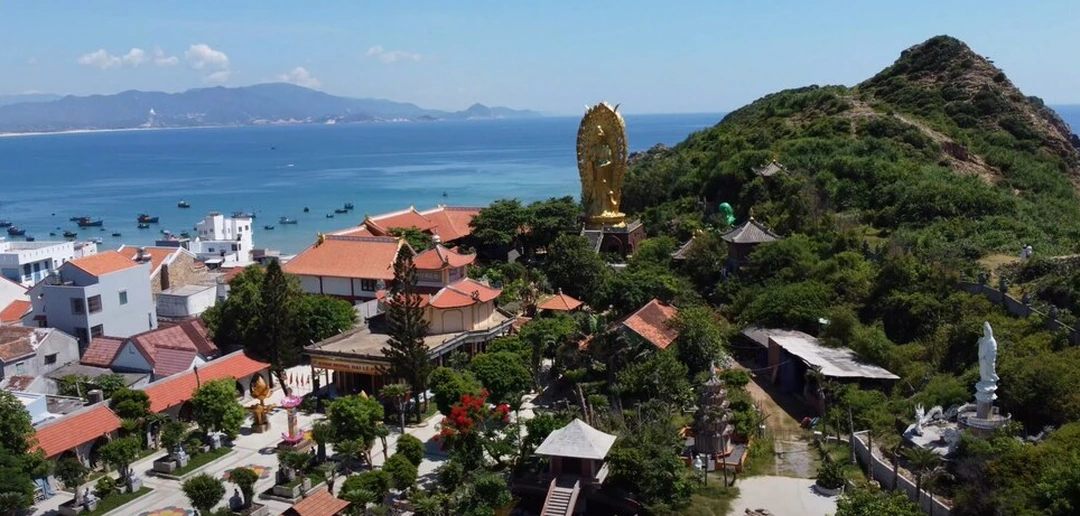
Located in Quy Nhon City, Binh Dinh Province, Ngoc Hoa Monastery continues to rank among the top spiritual and coastal destinations drawing Buddhist devotees and travelers from near and far. To ensure your pilgrimage and sightseeing trip goes smoothly and meaningfully, knowing a few practical details beforehand is essential. This handy pocket guide provides up-to-date information to help you prepare thoroughly for exploring this landmark monastery of the Mendicant Sect.
Regarding opening hours, Ngoc Hoa Monastery welcomes visitors and worshippers daily from 06:00 AM to 06:00 PM. Guests are free to offer incense, stroll the grounds, and admire the twin Avalokiteshvara monument. Notably, there is no admission fee—this free-entry policy is maintained so that people from all walks of life and international visitors alike can easily experience the distinctive spiritual and cultural heritage of Binh Dinh.
For transportation and routes, starting from downtown Quy Nhon, it takes only about 15 to 20 minutes to cover the roughly 8 km distance to the Ghenh Rang sandy shore where the monastery sits. The best and most scenic route follows the main An Duong Vuong extension, continuing along Vo Nguyen Giap Boulevard or Xuan Dieu Street toward Thi Nai Bridge before turning toward the Phuong Mai Peninsula and following clear directional signs to the monastery. You can travel by motorbike to enjoy the coastal scenery at your own pace, drive a private car, or take a taxi at a very reasonable fare.
Because the monastery is both a sacred religious site and situated right beside coastal terrain, sand dunes, and the rocky slopes of Ghenh Rang, visitors should adhere strictly to dress etiquette. Wear modest, respectful clothing suited to the solemn atmosphere of Mendicant Buddhism. Additionally, since you will be walking up stone steps and across outdoor grounds, wearing flat shoes, supportive sneakers, or non-slip strapped sandals will make exploring comfortable and safe on uneven terrain.
The best time of year to visit Ngoc Hoa Monastery is from March to September. This coincides with Binh Dinh’s dry season, bringing sunny skies, clear weather, turquoise waters, and white sands ideal for getting around and taking photos beside the seaside twin statue of Avalokiteshvara. Aim to visit early in the morning between 07:00 AM and 09:00 AM or in the late afternoon after 03:30 PM to enjoy the tranquil atmosphere, avoid the midday coastal heat, and witness the enchanting glow of sunset settling over the peaceful bay.
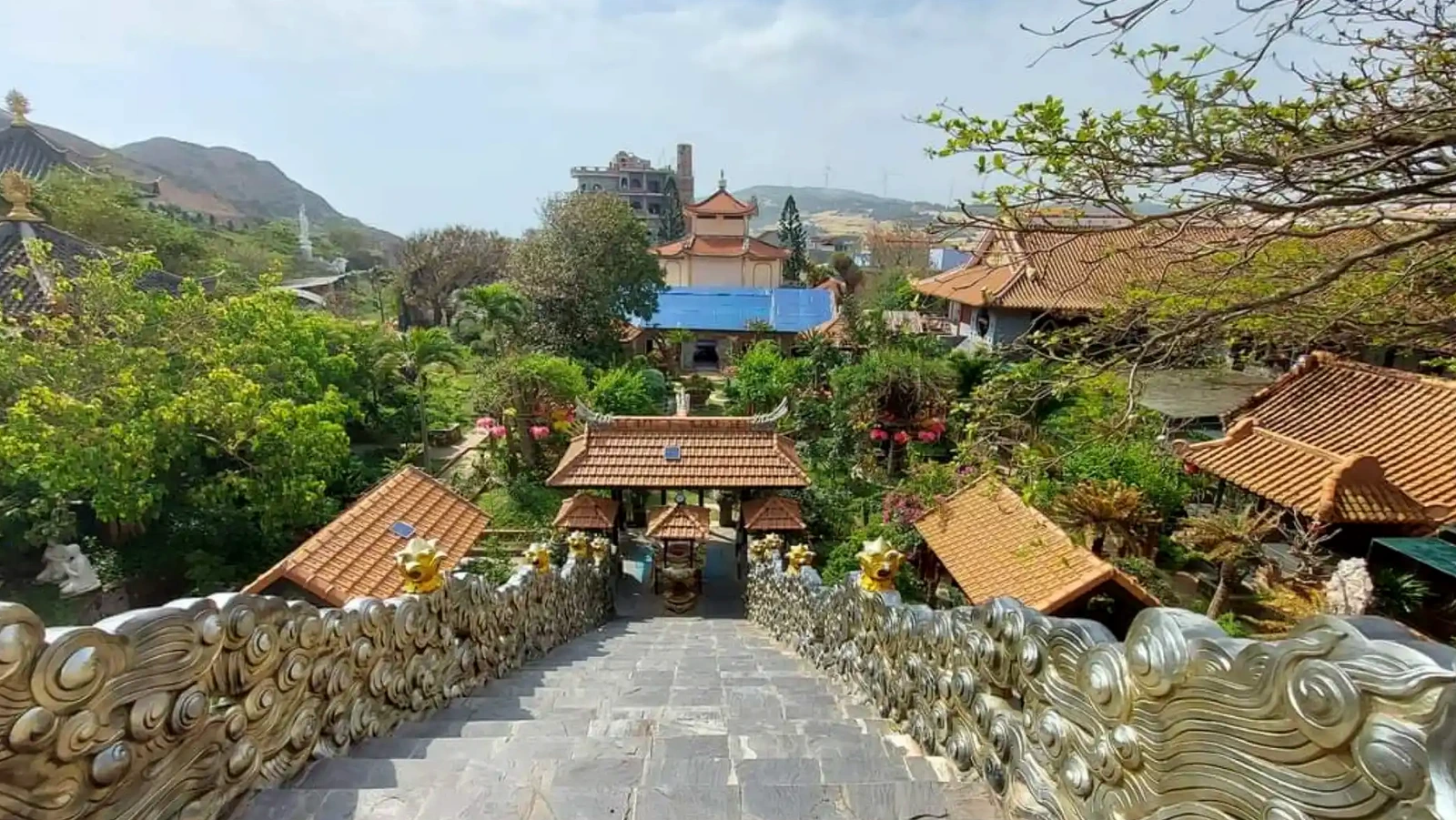
To enjoy a seamless getaway and take in the full beauty of Ngoc Hoa Monastery without worrying about transportation, ticket arrangements, or itinerary planning, travelers can choose VDS Travel’s premium all-inclusive Quy Nhon tour packages. Each itinerary is thoughtfully timed for sightseeing when the scenery is at its most radiant, accompanied by knowledgeable local guides well versed in regional culture alongside top-tier hotel and dining standards.