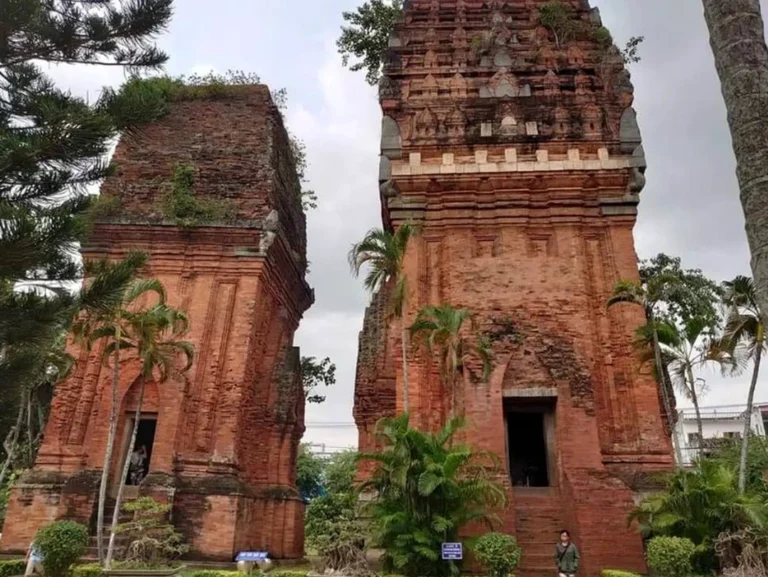
Stretching gracefully yet majestically along the Phuong Mai Peninsula, the Phuong Mai Sand Dunes system in Quy Nhon City, Binh Dinh Province, stands out as a rare geological wonder of Vietnam’s central coastal strip. In terms of spatial coordinates and feng shui topography, this complex boasts a unrivaled position: to the east, it faces directly out onto the vast East Sea swept by ocean breezes; to the west, it embraces the tranquil waters of the thousand-year-old Thi Nai Lagoon; while its back rests against the sturdy rocky Phuong Mai Mountain range (locally known as Hon Nguoc), acting as a natural screen shielding the frontier of the historic Dang Trong region. This subtle harmony of mountains, lagoon, and sea creates a convergence of auspicious terrain, uniting majestic natural beauty with the deep cultural heritage of an ancient land.
Viewed through the lens of toponymy and human history, the modern name “Phuong Mai Sand Dunes” is in fact the continuation and re-identification of a land that once left significant marks in the ancient records of the Nguyen Dynasty. During the reigns of Emperors Gia Long and Minh Mang, this area belonged to Hung Hoa Canton, Phu Cat District, Quy Nhon Prefecture. This colossal complex of shifting sand dunes did not form overnight; rather, it is the miraculous result of marine-continental sediment accretion spanning tens of thousands of years during the Quaternary (Holocene) epoch, where year-round northeast monsoons and the fierce central sun have sculpted and reshaped undulating slopes that shift their contours with every changing wind season.
The human imprint etched upon these pristine white and golden dunes is closely tied to the nation’s heroic southward expansion (Nam Tien), particularly starting from the milestone year of 1471 when King Le Thanh Tong personally led a campaign against Champa, establishing Quang Nam Circuit and Quy Nhon Prefecture. From the 15th and 16th centuries onward, generations of Vietnamese settlers and Cham communities worked side by side to reclaim land, establish hamlets, and live intermingled along Thi Nai Lagoon and at the foot of the Phuong Mai dune system, cultivating a humble yet resilient fishing-village culture. Through countless vicissitudes of time, this place has served not merely as a living space, but also as a witness to glorious chapters of national history.
Notably, in the late 18th century, the Phuong Mai Peninsula and its sand dunes became a vital strategic battlefield linked to the illustrious Tay Son Dynasty. With keen strategic foresight, Emperor Quang Trung (Nguyen Hue) stationed defensive fortifications and heavy artillery here to tightly control the Thi Nai estuary, safeguarding the capital at Do Ban as well as Emperor Thai Duc (Nguyen Nhac) at Cha Xi Citadel. These untamed slopes once trembled with the roar of cannon fire and witnessed fierce, tragic naval battles between the Tay Son forces and Nguyen Anh’s army between 1792 and 1801. Moving into the 19th century under the Nguyen Dynasty, the strategic importance of the seaport and the shifting sands of Phuong Mai continued to be reinforced and meticulously documented in official imperial histories such as *Dai Nam Thuc Luc* (Veritable Records of the Great South) and *Dai Nam Nhat Thong Chi* (Comprehensive Gazetteer of the Great South).
Today, in the eyes of heritage researchers and cultural authorities, Phuong Mai Sand Dunes is more than just a scenic spot for tourism—it is a precious geological and cultural heritage site that deserves respect and intact preservation. Its allure lies in the untamed, serene, and imposing grandeur of endless sand ridges, where visitors and scholars alike can touch the sedimentary layers of time, listen to the whisper of sea winds, and feel the sacred spirit of the land distilled over centuries of history.
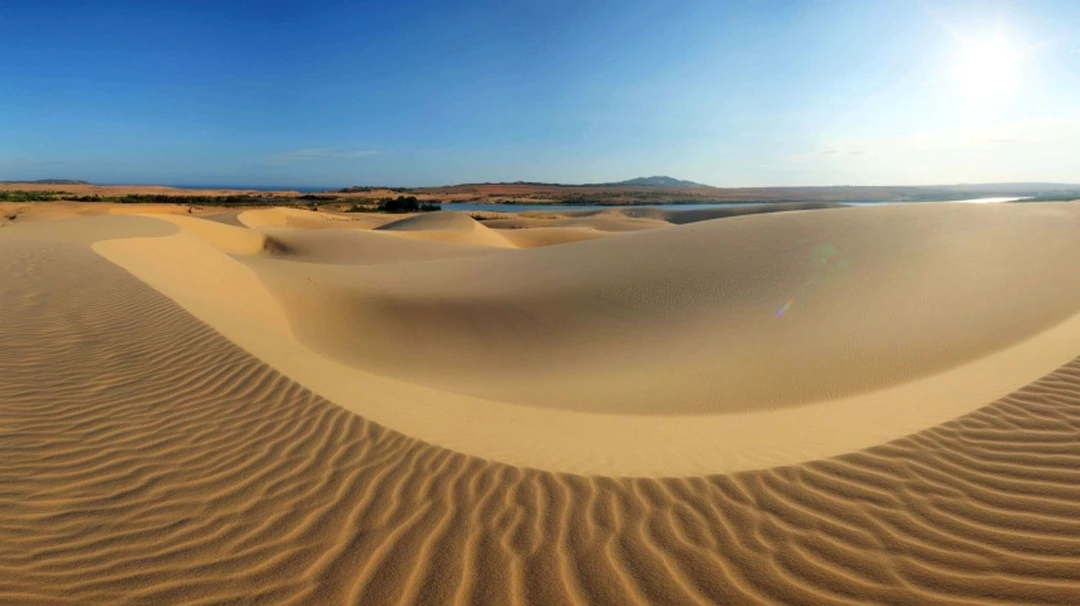
Extending along the pristine peninsula, the geological complex of Phuong Mai Sand Dunes rises like a monumental natural sculpture, where gleaming golden slopes curve fluidly to the rhythm of the open sea. The terrain of the dunes features a unique topography with steep gradients, including sheer sand faces soaring from several dozen to over a hundred meters above sea level, forming basin-like hollows and sharp, imposing “dinosaur-back” ridges. After tens of thousands of years of erosion by salty sea winds blowing directly off Quy Nhon Bay, the sand surface is in constant motion, continually recreating graceful, intricate curves that never repeat themselves at any moment of the day. Under the radiant central Vietnamese sunshine, every fine grain of sand sparkles with multidimensional light, interwoven with the deep blue of the distant ocean and the lush green of windbreak casuarina groves, composing a breathtaking natural panorama that is at once majestic and wistfully serene.
For professional photographers and avid travelers alike, choosing the right vantage points and the golden-hour light of dawn or dusk is the key to capturing the soul of this landscape. The premier photo spot is perched at the highest point of the central sand ridge, offering an unobstructed 360-degree panorama sweeping across the expansive Thi Nai Lagoon to the distant horizon of the East Sea. Here, at daybreak as the sun rises over the ocean (roughly between 5:00 AM and 6:00 AM), the first rays cast a magical color transition across the dunes—shifting from cool grayish-white to warm honey gold—while throwing every crisp, wind-carved ripple into sharp relief. Photographers typically favor wide-angle lenses paired with silhouette techniques that contrast human figures against the vast expanse to accentuate the sheer scale of nature.
The second artistic photo spot lies in the wind-sheltered basin on the western slope, where deeply sunken dunes form calm microclimatic valleys cradling low-growing, drought-resistant greenery. The ideal window to shoot here is between 4:00 PM and 5:00 PM, when the late afternoon sun dips toward the mainland, casting long, slanted streaks of amber-orange light across the hillsides. At this hour, depth of field reaches its peak, creating dramatic plays of light and shadow across the rippled sand. Every frame captured here exudes stillness, raw beauty, and contemplation, affirming the timeless aesthetic appeal of one of central Vietnam’s finest geological sand wonders.
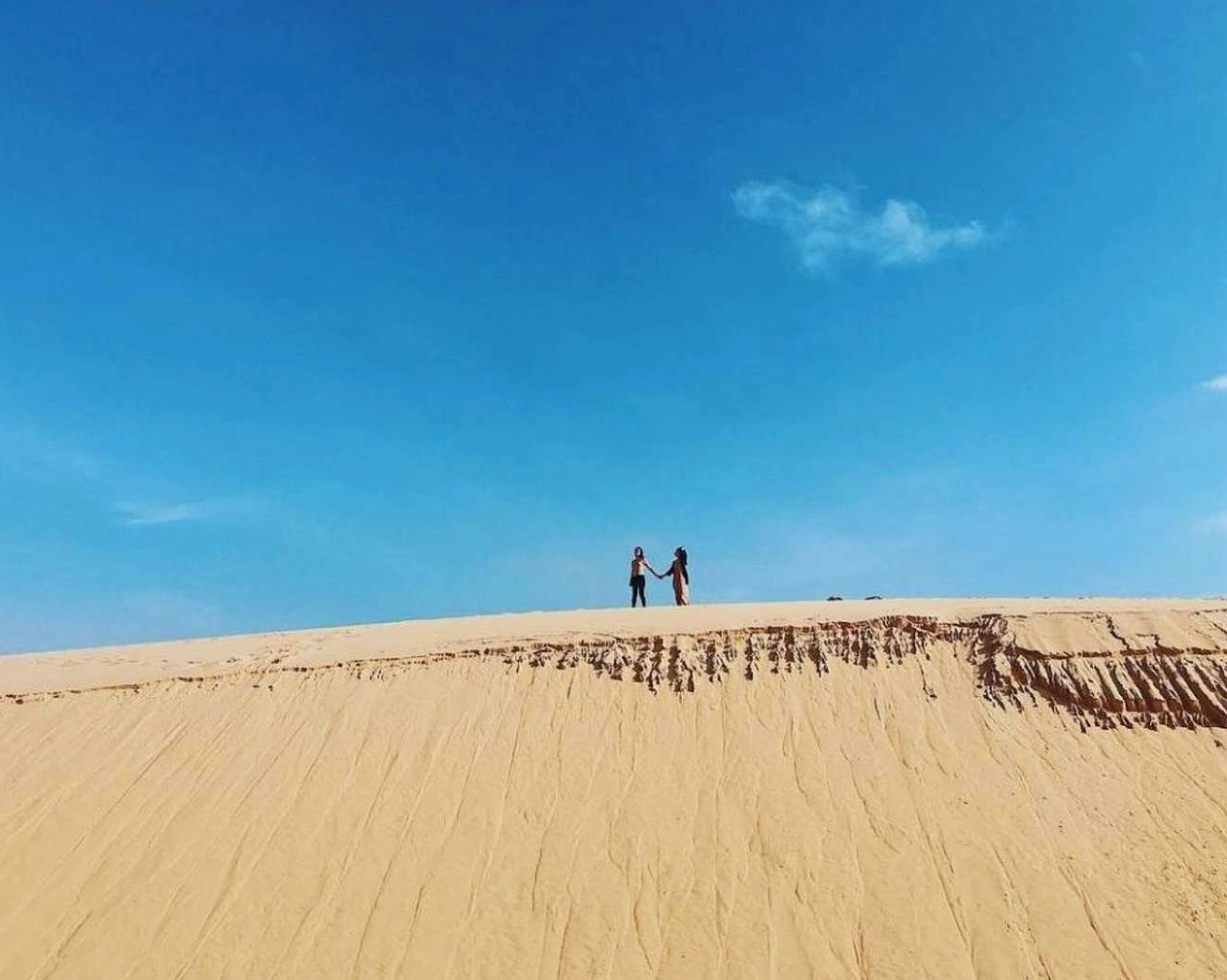
Stepping onto the geological complex of Phuong Mai Sand Dunes, visitors are immediately drawn into a hands-on adventure that is both challenging and deeply rewarding, where untamed nature and local culture intertwine. The signature inaugural activity is conquering the steep, rolling slopes that rise and fall like giant golden waves across an open expanse. Climbing to the highest crest of the dunes demands patience and stamina, yet the reward is a breathtaking sense of awe as you gaze out across the horizon. From this vantage point, the entire natural tapestry of Quy Nhon unfolds in pristine splendor: to the east stretches the endless blue sea with white-capped waves caressing sandy shores, while to the west lies mirror-calm Thi Nai Lagoon, the historic stage of the Tay Son Dynasty’s celebrated campaigns.
Leaving the golden slopes behind, the journey continues onto the tranquil waters of Thi Nai Lagoon with a poetic scenic boat ride. Seated in a small wooden boat swaying gently to the oars of a local fisherman, you feel as though you are drifting back to the 15th and 16th centuries, immersing yourself in the waterborne rhythm of life shared by Vietnamese and Cham communities for generations. The stillness of the lagoon at sunset—when the dying sun paints the sky crimson and casts silhouettes of traditional bamboo fish traps across the water—offers a priceless moment of inner peace. Beyond simple sightseeing, it is a reflective pause to pay tribute to a storied battleground where peasant-born heroes once fought valiantly to defend the realm.
Beyond landscape and history, Phuong Mai’s vibrant local culture is richly preserved in the coastal region’s celebrated culinary specialties. Fresh off your trek across the white and golden sands, you can treat your palate to dishes brimming with the flavors of the sea and Thi Nai Lagoon—from sweet, freshly caught seafood like crab, prawns, and squid grilled with fiery chili salt, to a steaming bowl of savory Quy Nhon fishcake noodle soup (*bun cha ca*) served with crisp fresh herbs. Every dish reflects the warmth and sincerity of the people of the “Land of Martial Arts” (Binh Dinh). This seamless blend of awe-inspiring scenery, heroic history, and authentic culinary culture transforms Phuong Mai Sand Dunes into a vivid destination that leaves a lasting impression on everyone who visits.

Located on Phuong Mai Peninsula in Nhon Ly Commune, Quy Nhon City, Binh Dinh Province, Phuong Mai Sand Dunes ranks among the most spectacular natural landmarks in central Vietnam. To ensure a smooth and fulfilling excursion, keep these essential practical details regarding visiting hours, costs, and directions in mind.
Regarding opening hours, the sand dunes welcome visitors freely all day, every day of the week, with no strict closing times. However, the best windows to visit are early morning from 5:00 AM to 7:30 AM to catch a brilliant sunrise, or late afternoon from 3:30 PM to 6:00 PM to watch the sun set over Thi Nai Lagoon. Avoid visiting between 11:00 AM and 2:00 PM, when surface sand temperatures soar and intense midday glare can quickly cause exhaustion. As for admission, entry to this scenic attraction is completely free for both domestic and international travelers.
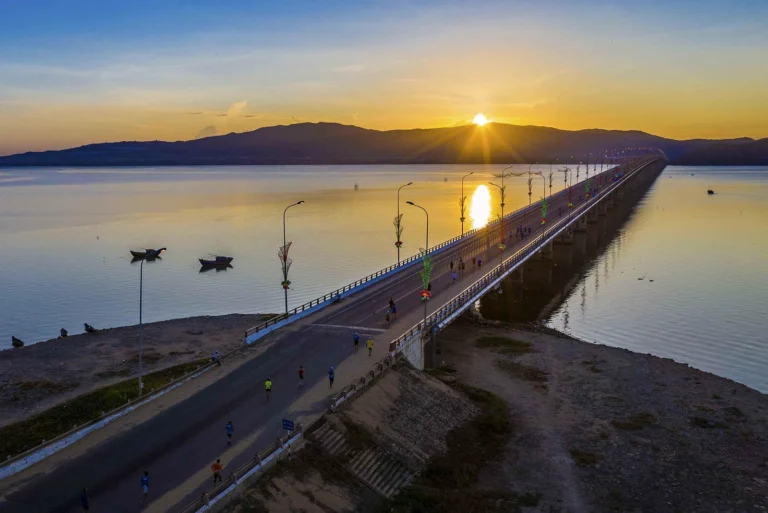
Getting from central Quy Nhon to Phuong Mai Sand Dunes is straightforward along well-paved, modern roads. Departing from the city center, cross the Thi Nai Bridge—once the longest sea-crossing bridge in Vietnam—then turn left into Nhon Hoi Economic Zone and continue straight along the main highway running down Phuong Mai Peninsula for about 20 kilometers until you reach the dunes. The best way to enjoy this scenic route is by motorbike or private car, allowing you to stop and admire the views at your own pace; alternatively, taxis and ride-hailing services are convenient options for families and small groups.
Given the coastal shifting-dune terrain with steep inclines and strong winds, choose practical, breathable activewear. Light, airy clothing paired with sturdy athletic shoes—or going barefoot for easier traction in soft sand—works best, alongside sunglasses, a wide-brimmed hat, and sunscreen. Additionally, when visiting nearby historical relics, ancient fishing villages, or culturally significant sites on the peninsula, please observe respectful etiquette and dress modestly to preserve the solemnity of these spaces and protect the sustainable heritage ecosystem.

To enjoy a seamless getaway and experience the full splendor of Phuong Mai Sand Dunes without worrying about transportation, ticket bookings, or itinerary planning, travelers can opt for VDS Travel’s premier all-inclusive Quy Nhon tour packages. Every itinerary is thoughtfully timed to put you at the best photo spots when the scenery is at its most radiant, accompanied by knowledgeable local guides and top-tier hotel and dining standards.