Nestled within the scenic Ghenh Rang – Tien Sa complex, Queen’s Beach (Bai Tam Hoang Hau) emerges as a one-of-a-kind geological landmark along Vietnam’s South Central Coast, where the sky and sea of Quy Nhon converge in untamed majesty and rich historical resonance. From a feng shui and topographical perspective, the site boasts a classic “mountain-backed, sea-facing” posture, where tens of thousands of boulders and pebbles—sculpted over eons by nature and relentless ocean waves—have been polished into giant, smooth, egg-shaped stones stacked together like an ancient stone formation embracing emerald-green waters. To geologists and heritage conservationists, this stretch of coastline is far more than a rare ecological wonder; it is an open-air natural museum preserving millions of years of geomorphological evolution along Vietnam’s continental shelf.
Tracing back through the currents of history, the Ghenh Rang coast and Phuong Mai Peninsula witnessed centuries of cultural accretion and exchange, from the flourishing Champa era (11th to 15th centuries) to the Dai Viet dynasties. Under the Le and Nguyen dynasties, these waters bore a humble folk name reflecting their treacherous surf and submerged rocks. Yet the cultural legacy of this landmark took on a romantic, poignant chapter through its deep connection to the brilliant yet ill-fated poet Han Mac Tu. During the final years of his life (1938–1940), the serene, mystical, and deeply poetic atmosphere of Ghenh Rang became an endless wellspring of inspiration for his tormented yet luminous verses—ensuring that the adjacent Poet’s Hill (Doi Thi Nhan) remains a sacred sanctuary preserving the soul of Vietnam’s New Poetry movement.
The regal allure and historic name “Queen’s Beach” stem from a refined yet true anecdote from the Nguyen Dynasty. According to historical records and local oral tradition, during her travels through Central Vietnam, Empress Nam Phuong—the last empress consort of feudal Vietnam, renowned for her grace and dignified bearing—chose this secluded, poetic cove as her private royal bathing beach. From those royal footsteps and enduring imprint, the name Queen’s Beach was officially born, replacing earlier folk monikers and elevating this landscape into a nationally recognized cultural and historical monument cherished across generations.
Today, a journey to Queen’s Beach is far more than a typical nature excursion; it is a spiritual reunion between modern travelers and the past. Standing before towering cliffs weathered by ocean winds, listening to echoes of the ancient Champa era, reminiscing about the regal silhouette of Empress Nam Phuong, or pausing in quiet tribute to the poetic flame of Han Mac Tu, visitors absorb the full essence of a land steeped in cultural sediment. Here, every egg-shaped stone, every crashing wave, and every inch of Ghenh Rang tells an enduring story of a heroic, romantic Quy Nhon that holds an irreplaceable place on Vietnam’s heritage map.
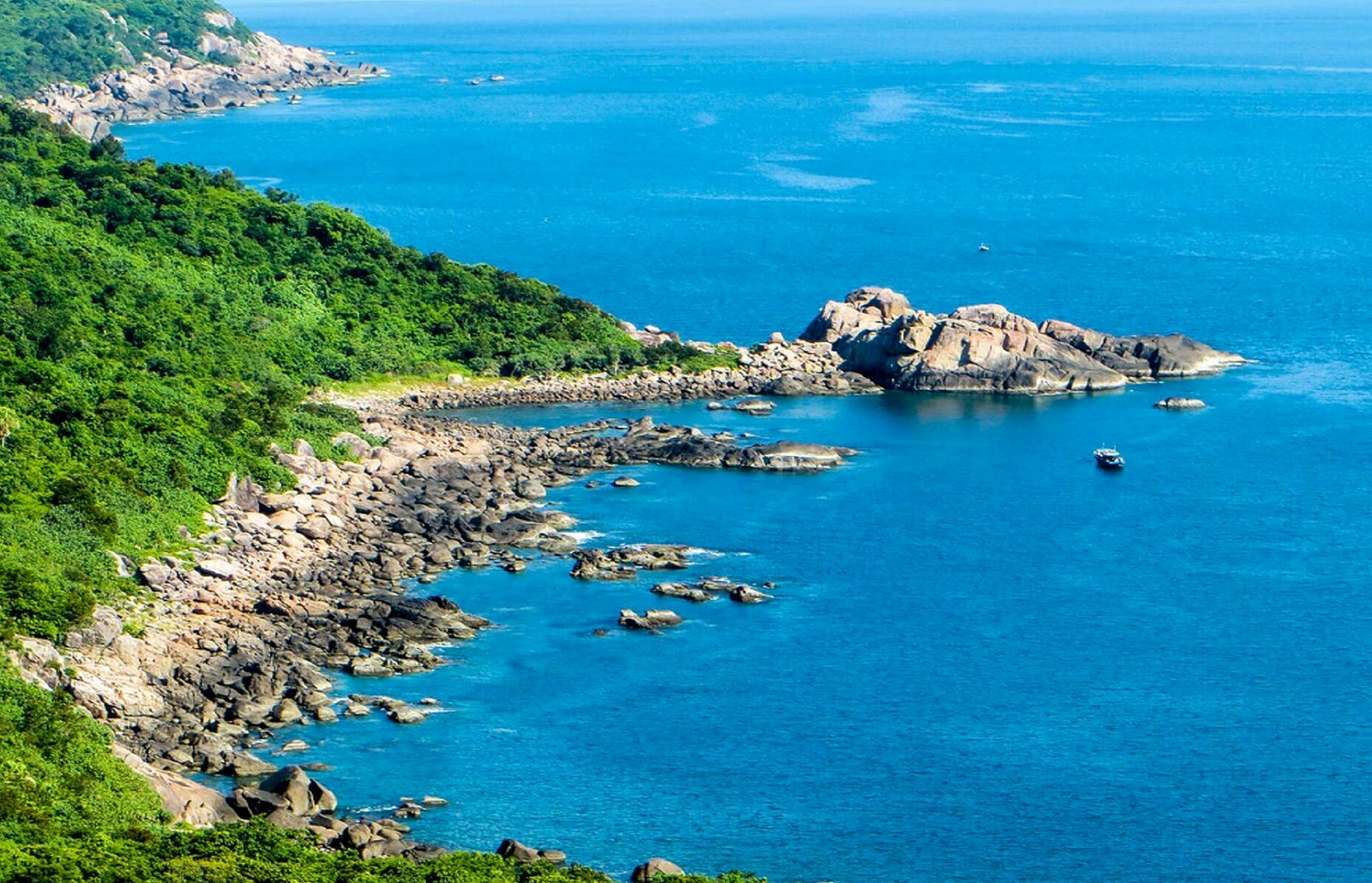
Located inside the Ghenh Rang – Tien Sa scenic area, Queen’s Beach appears as a monumental sculpture crafted by nature, where earth, sky, and sea harmonize in spectacular fashion. Completely distinct from the sweeping golden sand beaches typically found along Central Vietnam, this shoreline captivates visitors with its rugged yet lyrical terrain—blanketed by tens of thousands of smooth, rounded cobbles resembling giant eggs nestled closely atop one another. Worn smooth over millions of years by ocean tides, these inanimate stones possess a sleek, fluid grace, shimmering beneath crystal-clear, jade-green waters. Encircling the cove are sheer cliffs standing tall against the open sea like ancient sentinels holding back the waves, forming a sheltered natural basin that feels at once wild, majestic, and inherently regal—true to its historic ties to Empress Nam Phuong.
What gives Queen’s Beach its deeply moving appeal is the seamless fusion of an extraordinary natural landscape with profound artistic and cultural heritage. Right along the edge of the egg-stone shore, a winding footpath leads visitors up to Poet’s Hill, the final resting place of the gifted poet Han Mac Tu. Here, the landscape architecture is thoughtfully composed with rustic monolithic laterite stones, soaring verses inscribed on wood and stone, and the gentle whisper of sea breezes rustling through mature pine trees. This tranquil, contemplative setting sparks endless artistic inspiration, leaving everyone who visits with the sensation of reaching deep into the heart of poetic and historical memory.
To capture the million-dollar views of this natural wonder, professional photographers and seasoned travelers alike swear by a few premier vantage points. The first must-shoot angle looks down from above into the natural amphitheater of the egg-stone beach, framing tens of thousands of rounded boulders layered against white-capped waves breaking onto the shore. The second spot sits along the large rocky outcrops jutting into the sea, creating boundless depth with the deep blue bay cradling the foot of Phuong Mai Mountain in the background. The most magical lighting for capturing masterpiece photos occurs at sunrise (from 5:00 AM to 6:30 AM), when the first golden rays pierce through the mountain clefts and bathe the egg stones in an ethereal amber glow, or at dusk, when twilight cloaks the coast in romantic, nostalgic shades of deep violet.
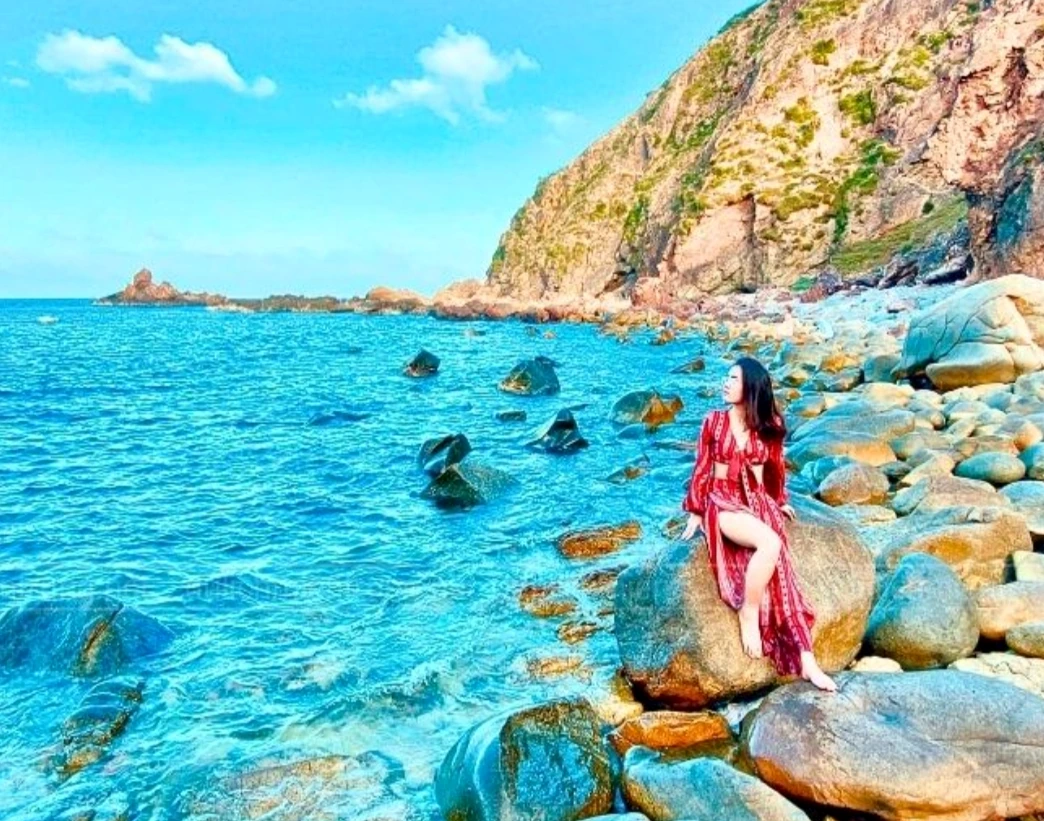
Stepping onto Queen’s Beach, visitors are immediately drawn into a dramatic natural sanctuary where deep blue waters meet towering cliffs shaped by millions of years of surf. The very first sensation is sheer awe at the one-of-a-kind egg-stone shore—tens of thousands of smooth, oversized cobbles stacked naturally together, creating a rare geological tapestry unmatched anywhere else along Vietnam’s coastline.
Exploration begins with a leisurely stroll across the cool stone slabs, listening to the rhythmic murmur of waves crashing against the rocky ledges in bursts of white foam. For travelers who enjoy active outings and a gentle challenge, a light hike up Poet’s Hill offers truly rewarding views. Gazing out from the summit, the entire panorama of Quy Nhon Bay unfolds like a painted masterpiece: calm waters sparkling under golden sunlight, fishing boats drifting lazily in the distance, and brisk sea breezes carrying the crisp, salty tang of the open ocean.
Beyond its natural splendor, the area offers moments of quiet emotion when visitors pay their respects at the tomb of poet Han Mac Tu. Resting a hand on the cool stone atop Poet’s Hill, surrounded by whispering pines and the distant echo of surf from Ghenh Rang, visitors cannot help but feel deeply moved—as if touching the brilliant yet tragic spirit of Vietnamese poetry. This interplay between untamed nature and cultural nostalgia creates a rare spiritual resonance that leaves the mind calm and reflective.
Capping off a visit to Queen’s Beach is the wonderful opportunity to savor the rich, celebrated local cuisine of coastal Quy Nhon. Just steps from the heritage complex, seaside eateries serve piping-hot, flavorful fishcake noodle soup (bun cha ca), crispy jumping-shrimp pancakes (banh xeo tom nhay) wrapped in fresh herbs, and freshly caught seafood harvested straight from the waters of Ghenh Rang. Enjoying these iconic specialties while watching the sunset paint the horizon crimson washes away the fatigue of daily life, leaving lasting memories of a warm-hearted land renowned for both martial arts and literary heritage.
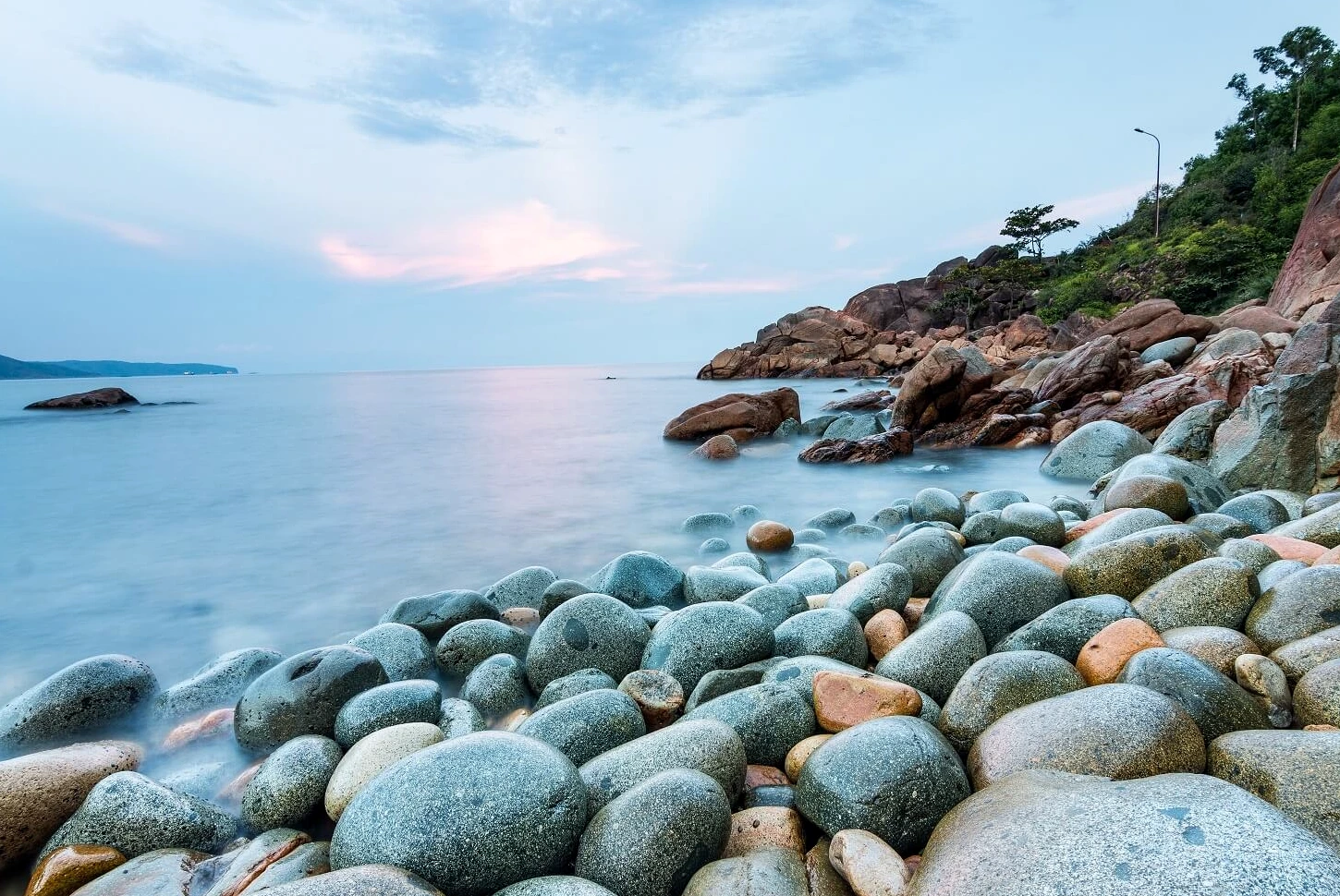
Welcoming travelers year-round, Queen’s Beach within the Ghenh Rang – Tien Sa scenic complex remains an unmissable stop when visiting the coastal city of Quy Nhon. To ensure a smooth journey exploring this historical and cultural landmark tied to the life of poet Han Mac Tu, keeping up to date on opening hours, costs, and transportation tips is essential.
Regarding operating hours, the Queen’s Beach historical and scenic site is open to visitors seven days a week, from 7:00 AM to 6:00 PM. The ideal time of year to visit is from March to September, when Quy Nhon enjoys dry weather, brilliant golden sunshine, and calm seas—perfect for admiring the dramatic egg-stone shore and combining your trip with a visit to Han Mac Tu’s tomb on Poet’s Hill.
Great news for travelers is that site management currently charges no admission fee to enter the Ghenh Rang and Queen’s Beach area, allowing visitors to explore and enjoy the scenery completely free of charge. However, if you arrive by private vehicle such as a motorbike or car, the parking area right outside the entrance gate applies standard municipal parking fees ranging from 5,000 to 10,000 VND per entry.
Getting from downtown Quy Nhon to Queen’s Beach is quick and effortless. Starting from the central square, it takes only about 10 to 15 minutes heading southeast along An Duong Vuong Street, which connects directly onto Han Mac Tu Street. Visitors can rent a motorbike for full itinerary flexibility, take a taxi, or book a ride-hailing service at very affordable rates. The entire route follows a smooth, paved coastal road winding picturesquely along the sea.
Because Queen’s Beach consists of a natural formation of tens of thousands of stacked egg-shaped stones with smooth, sloped surfaces, visitors should wear neat, comfortable, and active clothing. In particular, prioritize sneakers or flat shoes with good traction to prevent slipping while walking across the boulders. Additionally, since this is a site of profound cultural, historical, and spiritual significance associated with revered national figures, visitors should dress respectfully and modestly, while helping keep the area clean and strictly refraining from littering so this heritage landscape remains preserved for future generations.
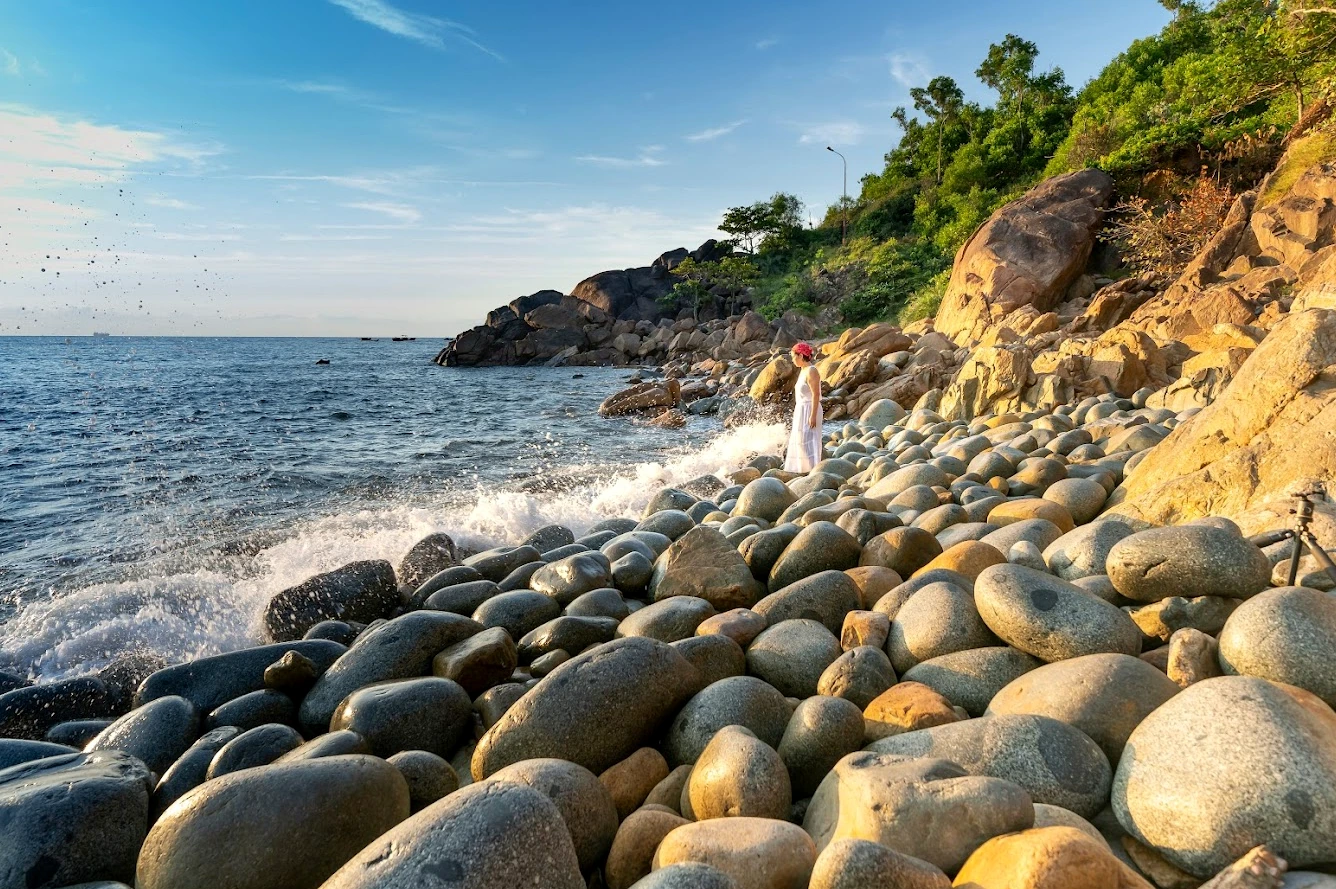
To enjoy a seamless getaway and take in the full splendor of Queen’s Beach without worrying about arranging transportation, attraction tickets, or daily itineraries, travelers can choose from VDS Travel’s premium all-inclusive Quy Nhon tour packages. Every itinerary is thoughtfully timed to capture each landmark at its most vibrant, accompanied by knowledgeable local guides and top-tier hotel and dining standards.