Nestled in the heart of the holy city of Lhasa on the majestic Qinghai-Tibet Plateau, Jokhang Temple (大昭寺) stands as an immortal testament to the profound cultural heritage and rich history of the Land of Snows. Commissioned around the mid-7th century (circa 647 AD), this sacred sanctuary is inextricably linked to the reign of Dharma King Songtsen Gampo—the great ruler who unified the Tibetan (Tubo) tribes and laid the enduring foundation for Tibetan Buddhism. The impetus for building this grand monastery stemmed from Songtsen Gampo’s historic diplomatic marriages to two princesses: Princess Bhrikuti of the Kingdom of Nepal and Princess Wencheng of the Tang Dynasty. To enshrine the two priceless Buddha statues brought by his royal consorts—the statue of Akshobhya Vajra Buddha (Jowo Mikyo Dorje) from Nepal and the life-sized statue of Shakyamuni Buddha at age twelve (Jowo Rinpoche) from the Tang court—the Tibetan king ordered the construction of this supreme spiritual space.
Over the long sweep of history, the temple’s name underwent several subtle transformations, reflecting successive eras of political and cultural shifts across the Tibetan Plateau. In its earliest days, ancient Tibetan texts recorded the site as “Jokhang” (Jo-khang, meaning “House of the Buddha” or the sanctuary housing the Enlightened One). During the Yuan Dynasty, it was known as “Dafan Temple” (大梵寺); in the Ming Dynasty, it was renamed “Yisongzhi Temple” (伊松智寺); and it was not until the Qing Dynasty that the title “Dazhao Temple” (大昭寺, Jokhang) was officially established and preserved to the present day. One of the temple’s peerless historical artifacts still intact within its courtyard is the “Tang-Tubo Alliance Stele” (also known as the Changqing Alliance Stele, erected in 823 AD). Meticulously inscribed in both Tibetan and Chinese, this ancient stone monument chronicles the diplomatic relations and peaceful accord of being “harmoniously united as one family” between the Tang court and the Tibetan Empire, serving as an indelible political and cultural milestone.
The history of Jokhang Temple is not solely defined by glory; it also endured turbulent trials alongside the shifting tides of the plateau. Toward the end of the Tibetan Empire, the devastating persecution of Buddhism under King Langdharma plunged the temple into silence, severely disrupting religious worship. However, under the subsequent patronage of Buddhist schools such as the Kadam and Sakya orders, as well as local rulers, Jokhang gradually reclaimed its stature as the supreme spiritual center. Notably, under the Ganden Phodrang government led by the Fifth Dalai Lama, the grand monastery underwent its most comprehensive renovations and expansions, shaping the magnificent architectural complex we revere today.
Across more than thirteen centuries of historical vicissitudes, Jokhang Temple has stood not merely as an architectural masterpiece seamlessly blending Tibetan, Chinese, Indian, and Nepalese styles, but as the ceaselessly beating heart of Tibetan Buddhism. The convergence of historical figures—from emperors and princesses to incarnate lamas—has transformed this site into the foremost pilgrimage destination, drawing millions of devotees offering their deepest faith. Recognized for its timeless historical, artistic, and spiritual value, Jokhang Temple has been designated a Major Historical and Cultural Site Protected at the National Level and inscribed by UNESCO as a World Heritage Site, affirming its status as an enduring cultural icon amid the cloud-wrapped plateau.
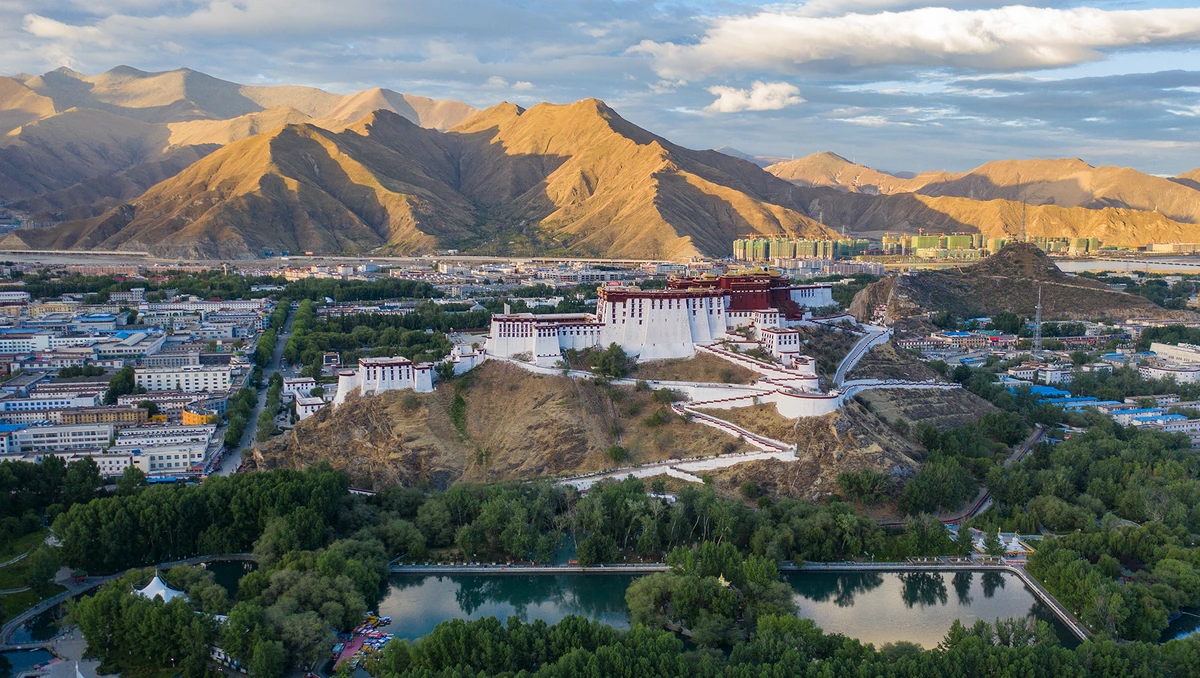
Commanding a prominent position at the center of the Lhasa River valley at an elevation of roughly 3,650 meters above sea level, Jokhang Temple (大昭寺) occupies an extraordinary geomantic (feng shui) site. Lhasa’s topography forms a classic basin blessed with the natural formation of “four surrounding mountains sheltering the wind and gathering auspicious energy”—four grand mountain ranges encircling the valley to block harsh winds and concentrate the sacred energies of heaven and earth. Yet, through the lens of traditional Tibetan esoteric geomancy, the entire Lhasa basin took the form of a “supine demoness” (Sīnǚ Luóshà)—an indigenous earth spirit representing untamed, chaotic forces of nature. Subduing this volatile energy and transforming the primordial wilderness into an eternal Buddhist sanctuary required spatial planning grounded in both Eastern geomancy and profound Tantric philosophy.
According to ancient chronicles, when Princess Wencheng arrived in Tibet from the Tang Dynasty to marry King Songtsen Gampo, she brought with her deep mastery of the I Ching and the art of geomancy (kanyu). Through careful divination and observation of the terrain, Princess Wencheng determined that Lake Wotang, situated right at the center of the basin, was the vital heart of the supine demoness. To pacify this fierce subterranean energy, she proposed a brilliant engineering and spiritual solution: filling in Lake Wotang to construct a powerful demon-subduing array. Reclaiming the marshy lake was a monumental feat of ancient engineering. Thousands of white-fleeced mountain goats were mobilized to continuously haul earth and stones from the surrounding sacred peaks to fill the lakebed. From this legendary feat, the nascent temple was originally named “Rasa” (meaning “the goats’ earth” or “land filled by goats”), the direct historical precursor to the renowned name of Lhasa today.
Beyond marsh reclamation and protective geomancy, the overall layout of Jokhang Temple strictly adheres to the sacred geometric blueprint of a Tantric Buddhist Mandala. Its central architectural axis takes the main hall of the Jowo Buddha as its eternal nucleus, symbolizing Mount Meru—the center of Buddhist cosmology. The surrounding cloisters and satellite structures are aligned with the cardinal directions, representing the Four Great Continents and the vast surrounding oceans. Translating Mandala architecture onto the physical landscape showcases not only the pinnacle of ancient Tibetan construction but also the spiritualization and cosmologization of the natural environment. From a treacherous marshy lake, through geomantic wisdom and master craftsmanship, Jokhang Temple emerged as an unshakeable spiritual heart—transmuting a wild terrain into a pure Buddhist realm while creating an extraordinary cultural landscape on the Qinghai-Tibet Plateau.
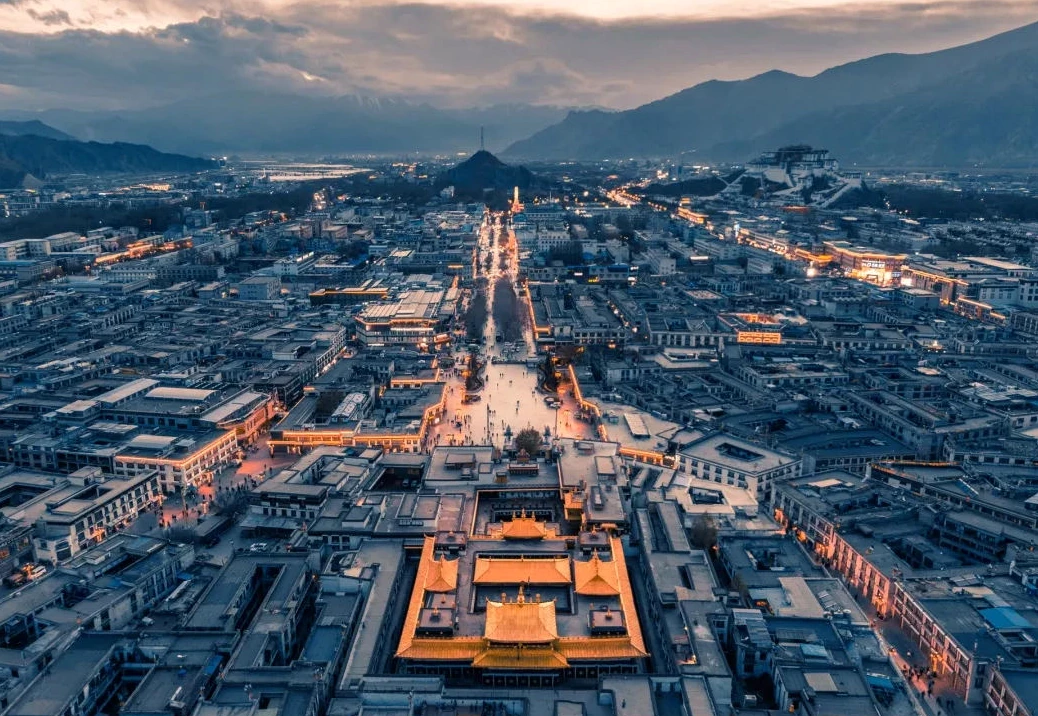
The grandeur of Jokhang Temple lies not only in its supreme spiritual stature but also in its exquisite architectural design, where four great civilizations—Tibetan, Chinese, Nepalese, and Indian—converge in brilliant harmony. Expanded and enriched over centuries, the complex today spans an impressive footprint of approximately 25,100 square meters. Viewed from above, the temple is organized as an enclosed courtyard compound steeped in Buddhist cosmological philosophy. At the heart of the complex rises the majestic four-story Main Hall, completely encircled by the bustling Barkhor circumambulation circuit. This symmetrical yet fluid spatial arrangement fosters a secluded, sacred atmosphere inside the main sanctuary while seamlessly connecting with the vibrant devotional rhythm of the pilgrims outside.
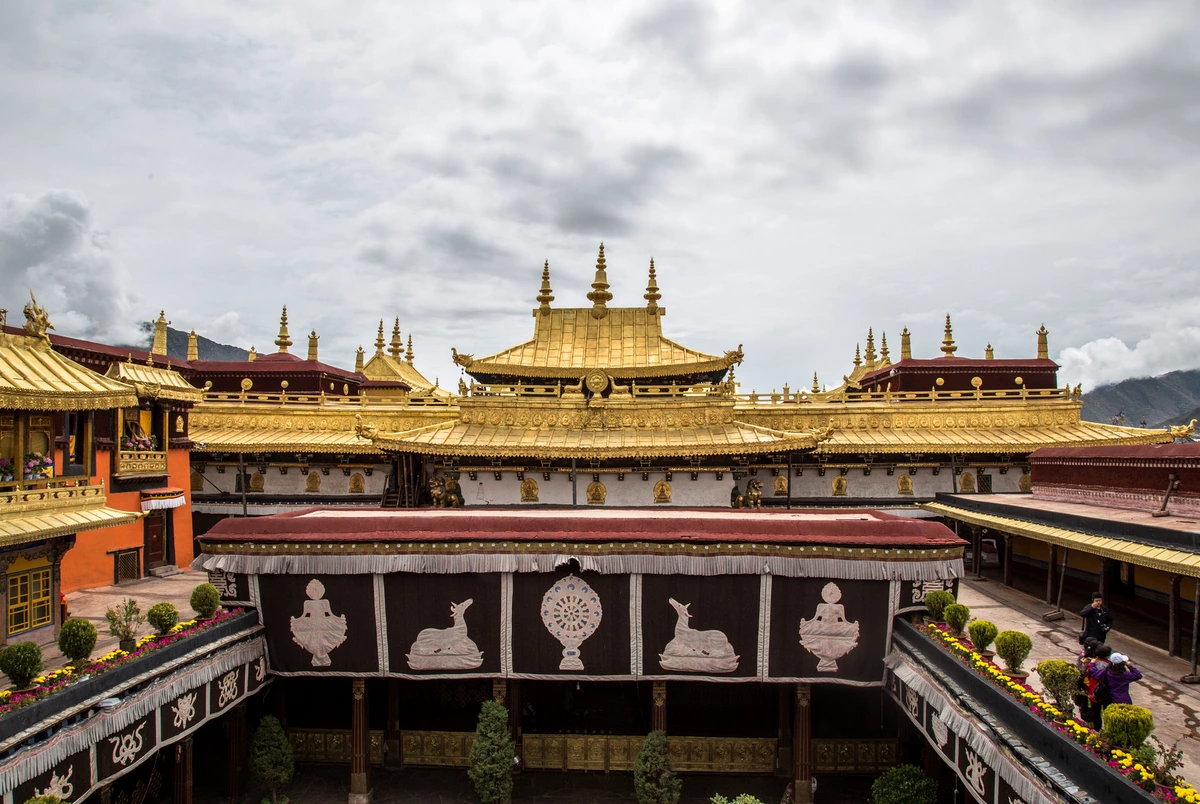
Delving into indigenous construction techniques, Jokhang Temple is a masterpiece of adaptation to the harsh climate of the snow-capped plateau. Its perimeter walls are built from a sturdy combination of locally quarried stone blocks and traditional rammed earth. Reaching thicknesses of one to over two meters, these walls act as an exceptional thermal barrier against Lhasa’s biting cold while providing a gravity-based structural system capable of withstanding severe historical earthquakes. Supporting the entire edifice is a timber framework hewn from primeval Himalayan fir and rare larch. The woodwork exemplifies cultural synthesis, integrating ancient Chinese dougong bracket sets and precision mortise-and-tenon joinery with intricate Tibetan carvings of auspicious motifs and mythical creatures adorning every beam and capital.
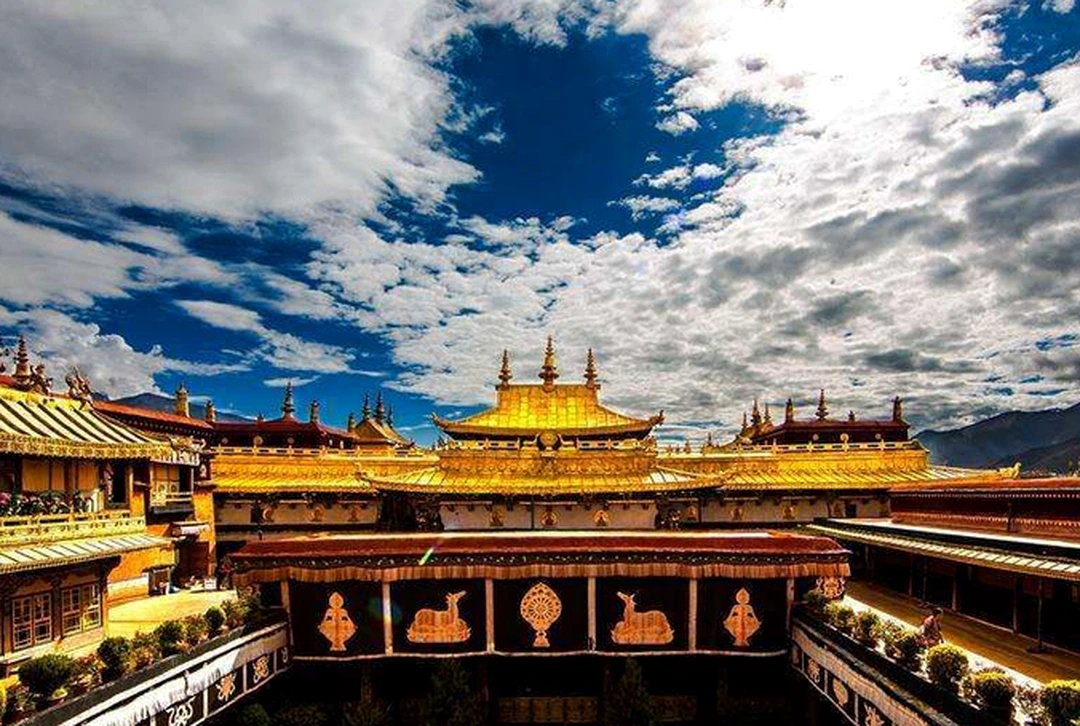
The crowning jewel of the entire complex is the cluster of golden roofs towering atop the highest tier of the Main Hall. Clad entirely in gilded bronze plates, the roofs gleam brilliantly beneath the intense plateau sun. Ancient architects masterfully combined two classic Central Plains roof styles—the gable-and-hip (Xieshan) roof and the multi-tiered pyramidal (Chongyan Zanjian) roof—achieving graceful curves paired with commanding majesty. The eaves and ridges are richly adorned with handcrafted gilded and silver-plated Buddhist emblems. Most iconic among them are the gilded Victory Banners (Dhvaja) and the sculpture of two kneeling deer flanking the Dharma Wheel—a timeless symbol recalling the Buddha’s first sermon at Deer Park and affirming the monastery’s supreme religious authority.
Every carved detail and spatial transition inside Jokhang Temple is designed to evoke a microcosm of the spiritual universe. The interplay of natural daylight streaming through skylights and the warm, flickering glow of thousands of yak-butter lamps illuminates centuries-old wooden pillars intricately carved with Bodhisattvas, Dharma Protectors, and ancient Tibetan motifs. Seen as a whole—from its solid stone foundations and precision-joined timber frame to its resplendent golden roofs—Jokhang Temple stands as both the zenith of Tibetan craftsmanship and living proof of the fusion of Chinese, Tibetan, Indian, and Nepalese architectural genius, creating a sacred sanctuary built to endure across the ages.
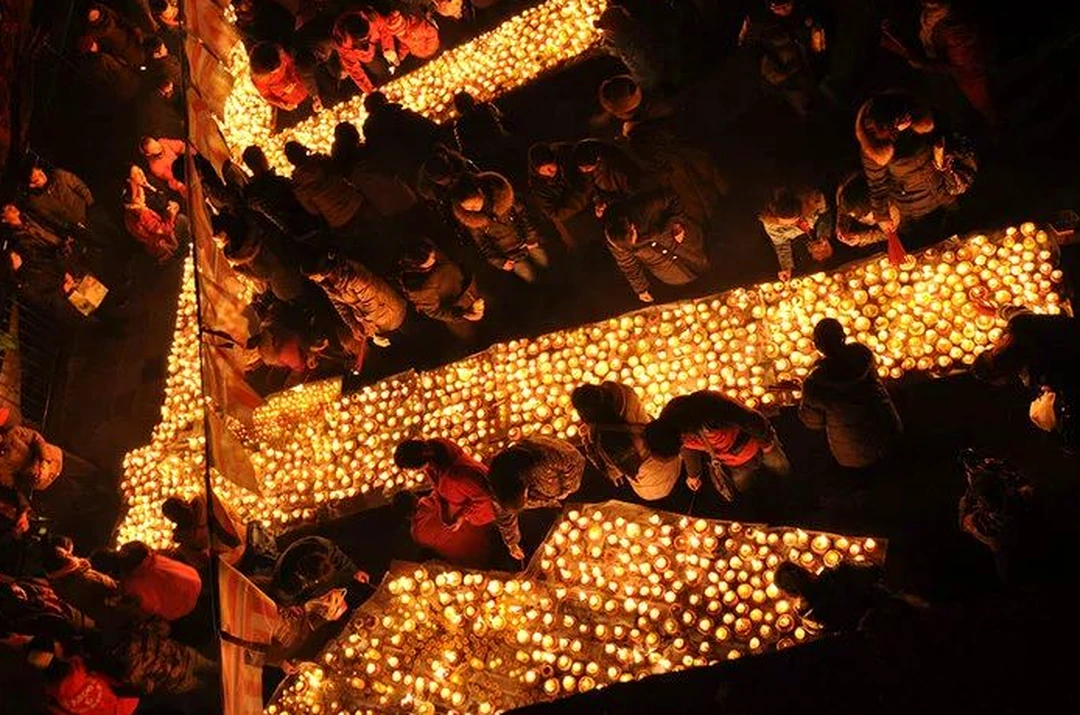
As dusk settles over the Roof of the World, Jokhang Temple and the surrounding Barkhor heritage quarter enter a mesmerizing visual realm thanks to a nocturnal lighting design strictly adhering to international conservation standards. Rather than using harsh floodlights that could damage centuries-old stone and timber, the concealed system employs low-color-temperature LEDs guided by the principle of “seeing the light, not the fixture.” Subtle washes of illumination trace the temple’s distinctive architectural lines, transforming its gilded roofs into a luminous Mandala seemingly suspended in the night sky. The ivory-white stone walls catch the gentle interplay between high-altitude moonlight and soft architectural accents, creating an ethereal yet solemn atmosphere that honors Lhasa’s sacred stature.
The closing of the heavy wooden doors to the inner halls at day’s end never interrupts the pulse of devotion; instead, it ushers in the most moving and vibrant scenes along the Barkhor circuit. In the crisp mountain breeze, thousands of Tibetan devotees and pilgrims converge on the flagstone path encircling the temple. Spinning intricately engraved bronze prayer wheels and softly chanting the six-syllable mantra “Om Mani Padme Hum,” an endless stream of worshippers moves clockwise around the ancient walls. Flickering butter-lamp light dances across wind-weathered plateau faces as thick clouds of Tibetan incense curl into the night air. Together, they form a living tableau where intangible cultural heritage is not locked behind museum glass, but breathes vividly through every footstep and whispered prayer late into the night.
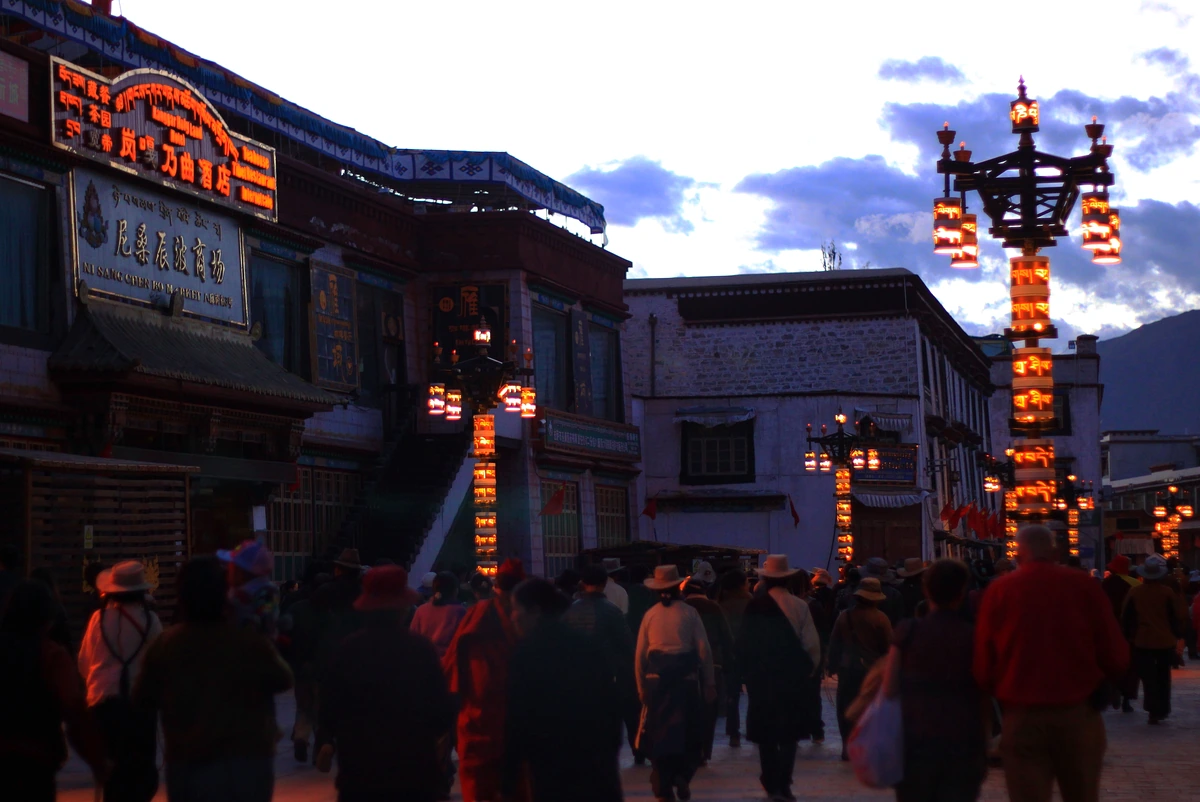
Beyond the evening circumambulation around the main sanctuary, Lhasa’s night experience continues with the grand outdoor live-action drama “Princess Wencheng,” staged in the Cijuelin Valley south of the Lhasa River. Set against a natural backdrop of rugged mountains and a star-filled plateau sky, the production brings to life the epic journey of the Tang princess across treacherous mountain passes and the legendary founding of Jokhang Temple. Audiences are transported back in time to witness thousands of skilled artisans and Tibetan villagers moving earth and mobilizing white goats to fill Lake Wotang and lay the temple’s foundations. Blending traditional Tibetan folk music, state-of-the-art lighting, and hundreds of local performers, the show crafts a living historical chronicle illuminating the spiritual origins and cultural depth of Jokhang.
Nighttime in Lhasa is thus far more than a period of rest—it is a profound sensory awakening and spiritual reflection. Seated beside the wooden windows of an upper-story traditional teahouse overlooking Barkhor Street, sipping a warm cup of rich butter tea or mild highland barley wine, travelers can feel the seamless flow between past and present. Soft golden light radiating from Jokhang’s roofs pierces the quiet night, mingling with the distant chime of wind bells amid vibrant local colors. It is a moment where contemporary lighting art, millennial heritage architecture, and authentic spiritual devotion unite, leaving an unforgettable impression on travelers seeking cultural depth on the Roof of the World.
Woven seamlessly into the sacred rhythm of the Kora circuit around Jokhang Temple, the culinary scene of historic Barkhor Street serves not only as vital sustenance on the high plateau, but also as a living museum of Tibetan culture distilled over centuries. Amid the fragrant juniper smoke rising from incense burners and the soft hum of spinning prayer wheels, local flavors open up a distinctive sensory world where the richness of yak butter, the gentle bitterness of brick tea, and the earthy aroma of roasted barley converge. Lhasa’s cuisine around Jokhang eschews elaborate plating in favor of culinary ingenuity tailored to a demanding environment, transforming humble ingredients into enduring vitality and living intangible heritage.
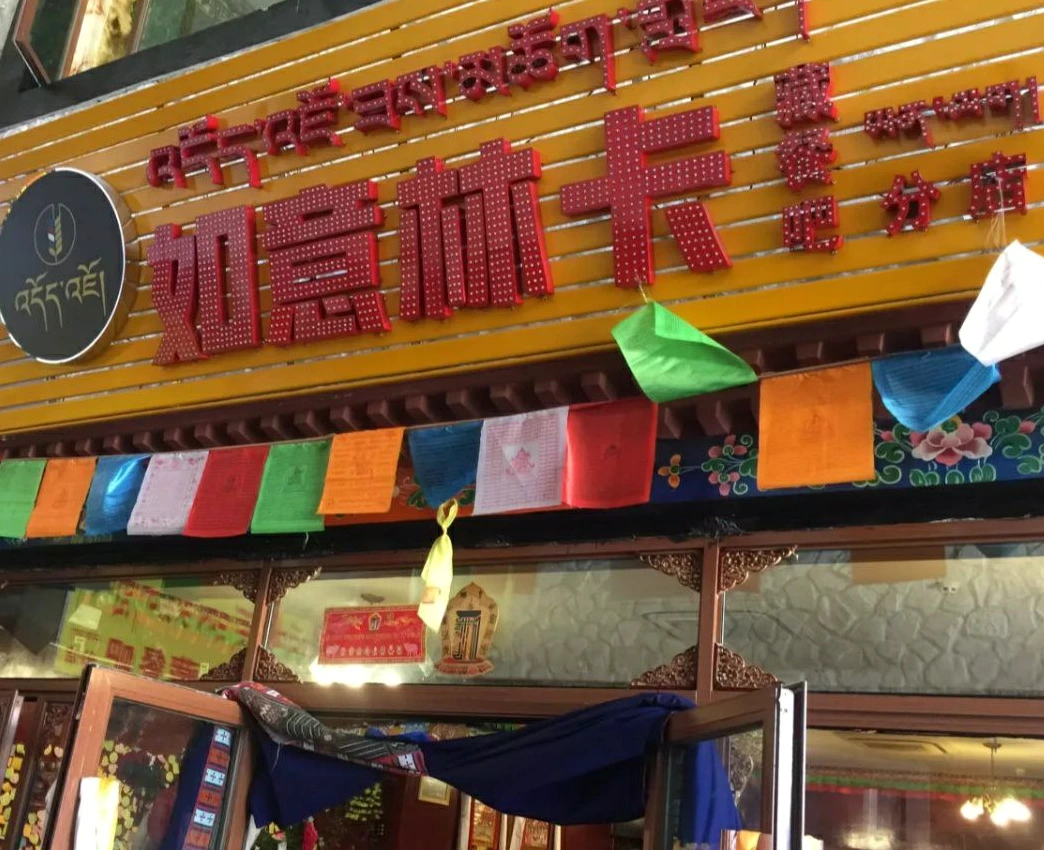
When exploring the bustling everyday life outside Jokhang’s crimson walls, the centuries-old teahouse culture is indispensable. Most iconic of all is Guangming Gangqiong Sweet Teahouse, an institution that has preserved the authentic soul of Lhasa across generations. Here, hundreds of locals—from senior monks and silver-haired pilgrims to curious travelers—sit shoulder-to-shoulder at long, time-worn wooden tables. Tibetan sweet tea, velvety and rich, is brewed from deeply steeped black tea simmered with fresh milk and sugar, releasing a comforting aroma. Ordering tea here follows a charming local custom: guests simply place a few small bills and an empty glass on the table, and servers carrying steaming copper kettles automatically top up their glasses and leave exact change. Alongside sweet tea, Lhasa’s street-food heritage shines at Cuomu Liangfen, famed for its cold mung-bean jelly noodles (liangfen) that artfully fuse Sichuan’s fiery spice craft with bold Tibetan seasonings, delivering a refreshing yet warming burst of flavor.
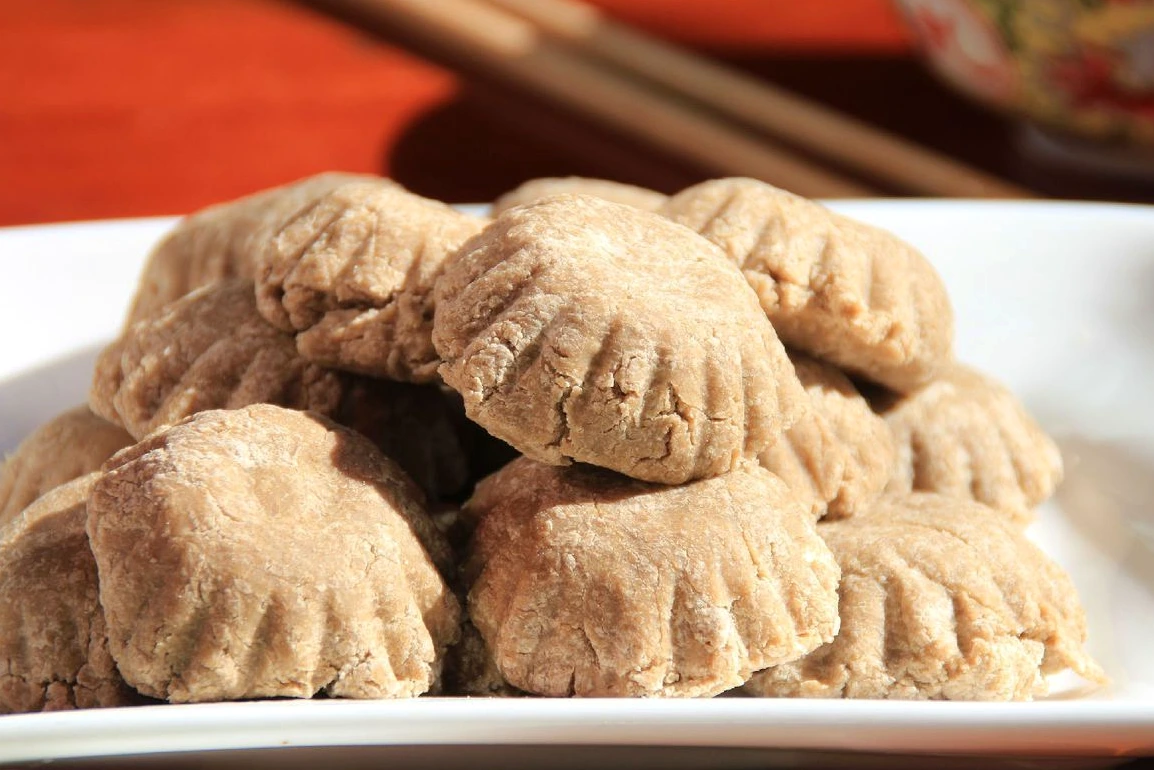
At the very core of highland culinary heritage lie Tsampa and Tibetan Butter Tea (Po Cha), two indispensable staples in both daily life and sacred rituals around Jokhang Temple. Tsampa is crafted from select Qingke highland barley grains roasted to a golden hue in hot sand and stone-ground into fine flour. To eat it, Tibetans deftly knead the barley flour by hand with a splash of warm butter tea, dried milk curds (chura), and fresh yak butter into firm, bite-sized dough balls—a dish that embodies minimalist yet energy-dense nourishment. The ideal companion to Tsampa is a steaming bowl of rich yak-butter tea, made by boiling brick tea for hours into a dark concentrate, then churning it vigorously in a tall wooden cylinder with fresh yak butter and Himalayan rock salt until smoothly emulsified. A hot sip not only wards off the bone-chilling plateau cold but also keeps pilgrims’ lips from chapping in the dry mountain winds.
A culinary tour around Jokhang Temple would be incomplete without two time-honored specialties shaped by the plateau’s climate: Air-Dried Yak Beef and Tibetan Yogurt. When winter arrives in Lhasa with crisp, dry winds and freezing temperatures, locals hang strips of choice fresh yak meat outdoors to cure slowly in the natural sun and wind for months. The resulting jerky retains its pure, savory sweetness and satisfying chew without a single artificial preservative. In refreshing contrast to the savory dried beef, Tibetan Yogurt offers an experience of pure, unadulterated freshness. Fermented entirely from pure yak milk, it boasts a custard-like texture as delicate as silken tofu, crowned with a natural golden layer of cream. Its signature tangy richness, balanced with a sprinkle of white sugar or wildflower honey, provides the perfect antidote to the bright highland sun.
Dining around Jokhang Temple is far more than satisfying hunger—it is a cultural ritual of stepping into local life to experience the true spirit of Lhasa. From a warming sip of creamy butter tea to earthy, hand-rolled Tsampa, every flavor tells a story of resilience, reverence for nature, and the heartfelt hospitality of the Tibetan people, leaving lasting memories for all who pause beneath these ancient golden roofs.
Visiting Jokhang Temple—the spiritual heart of Lhasa’s Old Town—requires thoughtful logistical and mental preparation to ensure a fulfilling experience while respecting local customs and regulations. Perched peacefully at an elevation of roughly 3,650 meters above sea level, this sacred sanctuary welcomes pilgrims and travelers daily from 09:00 to 17:30. To manage visitor flow and protect the heritage site, temple authorities enforce a strict real-name reservation system; during peak season, admission is approximately 85 RMB per person, and visitors must register in advance via official mini-programs. Getting here is straightforward, though shaped by the unique regulations of Tibet. From Lhasa Gonggar International Airport—located about 60 kilometers from the city center—travelers can take an airport shuttle bus or taxi into town. Because the entire Barkhor historic quarter surrounding Jokhang Temple is strictly pedestrian-only, vehicles drop passengers outside the perimeter, allowing visitors to stroll leisurely across ancient blue flagstones to reach the temple’s main entrance.
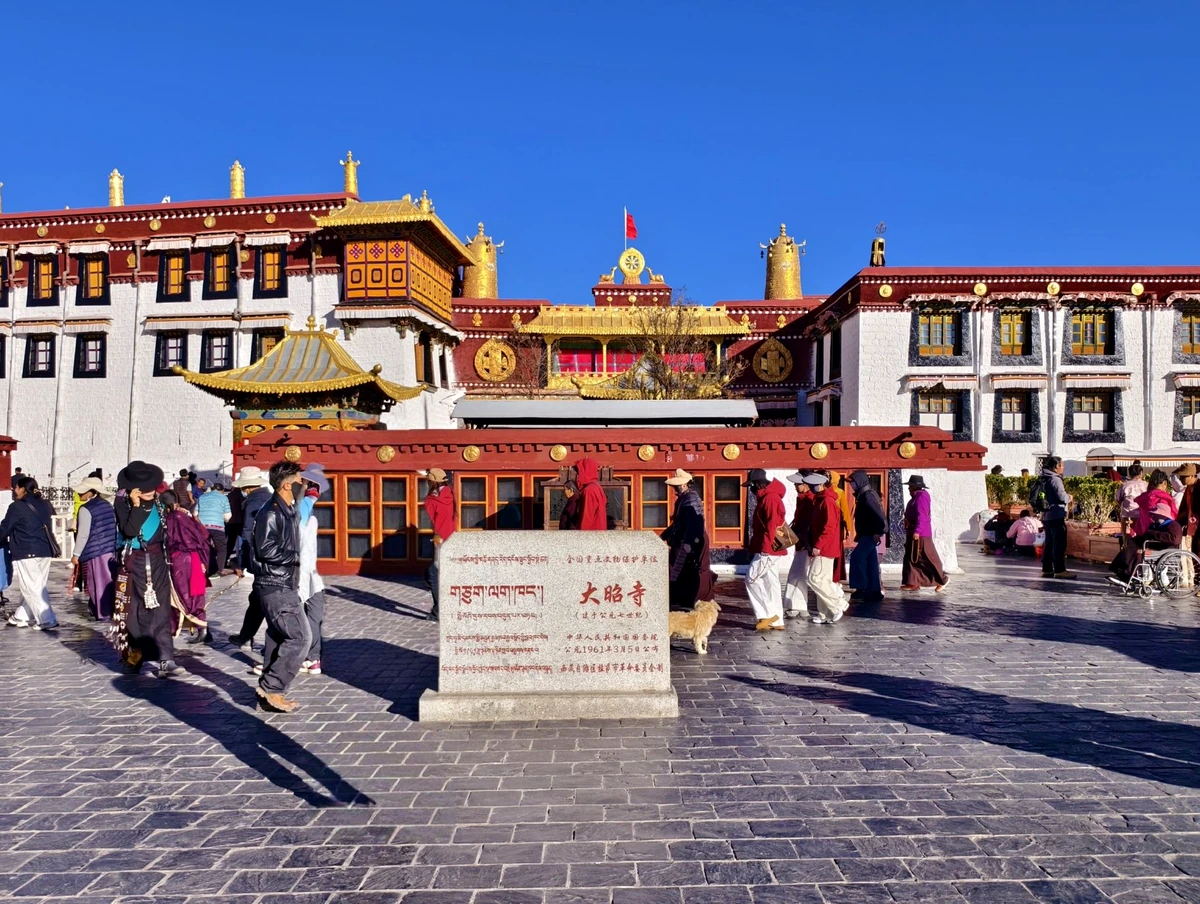
Upon entering this thousand-year-old sanctuary, observing local etiquette and religious protocols is paramount. Modest, respectful attire is mandatory; shorts, skirts above the knee, tank tops, and sleeveless shirts are strictly prohibited, and visitors must remove hats and caps immediately upon crossing the threshold of any prayer hall. Notably, inside the Main Hall—where the sacred life-sized statue of the twelve-year-old Shakyamuni Buddha (Jowo Rinpoche) is enshrined—photography and videography are strictly forbidden to preserve the sanctity of worship and protect the relics. Throughout your visit and while performing the traditional circumambulation (Kora), you must always walk in a clockwise direction. Walking counter-clockwise against the flow of pilgrims or touching Buddha statues, Thangka paintings, and ancient wall murals not only violates site rules but is considered deeply disrespectful to Tibetan Buddhist tradition.
Alongside spiritual etiquette, acclimatizing to Tibet’s high altitude and dry climate is crucial for a safe and comfortable journey. At 3,650 meters, thin air and lower oxygen levels can trigger Acute Mountain Sickness (AMS), marked by headaches, dizziness, or shortness of breath. During your first two days in Lhasa, strictly avoid strenuous exercise, running, or lifting heavy luggage. A time-tested tip from seasoned highland travelers is to avoid showering or bathing during the first 48 hours to prevent chilling and hypothermia—a common trigger for severe altitude complications. Keep portable oxygen canisters on hand and stay hydrated with oral glucose solutions to replenish energy smoothly as you explore.
Experiencing the serene stillness of Jokhang Temple—watching golden sunlight spill across its gilded roofs and listening to the rhythmic murmur of pilgrims along the Kora—creates memories that linger for a lifetime. For a seamless, well-supported journey that lets you immerse yourself deeply in Tibetan culture without worrying about complex Tibet Travel Permits or advance ticket reservations, consider joining an all-inclusive Tibet tour package to experience Lhasa, the Potala Palace, and Shigatse with complete peace of mind.