Situated within the Metropolitan Borough of Trafford in Greater Manchester, the football landmark of Old Trafford—transliterated in historical Chinese texts as *Lao Te-la-fu-de Qiu-chang* (老特拉福德球場)—has long held legendary status as “The Theatre of Dreams.” Linguistically and historically, the name “Trafford” traces back to medieval times and an Old English root referring to a river crossing or ferry ford linking communities across the water. Early on, the area was a quiet family estate where alluvial soil shaped a rural landscape before the Industrial Revolution turned Manchester into a major industrial hub.
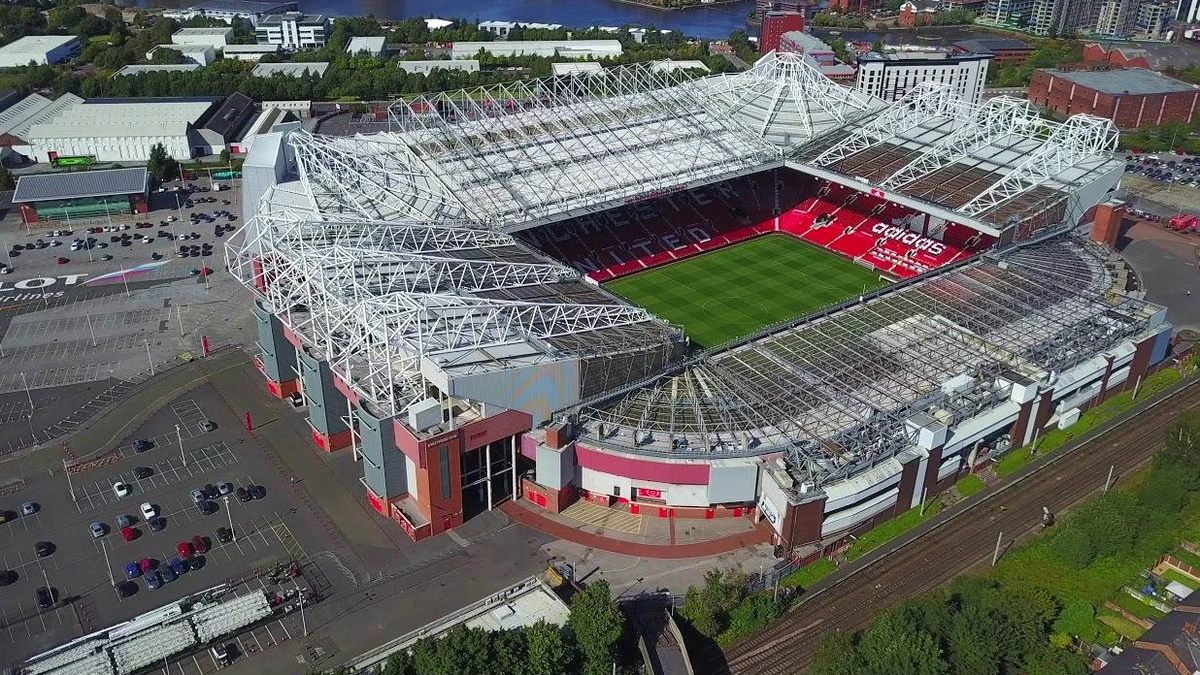
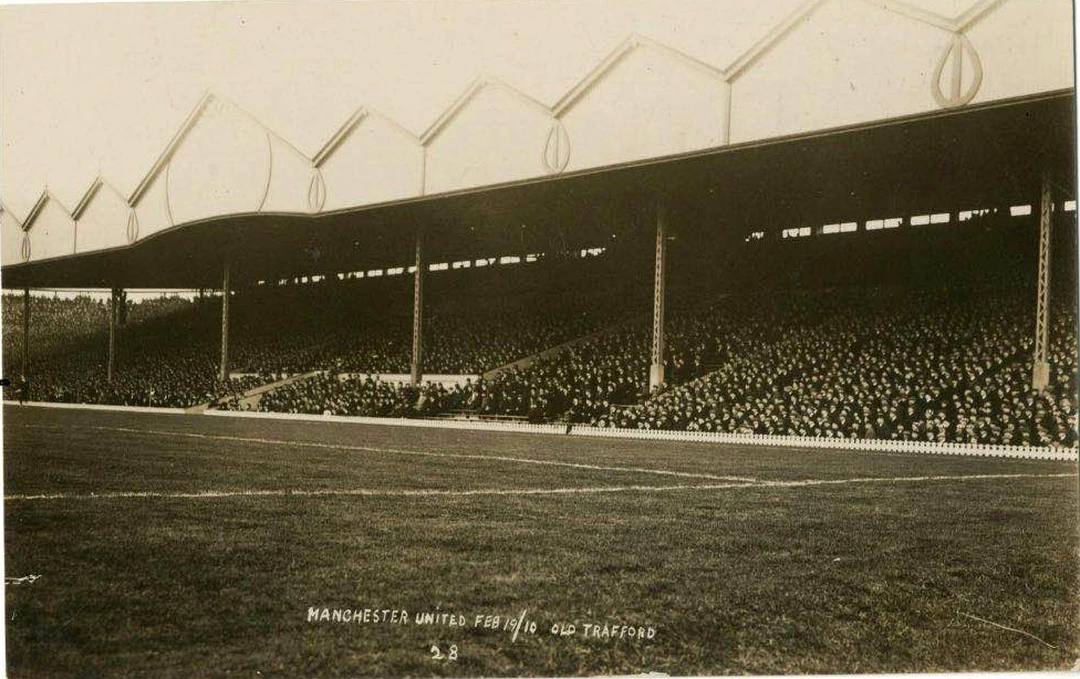
A pivotal step toward creating this sporting landmark took place in 1909, when Manchester United’s predecessor, Newton Heath, sought a home suited to its growing stature. Club chairman John Henry Davies, a wealthy industrialist, purchased agricultural land near Barton Road for £2,300—a substantial sum in the early twentieth century. To bring to life a grand stadium design in Britain, he commissioned acclaimed Scottish architect Archibald Leitch. Combining structural steelwork of the era with bold architectural massing, Leitch laid the foundation for Old Trafford’s sturdy, recognizable character and opened a new chapter in modern stadium construction.
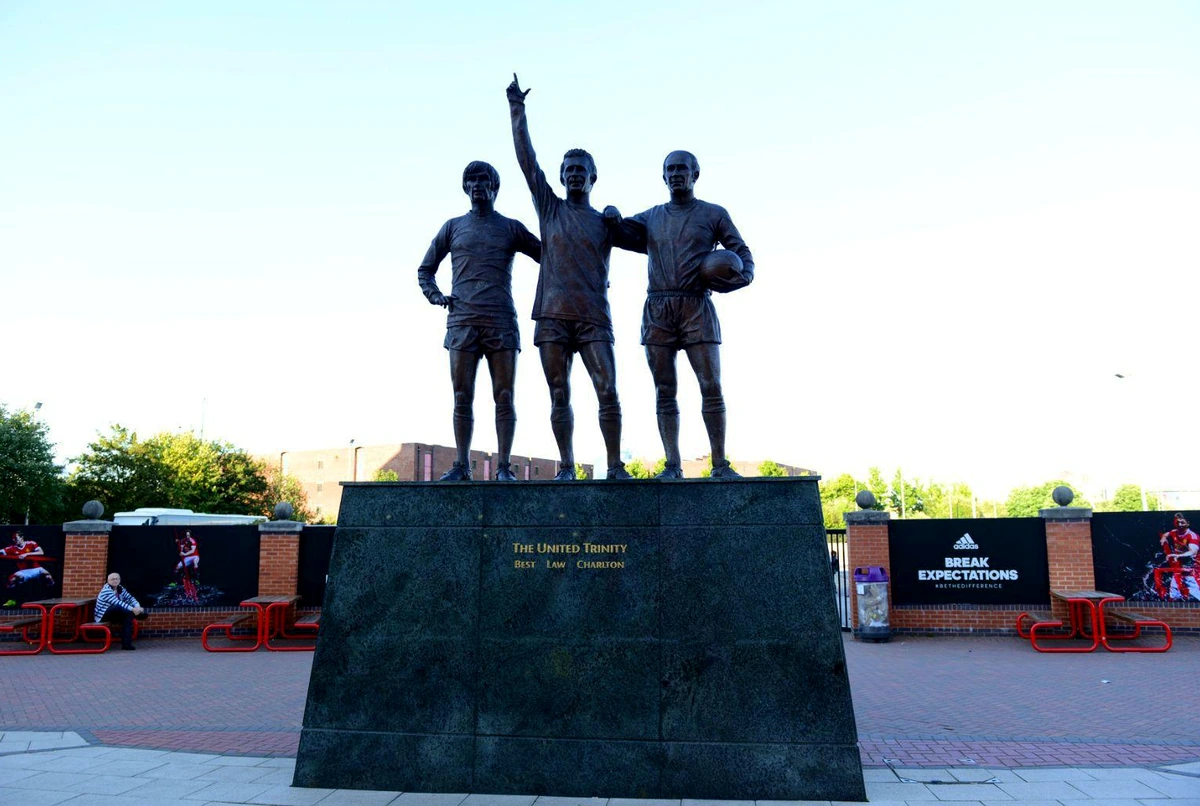
Across more than a century of ups and downs, Old Trafford has hosted major matches while serving as a living record of eras shaped by iconic figures. Success and storied chapters under Scottish managers Sir Matt Busby and Sir Alex Ferguson gave every stand lasting meaning for supporters. The North Stand and memorial statues honoring key figures stand as lasting landmarks linking past achievements with later eras, where the legacy of Busby and the “Busby Babes” carried forward into Ferguson’s long tenure to make Old Trafford an iconic football ground.
Old Trafford’s history has not been without hardship, including dramatic events of the twentieth century. Severe damage occurred during World War II when German air raids struck Manchester during the “Manchester Blitz” in March and December 1941. The main stand and pitch suffered heavy destruction, leaving rubble and twisted steel. Amid wartime strain and postwar financial constraints, the club could not rebuild immediately. For eight years from 1941 to 1949, Old Trafford remained heavily damaged, and the team played home fixtures at Maine Road, the ground of city rival Manchester City.
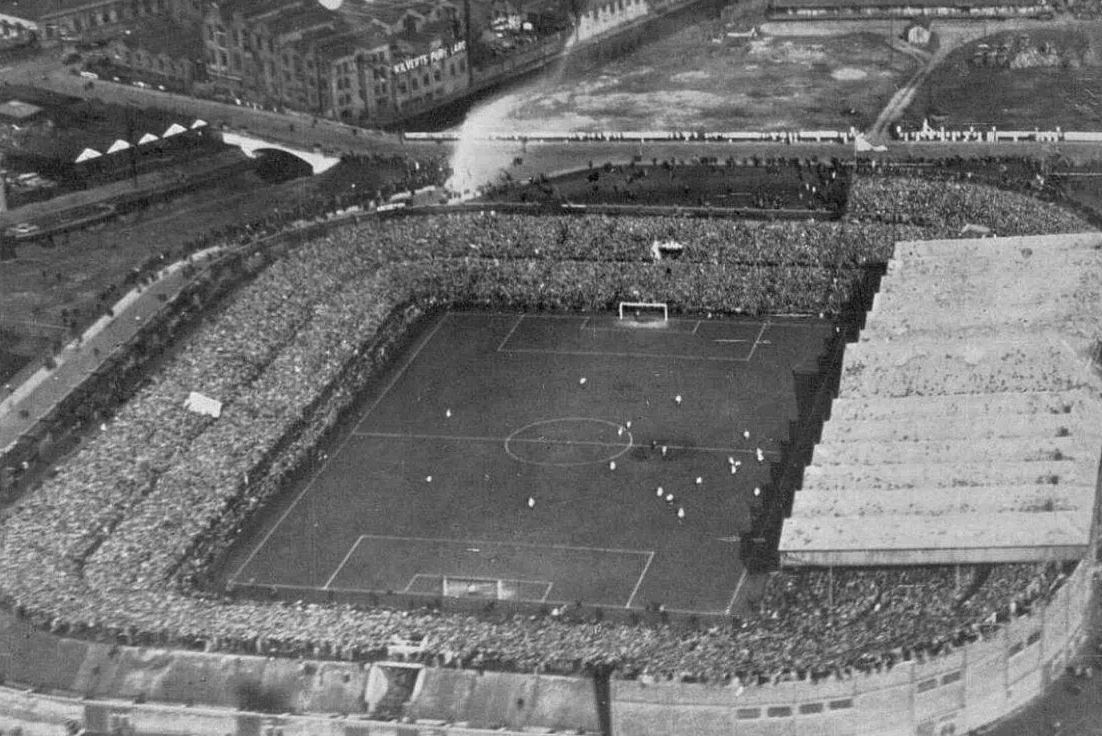
On August 24, 1949, following fundraising, restoration efforts, and determination from the club and local community, Old Trafford reopened to cheering supporters. That return marked not only the physical recovery of a stadium after wartime damage, but also the resilience of people across Britain rebuilding after difficult times—growing into one of the world’s best-known sporting landmarks.
Strategically situated in North West England within Greater Manchester, Old Trafford Stadium sits roughly 3.2 km (2 miles) southwest of Manchester city center. Geographically and in urban planning terms, the site benefits from the relatively level valley floor of the Mersey basin. Resting on stable alluvial ground at roughly 30 to 35 meters above sea level, Old Trafford has a solid base suited to supporting and expanding a large-capacity stadium across generations.
Waterways and local microclimate also shape the surrounding setting. Running close along the eastern side is the historic Bridgewater Canal. Dug in the eighteenth century during the early stages of Britain’s Industrial Revolution, the canal originally carried coal from the Worsley mines into Manchester. Today, alongside its industrial history, the Bridgewater Canal adds water views and gentle airflow around the grounds. About 1 km to the north flows the River Irwell, long a historic and geographic boundary between Manchester and Salford that adds river character to the neighborhood.
In transport planning, building Old Trafford beside the Manchester South Junction & Altrincham railway corridor proved a forward-looking choice. Rail access helped transform what had been an outer edge into a busy, well-connected destination. Pairing rail links with nearby waterways supports multi-modal access, helping manage matchday crowds and connecting the ground with wider northern transport networks.
Through decades of architectural additions and site planning, Old Trafford’s silhouette has become a recognizable feature on the western edge of Manchester. Carefully arranged concourses, towering stands, and nearby industrial-heritage waterways give the ground a strong sense of place where modern stadium engineering meets local history.
Architecturally, Old Trafford reflects an evolution from early-twentieth-century Edwardian industrial design to a large enclosed modern stadium. The original ground opened in 1910 to designs by Scottish stadium architect Archibald Leitch. Early stands featured sturdy red-brick masonry typical of Lancashire paired with steel-truss roofing. Leitch used riveted steelwork to build cantilevered roof spans, reducing obstructing support columns and improving sightlines for spectators.
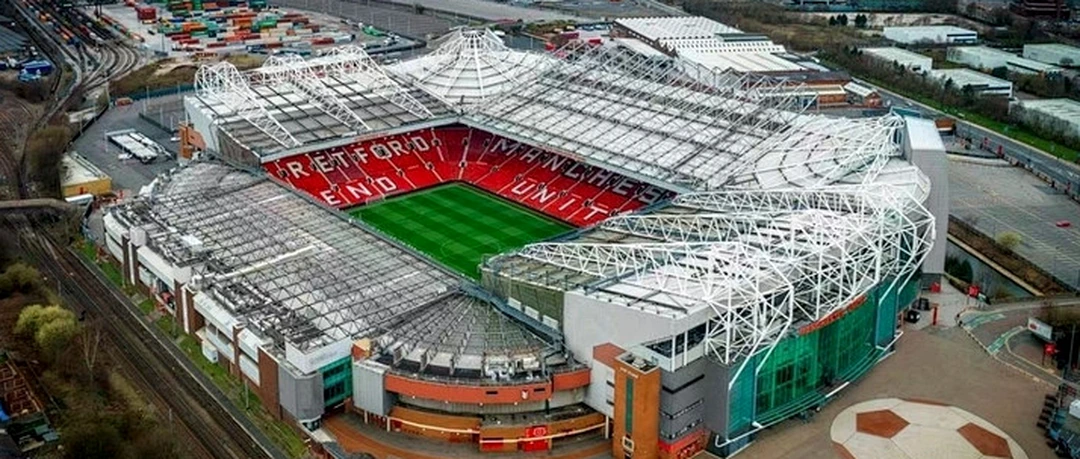
Over more than a century, Old Trafford’s architecture changed significantly following the Taylor Report of the 1990s, which prompted full conversion to all-seater stadiums. The North, East, and West stands were rebuilt and expanded with heavy steel roof trusses and translucent roof panels. These cantilevered roofs shelter tens of thousands of fans from rain and wind while letting natural light reach the pitch, giving Old Trafford a bold, modern silhouette.
While three sides rise high, the South Stand (now the Sir Bobby Charlton Stand) faces an interesting engineering constraint. Squeezed between the pitch and a railway line running directly behind it, the South Stand remains a single-tier structure. To ensure stability and safety alongside passing trains, engineers used deep-piling foundations anchored into firm ground below—preserving Manchester’s rail-side history while integrating cleanly with the rest of the bowl.
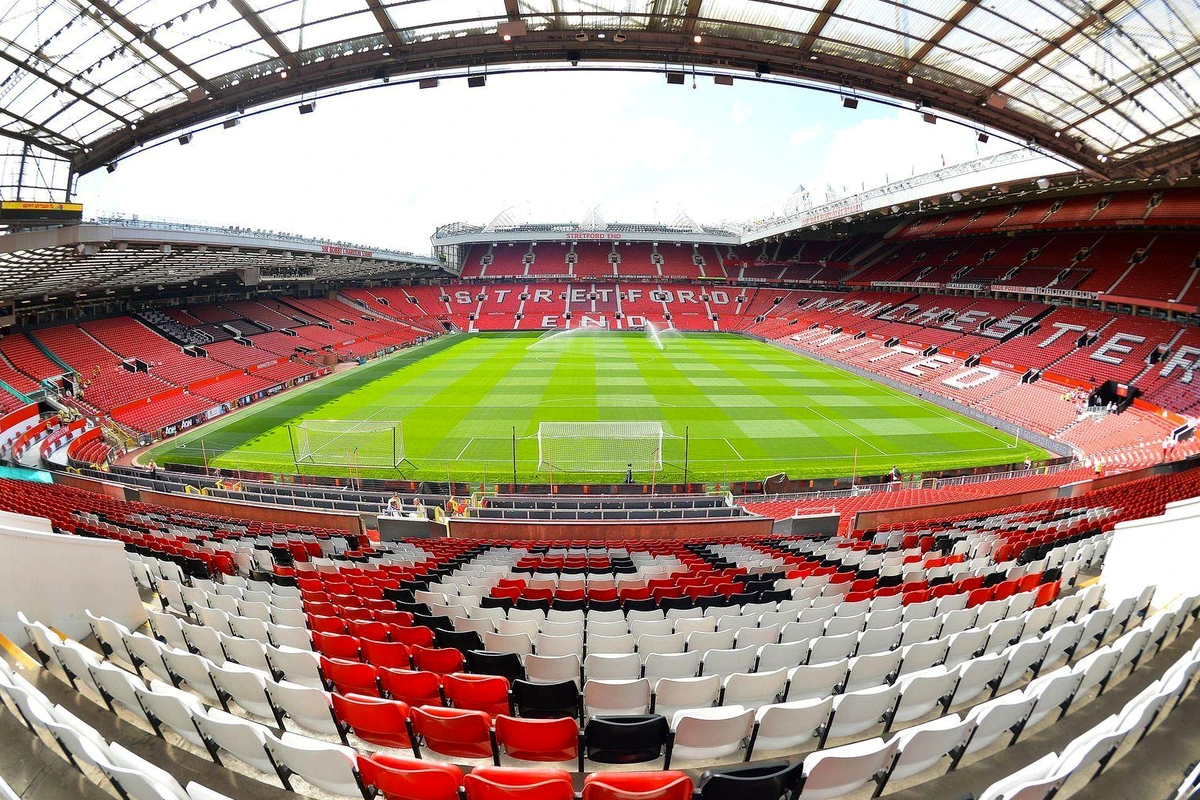
In scale and pitch engineering, Old Trafford spans roughly 7.5 hectares (around 18.5 acres) with a seating capacity of about 74,310, making it one of the largest club football grounds in the United Kingdom. At its center is a standard 105-by-68-meter playing surface built with hybrid turf technology (“Desso GrassMaster”), weaving natural grass with synthetic fibers into the root zone. Beneath the surface run vacuum drainage pipes and undersoil heating to keep the pitch level, drained, and playable during damp, chilly British winters.
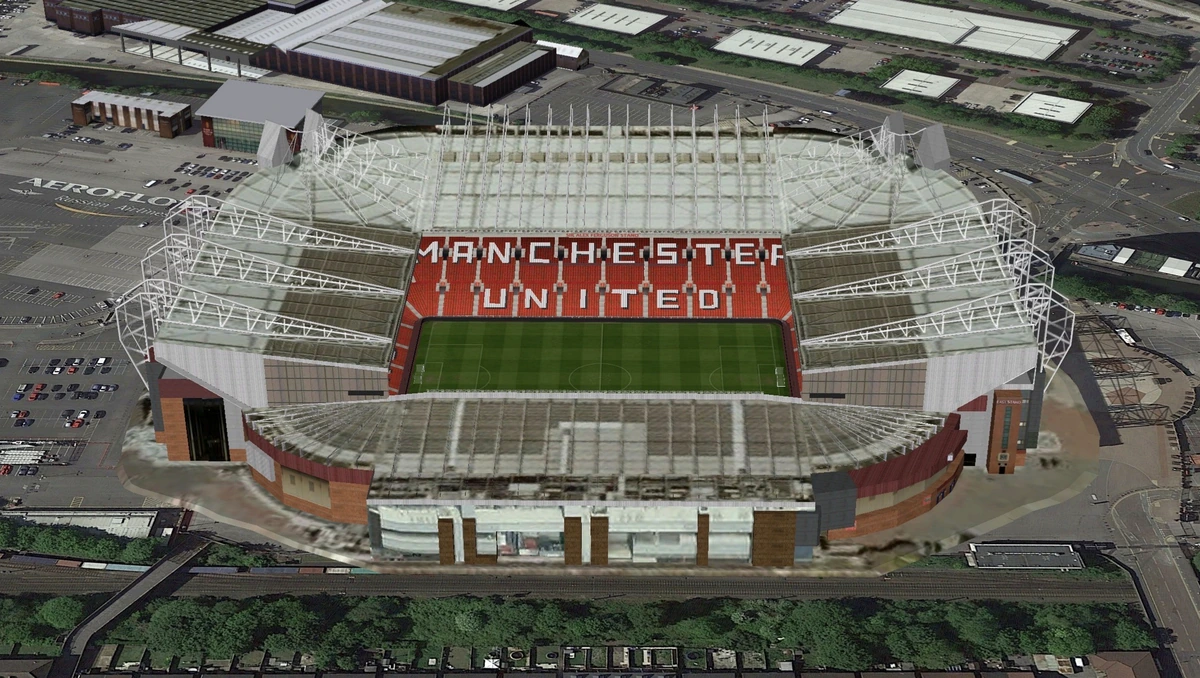
As dusk settles over Manchester, Old Trafford takes on a striking evening look where modern lighting meets heritage brickwork. Stadium lighting has evolved considerably since 1957, when four corner floodlight pylons were installed. Today, high-output LED matrix fixtures line the inner roof edges across all four stands, meeting broadcast light standards while allowing programmable lighting effects. On match nights or special occasions, red LED accents glow along the roofline and play against the brick exterior, giving the ground a distinct presence after dark.
Evening matchdays at Old Trafford bring a lively stadium atmosphere filled with chants, music, and shared fan rituals. Hearing familiar songs and anthems—such as “This Is the One” by Manchester band The Stone Roses—echo across the bowl as supporters wave scarves and banners creates an unmistakable matchday energy under northern skies.
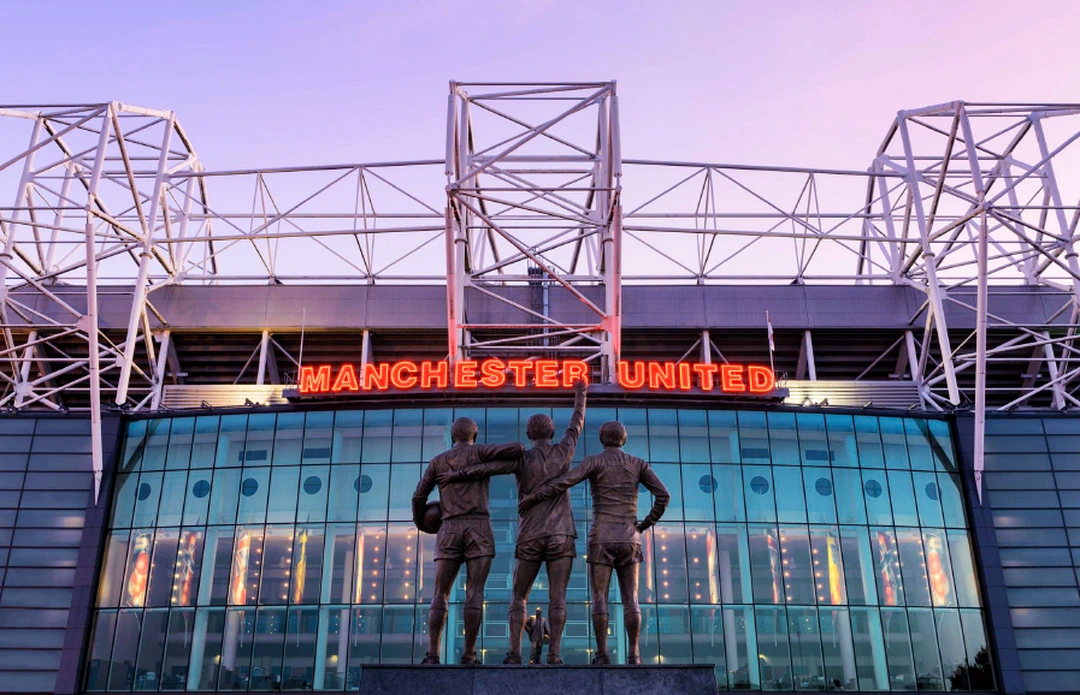
A focal point outside the stadium is the United Trinity (Holy Trinity) statue honoring George Best, Denis Law, and Sir Bobby Charlton. During special events or evening showcases, projection lighting and displays can highlight the monument and nearby walls, celebrating club history and memorable moments for visiting fans.
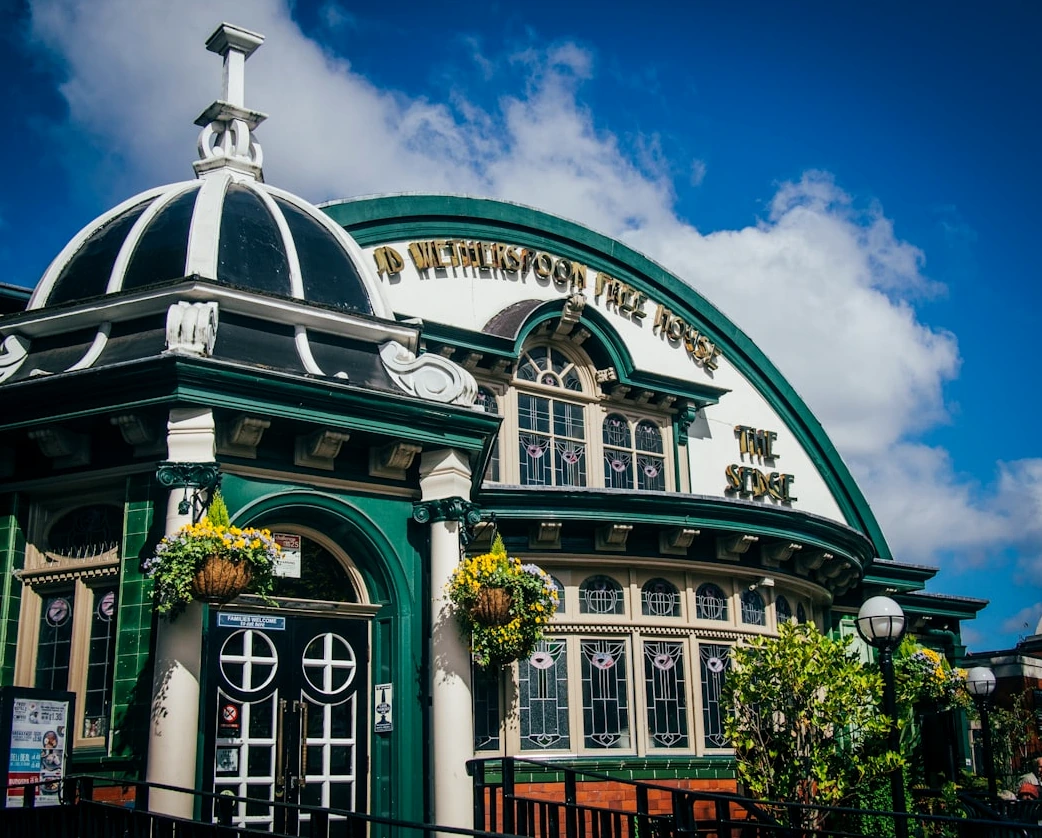
Evening activity around Old Trafford also centers on local pubs and eateries along Sir Matt Busby Way and nearby routes. Spots like The Bishop Blaize and The Trafford draw matchgoers with warm lighting, lively conversation, and classic British fare—from fish and chips with mushy peas and hot meat pies with gravy to pints of ale or stout—blending stadium atmosphere with traditional pub culture.
Matchday food around Old Trafford reflects hearty northern English fare and brisk pre-match energy. Around Sir Matt Busby Way, food stalls and pubs fill the air with warm aromas in crisp northern weather. For many visitors, grabbing a hot bite before kick-off is a simple, memorable part of the matchday routine shared with supporters from across the UK and abroad.
Classic British staples such as pie and mash—flaky shortcrust or puff pastry filled with tender beef, steak and kidney, or minced filling served with mashed potatoes and rich gravy—remain hearty favorites rooted in working-class culinary tradition. A hot bacon and egg roll on a soft bun is another easy, filling choice to start a matchday morning.
Beer lovers often look for classic northern ales and bitters such as Boddingtons Bitter, a longtime Manchester staple known for its creamy head and malty balance. Enjoying a pint alongside fellow fans adds to the traditional matchday spirit around the ground.
Right beside the stadium, The Bishop Blaize pub is a well-known gathering spot for supporters, decorated with football memorabilia, photos, and club history. Stepping inside before or after a match offers a glimpse into British football pub culture and shared fan camaraderie.
Planning a visit to Old Trafford is straightforward with a few practical details in mind. The Old Trafford Stadium Tour & Museum generally operates from 09:30 AM to 04:00 PM daily, except on matchdays. Because tours and museums draw steady visitors, booking tickets and time slots online in advance is recommended. On matchdays, stadium tours and museum access typically close for several hours before and after kick-off for security and match operations.
Getting there via Greater Manchester’s public transit is convenient. The Metrolink tram network runs services to the Old Trafford stop, followed by a roughly 10-minute walk to the stadium entrance. National Rail services also stop nearby (such as Trafford Park or Deansgate), making it easy to travel from central Manchester while avoiding matchday road congestion around Trafford.
A standard stadium tour and museum visit takes you through historical displays, trophies, and club milestones in the museum before heading up for views over the stands and pitch, walking past dressing rooms and the tunnel area, taking in the dugout/bench zone, and finishing near the club Megastore.
To keep visits smooth and safe, follow stadium guidelines: avoid wearing rival club colors or bringing opposing club banners/items into home seating areas, and note strict bag-size rules—typically bags larger than A4 (210mm x 297mm) are not permitted inside the stadium and must be left at designated bag-drop facilities outside.
Because Manchester weather frequently brings showers and cool breezes year-round, packing a waterproof hooded jacket is practical, while large or pointed umbrellas are generally prohibited inside stands for safety and sightlines. Planning ahead with transport, bag rules, and weather in mind makes visiting Old Trafford easy and enjoyable. To explore landmarks and sports culture across Britain, you can also browse all-inclusive UK & Scotland tour packages.