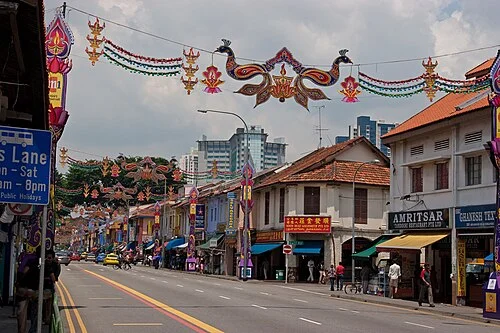
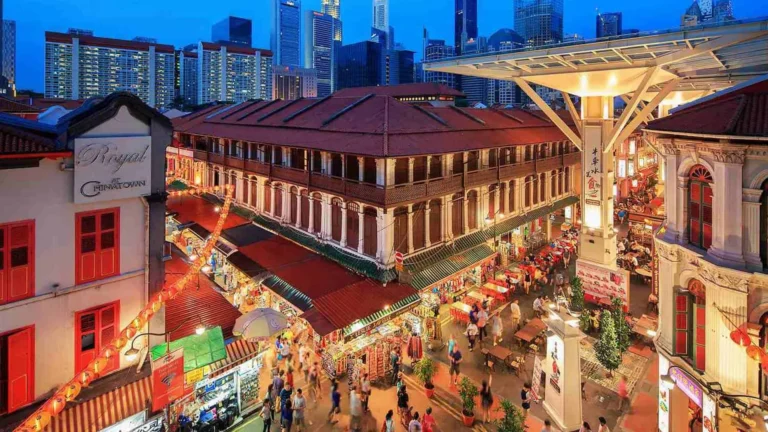
Gazing across Keppel Harbour today, Sentosa’s vibrant tapestry of dazzling lights and joyful sounds scarcely hints at a somber past once shrouded in gunsmoke and tragic chapters of history. In earlier times, when the Strait of Malacca was a treacherous maritime route for spice-laden merchant vessels, native Malays charted this island under a chilling name: Pulau Blakang Mati, which literally translates to “The Island Behind Death” or “The Island of Death from Behind.” That grim moniker originated in the 19th century, when the surrounding coastal waters served as a notorious stronghold for Bugis pirates, staging relentless, bloody ambushes to plunder passing merchant convoys. Beyond piracy, devastating outbreaks of malaria and plague among the island’s ancient fishing villages reinforced its bleak reputation as a land bound to perish and maritime terror in that era.
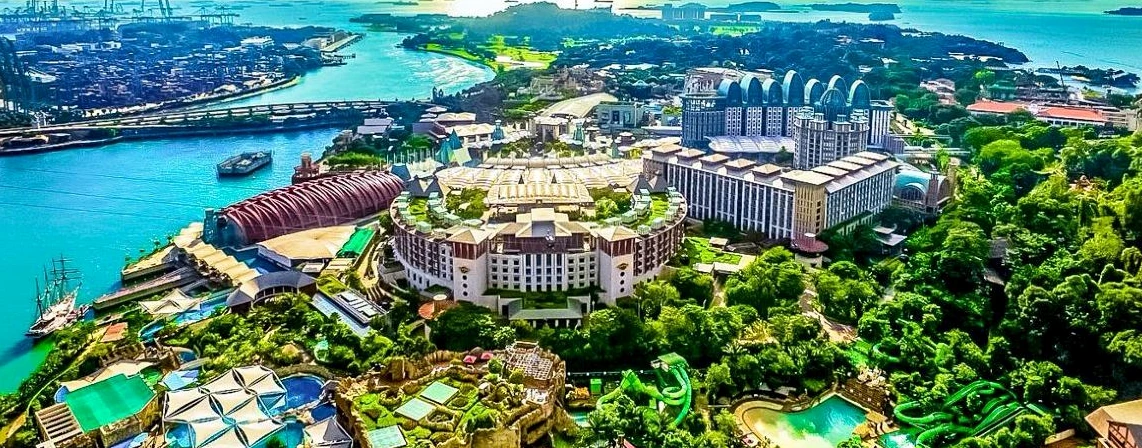
Entering the second half of the 19th century, recognizing its strategic chokepoint guarding Singapore’s southern gateway and protecting the shipping lanes into Keppel Harbour, the British Empire swiftly transformed Pulau Blakang Mati into an impregnable military outpost. A network of underground bunkers, ammunition magazines, and long-range artillery batteries was constructed, most notably Fort Siloso, Fort Connaught, and Fort Serapong. Yet the fiercest wartime fate befell the island during World War II. When Singapore’s defenses collapsed before the advancing Imperial Japanese Army, Fort Siloso was converted into a harsh Prisoner of War (POW) camp holding thousands of British and Australian soldiers. The smooth white sandy beaches where visitors stroll leisurely today once stood as silent witnesses to the bloody Sook Ching purge, etching deep historical scars into the collective memory of generations of islanders.
A historic turning point arrived in 1971 when British forces completed their full withdrawal from the island nation, handing over de facto control to the fledgling Singapore Government. Deeply aware that a fertile, promising island could not remain burdened by a dark past, Prime Minister Lee Kuan Yew and his policymakers made a bold decision: to completely rebirth the land into a world-class entertainment and resort sanctuary. In 1972, under the stewardship of the Ministry of Finance in collaboration with the Singapore Tourist Promotion Board (STPB), a large-scale public naming competition was held to shed its old name. Thus, the name Sentosa was officially born, derived from the ancient Sanskrit root “Santosha,” signifying peace, tranquility, and profound inner serenity. That same year, the Sentosa Development Corporation (SDC) was established by statute to unify master planning and management.
The momentum to awaken Sentosa’s potential accelerated dramatically with the inauguration of its first over-water cable car line in 1974, linking Mount Faber across Keppel Harbour to the island and opening an unprecedented aerial tourism gateway in Southeast Asia. However, the grand revolution that propelled Sentosa to the pinnacle of the global entertainment map truly erupted on December 8, 2006, when the Singapore Government approved the Integrated Resort project with a record-breaking bid of SGD 6.59 billion from the Genting Singapore consortium. The monumental Resorts World Sentosa (RWS) rapidly took shape, anchored at its dazzling heart by the movie-themed Universal Studios Singapore (USS), which officially opened its gates to its first visitors in 2010. From a desolate “island behind death,” Sentosa completed its greatest historical metamorphosis, emerging as a radiant symbol of renewal where deep heritage seamlessly converges with humanity’s finest entertainment technology.
Viewed through the lenses of feng shui and marine geography, Sentosa Island sits roughly five hundred meters off the southern coast of mainland Singapore, acting as a natural screen shielding ocean currents and prevailing winds sweeping from the Strait of Malacca into the Singapore Strait. The body of water separating the island from the mainland is Keppel Harbour—one of Southeast Asia’s busiest maritime arteries for centuries. In traditional feng shui philosophy, Sentosa’s landform embodies a protective frontispiece jewel facing the heart of the island nation, a confluence of prosperous tides and bustling trade routes. Today, the entire island spans a natural footprint of approximately five hundred hectares, though this is not purely nature’s original handiwork; rather, it is the outcome of one of the largest-scale topographical reclamation, earthworks, and coastal engineering endeavors in the Lion City’s modern history.
Sentosa’s natural terrain rests upon a sturdy granite bedrock foundation, undulating with rolling hills cloaked in secondary tropical rainforest canopies. The focal point of this primordial geomorphology converges at Mount Imbiah, rising about sixty meters above sea level and serving as a geological spine dividing the island’s airflow and landscapes. Under the skillful hands of urban planning engineers, Sentosa’s topography is distinctly partitioned into two spatial zones with contrasting yet mutually reinforcing characteristics. The northern coastline facing Keppel Harbour consists largely of densely compacted reclaimed land, providing an ideal footprint for grand integrated resorts, luxury marinas, and the Universal Studios Singapore theme park complex. Meanwhile, gentle slopes descend southward, opening up to a serene stretch of coastline facing the vast open ocean.
The engineering behind Sentosa’s southern coastal landscape stands as an astonishing feat of marine civil engineering. Stretching along the bay are three celebrated beaches: Siloso Beach, Palawan Beach, and Tanjong Beach. The entirety of these smooth, gently sloping sandy shores was not formed by local alluvial deposits, but painstakingly crafted from millions of tons of fine-grained sand imported directly from selected sediment quarries in Indonesia and Malaysia. To prevent erosion caused by the swift currents of the Singapore Strait and seasonal tidal surges, engineers designed an offshore system of crescent-shaped artificial breakwaters paired with small, coconut-fringed barrier islets. This submerged breakwater network dissipates the energy of crashing waves while creating tranquil, semi-enclosed lagoons that have preserved the ideal gradient of the artificial beaches for decades.
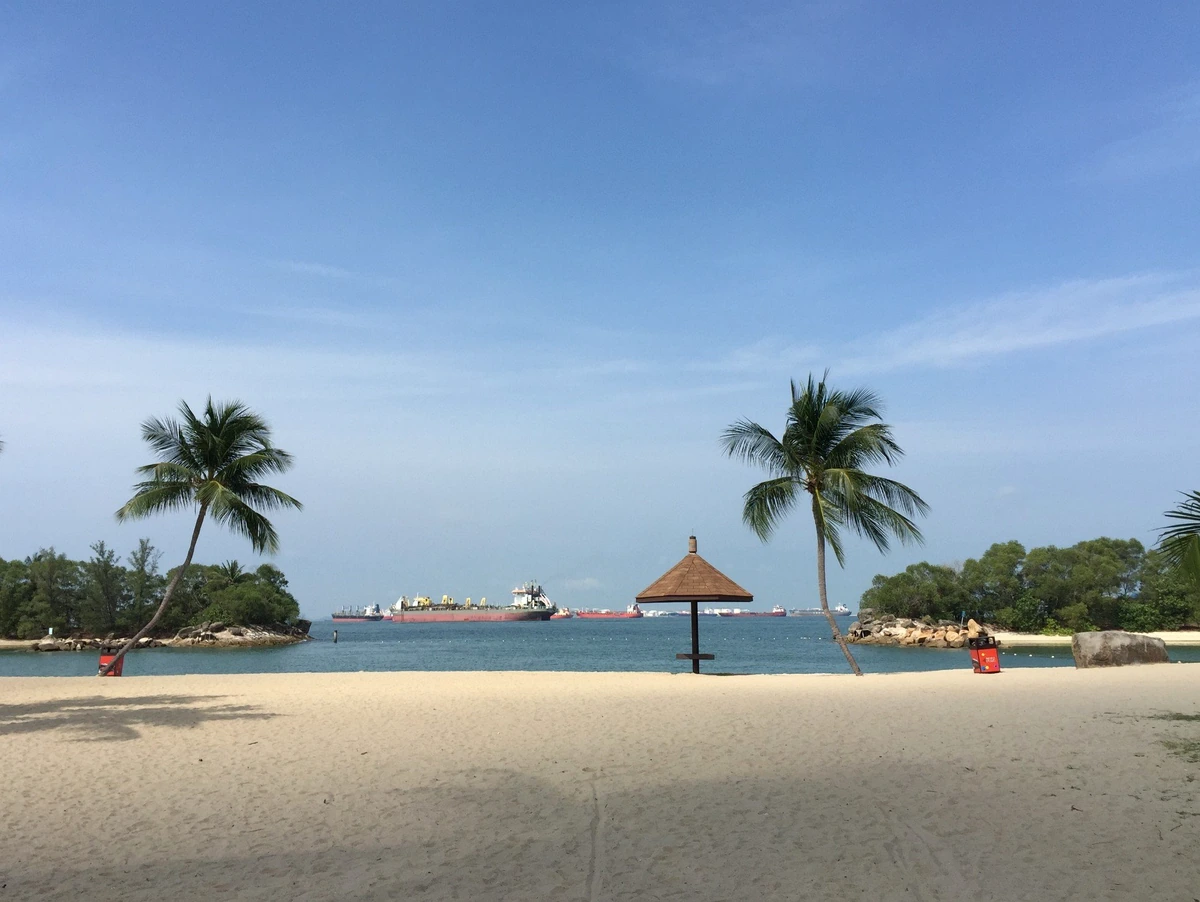
Beneath the glamour of world-class entertainment complexes, Sentosa’s natural ecosystem remains preserved as a remarkable multi-layered biological whole. The secondary rainforest blanketing the hillsides is home to towering ancient Tembusu trees—an iconic hardwood species celebrated in local lore for its fragrant blossoms and durable timber. Tucked beneath that dense tropical canopy thrives a rich habitat for Sunda colugos, gliding mammals that soar effortlessly between tall trunks, alongside bold troops of long-tailed macaques leaping nimbly from branch to branch. Beyond terrestrial flora and fauna, the nearshore marine ecosystem extends to artificial coral reefs along the seabed of the Singapore Strait, where submerged concrete structures seeded with branching corals recreate habitats for hundreds of benthic marine species, completing a seamless harmony between sophisticated human engineering and untamed tropical nature.
Set against the broader canvas of the Lion City, the integrated resort complex Resorts World Sentosa represents a triumph of construction craftsmanship and contemporary spatial planning, backed by a total investment of SGD 6.59 billion. This architectural symphony was sculpted by American Postmodernist master Michael Graves of Michael Graves & Associates, working in close partnership with local experts from DP Architects. Rather than imposing a cold concrete block onto a tropical island, the architects deftly employed a contemporary tropical architectural vernacular—optimizing microclimates by weaving together breeze-catching canopies, lush native greenery, and eco-friendly materials to create an ensemble that is both airy and visually enduring over time.
At the very heart of this entertainment complex lies Universal Studios Singapore, sprawling across an expansive 20 to 25 hectares. The park adopts a classic radial planning philosophy with a seamless circular layout encircling the tranquil waters of the central lagoon, Hollywood Lake. This compositional technique not only directs the daily flow of tens of thousands of visitors smoothly without internal congestion, but also opens up sweeping sightlines where the water acts as a giant mirror reflecting the surrounding man-made wonders. The entire park is divided into seven distinct yet seamlessly connected themed zones, each bringing a historical era or fantastical dimension to life through movie-set fabrication accurate down to the finest detail.
Right from the entrance threshold, Hollywood Boulevard opens into a nostalgic 1940s streetscape featuring the sweeping geometric curves of Art Deco architecture, intricately bent glass canopies, and towering palm trees faithfully recreating California’s cinema heartland. Turning into the New York zone, the visual sensibility immediately shifts to the stately grandeur of Manhattan Neoclassicism, where architects replicated brownstone facades, classic American wrought-iron fire escapes, and crisp stone-paved sidewalks. Stepping through the next portal, the environment transforms abruptly into Sci-Fi City, defined by the sleek, futuristic aesthetic of stainless steel and tempered glass, dominated by the towering twin tracks of Battlestar Galactica—the world’s tallest dueling roller coasters—alongside the multi-dimensional simulation complex housing TRANSFORMERS The Ride. Immediately adjacent, an ancient atmosphere settles over Ancient Egypt, where colossal Sphinx statues, deep-carved hieroglyphic reliefs on artificial rock walls, and mysterious Pharaonic temple gates enclose the indoor dark coaster Revenge of the Mummy, standing in stark contrast to the primeval greenery of The Lost World, which brings the Cretaceous era of Jurassic Park and the spectacular WaterWorld stunt theater to life.
The pinnacle of thematic sculpting and architectural fabrication here shines brightest in the Far Far Away zone. Its centerpiece is the fairytale castle of the ogre Shrek, soaring straight into the tropical sky to an impressive height of 40 meters. Every spire, battlement, and intricate Gothic carving of the castle was meticulously crafted from ultra-durable Glass Fiber Reinforced Concrete (GFRC), enabling artisans to sculpt realistic mossy stone textures and weathered cracks while ensuring structural strength and resilience against Sentosa’s year-round high humidity and equatorial solar radiation. Next door, the lively Madagascar zone—featuring rustic shipwrecked vessel structures crafted from high-grade composites—completes an enchanting visual circuit.
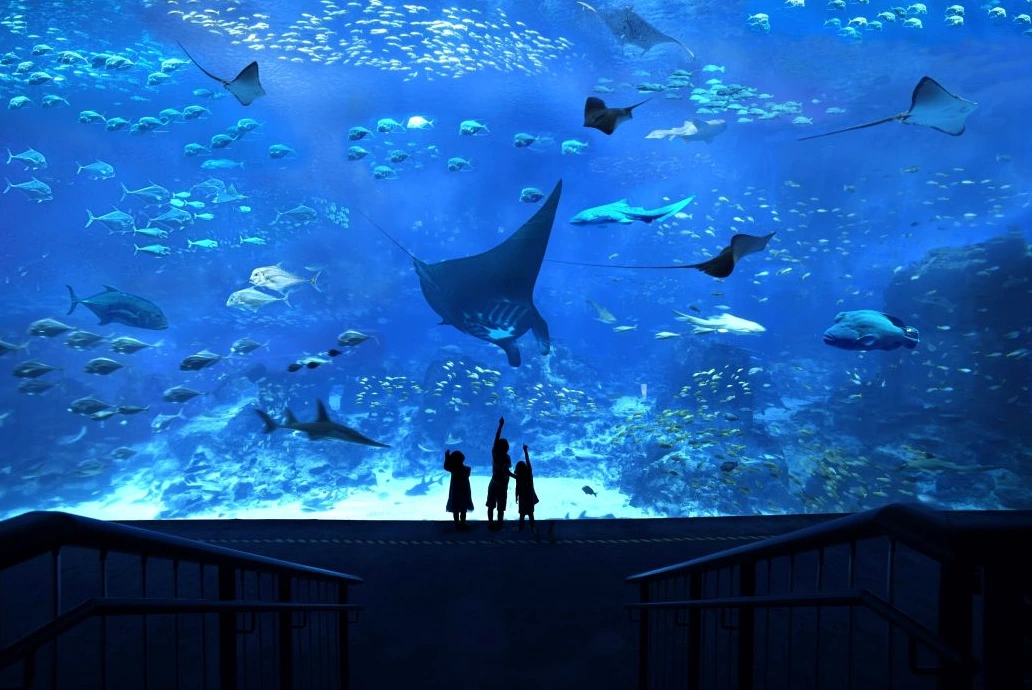
The architectural scale and engineering marvels of the complex also extend deep underground through the S.E.A. Aquarium. Here, subterranean engineering excellence is exemplified by the colossal acrylic viewing panel of the Open Ocean habitat: measuring 36 meters wide, 8.3 meters high, and remarkably thick, with a total weight exceeding 250 tons. This monolithic load-bearing panel is not merely a triumph of heavy mechanical transport and installation within an enclosed underground space; it also delivers crystal-clear optical transparency that dissolves the boundary between observer and deep ocean, completing Sentosa Island’s masterwork of architectural design.
As the tropical sun dips below the placid waters of the Strait of Malacca, Sentosa sheds its vibrant daytime attire to don the mysterious, shimmering allure of a premier kingdom of light and sound. Across Resorts World Sentosa, a breathtaking visual transformation unfolds via Southeast Asia’s most advanced architectural lighting system. Computer-programmed color-changing LED strips, paired with artistic uplights discreetly tucked beneath equatorial palm canopies, gently accentuate the sweeping contours of iconic structures, turning pedestrian boulevards into multi-layered corridors of light. Moving westward from the entertainment hub, Siloso Beach unveils a completely different nocturnal rhythm: warm golden glows from torches, beachside bonfires, and beachfront clubs like Rumours and Sand Bar mingle with vibrant laser beams, blending into the gentle murmur of crashing waves and hypnotic tropical beats.
The crowning masterpiece of Sentosa after dark belongs to “Wings of Time”—the world’s only permanent outdoor multimedia night show set directly on the open sea at Siloso Beach. Beneath a starlit sky, a steel-frame stage extending over the water supports colossal origami-inspired triangular sails rising dozens of meters high. The production harnesses the full power of 3D projection mapping, synchronizing dozens of ultra-high-pressure hydraulic water jets that launch billowing plumes into the air alongside high-powered lasers and blazing pyrotechnic fireworks bursting across the night sky. Audiences are captivated not only by precision mechanical effects, but also by an epic mythical narrative: the time-traveling odyssey of Shahbaz, a prehistoric bird awakened from a millennium-long slumber, who joins two young friends on a journey across human history—gliding over the legendary Silk Road of the East, sweeping through the roaring Industrial Revolution of the West, and touching down upon the vast African savanna—leaving behind a resonant message of courage and bravery.
Beyond its romantic seaside charm, the nightlife at Universal Studios Singapore (USS) is periodically electrified by large-scale cultural spectacles, most notably Halloween Horror Nights—the pinnacle of professional horror production in Asia. Once night falls, the colorful daytime zones instantly morph into eerie labyrinths shrouded in dense chilled fog and flickering spectral lights. Utilizing Hollywood-caliber production standards, the event brings together special-effects makeup artists, detailed theatrical costume designers, and skilled interactive scare actors. Haunted houses and scare zones are meticulously crafted, weaving haunting Southeast Asian urban legends—from the dreaded Pontianak spirit of Malay folklore to eerie tales of Chinese immigrants—with modern Western horror tropes. The fusion of low-frequency surround sound engineering, mechanical fire and fog effects, and macabre visual environments delivers a breathless nocturnal thrill, capturing the multi-layered, epic, and magnetic essence of Sentosa’s nightlife.
Amid Southeast Asia’s most modern resort enclave, the culinary landscape of Sentosa Island and Resorts World Sentosa is far from overshadowed by commercial glitz; instead, it reverently preserves the celebrated street-food heritage of the Strait of Malacca region. Standing out at this cultural crossroads is Malaysian Food Street, a nostalgic recreation capturing the atmosphere of 1960s hawker alleys across the Malay Peninsula. From marble-topped round tables and weathered wooden louvered shutters to the rhythmic clatter of iron spatulas against seasoned woks, every detail transports diners on a deeply traditional gastronomic journey. Here, second- and third-generation culinary artisans from renowned families across the neighboring country bring closely guarded heirloom recipes to create a living culinary museum.
The soul of this heritage shines vividly in the famed Penang Assam Laksa, a Peranakan fusion icon celebrated on the global culinary map. Its broth is a complex symphony of tangy tamarind pulp and the rich umami of poached, flaked mackerel simmered slowly with lemongrass, chilies, and—crucially—torch ginger flower buds that impart an unmistakable, heady aroma. Ladled over springy round rice noodles, each bowl is garnished with crisp julienned cucumber, ripe pineapple, red onion, and fresh mint leaves before being crowned with a spoonful of thick, pungent black shrimp paste. Alongside it sits Klang Bak Kut Teh, a herbal pork rib soup rooted in the wellness philosophy of Chinese immigrants. Prime meaty pork ribs are simmered gently for hours in clay pots with traditional Chinese medicinal herbs—star anise, cinnamon bark, cloves, goji berries, and angelica root—yielding a steaming, dark-brown broth fragrant with botanicals and naturally sweet from bone marrow.
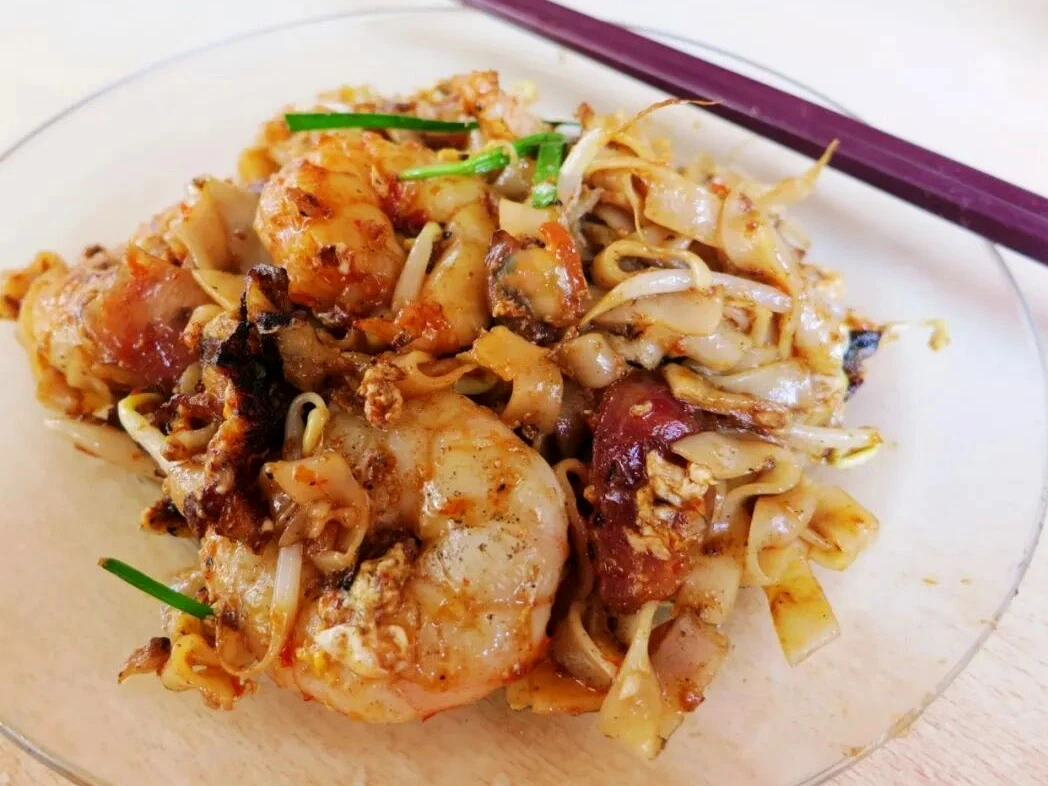
In a fiery corner of the food street, Penang Char Kway Teow delivers a peak sensory spectacle through masterful flame control. Master chefs capture authentic “wok hei”—the coveted breath of the wok—by flash-frying flat rice noodles over roaring high heat in mere seconds. Every strand of noodle absorbs a glossy coating of dark soy sauce, tightly clinging to crispy pork lardons, thin slices of savory Chinese sausage, plump fresh blood cockles, crunchy bean sprouts, and vibrant green chives. The light char along the noodle edges not only attests to pinpoint temperature mastery, but also releases a signature smoky aroma that lingers irresistibly on the palate, elevating this humble street dish into a true culinary masterpiece.
Stepping out from the nostalgic embrace of the heritage food street, Sentosa’s dining culture stretches toward sun-drenched Siloso Beach, where the pace shifts to the breezy sophistication of tropical coastal living. Along the powdery white sand, popular beach clubs such as Coastes and Ola Beach Club offer idyllic al fresco dining beneath swaying coconut palms. Here, local culinary artistry shines through traditional charcoal grilling, as skewers of chicken and beef satay marinated in lemongrass, turmeric, and cumin sizzle over glowing embers, releasing mouthwatering aromas before being dipped into rich, velvety crushed-peanut sauce. Paired with platters of freshly caught grilled seafood, the beachside dining experience is rounded out by artfully crafted tropical cocktails blending premium spirits with the zesty tang of local calamansi limes and the refreshing aroma of freshly muddled lemongrass—delivering pure relaxation as sunset paints the azure sea.
To fully experience the vibrant pulse and monumental scale of Sentosa Island and Universal Studios Singapore, understanding on-site operational rhythms is key to a seamless journey. Resorts World Sentosa in general—and Universal Studios Singapore in particular—typically welcomes visitors from 10:00 AM to 7:00 PM daily, extending operating hours until 9:00 PM on weekends and special festive seasons to accommodate fireworks displays and grand light shows. Meanwhile, the S.E.A. Aquarium opens its underwater world from 10:00 AM to 5:00 PM, while the soft white sands of Siloso Beach remain freely accessible 24/7, offering a tranquil retreat for anyone wishing to listen to gentle waves lapping beside tropical palms after dark.
Reaching the island once known as Pulau Blakang Mati is an engaging spatial transition in itself, reflecting the Lion City’s world-class infrastructure design. Travelers can start at HarbourFront MRT station, head up to Level 3 of the sprawling VivoCity mall, and board the Sentosa Express monorail to glide effortlessly across Keppel Harbour in just a few minutes. For those who prefer a leisurely scenic stroll, the fully covered Sentosa Boardwalk—equipped with travelators—carries pedestrians across the breezy strait amid colorful native flora. Most notably, the Singapore Cable Car departing from historic Mount Faber offers breathtaking aerial vistas, sweeping over one of the world’s busiest ports and lush rainforest canopies before descending onto the island.
When it comes to ticketing and logistics, booking admission passes online in advance through official channels is the golden rule for avoiding exhausting queues under the tropical sun while locking in rates against peak-season price fluctuations. If you are short on time yet eager to conquer headline thrill rides like the Battlestar Galactica dueling coasters or Transformers The Ride, a Universal Express pass is the ultimate key to bypassing regular lines via dedicated priority lanes, keeping every moment of your adventure seamless and exhilarating.
Located barely over a hundred kilometers north of the equator, Sentosa experiences a classic tropical monsoon climate year-round, with humidity frequently exceeding 80% alongside intense solar radiation. Consequently, a traveler’s essential kit should include lightweight, breathable clothing, a wide-brimmed hat, a compact folding umbrella for sun or sudden showers, and high-SPF sunscreen. To promote green sustainability and help guests stay energized, park management provides a network of free potable water dispensers near most public restrooms and ride queues, making a reusable personal water bottle an invaluable companion throughout the day.
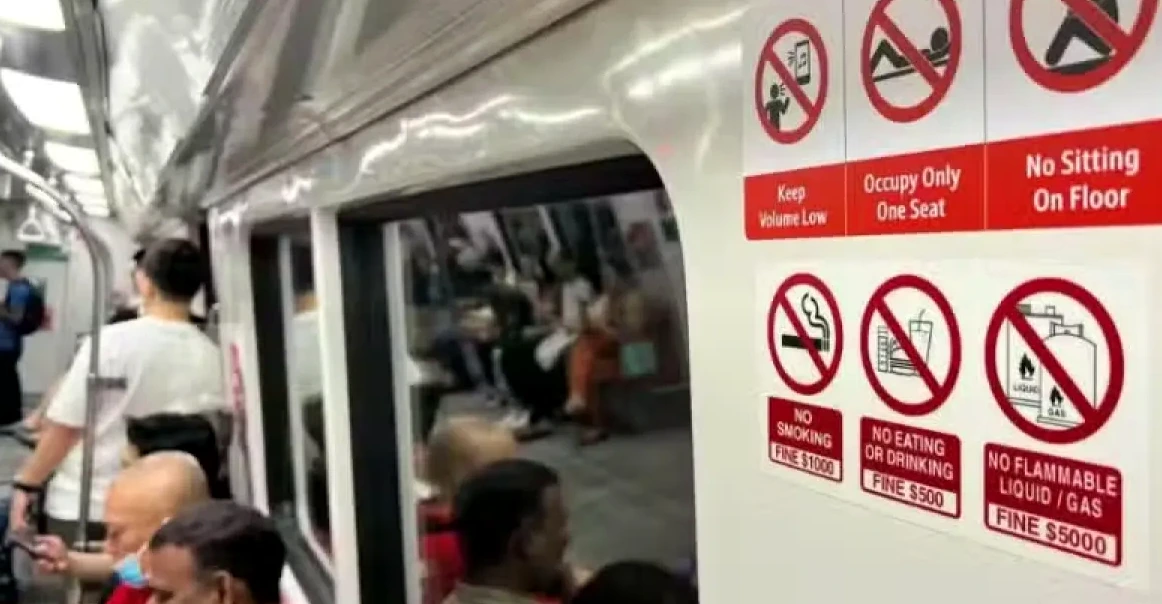
Above all, the foundation of Singapore’s civilized appeal lies in its strict legal framework, renowned worldwide as a model of public order. Visitors must pay close attention to public conduct rules: littering, spitting, and smoking outside designated yellow-bordered zones (Designated Smoking Areas) are strictly prohibited. Regulations forbidding eating and drinking on public transit—including the MRT and the Sentosa Express—are closely monitored via sensor cameras and security patrols, carrying steep financial penalties for violations. Respecting these civic standards not only guarantees a smooth, trouble-free visit, but also demonstrates genuine appreciation for local culture.
The seamless fusion of urban discipline, awe-inspiring global engineering marvels, and laid-back island nature has cemented Sentosa as an unmissable destination on any journey south. To turn the dream of exploring this enchanting wonderland into reality without worrying about complex logistics, choosing an all-inclusive Singapore – Malaysia cross-border tour package will open the door to the richest and most unforgettable experiences right in the heart of Southeast Asia.