Viewed from the emerald-blue flow of the storied Tiber River, the territory of today’s Città del Vaticano was originally a low-lying marshy plain on the river’s right bank, bearing an ancient name derived from the Etruscan root “Vaticum” or “ager Vaticanus.” It was once an untamed expanse on the outskirts of ancient Rome before Emperor Caligula decided in the 1st century AD to reclaim the land and construct a grand arena known as the Circus Gai et Neronis. To display the supreme might of the Roman Empire, a monolithic obelisk carved from vibrant red granite was transported across the Mediterranean Sea from the ancient Egyptian city of Heliopolis and erected toweringly at the center of the circus. Few could have imagined that the very axis of this blood-soaked racetrack would become the birthplace of one of the most sacred and powerful sanctuaries in all of human history.
The fateful event that etched itself forever into the soul of this land occurred in 64 AD, amid the brutal wave of persecution under Emperor Nero following the Great Fire of Rome. The Apostle Peter, revered as the princeps apostolorum (first among the apostles) of the early Christian community, suffered martyrdom on this hill, and his remains were quietly laid to rest in a humble necropolis running along the Via Cornelia. That modest tomb swiftly became the focal point of fervent religious devotion across generations of clandestine believers. By the early 4th century, when the Edict of Milan ushered in an era of peace for the Church, Emperor Constantine the Great made a decision that reshaped history: he leveled the steep hillside and ancient cemetery to build the first grand basilica (San Pietro in Vaticano). Begun between 318 and 322 and completed around 329, this monumental edifice permanently established Vatican Hill’s inviolable status as an enduring symbol of the universal Catholic faith.
Enduring more than a millennium of weathering elements and medieval geopolitical upheavals, the Constantinian basilica gradually fell into severe disrepair. Entering the 16th century, the vibrant Renaissance witnessed the rise of popes passionately devoted to art and architecture, foremost among them Pope Julius II. With rare audacity and foresight, he ordered the demolition of the thousand-year-old basilica to rebuild a magnificent masterpiece surpassing the bounds of its era. The solemn cornerstone-laying ceremony took place on April 18, 1506, launching a 120-year architectural epic that brought together some of humanity’s greatest geniuses. Not until November 18, 1626, was St. Peter’s Basilica officially consecrated, raising its colossal dome to embrace the spiritual consciousness of the entire Christian world. Shortly before this grand undertaking, Pope Sixtus IV—during his pontificate from 1473 to 1481—commissioned the construction of the Cappella Sistina (Sistine Chapel) upon the foundations of the older Cappella Magna. This structure not only served as a venue for solemn liturgical celebrations, but also became the sacrosanct space reserved for the Papal Conclave to elect the Successor of St. Peter across the ages.
Alongside the radiant glory of art and liturgy, the history of the Vatican also weathered turbulent turns of fate. The Breccia di Porta Pia (Capture of Rome) on September 20, 1870, marked the entry of the Royal Italian Army into Rome, bringing an official end to over a thousand years of temporal power held by the Papal States (Stato Pontificio) and confining the Popes behind the Vatican walls as self-proclaimed “prisoners in the Vatican.” This political deadlock lasting nearly six decades finally found its historic resolution on February 11, 1929, when the Lateran Treaty (Patti Lateranensi) was solemnly signed between the Holy See and the Kingdom of Italy. This landmark accord gave birth to the Vatican City State as an independent, fully sovereign nation spanning a mere 44 hectares, opening the modern era for the spiritual heart of more than one billion Catholics across five continents.
Resting gracefully along the right bank of the winding Tiber River, the territory of the Holy See sits atop a geological structure at once complex and symbolic of the ancient Mons Vaticanus. In contrast to the seven historic hills on the opposite bank that cradled the Roman Empire, Vatican Hill and the neighboring Gianicolo ridge were formed from fertile alluvial sediment layers interwoven with dense clay strata and bands of tufa stone left behind by prehistoric volcanic activity. This distinctive stratigraphy, sloping gently down toward the riverside floodplain, posed a formidable engineering challenge for architects across centuries. To erect a sacred complex capable of enduring through the ages, massive earthmoving and leveling operations were tirelessly carried out from the reign of Emperor Constantine to the zenith of the Renaissance, transforming what was once a damp, low-lying marsh into a solid foundation platform capable of supporting hundreds of thousands of tons of marble and Roman masonry.
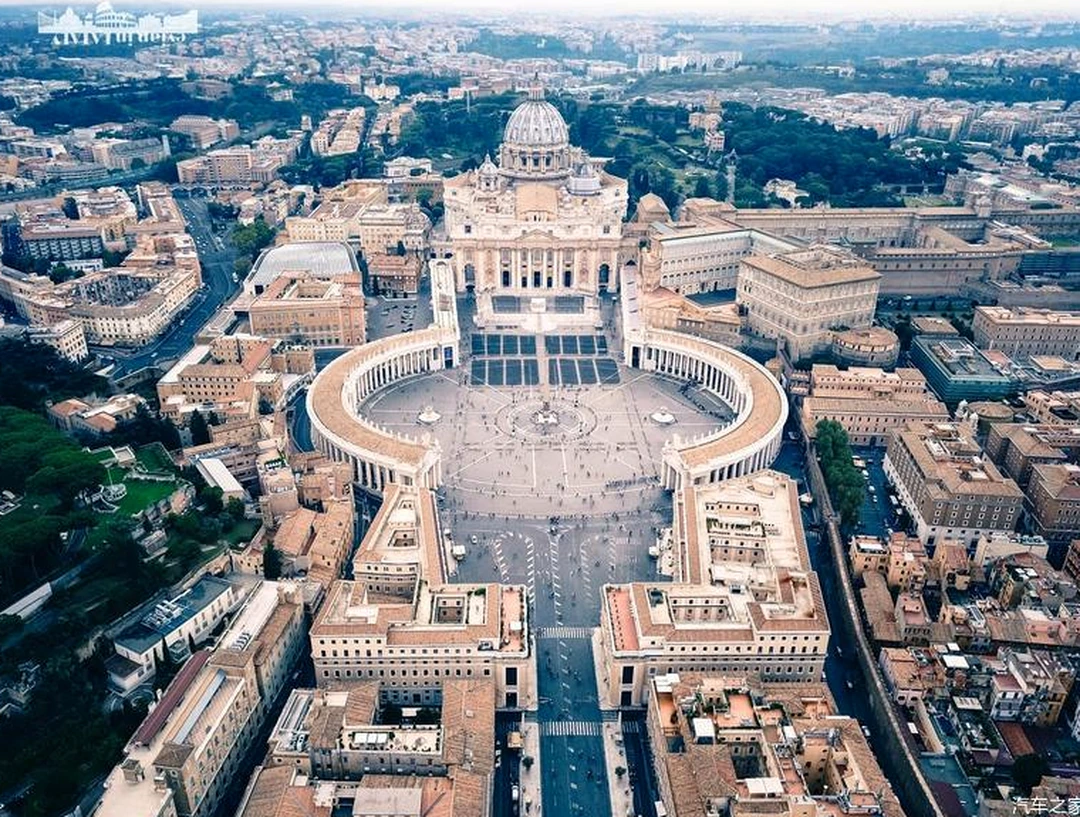
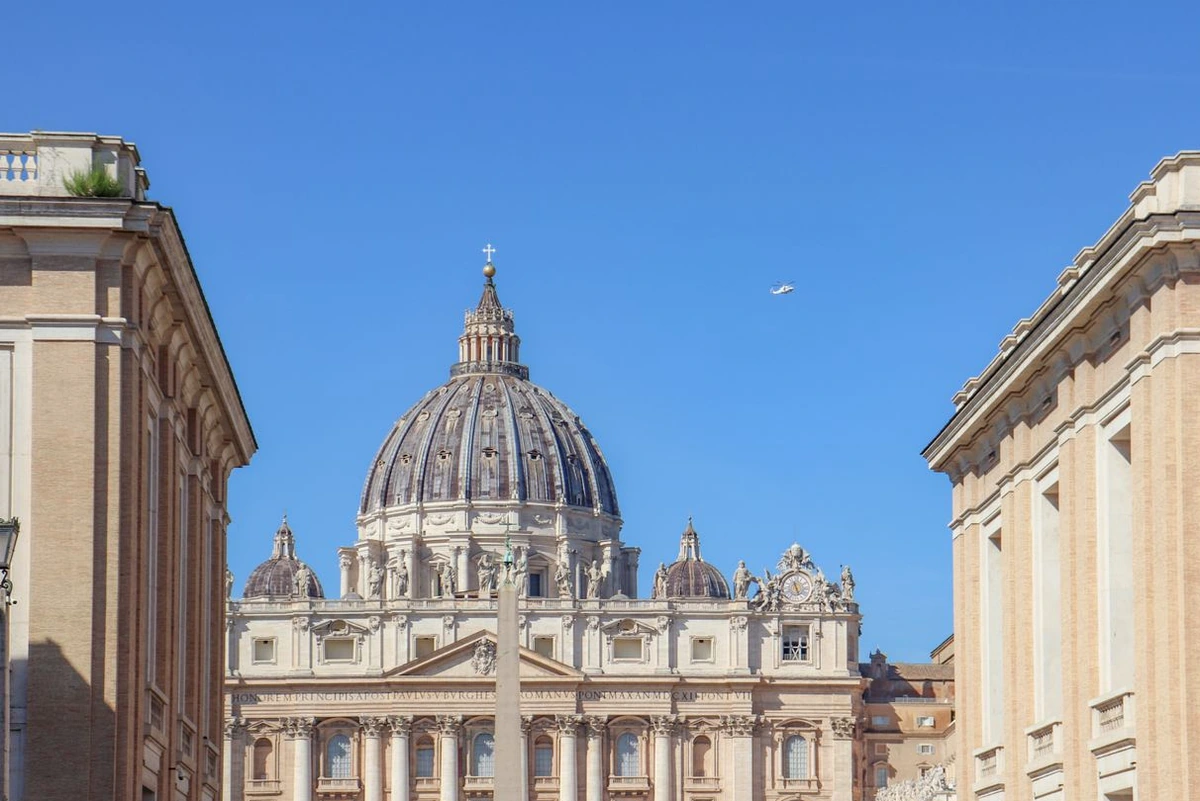
Upon this tamed terrain, the centerpiece of landscape design and visual spatial planning is St. Peter’s Square (Piazza San Pietro), an unprecedented masterpiece of urban planning conceived and executed by the genius Gian Lorenzo Bernini between 1656 and 1667 under Pope Alexander VII. Faced with the challenge of harmonizing the asymmetrical layout between Carlo Maderno’s monumental facade, the Apostolic Palace, and the pre-existing Egyptian Obelisk erected in 1586, Bernini harnessed the grand geometric principles of the Baroque era to create an expansive elliptical piazza joined to a trapezoidal forecourt (Piazza Retta). This architectural form embodies the theological spirit of the Counter-Reformation, wherein two sweeping curved colonnades reach outward like the maternal arms of the Church embracing all the faithful, sheltering pilgrims, and welcoming even those outside the faith into sacred ground.
This architectural marvel was realized through a concentric four-deep colonnade in the Doric order comprising 284 towering monolithic columns and 88 supporting pilasters, all crafted from ivory-white travertine quarried from the renowned stone pits of Tivoli. Vast quantities of stone were transported along the Aniene and Tiber river valleys to raise an imposing wall of honor, crowned atop by 140 statues of martyrs intricately sculpted by Bernini’s workshop. Beyond its supreme aesthetic value, the four-tiered colonnade served as an ingenious engineering solution to disguise the natural elevation difference between the sloping Vatican hillside and the receding ground level, while producing a mesmerizing optical illusion: when a visitor stands upon either of the two porphyry focal points marked in the piazza pavement, all four rows of columns visually align into a single straight line, demonstrating the absolute precision of perspective geometry.
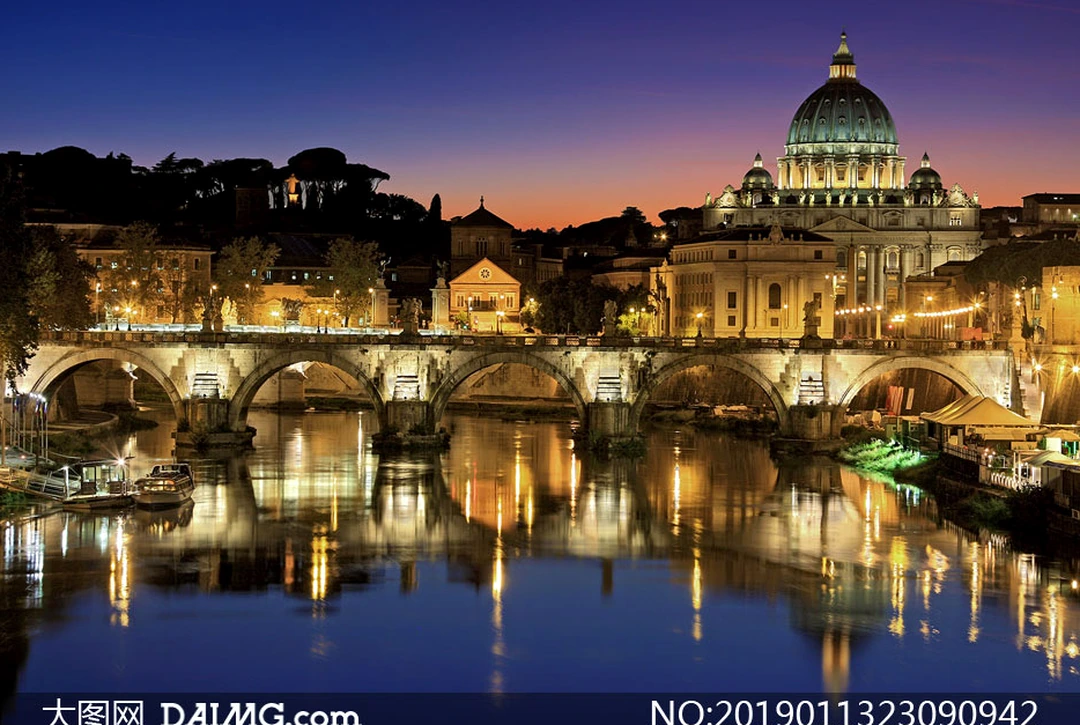
The landscape of the Vatican attains true perfection through its spatial axis stretching from the banks of the Tiber—beginning at the marble angel-lined Ponte Sant’Angelo, leading through the historic Borgo district, and merging into the grand Via della Conciliazione widened in the 20th century. This layered progression orchestrates a subtle emotional transition for travelers, guiding them from the bustling rhythm of Rome, along quiet streets paved with dark sampietrini cobblestones, before suddenly opening out into the vast, breathtaking expanse of the sacred square. Beneath the Mediterranean sky, the interplay of river breezes off the Tiber, the sedimentary gray tones of Gianicolo Hill, and the warm golden hue of Tivoli travertine composes a majestic panorama where natural geography and architectural artistry fuse into a sacred entity at the heart of the Eternal City.
St. Peter’s Basilica rises as a supreme triumph of Western architectural art, uniting the aesthetic vision and master craftsmanship of the greatest luminaries of the Renaissance and Baroque periods. Over more than a century of construction, the edifice became an unbroken continuum of generational genius: originating from Donato Bramante’s bold Greek-cross floor plan, evolving gracefully under the hand of painter Raffaello Sanzio and the meticulous draftsmanship of Antonio da Sangallo the Younger, before Michelangelo Buonarroti reshaped the monumental structure of the central dome. Later, architect Carlo Maderno extended the nave between 1612 and 1614 to transition the church into a classic Latin-cross plan, creating the imposing, majestic facade that welcomes pilgrims from every corner of the globe to the center of Christendom.
The sheer physical scale of the basilica transcends all conventional standards of religious architecture. Measuring approximately 220 meters in length and up to 150 meters in width, this sacred interior can accommodate over 60,000 standing worshippers alongside 20,000 seated guests during major liturgical celebrations. Dominating the entire skyline of Rome is the magnificent hemispherical dome designed by Michelangelo and carried to completion in 1590 by Giacomo Della Porta and Domenico Fontana. Soaring to a height of 133.30 meters from the floor to the top of the Cross, this colossal double-shell dome operates through an extraordinary system of load-distributing structural ribs, framing a celestial expanse flooded with shafts of heavenly light streaming down from high windows and the crowning lantern.
Stepping through the massive bronze portals into the nave, visitors are immediately overwhelmed by a resplendent symphony of polychrome marble slabs covering the floors and vaults, interwoven with gleaming gilded stucco motifs and elaborately carved bas-reliefs. Directly beneath the center of the dome, standing sentinel over the tomb of the Apostle Peter, is Gian Lorenzo Bernini’s bronze Baldachin. Rising to the height of a four-story building, this masterpiece features four spiraling Solomonic columns inspired by the ancient Temple of Jerusalem, cast from tens of tons of bronze stripped from the portico of the ancient Pantheon by decree of Pope Urban VIII. Nestled serenely in the first chapel on the right stands Michelangelo’s celebrated Pietà, sculpted when the artist was still in his early twenties between 1498 and 1499. From a single block of flawless Carrara marble, he chiseled drapery that falls as softly as silk and the remarkably youthful, serene countenance of the Virgin Mary cradling the body of Jesus—establishing an eternal benchmark for proportion and spiritual grace in human sculpture.
Adjoining the basilica complex is the Sistine Chapel, the sacred chamber where the College of Cardinals convenes to elect a new Pope and the crowning pinnacle of Western painting. Built to exact rectangular dimensions of 40.93 meters in length, 13.41 meters in width, and 20.70 meters in height, the room replicates the precise biblical proportions of Solomon’s Temple as described in the Old Testament. Across more than 520 square meters of vaulted ceiling, Michelangelo labored for years atop high scaffolding to paint nine episodes from the Book of Genesis, highlighted by the iconic moment when the finger of God imparts the spark of life to Adam. Decades later, the master returned to the altar wall between 1536 and 1541 to complete The Last Judgment, depicting over three hundred figures caught in a swirling vortex between salvation and damnation—an immortal testament to faith, awe, and humanity’s yearning for transcendence.
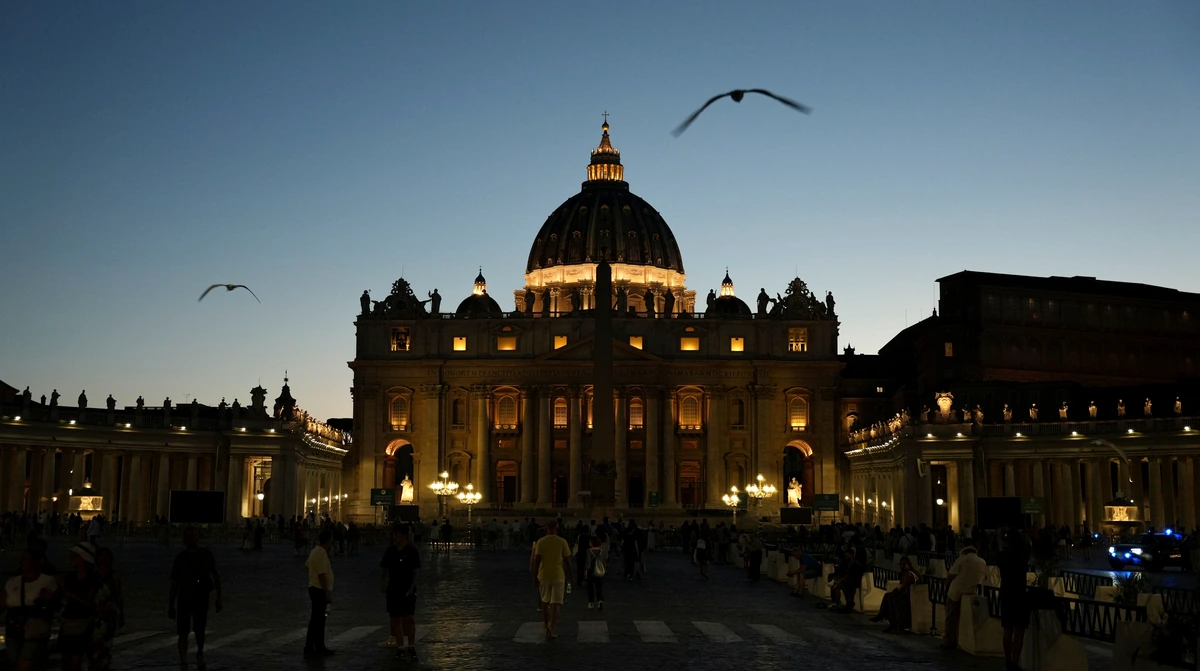
When sunset dips below the horizon of Vatican Hill, shedding the daytime bustle of tens of thousands of pilgrims, the holiest city-state in the Catholic world enters an entirely different metaphysical dimension. Beneath Rome’s deep violet twilight, a masterpiece of contemporary lighting design comes to life, paying tribute to the monumental travertine architecture bequeathed to humanity by Gian Lorenzo Bernini and Michelangelo Buonarroti. Hundreds of specialized optical fixtures—angled with millimeter precision so as never to harm the centuries-old sedimentary limestone—awaken the elliptical embrace of St. Peter’s Square in unison. The grand colonnade of 284 Doric pillars rises like open arms cradling humankind, while Michelangelo’s majestic cupola glows like a gilded crown suspended in the tranquil night sky, casting its stately reflection upon the calm waters of the Tiber.
Nightlife in the Vatican carries none of the flashy glamour of a conventional entertainment district; instead, it distills into an intimate, one-of-a-kind artistic encounter through special evening openings held in spring and autumn, known locally as aperture serali straordinarie. During these enchanting hours, the grand halls of the Vatican Museums cast off their daytime urgency. Visitors stroll through the serene hush of kilometer-long corridors, where warm golden light washes across the Gallery of Maps—with its richly gilded vaulted ceiling and 16th-century geographical frescoes—and leads onward through the Raphael Rooms, where The School of Athens presides in a breathtakingly solemn atmosphere.
The culmination of this nocturnal journey arrives the moment you step across the threshold of the Sistine Chapel. Illuminated by a conservation-grade lighting system engineered to emit zero ultraviolet radiation, the original pigments across Michelangelo’s ceiling and The Last Judgment emerge with astonishing vibrancy. Freed from hurried whispers and pressing crowds, the space becomes a silent dialogue between mortal visitors and Renaissance genius. Every fold in the robes of the prophets and every rippling muscle of the souls on Judgment Day seem to stir to life beneath the gentle glow, creating a spellbinding visual experience that inspires quiet reverence before the pinnacle of human creativity.
The evening experience at the Vatican reaches even greater heights when visual splendor merges with sacred music and classical chamber concerts staged inside original Renaissance courtyards such as the Cortile della Pigna or the Cortile del Belvedere, originally conceived by master architect Donato Bramante. Beneath the open, breeze-swept night sky and the shadow of the colossal bronze pinecone dating back to ancient Rome, timeless works by Antonio Vivaldi and Wolfgang Amadeus Mozart—alongside the solemn polyphonic harmonies of Giovanni Pierluigi da Palestrina—resonate deeply within the soul. It is a sublime convergence of ancient limestone heritage, the storied darkness of a Roman night, and purifying music, offering an elevated cultural experience unmatched anywhere else on earth.
Stepping out of the stately shade of the Tuscan-Doric colonnades framing St. Peter’s Square and passing through ancient stone arches into the rione Borgo—the historic neighborhood nestled between the Vatican walls and Castel Sant’Angelo—travelers immediately enter a culinary realm steeped in layers of history. The local gastronomy here is an exquisite marriage between the opulent courtly cuisine of Renaissance papal households and the rustic, generous flavors of the fertile Latium countryside. Every recipe handed down over the centuries in this quarter is far more than everyday sustenance; it deeply reflects religious life, strict liturgical calendars, and the unique terroir of central Italy.
The soul of this sacred district’s culinary identity springs from ingredients protected under some of Europe’s strictest geographical indication standards. Foremost among them is Pecorino Romano DOP, a pure sheep’s milk cheese prized for its sharp, piquant saltiness that once sustained ancient Roman legions and graced medieval papal tables; delicately sweet Ricotta Romana; and celebrated slabs of cured pork jowl, Guanciale di Amatrice IGP, seasoned with black pepper and sea salt using time-honored artisanal methods. Pairing effortlessly with these rich flavors is Frascati Superiore DOCG white wine from the volcanic hills of Castelli Romani, where monastic orders once cultivated the land to craft luminous golden vintages bursting with wildflower aromas and crisp minerality.
In the skilled hands of local Roman chefs, these ingredients unite to create Rigatoni alla Gricia—widely hailed as the original ancestor of Rome’s iconic pasta dishes. Thick, ridged pasta tubes are tossed to perfection al dente, coated in the rendered richness of crispy, golden-edged guanciale and a velvety emulsion of grated sheep’s milk cheese and hot pasta water. Continuing this gastronomic tour is Saltimbocca alla Romana: paper-thin slices of tender milk-fed veal pinned with a fresh sage leaf and cured prosciutto, swiftly pan-seared over high heat in unsalted butter and white wine to release an aroma so irresistible its name poetically translates to “jumps in the mouth.” For lamb lovers, Abbacchio alla scottadito—baby lamb chops marinated with rosemary and fresh garlic and charred over glowing coals until meant to be eaten with one’s fingers straight off the grill—delivers a rustic yet unforgettable delicacy.
Beyond hearty celebratory fare, the Vatican’s culinary heritage bears the distinct imprint of “meatless cooking” (cucina di magro), shaped by strict Benedictine and Franciscan monastic traditions observed during Lent and Fridays of penance. This tradition shines in slow-simmered legume soups, Baccalà alla romana (salted cod braised in tomato sauce with pine nuts and raisins), and Minestra di broccoli e brodo di arzilla, a comforting soup of Romanesco broccoli simmered in skate fish broth that embodies a philosophy of wholesome, restrained nourishment. Cultural exchange is also vividly expressed through two classic preparations of Roman artichokes: Carciofi alla Giudia, deep-fried to golden crispness like a blooming chrysanthemum from the nearby historic Jewish Ghetto, and Carciofi alla Romana, braised tender with wild mint (mentuccia), fresh garlic, and extra-virgin olive oil.
A culinary journey here is only truly complete when travelers linger slowly inside the historic trattorias and osterias tucked along the cobblestone lane of Borgo Pio. Beneath centuries-old terracotta brick vaults, surrounded by sepia-toned photographs capturing generations of cardinals and local residents sharing the same tables, diners come to realize that every dish served is not merely a feast for the senses, but an intimate cultural dialogue woven into the eternal faith of the Holy See.
Stepping into the heart of the Vatican—the world’s foremost center of Catholic faith and treasury of Renaissance art—requires not only a spirit of reverence, but also thoughtful logistical preparation. St. Peter’s Basilica (Basilica di San Pietro) welcomes pilgrims daily on a seasonal schedule. From April through September, its imposing bronze doors remain open from 7:00 AM to 7:00 PM; during the autumn and winter months from October through March, closing time shifts thirty minutes earlier to 6:30 PM. While passing through security to admire Michelangelo’s Pietà or the central Papal Altar is completely free of charge, the ideal time to avoid dense crowds is early morning, when dawn light slants dramatically through the high clerestory windows. If you wish to test your stamina for sweeping panoramic views over Rome and Gian Lorenzo Bernini’s elliptical square, climbing to the top of the Dome (Cupola) is an unmissable experience—offering a paid elevator ride combined with over 300 narrow steps, or a full ascent on foot via more than 500 winding stairs.
Just steps away, the Vatican Museums (Musei Vaticani) and the Sistine Chapel (Cappella Sistina)—home to priceless artistic treasures and the site of the Papal Conclave—operate on their own schedule. The museum complex typically welcomes visitors Monday through Saturday from 8:00 AM to 7:00 PM, with final entry permitted at 5:00 PM. Given that more than six million visitors arrive annually from around the globe, booking timed-entry tickets online well ahead of your trip is essential if you wish to avoid spending exhausting hours waiting in long queues beneath the ancient fortress walls.
Rome’s public transit network connects effortlessly with this tiny sovereign state. The fastest and most popular option is Metro Line A: alight at Ottaviano – San Pietro station for direct access to St. Peter’s Square, or exit at Cipro station if your first stop is the entrance to the Vatican Museums. For travelers who prefer taking in Rome’s time-worn streetscapes above ground, urban bus routes such as Line 40 (an express service from Roma Termini central station) or Line 64 (winding through the historic center) drop passengers right near the edge of Via della Conciliazione. Additionally, Bus Line 49 stops directly outside the museum entrance, while Tram Line 19—ending at the leafy Piazza del Risorgimento—offers a charming, quintessentially Italian way to arrive.
As a supreme sanctuary of the Catholic Church, the Vatican’s dress code is strictly enforced by the Swiss Guard and local security personnel. Both men and women are required to dress modestly and respectfully: shoulders must be fully covered (no sleeveless tops or low-cut necklines), and trousers, shorts, or skirts must extend below the knees. Bulky backpacks, wheeled luggage, professional camera tripods, and sharp objects must be checked at the cloakroom prior to passing through security screening. Inside the sacred space of the Sistine Chapel in particular, visitors must maintain absolute silence and strictly observe the ban on photography and filming to protect The Last Judgment frescoes from the cumulative damage of optical flashes over time.
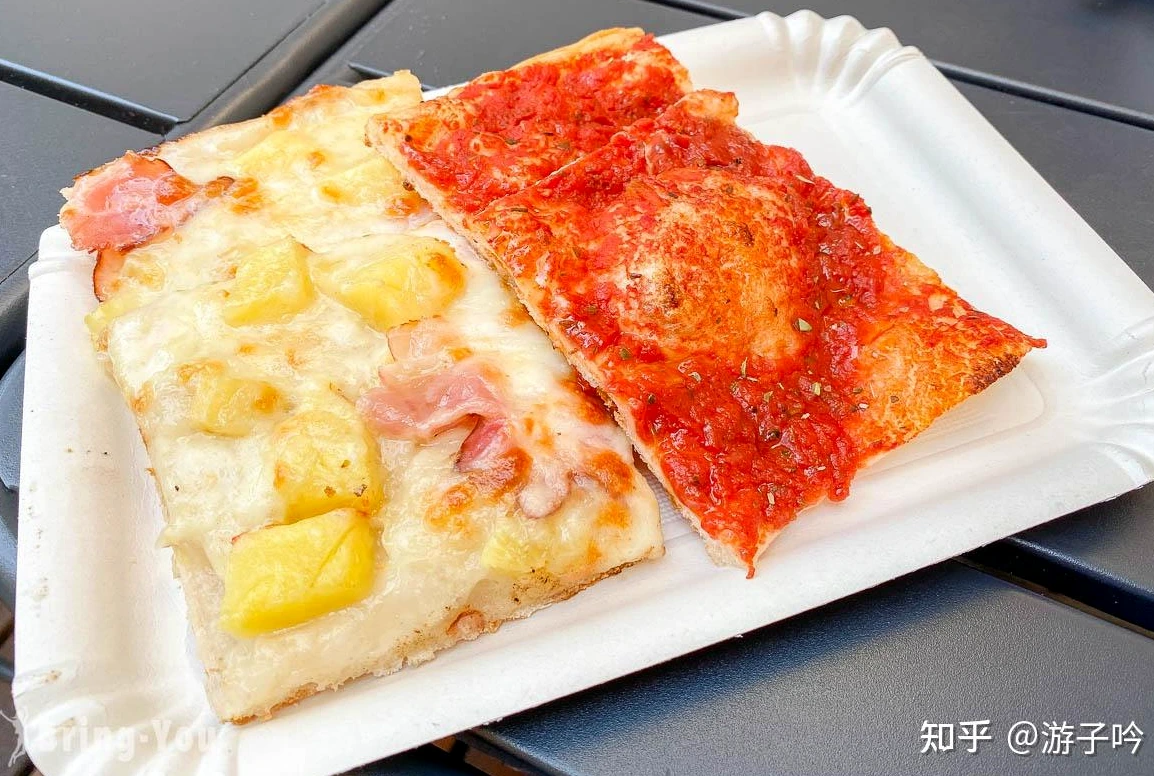
To make the most of exploring the world’s smallest nation without wearing yourself out, wear comfortable walking shoes and bring a refillable water bottle to top up with fresh, pure drinking water from Rome’s iconic public fountains (nasoni). Rather than dining at overpriced tourist traps bordering the square, stroll over to the neighboring Borgo or Prati districts for crisp wood-fired pizza or an authentic plate of Roman pasta. Thoughtful planning and a genuine appreciation for local customs will elevate your visit to the Vatican into a deeply enriching journey—and for a seamless itinerary combining this sanctuary with neighboring landmarks, travelers can explore our all-inclusive European tour packages for an effortless, culturally immersive getaway.