Set within a fertile subtropical valley in western Bhutan—the Land of the Thunder Dragon—Punakha Dzong carries the ceremonial title Punakha Pungthang Dechen Phodrang Dzong, a dignified Dzongkha name meaning “Palace of Great Bliss.” This historic fortress-monastery is the second-oldest dzong in Bhutan and one of the largest religious and administrative complexes in the country’s history. Its origins are closely tied to Zhabdrung Ngawang Namgyal, the revered master of the Drukpa Kagyu school of Tibetan Vajrayana Buddhism who laid the groundwork for unifying fragmented clans into an independent Bhutanese state in the seventeenth century. In the winter of 1637, following an auspicious dream and careful assessment of natural defense lines, the Zhabdrung chose a sacred alluvial spit right where two rivers meet—the turbulent Pho Chhu, symbolizing the vital force of the Father, and the gentle Mo Chhu, representing the nurturing nature of the Mother—to establish the supreme seat of Bhutan’s dual religious and secular system.
Under chief architect Trashipangpa, the initial structure known as Dzong Chung (“Little Dzong”) was completed in less than a year in 1638. This rapid build relied on the traditional gungtshil system of communal labor contributed by households across nearby valleys. Once its ramparts rose, Punakha Dzong served as the seat of government and the political and cultural heart of the kingdom for more than three centuries until the royal government permanently moved the capital to the Thimphu valley in 1955. Beneath the shadow of its sturdy central tower (utse), national decrees and sacred Buddhist empowerments were issued, anchoring traditional Bhutanese social order.
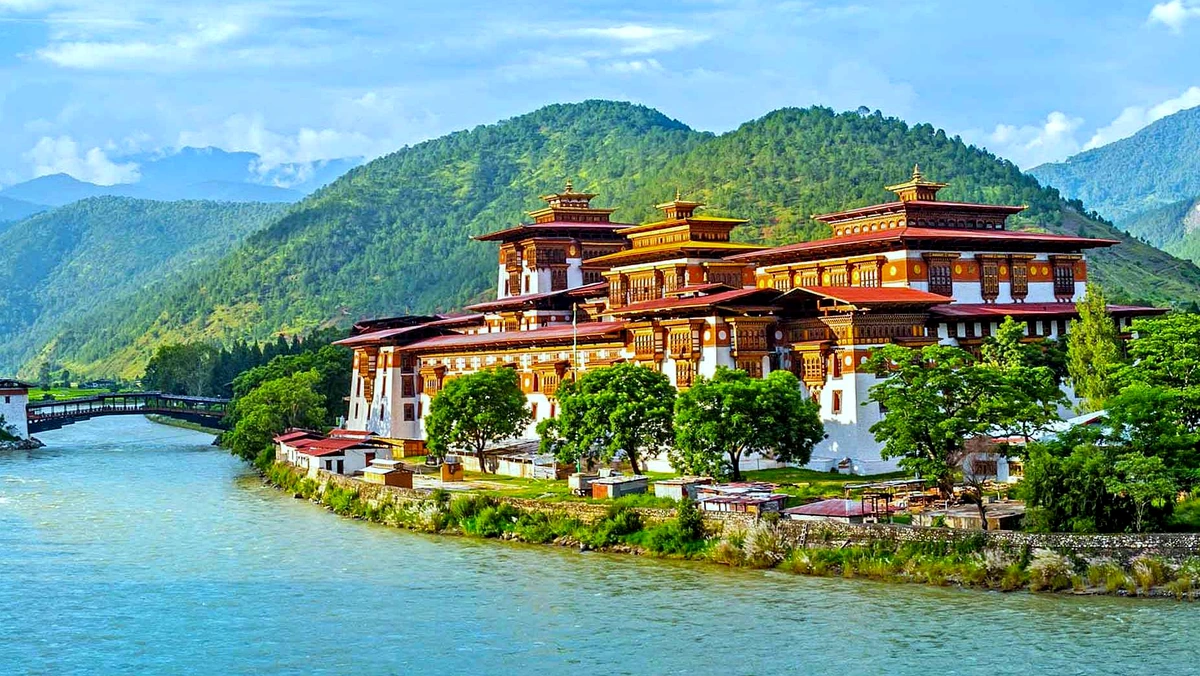
Punakha’s history was forged not only in times of peace but also in fierce defense against outside invasion. From 1639 to 1644, and again in 1728 and 1729 under the resolute leadership of Druk Desi Sherab Wangchuk, Punakha Dzong stood as a formidable stronghold against repeated assaults by Tibetan forces and Mongol allies. Steep, meter-thick stone and rammed-earth walls paired with swift river currents around the confluence turned the site into a natural bastion that repelled foreign takeover and secured Drukpa sovereignty.
One of the defining moments in Punakha Dzong’s chronicle occurred on December 17, 1907. Inside its grand assembly hall, the monastic body, regional lords, and representatives of the people unanimously crowned Gongsar Ugyen Wangchuck as king, establishing the Wangchuck dynasty that rules to this day. Even so, the ancient dzong has weathered severe natural blows. A devastating fire in 1986 destroyed much of its fine woodwork, followed in 1994 by a historic glacial lake outburst flood (GLOF) from the upper Himalayas that sent debris-laden waters surging past the base of the fortress. Through major national restoration efforts, its intricate gilded ornamentation was faithfully brought back.
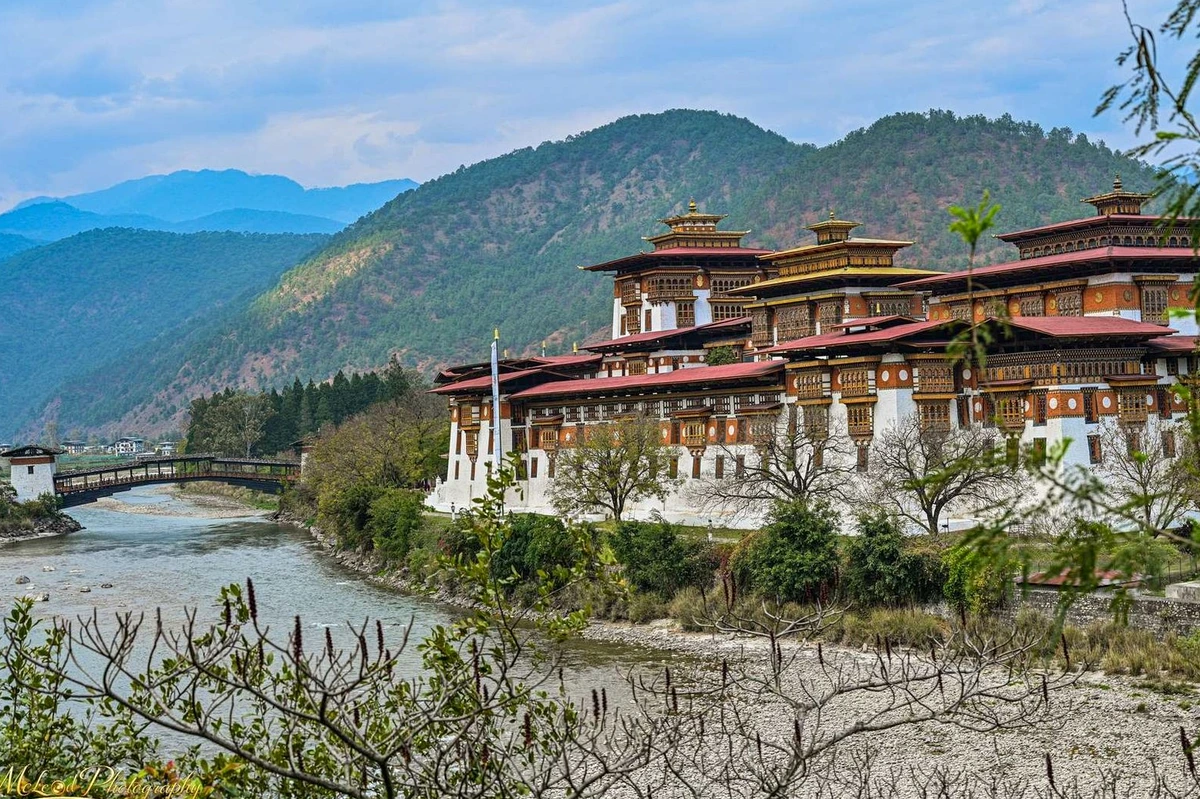
Today, spiritual life and historical continuity at Punakha Dzong remain closely guarded under the Central Monastic Body (Dratshang Lhentshog). It continues to serve as the winter residence of the Je Khempo—the Chief Abbot of Bhutan—and hundreds of monks. Inside closely protected archive chambers, thousands of religious texts and historical records written on traditional loose-leaf manuscripts (pechas) are carefully preserved, bearing witness to an architectural landmark that has endured conflict, natural disasters, and time in a fabled valley.
Rising prominently at the southern end of the Punakha valley at roughly 1,200 meters (3,937 feet) above sea level, Punakha Dzong experiences a markedly milder microclimate than higher, colder centers such as Thimphu or Bumthang. Its relatively low elevation and surrounding mountain ridges bring pleasant, mild winters and warm, humid subtropical summers. The dzong sits on a tongue-shaped alluvial spit projecting into the river junction, shaped over millennia by sediment deposited from two glacial rivers. Fertile valley soil and steady moisture made this spot an inviting place for long-term settlement and a major administrative and monastic center.
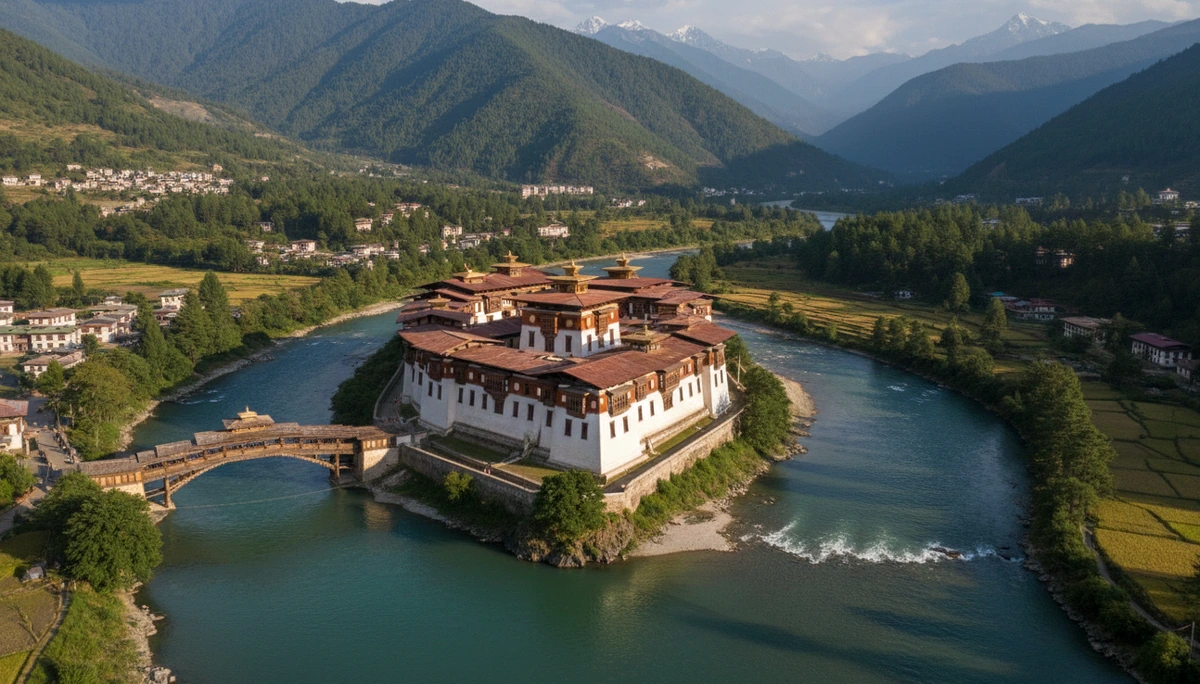
The fortress’s standout defensive feature is its location right where the Pho Chhu and Mo Chhu meet. The Pho Chhu (“Father River”) rises from high glacial basins in rugged Lunana, rushing down with strong flow, a wide bed, and sediment-heavy water capable of powerful erosion. By contrast, the Mo Chhu (“Mother River”), flowing from mountains to the northwest, winds more gently with clearer water that irrigates terraced fields along its banks before joining the Pho Chhu. In medieval military terms, this confluence created a strong natural moat on three sides, posing a serious water obstacle against direct assaults or large troop movements coming down from the north.
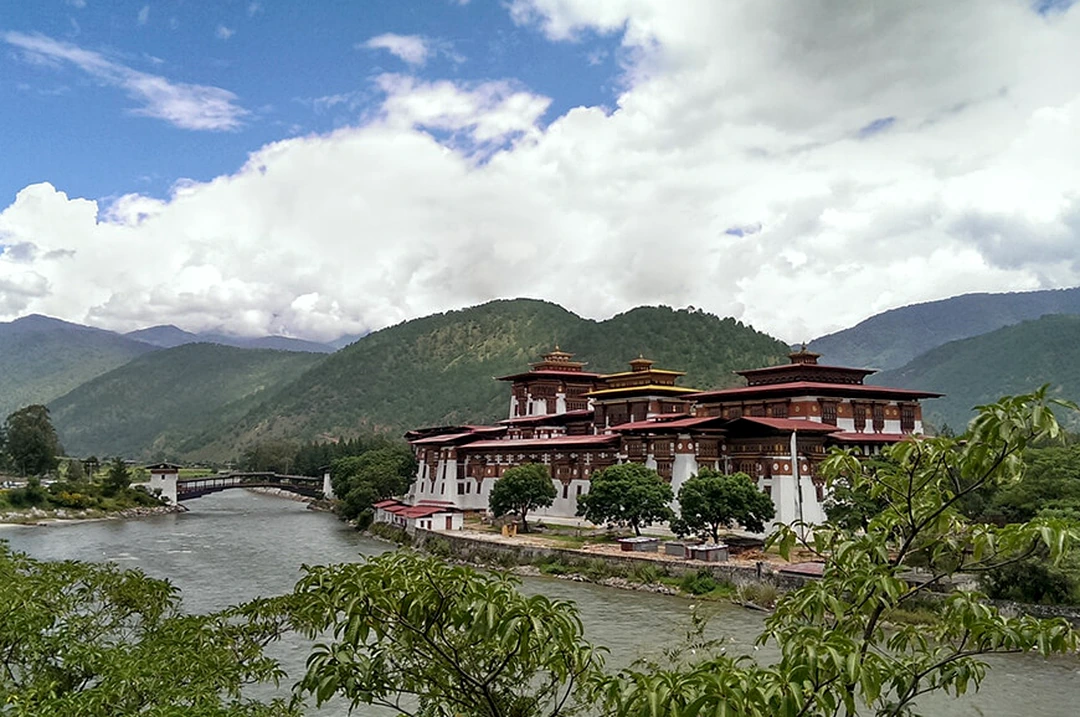
Beyond military utility, Punakha Dzong’s setting reflects traditional Himalayan geomancy, recorded in indigenous texts as sa-dpyad. In Vajrayana sacred geography, the meeting of two major rivers is seen as a focal point where spiritual energy (lungta) gathers. The vigorous, yang-like current of the Pho and the softer, yin-like flow of the Mo represent a dynamic balance of complementary forces, believed to harmonize energies funneling through mountain gorges and support lasting prosperity for the realm. From this vantage, the dzong looks much like a steady vessel holding course between two converging waterways.
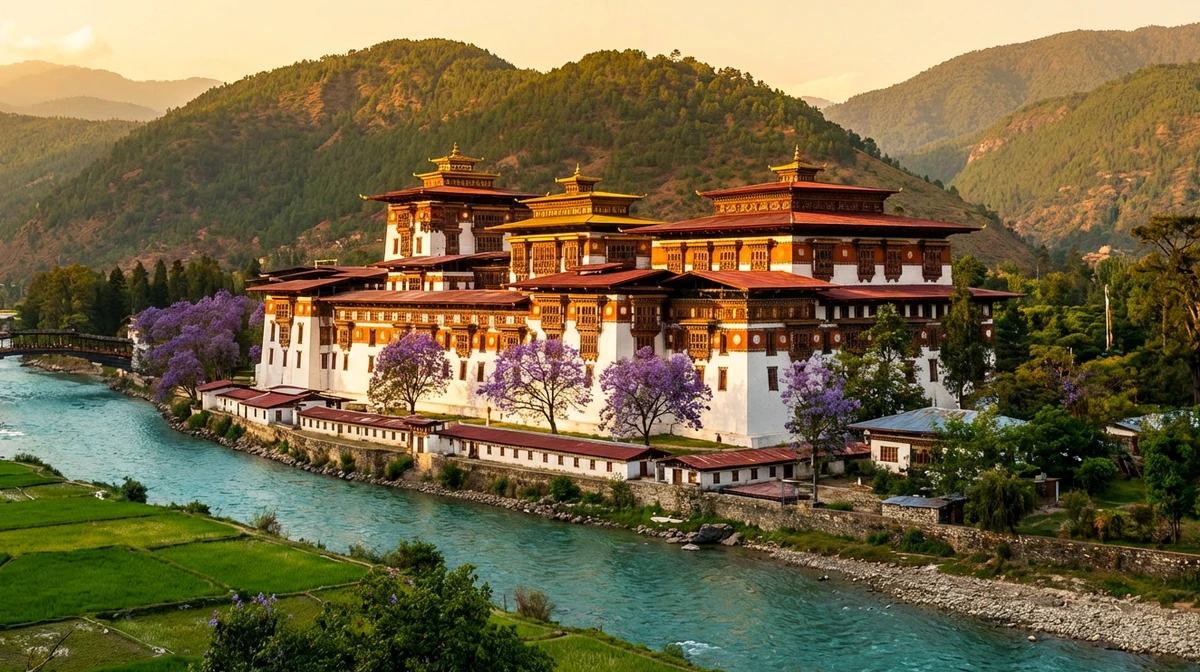
Around the ancient walls lies a subtropical broadleaf and valley forest ecosystem. Dry slopes support tall chir pines (Pinus roxburghii), mixed with blue pine (Pinus wallichiana) and Nepalese alder (Alnus nepalensis) rooting along banks to help prevent erosion. The valley looks especially striking in spring when jacaranda trees along the riverbanks and walls burst into violet bloom, contrasting against whitewashed walls and reflecting in the water. This river corridor also provides essential feeding and movement habitat for the critically endangered white-bellied heron (Ardea insignis), whose quiet presence along gravel bars underscores the link between built heritage and river ecology.
Punakha Dzong stands as a prime example of traditional Bhutanese building craft, constructed without paper blueprints, iron nails, or reinforced concrete. Its thick foundation and perimeter walls use traditional rammed-earth masonry known as sa-pas: master builders pack clay soil, river gravel, and dry straw inside wooden shuttering (rab) and tamp each layer by hand until dense and rock-hard. Overhead beams and interior monastic framing use shaped blue pine and cypress timber joined with mortise-and-tenon carpentry, giving the structure flexibility and seismic resilience along the active Himalayan fault zone.
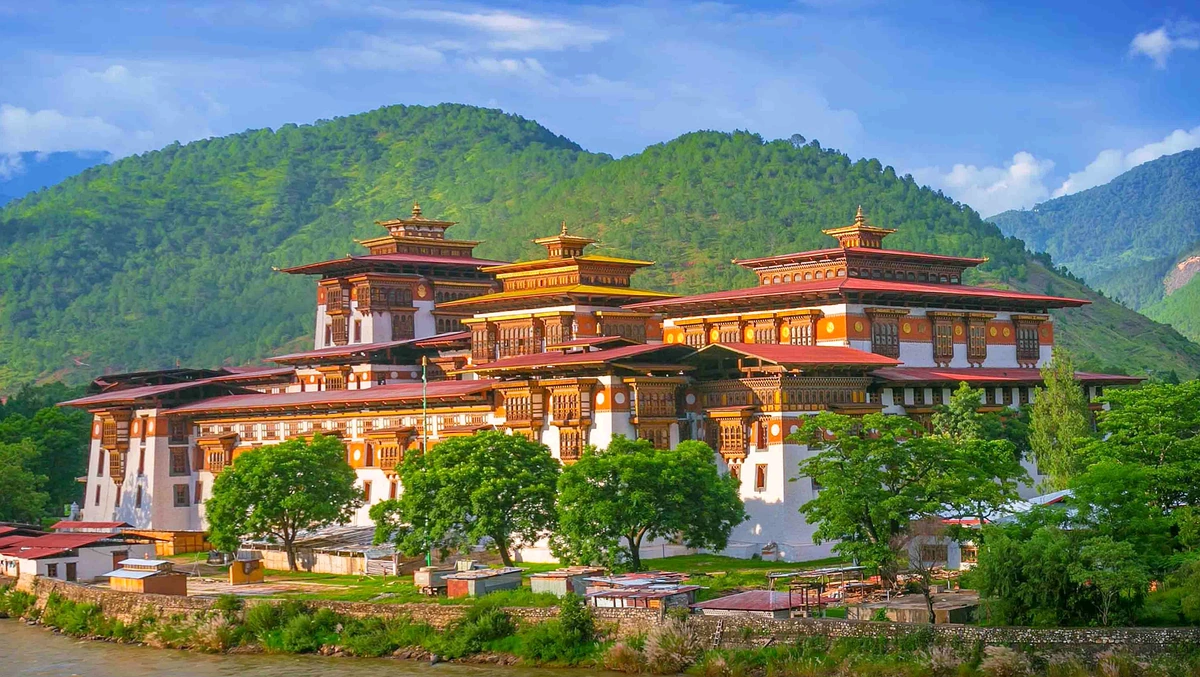
The exterior of Punakha Dzong radiates solemnity and purity with thick walls coated in crisp white slaked lime plaster, standing in vivid contrast to the deep hues of intricately carved timber window and door frames. The most prized visual accent along the facade is the dark ochre band known as khemar running horizontally along the upper edge of the fortress walls, symbolizing the inviolable spiritual sovereignty of Vajrayana Buddhism and the fixed boundary of a serene monastic sanctuary. In overall scale, the fortress spans a rectangular footprint stretching along the water for roughly 180 meters in length and about 72 meters in width. Inside, the space is organized sequentially and deliberately into three great courtyards called Dratshel, guiding a traveler’s mind from the realm of secular administrative governance to the highest plane of sacred religious devotion.
The first courtyard on the southern side serves secular administrative functions, where a towering sacred bodhi tree spreads lush green shade beside a smooth cobblestone plaza. The sole entrance leading to this courtyard is guarded by a sturdy wooden cantilever bridge spanning a deep moat, with projecting beams that can be retracted or dismantled in an instant when the fortress is besieged by enemies. Separating the courtyards is the seven-story central tower, the Utse, which rises majestically as both the defensive heart and spiritual center of the entire complex. Crowning the Utse is a golden gajur spire gleaming beneath the bright sun of the snow-capped peaks, sheltering a network of ancient chapels, the abbot’s quarters, and chambers storing national religious treasures.
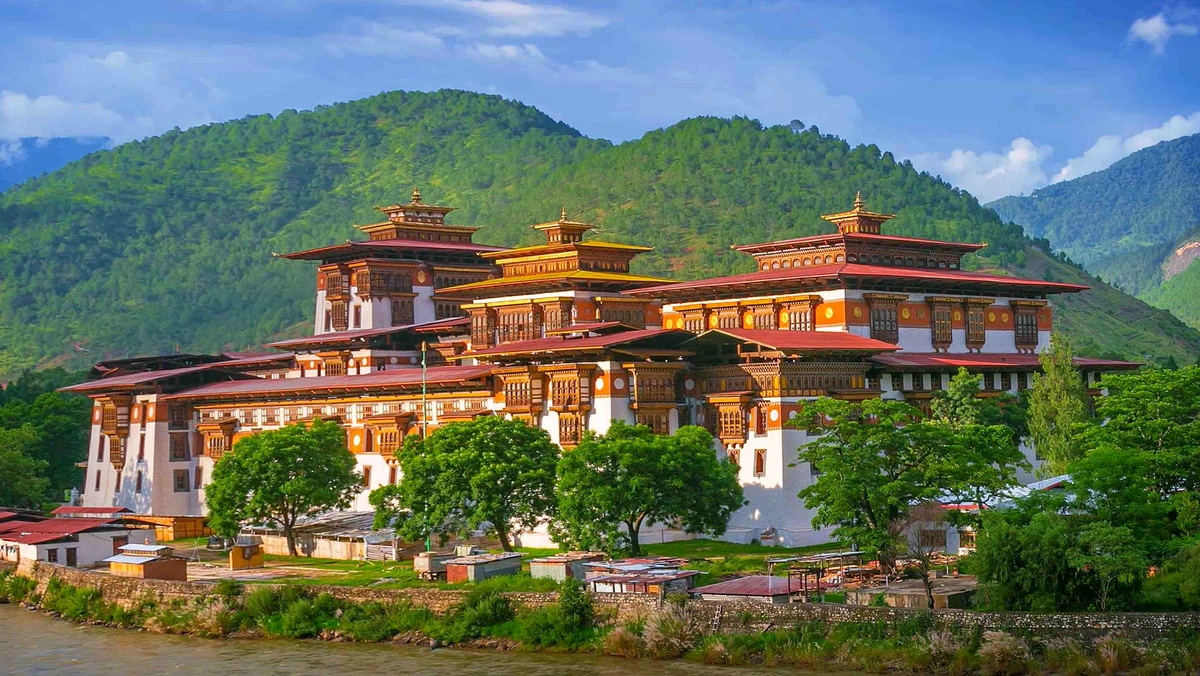
Passing beyond the central tower into the Northern Courtyard brings visitors into the most solemn sanctum of the monastery, where formal meditation retreats and major annual religious ceremonies take place. Standing out here is the expansive Kuenrey assembly hall lined with imposing wooden pillars wrapped in deep crimson cloth, housing colossal gilded bronze statues depicting Shakyamuni Buddha, Guru Rinpoche (Padmasambhava), and Zhabdrung Rinpoche, the unifier of the kingdom. Surrounding this meditative space are hundreds of thangka murals painted directly onto earthen walls, detailing the twelve deeds in the life of the Buddha alongside Tantric mandalas rendered in natural mineral pigments that endure across time. Right beside it is the inner sanctum of Machen Lhakhang, which enshrines the golden casket holding the sacred relics and preserved body of Zhabdrung Rinpoche—a place where only the King of Bhutan and the Chief Abbot, the Je Khenpo, are permitted to enter for veneration according to esoteric ritual.
The mechanism for operating and preserving a structure of Punakha Dzong’s grand scale across centuries of upheaval is powerful testimony to deep-rooted local community solidarity. In the past, restoration costs, lamp oil, and provisions for hundreds of resident monks were supplied through a traditional agricultural tax system, as villagers across the valley voluntarily contributed portions of their bountiful grain harvest after every season. Entering the contemporary era, the lifeblood of preserving this masterpiece continues steadily through close coordination between national cultural heritage funds of the royal government and technical support from international conservation organizations, ensuring that every grain of cypress wood and every stretch of rammed-earth sa-pas wall endures alongside the snowy mountains and rivers.
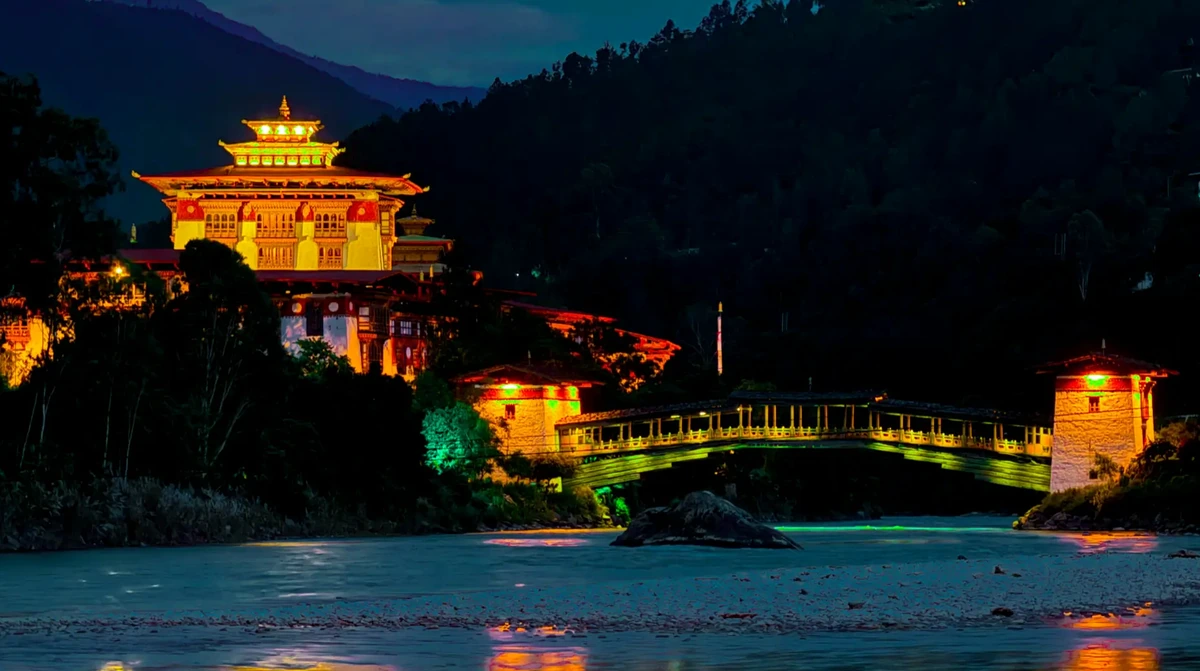
As dusk fades behind the layered snowy summits of the Himalayas, the Punakha valley begins to draw a veil of stillness over the sacred confluence of the Mother River, Mo Chhu, and the Father River, Pho Chhu. Streams of visitors gradually depart across the covered wooden Bazam bridge, leaving Punakha Dzong to the primeval quiet of a Drukpa Kagyu Buddhist spiritual power center. Free of garish artificial colors or the bustle of lively stalls found in modern tourist towns, nightfall at Punakha Dzong is a blend of profound hush, where nighttime rhythm is shaped by solemn monastic practice and some of the strictest heritage conservation rules in the Kingdom of Bhutan.
To safeguard the full tranquility of the monastic sanctuary and prevent light pollution from degrading the ecological landscape, Bhutanese authorities enforce a strict nighttime lighting system at the ancient fortress. Instead of high-output direct floodlights, conservation specialists have thoughtfully arranged recessed LED fixtures casting a warm amber spectrum along the gentle gravel banks at the river confluence. Soft golden light uplifts the towering whitewashed rammed-earth walls and the deep red decorative khemar bands of fine timber running around the neck of the Utse tower. When darkness envelops the valley floor, the monumental architectural mass appears almost detached from the ground, hovering lightly above dark, smoothly swirling waters to create an ethereal visual masterpiece shimmering across emerald-toned currents.
Stepping across the heavy timber threshold deep into the dochey courtyards after nightfall, time seems to pause within the realm of impermanence. Inside the sacred main chapel of Machen Lhakhang—where the preserved body of Zhabdrung Ngawang Namgyal, founder of the unified Bhutanese state in the 17th century, rests—modern electric light is completely excluded. Instead, hundreds of brass karme butter lamps are lit by hand, releasing the pure scent of yak butter mingled with subtle notes of cedarwood. Flickering flames illuminate thousand-year-old murals and the compassionate smiles of the Buddhas, blending with the low murmur of novice monks chanting prayers. Now and then, the deep, booming resonance of meter-long ceremonial brass horns called dungchen pierces the quiet night, weaving with rhythmic rolmo cymbals, echoing against sheer rock faces before dissolving into the gentle rush of the river.
The most vibrant live performance art at the fortress comes alive only during the grand festivals of Punakha Drubchen and Punakha Tshechu held around early spring. Within the spacious gray-stone courtyard, lit by the flickering glow of giant pine-resin torches that ward off the highland chill, monks don brocade silk robes embroidered with glittering thread and wooden spirit-animal masks to perform sacred cham dances. Far more than a visual spectacle, this is a rite of karmic purification, spiritual awakening, and reenactment of heroic historical legend. Spectators feel transported back to 1639, witnessing the dramatic reenactment of repelling a Tibetan military invasion—complete with pazap warriors bearing cane shields, long spears, and drawn swords amid billowing smoke—before the sixth Je Khenpo performs the grand ritual of casting sacred nectar into the Mo Chhu to pray for peace and prosperity across the land.
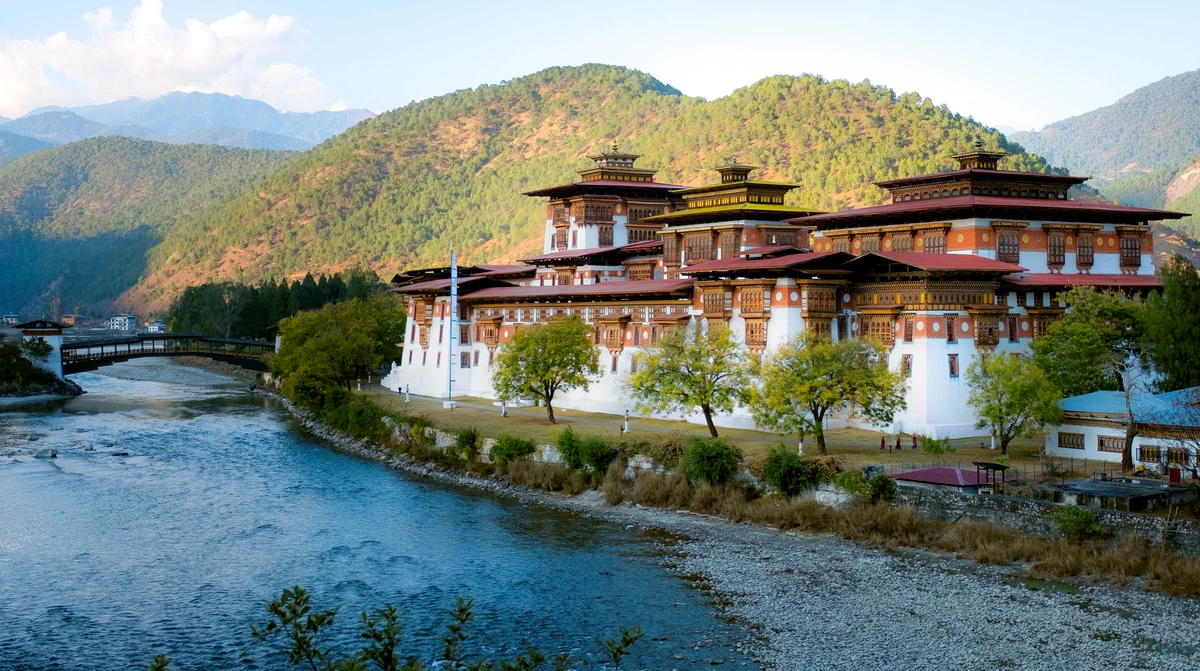
Savoring the nighttime cadence at Punakha Dzong calls for an unhurried spirit and deep reflection. Standing along the quiet riverbank as temple bells toll softly, travelers truly feel the philosophy of Gross National Happiness among Bhutanese people—where darkness is not an empty void chased away by commercial lights, but a sacred cradle nurturing harmony between vast nature and the human mind.
Tucked along the lush valley floor at a relatively low elevation compared with much of the Himalayan kingdom, Punakha is blessed with a mild subtropical microclimate where the Mother River, Mo Chhu, and the Father River, Pho Chhu, deposit rare, fertile alluvium. This rich soil has turned the former capital into a renowned breadbasket of sweeping terraced fields planted with plump, fragrant, chewy red rice, interspersed with juicy citrus orchards, sweet bananas, and sprawling fields of fiery chilies glowing under golden sunlight. Local Punakha cuisine therefore reflects nature’s generosity across every fruiting season while preserving a philosophy of living in harmony with earth and sky, turning every everyday meal or banquet into a complete fusion of highland soil, mist, and mountain breeze.
Stepping into the culinary world here, no traveler can miss Ema Datshi—the dish hailed as the national signature of the Land of the Thunder Dragon. In local understanding, chilies are not merely a seasoning to perk up the palate, but the principal vegetable reigning on the table. Crisp green bird’s-eye chilies or sun-dried red chilies are slit lengthwise and simmered slowly with crushed garlic, mountain herbs, and rich fermented cheese made from cow’s or yak’s milk. Velvety, creamy cheese clings to the fiery heat of the chilies and melts gently over plump red rice grains, creating a bold, unforgettable burst of flavor. Alongside it, Kewa Datshi offers a gentler, more comforting variation for those seeking warmth and softness, where tender valley potato slices stew slowly in buttery cheese, filling the air with a rich aroma that warms the spirit on misty evenings.
Deeper cultural layers of Punakha’s food traditions come alive in ceremonial heritage dishes, epitomized by Pasa, an elaborate preparation typically reserved for sacred festivals and major family celebrations. Using time-honored techniques passed down through generations, sun-dried beef or fresh stream fish caught from the river confluence is finely minced and mixed with vibrant wild greens, fragrant scallions, and a searingly spicy blend of bird’s-eye chilies and famed Sichuan-style pepper known as thingay. The signature numbing tingle of thingay cuts through any fishiness while awakening every sense, crafting a flavor profile that is at once rustic and remarkably refined. Together with Pasa, buckwheat dumplings called Hoentay—with deep roots in neighboring Haa valley—hold an honored place in Punakha’s food culture. Dark buckwheat dough wraps a simple filling of dried radish leaves (naagay) simmered with milky cheese and ginger; steamed, the dumplings release warm steam with an earthy herbal note, while pan-frying gives them a crisp, fragrant crust that captures the skill of making the most of highland harvests.
Beyond its layers of flavor, the culinary experience in Punakha is closely tied to symbolic spaces of community life. At the heart of traditional homes sits the thab hearth glowing with embers, where generations gather to share warmth and folk stories, much like the spacious monastic dining halls (ja-khang) inside Punakha Dzong, where hundreds of monks take meals together in quiet discipline. That communal bond grows warmer through the offering of Ara, a traditional distilled spirit brewed from red rice, corn, or barley. Warmed over glowing coals—sometimes enriched with unsalted butter and beaten egg—Ara is generously poured into finely turned wooden dapa bowls to welcome honored guests and pilgrims. Passing a warm bowl from hand to hand eases the chill of mountain winds while serving as a pure blessing that reflects the sincere, dignified hospitality of this sacred valley.
To reach the quiet majesty of Punakha Dzong, most travelers set out from the capital city of Thimphu along a winding route of roughly 72 kilometers skirting the eastern slopes of the Himalayas. The highlight of the two-and-a-half- to three-hour drive is crossing Dochula Pass at 3,140 meters (10,300 feet) above sea level. At the mist-shrouded pass—home to the 108 Druk Wangyal Chortens standing proudly beneath clear skies—travelers take in sweeping snow-capped peaks before descending gradually into the milder, subtropical Punakha Valley. The approach to the monastery grows even more dramatic as visitors cross the Pho Chhu river over the Punakha Suspension Bridge, one of the kingdom’s longest traditional suspension bridges, where thousands of colorful lungta prayer flags flutter in the mountain breeze and carry blessings of peace along the pilgrimage path.
The fortress gates welcome visitors daily from 09:00 to 17:00, with a quiet pause from 13:00 to 14:00 while monks step away for lunch and observe strict monastic routines. Reaching this major spiritual landmark requires careful administrative preparation: international visitors must hold a Dzong entry permit arranged through licensed local tour operators and fulfill the Sustainable Development Fee (SDF) under Royal Government of Bhutan policy to support heritage preservation and environmental protection. Entry is more than physical access; it is a shared commitment to keeping living traditions intact against heavy commercial pressures.
Passing through the massive timber gates into sacred ground calls for deep respect through dress and conduct. While locals proudly wear intricate traditional attire—men dressed formally in a Gho fastened with a kera belt and a kabney scarf draped over the left shoulder, and women gracefully wearing an ankle-length Kira paired with a soft toego jacket and narrow rachu sash—international visitors must strictly keep shoulders covered and hemlines past the knee. Shorts, mini-skirts, hats, and sunglasses are not permitted inside the wide courtyards. Upon entering quiet lhakhangs (sanctuaries) housing ancient murals and priceless relics, all cameras and recording devices must be powered off and put away. Moving through sacred spaces means following korwa—walking clockwise around stupas, carved mani walls, and prayer wheels—and when pausing before Buddha statues or senior lamas, never pointing the soles of your feet toward them, sitting neatly cross-legged in silent reverence instead.
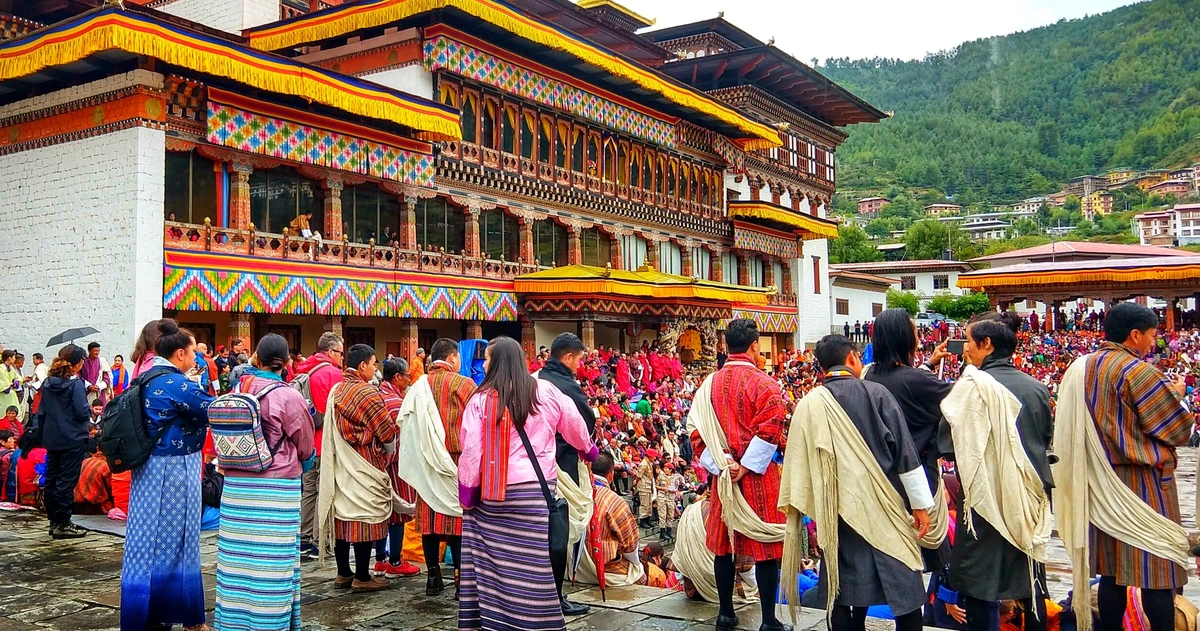
The finest season to experience the spirit of this sacred landmark is spring, from February through April. During these months, mature purple jacaranda trees burst into bloom together, weaving a violet canopy around whitewashed walls and intricately carved wooden windows reflected in the turquoise waters where the Mother and Father rivers meet. Spring also brings the sacred Punakha Tshechu festival, lighting up the valley with masked Cham dances that recount the deeds of Zhabdrung Ngawang Namgyal, who unified Bhutan. To prepare thoroughly for a meaningful heritage journey, observe local customs, and take in the scenery of the Land of the Thunder Dragon, travelers can explore thoughtfully planned itineraries through Bhutan tours.