Standing proudly along the breezy shore of the Gulf of Finland, the Peterhof Summer Palace complex is far more than a masterpiece of landscape architecture – it is a stone monument carved with the Russian Empire’s burning maritime ambition. The origins of this marvel date back to 1714, when Tsar Peter the Great personally sketched the first lines for a country retreat named “Петергоф” (Peterhof) – derived from Germanic roots meaning “Peter’s Court” or “Peter’s Residence.” The decision to build it was tied to a pivotal chapter of European history: the grueling Great Northern War that stretched across more than two decades from 1700 to 1721. Following resounding victories on the Baltic Sea, above all the legendary 1714 Battle of Gangut that routed the Swedish fleet, Peter the Great saw an urgent need for a symbol of military and cultural might, ironclad proof that Russia had officially flung open its “window onto Europe” and risen as an unconquerable naval power.
The iron will of the reforming Tsar did not stop at the offshore military fortresses of Kronstadt; it also focused on creating a palace grand enough to rival the opulence of the Palace of Versailles under France’s Sun King, Louis XIV. Peterhof was planned as a triumphal anthem cast in granite, pure gold, and surging columns of water. Natural streams rising from the Ropsha hills more than twenty kilometers away were harnessed through a pump-free hydraulic system, turning the Romanov ruler’s dream of commanding nature and the sea into reality. After Peter the Great’s passing, the palace’s destiny entered a dazzling new era during the reign of his daughter, Empress Elizabeth Petrovna. Across her brilliant rule from 1741 to 1762, the Empress commissioned chief court architect Francesco Bartolomeo Rastrelli to carry out a sweeping, transformative renovation.
Under Rastrelli’s gifted hand, mature Russian Baroque infused Peterhof with supreme splendor. The Grand Palace gained another story and a wider facade sweeping across the natural slope, blending royal gold, crisp white moldings, and gilded domes gleaming in the northern sun. Entering the 19th century, a romantic spirit took root across the royal grounds when Tsar Nicholas I laid out Alexandria Park immediately to the east, named after Empress Alexandra Feodorovna. Far removed from the strict symmetry and courtly formality of the ceremonial fountains, Alexandria opened into gentle meadows, ancient oaks, and the serene Gothic Cottage, reflecting the inner life and longing for peace of the imperial family amid the undercurrents of their age.
Yet Peterhof’s history was not woven solely from silk and glory; it was also steeped in tragedy through the turbulent turns of the 20th century. After the October Revolution of 1917, the estate was nationalized and turned into a public museum, opening to ordinary citizens treasures that had once been an imperial preserve. The fiercest blow struck during the Great Patriotic War, when Nazi forces occupied the area from 1941 to 1944 during the nearly 900-day siege of Leningrad. Before retreating, invading troops reduced the site to charred ruins: the Grand Palace was mined and burned, the underground water supply was completely destroyed, thousands of mature trees were felled, and countless priceless works – including the original gilded bronze statue of Samson prying open the lion’s jaws – were looted or melted down.
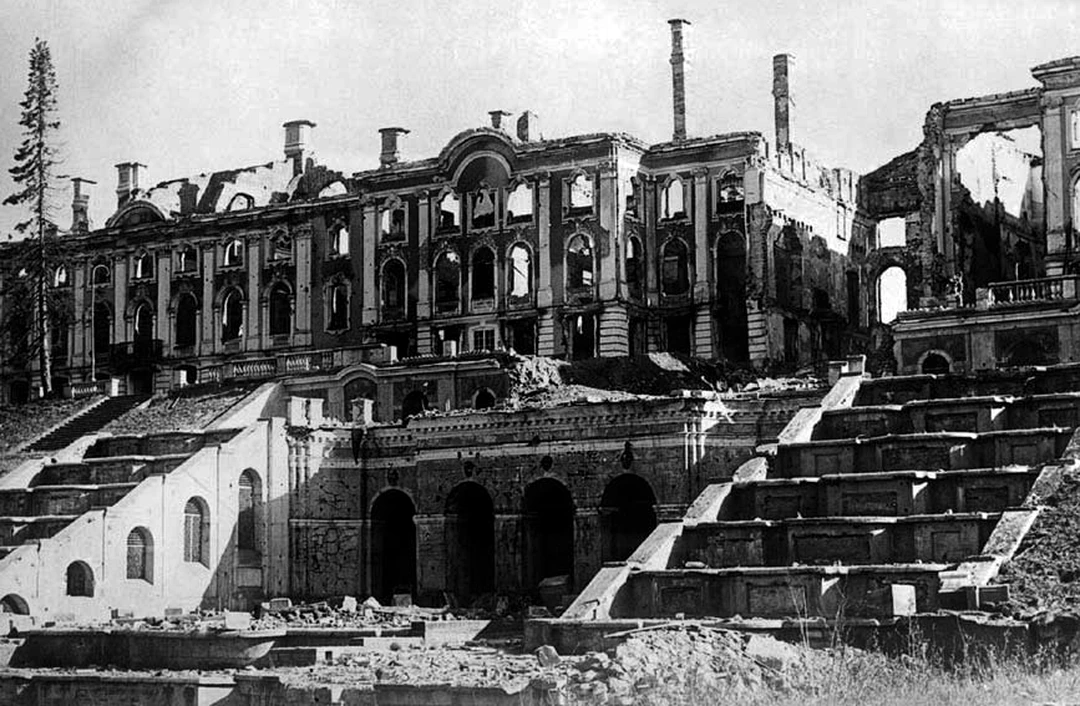
It seemed as though the Baltic marvel had vanished forever from the world map, yet the resilience of the Soviet people achieved an unprecedented resurrection in the history of heritage conservation. Right after liberation, leading restorers, architects, and sculptors labored tirelessly to rebuild every detail from 18th-century architectural drawings and pre-war photographs. A new Samson monument was cast to perfection, groundwater surged once more over the Grand Cascade, and each royal hall shone as brightly as if it had never known bombs and fire. This remarkable revival earned Peterhof Summer Palace a place on the UNESCO World Heritage List, making it an enduring symbol of cultural fortitude, indomitable vitality, and lasting pride in the land of birches.
Peterhof’s setting is a refined synthesis of strategic military foresight and pinnacle Enlightenment landscape design under Tsar Peter the Great. Resting gently along the southern shore of the Gulf of Finland, the architectural complex commands a natural fault terrace roughly sixteen meters above sea level, creating a stepped geological profile rare in European royal palace planning. At first, Peter the Great considered placing his summer residence at Strelna, but surveys by leading hydrologists of the day quickly showed that the elevation there lacked enough natural head to drive water jets high into the air. Choosing Peterhof instead turned a marshy stretch of the Baltic coast into a grand stage where the palace could look out across the sea as a trophy of the Great Northern War while using the slope’s elevation drop to run an extraordinary empire of water.
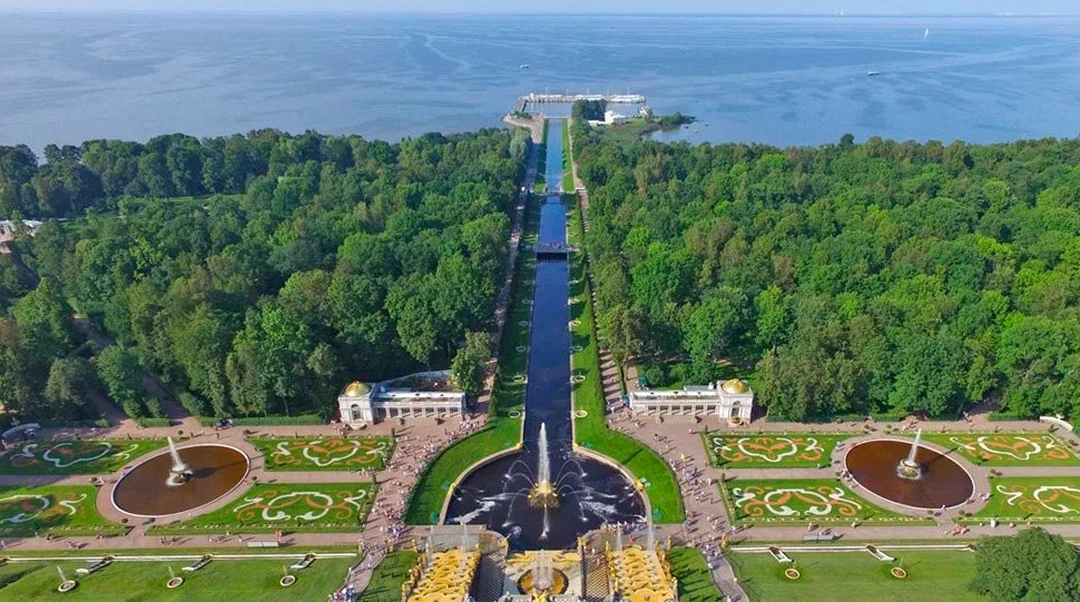
The feat behind Peterhof’s title as fountain capital does not lie in loud, expensive mechanical engines like the famous Marly machine at Versailles, but in a subterranean water-delivery system powered purely by natural hydraulics. Guided by the skill of renowned Russian hydraulic engineer Vasily Tuvolkov, pure water from underground springs and natural marshes on the Ropsha plateau more than twenty-two kilometers away was collected via hand-dug channels and led into regulating ponds on the upper slope of the Upper Garden. Applying communicating vessels and hydrostatic pressure between the two elevation tiers, the water gathered through a dense network of cast-iron, lead, and oak conduits, building up immense potential energy before leaping tens of meters into the air at the Grand Cascade without a single artificial pump.
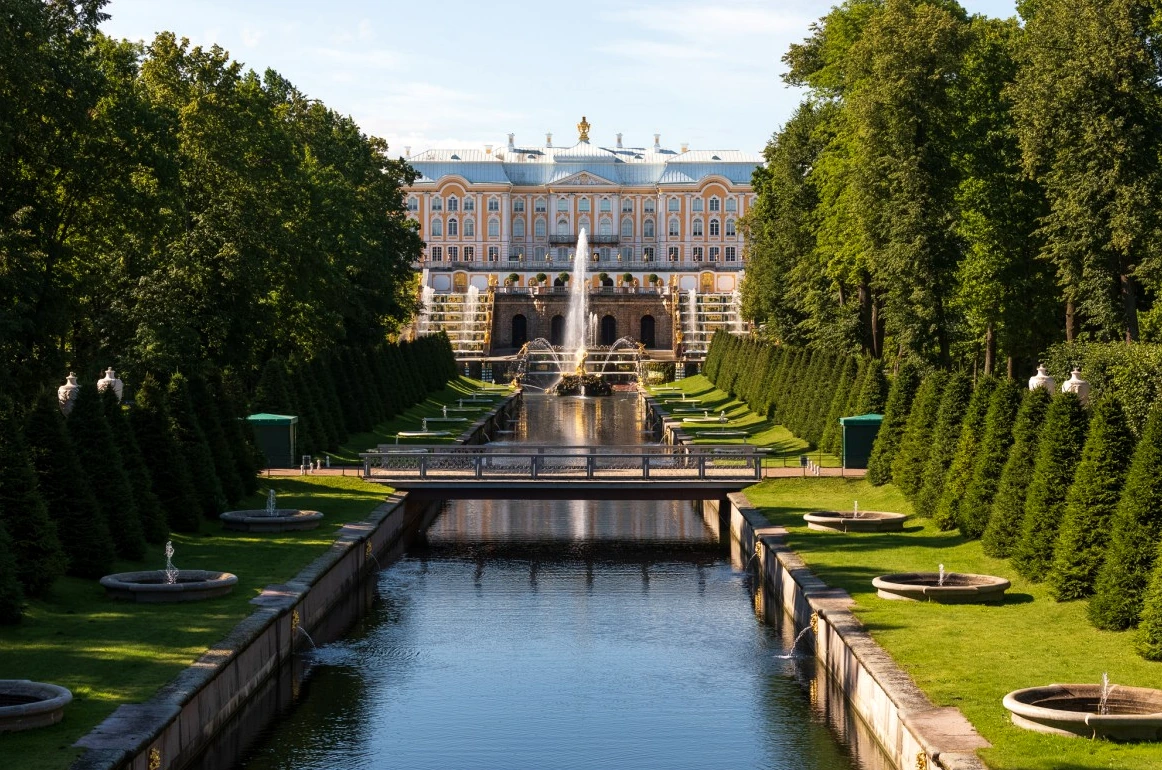
Peterhof’s spatial layout follows the classic symmetrical axis of Western classicism blended with Baroque, enriched by a spacious Russian sensibility. The heritage grounds divide into two distinct landscapes separated by the Grand Palace: the Upper Garden, spanning roughly fifteen hectares in a formal French geometric garden style with five tranquil ponds, and the expansive Lower Park, stretching across more than one hundred and two hectares as it slopes down toward the waters of the Gulf of Finland. Cutting straight through the Lower Park is the Sea Canal, nearly half a kilometer long, serving as a ceremonial waterway linking the palace with the open sea so royal vessels and guests’ boats could dock right at the foot of the Grand Cascade. Along this axis, maple-lined walks, pockets of old-growth oak forest, and trick fountains hidden beneath gravel paths create a dramatic visual shift from quiet contemplation to dazzling grandeur.
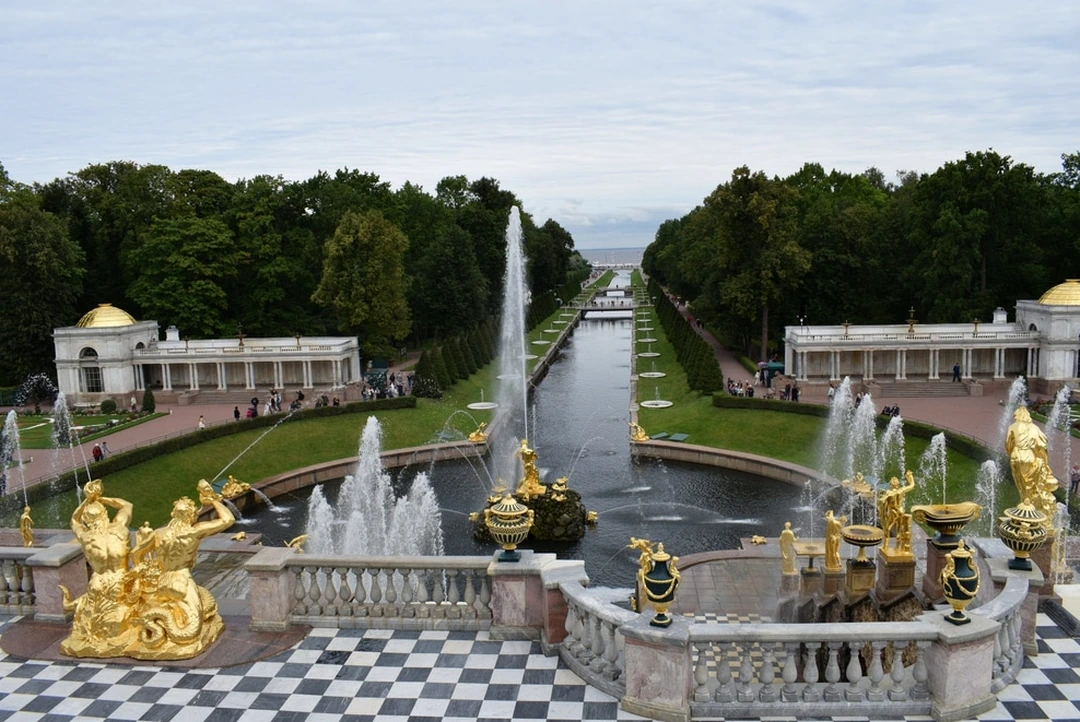
Peterhof’s signature scenery reaches peak expressive power through the interplay of water, light, and gilded metal. The Grand Cascade rises like an ancient Roman amphitheater with sixty-four fountains and more than two hundred gilded bronze statues catching the northern sun. The roar of thousands of cubic meters of water pouring every second from the powerful Samson fountain as it parts the lion’s jaws mingles with salty sea breezes from the Gulf of Finland, creating a cool, damp microclimate year-round that coats the granite steps in a patina of moss. This deft blend of microclimate planning, pioneering hydraulics, and Baroque sculpture turns Peterhof into a harmonious interplay of water and woodland, where human resolve to shape nature moves in step with the natural world.
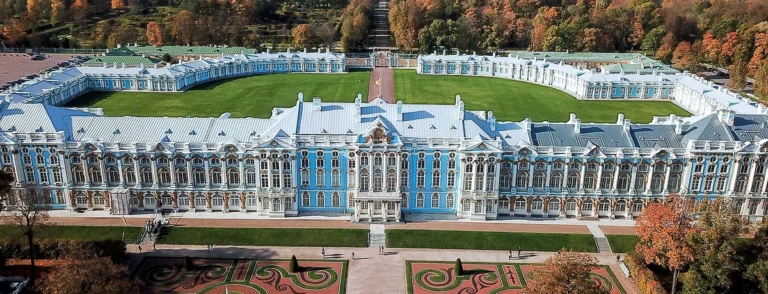
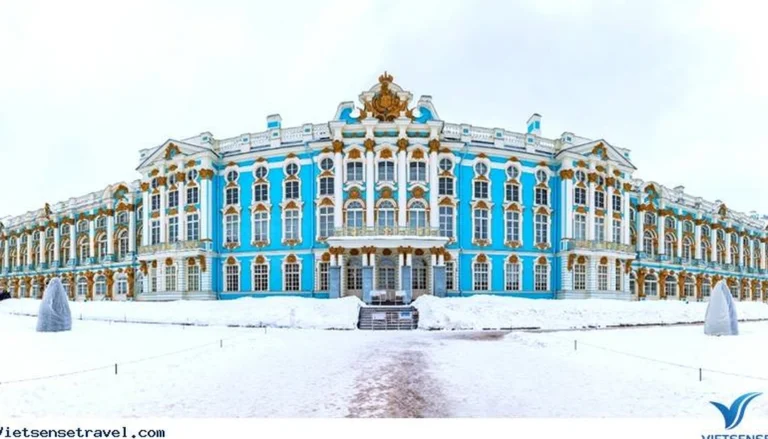
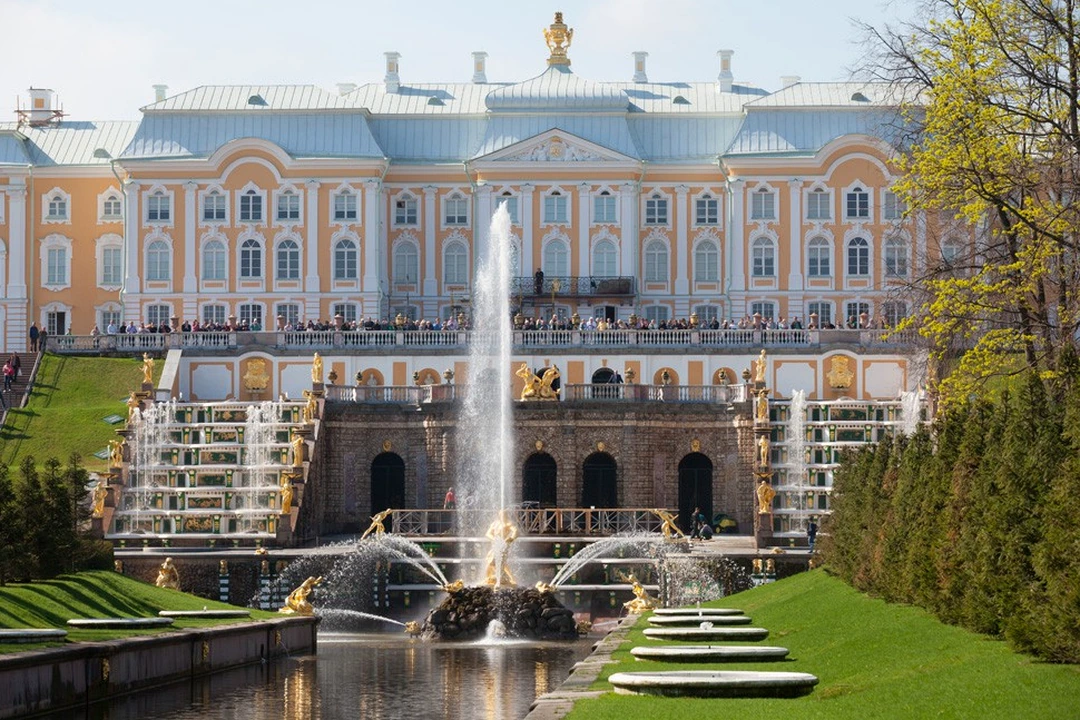
Stretching along a natural terrace nearly sixteen meters above the Baltic Sea, the Grand Palace (Bolshoy Dvorets) stands like a golden ribbon with a majestic facade measuring close to three hundred meters. Shaped by master architect Bartolomeo Rastrelli during the reign of Empress Elizabeth Petrovna, the building was elevated from a refined summer residence of Tsar Peter the Great into a radiant pinnacle of Russian Baroque. Its exterior pairs imperial ochre-gold with crisp white columns and gilded reliefs gleaming under northern sunlight. The broad sweep of the palace acts like a grand rampart, gracefully dividing the calm symmetry of the Upper Garden from the spirited vista of the Lower Park reaching out toward the Gulf of Finland.
Directly beneath the palace terrace lies the Grand Cascade, the monumental hydraulic centerpiece of the entire Peterhof heritage ensemble. Designed like a giant stepped amphitheater in granite and marble, it sends water cascading down three churning tiers in harmony with sixty-four fountains and more than two hundred and fifty gilded statues and reliefs. Water tumbles from the tiers into a semicircular basin before flowing along the Sea Canal, nearly five hundred meters long, to meet the open gulf. Under the coastal sun, gleaming bronze figures of Neptune, river deities, and mythical creatures form a living mythological tableau embodying the supreme authority and maritime ambition of the Tsarist empire.
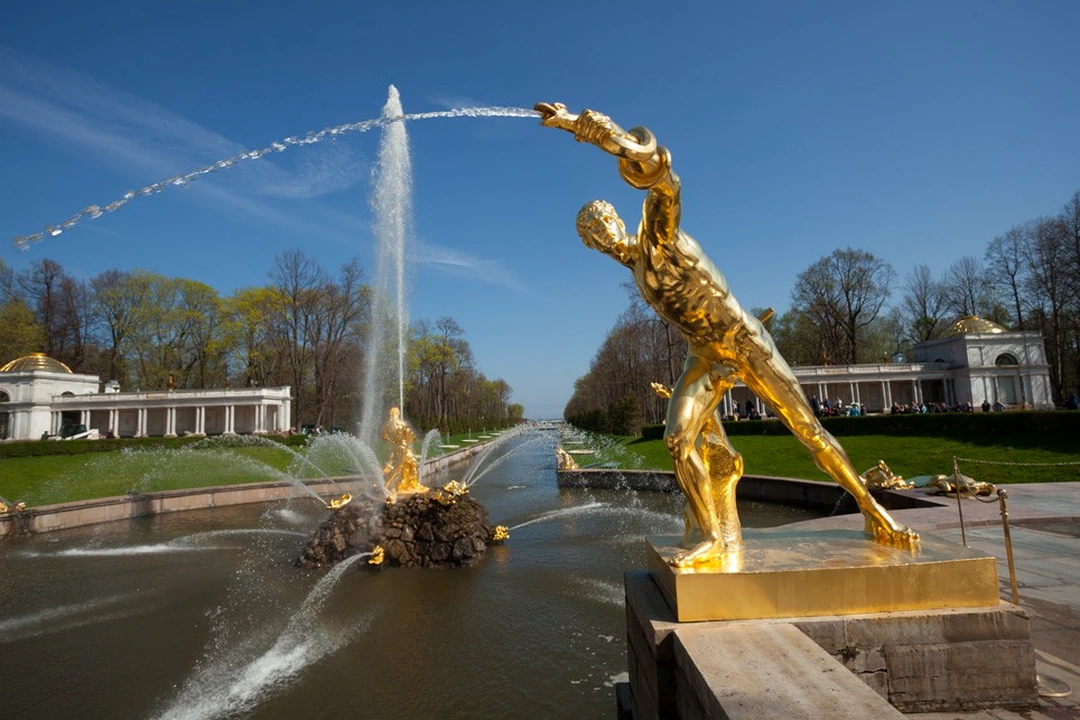
At the focal point of the main basin stands the sculpture “Samson Prying Open the Lion’s Jaws” by master sculptor Mikhail Kozlovsky, a work uniting top-tier bronze casting with layered political symbolism. The biblical hero subduing the beast with his bare hands commemorates the Russian army’s turning-point victory over the Swedish Empire at the Battle of Poltava, fought on Saint Samson’s feast day. In the allegorical language of the era, the lion stood for King Charles XII’s Swedish crown, while Samson embodied Peter I’s surging strength. From the beast’s parted jaws, a powerful jet of water shoots more than twenty meters into the air, creating a dramatic sight and sound that stirs visitors from afar.
What makes Peterhof truly one of a kind is not only its gilded scale, but also its early-18th-century hydraulic engineering that still runs smoothly today. Unlike Versailles, which relied on the massive Marly mechanical engine that frequently broke down, Peterhof’s entire fountain network operates without a single pump. Through the visionary engineering of Vasily Tuvolkov and Tsar Peter the Great, natural spring waters from the Ropsha hills over twenty-two kilometers away were gathered through artificial canals. Using elevation head and the principle of communicating vessels, the water builds pressure through sturdy underground cast-iron pipes to launch towering jets skyward, keeping this hydraulic landmark alive along the Baltic shore.
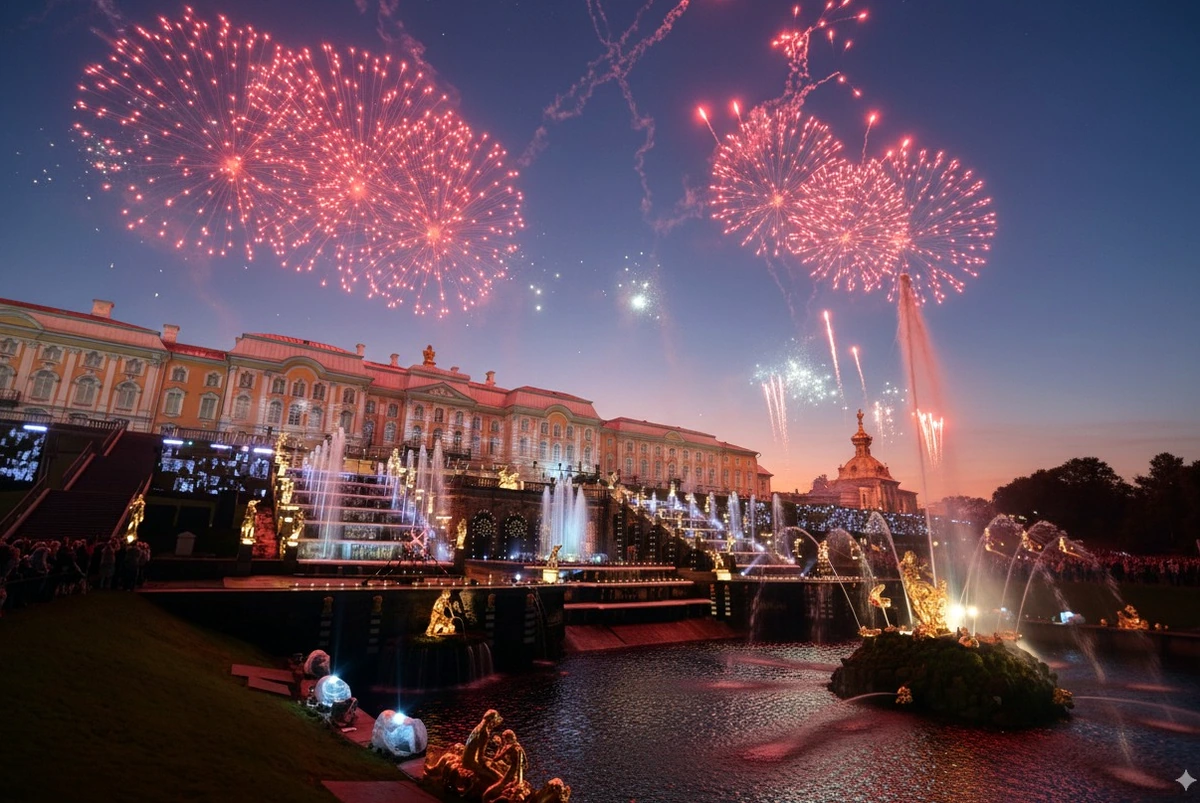
As dusk settles over the misty waters of the Gulf of Finland, Peterhof Palace sheds its daytime formality and enters an enchanting dance of light. Between twilight and nightfall, the royal grounds transform as multi-layered architectural lighting comes alive, wrapping the entire Grand Cascade in a radiant glow. Carefully aimed LEDs tucked inside granite niches illuminate all 64 fountains and over 250 gilded statues and reliefs at once. Centered amid the mist, Samson and the lion gleam like a giant jewel, reflecting golden light off wet marble slabs and turning the gentle slope leading to the Sea Canal into a flowing river of light.
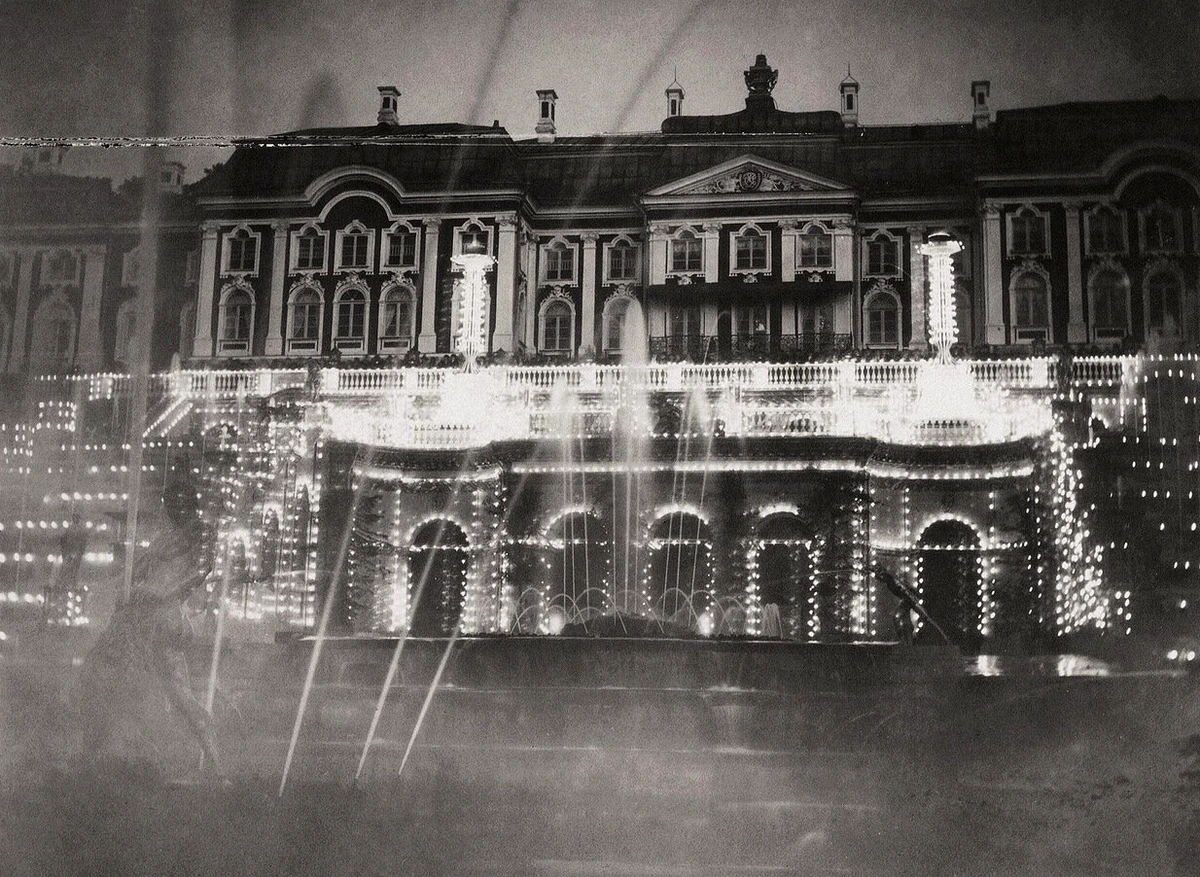
Peterhof’s nightlife reaches its crescendo during the Autumn Fountain Festival, an iconic annual arts event that draws enthusiasts from around the world before the fountains close for winter. Once darkness falls, the nearly three-hundred-meter Baroque facade of the Grand Palace becomes a vast multi-dimensional canvas through state-of-the-art 3D mapping. Golden walls, white-trimmed windows, and carved balconies shift into the moving backdrop of a living epic. Chapters of Russian imperial history unfold in sharp visual detail – from Peter the Great’s dream of draining marshes to reach the Baltic and the victory at Gangut to lavish masquerade balls under Empress Elizabeth Petrovna and Catherine the Great. Every sequence of light is timed to the millisecond with sweeping scores by Tchaikovsky, Mussorgsky, or Glinka, creating an immersive artistic current for every sense.
The spectacle turns even more surreal as high-powered lasers weave across the scene alongside high-altitude fireworks launched from the Gulf of Finland shore toward the base of the cascade. St. Petersburg’s night sky lights up with bursts of color reflected across the rippling waters of Morskoy Kanal. Along the birch- and oak-lined banks of the Lower Park (Nizhny Park), visitors stroll in a nostalgic mood beneath 18th-century-style lanterns. The roar of the fountains blends with solo violin strains from street musicians, turning late evening into a romantic serenade steeped in Russian aristocratic charm.
After the visual drama winds down, Peterhof’s evening flavor lingers in the refined dining rooms and tea salons around the royal estate. By candlelight and soft piano music, Romanov banquet traditions come alive through signature dishes. Guests can sample delicate blini crepes topped with prime Beluga caviar, multi-layered kulebyaka pie filled with rich salmon and wild forest mushrooms, or smoked sturgeon in true northern noble style. To chase away the crisp coastal chill blowing off the far north, a sip of spiced wild-berry nastoyka liqueur or a hot cup of Ivan-chai herbal tea poured from a glowing brass samovar rounds out a memorable night where history, architecture, and contemporary art meet.
Stepping away from the lively rush of gilded fountains, a visit to Peterhof feels complete only when travelers let their senses explore the royal culinary traditions of the Tsars. Food culture in the town of Peterhof is a rich blend preserving much of the flavor of state banquets from the Romanov golden age. Under Peter the Great and his successors, the imperial table was not merely a feast but a grand stage of diplomacy, pairing wild ingredients from the cold north with refined culinary techniques drawn from French and German courts.
At the heart of Peterhof’s culinary map are prized catches pulled straight from the cold waters of the Gulf of Finland and the Baltic Sea. Foremost among them is royal Ukha fish soup, a classic dish served at imperial banquets for centuries. Unlike everyday fish soup, Ukha at Peterhof is simmered from layers of noble fish such as Baltic salmon, river zander, and white sturgeon, yielding a clear, amber-like broth with deep natural sweetness and gentle notes of fresh dill, parsley root, and whole black peppercorns. Served alongside the steaming bowl is the beloved Rasstegai pie. Shaped like a small boat with a graceful opening in the center, this baked pastry holds a savory filling of salmon, mushrooms, and herbs. In keeping with old St. Petersburg noble etiquette, diners spoon a little rich Ukha broth right into the opening before eating, uniting a crisp, tender crust with a meltingly soft filling.

Alongside cold-water seafood, royal hunting traditions in the vast conifer forests around Peterhof gave rise to game dishes of unmistakable courtly character. A prime example of this culinary revival is Standart restaurant, a historic dining spot named after Tsar Nicholas II’s famous yacht. Here, diners step back in time to taste historic menus recorded in 19th-century imperial kitchen ledgers. Tender reindeer seared over embers with juniper berries, wild boar slow-braised with dark beer and wildflower honey, or roast pheasant wrapped in aromatic taiga leaves are recreated faithfully from historic Tsarist kitchen recipes.
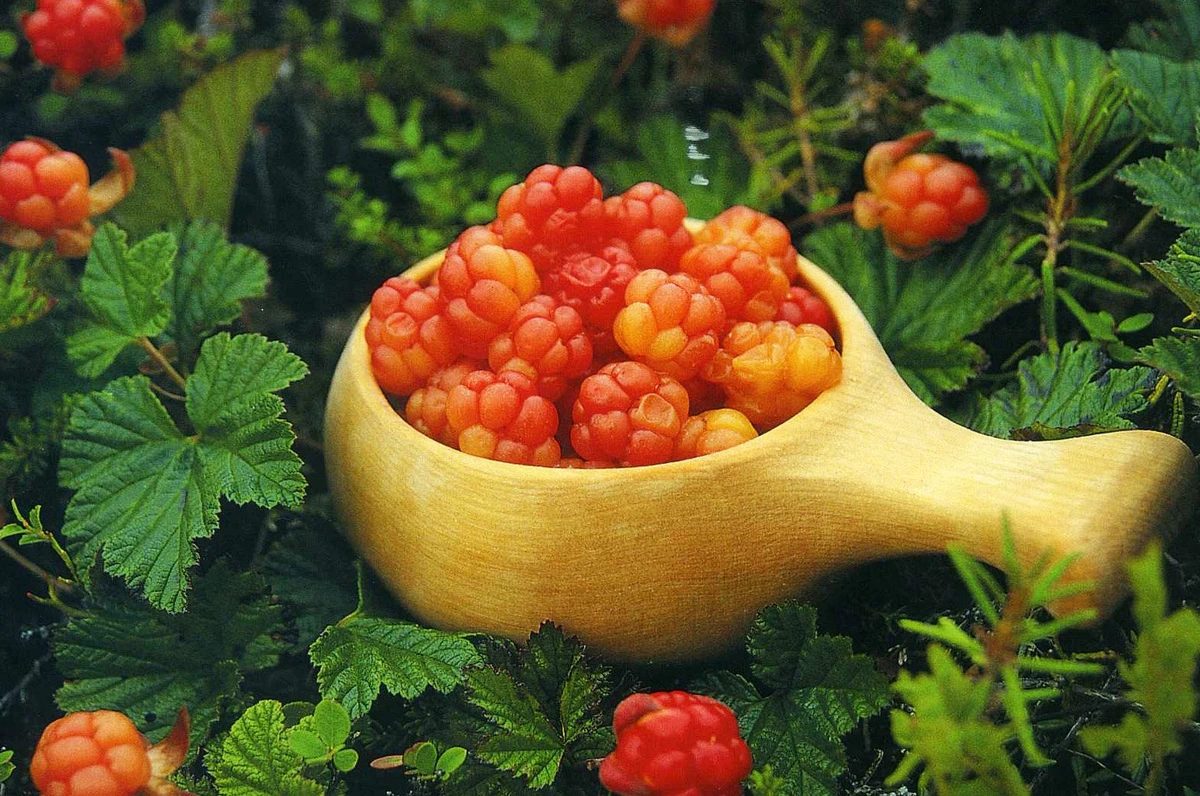
Dining at the summer estate would lack soul without pure gifts from the northern soil. Cloudberries – revered locally as the amber gold of mossy bogs – thrive only in harsh climates and offer a delicate perfume with a bright, refined tartness, often reduced into a glossy glaze for roasted meats or served as jam with tea and pastries. Alongside cloudberries come wild forest mushrooms gathered from old birch woods and pickled with bay leaf and garlic using family methods, giving a firm crunch and earthy depth. Finishing a meal with a strong cup of black tea poured from a glowing brass samovar, with a spoonful of cloudberry jam as sunset fades over the Gulf of Finland, captures the unhurried poise and noble spirit of Peterhof.
The most dramatic arrival at Peterhof begins on the waters of the Neva River rather than along busy roads. From the pier opposite the State Hermitage Museum on Dvortsovaya Naberezhnaya in the city center, travelers do well to board a Meteor hydrofoil. Skimming past the tip of Vasilyevsky Island and opening up across the breezy Gulf of Finland in about forty-five minutes, the voyage echoes the ceremonial water approach Tsar Peter the Great and Romanov sovereigns once took to inspect their summer retreat. As the vessel slows toward the Lower Park pier, the Grand Palace rising on its terrace with gilded spires glinting against green oak woods creates a sweeping first impression that road travel simply cannot match. Visitors can also take the Kirovsko-Vyborgskaya metro line to Avtovo or Leninsky Prospekt and transfer to a bus, yet arriving by water carries unmistakable old-world grandeur.
Peterhof’s heartbeat follows the rhythm of water, so timing your visit makes all the difference to the experience. The Lower Park typically welcomes visitors from 9:00 AM to 8:00 PM daily, while the prized moment of the day arrives right at 11:00 AM from Monday through Friday during the fountain season. At that hour, a stirring excerpt from Mikhail Glinka’s symphonic works rings out across the granite basin. Clusters of jets along the Grand Cascade awaken in rhythmic succession before the central jet from Samson’s lion’s jaws blasts white spray more than twenty meters into the blue sky. To avoid missing this water-awakening moment amid thousands of international visitors, booking e-tickets in advance through the official portal helps bypass long lines at the central ticket booths. Admission is structured separately between park entry tickets and tickets to go inside the Grand Palace or outlying pavilions such as Marly Palace and Monplaisir by the shore.
Spanning more than 100 hectares with tens of kilometers of gravel paths winding beneath linden and birch canopies, Peterhof calls for sturdy walking shoes and thoughtful clothing. Comfortable, grippy footwear, a windproof jacket against Baltic gusts, and a compact umbrella are smart essentials for changeable coastal weather. To keep energy up during a full day of exploring, stop at rustic kiosks tucked beneath the trees for warm Pirozhki filled with savory meat or fruit jam, paired with hot black tea poured from a traditional brass samovar in classic Russian style.
Once you have taken in the full splendor of the gilded cascades, set aside a quiet afternoon walk eastward into neighboring Alexandria Park. Once reserved by Tsar Nicholas I for Empress Alexandra Feodorovna, this stretch feels markedly calmer than Peterhof’s busier displays, offering sweeping lawns, century-old oaks, and the slender Gothic Chapelle rising into the quiet evening sky. For travelers who want every historical detail and Russian cultural highlight woven together smoothly without missing key seasonal schedules, choosing an all-inclusive Moscow – St. Petersburg Russia tour package makes a seamless starting point for exploring Romanov heritage along the Gulf of Finland.