Along the flowing waters of the Neva River in the heart of Russia’s northern former capital, the Winter Palace and Hermitage Museum complex stands tall like a living chronicle of the illustrious Romanov Empire. The origins of this monumental landmark trace back to Tsar Peter the Great’s dream of opening a window to the sea when he laid the foundation stones of Saint Petersburg in the early eighteenth century. Its original Russian name, “Zimny dvorets,” translates to official winter residence, designed to shelter the imperial family from the harsh subarctic cold. Across four successive architectural generations, the structure began modestly as a two-story Dutch-style wooden house erected between 1711 and 1712 to celebrate the wedding of Peter the Great and Catherine I. A second stone residence, completed by architect Georg Mattarnovy, was the very place where Peter the Great drew his last breath in 1725, closing a poignant opening chapter in the history of Russia’s modernization.
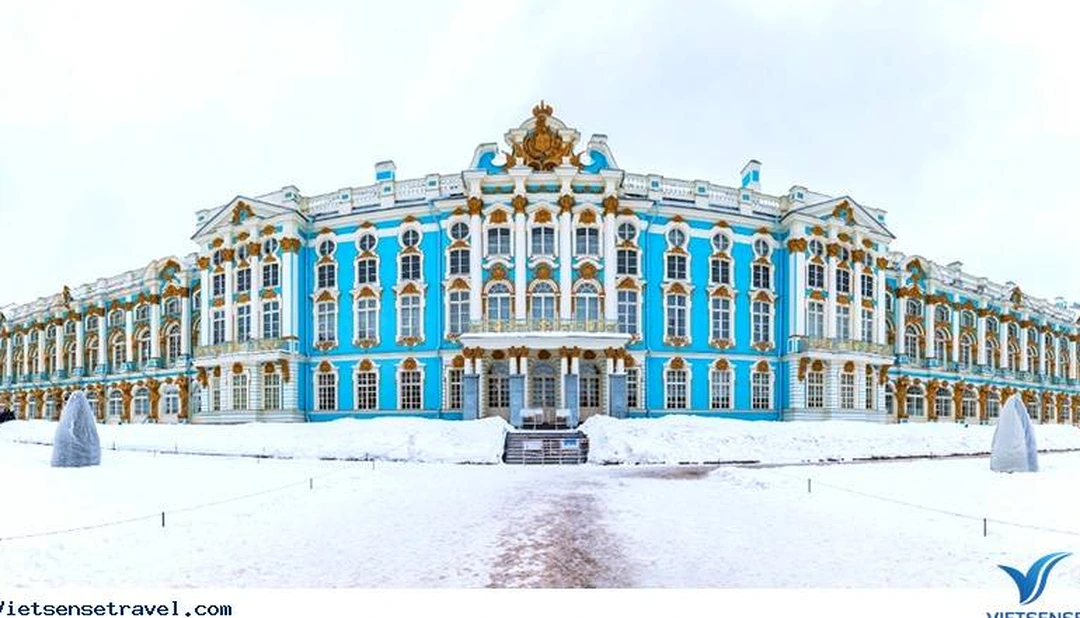
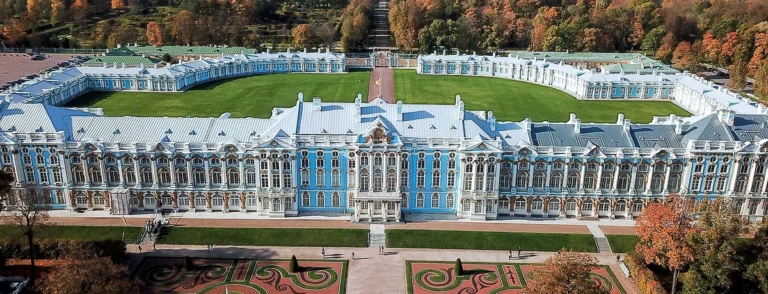
The supreme splendor admired by posterity today represents the palace’s fourth architectural iteration, a crowning masterpiece of Elizabethan Baroque directed by the great Italian architect Francesco Bartolomeo Rastrelli between 1754 and 1762. Under Empress Elizabeth Petrovna, the imperial treasury expended vast sums to craft a colossal palace featuring more than a thousand rooms, hundreds of marble staircases, and an emerald-green facade trimmed in dazzling white and gold leaf. Though Empress Elizabeth passed away before construction was finished, her brilliant successor, Catherine the Great, took the helm and infused these halls with the spirit of the Enlightenment and refined Neoclassical elegance. Her reign is forever linked to the birth of the Hermitage Museum in 1764, when the Empress acquired a prestigious collection of 225 Western European paintings from the Berlin merchant Johann Ernst Gotzkowsky. The name “Hermitage” derives from the French word “l’hermitage,” meaning “secluded retreat” or “sanctuary,” originally referring to private apartments where the powerful Empress withdrew to admire art and converse on philosophy with leading thinkers, free from rigid court protocol.
Through the passage of time, the Winter Palace served not only as the ultimate symbol of imperial authority, but also as the epicenter of Russia’s most dramatic historical upheavals. Its halls once echoed with the triumphant spirit of the Patriotic War of 1812 against Napoleon’s Grande Armée, an illustrious victory later immortalized in the famed Military Gallery. In December 1837, a catastrophic fire broke out and raged for three consecutive days and nights, reducing nearly the entire opulent interior to ashes. Yet, driven by the iron will of Tsar Nicholas I, master architects Vasily Stasov and Alexander Briullov miraculously rebuilt the palace within fifteen months—preserving Rastrelli’s ornate Baroque exterior intact while resurrecting the extraordinary magnificence within.
Entering the twentieth century, the palace transformed into a bloody political stage when it was commandeered as the seat of the Provisional Government following the February Revolution of 1917. The signal shot fired from the cruiser Aurora, which triggered the storming of the Winter Palace during the October Revolution later that year, officially brought an end to over three centuries of Romanov rule, ushering in the Soviet era and converting the entire royal residence into a public museum for the people. The next harrowing ordeal to test the survival of this heritage was the Great Patriotic War. Throughout the suffocating 872-day Siege of Leningrad, dedicated museum staff swiftly and heroically evacuated over one million priceless artifacts deep inland to the Ural Mountains, while the palace’s fortified cellars became shelters that saved thousands of lives amid relentless shelling—preserving the soul of Russian culture intact through the fires of war.
Occupying a commanding strategic position along the southern bank of the Neva River delta, the Winter Palace complex sits upon a masterwork of geomantic and urban planning shaped by the imperial vision of Peter the Great and his successors. Rather than shying away from the harshness of the untamed marshlands bordering the Gulf of Finland, royal planners transformed the broad expanse of the Neva into a giant mirror reflecting sovereign power. The palace’s main riverfront facade looks directly across toward the Strelka spit on Vasilyevsky Island—the city’s early maritime and financial hub—establishing a harmonious visual axis between commercial might and royal authority. To the west, the complex is naturally bounded by the Zimnyaya Kanavka (Winter Canal), a narrow, deep waterway excavated and reinforced to channel water from the Moika River straight into the Neva, serving simultaneously as an elegant defensive moat and a vital aquatic artery linking the court directly to the city’s intricate network of canals.
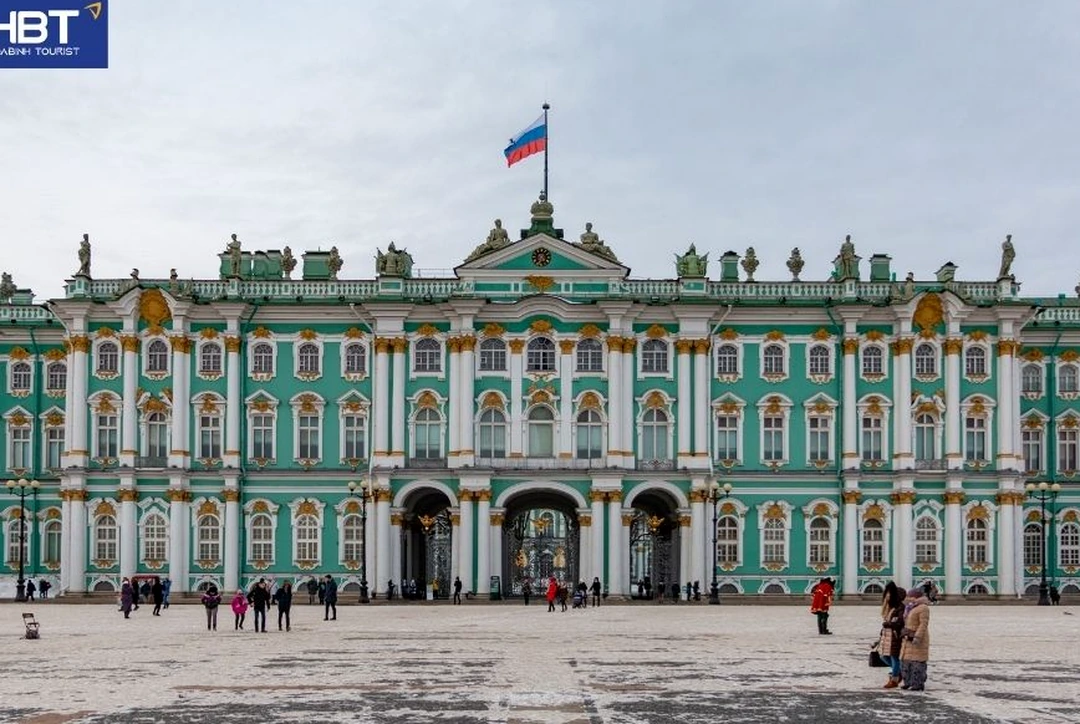
To the south, the Winter Palace opens onto one of the grandest public spaces in the Western world: Palace Square, the geometric heart and civic soul of St. Petersburg. This expanse represents a brilliant synthesis of two seemingly contrasting artistic movements blended into seamless harmony. While Francesco Bartolomeo Rastrelli’s palace facade displays the exuberant, dynamic opulence of Russian Baroque with crisp white columns rising against jade-green walls, across the square stands the sweeping semicircular arc of the General Staff Building, designed by architect Carlo Rossi in strict Empire Neoclassical style. Together with the Guards Corps Headquarters, this colossal crescent stretching over 580 meters embraces the square like outstretched arms, drawing the eye directly toward the imposing double Triumphal Arch—crowned high aloft by a bronze six-horse chariot of Victory.
Anchoring the serene, sacred stillness at the center of the entire square is the Alexander Column, erected in 1834 to commemorate Russia’s victory over Napoleon’s forces. Under the ingenious direction of architect Auguste de Montferrand, a single monolith of red granite weighing over 600 tons was quarried from Pyterlahti, transported across the sea, and hoisted upright into vertical alignment in just one hour and forty-five minutes using the mechanical pulley power of more than two thousand soldiers and Imperial Guard veterans. Rising to a total height of 47.5 meters including the bronze angel holding a cross at its summit, this marvel is the tallest monolithic stone monument in the world standing entirely by the pure law of gravity. The massive shaft rests securely on its pedestal solely through its own immense weight, without a single metal anchor, steel dowel, or mortar joint driven into the ground—an extraordinary testament to the peak mechanical engineering and surveying precision of the era.
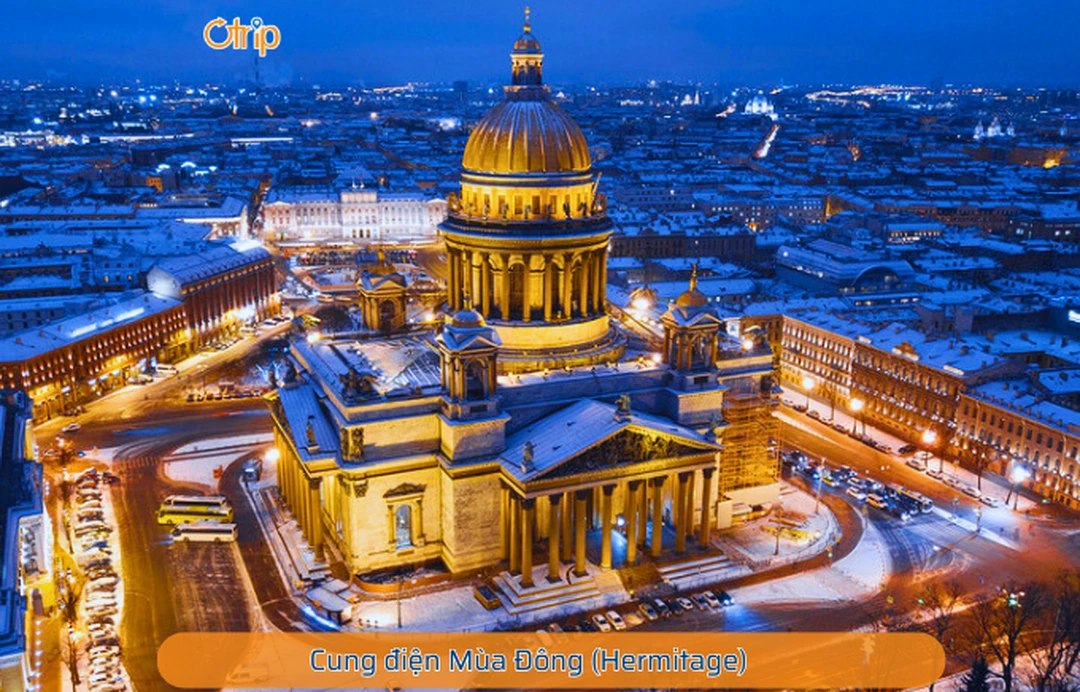
Landscape integration across the Winter Palace complex reaches perfection even in its supporting infrastructure, where the sturdy gray granite embankments of the Neva converse with the melancholic quietude of the Zimnyaya Kanavka canal. The graceful arched bridge linking the Hermitage Theater across the narrow waterway evokes the silhouette of Venice’s Bridge of Sighs, yet carries the contemplative, crisp atmosphere of the northern latitudes. From stabilizing soft alluvial marshland with tens of thousands of mud-cured oak pilings to orchestrating spatial transitions from the wide-open square into secluded inner courtyard gardens, the planning of the Winter Palace stands as an enduring monument to early modern urban landscape architecture.
Sculpted by the masterful hand of chief court architect Francesco Bartolomeo Rastrelli, the Winter Palace embodies the dazzling zenith of Elizabethan Baroque seamlessly interwoven with the graceful ornament of Western Rococo. Dominating the Neva riverbank, the colossal edifice spans roughly 210 meters along its facade while strictly adhering to a height limit of 23.5 meters. This defining elevation stems from an inviolable imperial decree of the era stipulating that no civic or religious building in Saint Petersburg could rise higher than the roofline of the Imperial Palace, establishing an iconic horizontal skyline preserved for centuries. Its exterior shell presents a classic chromatic harmony of turquoise green and ochre yellow, accented by hundreds of crisp white Roman columns soaring across two stories, intricate terracotta reliefs, and gilded bronze statues standing proudly along the roof balustrade against the northern sky.
The sheer physical scale of the royal palace complex leaves every visitor awestruck by its capacity and intricate internal circulation. Encompassing an estimated total floor area of over 60,000 square meters, this architectural labyrinth houses between 1,057 and 1,084 rooms of varying sizes, flooded with natural light through 1,786 tall windows and interconnected by 1,945 doors and 117 distinct staircases. Every hall, gallery, and state room functioned as a calibrated gear within the machinery of Russian court ceremonial, demarcating clear boundaries between the private family life of the Romanovs, formal international diplomacy zones, and a vast service logistics network concealed behind thick, fortified red-brick walls.
Inside, the visual journey begins in astonishment at the Jordan Staircase—originally known as the Ambassadors’ Staircase—where foreign envoys once ascended to an audience with the Tsar. The entire sweeping double staircase is carved from solid imported white Carrara marble, framed by walls of lavish gilded stucco, endless reflecting mirrors, and an immense ceiling fresco depicting mythical Mount Olympus. From this breathtaking foyer, the route leads into St. George’s Hall, or the Grand Throne Room, a Neoclassical masterpiece featuring twin rows of Italian marble Corinthian columns supporting a gilded ceiling. The sacred focal point of the hall is the red-velvet imperial throne embroidered with the double-headed eagle coat of arms of the Romanov dynasty, set solemnly atop an intricate parquetry floor handcrafted from sixteen rare varieties of precious wood.
Alongside symbols of sovereign majesty, Russia’s finest artisanal craftsmanship shines brilliantly in the celebrated Malachite Room. The reception chamber of Empress Alexandra Feodorovna was transformed into a mineralogical wonder through the unique “Russian mosaic” stone-inlay technique, utilizing premier malachite quarried from the distant Ural Mountains to veneer towering columns, fireplaces, and decorative urns in vivid contrast against gilded bronze accents and crimson silk draperies. Adjacent to it, the Military Gallery of 1812—designed by architect Carlo Rossi—strikes a solemn, heroic note, where natural light from overhead glass skylights illuminates 332 portraits of Imperial Russian generals who defeated Emperor Napoleon Bonaparte’s invading army, all meticulously painted over many years by English artist George Dawe and his assistants, turning an aristocratic gallery into an eternal epic of Russian history.
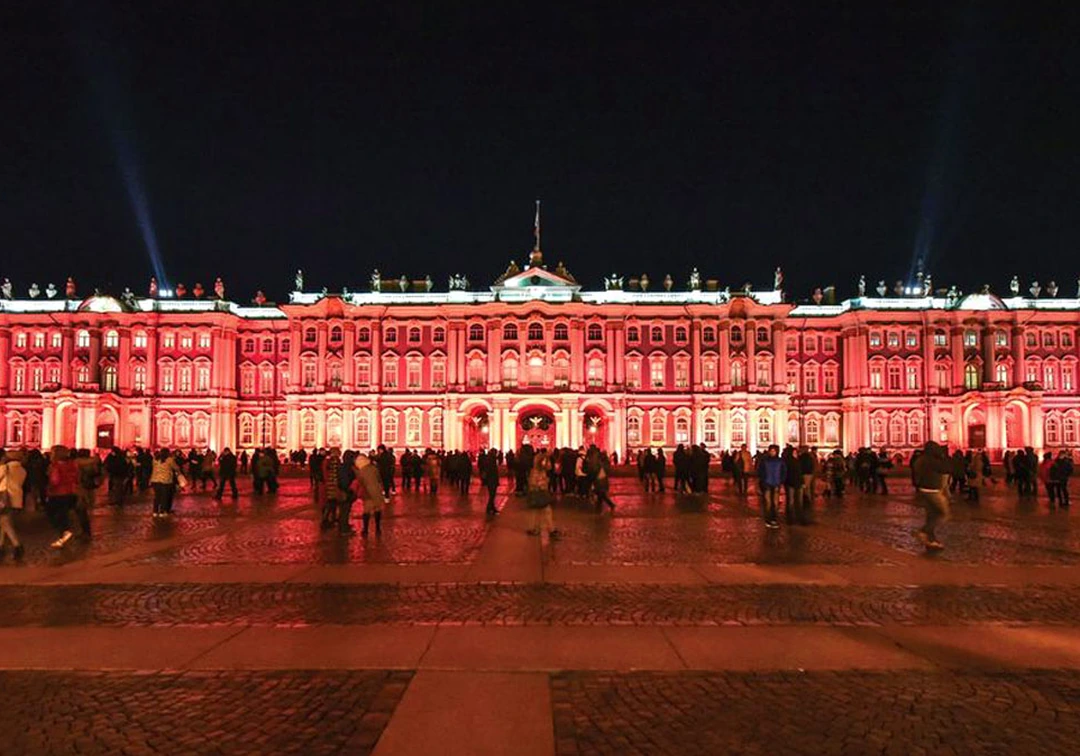
As northern twilight dips below the Gulf of Finland horizon, the Winter Palace sheds its serene daytime dignity to enter a breathtaking, enchanting nocturnal life. A modern multi-layered artistic lighting system along Palace Embankment awakens every detail of Francesco Bartolomeo Rastrelli’s supreme Baroque exterior. Classic emerald green, ivory white, and gleaming gold accents glow radiantly, casting shimmering reflections across the rippling Neva like a crystal palace floating weightlessly in midair. Under the crisp illumination of thousands of optical floodlights, mythological Greco-Roman statues atop the roof balustrade, hundreds of proud Corinthian columns, sea-god mask reliefs, and Romanov double-headed eagle emblems emerge in vivid relief, celebrating eighteenth-century sculptural mastery.
Directly opposite the southern facade, expansive Palace Square transforms into one of Europe’s grandest open-air performing arts venues. Standing tall at its heart, the 600-ton monolithic granite Alexander Column becomes the pivot for major classical music festivals and contemporary visual spectacles. During Saint Petersburg’s premier cultural celebrations, the curved semicircular facade of the General Staff Building—stretching hundreds of meters—becomes a colossal projection screen for state-of-the-art 3D mapping shows. Defining chapters of history, from Peter the Great’s founding of the city and Alexander I’s Patriotic War to priceless paintings preserved inside the Hermitage, are brought to life in vibrant laser light, synchronized with immortal symphonic works by Pyotr Ilyich Tchaikovsky and Dmitry Shostakovich performed live beneath the night sky by Russia’s leading musicians.
Even more magical and romantic is the nocturnal rhythm during the enchanting “White Nights” season stretching from late May to mid-July. This ethereal natural phenomenon turns Saint Petersburg into a sleepless city, where endless dusk merges seamlessly into dawn in a silvery blue-violet glow. Tens of thousands of travelers and locals gather around the Winter Palace, strolling along historic cobblestone walkways toward Palace Bridge. At precisely 1:00 AM, the moment the twin bascule leaves of Dvortsovy Most slowly part and rise toward the luminous night sky to let cargo vessels pass along the Neva becomes an immortal poetic emblem of the northern capital. The sight of the illuminated imperial palace reflected in the river at that hour, accompanied by the soulful notes of street saxophones or ceremonial cannon salutes during the Scarlet Sails festival, creates a sensory crescendo that stirs every emotion.
Evening artistic appreciation extends further through refined courtly performances inside the Hermitage Theater—a Neoclassical gem built by Giacomo Quarenghi atop the foundations of the very first Winter Palace. Designed in the style of a miniature ancient Roman amphitheater, this intimate auditorium lined with faux rose-gray marble columns regularly hosts timeless ballets such as Swan Lake and The Nutcracker alongside chamber recitals featuring acclaimed opera soloists from the prestigious Mariinsky Theater. To close out an evening steeped in art, visitors can stroll along the nearby Moika River embankment or Nevsky Prospekt, stopping at aristocratic tea salons to enjoy steaming samovar tea, traditional blini pancakes topped with velvety black caviar, and a chilled glass of sparkling wine—savoring royal traditions preserved across centuries.
A world apart from the rustic feasts of ancient Slavic countryside traditions, the culinary artistry associated with the Winter Palace and St. Petersburg’s aristocracy during the golden age represents a dazzling marriage of premier French haute cuisine and rich, deeply rooted Russian gastronomic heritage. Under the Romanov tsars, renowned chefs were summoned from Paris to the northern capital, bringing refined sauce-making techniques and modern multi-course dining structures to harmonize with the abundant ingredients of an empire spanning multiple time zones. This fusion gave rise to an inimitable imperial culinary legacy, where every dish became an edible work of art reflecting the opulent lifestyle and storied past of those who once ruled along the banks of the Neva.
The most celebrated emblem of this culinary cross-pollination is world-famous Beef Stroganoff, named after the illustrious noble family of Count Stroganov. Crafted from prime beef tenderloin sliced into uniform thin strips, the meat is seared swiftly over high heat to lock in its natural tenderness and sweetness before being folded into a velvety sauce of rich smetana sour cream, wild forest mushrooms, and a warm hint of Dijon mustard. Equally indispensable at historic royal banquets was Tsar’s Ukha fish soup, the pinnacle of multi-stage broth refinement. Simmered from prized freshwater species such as Volga sturgeon, Lake Ladoga salmon, and sterlet, the broth is meticulously clarified to crystal transparency and finished with fine white wine and meadow herbs, yielding a flavor as pure yet profound as the sweep of history itself. Notably, traditional kulebyaka baked pie was elevated to courtly delicacy by layering rich salmon fillings with viziga—dried sturgeon spinal marrow—imparting an inimitable crisp-chewy texture and depth of richness unmatched by any other ingredient.
A journey through imperial capital flavors concludes on refined sweet notes, epitomized by the famed Guryev Kasha created for Count Dmitry Guryev, Minister of Finance under Tsar Alexander I. Far removed from humble everyday buckwheat or plain semolina porridge, Guryev kasha is an intricate layered confection: silky milk-simmered semolina alternates with fragrant caramelized milk-skin foam (kaymak), studded with roasted hazelnuts, crushed walnuts, and luscious candied forest berries. Right inside the Hermitage Museum, after hours of admiring masterworks of painting, visitors can pause at cafés beneath historic vaulted ceilings to savor pastries baked according to authentic nineteenth-century St. Petersburg court recipes alongside robust bergamot-scented black tea, as if time itself had stood still.
To extend this historical immersion beyond the gilded gates of the Winter Palace, discerning gastronomes often seek out Palkin Restaurant on Nevsky Prospekt—a legendary dining institution founded in the late eighteenth century that once served as an elegant gathering spot for literary giants Fyodor Dostoevsky and Leo Tolstoy as well as composer Pyotr Ilyich Tchaikovsky. Today, it preserves its glittering crystal-chandeliered ambiance, impeccable court-style service, and a menu faithfully recreating the aristocratic flavors of Tsarist Russia’s heyday. Meanwhile, Severyanin Restaurant, tucked along a charming historic street, takes diners on a culinary expedition to Russia’s far north with wood-roasted game meats, naturally smoked fish, and golden cloudberry preserves, completing the multifaceted, luxurious gastronomic portrait of an eternal imperial capital.
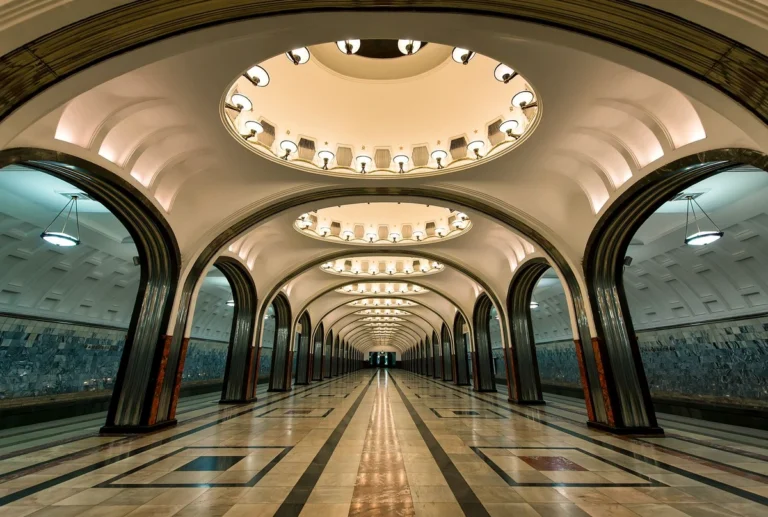
Standing majestically in the heart of Russia’s northern former capital at 2 Palace Square (Dvortsovaya Ploshchad) and stretching along the Neva waterfront at 34 Palace Embankment (Dvortsovaya Naberezhnaya), the State Hermitage Museum complex is the crowning highlight of any cultural journey across Russia. To reach this temple of art, the most convenient and authentically local mode of transport is Saint Petersburg’s famed metro system, renowned as one of the deepest in the world. Visitors simply alight at Admiralteyskaya Station (Адмиралтейская) on Line 5 (the Purple Line), then take a leisurely stroll a few hundred meters past the vibrant intersection of Nevsky Prospekt and through the grand triumphal arch of the General Staff Building to watch the vast cobbled expanse of Palace Square unfold before their eyes.
The Hermitage’s operating schedule is carefully structured to welcome immense crowds from around the globe while upholding strict conservation standards for its rare marquetry floors and millions of antiquities. The museum opens to visitors from 11:00 AM to 6:00 PM on Tuesdays, Wednesdays, Thursdays, and Sundays. On Fridays and Saturdays, opening hours extend until 8:00 PM, offering an ideal opportunity to admire masterworks of painting as golden twilight settles outside tall windows overlooking the misty Neva. The entire complex closes every Monday as well as on New Year’s Day for routine maintenance and conservation care.
To navigate a colossal collection housing more than 3 million artifacts across nearly 20 kilometers of galleries spanning five interconnected buildings—the Winter Palace, Small Hermitage, Old Hermitage, New Hermitage, and Hermitage Theater—thoughtful itinerary planning is essential. Researchers estimate that spending just one minute examining each artifact would require more than an entire human lifetime. Accordingly, booking timed-entry tickets in advance via the official online portal hermitagemuseum.org is the smartest strategy, sparing you hours of queuing in chilly winds inside the Jordan Courtyard. Beyond the main riverfront entrance, savvy travelers often enter via the General Staff Building wing directly across Palace Square—home to celebrated Impressionist and Post-Impressionist masterpieces by Claude Monet, Vincent van Gogh, Paul Cézanne, and Henri Matisse—to begin their visit at a calmer, more unhurried pace.
Before stepping into the gilded state halls, every visitor must observe traditional Russian museum etiquette: removing heavy winter coats, knit hats, and umbrellas, and checking backpacks or large bags at the subterranean cloakroom (garderob). Attire should be neat and respectful of the palatial setting, paired with comfortable, supportive footwear capable of cushioning your feet through hours of continuous walking across eighteenth-century marble and solid hardwood floors. Downloading the official museum map app or renting a multilingual audio guide will help you navigate the labyrinth of hundreds of opulent galleries with ease, allowing you to curate classic thematic routes—from Italian Renaissance masterworks by Leonardo da Vinci and Raphael to the world-renowned collection of Dutch master Rembrandt.
Pairing heritage appreciation with a well-paced itinerary led by guides deeply versed in Russian history transforms a museum visit into an enriching cultural odyssey—and to savor every magical moment in the former capital of the Tsars without worrying about complex logistics, travelers can explore an all-inclusive Moscow – St. Petersburg Russia tour package.