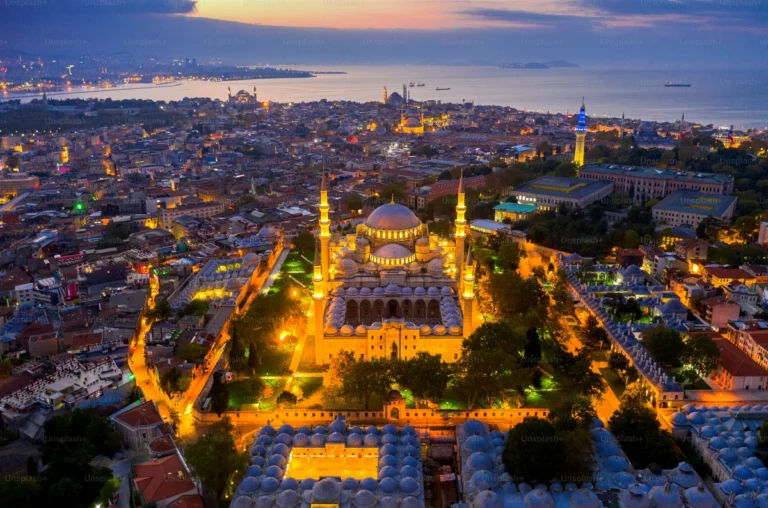
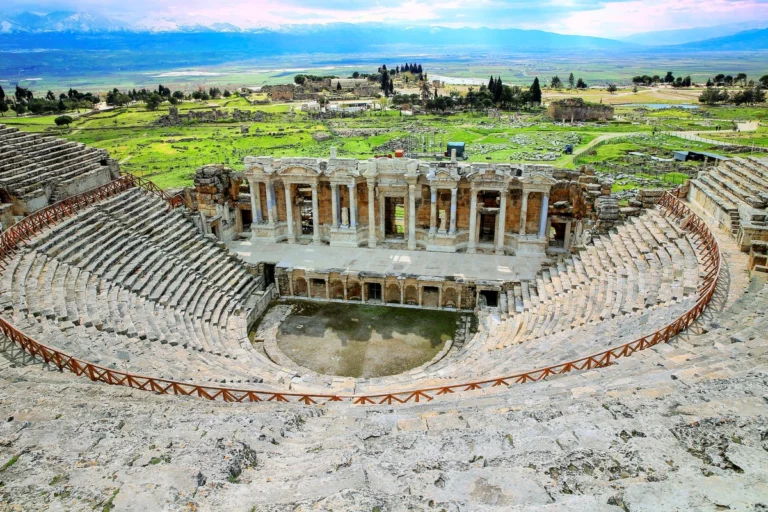
Perched precariously atop pure white limestone terraces resembling a perpetual snow-capped mountain amid the Lycus River valley of ancient Phrygia, the sacred city of Hierapolis and the natural wonder of Pamukkale have endured thousands of years of human history. The origins of this land are intertwined with the Attalid dynasty of the illustrious Kingdom of Pergamon. In the late second century BCE, King Eumenes II laid the foundational stones of this metropolis, naming it Hierapolis in honor of Hiera—the radiant consort of the hero Telephos, legendary founder of Pergamon and son of the demigod Heracles. From its earliest days, this territory served not merely as a strategic defensive bastion at the crossroads of Asia Minor’s civilizations, but also as a mystical spiritual sanctuary endowed with steaming subterranean thermal springs and the Plutonion cave—believed by the ancients to open directly into the underworld of Hades.
A monumental turning point reshaped the city’s destiny in 133 BCE, when the final monarch of the Attalid dynasty, Attalos III, bequeathed the entire Kingdom of Pergamon to the Roman Republic through a historic will. Absorbed into Roman territory, Hierapolis entered its most dazzling golden age under the Pax Romana, spanning from the first to the third century CE. Although leveled completely by a devastating earthquake in 60 CE during the reign of Emperor Nero, the city rose miraculously from the ashes. Financed by immense wealth drawn from travelers across the Mediterranean flocking here to heal in mineral waters rich in calcium bicarbonate, Roman authorities rebuilt Hierapolis according to the orthogonal grid plan of Hippodamus. Expansive marble-paved avenues, colossal Roman public baths, bustling agoras, and a grand semicircular theater transformed the city into the premier wellness and leisure retreat for the empire’s aristocracy.
With the dawn of the Christian era under the Eastern Roman Empire, the spiritual identity of Hierapolis underwent another profound transformation. In 80 CE, Philip the Apostle—one of the twelve closest disciples of Jesus—suffered martyrdom here for preaching the faith, executed on a high hill outside the city gates. This tragic event elevated the worldly spa town into one of the foremost sacred pilgrimage centers of the early Christian world. By the fifth century, a monumental octagonal Martyrium and basilica were erected directly over the apostle’s tomb, welcoming waves of devout pilgrims from across the East who traversed deserts and seas to venerate, pray, and purify body and soul in the miraculous warm waters.
The tides of history pressed onward through fierce medieval conflicts. From the late twelfth century, sovereignty over Hierapolis and the Pamukkale plain gradually passed into the hands of Turkic peoples, experiencing rule under the Seljuk Sultanate and the Germiyanid Beylik before being permanently incorporated into the mighty Ottoman Empire. Throughout that unbroken flow of centuries, this landscape became an endless muse for classic chronicles and travelogues. In his encyclopedic Geographika, the renowned Greek geographer Strabo marveled at steaming underground waters capable of petrifying objects into solid white limestone walls. Later, Byzantine historian Niketas Choniates meticulously recorded fierce military clashes along this frontier, before English traveler Richard Chandler explored the region and reintroduced the surreal beauty of its travertine cascades and ancient ruins to Western scholarship in the eighteenth century, paving the way for landmark archaeological excavations celebrated ever since.
Commanding the gentle slopes of the Büyük Menderes Valley in the fertile Aegean Region, roughly eighteen kilometers north of downtown Denizli, the geological formation of Pamukkale occupies an extraordinary geographic setting where nature and history converge. Viewed from afar, the pure white hillside stands out boldly against the sweeping emerald plains of Asia Minor like a ribbon of snow draped across the horizon. This region rests squarely within the Büyük Menderes Graben rift system, where tectonic movements of the Earth’s crust over millions of years fractured the mountain terrain, sculpting a dramatic natural stepped terrace cascading from the limestone plateau down into the fertile valley basin below.
From a geomorphological and geophysical perspective, Pamukkale sits directly atop a first-degree active fault zone where the continental crust undergoes continuous subterranean extension and compression cycles. Rather than destroying the landscape, these intense geological fractures open deep conduits descending straight into warm magma chambers, turning the site into an immense geothermal reservoir brimming with inexhaustible mineral waters. Energy-rich groundwater from deep below is propelled steadily to the surface at an astonishing flow rate of approximately 250 liters per second. The surface temperature of these thermal springs spans an extraordinarily wide spectrum—from gentle, soothing 35°C waters caressing the stone ledges to boiling vents reaching 100°C that shroud the hillside in billowing, mystical plumes of steam.
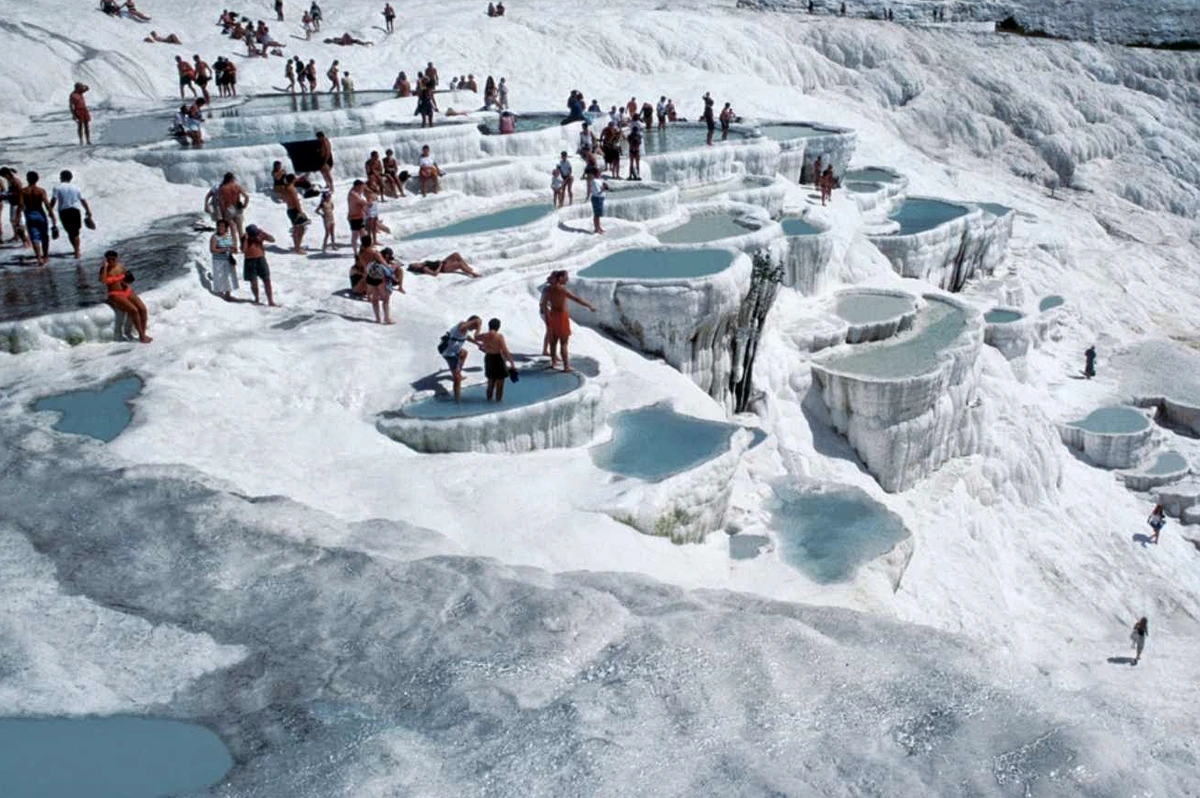
The mechanism behind the creation of the Cotton Castle is an extraordinary chemical sedimentation dance unfolding tirelessly over tens of thousands of years. While primary mineral water circulates deep within the Graben fault system, immense hydrostatic pressure keeps abundant dissolved calcium hydrogencarbonate in a supersaturated state. The instant these thermal currents burst through crustal fissures onto the open hillside, the sudden drop in atmospheric pressure combined with broad exposure to oxygen triggers the rapid release of carbon dioxide gas. As gas escapes into the air, the chemical reaction reverses—rendering calcium carbonate insoluble and precipitating it immediately into a silky, gel-like white mineral paste as pure as fresh snow, blanketing every surface touched by the flowing water.
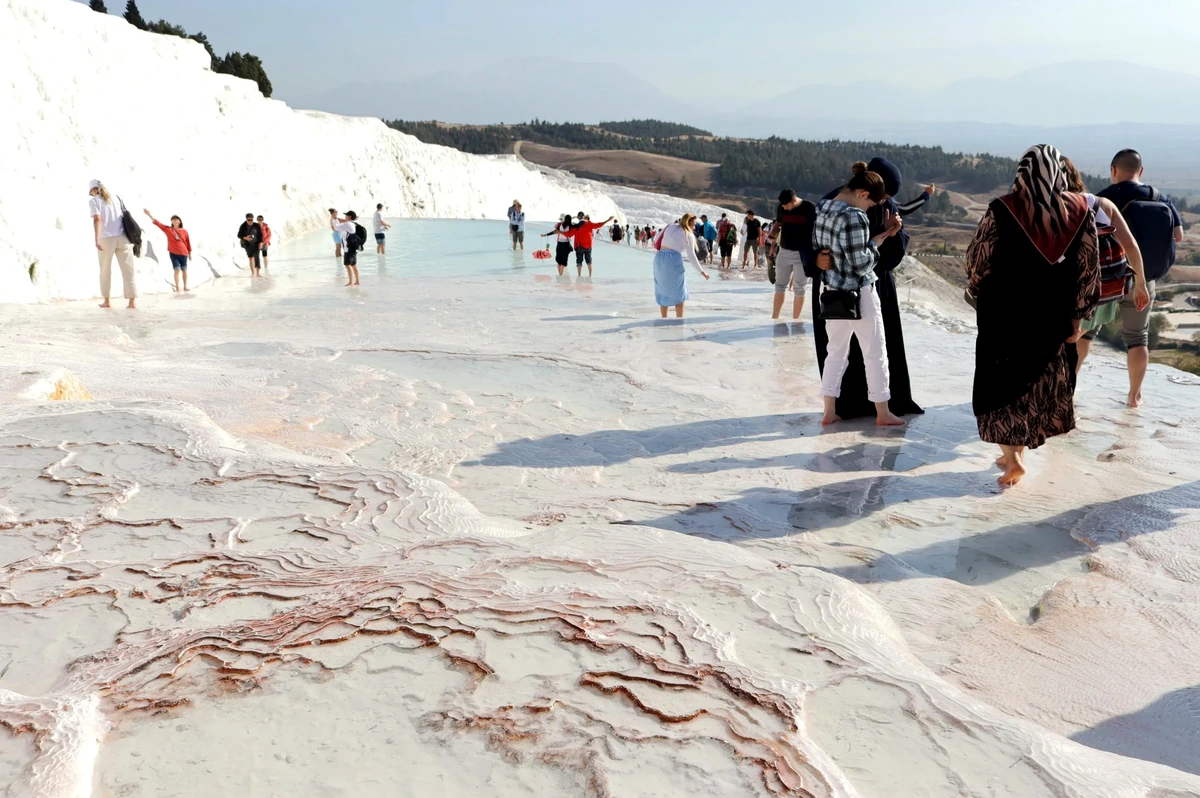
Catalyzed by ambient air temperatures and continuous evaporation driven by continental Aegean breezes, this nascent calcium carbonate gel gradually solidifies, crystallizes, and petrifies over centuries into gleaming white, durable travertine limestone. Mineral-rich alkaline water overflows natural rims, building self-elevating rimstone dams that curve into hundreds of scallop-shaped terraced pools cascading tier upon tier down the cliffside. Even mineral waterfalls plunging over sheer rock ledges have petrified mid-fall, freezing into monumental curtains of travertine and stone cascades suspended against the blue sky. The interplay between pure white travertine strata and mirror-still turquoise mineral pools has forged a geological wonder unmatched anywhere else on Earth.
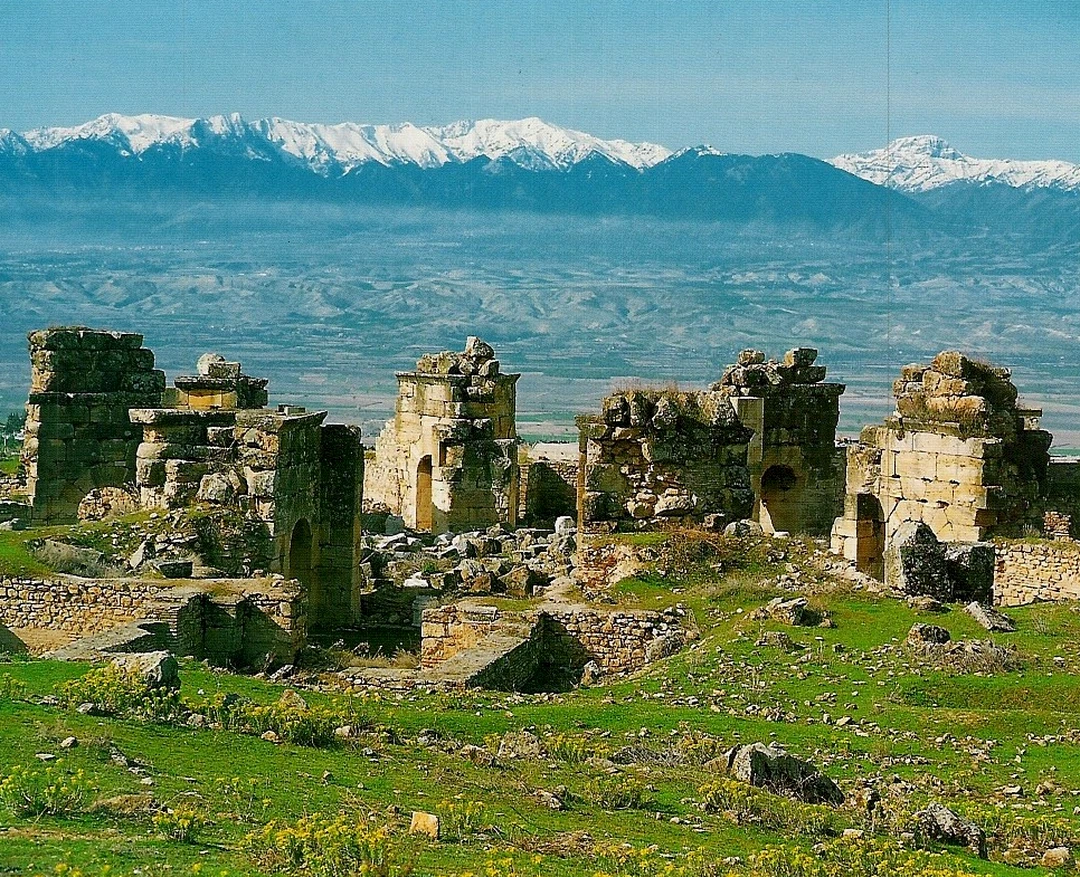
Sprawling across the summit of ancient Phrygia’s calcified plateau, the ruins of Hierapolis stand as an exemplary masterpiece of Roman urban planning harmonized seamlessly with natural topography. The backbone governing the ancient city’s layout is the famed Frontinus Street, a grand colonnaded avenue measuring 14 meters wide and paved smoothly with colossal local limestone blocks. Once flanked by stately Doric colonnades leading through the imposing Domitian Gate, this thoroughfare held more than imperial symbolism: beneath its paving slabs lay an advanced network of stone drainage sewers, attesting to some of the most sophisticated sanitary urban engineering in the ancient world.
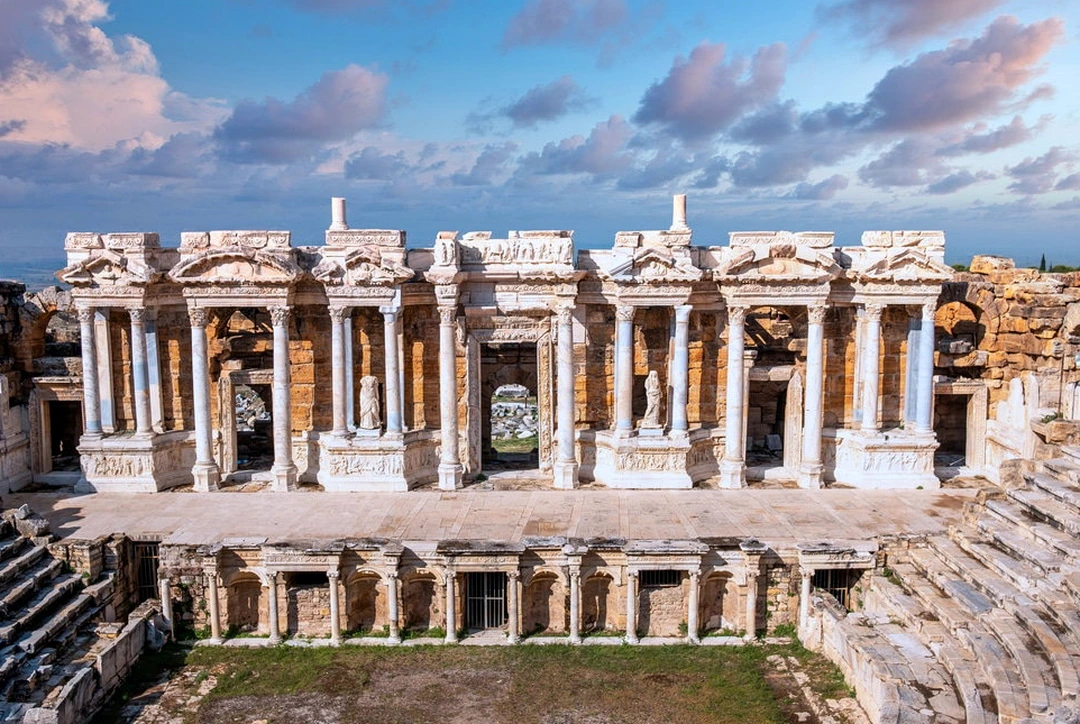
Resting solidly against the gentle hillside overlooking the expansive Lycus River valley, the Theater of Hierapolis rises like an epic poem carved in marble and limestone, magnificently renovated in the second century CE under Emperor Septimius Severus. Boasting a massive capacity of 10,000 to 12,000 spectators, the auditorium is divided into fifty gracefully curving tiers of stone seating separated by wide diazoma walkways to regulate crowd movement. The most captivating feature of this temple of performing arts is its proud three-story scaenae frons stage wall, where master Roman sculptors chiseled intricate reliefs depicting myths of Dionysus and the huntress goddess Artemis alongside stately statues of the Roman imperial family in ceremonial attire.
Beyond the bustle of urban life stretches a realm of eternity in the Necropolis, extending along both the northern and southern flanks of the ancient city as one of the largest and best-preserved ancient burial grounds in all of Anatolia. Over twelve hundred tombs scattered across the arid hillside compose a silent human tapestry spanning multiple historical eras. Funerary craftsmanship here reaches remarkable artistry—from circular tumulus burial mounds inheriting pre-Roman traditions and subterranean family hypogea cut deep into rock, to limestone sarcophagi carved with garlands, Medusa heads, and ancient Greek and Roman inscriptions recording wills and curses deterring grave robbers.
Ascending the eastern hill above the city, the spatial atmosphere turns deeply solemn with Byzantine religious heritage at the Martyrium of St. Philip. Constructed in the fifth century to commemorate the martyrdom of one of Jesus’s twelve apostles, the shrine features an extraordinary octagonal floor plan with an interior diameter of twenty meters. This distinctive octagonal geometry reflects the profound theological symbolism of early Christianity, wherein eight rectangular chambers radiate symmetrically from a central circular sanctuary once crowned by a lead-sheathed timber dome, creating an otherworldly space for contemplation amid windswept skies.
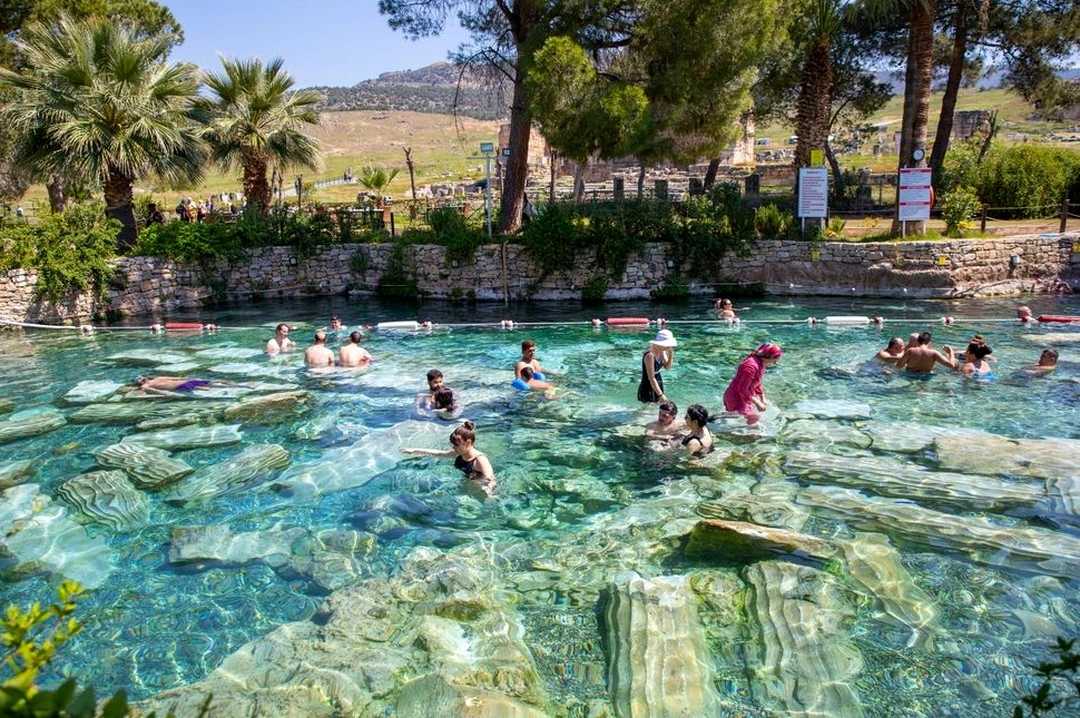
The most wondrous crystallization of human artistry and local geological upheaval is Cleopatra’s Antique Pool, known locally as Kleopatra Havuzu. A catastrophic earthquake around 700 CE tore open the earth, toppling the entire marble Corinthian colonnade of the adjacent Temple of Apollo directly into the depths of a subterranean thermal spring. Today, crystal-clear, effervescent mineral water heated naturally to a steady 36°C embraces fallen carved stone blocks and ornate column capitals scattered across the pool floor. Nature’s irony inadvertently created a living underwater museum where swimmers glide through pure thermal waters and touch moss-kissed ruins from an empire’s golden age.
As crimson sunset hues settle along the rim of the Lycus River valley, Pamukkale’s limestone terraces shed their crisp daytime brilliance to assume the mystical allure of an ethereal dreamscape. Rather than plunging into pitch darkness, this UNESCO World Heritage site awakens under an artistic lighting system utilizing low-energy diffused LED technology. Engineered and installed strictly in compliance with international ecological conservation standards, these luminaires emit zero heat and cause no mineral discoloration or disruption to the delicate calcium carbonate crust. Beneath gentle washes of amber, gold, and turquoise light, hundreds of overflowing pools transform into giant celestial mirrors, shimmering like a crystal palace sculpted from petrified clouds suspended midair.
Nighttime cultural life in sacred Hierapolis centers on its grand Roman theater, initiated under Emperor Hadrian and completed during the reign of Septimius Severus. With seating for over twelve thousand spectators arranged along a semicircular slope, this architectural marvel boasts acoustics so pristine that a single plucked string on the orchestra stage carries clearly to the topmost tier. On tranquil summer evenings, the venue hosts chamber concerts and acoustic performances imbued with epic resonance. The deep timbre of cellos, soaring violins, and traditional Anatolian ney flutes echo off mythological Greek reliefs, transporting audiences back through centuries of classical splendor.
Stepping beyond the theater, nightlife in Pamukkale eschews the noisy clamor of modern entertainment hubs in favor of serene contemplation. Along timber boardwalks skirting the travertine basins, visitors listen to an inimitable natural symphony: millennia-old thermal waters trickling steadily over pure white limestone ledges while cool mountain breezes drift down from Mount Honaz across the valley. Gazing outward, the Denizli plain below sparkles like a terrestrial Milky Way, contrasting starkly with the quiet solitude of the ruined Temple of Apollo and ancient Necropolis silhouetted against the night sky.
An evening in this wonderland would be incomplete without savoring traditional Aegean culinary heritage. Historic hillside inns serve the celebrated brick-oven roasted lamb specialty Denizli kebabı, slow-cooked for hours over oak embers until the meat melts like butter. Guests sip glasses of Pamukkale şarabı red wine fermented from ancient native Öküzgözü and Boğazkere grapes, paired with herb-infused goat cheese and flaky baklava drenched in wildflower honey. Surrounded by fragrant mountain herbs and warm rising steam from the mineral springs, Pamukkale at night unfolds as a harmonious masterpiece nourishing sight, sound, and soul.
The gastronomy of the Denizli valley cradling Pamukkale reflects not only fertile terroir, but also a resonant fusion between free-spirited Yörük nomadic traditions and agricultural civilizations bridging the Aegean coast with the Anatolian interior plateau. Over centuries, Silk Road caravans halting beneath the sacred hill of Hierapolis introduced interwoven culinary techniques, forging a rustic yet deeply refined school of cooking centered on live fire and indigenous ingredients. Local culinary philosophy rejects heavy artificial seasonings, celebrating instead the pure essence of wild mountain herbs, cold-pressed coastal olive oil, and free-range sheep grazing across fragrant limestone pastures.
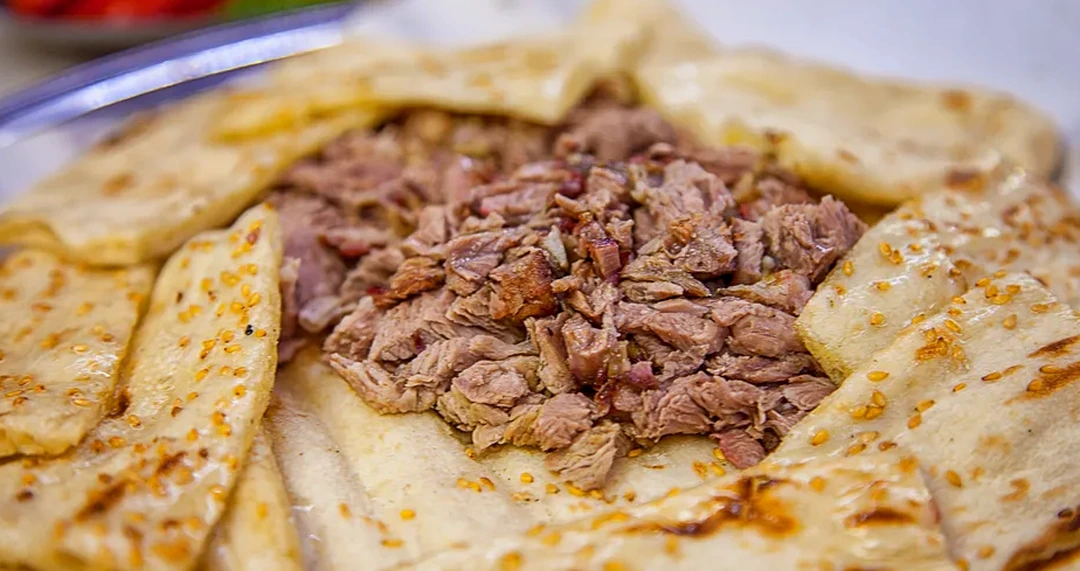
Reigning supreme over every Denizli feast is the iconic roasted meat specialty Denizli Kebabı, a culinary masterpiece originating in the mid-nineteenth century and safeguarded meticulously across generations of master chefs. This dish stands completely apart from the heavily spiced kebabs common in eastern Turkey. Artisans select only young male lambs raised on steep mountain slopes, hanging large cuts on iron hooks suspended inside a custom-built domed brick oven. Heat comes exclusively from smoldering aged oak logs burning beside the meat—never commercial charcoal—to prevent harsh smoke flavor. The lamb roasts slowly for three to four hours without any salt, onion, or seasoning; natural fat renders out and bastes the meat continuously, crisping the exterior to a golden amber crunch while leaving the interior velvety and succulent. True to tradition, Denizli Kebabı is served without cutlery—pulled apart by hand atop warm pide flatbread soaked in rich lamb drippings, accompanied by crushed raw onion and blistered green peppers.
Delving deeper into rural family homes and village festivals introduces diners to Keşkek, a ceremonial delicacy inscribed on UNESCO’s Representative List of the Intangible Cultural Heritage of Humanity. Far more than a meal, Keşkek embodies Yörük communal solidarity: hulled durum wheat berries are simmered overnight with shredded lamb or beef in colossal copper cauldrons over glowing fires. The secret behind its legendary velvety texture lies in continuous pounding with heavy wooden mallets by strong village men until meat fibers and wheat grains meld into a cohesive, creamy porridge. Served piping hot, Keşkek is finished with a ladleful of melted sheep’s butter infused with sweet red paprika, delivering a deeply comforting, nutty richness. Meanwhile, Çaput Aşı showcases the ingenuity of rural women, layering young valley grape leaves with minced lamb, white rice, chickpeas, and savory bone broth to achieve an exquisite balance between gentle herbal tartness and rich meatiness.

Denizli’s culinary signature lingers sweetly beside the baker’s griddle with Katmer, a delicate pastry enchanting palates through sheer mastery of dough and roasted nuts. Dough balls are kneaded skillfully and tossed across marble counters until stretched as thin and translucent as silk veil. Rather than plain butter, local Katmer is generously spread with rich, velvety sesame tahini paste and crushed walnuts harvested from ancient orchards at the foot of the mountains. Folded neatly into squares, the pastry is baked atop a convex iron griddle over glowing embers until blistered, flaky, and fragrant with toasted sesame and cane sugar. Biting into crisp Katmer alongside a glass of robust black tea brewed in a traditional double-stacked copper teapot captures the enduring abundance and warm hospitality of this ancient thermal sanctuary.
Experiencing the geological marvel and ancient civilization of Pamukkale firsthand requires attuning to the seasonal rhythms of southwestern Turkey’s semi-arid climate. This dual UNESCO World Heritage site opens its gates from 8:00 AM until 9:00 PM during hot summer months, when lingering twilight stretches across the Honaz range, and adjusts to 8:00 AM through 5:00 PM in crisp winter months when delicate mist drifts over the limestone tiers. The most enchanting time to witness the Cotton Castle is late afternoon as the sun dips toward the Menderes Valley—sparing your eyes from intense midday glare off the white stone while bathing the infinity pools in shifting hues of apricot gold, rose pink, and deep violet.
To reach this thermal sanctuary by air, travelers fly into Denizli Çardak Airport, where airport shuttles or private transfers cover the roughly sixty-five-kilometer journey in a smooth forty-five-minute drive. From downtown, Denizli Otogarı central bus terminal operates frequent local minibuses known as dolmuş departing every twenty minutes directly to the north or south gates of Hierapolis. Modern ticketing booths accept both international payment cards and the official Müze Kart museum pass issued by the Ministry of Culture and Tourism of Turkey, streamlining entry into this celestial landscape.
One inviolable rule every visitor must observe is the strict prohibition against wearing shoes, clogs, or flip-flops when walking across the travertine terraces. Fresh calcium carbonate deposits are exceptionally delicate and vulnerable, requiring visitors to shed rubber soles entirely and step onto the formations barefoot. Going barefoot not only preserves the dazzling white purity of this natural masterpiece for future generations, but also offers a remarkable tactile journey—feeling gentle mineral ripples, warm textured beds in shallow channels, and cool, silky smoothness beneath thin sheets of flowing water.
Essential daypack gear for a Pamukkale excursion starts with quality polarized sunglasses and a wide-brimmed hat, acting as vital optical shields against intense UV reflection bouncing off the vast white limestone expanse. If you wish to immerse yourself in the 36°C emerald-bubbling thermal waters of Cleopatra’s Antique Pool, pack modest swimwear and a personal towel in your day bag, as on-site rental facilities are limited. Floating effortlessly in pure bicarbonate-rich waters directly above sunken Roman marble columns becomes an unforgettable imperial spa memory.
To appreciate every interwoven layer of history alongside the paradisiacal natural beauty of this extraordinary region, a thoughtfully curated journey stretching from fertile Aegean shores across the Anatolian plateau is the ideal choice—all seamlessly woven into the 10-Day 9-Night Bursa – Canakkale – Izmir – Pamukkale – Cappadocia – Ankara – Istanbul tour steeped in timeless grandeur and ancient charm.