Along the meandering water silk of the Grand Canal, the voyage of the gondola is not merely a method of water transportation, but a millennium-old sedimentary chronicle of the Venetian lagoon territory. The earliest historical record confirming the legitimate presence of this boat dates back to the eleventh century—specifically in 1094, when Doge Vitale Falier signed an official administrative document in which the designation “gondola” appeared for the first time to describe the boat-building privilege of residents living along the lagoon. Originating as a modest vessel designed to adapt to the shallow channels and muddy terrain of the Adriatic Gulf, the gondola gradually transcended its utilitarian role to merge into the political, economic, and artistic currents of one of the most prosperous maritime republics in the West.
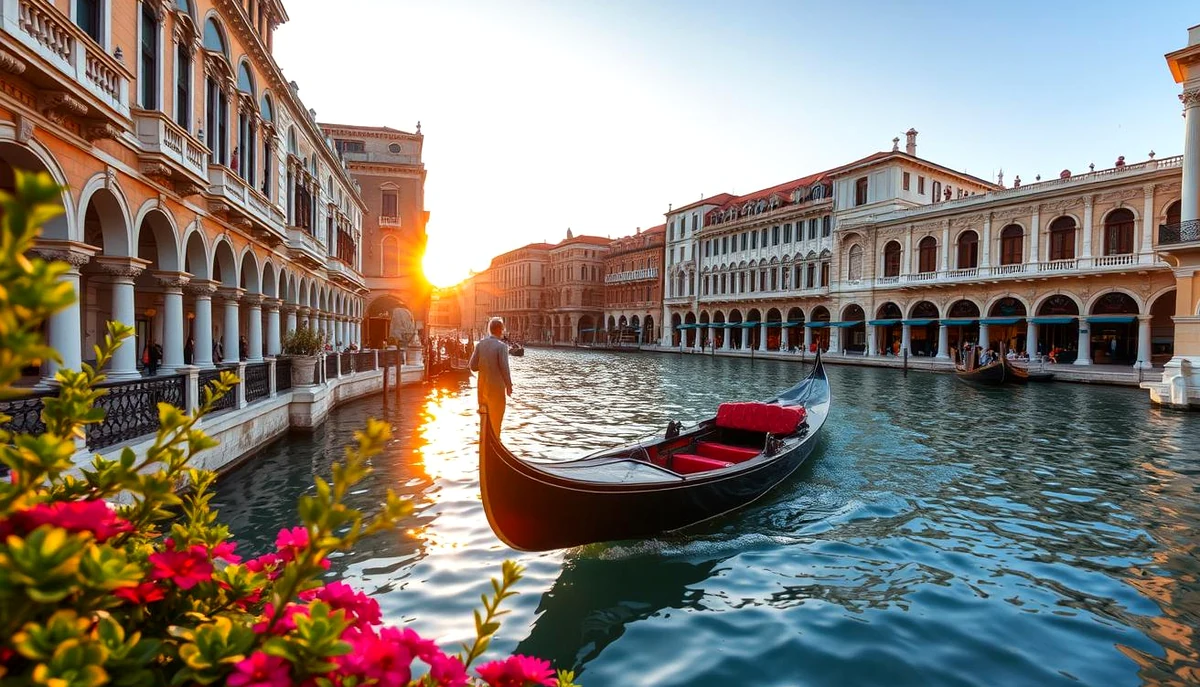
Entering the 14th and 15th centuries—the glorious golden age of the Venetian Maritime Republic known by the reverent title La Serenissima—the gondola officially became the supreme symbol of power and aristocratic status. In a city devoid of horse-drawn hoofprints or rolling carriage wheels, the waters of the Grand Canal transformed into a runway to flaunt the prestige of noble households. Each aristocratic lineage owned its private fleet of gondolas, maneuvered by loyal family oarsmen. At its peak in the 16th century, an estimated ten thousand gondolas bustled back and forth through winding canal nooks. This era witnessed an explosion of extreme lavish lifestyles, as hulls were paneled in exquisitely carved, brightly gold-plated precious woods, and passenger cabins (felze) were tightly draped in Damask silk, deep red velvet, and expensive Persian carpets, turning every canal crossing into a miniature ball of extravagance and wealth.
Such excessive ostentation ultimately led to a landmark reform regarding the appearance of the gondola. Recognizing that the competition in attire and vessels was eroding social discipline and threatening internal stability, the Venice City Council and magistrates decided in 1562 to enact the Sumptuary Laws. This decree strictly prohibited all forms of gemstone encrustation, gold plating, or colorful velvet draping on the hulls, and mandated that all gondolas—regardless of whether they belonged to illustrious noble lineages or commoners—must wear a uniform jet-black paint (Nero). The black pitch originally swept on hulls for waterproofing suddenly became a mandatory aesthetic standard, vesting Venice in a solemn, elegant, and profoundly philosophical mystery, where all vanities of the ego must surrender before the eternal solemnity of the water.
Through all historical vicissitudes—from the fall of the Republic of La Serenissima under the boots of Napoleon’s army to the moment of integration into the unified Kingdom of Italy—the gondola has resiliently survived as an immortal witness. The profession of the gondolier has long been a closed guild, operating via a hereditary method with secret techniques to steer the asymmetrical boat, over eleven meters long, using a single oar resting on a forcola rowlock. This seemingly unchangeable prejudice only truly opened a new historical page in 2010, when Giorgia Boscolo—a daughter of Venice—passed extremely rigorous professional examinations in physical stamina, maritime law, and cultural history to become the first officially licensed female gondolier. This milestone not only shattered a nearly millennia-long barrier in the Venetian rowing world, but also affirmed the flexible, self-renewing vitality of an intangible cultural heritage at the heart of humanity.
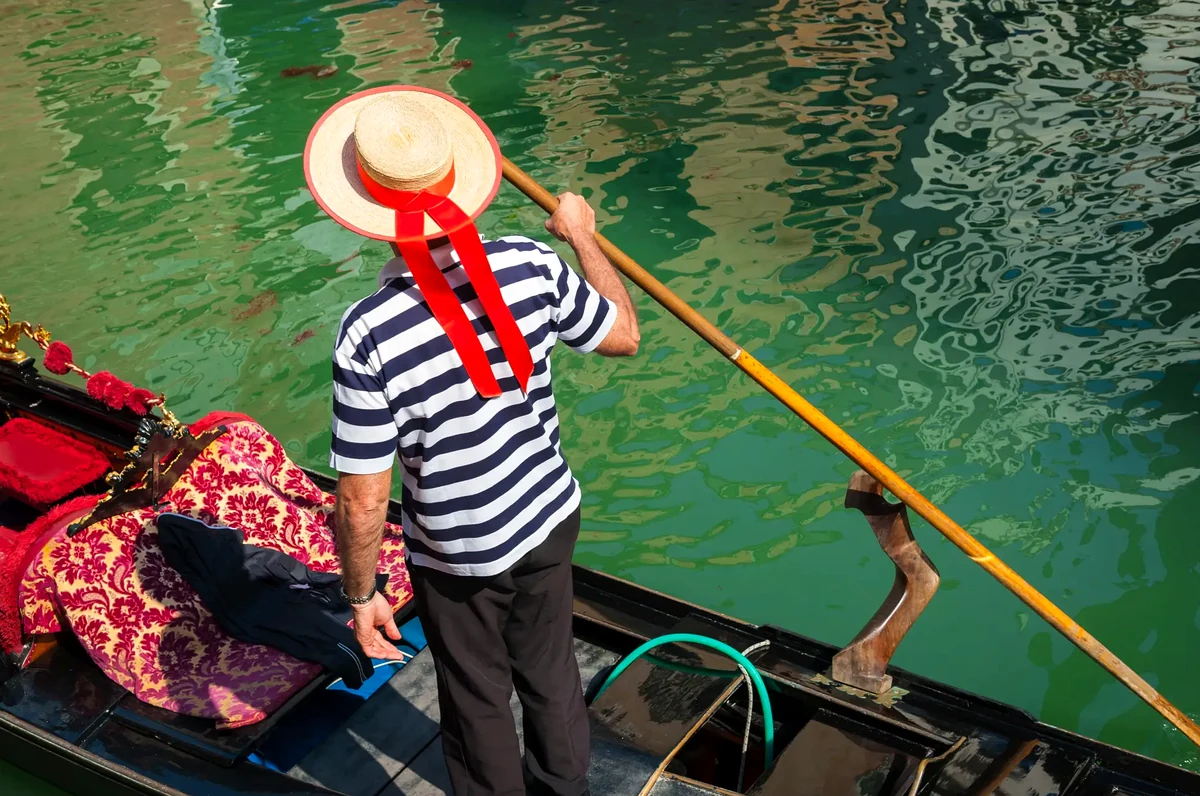
Viewed from the Venetian lagoon expanse, the Grand Canal emerges like a giant reverse S-shaped silk ribbon winding smoothly, dividing the ancient archipelago into two harmoniously symmetrical halves. This vital artery stretches fully 3.8 km, with channel apertures varying flexibly from 30 meters at tight bottlenecks shaded by palaces to 90 meters at the expansive bay mouth, maintaining a sturdy average depth of 5 meters. The seemingly fragile aquatic land terrain actually harbors masterly ancient topographical planning philosophy: beneath the jade waters lie millions of oak and pine tree trunks transported from the Cadore forest, driven through the mud to anchor firmly into the indestructible caranto clay layer, creating an eternal fossil foundation supporting the entire system of mansions weighing thousands of tons. Tidal currents varying with the diurnal cycle from the Adriatic Sea not only serve as a natural lung purifying the metropolis, but also generate precise hydrodynamic flows shielding the gondola fleets from the harshness of northern winds sweeping down from the Alps.
The gondola experience journey is delicately divided into three spatial segments carrying completely distinct landscape nuances. The first route is the orthodox Grand Canal voyage, where the boat glides smoothly through the center of power and utmost prosperity of Mediterranean commerce during the Renaissance. Under rhythmic oar strokes, visitors drift slowly beneath the heroic arch span of the Rialto Bridge built of pristine white Istrian limestone—an engineering marvel completed by architect Antonio da Ponte in the late 16th century, before passing the graceful elegance of the wooden Accademia Bridge. Along both canal banks stands a living architectural museum showcasing tiers of splendid palazzi: from the Ca’ d’Oro palace with its open-work carved facade resembling granite lace once brightly gilded under the Contarini aristocracy, to the majestic Ca’ Foscari palace bearing deep Venetian Gothic imprints—which once marked the supreme authority of the illustrious Doge Francesco Foscari.
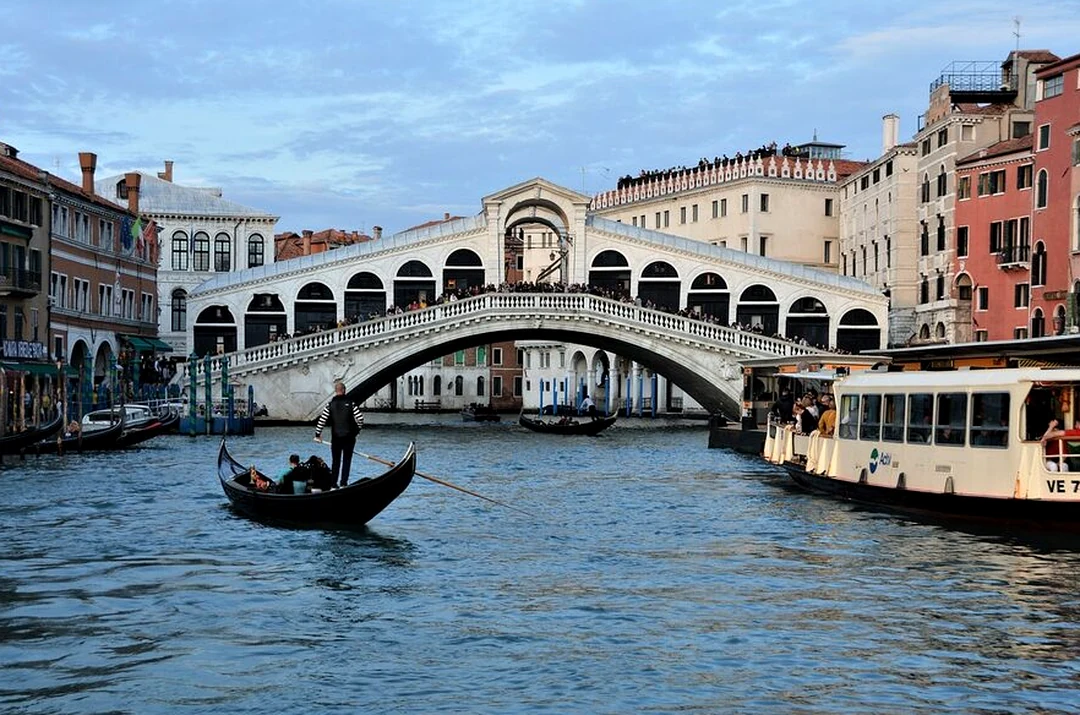
Leaving the bustling main axis, the gondola changes direction to weave into the second route: the secluded inland canal network also known as mysterious water alleys. Here, the canal width narrows sharply below 4 meters, just wide enough for the hull to slip past without scraping centuries-old moss-covered steps. This is the space that most clearly manifests the peak craft of gondola manufacturing: the hull is designed with a uniquely unmatched asymmetry, with the left side wider than the right side by precisely 24 centimeters to perfectly offset the body weight of a standing oarsman leaning to one side. By pressing the single wooden oar against the curved forcola rowlock featuring eight technical resting notches, the gondolier steers spectacularly through dark right-angle turns, bringing visitors beneath the melancholy stone arches of the Bridge of Sighs. The space is so silent that one seemingly hears only the sound of water parting gently beneath the boat’s bottom and the nostalgic echoes of sighs from ancient Venetian prisoners as they caught their final glimpse through the lattice windows.
The journey reaches visual sublimation when the gondola parts the water to enter the third segment: the expansive waters at the San Marco basin heading straight out toward the vast Venetian lagoon at the moment of dusk. As evening twilight brightly gilds the Campanile bell tower and silvers the magnificent Baroque domes of the Basilica di Santa Maria della Salute—the sacred thanksgiving structure erected after the 1630 plague disaster—the water surface opens up like an infinite reflecting mirror. Amidst the briny wind blowing strong from the open sea, the jet-black painted wooden boat floats between the boundaries of sky and sea, closing a complete experiential circle where traditional handcraft boat-building and aquatic urban landscape art blend into an immortal epic.
The smooth glide along the vital Grand Canal waterway reveals one of the world’s most magnificent open-air architectural museums, preserving over 170 ancient aristocratic mansions stretching along both banks. These splendid palazzi are the pinnacle embodiment of Venetian Gothic style—a unique artistic fusion harmoniously combining Western Gothic pointed arch lines, the mystical oriental flair of the Byzantine empire, and Renaissance proportional standards. Each majestic facade mirroring in the jade waters is carved from Istrian white limestone—an endemic sedimentary salt-resistant stone quarried from the Istrian peninsula and transported across the Adriatic Sea to build exquisitely carved open balconies, graceful columns, and arched window frames interwoven with soft patterns like stone lace.
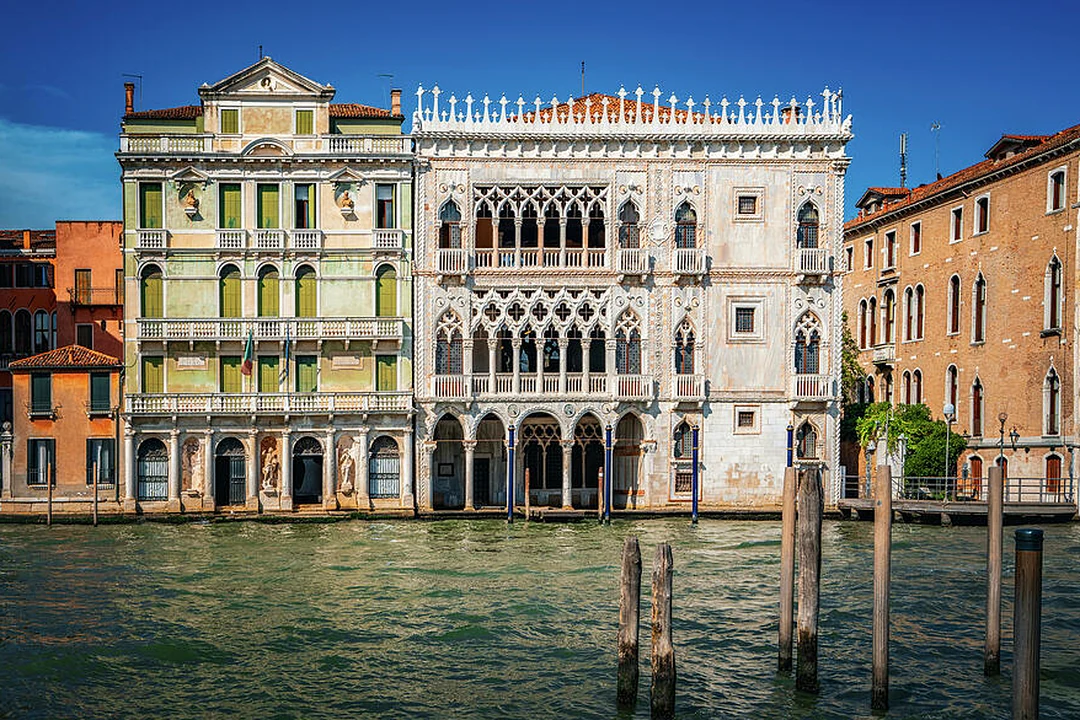
To honor this splendid space, every single gondola boat is itself a pinnacle handicraft masterpiece, crystallized from hundreds of years of traditional boat-building techniques in renowned workshops called squeri, typified by the Squero di San Trovaso workshop surviving since the seventeenth century. At first glance, the hull bears slender beauty and absolute symmetry, but in reality, the gondola hull is crafted completely asymmetrically in terms of axis geometry: the right-hand side is narrower than the left-hand side by about twenty-four centimeters, causing the hull to tilt slightly to the right. This ingenious eccentric structure is precisely calculated to eliminate the torque generated when the oarsman standing on the platform behind the left side puts all gravity onto a single oar resting against a walnut wood fórcola rowlock, helping the boat glide in a straight line without straying.
The master carpentry technique of the artisans is demonstrated through the skillful coordination of eight specialized wood varieties to meet each strict mechanical requirement of the hull: flexible oak for load-bearing ribs, larix larch and fir for the bottom to create buoyancy and water resistance, cherry and beech woods shaping the sides, elm and linden woods defining decorative moldings, while walnut wood plays a pivotal role at the rowlock. Prominent at the bow is the shiny metal prow head (ferro) made of stainless steel or cast aluminum, serving both as a counterweight balancing the oarsman’s weight at the stern and as a visual gauge to align when passing under low stone bridge arches. The ferro metal head contains the entire history of the Serenissima Republic: the crown-shaped curved peak mimics the Doge’s Corno Ducale coronation cap, the arched cutout symbolizes the Rialto Bridge, the rear-facing tooth alludes to Giudecca island, and the six forward-facing teeth represent the six ancient sestieri districts of the capital.
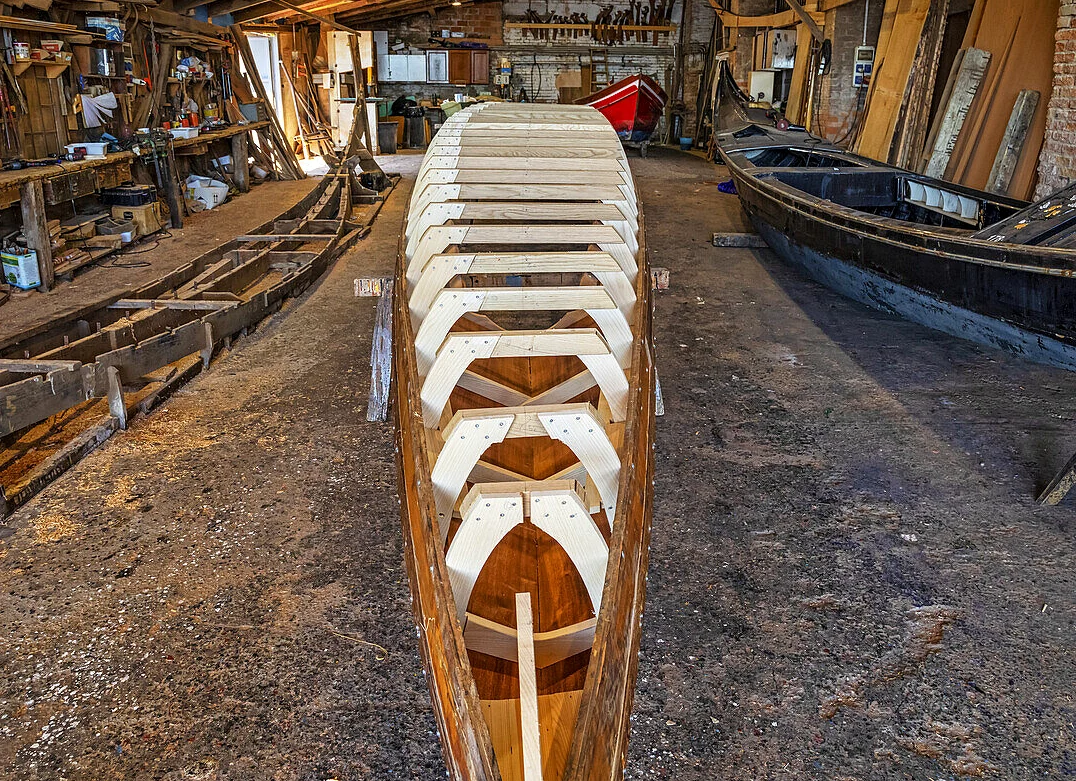
Regarding practical scale and maritime parameters, each standard gondola possesses an overall length of precisely 11 meters, a hull width of 1.42 meters, and a net mass ranging from 350 to 400 kilograms. To maintain absolute draft stability against complex undertows from vaporetto water buses and cargo motorboats, the Venice Boatmen Association applies extremely strict load safety inspection regulations for each voyage. The boat is only permitted to receive a maximum of five passengers when traveling on the main artery of the Grand Canal due to heavy traffic and large wave amplitudes; whereas for inland canal routes winding deep into the old town, the upper limit is six passengers, ensuring graceful smoothness and absolute safety when weaving through narrow creeks barely wide enough for the paddle.
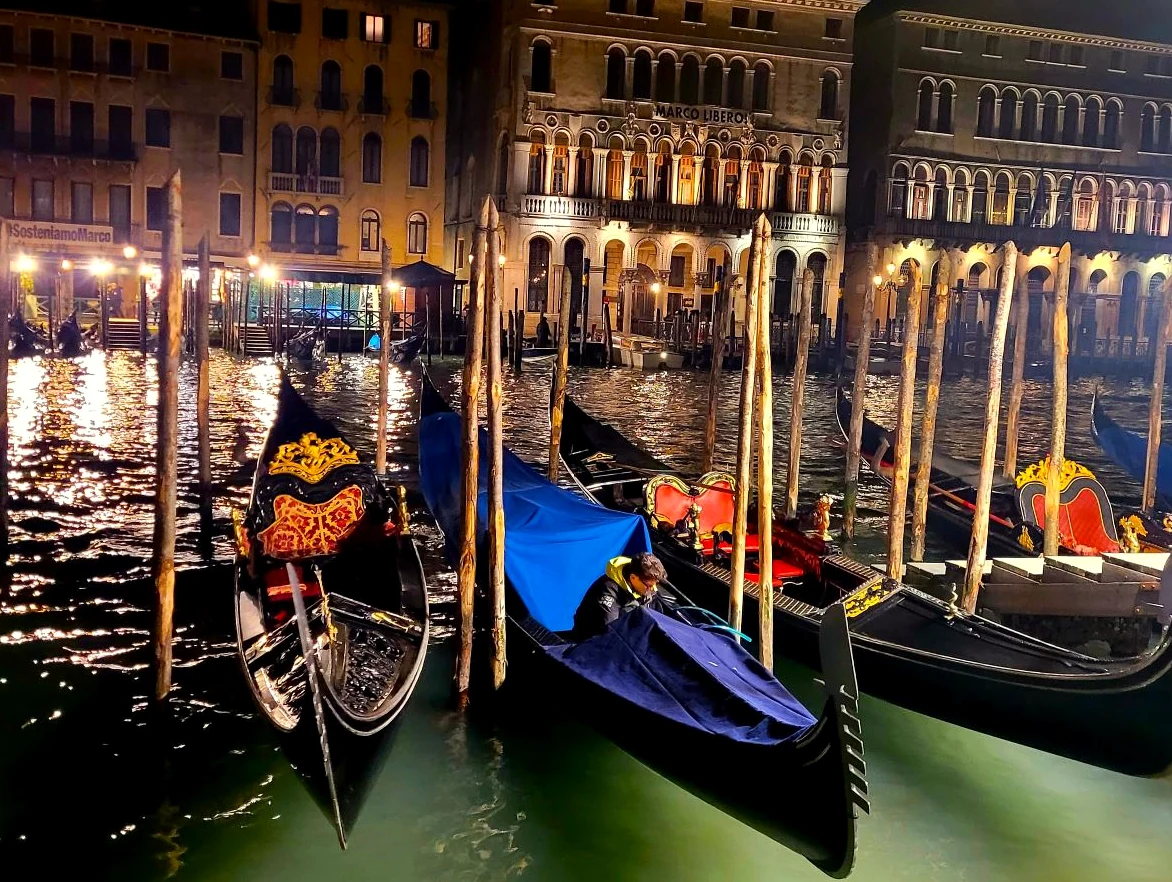
When evening shadows gradually descend over the San Marco bay basin, Venice sheds daytime hubbub to transform into a grand live outdoor stage of light and classical sound. The visual art here does not originate from modern artificial electronic lighting, but is intricately crafted by the magical contrast between the warm yellow light leaking out from Gothic arched windows of ancient palazzi and the dark waters of the Grand Canal. Leaning back on the jet-black velvet upholstery of the gondola cabin, travelers will clearly feel the rhythm of the oars churning water seemingly slowing down, allowing the sharp metal prow to lead the way weaving through winding narrow creeks. Under overarching shadows, mossy brick wall patches and brightly striped mooring poles suddenly become silent backdrops, honoring the enchanting night life of the Adriatic coast’s most famous city.
In this somber evening salon space, the operational rules of the boats enter the night hour time frame from 19:00 PM to 08:00 AM the following morning. The official listed tariff applied to this mystical time frame is 120 Euros for each 40-minute trip on a single boat, preserving absolute privacy for the voyage adrift among the night. Unlike its brilliance under glaring sunlight, the nighttime space brings travelers to touch the original soul of the ancient Serenissima Republic. As the boat glides smoothly past the towering Rialto Bridge or drifts before the Campanile bell tower silhouette mirroring in the water, light sparkling from renowned Murano glass chandeliers glowing behind Palazzo Ducale windows paints a splendid visual picture, fully reenacting the luxurious lifestyle of the Venetian aristocracy from the 17th century.
The pinnacle of night-life appreciation is the experiential segment combining unique live musical performance directly on the water. To elevate the excursion into a mobile chamber concert, visitors can select an integrated service featuring a solo opera singer or musician with a surcharge ranging from 150 to 350 Euros per journey. When the boat separates from crowded main canals, the resonant accordion notes blending with the violin will begin bobbing with every small wave. The tenor male voice lifts yearning serenade melodies or traditional barcarolle boating songs of local gondoliers, creating an extremely vivid natural acoustic field. Unamplified raw sound echoes against ancient stone arches, reverberates over calm water surfaces and touches the majestic dome feet of the Santa Maria della Salute basilica, invoking intense nostalgic emotions hard to match anywhere else.
When the singing gradually fades to return tranquility to neighboring areas like the San Polo or Dorsoduro districts, the nighttime appreciation space opens up another sensory depth. The salty scent of sea breeze mixing with the aroma of water-soaked ancient cypress wood creates a unique flavor found only in Venice. Under moonlight piercing through hundreds of years old stone bridge arches, the oarsman’s stroke passing worn-out stone steps is the sole sound lingering amid peaceful surroundings. The harmonious combination of natural visual art, mirroring Renaissance architecture, and Italian classical music turns the 40-minute night voyage not merely into a sightseeing activity, but into a live landscape art masterpiece bringing humans to touch the eternal dream realm of human heritage.
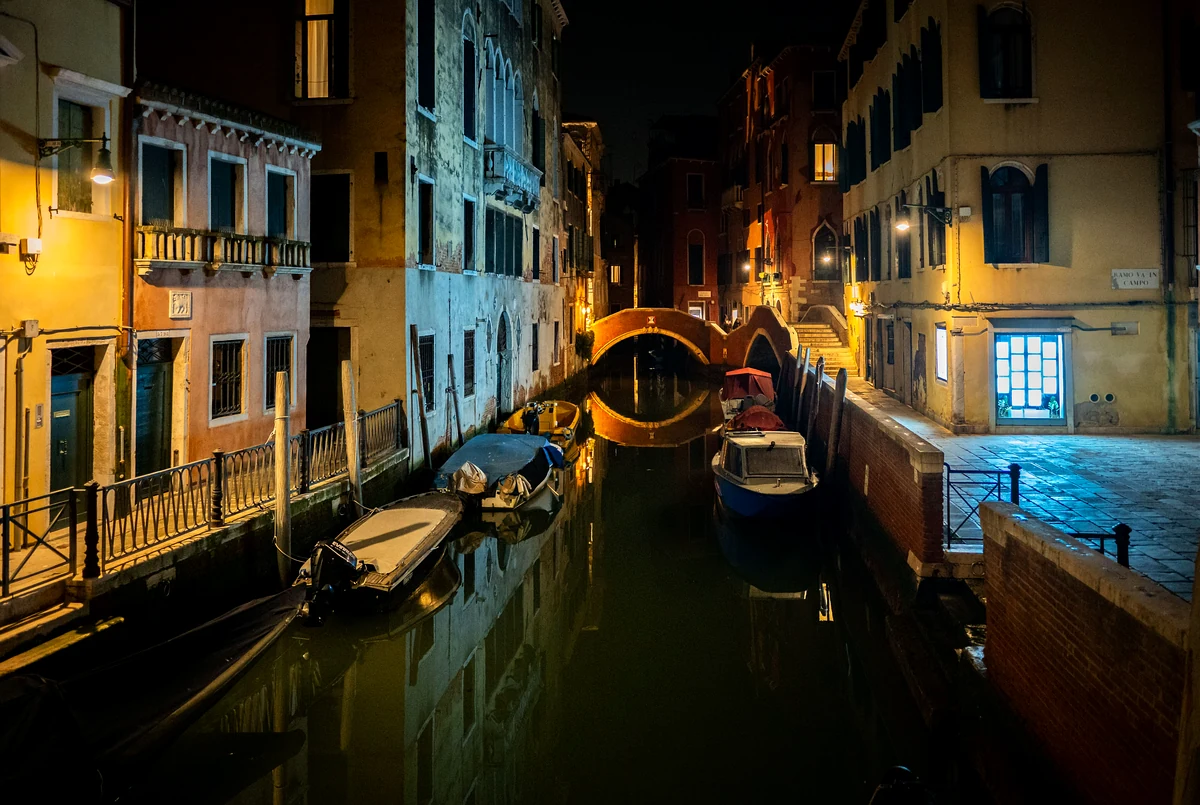
When the gondolier’s oar rests beside seaweed-wrapped wooden pilings, Venetian life does not stop but gently shifts from the still waters of canals into a network of winding alleys called calli. The cuisine of the lagoon territory is not simply a fusion of ocean bounty and Veneto agricultural essence, but truly a living chronicle of the illustrious Serenissima Republic. Here, dietary habits closely tied to the lives of boatmen over centuries constitute the culture of visiting bacari—modest rustic wine bars, where wine and seafood aromas intertwine tightly into mossy ancient brick walls. Locals often stroll across stone bridges to enjoy a sip of “Ombra di Vino,” meaning fresh white wine, whose poetic name stems from the ancient habit of wine merchants selling wine under the shade (ombra) of St. Mark’s Square bell tower to keep the wine at perfect coolness.
Accompanying those crisp, mineral white wines is the endless world of cicchetti, an appetizer style similar to tapas but bearing deep Renaissance port character. On glossy oiled oak counters, diners will encounter crispy sliced baguettes or golden polenta cakes, topped with the renowned baccalà mantecato creamed salt cod. This dish is tied to the historical event of 1432, when aristocratic navigator Pietro Querini was shipwrecked in the distant Lofoten islands of the Arctic and brought back to Venice stone-hard dried codfish strips. Through the talented hands of lagoon chefs, dried fish fibers soaked in water are continuously beaten together with Garda virgin olive oil, fresh garlic, and white pepper until transforming into a smooth buttery cream, light and airy with a characteristic savory aroma. Placed alongside are skewers of salted anchovies marinated in tart vinegar and herbal oil, fully evoking the pristine taste of the salty Adriatic Sea.
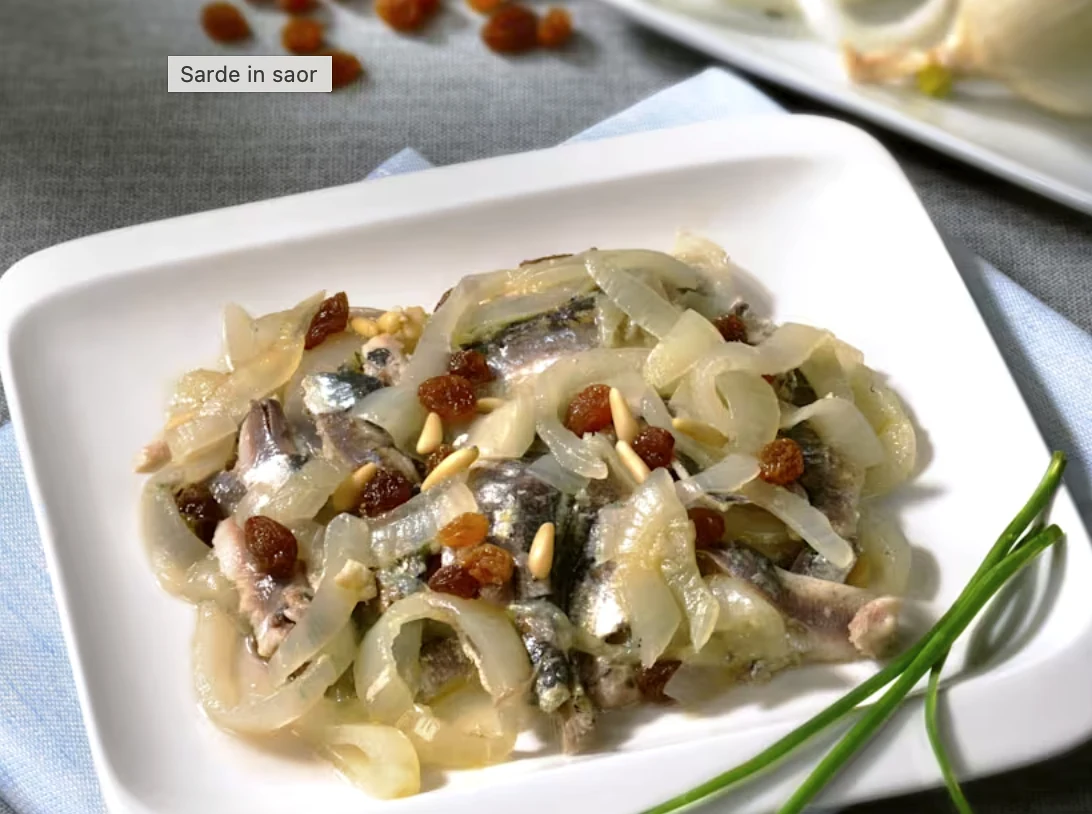
The expeditionary imprint and eastern spice monopoly status of the Venetian maritime empire manifest most clearly through Sarde in Saor—an heirloom masterpiece originating in the fourteenth century. Originally, this culinary technique was invented by sailors as a method of natural food preservation during long voyages crossing the Mediterranean. Fresh sardines caught from the lagoon are fried golden, then layered alternately with white Chioggia onions sautéed in white vinegar and wine. To balance the sharp acidity and richness of sardines, Venetians added sweet Levant raisins and nutty pine nuts—two expensive ingredients at the time only found on silk merchant ships. After days of fermenting in ceramic jars where vinegar acid completely softens the fish bones, the dish creates a magical harmony among tart, deep sweet, and rich flavors, like a timeless blend preserving memories of arduous voyages.
As night falls over sparkling water surfaces reflecting lantern lights from gondola stations, the lavish feast in Venice reaches sublimation with Risotto al Nero di Seppia. Renowned Carnaroli or Vialone Nano rice grains are slowly simmered in rich seafood broth, fully absorbing jet-black cuttlefish ink sacs from fresh squid and cuttlefish just arriving at the Rialto market at dawn. The smooth, mysteriously black glossy rice dish resembles the night of the Grand Canal, carrying salty, deeply sweet ocean flavors combined perfectly with light creamy butter and grated cheese. Concluding the lagoon flavor map is rustic Fritto Misto di Mare wrapped in brown scartosso straw paper cones. Schie lagoon shrimp, baby squid, and especially soft moeche soft-shell crabs are coated in a thin batter and deep-fried in boiling olive oil, keeping pure sweetness intact inside an unforgettable crispy crust.
To fully enjoy the unique flavor of the voyage on the jet-black gondola, understanding the breathing rhythm of the canal system and choosing the ideal time frame is a prerequisite. Venice is beautiful at every moment, yet the golden time to start a gondola voyage typically falls in the quiet early morning from 9:00 to 10:30 AM, or the magnificent sunset from 17:30 to 19:00 PM. When dawn breaks, delicate mist blanketing the Grand Canal has not been stirred by vaporetto water buses or water taxi motorboats cutting waves, bringing deep atmospheric space for those wishing to admire ancient Gothic palazzi mirroring in the water. Conversely, when dusk falls, evening sunlight gilds the limestone facade of the Santa Maria della Salute Church and Rialto Bridge, turning the entire lagoon into a brilliantly romantic poetic painting.
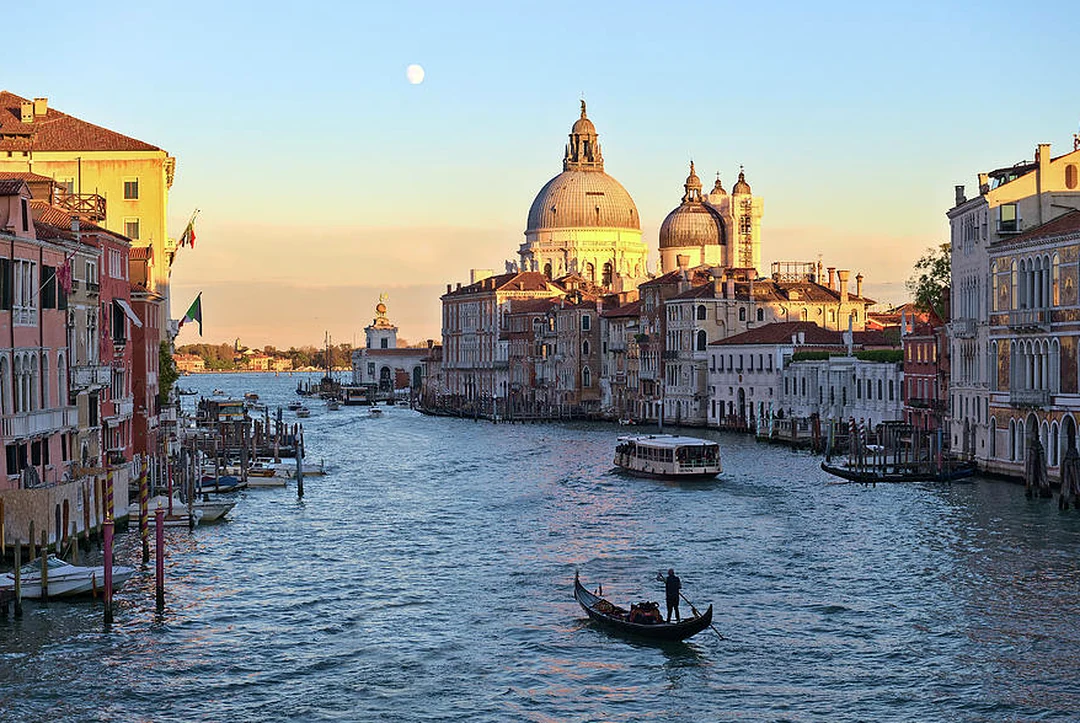
Regarding costs and transactions, visitors should clearly understand the regulations maintained by the Gondolier Association for centuries to protect their rights. Currently, the official public tariff set by city authorities for a daytime gondola trip is 90 Euros for a standard journey lasting exactly thirty minutes, accommodating a maximum of five passengers. This pricing structure is applied uniformly at official boat stations (stazi) across the city, from the bustling Bacino Orseolo station behind St. Mark’s Square to quieter stations around Cannaregio or Dorsoduro. If visitors choose to tour after 19:00, prices automatically shift to the nighttime rate with higher surcharges; therefore, clearly communicating routes and durations before stepping aboard is the golden rule to avoid any unpleasant disagreements.
Beyond financial aspects, etiquette and attire during the experience also require a certain level of refinement. The gondola features a classic asymmetrical design, with the left side being twenty-four centimeters wider than the right, allowing the oarsman standing at the stern to maintain perfect balance using only a single oar. Due to this delicate balance, visitors are advised to choose elegant, sophisticated attire (Smart Casual) and, in particular, to avoid wearing sharp high heels. Stiletto heels not only increase the risk of slipping when stepping across the curved metal prow (ferro) into the slippery cabin but can also scratch the varnish and expensive velvet upholstery meticulously maintained by the boatmen over the years.
Regarding immigration procedures and urban regulations, exploring the water city requires visitors to hold a valid short-stay Schengen visa. Simultaneously, to reduce overcrowding during peak periods and preserve the sustainability of this heritage site, Venice has established a control policy called the Venice Access Fee, set at 5 Euros per person per day for day-trippers not staying overnight. Visitors must complete online QR code registration and payment in advance to present when authorities perform random checks at gateway points like the Santa Lucia railway station or the Piazzale Roma bus terminal, thereby avoiding administrative fines under local regulations.
Another important note to avoid commercialized tourist traps is to be wary of abnormally cheap service packages, which are typically accompanied by shortened routes or crowded group sharing. Many opaque travel agencies often compress the experience time to just fifteen to twenty minutes or lure customers to fake Murano island craft workshops to solicit the purchase of low-quality goods for commissions. To ensure the experience meets the highest and purest standards, prioritizing an exclusively private gondola ride with a no-shopping policy is the optimal choice, opening opportunities to weave through quiet side canals like Rio di San Barnaba, which visitors can securely find within a carefully designed all-inclusive tour package.