Nestled amid the tranquil folds of Hangzhou’s western hills, West Lake Longjing tea (西湖龙井茶)—also known as Dragon Well tea—is far more than a refined beverage; it is a thousand-year distillation of life philosophy, imperial prestige, and the cultural soul of southern China. The name “Longjing” (Dragon Well) originates from an ancient legend tied to a stone well on the slopes of Phoenix Mountain (Fenghuang Shan). Local folklore holds that the spring at the bottom of this deep well connects directly to the Dragon Palace of the East Sea, where a divine dragon dwells to ensure favorable weather and bountiful harvests for the people of the Qiantang River delta. Through the lens of natural science, this ancient stone well exhibits a remarkable hydrological phenomenon: when the water is stirred, the boundary between lighter rainwater floating on top and denser, mineral-rich groundwater below creates undulating refractive ripples resembling a dragon’s whiskers dancing on the waves. This curious convection current, paired with crystal-clear, naturally sweet spring water, gave birth to the legend of an unrivaled tea region on earth.
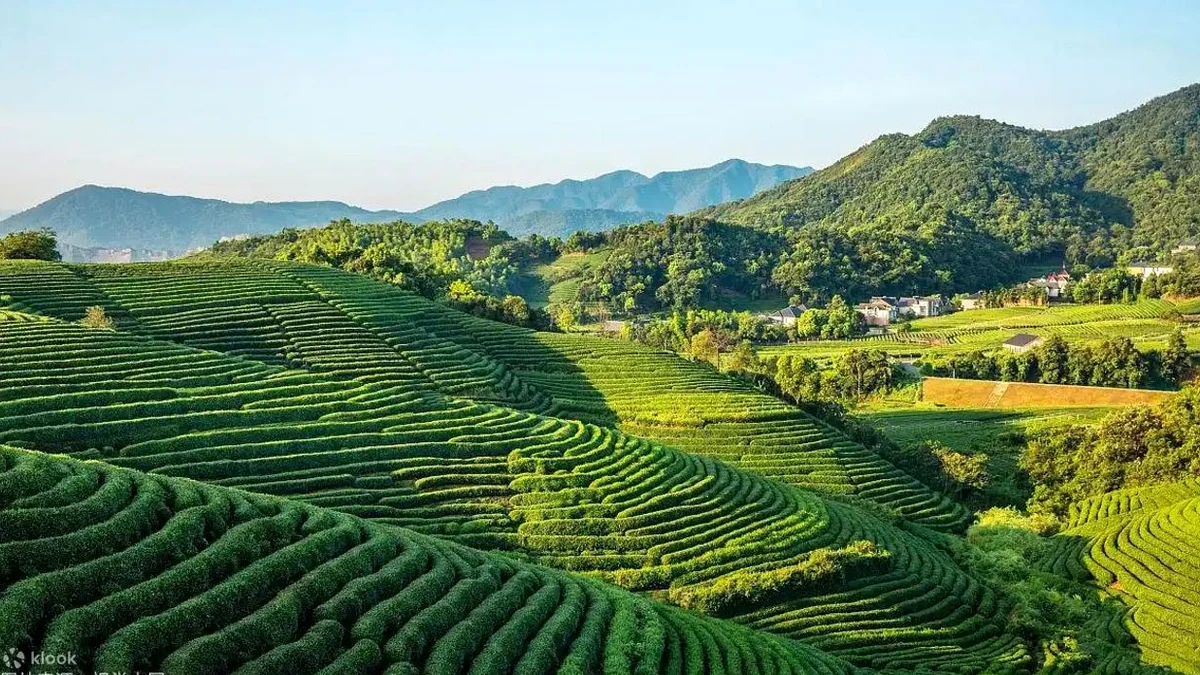
The earliest written records of Hangzhou’s tea culture emerged during the High Tang Dynasty, when the “Tea Sage” Lu Yu (陆羽) traveled to this scenic land of mountains and waters to compile his immortal classic, The Classic of Tea (Cha Jing). During his days of quiet retreat at Tianzhu Temple and Lingyin Temple, Lu Yu meticulously documented the wild mountain tea growing along the steep slopes around Upper Tianzhu, praising it as one of the purest gifts of Zhejiang’s landscape. By the Northern Song Dynasty, the prestige of West Lake tea was elevated further through the artistry and free-spirited soul of literary giant Su Dongpo (Su Shi). While serving imperial appointments as Vice Prefect and later Prefect of Hangzhou, Su Dongpo not only led the dredging of West Lake and built the famed Su Causeway, but also forged a deep friendship with the eminent monk Biancai at Shousheng Monastery in the Shoushan area. Their Zen dialogues at the foot of White Cloud Mountain inspired masterful poetry celebrating fragrant tea, laying a sturdy foundation for the graceful fusion of the Way of Tea and Eastern Zen Buddhism.
Nevertheless, the crowning chapter that elevated Longjing to the throne of China’s “Number One Famous Tea” unfolded during the Qing Dynasty under the reign of the Qianlong Emperor. A sovereign gifted with artistic sensibility and an ardent devotion to culture, Emperor Qianlong bestowed special favor upon the scenery and tea of this region during his six southern inspection tours. Historical lore recounts that during an incognito visit to the foot of Lion Peak Mountain (狮峰山), the emperor paused to admire the scenery at Hugong Temple (胡公庙). Watching monks and village maidens deftly pluck tender young buds, he was moved to personally step out and pick fresh tea shoots, tucking them into his sleeve. Suddenly, an urgent imperial edict arrived from the capital reporting that the Empress Dowager had fallen gravely ill. Forced to rush back to Beijing, Qianlong inadvertently pressed the fresh tea leaves inside his dragon robe into flat blades shaped like sparrow tongues. Upon his return to the Forbidden City, the pure fragrance radiating from his robes revived the Empress Dowager’s spirits; after she drank an infusion brewed from those flattened leaves, her illness gradually subsided.
Deeply moved by this auspicious providence and miraculous restorative effect, Emperor Qianlong immediately issued an imperial decree designating the 18 ancient tea trees growing before Hugong Temple at the foot of Lion Peak as “Imperial Tribute Tea” (贡茶), ordering local officials to carefully harvest and pan-fire them each year for palace ceremonies and royal consumption. This historic episode not only defined Longjing’s unmistakable flat-leaf processing style, but forever enshrined Shifeng (Lion Peak) Longjing as the pinnacle of imperial-grade tea. Through centuries of upheaval, changing eras, and the rise and fall of dynasties, West Lake Longjing tea culture has preserved its timeless value, evolving from a closely guarded palace tribute into an enduring intangible cultural heritage woven into the history of misty Hangzhou.
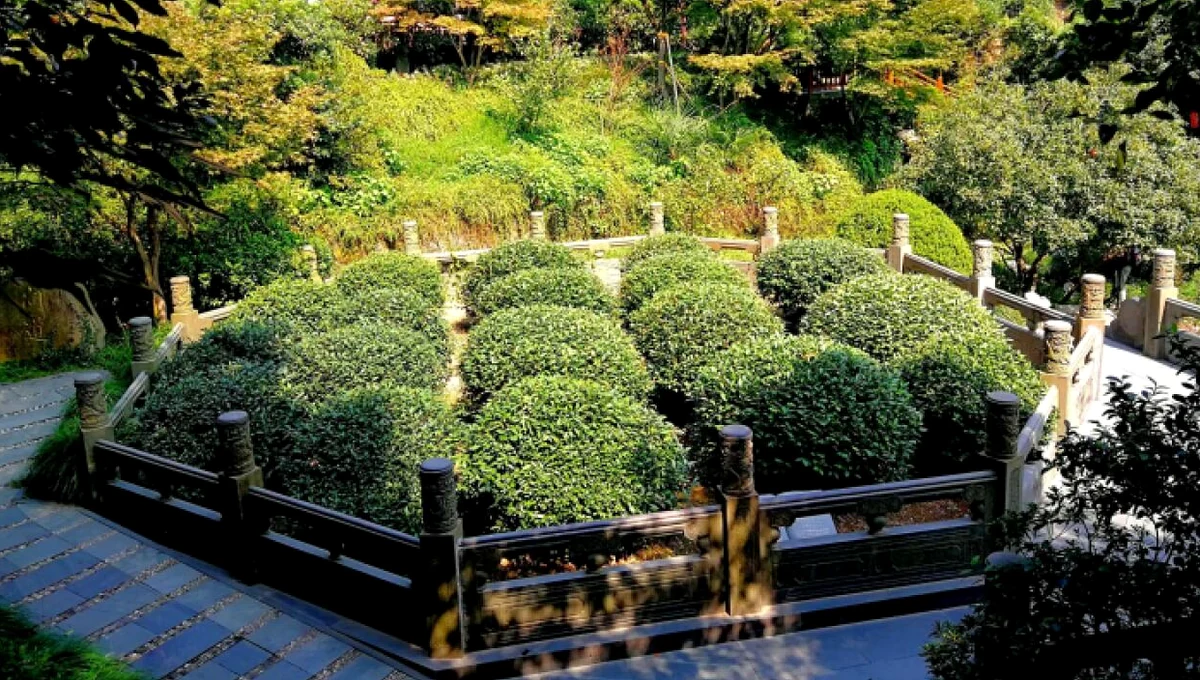
The core terroir that yields supreme Longjing tea was sculpted by nature into an ideal feng shui basin, sheltered on three sides by the verdant hills of West Lake while opening out to welcome vital energy and sweet moisture rising from the surging Qiantang River. For centuries, tea connoisseurs and geographers have distilled the essence of Hangzhou’s terroir into five celebrated sub-regions: Shi (Lion Peak / Shifeng), Long (Dragon Well / Longjing), Yun (Five Cloud Mountain / Wuyun Shan), Hu (Tiger Spring / Hupao Quan), and Mei (Meijiawu). Tucked between towering Lion Peak and winding valleys, Longjing Village and the ancient hamlet of Meijiawu enjoy a secluded subtropical monsoon microclimate. Year-round, delicate mists drifting off West Lake keep relative humidity consistently above an ideal 80 percent, shielding the plants from harsh sunlight and keeping every young leaf tender and pure.
The decisive factor behind Longjing’s timeless “four wonders”—emerald color, rich aroma, sweet taste, and graceful shape—is the rare weathered quartz-sandstone soil blanketing the slopes of Meijiawu and Lion Peak. This loose, reddish-yellow earth, rich in organic matter, phosphorus, and mildly alkaline trace minerals, offers superior drainage while maintaining optimal root moisture, stimulating the accumulation of amino acids and L-theanine—the key compounds responsible for the tea’s lingering, velvety sweetness. Alongside this heaven-sent soil, groundwater from Tiger Spring (Hupao Quan) percolates through million-year-old quartz strata, producing pure, sweet water with remarkable surface tension. When crystal-clear Tiger Spring water is brewed with Lion Peak tea leaves, the buds unfurl like jade blossoms without clouding the cup, forming the legendary Jiangnan culinary pairing: “West Lake Longjing Tea and Tiger Spring Water.”
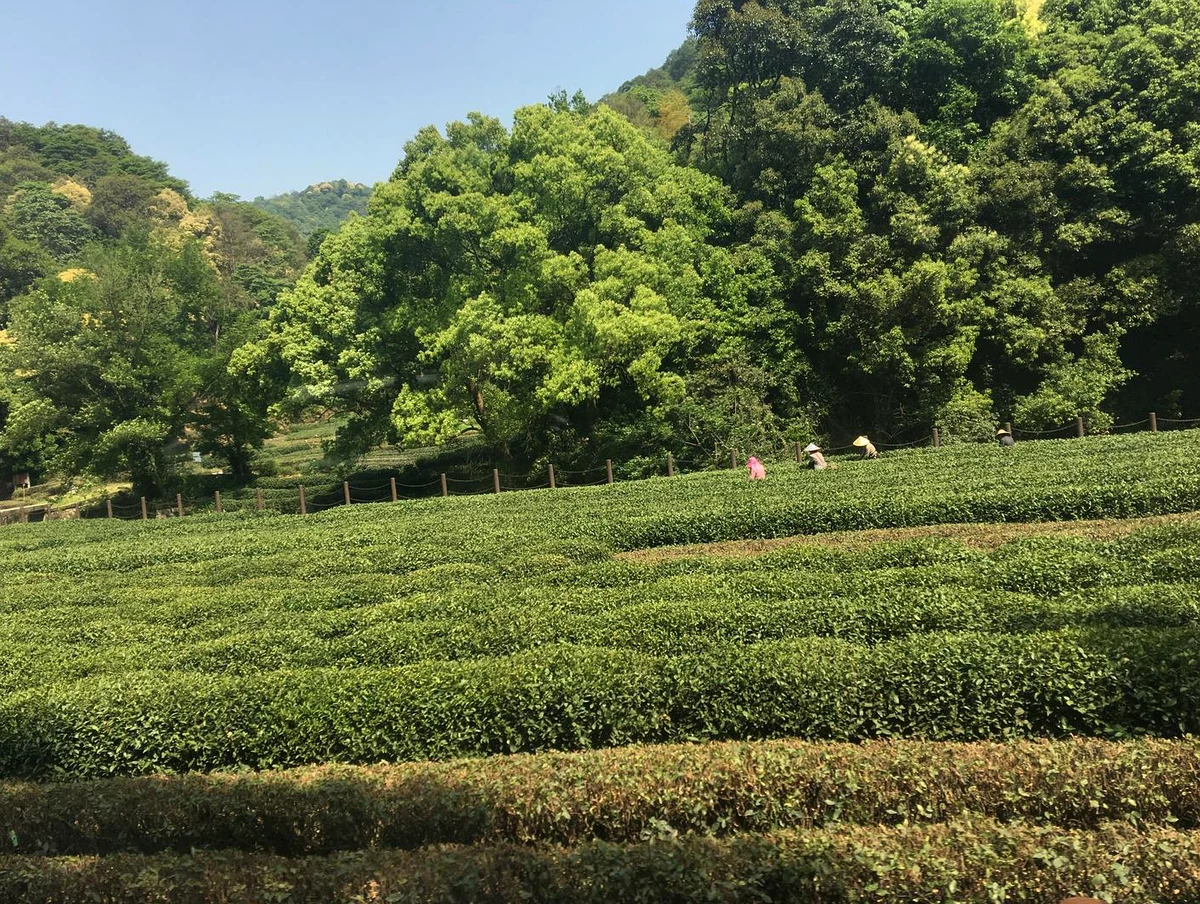
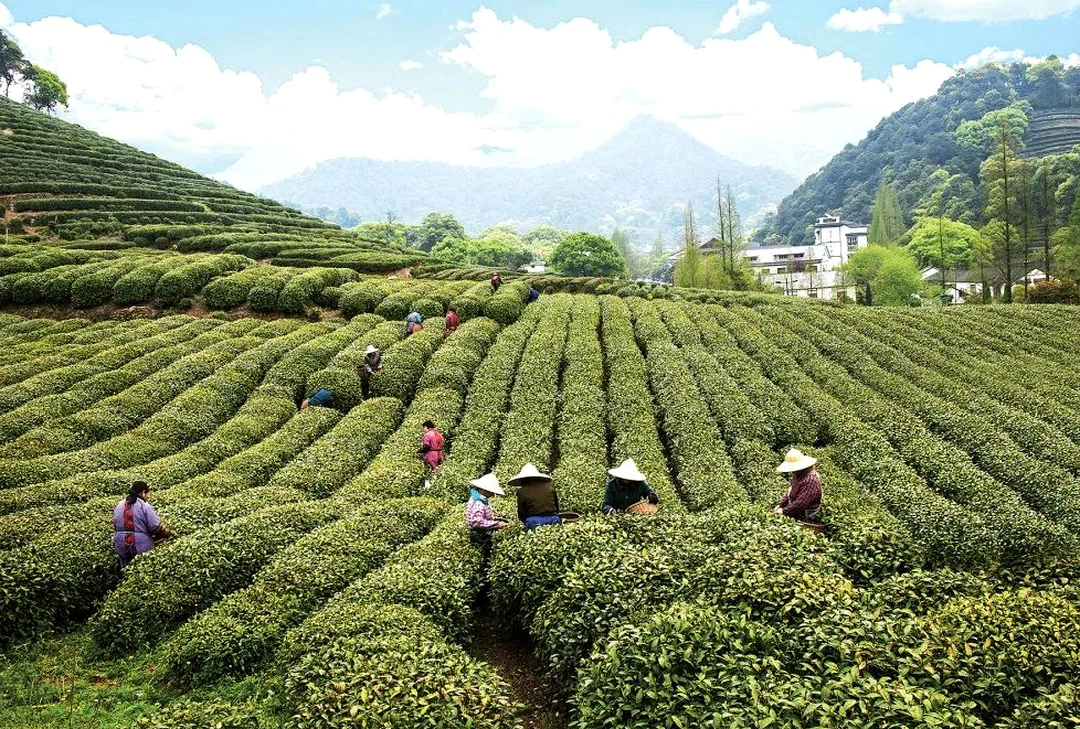
Landscape planning across the Meijiawu tea plantations is living proof of generations of local farmers cultivating in harmony with nature. Rather than leveling the terrain, tea growers follow the natural contours of the ridges to sculpt undulating terraced gardens that wrap around the hillsides like emerald silk ribbons. Each tea row is angled at a precise gradient of 15 to 25 degrees to capture gentle morning sunlight while avoiding the scorching afternoon sun. Whitewashed walls and gray-tiled roofs characteristic of Jiangnan water-town architecture sit quietly nestled at the valley floor amid babbling brooks and lush bamboo groves, composing a poetic landscape painting that serves both as thriving farmland and a serene sanctuary for the soul.
The pinnacle of craftsmanship behind prized Longjing tea lies in its exacting harvest standards and traditional hand-roasting wok technique, celebrated as the “Ten Classic Hand Movements” (Shi Da Shou Fa). During the most coveted harvest window just before the Qingming Festival—which yields priceless “Pre-Qingming Tea” (Mingqian Cha)—pickers pluck strictly to the standard of “one flag, one spear”: a single pointed bud resembling a spear tip accompanied by one newly unfurled leaf resembling a banner, measuring barely 1.5 to 2 centimeters in length. Once harvested, the fresh leaves are spread evenly on tightly woven bamboo trays to wither naturally in the breeze for several hours, allowing raw astringency to dissipate. Master artisans then work bare-handed directly inside heated cast-iron woks at temperatures ranging from 80°C to 200°C, fluidly transitioning through ten classic hand motions: shaking, spreading, stir-frying, flicking, pressing, pulling, rubbing, flattening, grinding, and thrusting. Guided by a rhythm alternating between graceful dance-like sweeps and firm, decisive presses, each shoot is gradually flattened and shaped into crisp, sleek blades that lock in a glossy jade hue and the delicate aroma of young chestnut blossoms.
Along the gentle slopes winding around West Lake, from Longjing Village to the ancient valley of Meijiawu, traditional teahouses and tea guilds stand as quiet architectural accents defining Hangzhou’s aesthetic soul. Tea pavilion architecture here exemplifies classic Jiangnan style, pairing pristine white lime-washed walls in sharp contrast with moss-dappled yin-yang clay roof tiles weathered by time. Punctuating these clean walls are rustic circular moon gates and windows—an intentional visual device of “borrowed scenery” devised by the ancients to frame endless green seas of tea and drifting morning mist within the refined gaze of tea guests. Every beam and pillar is stripped of unnecessary ornamentation, yielding to the open, natural beauty of clouds, sky, and mountain shadows.
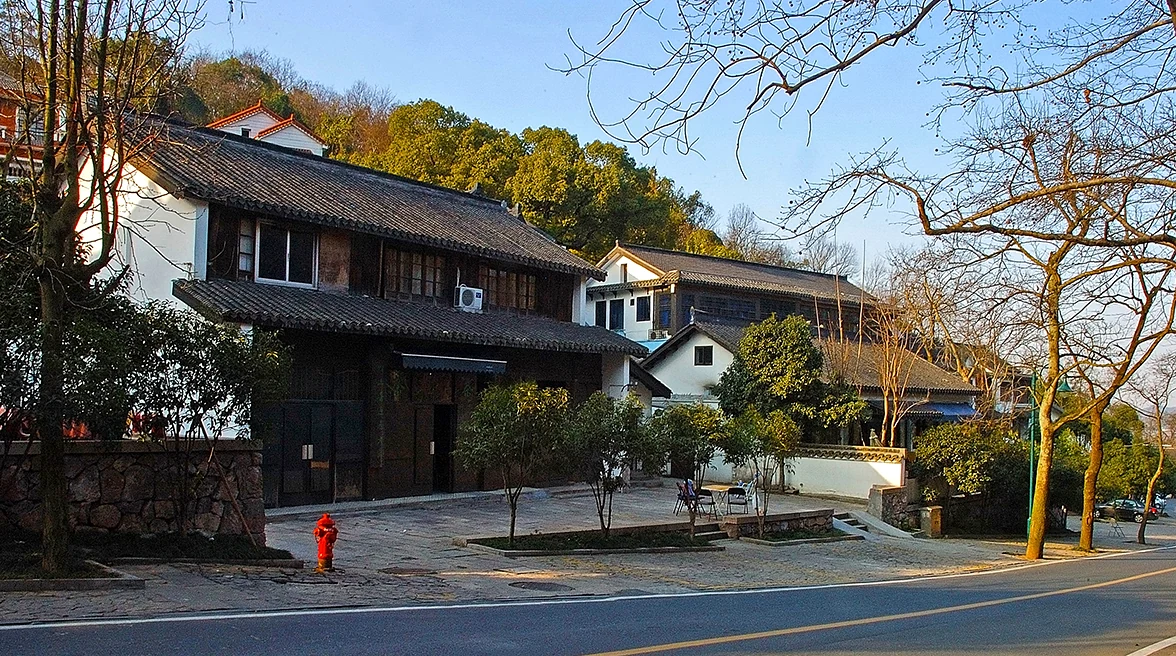
The defining spatial hallmark sustaining the enduring vitality of Longjing tea estates is the functional layout known as “shop in front, workshop in back”—a seamless marriage of refined hospitality and rigorous artisanal production. The front hall opens to mountain breezes, furnished with rustic solid-wood tea tables and graceful wooden couches where literary travelers can leisurely admire each tea bud unfurling inside Jingdezhen porcelain cups. Meanwhile, the rear workshop is a fiery, heritage-rich roasting studio housing deep hemispherical cast-iron woks measuring 60 to 80 centimeters in diameter. Here, the air hangs thick with the fresh scent of toasted young rice radiating from famed hand-crafting techniques. Using only their bare hands, seasoned masters perform the celebrated Ten Hand Movements—shaking, patting, gathering, pressing, snapping, rubbing, and throwing—to regulate heat from over 200°C down to a gentle simmer, pressing tender shoots into Longjing’s signature straight, sword-like blades.
Steeped in the Zen Buddhist ethos radiating from nearby Lingyin Temple, the Zen tea spaces of Meijiawu are designed around the maxim “Tea and Zen share one taste.” Building materials honor raw nature: unvarnished timber, hand-woven bamboo screens, hand-loomed rush mats, and garden paths paved with smooth pebbles polished by the waters of Tiger Spring. Natural daylight filters through sparse bamboo blinds, casting subtle plays of light and shadow that guide the drinker’s mind away from worldly distractions into primal stillness. The gentle hiss of boiling water over glowing charcoal, harmonized with the intermittent thud of well buckets at ancient stone wells, composes a tranquil symphony where the understated aesthetic philosophy of ancient East Asia reaches its purest simplicity.
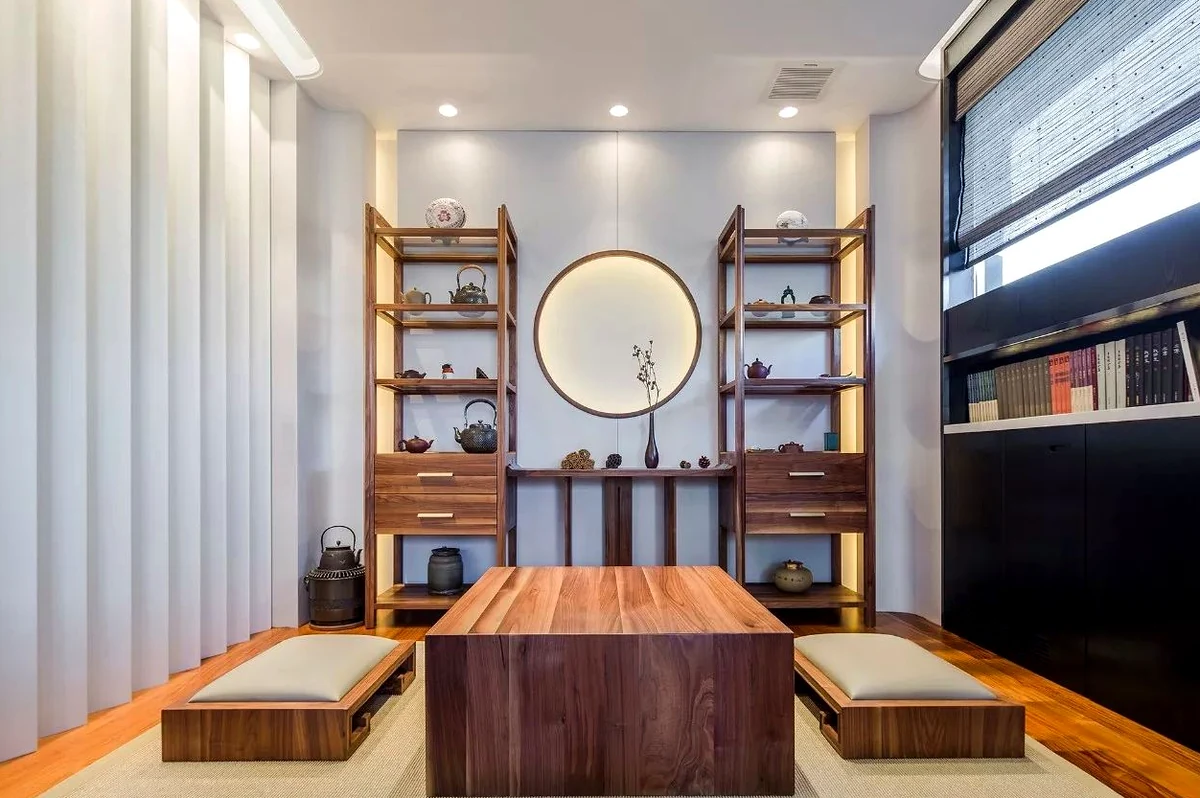
Across the landscape, historic teahouse clusters in Meijiawu follow the natural contours of the valley, seamlessly linking hundreds of multi-generational tea-farming households into a living cultural organism. Each antique dwelling serves not merely as a guesthouse or local restaurant serving celebrated heritage dishes—such as Longjing tea shrimp and tea-leaf steamed chicken—but also as a micro-museum safeguarding millennia-old intangible heritage. The open spatial layout of this Ming- and Qing-era vernacular architecture blurs the boundary between everyday life and the natural world, turning a journey to West Lake into a multi-layered immersion in space, handcraft, and graceful living passed down through generations.
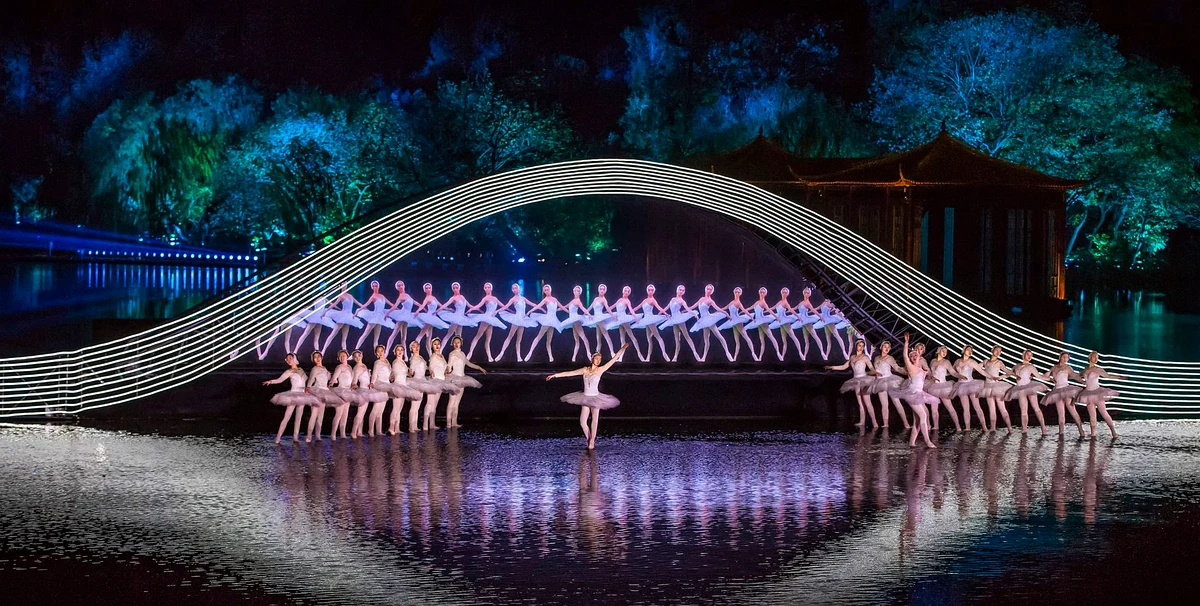
As crimson twilight sinks behind Nanping Mountain, West Lake and Hangzhou’s tea valleys shed their daytime bustle and enter an enchanting nocturnal realm of light and primal stillness. By night, Hangzhou does not sweep visitors into urban clamor; instead, it leads the senses into the depths of Jiangnan aesthetics through a union of world-class outdoor live performances and contemplative evening tea sessions. Rising at the heart of this dreamlike nightscape is the live water spectacular Enduring Memories of Hangzhou (Most Memorable is Hangzhou), a masterpiece directed by Zhang Yimou inspired by the famous verse of Tang Dynasty poet Bai Juyi. The stage is ingeniously submerged three centimeters beneath the surface across thousands of square meters of Yuehu Lake, transforming the calm water into a giant mirror reflecting magical lighting artistry.
The visual centerpiece that captivates tens of thousands of spectators is a segment bringing Longjing tea culture to life through multi-dimensional projection and lighting technology. A colossal glowing jade teacup rises slowly from the center of the lake, releasing plumes of luminous white mist evocative of steam rising from a freshly boiled kettle, while hundreds of maidens in jade-green silk glide across the ripples in a spring tea-picking ballet. Precision laser beams sweep through the night mist, sketching slender sparrow-tongue tea buds and reenacting Qing Dynasty Emperor Qianlong’s southern tour, when he bestowed imperial tribute status upon the eighteen tea trees beneath Lion Peak. Modern lighting technology here feels never ostentatious, serving instead as a spiritual conduit carrying spectators across time to pay homage to the origins of China’s most refined beverage.
Leaving the central performance venue and heading southwest, Meijiawu Valley and Longjing Village reveal an entirely different world where nocturnal life settles into quiet elegance. Tucked amidst vast rolling hills of lush tea gardens, dark-timbered antique tea pavilions illuminate rustic, stylized silk lanterns. Warm golden light filters through intricately carved Ming- and Qing-style lattice windows, casting shadows of swaying bamboo branches across terraced tea rows blanketed in night dew. Evening Zen tea rooms in Meijiawu are minimally appointed to honor the four pillars of tea philosophy: harmony, respect, purity, and tranquility. The murmur of mountain spring water channeled through natural stone rills mingles with wisps of aged agarwood incense, creating an atmosphere of absolute serenity wholly detached from worldly commotion.
Nighttime tea rituals in West Lake’s historic teahouses demand heightened mindfulness of every sense. By flickering candlelight, the tea master slowly heats mineral water drawn from Tiger Spring over a gentle olive-pit charcoal brazier, monitoring the temperature precisely between 85°C and 90°C. Mineral-rich Tiger Spring water, paired with Pre-Qingming Longjing leaves harvested before the Qingming Festival, is steeped in sky-blue glazed Jingdezhen bowls or renowned Longquan celadon cups. Flat, sword-shaped buds gently twirl before standing upright on the bottom of the cup, releasing a rich aroma of fresh green beans layered with roasted chestnuts. Sipping the sweet, luminous night brew alongside chewy, fragrant Dingsheng cake or osmanthus-honeyed tea fruits, travelers taste the soul of a thousand-year-old cultural heartland in every shimmering drop.
The marriage of refined Hangzhou cuisine (Hangbang Cai) and the aroma of Longjing tea has long defined the culinary soul of affluent Jiangnan. Rooted in the culinary philosophy of “infusing tea into cuisine”—bringing the grace of tea into both imperial banquets and rustic kitchens—the undisputed star of the West Lake table is Longjing Shrimp (Longjing Xiaren). This dish unites tender Pre-Qingming Longjing tea buds with freshly shelled river shrimp caught from the Qiantang River or West Lake. Legend traces the dish to Emperor Qianlong’s southern tour, when an imperial chef accidentally stir-fried fresh river shrimp with royal tea leaves tucked inside the emperor’s robe. Translucent, pearl-white shrimp glistening like jade beads are flash-fried over high heat in mere seconds alongside delicate emerald tea leaves, composing a pure sensory symphony of crisp, sweet richness kissed by a lingering hint of toasted young rice.
Alongside the delicate elegance of tea-infused shrimp, Hangzhou’s culinary map bears the bold, aristocratic stamp of Dongpo Pork, the iconic braised pork belly named after Northern Song poet Su Shi during his tenure as Prefect of Hangzhou while overseeing the dredging of West Lake and construction of the Su Causeway. Neat, chess-piece squares of pork belly gleam with a deep agate-red luster after hours of slow braising over gentle charcoal embers in Shaoxing rice wine, traditional soy sauce, and rock sugar. While savoring the rich, melt-in-your-mouth pork that remains remarkably light on the palate, local gourmets always follow with a warm sip of Longjing tea; its subtle natural astringency cleanses every trace of richness, restoring effortless yin-yang balance. The feast reaches perfection with the arrival of West Lake Vinegar Fish (Xihu Cuyu), prepared from West Lake grass carp fasted in bamboo cages for several days to purge any muddy taste, poached just to tenderness, and coated in a glossy sweet-and-sour vinegar reduction that evokes ancient tales of brotherly loyalty beside Broken Bridge.
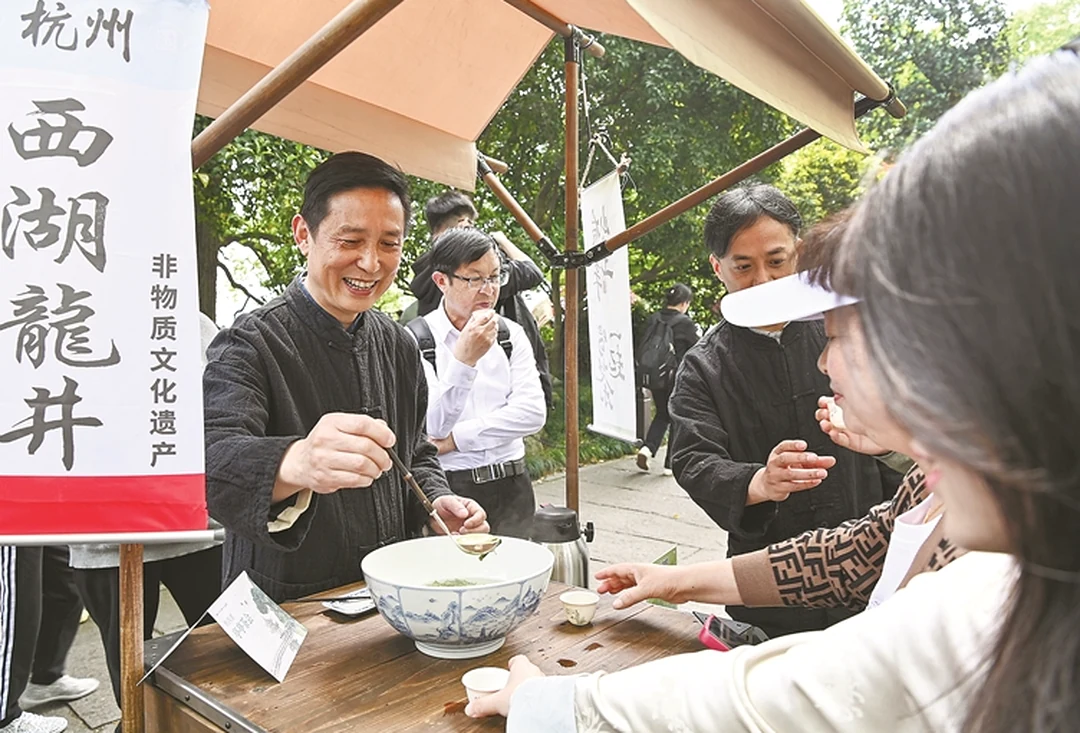
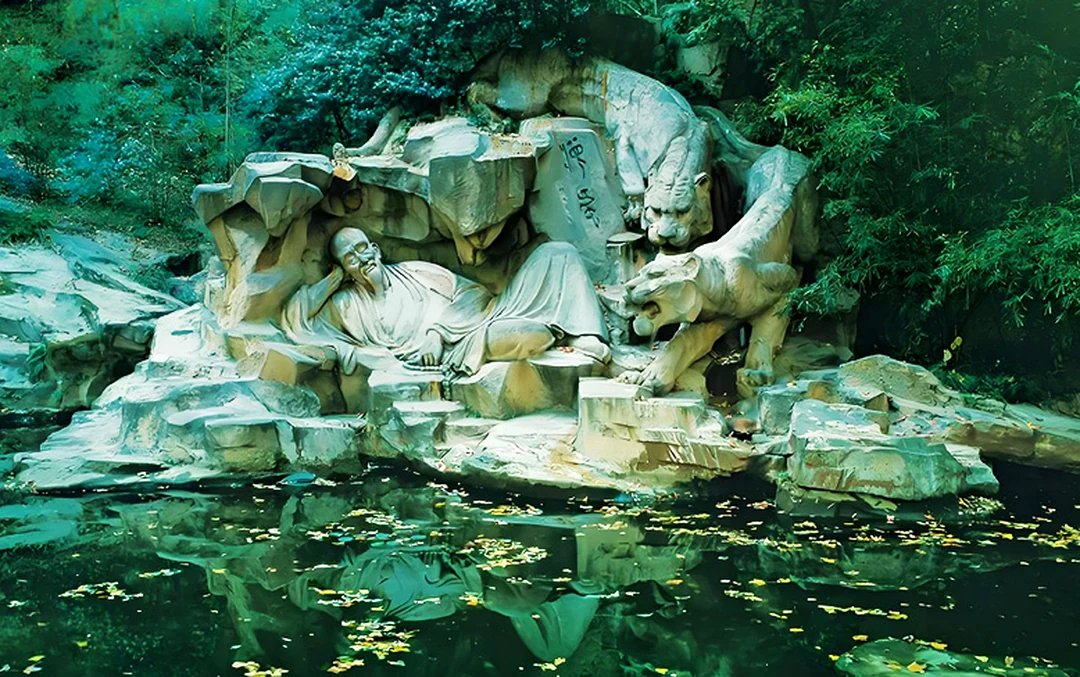
Enjoying Longjing green tea in Hangzhou is far more than quenching thirst—it is a codified tea ceremony demanding utmost precision in water source and teaware. As the ancient proverb proclaims, “West Lake Longjing Tea and Tiger Dream Spring Water,” celebrating the heavenly union of imperial tea leaves and millennia-old spring water filtered through mineral-rich quartz-sandstone strata. Tiger Spring water possesses surface tension so extraordinary that coins can float effortlessly atop a brimful bowl without spilling a drop. To brew Longjing properly, this spring water must be brought to a full rolling boil and then cooled precisely to 80°C–85°C. Maintaining this temperature window is vital to prevent scalding the tender young shoots, preserving delicate chlorophyll, vitamin C, and pure amino acids that give the tea its signature deep, lingering sweetness.
Hereditary brewing artistry favors crystal-clear, heat-resistant glass tumblers or whisper-thin white porcelain gaiwans from the kilns of Jingdezhen, and occasionally porous Yixing Zisha teapots crafted from fine red clay to cradle aroma and color. Tea masters traditionally employ the “Bottom-Pouring” method (Xia Tou Fa): first pouring warm water to fill one-third of the glass before gently dropping in the flat, spear-shaped tea buds. Once the leaves absorb moisture and release a rustic, nutty fragrance of roasted chestnuts, the brewer lifts a silver or copper kettle to perform the “Three Nods of the Phoenix” (San Qi San Fu). Raising and lowering the kettle in three graceful arcs, the high-pouring stream creates gentle convection currents that swirl the emerald buds until they stand upright in crisp vertical rows suspended in crystal-clear liquor, like thousands of miniature lotus blossoms opening in the morning mist of Jiangnan.
A journey to the birthplace of West Lake’s celebrated tea reaches its fullest splendor when timed for the brief window just before the Qingming Festival, falling between late March and early April each year. During this harmonious seasonal transition, drifting mists blanket the slopes of Meijiawu and Longjing Village, coaxing out the very first tender shoots of the year known as Pre-Qingming Tea (Mingqian Cha, 明前茶). Harvested under strict standards permitting only “one bud, one leaf” or “one bud, two leaves,” each shoot concentrates a winter’s worth of dormant nutrients. Yields of Pre-Qingming Tea are exceedingly scarce, as just a few days of warm sunshine cause the buds to open into Pre-Grain Rain Tea (Yuqian Cha, 雨前茶—harvested before Guyu), which carries brisker astringency and lacks the ethereal, dew-sweet delicacy that the ancients valued above pure gold.
East China’s modern transportation network makes reaching Hangzhou’s cradle of tea culture remarkably seamless and straightforward. From major hubs like Shanghai, travelers simply board a high-speed bullet train at Shanghai Hongqiao Railway Station traveling at 300 to 350 km/h, arriving at Hangzhou East Railway Station in just 45 to 50 minutes. Stepping out of the arrival concourse, the city’s metro network offers effortless onward connections: take Metro Line 1 and transfer smoothly to Metro Line 3 heading toward the western side of the city. From the nearest subway station, dedicated scenic shuttle buses or ride-hailing taxis wind along avenues shaded by ancient phoenix trees straight into the tranquil heart of Meijiawu Valley, far removed from urban bustle.
The Meijiawu plantations and historic tea villages have no gated entry barriers or general admission fees, welcoming visitors freely from roughly 7:30 AM until sunset at 5:30 PM. Guests can stroll unhurriedly between crescent-shaped tea rows and breathe in crisp mountain air scented with wild herbs. However, costs for specialized experiences vary depending on your itinerary. A traditional tea-tasting session at a heritage teahouse featuring a master brewer demonstration, authentic Tiger Spring water, and genuine Pre-Qingming Longjing tea typically ranges from 150 to 500 RMB per person. Opting for a farmhouse meal showcasing classic regional specialties—such as Longjing Tea Shrimp, bamboo-shoot braised chicken, or West Lake Vinegar Fish—averages around 80 to 150 RMB per person for a flavorful, locally sourced feast.
One crucial caveat for visiting travelers is staying vigilant against “low-cost tour traps” commonly peddled around bus terminals, train stations, and unverified booking platforms. The typical ploy of these predatory tours is luring travelers with unrealistically cheap upfront prices before pressuring them inside counterfeit processing workshops to buy inferior, artificially dyed or scented tea from outer Zhejiang at exorbitant markups. Local cultural experts strongly advise choosing pure “No Shopping” itineraries and purchasing directly from established family estates or long-standing cooperatives in Meijiawu holding official PGI (Protected Geographical Indication) certification. Every authentic box of imperial-grade West Lake Longjing carries an electronic traceability label with a strict anti-counterfeiting verification code issued by the Hangzhou municipal government.
Alongside packing cushioned walking shoes for damp stone hillside paths and an umbrella for spring morning mist, travelers should adopt an unhurried, serene demeanor when entering a teahouse—taking time to admire the pale yellow-green liquor and watch the tea buds stand upright inside an uncovered glass tumbler. To fully experience Hangzhou’s historical depth and the ethereal beauty of West Lake without worrying about transit logistics or tea quality, travelers can consider booking a professionally curated all-inclusive tour package featuring in-depth cultural exploration.