Across the thousands of years of history in the rugged lands of the South, the silver attire of Miao women has never been merely ornamental jewelry to adorn beauty; rather, it is a solemn epic forged from precious metal. The origins of the Miao (Hmong/Miao) people are intertwined with the most ancient legends of the Yellow River and Yangtze River basins, which once witnessed the rise of the Jiuli tribal confederation led by the mythical chieftain Chiyou (Xi Vưu). Following a watershed defeat at the Battle of Zhuolu around the 26th century BCE against the allied forces of the Yellow Emperor and the Yan Emperor, the Miao people embarked on a long, arduous great migration across countless upheavals of time. From the fertile northern plains, resilient clans traversed towering mountain ranges, passing through the Qin, Han, Tang, and Song dynasties to seek refuge amid the thousand peaks of Guizhou, Xiangxi, and the rugged mountain chains of the Southwest.
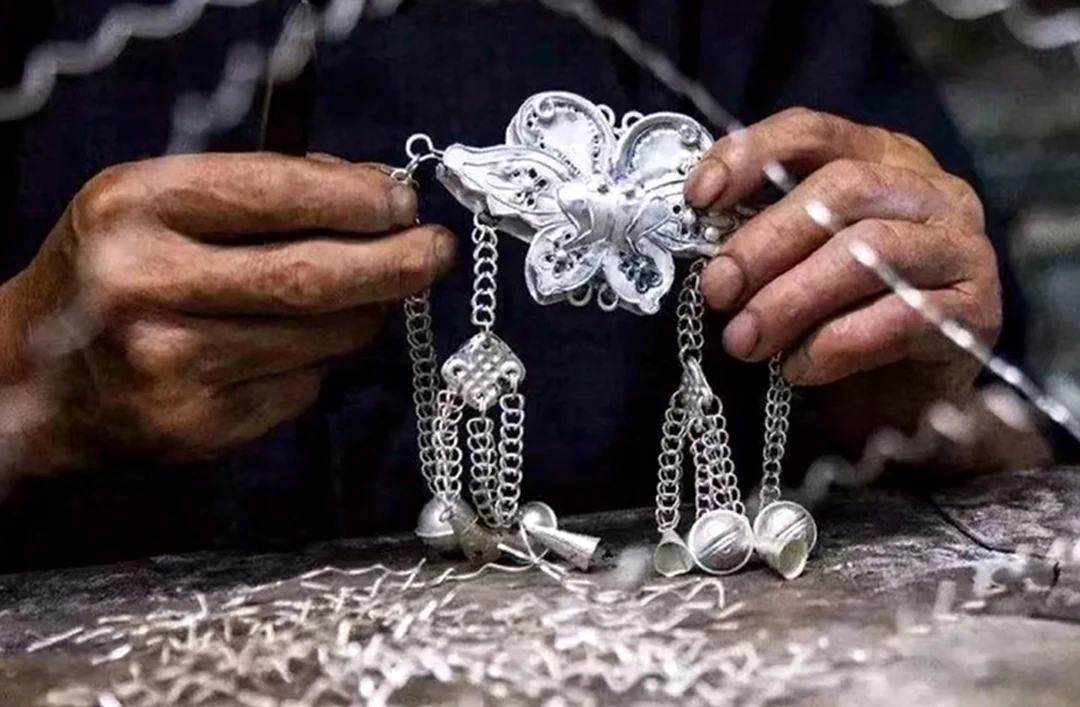
It was not until the Ming and Qing periods, spanning from 1368 to 1912, that the cultural identity of Miao silver attire truly took clear shape and reached its pinnacle of artistic expression, profoundly shaped by fierce political turbulence. The feudal imperial court’s enforcement of the “Gaitu Guiliu” policy—abolishing hereditary native chieftaincies (tusi) in favor of direct rule by appointed officials—sparked a series of bloody armed uprisings. Amid the smoke of war and relentless displacement, the Miao faced a harsh question of survival: how to safeguard family wealth when forced to abandon their villages at a moment’s notice. The wisest survival solution was to melt down all accumulated silver into bangles, neck rings, plaques, and belts, and wear them directly upon the bodies of their women. Silver became the safest form of portable wealth—both easy to conceal and convenient to carry along perilous escape routes through deep forests.
Lacking a universally circulated written script across historical eras, the Miao transformed their entire silver regalia into a one-of-a-kind “epic in metal” to pass collective memory down to future generations. Every intricate engraving on a silver plate serves as a profound geographical and spiritual code. Surging wave motifs recall the Yellow and Yangtze rivers their ancestors once crossed; layered mountain ridges mirror the endless ranges along their migration routes; and most notably, towering water buffalo horns stem from the totemic worship of Chiyou and the myth of the white buffalo that saved the tribe’s lives in times of dire peril. When a Miao woman dons her silver attire, she carries upon her shoulders the entire heroic and tragic history of migration, as well as the pride and soul of her ancestors through the ages.
Today, Miao silver jewelry forging techniques (苗族银饰锻制技艺) have been inscribed as a National Intangible Cultural Heritage under identification code VIII-14, crystallizing the extraordinary metallurgical skill and aesthetic sensibility of local artisans. Each magnificent set of ornaments undergoes up to 30 rigorous manual stages, from melting silver ingots and drawing wires as fine as silk threads, to bending, soldering clasps, embossing, and blanching with natural herbs. Notably, Miao silversmiths do not use absolute pure silver; instead, they alloy it according to a time-honored ratio of 85% to 92% purity to achieve ideal rigidity for multi-layered hollow structures, while producing a signature, crystal-clear chiming sound—like a babbling brook—with every step the wearer takes.
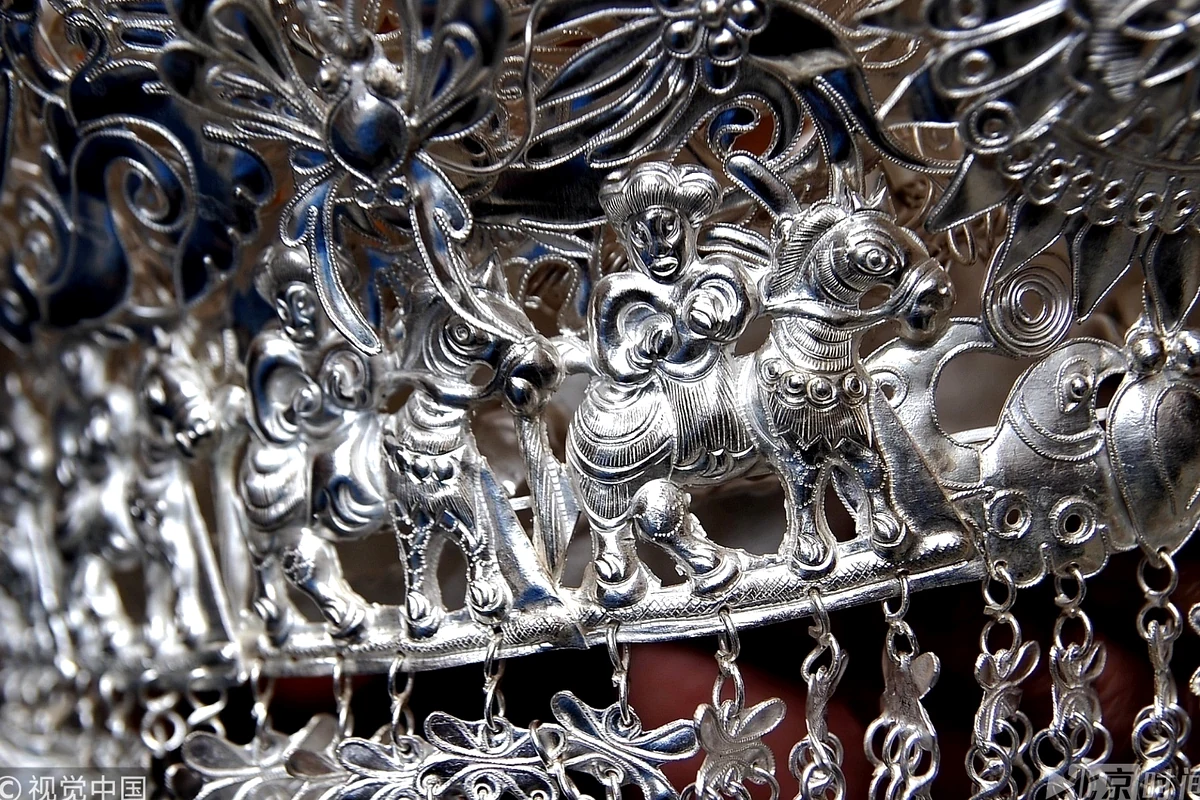
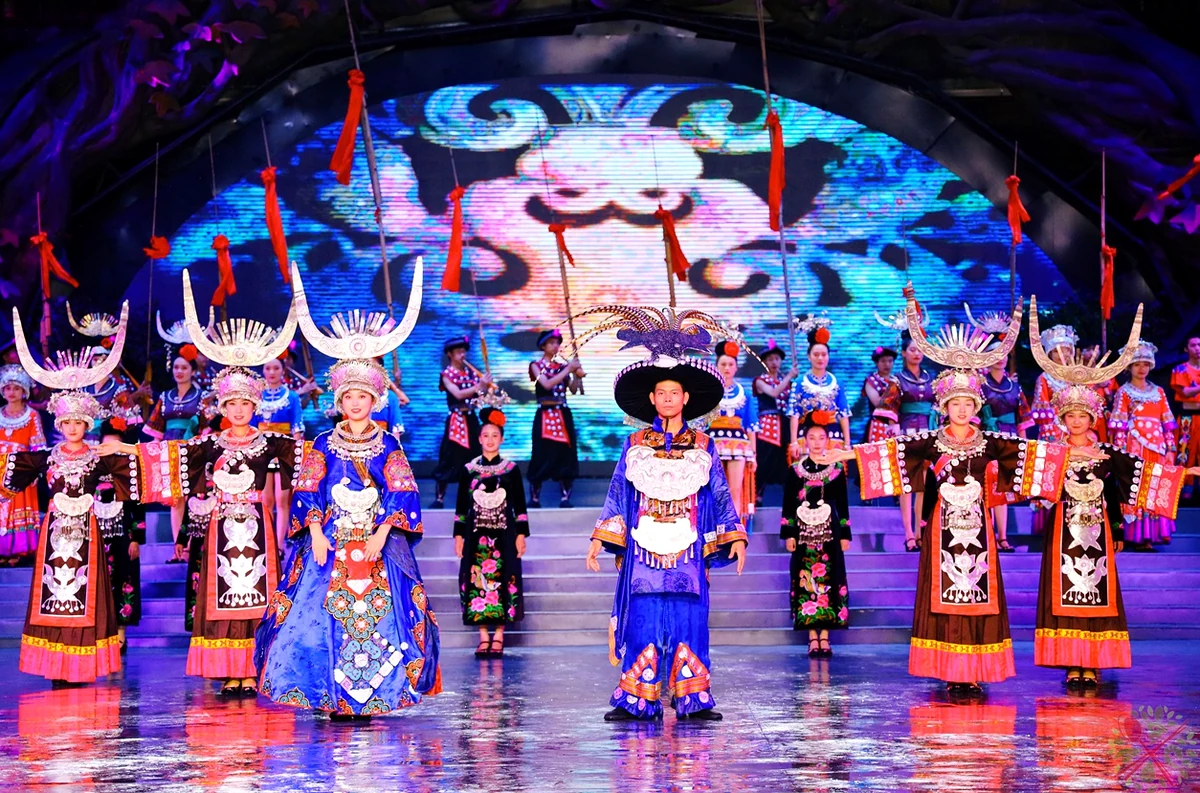
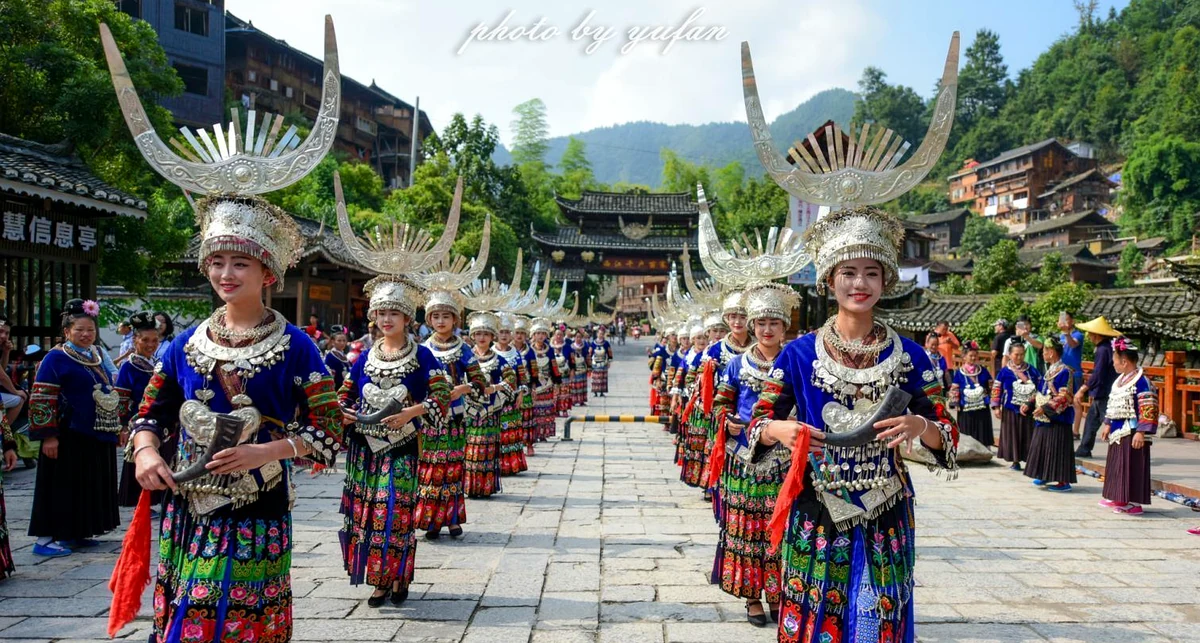
The complete ceremonial ensemble worn for major occasions is known as Shengzhuang (盛装), a handcrafted masterpiece weighing an imposing 10kg to 15kg of solid silver resting upon a young woman’s frame. The centerpiece of the entire regalia is the grand silver crown (Ngân quan), weighing between 3kg and 5kg, distinguished by a pair of proudly sweeping buffalo horns and adorned with countless dangling silver tassels veiling the forehead. Across the back spread silver wings (Ngân sí) unfurled like phoenix pinions, paired with a silver tunic (Ngân y) layered with tiered neck rings, decorative chains covering the chest, and a silver belt (Ngân đái) cinched tightly around the waist. In ancient settlements such as Xijiang Qianhu Miao Village (西江千户苗寨), during every New Year celebration or Ancient Drum Festival, thousands of Miao women in resplendent Shengzhuang perform shimmering dances amid the primeval forests, reflecting the undying radiance of a civilization that has resiliently weathered millennia of historical storms.
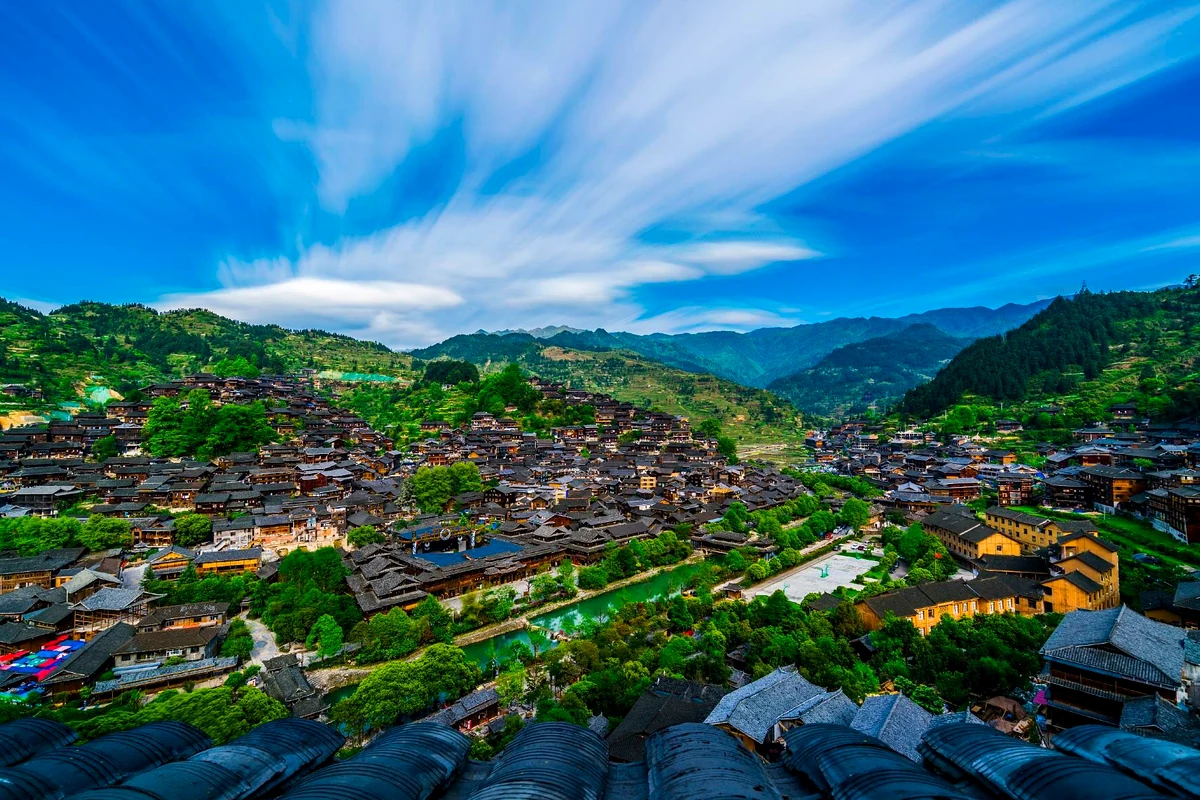
Tucked within a basin valley in one of the most rugged karst landscapes of the Qiandongnan highlands and the legendary Xiangxi region, the settlement of Xijiang Qianhu Miao Village and the lands of Fenghuang Ancient Town are laid out according to a remarkably unique indigenous feng shui order. At the foot of the cloud-shrouded Leigong Mountain range, the terrain is deeply carved by sheer limestone valleys and bottomless gorges. When the ancient Miao migrated here, they chose to live in harmony with nature, relying on the geomantic principle of “backing the mountains and facing the water” to establish their villages. The crystal-clear Baishui River winds like a soft silk ribbon bisecting the valley floor, acting as a vital hydrological axis that regulates life energy for more than a thousand dark oak stilt houses—known as Diaojiaolou—clinging tier upon tier to slopes inclined at thirty to seventy degrees. This energy-gathering basin topography not only forms a natural screen shielding against harsh northern winds, but also turns the area into an isolated fortress, preserving ancient cultural lifelines untouched across centuries of vicissitudes.
The enclosed nature of this thousand-fold karst terrain once kept the valley nearly isolated from the outside world, yet modern transportation networks have now carved magnificent corridors through the limestone mountains. The Shanghai–Kunming High-Speed Railway passing through Kaili South Station, alongside the Zhangjiajie–Jishou–Huaihua railway line leading directly to Fenghuang Ancient Town Station, has condensed thousands of miles of rugged peaks into smooth journeys gliding through the clouds. Simultaneously, vital highway arteries—the G60 Shanghai–Kunming Expressway and the G56 Hangzhou–Ruili Expressway—pierce through some of China’s longest mountain tunnels, stringing cultural hubs together into golden heritage routes. Travelers can easily set out from majestic Zhangjiajie, pause at tranquil Fenghuang Ancient Town, cross the Tongren plateau to reach Xijiang Qianhu Miao Village before converging in the provincial capital of Guiyang; or embark on a journey back in time from Guiyang through Kaili, lingering in Xijiang before heading down to stately Zhenyuan Ancient Town along the Wuyang River.
Amid this vast geographical expanse, the Miao people’s traditional silversmithing craft has crystallized into the summit of handmade jewelry artistry, faithfully mirroring memories of migration and a philosophy of survival within rocky valleys. The traditional silver-crafting process of local artisans demands absolute precision across dozens of strict steps, executed entirely by hereditary handwork using open flame and hammer and anvil. After selection, pure silver ore undergoes smelting in a clay furnace at temperatures nearing one thousand degrees Celsius, before being poured into molds to cast raw ingots. From the rough silver block, the artisan begins hammering and shaping, flattening sheets, and performing the most painstaking step of all: filigree drawing—pulling silver wire through specialized steel drawplates to obtain strands as delicate as heavenly silk, less than half a millimeter in diameter. These fine threads are then worked through twisted filigree, repoussé embossing, and intricate chasing and engraving, forming dragon scales, the wings of Butterfly Mother (Mama Pang), peony blossoms, or mighty buffalo horns symbolizing the primordial strength of creation.
The cultural landscape here only truly reaches transcendence when jewelry artistry blends seamlessly with daily life along the terraced fields winding around the mountain slopes. As twilight descends over the Baishui River, thousands of yin-yang tiled roofs of the Diaojiaolou begin to light up, glittering like a myriad of stars fallen onto the valley floor. Amid drifting wisps of evening cooking smoke mingled with the rhythmic clinking of hammers and anvils from centuries-old silver workshops, young Miao women in ceremonial attire weighing up to fifteen kilograms of gleaming white silver gracefully cross the Wind and Rain Bridge. Each silver crown engraved with twin dragons playing with a pearl, multi-tiered neck rings, and silver plates suspended along the hems of their tunics chime crisply, echoing through the karst wilderness and transforming this rugged geography into a living open-air museum, where humanity and heaven and earth commune through the pure white sheen of precious metal.
Leaning into the gentle slopes of the Leishan valley, Xijiang Qianhu Miao Village emerges as a monolithic wonder of human settlement, with a cluster of more than 1,300 Diaojiaolou stilt houses clinging tier upon tier to the steep mountainside. This monumental scale is no mere accidental aggregation of dwellings, but the zenith of indigenous architectural ingenuity perfectly adapted to the rugged terrain of mountainous Guizhou. All of these imposing fir-wood structures are erected without using a single iron nail, relying instead on a traditional system of mortise-and-tenon joints and wooden pegs calibrated to the millimeter. This load-bearing framework allows the houses to stand steadfast through centuries of mountain rains and gales, perched beside sheer cliffs with sweeping views over winding staircases of terraced fields.
The interior space of each Diaojiaolou home is organized according to a strict hierarchy of functional levels, reflecting the Miao people’s profound worldview regarding harmony among humanity, nature, and spirits. The first floor is a semi-subterranean level hugging the damp earth, used for sheltering livestock and storing dry firewood for long, freezing winters. The second floor serves as the central living space for the entire family, presided over by the Huotang hearth, whose fire never goes out year-round. Here, the hearth fire not only provides warmth and wards off malevolent energies, but also anchors the solemn ancestral altar, where sacred rituals binding bloodlines are performed. Ascending to the third floor—the highest, airiest, and exceptionally dry level—visitors enter the private quarters of the children, the granary storing rice that has sustained the clan across generations, and above all, the repository for locked wooden chests safeguarding a priceless heirloom: the ceremonial Shengzhuang silver attire of the daughters of the household.
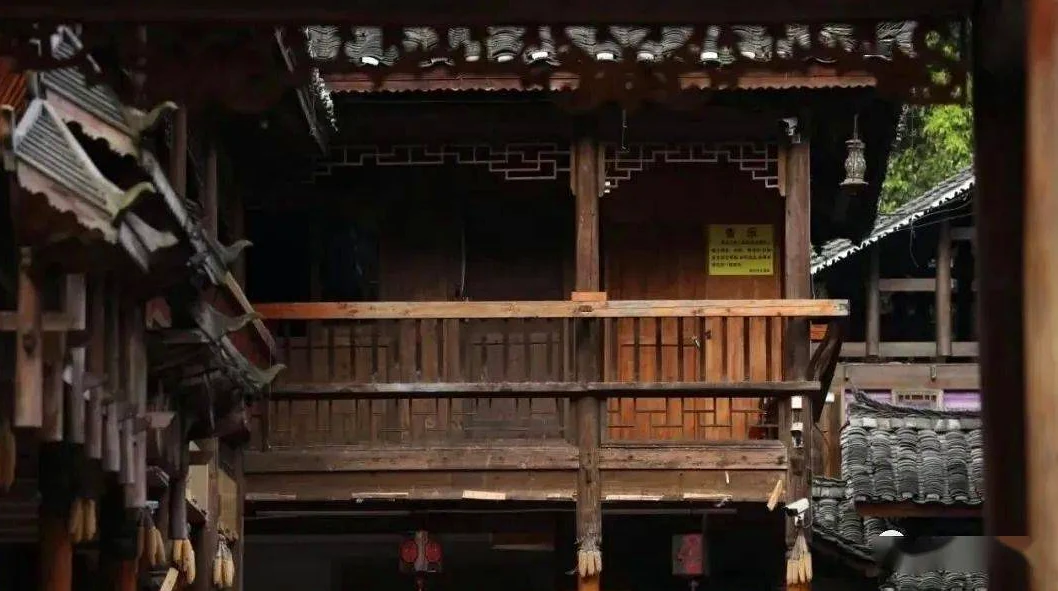
The organic connection between the secluded upper-level storage spaces of the Diaojiaolou stilt houses and indigenous cultural values is fully crystallized in the traditional silversmithing art of the Miao people. To craft a magnificent ceremonial ensemble weighing between 10 and 15 kilograms of pure silver, Miao master artisans must go through dozens of arduous manual stages—from smelting the metal, hammering it into thin sheets, and drawing silver wires as fine as a strand of hair, to twisting, filigree work, and intricate engraving. The heavy weight of silver draped across a young woman’s body not only symbolizes the wealth and prosperity of her clan, but also serves as spiritual armor, preserving the memory of her ancestors’ glorious historical migrations.
The aesthetic pinnacle of this ceremonial attire lies in the Yin Guan, an imposing silver headdress designed to rise high with a tiered structure featuring five to seven layers of vividly engraved motifs. Every detail on the Yin Guan is an allusion depicting the natural world and Miao mythology: pairs of dragons and phoenixes gracefully coiling and soaring majestically atop the crown, elegant lotus petals blooming across the middle tiers symbolizing purity, and schools of fish swimming fluidly along the brim, conveying age-old wishes for fertility and continuous lineage. When paired with layered necklaces, cascading chatelaines, and a silver breastplate, every rhythmic step of a Miao maiden rings out with crisp metallic chimes echoing through the mountains and forests, transforming the entire Diaojiaolou village into a living museum where tangible architectural heritage and intangible jewelry artistry converge in perfection.
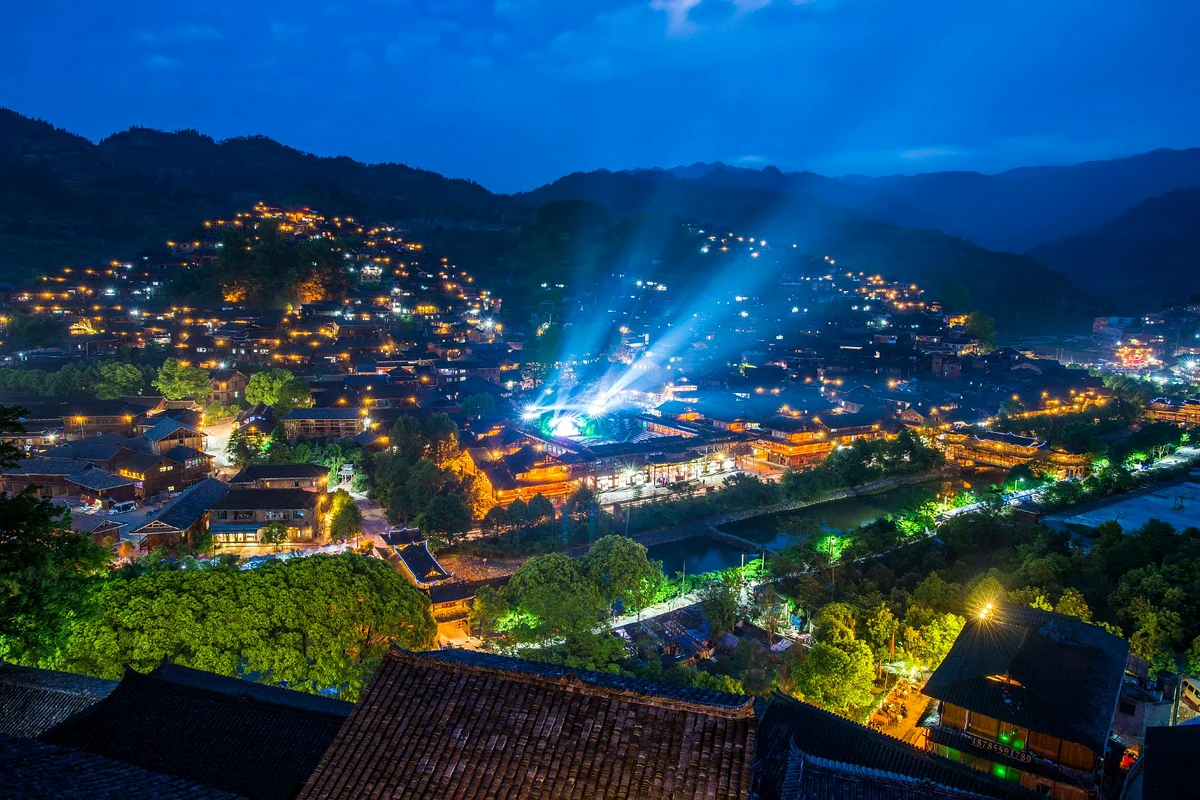
As the crimson twilight gradually fades behind the rolling slopes of the Leigong Mountain range, the valley of Xijiang Qianhu Miao Village enters its most magical transition of space and time. When night falls, more than 1,200 ancient fir-wood Diaojiaolou stilt houses, clinging tightly to steep mountain slopes inclined at forty-five to seventy degrees, simultaneously ignite tens of thousands of amber-yellow lights. Viewed from the observation deck atop Liuhe Mountain, the entire village resembles a colossal man-made Milky Way spilling across the Baishui River valley basin. The millennia-old architecture of the Miao—having weathered countless vicissitudes from the era of tribal chieftains during the Tang and Song dynasties to its flourishing peak under the Qing dynasty’s Yongzheng Emperor—now shines brilliantly like a breathtaking natural landscape gilded in gold. The warm, serene glow of lanterns mingles with wisps of misty blue fog draping the steep stone alleys, turning the entire space into a boundless, ethereal stage.
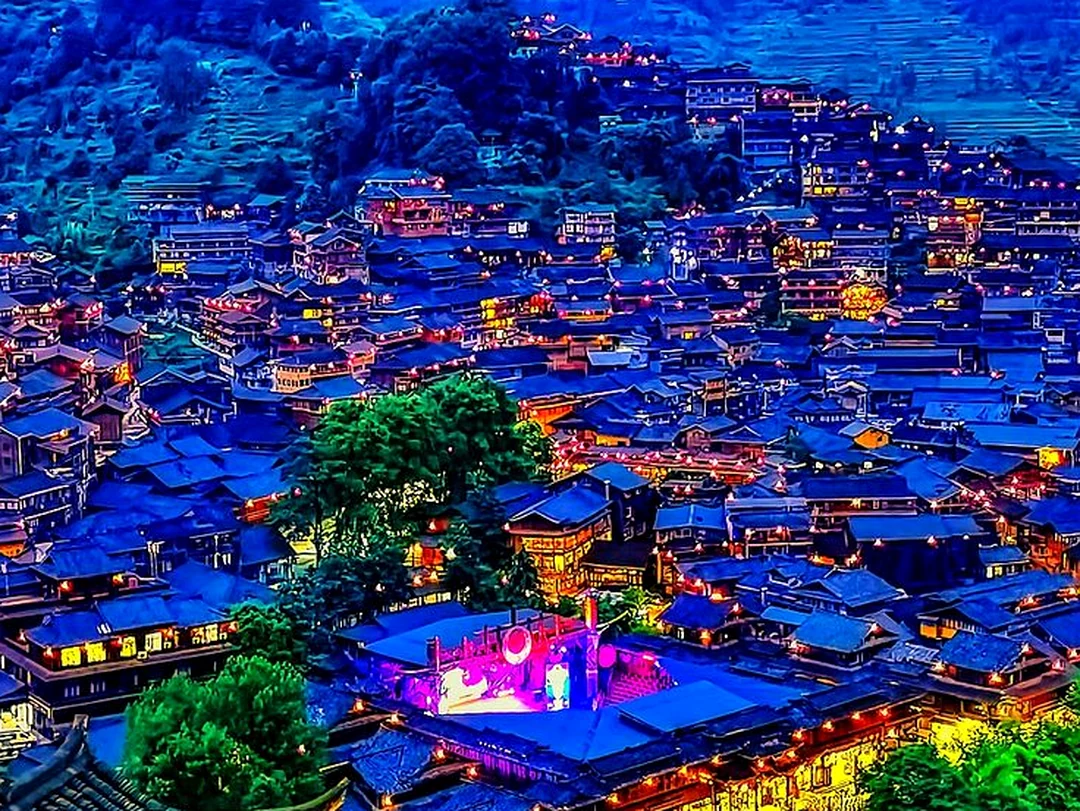
Amidst that magnificent tapestry of light, the nocturnal rhythm of the village is awakened by the enchanting, signature chimes of traditional silver attire. Punctuating every graceful step of the Miao maidens is the crisp, crystalline jingling—reminiscent of a babbling mountain brook—from the Yin Guan, Yin Jiao (silver horns), and hundreds of delicate silver ornaments. When the golden lantern light reflects off the undulating surfaces of silver plaques engraved with the Butterfly Mother (the primordial mother figure in Miao mythology), fire phoenixes, or migratory wave patterns, the cool white sheen of high-purity silver suddenly glows with an unusually warm radiance. Strolling along the seven Wind and Rain Bridges spanning the Baishui River, visitors can easily spot silhouettes of maidens dressed in ceremonial outfits weighing over fifteen kilograms of pure silver, their hair pinned with intricately carved horn combs, walking leisurely through alternating patches of light and shadow. The resonant chiming of silver bells blends with the gentle murmur of flowing water beneath the bridges, creating a primordial harmony that completely blurs the boundary between earthly reality and a wondrous realm.
The zenith of nocturnal lighting and performance art here is fully concentrated at the grand open-air live-action stage known as “Meili Xijiang” (Beautiful Xijiang). This epic production borrows the tiered backdrop of real Diaojiaolou houses rising behind it to reenact a tragic yet heroic love song of ancestral bloodlines. Beneath modern lighting interwoven with drifting mist, the performance unfolds glorious chapters of history, starting from the ancient defeat of the Ancestor Chiyou at Zhuolu, which triggered the ten-thousand-mile great migration of the Jiuli tribe from the Yellow and Yangtze River basins deep into the sacred forests of the Southwest. The climax of the evening show is the grand Lusheng Dance in full ceremonial dress, where hundreds of Miao girls clad in their most prized regalia appear in unison. Amid the deep, resonant tones of the Lusheng reed pipes echoing off the cliff walls, the whirling dance of pleated skirts combined with dazzling flashes of silver light reflecting off giant buffalo-horn headdresses creates a mesmerizing visual whirlwind, making spectators feel as though they are witnessing the proud rebirth of an ancient civilization.
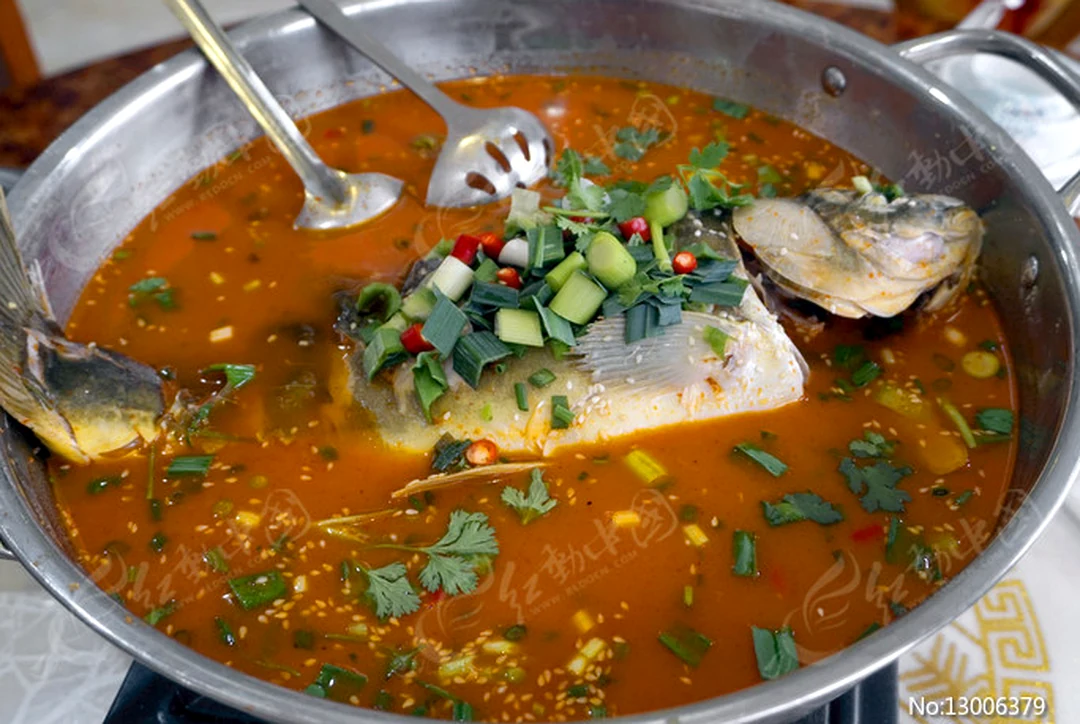
When the night grows late, life around the taverns and teahouses lining both banks of the Baishui River takes on a uniquely tranquil and lyrical charm. Flickering oil lamps cast warm light onto rustic wooden couplet plaques, where visitors savor the tangy, fiery flavors of Sour Soup Fish—cooked with paddy-field carp and fermented wild tomatoes from Qiandongnan—while sipping upland glutinous rice wine in the traditional “High Mountains and Flowing Water” buffalo-horn drinking ritual. Beside a wooden table darkened by time, the silhouette of a maiden removes her heavy Yin Guan headdress, revealing a gentle, pure smile amidst drifting hearth smoke, bringing to a close an enchanting festive night where the glow of fire, lanterns, and white silver eternally engraves the immortal soul of the southern primeval forests.
As dusk drapes a deep indigo veil over the tiered yin-yang tiled roofs of Xijiang Qianhu Miao Village, kitchen smoke from the Diaojiaolou stilt houses begins to mingle with the mist of Leishan, awakening an archaic culinary map accumulated over thousands of years of migration. In the survival philosophy of the Miao people amidst the thousand-peak valleys of Guizhou, cuisine is not merely physical sustenance, but a repository of indigenous knowledge where hereditary artistry merges with absolute reverence for natural bounty. The very first impression to touch a visitor’s senses before stepping into this realm is the gate-blocking welcoming drink ritual known as Lanmen Jiu at the dark wooden village gates. Miao maidens in splendid ceremonial attire, crowned with silver headdresses intricately engraved with dragons and phoenixes, sing ancient folk songs and raise buffalo-horn cups of wine to invite guests through twelve tiers of challenges symbolizing twelve treacherous mountain passes. The sweet, mellow glutinous rice and millet wine, brewed with wild herbs, carries a gentle yet soothing warmth brimming with sincere hospitality, opening the path to experiencing time-honored flavors renowned across the misty Southwest.
When speaking of the peerless delicacies of the Miao people, one cannot overlook the famed Sour Soup Fish, the very soul of local culinary culture rooted in an ancient regional proverb: “Go three days without tasting sourness, and your steps will falter.” The essence of the dish lies in its vibrant red sour broth, painstakingly crafted through natural fermentation. Miao women combine aged upland glutinous rice-washing water with crushed wild bird’s-eye red chilies and local wild tomatoes, sealing them in earthenware jars for months on end to yield a pure, crisp acidity that finishes smoothly on the palate without harshness. Fresh river fish caught straight from the terraced paddy irrigation channels are cleaned and plunged whole into the bubbling broth alongside mountain ginger, purple garlic, and especially aromatic Litsea cubeba oil, which imparts a cool, minty note of deep forest flora. The tender sweetness of the white fish flesh blends seamlessly with the bold sour-and-spicy broth, releasing a rich fragrance around the crackling hearth and completely dispelling the damp chill characteristic of the highlands.
Alongside the refreshing tang of stream fish, the rich, savory flavor of Miao cured smoked meat represents a profound food preservation craft passed down through generations. Highland black pork is selected from free-range pigs raised on mountain slopes; once cut into thick strips, the meat is generously rubbed with coarse salt, chili powder, and wild Sichuan peppercorns before being hung high above a wood-fired hearth for three to six full months. Having bathed day and night in smoke from pinewood and sugarcane bagasse for hundreds of days, the strips gradually turn a glossy dark brown, with the fat turning translucent amber like jade and the lean meat deepening to the crimson hue of dried rose petals. When thinly sliced and stir-fried with wild bamboo shoots or young garlic, the cured pork releases an irresistible savory aroma, its salty richness infused with ancient hearth smoke reaching every olfactory sense and evoking the relentless efforts of ancestors to stockpile provisions against bone-chilling winters.
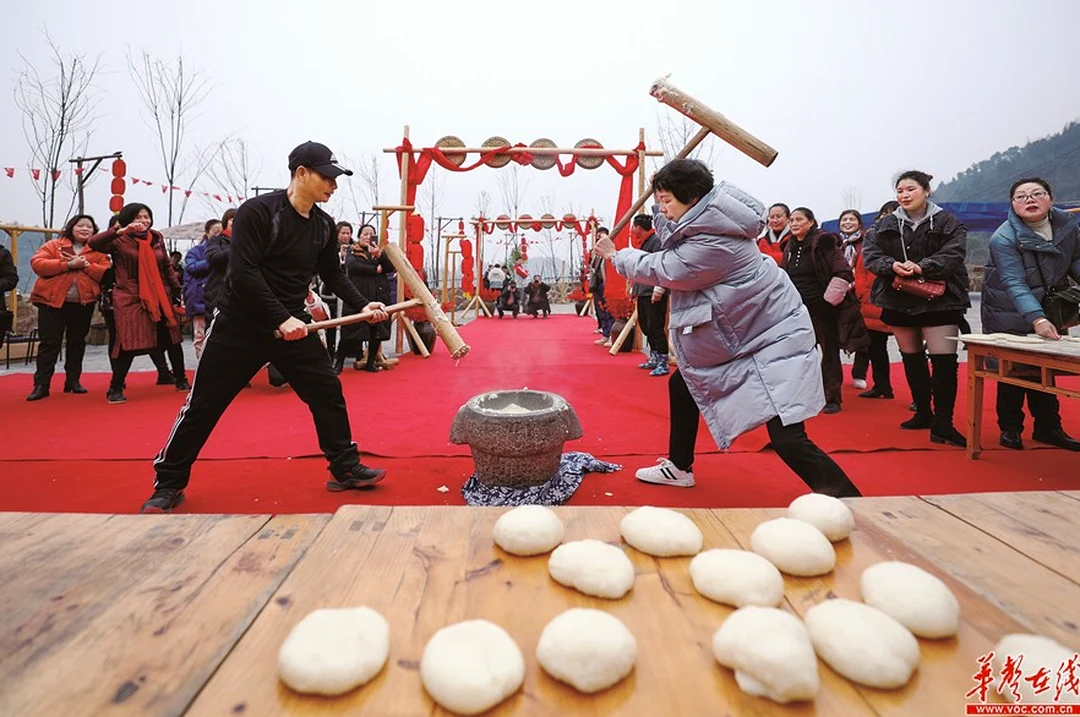
A traditional family feast in the ancient village would never be complete without the wholesome sweetness of hand-pounded glutinous rice cakes, a delicacy crystallized from the “heavenly pearls” of the majestic terraced fields. After being steamed in a pinewood steamer, upland glutinous rice is poured straight into a monolithic stone mortar in the courtyard, where sturdy young men rhythmically pound it with wooden pestles until every grain melds into a cohesive, silky, snow-white dough. Shaped into plump rounds while still piping hot, the rice cakes are rolled in traditional cane-sugar slab shavings or fragrant roasted black sesame powder, offering a chewy, nutty texture, delicate sweetness, and heartwarming hospitality. Seated around a long banquet table stretching dozens of meters through the heart of the village, listening to the lilting melodies of leaf flutes and the lively clinking of silver bangles with every welcoming gesture, one truly understands that Miao cuisine is not merely the art of seasoning, but a living epic of the inseparable bond between humanity, nature, and ancestral roots.
The journey back to the cradle of silver jewelry crafting art and gazing upon the dazzling beauty of Miao maidens in Xijiang Qianhu Miao Village and the mystical Xiangxi region is deeply intertwined with the rhythm of nature and festivals. The period from April to October every year is considered the most radiant time, when thousands of cascading terraced fields winding around the village transition from vibrant green to the golden hues of the harvest season, creating a pristine backdrop that highlights the pure silver radiance. More specially, if travelers wish to immerse themselves in the most sublime cultural atmosphere, they should visit around November to December of the lunar calendar. This is when the Miao New Year takes place, echoing with the sounds of Lusheng pipes across sloping alleys, and all the maidens in the village dress in their most magnificent silver ceremonial attire to join the traditional bronze drum dance. The Miao village is open to visitors continuously from early morning until late night, yet the moment of dawn when morning mist gently hugs the fish-scale tile roofs and dusk when thousands of lanterns light up the mountainside are the two most breathtaking times to admire the local cultural space.
One of the most captivating experiences that every traveler looks forward to trying is transforming into a graceful Miao girl amidst the precarious Diaojiaolou stilt houses. Along the traditional costume shops lining the banks of the Baishui River or the ancient streets of Fenghuang, rental package prices typically range from 150,000 to 400,000 VND depending on the intricacy of the attire and the weight of the accompanying silver set. This experience package includes elaborately embroidered silk-thread jackets and skirts, a traditional silver jewelry set weighing nearly ten kilograms complete with a buffalo-horn silver headdress, peony flower hairpins, multi-layered neck rings, a chest armor plate adorned with jingle bells, along with professional makeup and hair styling following the authentic mountain girl aesthetic. With every light step on the ancient green stone slabs, the crisp ringing of hundreds of silver pieces softly colliding creates an enchanting melody, transporting travelers back in time to the ancient legends of the ancestor Chiyou.
Stepping across the village threshold, visitors are immediately greeted by the legendary welcome ritual known as “Lan Lu Jiu” (blocking the path with wine), consisting of twelve strict checkpoints. Maidens adorned in brilliant silver attire lift their resonant mountain folk songs and present buffalo horns filled with rich, fragrant glutinous rice wine to distant guests. According to local etiquette, travelers must never touch the buffalo horn with their hands, as this action is implicitly understood as a desire to drink the entire large bowl of wine by oneself; instead, keep both hands natural or lightly folded behind the back, gently bow to take a small sip or finish the cup to express respect for the hospitality of the locals. Following the village-entrance ritual, a traditional long-table banquet featuring the famous Southeast Guizhou sour and spicy fish soup and a plate of colorful upland sticky rice continues to treat visitors with the ultimate culinary essence of the mountainous region.
Faced with the powerful allure of local goldsmithing art, the souvenir market also harbors subtle commercialization traps. Travelers must stay alert to avoid cheap tours with deceptive tactics that force visits to large-scale industrial silver showrooms, which typically display mass-produced items mixed with copper and zinc at prices many times higher than their actual value. When searching for a genuine silver token to commemorate the trip, the core guideline is to seek out the traditional forging workshops of certified local intangible cultural heritage artisans. Observe the surface of the product carefully to find sunken hallmark stamps indicating standard silver purity such as S925 or S999 pure silver, while listening for the distinctive muffled sound of hand-forged silver instead of the sharp ringing of mixed metals. To have a complete expedition exploring the cultural depth of the mountainous Xijiang and the mystical Xiangxi region without worrying about complex logistics, choosing a professional all-inclusive tour package will be the ideal solution to help travelers peacefully immerse themselves in the joyful sounds of tens of thousands of white silver pieces.