In the heart of romantic Tuscany, where lush green hills cradle endless vineyards and ancient towns bask in golden sunlight, Florence (Firenze) stands as a defining monument of the Renaissance. And at the very center of this jewel, rising majestically into the azure sky, is a grand architectural marvel—an eternal symbol of human intellect and aspiration: the Cathedral of Santa Maria del Fiore, affectionately known by locals as the Cattedrale di Santa Maria del Fiore, or the Cathedral of Saint Mary of the Flower.
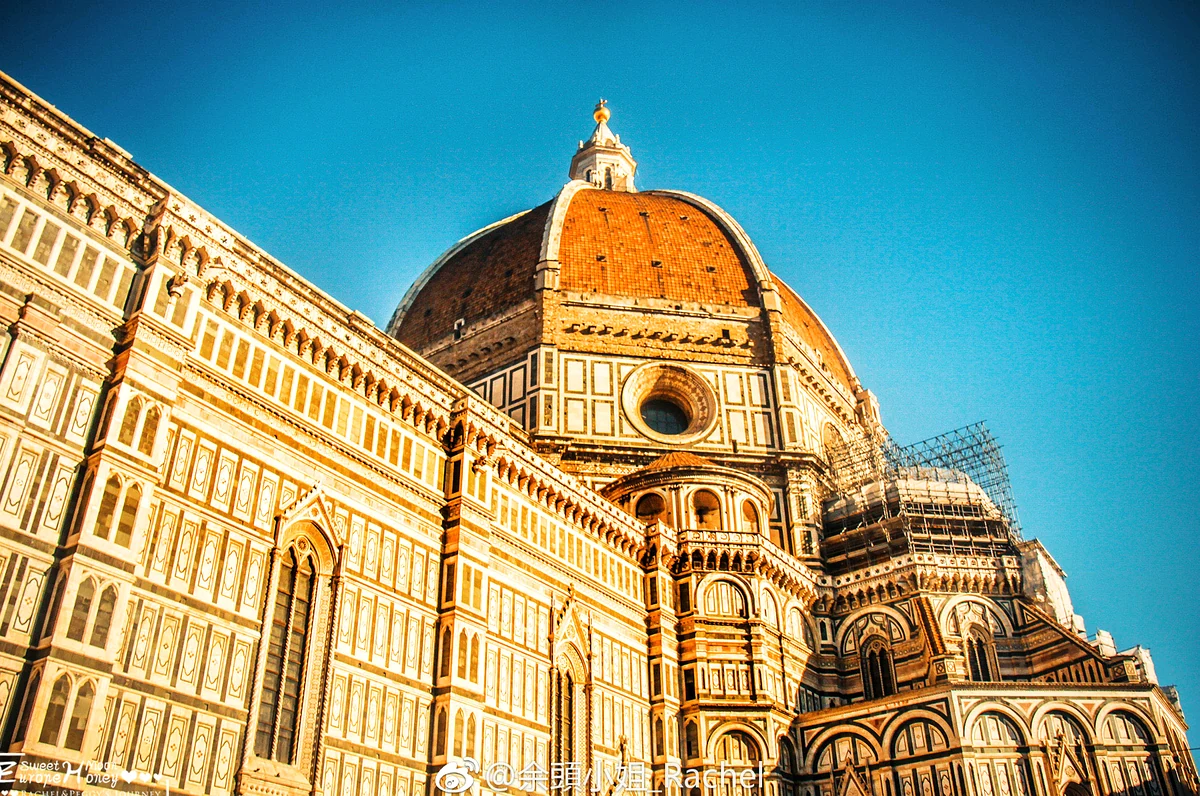
The story of the Duomo’s creation is not merely a tale of stone and mortar, but an epic saga of an ambitious republic where art and science converged, and where geniuses were born to defy every boundary. It all began on September 8, 1296, when Florence—at the height of its golden age—resolved to build a cathedral worthy of its rising economic and cultural power, a monument capable of surpassing lifelong rivals such as Siena and Pisa. Entrusted with initiating this grand vision was the renowned architect and sculptor Arnolfo di Cambio. He drafted a bold design steeped in the Italian Gothic style on a colossal scale, promising to become one of the largest religious structures in Europe.
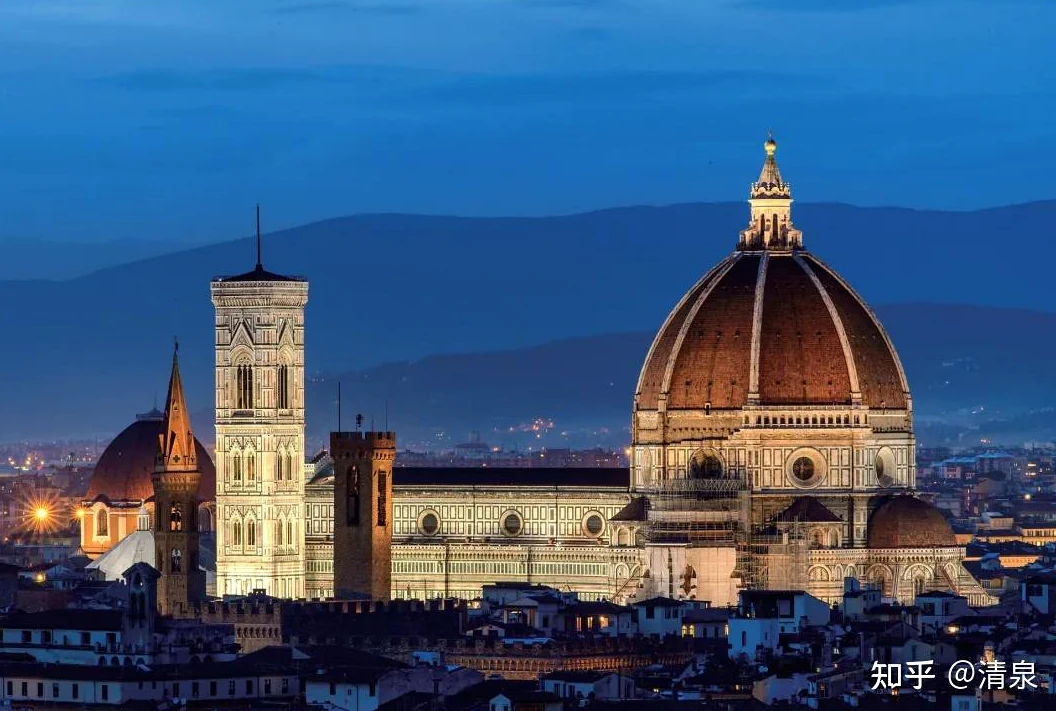
Yet no wonder is ever built without enduring trials. The 14th century saw Florence and all of Europe plunged into the shadow of grim historical upheavals. The Black Death, which ravaged the continent in 1348, claimed millions of lives and repeatedly brought construction to a halt. Successive financial crises among Florence’s powerful banking families further slowed progress. Even so, the resolve of the Florentine people never wavered. Following Arnolfo di Cambio, other illustrious masters stepped forward, including Giotto di Bondone, who assumed the role of chief architect in 1334 and left an immortal legacy with his graceful design for the Bell Tower (Campanile di Giotto)—a freestanding Gothic masterpiece that harmonizes seamlessly with the cathedral as a whole.
Still, the greatest challenge—a seemingly unsolvable “problem of the century”—remained: how to construct a massive dome over the cathedral’s crossing, spanning nearly 45.5 meters in diameter, without traditional supporting scaffolding? At the time, construction engineering could not erect a wooden framework large or sturdy enough to bear thousands of tons of masonry at such dizzying heights. For nearly a century, the open void atop the Duomo lingered as an unanswered question, a gauntlet thrown down to the most brilliant architects and engineers of the age. It was not until 1418, when the wool merchants’ guild, *Arte della Lana*, held a historic design competition for the dome, that the door finally opened for a true genius: Filippo Brunelleschi, a goldsmith turned self-taught architect who presented an audacious solution far ahead of contemporary thought.
Brunelleschi not only designed the dome (Cupola) but personally supervised and executed its construction from 1420 to 1436, turning the impossible into reality. He employed an ingenious double-shell dome structure combined with a *herringbone pattern* brickwork technique and a self-locking rib system, enabling the dome to support itself as it rose without ground-based scaffolding. It was an unprecedented feat of engineering that heralded the brilliant dawn of Renaissance architecture and secured Brunelleschi’s eternal fame. Finally, on March 25, 1436—the Feast of the Annunciation on the Florentine calendar—the Cathedral of Santa Maria del Fiore was officially consecrated, becoming an enduring emblem of Florence where Italian Gothic and Early Renaissance styles meet in extraordinary harmony.
Even then, the Duomo’s history continued to unfold across the centuries. Not even Arnolfo di Cambio’s original facade escaped alteration. Between 1587 and 1588, on the orders of Grand Duke Francesco I de’ Medici, the original facade was dismantled for being considered outdated, leaving a bare expanse for nearly three hundred years. It was not until 1887 that the cathedral was completed with its resplendent Neo-Gothic facade seen today, designed by architect Emilio De Fabris using naturally polychrome marble panels—pure white Carrara, green Prato, and red Maremma—creating a balanced, magnificent composition. Every stone and architectural contour of the Duomo tells a story, a chapter in Florence’s grand epic, inviting travelers to explore a depth of history and culture unmatched anywhere else.
Stepping onto the Piazza del Duomo in Florence, visitors are immediately captivated by an extraordinary architectural triumph rising above the historic city. This is the Cathedral of Santa Maria del Fiore—an undying symbol of boundless creativity where the finest elements of Italian Gothic and Early Renaissance architecture converge, standing as powerful testimony to humanity’s drive to transcend limits. Far more than a house of worship, it is a living museum narrating a golden age of art and engineering.
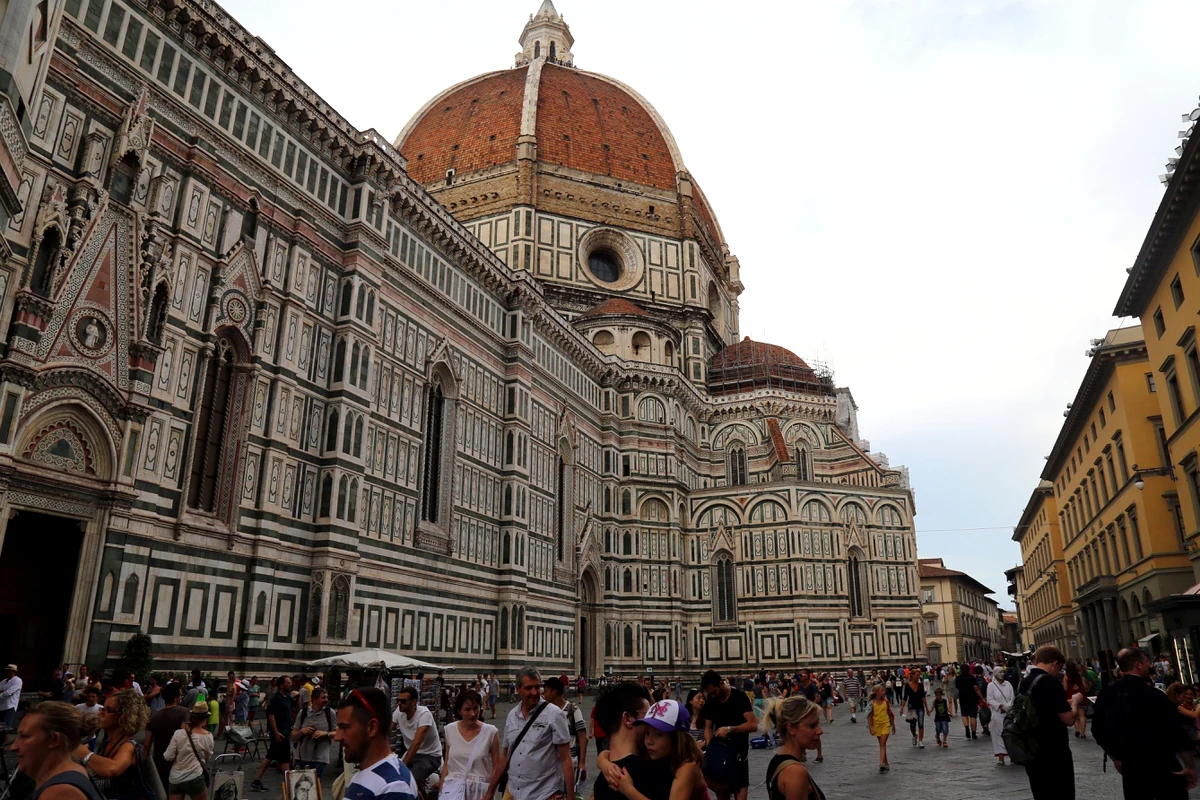
The journey to create this masterpiece began on September 8, 1296, under the gifted hand of famed architect and sculptor Arnolfo di Cambio. He laid the first stones and outlined the monumental body of the cathedral in the signature Italian Gothic style, defined by slender yet commanding lines. Later, in 1334, painting master Giotto di Bondone took over as chief architect, leaving an indelible mark with his distinctive Bell Tower (Campanile di Giotto)—an independent structure that blends astonishingly well with the main church, clad in polychrome marble panels that lend it timeless splendor.
Yet the greatest challenge—and the pinnacle of ingenuity—lay in building the colossal dome, an “impossible” engineering riddle of its era. After decades of delays caused by the Black Death and economic turmoil, a historic design competition in 1418 paved the way for a towering genius: Filippo Brunelleschi. From 1420 to 1436, Brunelleschi achieved the unthinkable, raising a Cupola that remains the largest masonry brick dome in the world today, measuring 45.5 meters in internal diameter and reaching 114.5 meters from ground level to the top of the cross.
Brunelleschi’s engineering breakthrough rested on an innovative double-shell dome design: an inner dome and an outer dome linked by an intricate network of vertical and horizontal brick ribs. Most remarkably, he built the entire structure without any traditional scaffolding rising from the floor—an accomplishment far beyond the technical knowledge of the day. Using custom-designed hoisting machines and self-locking *herringbone brickwork*, he engineered a self-supporting structure that minimized weight while distributing outward thrust with mathematical precision. It remains a dazzling testament to Renaissance intellect and daring.
Beyond being a marvel of engineering, the Duomo is also a visual feast of fine art. The facade and exterior walls are completely faced with natural polychrome marble slabs, forming a vibrant, harmonious tapestry. Pure white Carrara marble, tranquil green Prato marble, and warm red Maremma marble interlace into intricate geometric patterns that shimmer beneath the radiant Tuscan sun. Although Arnolfo di Cambio’s original facade was torn down in 1587 and replaced in 1887 with Emilio De Fabris’s ornate Neo-Gothic design, the overall aesthetic retains remarkable unity and grandeur, cementing the Duomo as an iconic landmark in the heart of Florence.
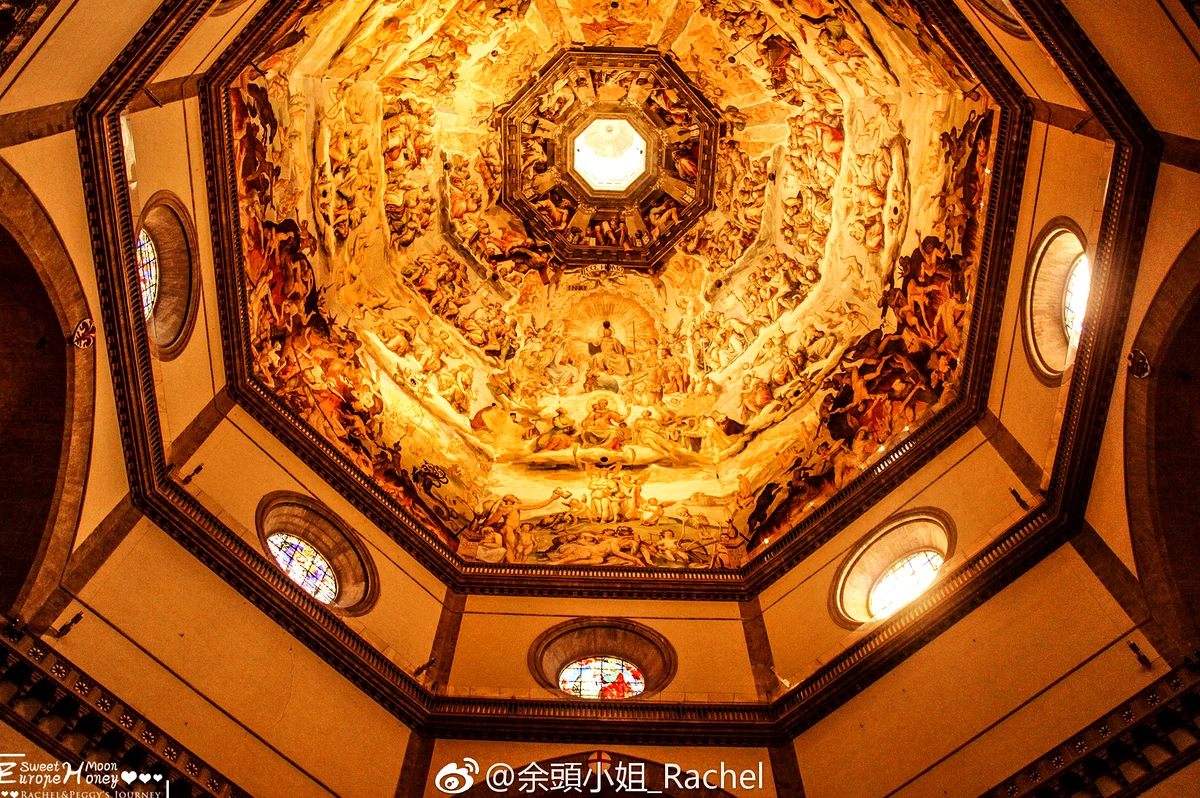
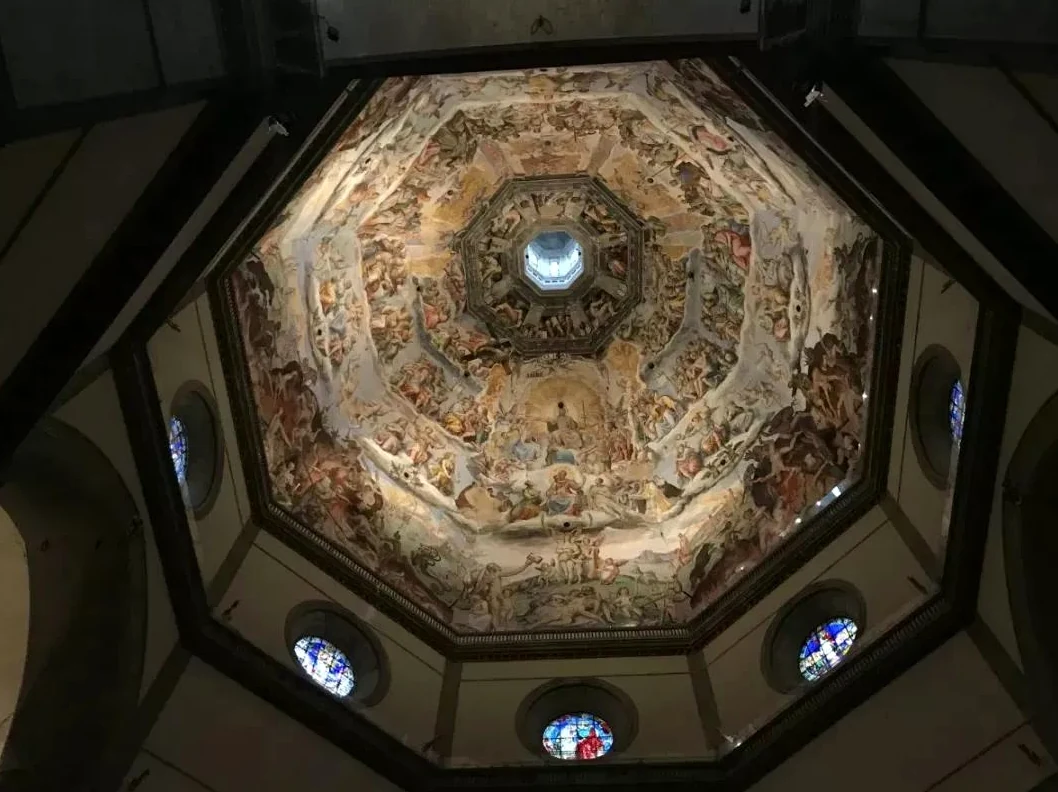
Inside the dome, another artistic masterpiece awaits: the monumental fresco “The Last Judgement” by Giorgio Vasari and Federico Zuccari. Covering an astonishing expanse across the entire interior vault of the Cupola, the fresco vividly and dramatically depicts scenes from Scripture. As visitors climb the 463 steps winding between the two shells of Brunelleschi’s dome, they are treated to a rare, up-close view of the fresco’s intricate brushwork, experiencing the sheer scale of Renaissance artistry before emerging at the lantern for a breathtaking 360-degree panorama of historic Florence.
Duomo Santa Maria del Fiore is more than a feat of architecture; it is a statement of human ambition and the power to turn bold ideas into enduring reality. From Arnolfo di Cambio’s first foundation stones to Giotto’s graceful campanile and Brunelleschi’s miraculous dome, every detail tells a story of perseverance, innovation, and timeless beauty. It is truly a supreme masterpiece of architecture and visual art—an unmissable highlight on any European heritage itinerary.
When you arrive in Florence, the heart of romantic Tuscany, Duomo Santa Maria del Fiore is far more than a monumental edifice—it is an invitation and a challenge for travelers eager to uncover deep layers of history and art. As a senior international travel writer, I believe the most “priceless” experiences here are not measured in material terms, but in active immersion—in the rare perspectives reserved for those willing to make the climb.
The foremost journey, and the crowning highlight of any visit, is ascending to the summit of the legendary Brunelleschi’s Dome. This is no ordinary walk, but a pilgrimage back through time, winding up 463 relentless spiral steps tucked inside the narrow space between the dome’s two masonry shells. Every step echoes with the pulse of history, drawing you deeper into Filippo Brunelleschi’s unmatched engineering triumph. There is no elevator—only determination and anticipation—until an unforgettable reward unfolds before your eyes: the vast *The Last Judgement* fresco by Giorgio Vasari and Federico Zuccari. Seen from astonishingly close range, every detail and brushstroke across hundreds of figures springs to life, portraying heaven and hell, salvation and reckoning, on a scale and complexity that leaves onlookers breathless.
And then, after taking in the breathtaking splendor of the frescoes, the final steps lead up to the observation lantern at the very summit. From an elevation of 114.5 meters, the panorama of historic Florence unfolds like a living 360-degree painting. Clusters of terracotta-tiled rooftops, the gently winding Arno River, the graceful Ponte Vecchio, and the lush green hills cradling the city all converge into a spectacular vista where time seems to stand still. This is a moment when you do not merely gaze upon Florence—you feel the pulse of a city that gave birth to humanity’s greatest geniuses and sparked the glorious Renaissance.
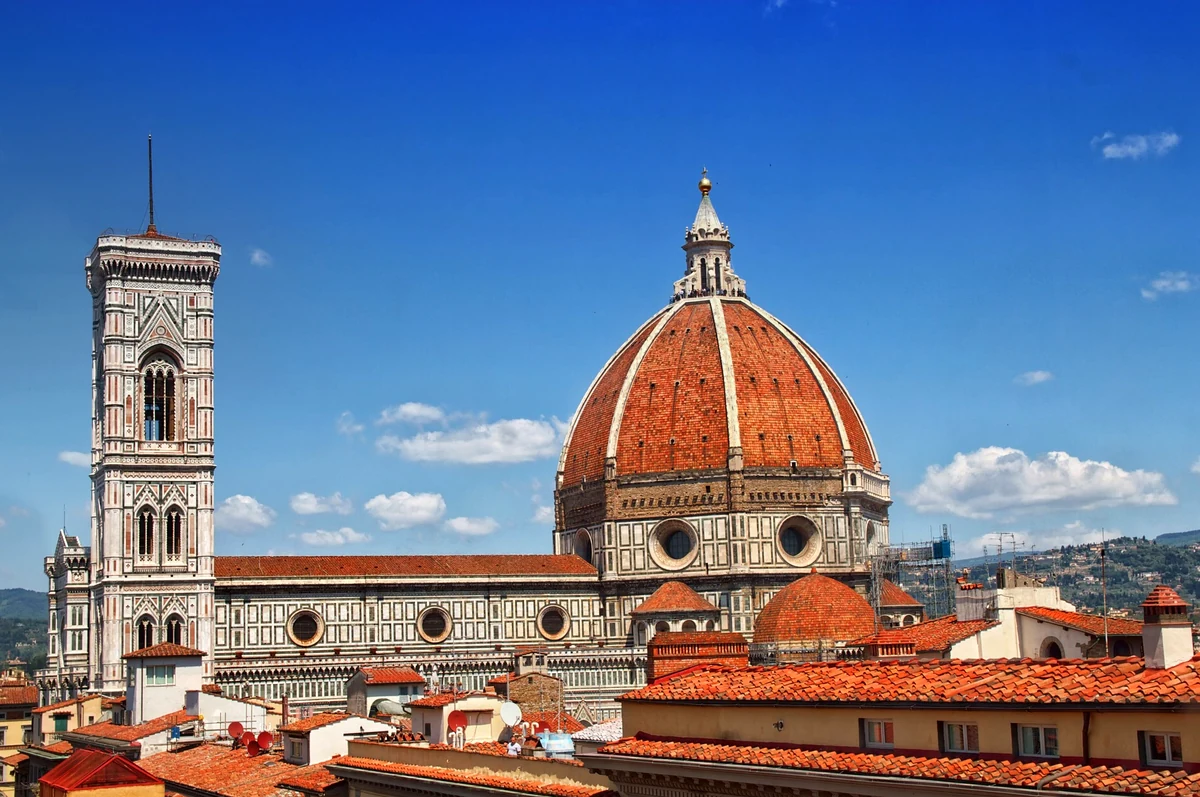
For another perspective—no less rewarding and equally iconic—visitors should not miss climbing Giotto’s Campanile (Giotto’s Bell Tower). At 414 steps, this ascent is slightly shorter than the dome’s, yet it delivers an entirely different visual reward. From the top of the bell tower, you gain a “golden” vantage point looking straight across at the ornate facade and, above all, the colossal dome of the Duomo Cathedral. This is widely considered the finest artistic photo angle in Italy, where the stately elegance of Italian Gothic architecture harmonizes with the boldness of the Early Renaissance. The contrast between the slender bell tower—clad in polychrome slabs of white Carrara, green Prato, and red Maremma marble—and the massive dome is an unforgettable sight, a picture-perfect frame for anyone wishing to capture the essence of Florence.
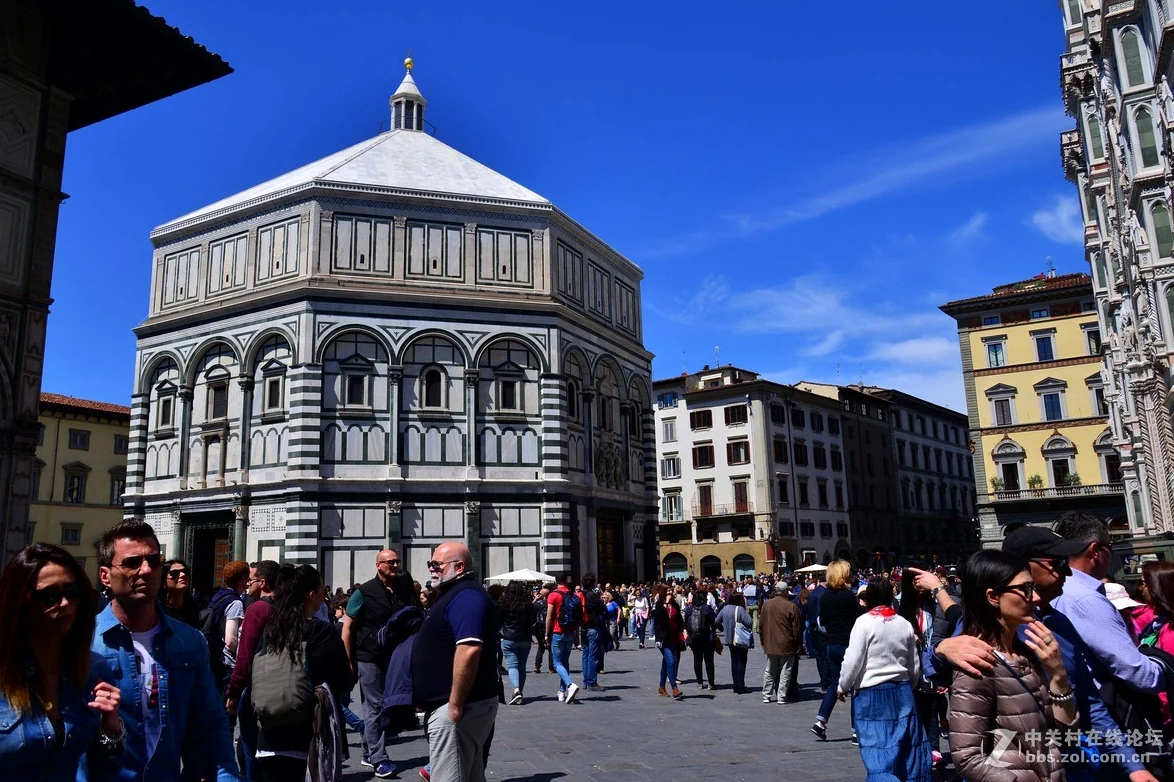
To make the most of these extraordinary experiences, securing the all-access Brunelleschi Pass is a smart move. Priced at approximately 30 EUR per person, this ticket not only opens the doors to the Dome and the Bell Tower, but also grants entry to the resplendent Baptistery of San Giovanni, the Crypt of Santa Reparata with its hidden archaeological treasures, and the Opera del Duomo Museum—home to original masterpieces and historic construction tools. However, there is one vital tip every discerning traveler must keep in mind: booking your ticket at least 3 weeks to 1 month in advance via the official website is essential. Entry to the dome is strictly regulated by timed slots to preserve the heritage site and ensure a high-quality experience for every visitor. Thoughtful preparation is the key to turning an ordinary trip into a truly seamless and unforgettable journey.
These experiences go far beyond simple sightseeing; they offer a profound connection to one of humanity’s greatest architectural wonders and pay tribute to the relentless spirit of human creativity. It is an awe-inspiring sensation to stand at the summit, look out over the city that defined an era, and understand why Florence is celebrated as the cradle of the Renaissance. Every step and every vantage point tells a story—a history lesson written in stone and marble, waiting for kindred spirits to discover.
After immersing yourself in the architectural marvel of the Duomo di Santa Maria del Fiore, with impressions of Renaissance artistry still lingering in your mind, the discerning traveler’s senses naturally turn toward another equally illustrious heritage: Florence’s local culinary map. Here, food is far more than mere sustenance; it is a journey into the art of dining, where every flavor tells a story of the bountiful Tuscan countryside and the quiet pride with which Florentines preserve and honor authentic traditions.
Step just a few paces away from the grand Piazza del Duomo, and you will find yourself wandering through a labyrinth of narrow, cobblestone alleys where the aroma of traditional cooking drifts invitingly through the air. The undisputed centerpiece of any culinary feast here is Bistecca alla Fiorentina—the legendary Florentine T-bone steak. More than just a dish, it is a ritual. Cut from prized Chianina cattle raised on the lush pastures of Tuscany, the steak is sliced remarkably thick—around 3 to 4 cm—and weighs at least 1 kilogram. Seared over glowing embers, it reaches perfection with a charred, crisp exterior while remaining an alluring, tender, and juicy rare to medium-rare inside. Its brilliance lies in its simplicity: just a sprinkle of coarse sea salt and a drizzle of top-tier extra virgin olive oil are enough to elevate the beef’s natural flavor. To savor this delicacy at its finest, beloved establishments like Trattoria Mario or Osteria di Giovanni remain top choices, offering the warm, authentic atmosphere of a classic Italian family meal.
If Bistecca alla Fiorentina is the emblem of indulgence, then Lampredotto is the soul of Florentine street food—a dish no traveler wishing to tap into local life should miss. Made from the fourth stomach of the cow, slow-simmered in a fragrant herb broth, thinly sliced, and tucked into a crusty bread roll, it is finished with bright, zesty salsa verde and a touch of fiery chili oil for an unforgettable burst of flavor. For the most authentic Lampredotto, head to Nerbone, a century-old stall nestled inside the central market, Mercato Centrale, just a five-minute walk from the Duomo. Here, you will see long lines of locals and visitors alike patiently waiting for a taste of this humble yet captivating specialty—living proof of a food culture that transcends all social boundaries.
Alongside its hearty mains, Florence delights diners with simple yet refined treats. Schiacciata Fiorentina is a traditional wood-fired flatbread boasting a crisp crust and a soft, airy crumb fragrant with extra virgin olive oil and sea salt. Delicious on its own, it becomes an ideal light meal when layered with renowned cured meats like savory Prosciutto di Parma and rich Pecorino cheese. The world-famous sandwich shop All’Antico Vinaio, celebrated for its generously stuffed, oversized Schiacciata panini, is an unmissable stop. Though the queue can be long, fast service and extraordinary flavor make every minute of waiting worthwhile for a quintessential street-food experience.

Of course, no guide to Florentine dining would be complete without mentioning the ultimate accompaniment to every meal: Chianti Classico wine. With its full-bodied character and signature aromas born in the rolling hills of Tuscany, Chianti Classico is far more than a beverage—it is an inseparable pillar of local gastronomy. Every glass of ruby-red wine captures the essence of the land and its sun-drenched Mediterranean vineyards, adding richness and depth to every bite. In Florence, dining culture is not merely about tasting great food; it is about slowing down, savoring every moment around the table, sharing stories, and connecting through flavors passed down across generations.
From ember-grilled Chianina steaks and rustic Lampredotto at the corner market to fragrant Schiacciata flatbread and a swirling glass of Chianti Classico, Florence’s culinary landscape is an enchanting journey of discovery—an essential key to understanding the true spirit of the Renaissance city. Every dish is a work of art crafted with love and deep respect for ingredients, reflecting the cultural and historical wealth of Tuscany and leaving travelers with unforgettable flavors that linger long in memory.
Now that we have immersed ourselves in Florence’s rich history, marveled at its architectural wonders, and savored its finest local cuisine, let us equip you with an essential “pocket guide” to ensure your visit to the Duomo di Santa Maria del Fiore goes as smoothly and safely as possible. After all, a truly seamless journey requires not only an open heart, but also careful planning—especially when standing before a monument of such magnitude.
The ideal times to visit Florence and admire the Duomo are undeniably spring (April – June) and autumn (September – October). In spring, mild weather, blooming flowers adorning the city, and gentle sunlight spilling across historic streets combine with moderate crowd levels, allowing you to savor every moment at an unhurried pace. It is the finest season for climbing the dome or bell tower without heavy congestion. When autumn arrives from September through October, the city glows in the golden hues of the grape harvest, creating a deeply romantic backdrop ideal for photographers and anyone seeking peaceful reflection. Conversely, think twice before planning a visit in July or August, as peak summer brings intense heat and overwhelming crowds that can significantly detract from the experience.
To unlock the full wonders of the Duomo complex, the best ticket option is the Brunelleschi Pass. Priced at around 30 EUR per person, this pass is far more than an ordinary entry ticket—it is a golden key to the entire monument ensemble. It includes access to the most sought-after highlights: climbing Brunelleschi’s legendary Dome, ascending the majestic Giotto’s Campanile, exploring the ancient Baptistery of San Giovanni, descending into the subterranean Crypt of Santa Reparata, and admiring masterpieces at the Opera del Duomo Museum. One crucial reminder for every savvy traveler: you must book your tickets at least 3 weeks to 1 month in advance on the official Duomo website. Dome access is strictly regulated by fixed time slots, and without a prior reservation, you will have virtually no chance of experiencing this summit climb. Consider early booking an essential part of the art of preparing for an unforgettable trip.
As for opening hours, the Cathedral (Cattedrale) generally welcomes visitors from 10:00 AM to 5:00 PM, Monday through Friday, while Sundays follow a separate liturgical schedule. Meanwhile, the Dome and Bell Tower—the complex’s two biggest draws—offer extended hours from 8:15 AM to 7:45 PM daily, giving you greater flexibility when planning your climb to the top. Keeping these hours in mind will help you optimize your itinerary and avoid unnecessary waits.
When stepping into a sacred and historically significant site like the Duomo, following operational rules and safety precautions is of utmost importance. First and foremost is the strict Dress Code. The Duomo is a church and an active place of worship, so visitors are required to dress modestly, covering both shoulders and knees (applicable to both men and women). Sleeveless tops, shorts, miniskirts, and backless shirts are strictly prohibited. Do not be surprised if security staff deny you entry for non-compliance, as this is a sign of respect for a religious heritage site. Be sure to bring a shawl or light jacket so you are always prepared.
Another issue requiring special attention is pickpocketing prevention. Florence—especially the area around the Duomo and Santa Maria Novella station—is a hotspot for sophisticated pickpocketing rings, who often pose as tourists or charity petitioners. To protect your belongings, always wear your backpack or handbag in front of your chest, and never keep your phone or wallet in your back pocket. Remain vigilant and politely decline anyone approaching you on the street to ask for signatures or donations. A little caution will help you avoid unnecessary trouble and keep your trip running smoothly.
With these essential pocket tips—from choosing the golden hours to visit and mastering smart ticket booking, to respecting the dress code and staying alert—your journey to discover the Duomo di Santa Maria del Fiore will be far more than a simple trip; it will be a well-prepared, respectful experience certain to leave an indelible mark on your memory. Let us accompany you, turning every tiny detail into part of a grand travel story.
After diligently exploring each slab of polychrome marble in Carrara white, Prato green, and Maremma red; after bravely climbing the 463 steps winding between the magnificent double-shell structure of Brunelleschi’s Dome; and after standing in quiet awe beneath the fresco of The Last Judgment like a miniature universe, you have truly touched the heart of Florence. The Cathedral of Santa Maria del Fiore is not merely an architectural monument; it is an immortal epic of human intellect, resilience, and the Renaissance pursuit of beauty. From a height of 114.5 meters, gazing down at the winding Arno River and the sprawling terracotta rooftops, you see not just a city, but a golden era of humanity.
However, to truly immerse yourself in that flow of history and art—to not only “see” but deeply “feel” and “understand” every layer of culture—an ordinary trip will never suffice. That is when we step in as your elite guide, crafting experiences that go far beyond expectations. We understand that your time is priceless, and every moment in Florence deserves to be savored to the fullest, uninterrupted by the everyday hassles of mass tourism.
Imagine that instead of standing in mile-long queues under the scorching summer sun or biting winter wind, waiting hours to buy tickets and pushing through dense crowds, you enjoy the privilege of Fast-track Access. Through priority tickets pre-booked via the strategic partner network of the Institute of Tourism Economics Research, our group bypasses those exhausting lines entirely. This is not just convenience; it is respect for your experience, ensuring every precious second is spent admiring the timeless beauty of the Duomo rather than waiting in vain. We handle every strict crowd-control booking procedure for climbing the dome—which requires reservations at least three weeks to a month in advance—so you can simply relax and enjoy.
And what happens when you stand before a masterpiece like Brunelleschi’s Dome, a structure built completely without ground-supported scaffolding, utilizing the herringbone pattern bricklaying technique and a unique double-shell design? An ordinary guidebook will only provide basic facts. With us, however, you will be accompanied by a Private Expert Guide—a local art historian and true Renaissance specialist. They will not only recount the story of the 1418 dome design competition and the engineering challenges Brunelleschi faced, but also thoroughly decode architectural allusions and technical secrets that standard guidebooks never mention. You will gain deeper insight into how the hoisting mechanisms operated, the meaning behind each sculptural detail on Giotto’s Campanile, and the historical events that shaped the cathedral’s current appearance, including the demolition of Arnolfo di Cambio’s original facade in 1587–1588 and its replacement in the Neo-Gothic style in 1887.
A journey to explore the Duomo would not be complete without the signature flavors of Tuscany. We elevate your culinary experience through exclusive Fine Dining Integration. After a day immersed in art and history, you will enjoy dinner in a historic 16th-century wine cellar, where the authentic flavors of Florence come to life. Genuine Bistecca alla Fiorentina—featuring a prime 3–4 cm thick cut of Chianina beef grilled to perfection with a rosy-rare center and seasoned simply with sea salt and olive oil—will be served alongside rich glasses of Chianti Classico. A professional Sommelier will accompany you, guiding you through every aromatic note and layer of flavor of this renowned wine, transforming dinner from a mere meal into an immersive lesson in Italian culinary culture.
The Florence Duomo, in all its grandeur, is a flagship heritage site in Travel’s luxury “Italian Heritage: Rome – Florence – Venice” itinerary. It is not merely a sightseeing stop, but a center of Renaissance scholarship and artistry that we want you to experience at its deepest level. From climbing Giotto’s Campanile for a “golden” vantage point looking directly across at the colossal dome, to exploring the Crypt of Santa Reparata and the Opera del Duomo Museum, every detail is meticulously curated to create a complete, multidimensional portrait of one of the greatest architectural wonders in the world.
Let us be your trusted companion, guiding you through the labyrinths of history, the pinnacles of art, and the finest flavors of Florence. This is not merely a vacation, but a profound connection with human heritage—an experience tailor-made for souls who yearn to explore and cherish authentic value. To embark on this elite journey and discover other remarkable destinations on the itinerary, you can find detailed information and reserve your spot at All-Inclusive Tour Package . We are honored to accompany you on every leg of your journey around the world.