Stepping into the heart of Munich, the grand capital of Bavaria, visitors are immediately captivated by the majesty and lively energy of Marienplatz. More than just the geographic center of the city, it serves as a living chronicle recounting the rise, trials, and evolution of one of Europe’s oldest cities. To truly feel the soul of Marienplatz and the New Town Hall, Neues Rathaus, we have to step back in time and explore the layers of history that shaped its appearance and significance today.
The story of Marienplatz begins in 1158, when this area was known as Schrannenplatz, or Grain Square. Under the rule of the Duke of Saxony and Bavaria, Henry the Lion, a bustling market was established at the strategic crossroads of the royal salt road and the Isar River. This prime location quickly turned Schrannenplatz into the commercial and social hub of young Munich, laying a firm foundation for the city’s growth over the centuries to come. It witnessed lively market days, community gatherings, and served as the anchor for residents’ economic and social life.
However, it wasn’t until 1638 that a dramatic historical event truly gave the square its identity. Late in the Thirty Years’ War, as the powerful Swedish army drew near and threatened to occupy Munich, the townspeople placed their faith in divine protection. Together, they hoisted a statue of the Virgin Mary (Mariensäule) in the center of the square and prayed earnestly for deliverance. Miraculously, Munich was spared the worst devastation of the war. To express deep gratitude and commemorate this pivotal moment, the square was officially renamed Marienplatz—Mary’s Square—a name carrying profound spiritual meaning that endures to this day. The stately Marian Column, erected shortly afterward, became a lasting symbol of faith and protection.
As time passed, Munich continued to grow. By the late 19th century, the Old Town Hall (Altes Rathaus), despite its historic charm, could no longer accommodate the expanding administration of a rapidly booming city. The need for a new seat of power worthy of Munich’s stature became urgent. Against that backdrop, the city council made a bold decision: to build a new town hall, Neues Rathaus. Construction began in 1867 and took more than four decades of dedicated work across multiple phases before full completion in 1909. It was an ambitious undertaking that reflected Munich’s drive to rise and assert its identity on the European map.
The mind behind this architectural masterpiece was Georg von Hauberrisser, a gifted young architect who was just 22 years old at the time. He infused Neues Rathaus with an intricate, grand Neo-Gothic style blended with German Renaissance elements, turning it into an unmistakable architectural landmark. Throughout the construction of Neues Rathaus, Munich also saw the reign of King Ludwig II of Bavaria, a monarch famous for his love of art and lavish buildings, helping transform Munich into one of Europe’s major cultural and artistic centers. The arrival of Neues Rathaus solved space constraints while serving as a statement of the city’s prosperity and prominence.
Still, history has rarely been smooth. Near the end of World War II (1944–1945), Marienplatz and Neues Rathaus suffered severe damage from Allied air raids. Large sections of the building were destroyed, yet the resilience of Munich’s citizens carried them through. Right after the war, a major restoration effort got underway. Remarkably, this rebuilding stayed faithful to architect Hauberrisser’s original plans, ensuring the original Neo-Gothic beauty was recreated as authentically as possible. In particular, the famed Glockenspiel clockwork—one of Neues Rathaus’s signature features—was thoroughly restored and officially returned to operation in 1958, coinciding with Munich’s 800th anniversary. That milestone marked not only the rebirth of a building, but also a symbol of an entire city’s vitality and pride.
From a humble grain square to a splendid administrative and cultural center, Marienplatz and Neues Rathaus stand as powerful proof of Munich’s resilience, ambition, and enduring spirit. Every stone and statue here carries a story and a mark of time, inviting travelers to uncover the mysteries and timeless beauty of Bavarian history.
After the early chapters of how Marienplatz took shape and changed over time, let’s step into a new chapter where uncarved stone is brought to life as a grand architectural masterpiece and enduring emblem of Munich: the New Town Hall, Neues Rathaus. It is far more than a municipal building; it is an epic written in stone, where high artistic craft meets Bavarian history and culture.
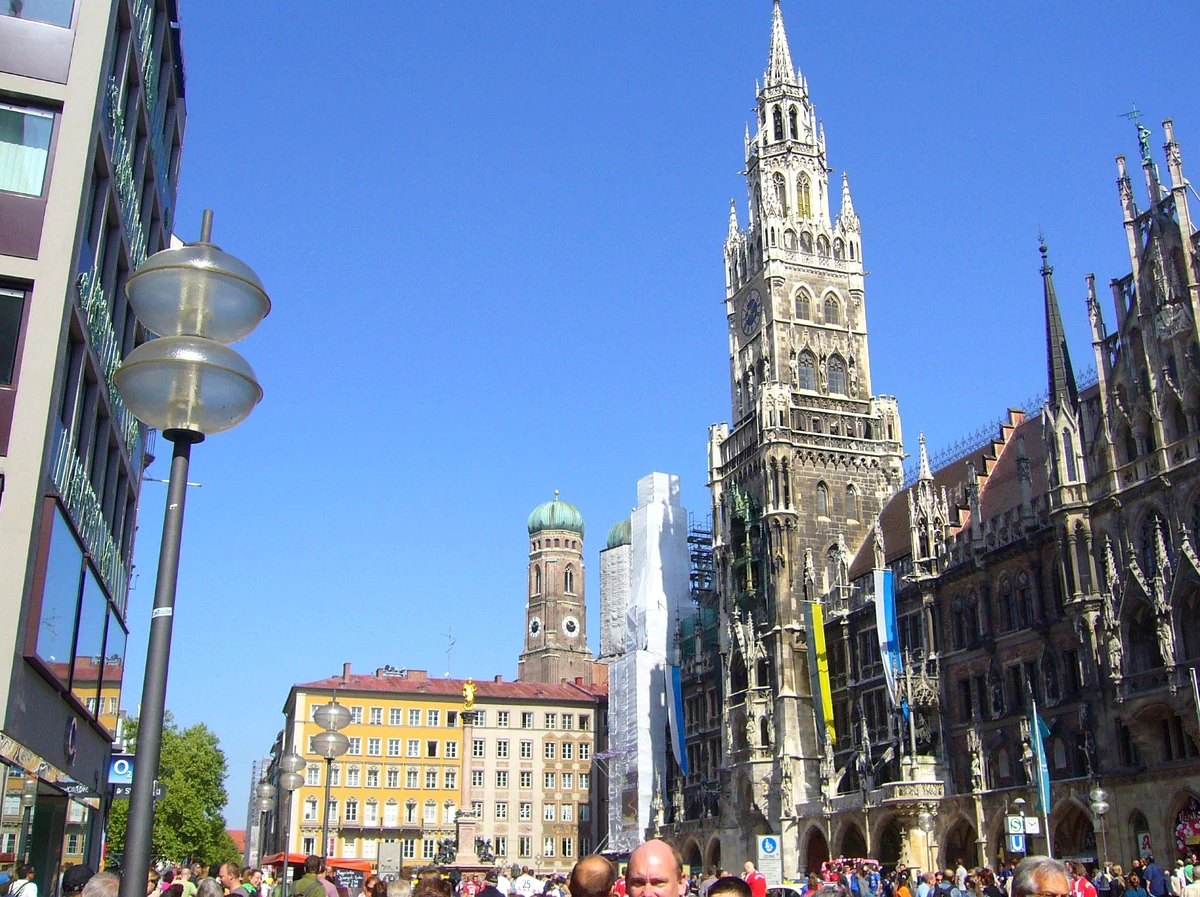
At first glance, Neues Rathaus makes a striking impression with its magnificent Neo-Gothic design, conceived by the talented architect Georg von Hauberrisser when he was 22 and completed in stages from 1867 to 1909. The facade stretches more than 100 meters along the north side of Marienplatz like a giant relief sculpture, where every detail tells a story. Hundreds of intricately carved stone statues—meticulous down to the finest lines—vividly portray regal Bavarian kings, noble dukes, renowned historical figures, sacred saints, and colorful German folklore. The skillful blend of Neo-Gothic style with accents of the German Renaissance across the facade creates a harmonious whole that feels both historic and forward-looking, reinforcing Munich’s standing as a major European center of art and culture under King Ludwig II.
At the heart of this landmark rises the Rathaus-Glockenspiel bell tower, reaching 85 meters high and housing the fourth-largest mechanical clock in Europe. Every day at 11:00 AM and 12:00 PM (plus an extra showing at 5:00 PM from May to October), thousands of eyes turn upward to watch the famous performance of 43 melodic bells and 32 life-sized figures. More than a mechanical display, it is a miniature historical drama divided into two distinct scenes. The upper tier reenacts the lavish 1568 wedding of Duke Wilhelm V and Renata of Lorraine, complete with a lively jousting tournament where knights compete to the cheers of the crowd. The lower tier takes visitors back to 1517 with the Schäfflertanz (Coopers’ Dance), a tradition celebrating Munich’s survival after a devastating plague outbreak. Dressed in traditional attire with fluid steps, the coopers brought renewed hope and life to the city. To close the show, the little golden rooster at the top crows out, like a farewell and promise to return, leaving viewers with lasting memories of a vibrant, resilient Munich.
To build a structure as massive and detailed as Neues Rathaus, its architects and craftspeople drew on Bavaria’s finest materials. Bavarian limestone and sandstone form the primary stone for the sculpted facade, lending lasting durability and a distinctive hue. Remarkably, despite its historic appearance, Neues Rathaus was built using advanced techniques of its era, incorporating hidden steel framing and reinforced concrete beams inside. That structural combination helped the building endure over time, especially during the major restoration following severe damage from Allied air raids at the end of World War II (1944–1945). Restoration began right after the war, preserving Hauberrisser’s original drawings and fully restoring the legendary Glockenspiel mechanism in 1958 for Munich’s 800th anniversary—a testament to the indomitable spirit and civic pride of its people.
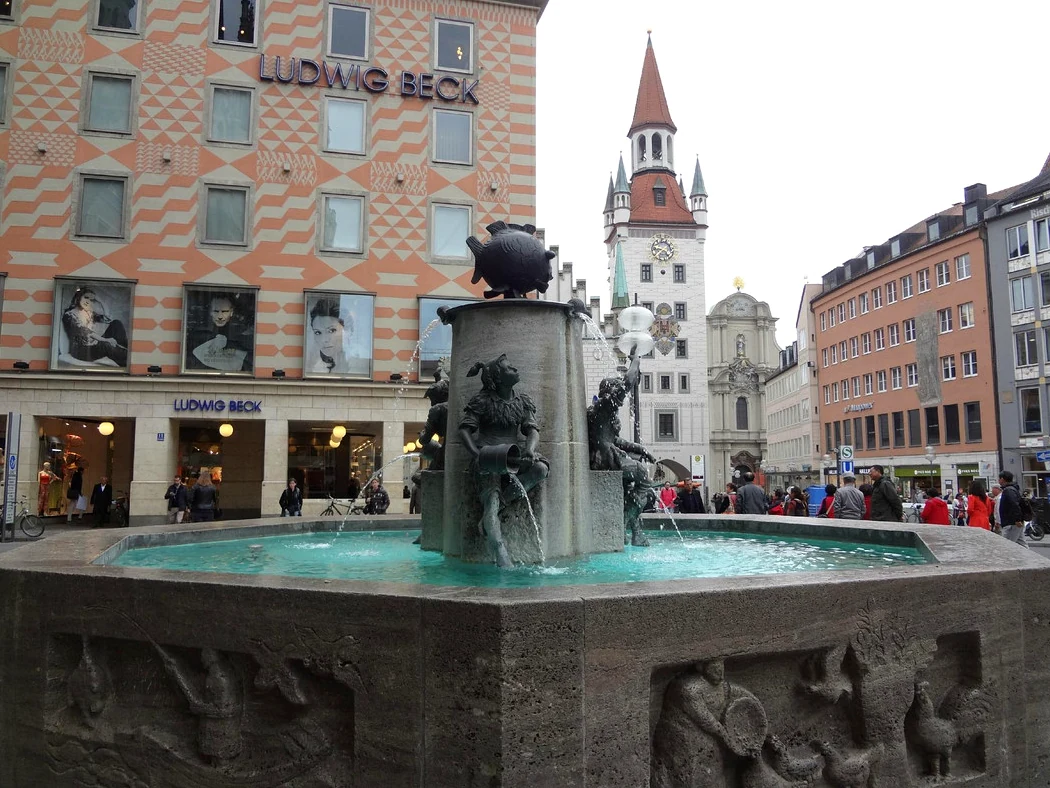
For visitors, taking in Neues Rathaus goes well beyond admiring a handsome building. It is a journey into cultural, historical, and artistic depth. Every statue, carved detail, and chime is a piece of Munich’s story. Whether viewed from the ideal vantage point beside the Mariensäule (Marian Column) in the early morning, as soft daylight gently wakes the stonework, or near the Fischbrunnen fountain, where you can capture passing crowds blending into historic architecture, Neues Rathaus always appears splendid and captivating. It truly stands as an architectural masterpiece and living symbol of Munich, where top-tier artistic value has been preserved and shines across centuries.
As the first rays of dawn touch the Bavarian sandstone spires, Marienplatz—Munich’s historic heart—begins to reveal experiences that are truly worthwhile and not to be missed, shaping a trip that goes beyond sightseeing into deep cultural and historical connection. These are more than stops on an itinerary; they are distilled moments where every detail tells a story and every angle opens up a new view.
To take in the full grandeur of Neues Rathaus, the imposing Neo-Gothic town hall, travelers are encouraged to head to the Mariensäule (Marian Column) early in the morning, around 8:00 AM to 9:00 AM. At that hour, the square is still quiet and uncrowded, letting you take in the entire facade—over 100 meters long and richly carved with hundreds of stone statues depicting Bavarian kings, dukes, historical figures, and saints. Soft morning light brings out every fine architectural line, creating an ideal backdrop for unforgettable photos. Alternatively, stand near the Fischbrunnen fountain on the east side of the square, where you can capture the lively flow of passersby set against historic architecture for a dynamic, poetic composition.
Still, the visual highlight at Marienplatz is the performance of the famed Glockenspiel mechanical clock on the Neues Rathaus bell tower. At 11:00 AM and 12:00 PM daily—with an added 5:00 PM show from May to October—43 bells ring out, setting 32 life-sized figures in motion. The upper scene stages the grand 1568 wedding of Duke Wilhelm V and Renata of Lorraine alongside a dramatic knightly tournament. Right after, the lower scene takes visitors back to 1517 with the Schäfflertanz (Coopers’ Dance), a ritual celebrating Munich’s recovery from the plague. The show wraps up with the clear crow of the golden rooster, leaving a vivid echo of a storied past and living traditions. It is a moment that awakens every sense—completely free, yet priceless.
To admire Munich’s panorama from a completely different angle, visitors shouldn’t miss the chance to take the elevator up to the bell tower of Neues Rathaus. From a height of around 85 meters, a sweeping view of central Munich unfolds before your eyes: bright red rooftops, historic cobblestone streets, and the iconic Frauenkirche with its two signature onion domes. On clear days, your gaze can stretch all the way to the majestic Alps in the south—a breathtaking and unforgettable sight. This experience costs only around 5 EUR to 6 EUR per adult, a modest price for a million-dollar view, and buying tickets directly at the tourist information desk on the ground floor of the town hall is recommended for maximum convenience.
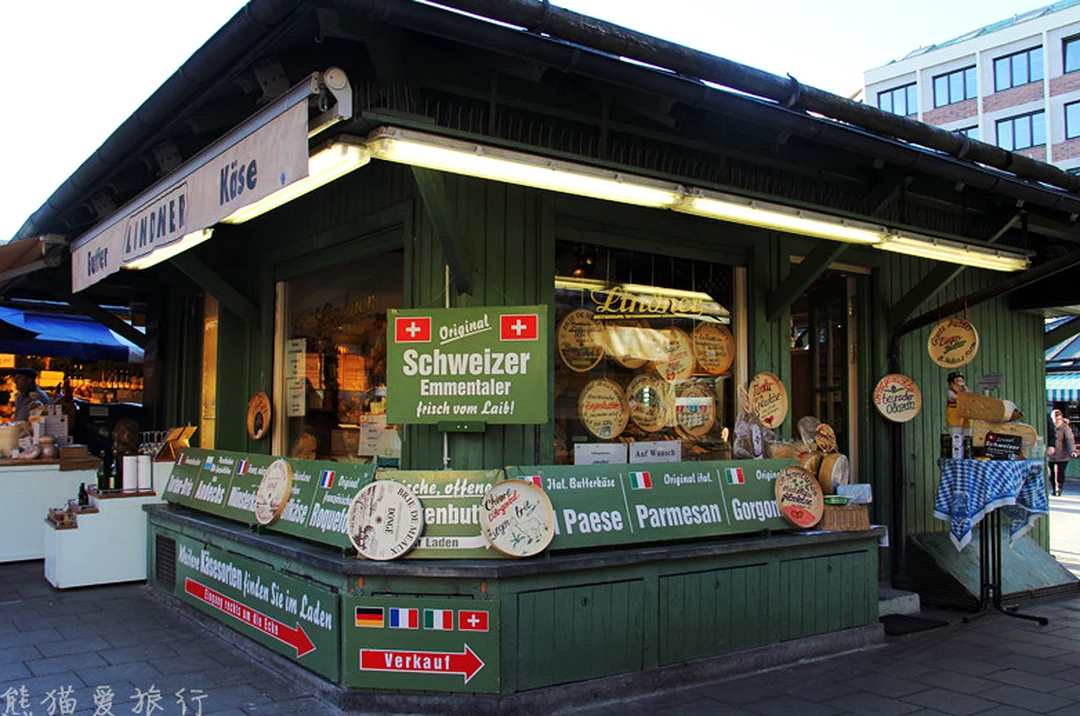
Exploring Marienplatz wouldn’t be complete without tasting local flavors. The area around the square is a “mecca” of traditional Bavarian cuisine. Just a 3-minute walk south of Marienplatz, Viktualienmarkt is a historic open-air market operating since 1807, where you can sample rich Bavarian Obatzda cheese, Weißwurst white sausage served with a soft Pretzel and sweet Händlmaier mustard, along with fresh seasonal fruits and traditional draft beer at the Biergarten in the middle of the market. A bit farther—about a 7-minute walk—Hofbräuhaus München, an iconic beer hall dating back to the 16th century, treats you to crispy-skinned roasted pork knuckle (Schweinshaxe) with rich gravy, Bavarian roast pork (Schweinebraten), and of course, a 1-liter mug (Maß) of Original Hofbräu Original. To wrap up the tasting feast, stop by Café Luitpold or traditional bakeries for warm cinnamon-rolled apple strudel (Apfelstrudel) served with hot vanilla sauce or whipped cream.
VDS Travel also always prioritizes the safest and most comfortable experience for travelers. The ideal season to explore Marienplatz is from May to September, when the weather is mild and sunny—ideal for strolling and enjoying outdoor beer. In December, in particular, the square transforms into Christkindlmarkt, Munich’s historic Christmas market—one of the oldest Christmas markets in Germany—with a romantic setting of glowing lights and warm mulled wine (Glühwein). However, in a crowded destination like Marienplatz, especially during Glockenspiel showtimes, pickpocketing can be quite sophisticated. Tour guides always remind travelers to wear backpacks in front of their chests, never keep wallets or phones in back pockets, and stay alert around groups approaching to ask for charity donations or fake surveys. With VDS Travel, every journey is not only about discovery, but also about complete peace of mind.
The added value VDS Travel brings to these “high-value” experiences lies in the privilege of an Expert Tour Leader. They don’t just lead the way; they decode layers of Neo-Gothic architecture and share Bavarian royal historical anecdotes that independent travelers or mass-market tours rarely access. VDS Travel designs flexible itineraries so travelers catch the Glockenspiel on time while having free time to enjoy a fresh draft beer at Viktualienmarkt or shop luxury brands along the pedestrian street Kaufingerstraße right beside the square. With seamless logistics, VDS Travel’s group coaches pull up to safe technical drop-off points, minimizing walking for older guests while still capturing the essence of the Altstadt old town. Every experience at Marienplatz—whether a photo, a performance, a view, or a dish—is elevated into an unforgettable memory, part of a meaningful journey of discovering Europe.
After admiring the magnificent Neo-Gothic beauty of Neues Rathaus and listening to historical echoes from Marienplatz, our journey through Munich shifts into a new chapter, just as enchanting: a chapter of flavors, rich local dishes, and dining culture that shaped the soul of Bavaria. Because to truly understand a city or a region, nothing is more authentic than immersing yourself in its food map, where every dish and every glass of beer tells its own story as part of a cultural heritage passed down across generations.
Just south of Marienplatz, only a 3-minute walk away, we step into Viktualienmarkt—the historic open-air market, a culinary haven bustling since 1807. This is not merely an ordinary market, but a living museum of Bavarian food culture, where colors and flavors blend into a multi-dimensional portrait. Amid stalls vibrant with fresh flowers, seasonal fruits and vegetables, and local artisan goods, visitors are invited to sample must-try specialties. Start with Obatzda—a rich Bavarian cheese blend mixed with paprika and onions, usually served with dark rye bread. Next comes Munich’s legendary trio: Weißwurst—traditional white sausage gently poached and served with a soft Pretzel and famous sweet Händlmaier mustard. The experience becomes even more complete when you grab a seat at the Biergarten right in the center of the market, sip a cold draft beer, watch passersby, and feel the slow, peaceful rhythm of local life.
Continuing our tasting journey, just about a 7-minute walk from Marienplatz, we arrive at an indispensable symbol of Bavarian beer culture: Hofbräuhaus München. This massive beer hall is more than a restaurant—it is a living piece of Munich history dating back to the 16th century. Stepping inside Hofbräuhaus, you are immediately swept up in the lively atmosphere, clinking mugs, and rich aroma of fresh beer and traditional dishes. It is the ideal place to enjoy Schweinshaxe—crispy-skinned roasted pork knuckle, golden outside and tender and juicy inside, soaked in savory gravy. Or you can choose Schweinebraten—Bavarian-style roast pork or roast duck, a dish full of rustic country flavor. Yet it would be a major omission not to order a 1-liter Maß mug of Original Hofbräu Original. Holding the heavy beer mug in hand, listening to traditional oompah music, and joining the warm, openhearted Bavarian crowd, you will feel the full spirit of “Gemütlichkeit”—the cozy comfort signature to this region.
To close out the colorful food map, don’t forget to set aside time for sweet desserts. At Café Luitpold or any traditional bakery around Marienplatz, you will find Apfelstrudel—warm cinnamon-rolled apple pastry, often served with hot vanilla sauce or a scoop of cool whipped cream. The gentle tartness of apples, warm fragrance of cinnamon, and mild sweetness of cream sauce make the perfect closing note to Bavaria’s culinary harmony. These cafés don’t just serve pastries; they are wonderful places to watch everyday Munich life, sip a rich German coffee, and feel the city’s historic elegance.
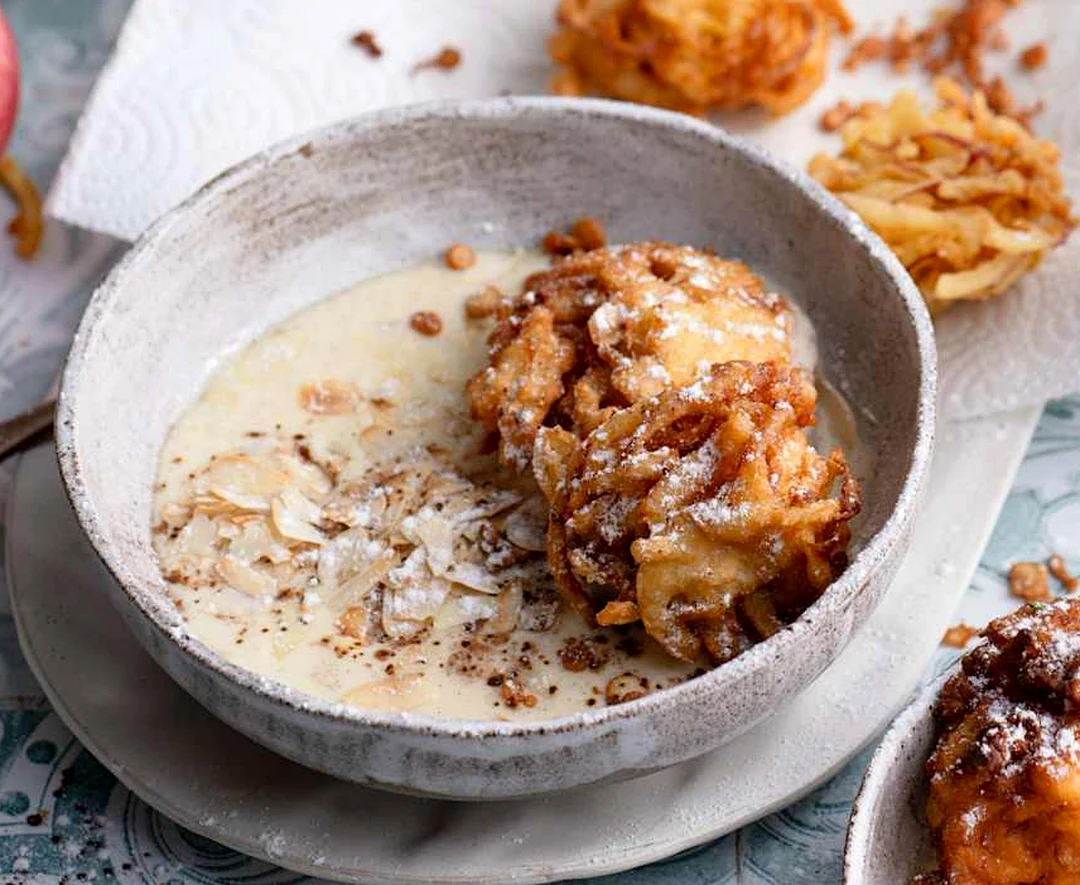
Every dish and every beer in Munich is more than just food and drink—it is part of a story, of history and culture. From bustling markets like Viktualienmarkt, where locals shop and mingle, to legendary beer halls like Hofbräuhaus, where friendships are forged and stories are told, cuisine is the bridge bringing travelers closer to the heart of Bavaria. It is a multi-sensory experience, a journey of discovery not only by eye, but also by taste, scent, and spirit, so every moment in Munich becomes memorable and meaningful.
After heroic chapters of history and grand Neo-Gothic architectural lines etched into memory, now let’s open the “Pocket Guide”—the most practical pointers to make your journey exploring Marienplatz and Neues Rathaus complete, safe, and unforgettable. Because a great trip doesn’t stop at sightseeing; it also relies on thoughtful preparation so every moment can be enjoyed at its best.
The best time to set foot in Marienplatz can be divided into two seasons, each offering its own beauty and unique experience. If you love lively energy, bright golden sunshine, and Bavaria’s signature clear blue sky, then May through September is the ideal window. These summer and early autumn months bring mild, pleasant weather—perfect for leisurely strolls around the square, enjoying cool draft beer at outdoor beer gardens, and watching Munich’s vibrant daily life. Especially during these months, the legendary Glockenspiel clock performance adds an extra 5:00 PM show alongside the two main shows at 11:00 AM and 12:00 PM, giving you another chance to watch the Schäfflertanz dance and colorful jousting tournament.
Conversely, if you crave a romantic, cozy setting steeped in European fairy-tale charm, then December—the Christmas season—is not to be missed. Marienplatz transforms into the center of Christkindlmarkt, one of Germany’s oldest and most famous Christmas markets, with roots going back to the 14th century. The rich scent of Glühwein mulled wine, Lebkuchen gingerbread, and grilled sausages fills the air, blending with twinkling lights, cozy little wooden stalls, and gentle Christmas music. It is a wonderful sensory experience that draws visitors into a fairytale world right in historic Munich.
As for costs and admission tickets, you will be glad to know that exploring Marienplatz, admiring the grand exterior of Neues Rathaus, and watching the Glockenspiel performance are completely free. This public space is open 24/7, always welcoming every visitor. However, for a top-tier panoramic experience, buying a ticket for the elevator up to the bell tower of Neues Rathaus is especially recommended. From 85 meters high, all of central Munich comes into view—with bright red rooftops, the two signature onion domes of Frauenkirche Cathedral, and on clear days, distant views all the way to the majestic Alps in the south. Ticket prices for this experience are quite reasonable, around 5 EUR to 6 EUR per adult, and you can easily buy them directly at the Tourist Information desk right on the ground floor of the town hall.
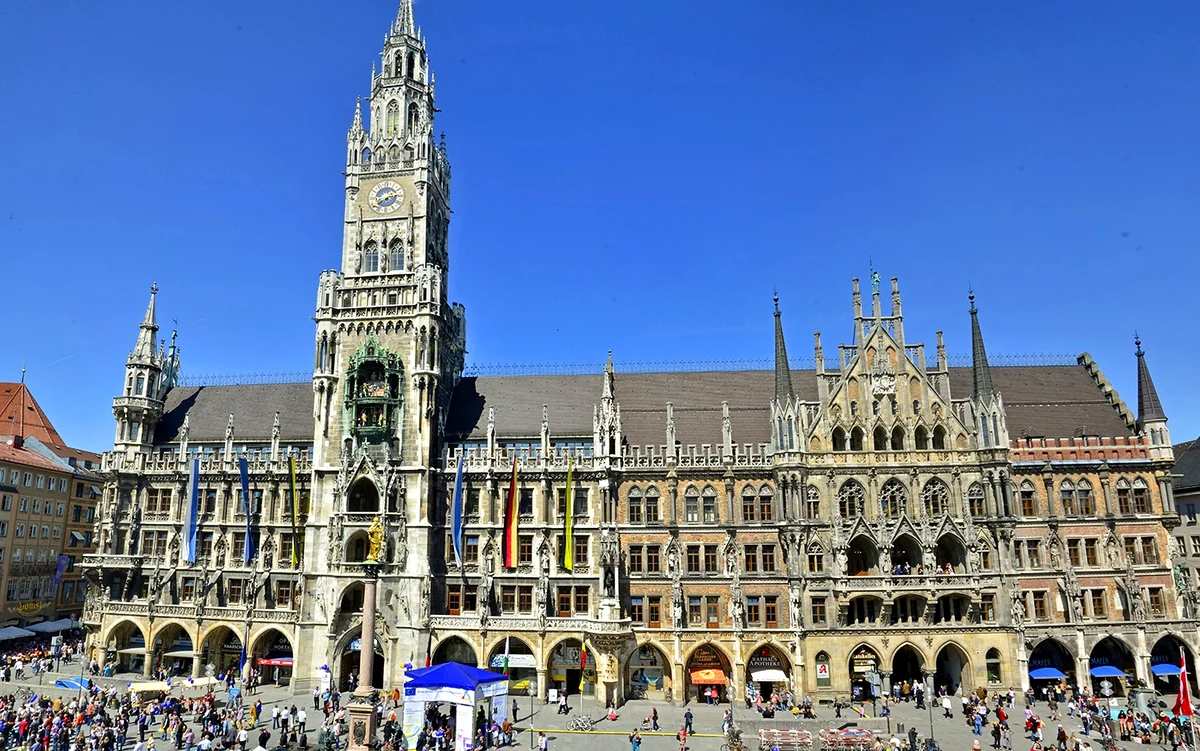
Safety and respectful conduct are essential for a smooth trip. Marienplatz, as a major tourist hub, is also a place where pickpocketing can be fairly sophisticated, especially during peak Glockenspiel showtimes when crowds press together and look upward. To keep personal belongings safe, wear backpacks in front of your chest, never keep wallets or phones in back pockets, and stay alert around groups approaching to ask for charity donations or fake surveys. VDS Travel’s professional tour guides will always remind and assist you throughout the journey.
Regarding dress codes, Marienplatz is an open public square, so you can dress comfortably while still keeping your attire neat and respectful. If you plan to combine your walk with visits to historic churches in the Old Town such as the Frauenkirche or St. Peter’s Church, keep in mind that covering your shoulders and knees is expected out of respect. Another signature Bavarian custom you can experience is table-sharing (Gemeinsames Sitzen) at traditional beer halls when seating gets busy. It is a welcoming gesture of openness and hospitality, so do not hesitate to share a table and strike up a conversation with interesting locals.
Finally, when it comes to opening hours, the Marienplatz square itself is accessible 24/7. However, the tourist information desk and the elevator up the Neues Rathaus tower typically operate from 10:00 AM to 7:00 PM on weekdays (Monday through Friday), and may close earlier on weekends or public holidays. Knowing these details ahead of time will help you plan your visit efficiently so you do not miss any memorable moments in the heart of Munich.
After wandering through every stone detail and hidden story around Marienplatz and the Neues Rathaus, we have pulled back the curtain of time together, admired sweeping Neo-Gothic grandeur, and felt Munich’s historical pulse. Yet a truly meaningful journey goes beyond sightseeing—it is about deep connection and experiences woven with knowledge and care. That is the core value VDS Travel brings to every trip, turning each destination from a simple pin on a map into a lasting impression in a traveler’s memory.
With its place as Munich’s historical and cultural heart, Marienplatz is always an essential stop and a vibrant highlight on VDS Travel’s upscale itineraries, especially journeys across Central and Eastern Europe where old-world charm meets modern life. VDS Travel knows that to truly feel a city’s character, travelers need more than a quick glance. That is why VDS Travel takes pride in its Expert Tour Leaders, who not only know the history inside and out, but are also gifted storytellers able to decode every intricate Neo-Gothic layer of the Neues Rathaus—from hundreds of sculptures depicting Bavarian kings, dukes, and saints to royal allusions that independent travelers or mass-market tours rarely uncover.
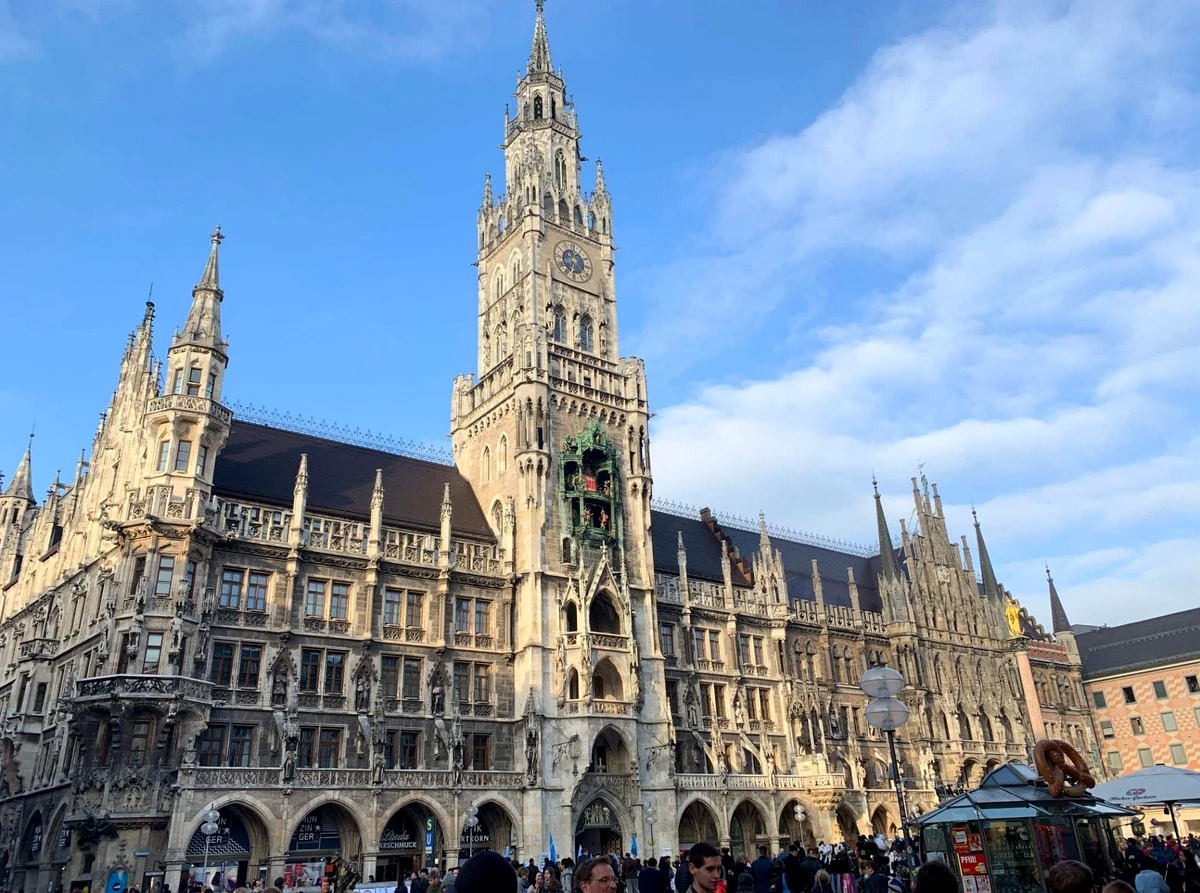
Picture standing beneath the 85-meter tower of the Neues Rathaus not just to watch the famed Glockenspiel performance, but to hear the romantic story of Duke Wilhelm V and Renata of Lorraine, or the deeper meaning behind the *Schäfflertanz*—the Coopers’ Dance celebrating Munich’s recovery from the 1517 plague. Every detail, from 43 chiming bells to 32 moving figures, is brought to life by VDS Travel’s guides, turning the moment into a vivid, emotionally resonant experience. VDS Travel does not merely bring you there; it helps you *feel* part of history.
VDS Travel always prioritizes exclusive experiences thoughtfully paced to make the most of every precious moment on the road. Itineraries are structured so you arrive in time for the Glockenspiel at 11:00 AM or 12:00 PM (and 5:00 PM during peak season from May to October), followed by plenty of free time to soak up the lively energy of Viktualienmarkt right next door. There you can savor creamy Bavarian *Obatzda* cheese spread, warm white *Weißwurst* sausages with a soft pretzel and sweet Händlmaier mustard, or sip a 1-liter *Maß* of Original Hofbräu at a traditional beer garden. Or, if you enjoy shopping, the pedestrian thoroughfare of Kaufingerstraße with high-end brands is just a few steps away waiting to be explored.
Even further, seamless logistics are an indispensable promise at VDS Travel. VDS Travel understands that comfort and safety are foundational to a fulfilling trip. Group coaches pull up to safe technical drop-off points and keep walking distances manageable—especially helpful for older travelers—while ensuring you still experience the finest highlights of the Altstadt Old Town. From smooth transfers to well-paced schedules, every detail is carefully calibrated for peace of mind so you can relax and enjoy the journey.
Marienplatz is more than a destination; it is an invitation and a doorway into a world of stories, flavors, and unforgettable moments. VDS Travel does not just sell tours—it crafts memories and timeless journeys where every step brings a discovery and every view sparks emotion. Let VDS Travel accompany you as you explore Europe’s enduring beauty, where past and present blend into a remarkable harmony.
If you are ready to write your own travel story and make Marienplatz along with wonders across Germany, Austria, Hungary, and the Czech Republic part of your life’s chronicle, reach out to VDS Travel. Let VDS Travel turn your dream of exploration into reality with refined, elevated, and inspiring itineraries. Full details on all-inclusive tour packages to these remarkable destinations are waiting for you at All-Inclusive Tour Packages. Reserve your spot today to start your journey with VDS Travel, where every trip is a masterpiece!