Situated at the heart of China’s prosperous northeast in Liaoning Province, Shenyang once served as the cradle of the northern feudal dynasty while standing as a powerhouse of heavy industry across decades of modernization. Amid that sweeping historical current, the rise of Shenyang Lotte World (Chinese: 沈阳乐天世界) in Huanggu District represents far more than a large-scale commercial entertainment complex—it stands as living testimony to cross-border economic ambition during a golden era of East Asian relations. The project bears the unmistakable imprint of Shin Kyuk-ho, legendary founder of the Lotte Group, who spent his life building iconic retail and theme park empires from Seoul to Tokyo before turning his visionary gaze toward the vast Chinese mainland market.
The vision took root and broke ground when Sino-South Korean economic ties reached a brilliant peak under the leadership of then-President Lee Myung-bak on the Korean Peninsula alongside President Hu Jintao—and subsequently President Xi Jinping—in Zhongnanhai. Backed by a colossal investment commitment exceeding three billion US dollars, Shenyang Lotte World was positioned as an upgraded, even grander counterpart to the famed original Lotte World in Seoul’s Jamsil district in the Land of the Morning Calm. The development was designed not merely to encompass a hybrid indoor-and-outdoor theme park crowned with soaring fairy-tale castle spires, but also to integrate luxury shopping malls, multiplex cinemas, five-star hotels, Grade-A office towers, and upscale residential high-rises across hundreds of thousands of square meters of floor space in bustling Huanggu District.
Yet the wheel of history rarely turns along the smooth path drawn on architectural blueprints. Just as construction was surging ahead and the shopping mall phase had opened its doors to bustling crowds, an unexpected geopolitical shockwave struck at a pivotal moment in the decade. Seoul’s decision to allow deployment of the Terminal High Altitude Area Defense (THAAD) missile system on golf-course land owned by Lotte in Seongju ignited a fierce diplomatic crisis between the two nations. Intense backlash across the mainland swiftly placed the South Korean conglomerate at the center of economic retaliation and stringent regulatory inspections from local authorities. The multi-billion-dollar theme park—envisioned as the heart and soul of the entire complex—was forced into indefinite suspension, leaving massive steel frames standing silent beneath Liaoning’s winter skies like a poignant pause in mid-symphony.
Following years of stagnation brought on by political headwinds, a comprehensive restructuring beginning late in the decade ushered in an entirely new chapter for Shenyang Lotte World. Unable to sustain the financial burden and local isolation, Lotte gradually scaled back its presence, negotiating ownership transfers and repositioning the entire complex under domestic Chinese real estate developers and investment groups. This transition closed a proud chapter of Shin Kyuk-ho’s overseas ambition while transforming the landmark into an urban space infused with the homegrown identity of Shenyang’s government and residents. Today, walking down the broad avenues of Huanggu District, historically minded travelers can still discern the silhouette of an unfinished marvel—where every brick and arched roof tells a story of collision, convergence, and shifting power in 21st-century economics and politics.
Viewed through traditional East Asian geomancy, Shenyang has long been celebrated as a “land of heavenly abundance” across the vast northeast, where the Later Jin dynasty forged its illustrious rise before moving its capital to Beijing. Standing proudly at the center of Huanggu District, Shenyang Lotte World draws upon the rich vitality of the fertile Liao River Plain, backed in the distance by the rugged majesty of the Changbai Mountains and looking out openly toward the Bohai Sea. From antiquity to the present, Huanggu has been renowned as a convergence point of auspicious energy, blending the stately dignity of early Manchu Shengjing with the surging economic pulse of a modern metropolis. The harmony between level, grounded terrain and abundant waterways creates enduring spatial balance, underwriting the continuous vitality of an international-scale leisure and commercial destination.
In contemporary urban planning, Shenyang Lotte World serves as a central anchor of Huanggu District, enjoying one of the finest transit ecosystems in the historic northeast. A standout feature of its spatial design is the seamless integration of its monumental architecture with Line 2 of the Shenyang Metro. This vital underground artery feeds directly into the heart of the complex like an ocean current carrying steady streams of visitors from every direction without disrupting surface streetscapes. The surrounding terrain was carefully leveled to create an expansive footprint that maximizes open sightlines, turning entertainment, hospitality, and retail zones into a self-contained oasis of prosperity that remains effortlessly accessible through cutting-edge subterranean infrastructure.
The complex’s geographic appeal is amplified further by its proximity to Shenyang North Railway Station—the strategic rail hub for all of Northeast China. Via the Beijing–Harbin High-Speed Railway operating at design speeds of 300 to 350 km/h, vast distances virtually vanish: travel from Beijing to Shenyang takes just over two hours, while reaching the breezy port city of Dalian requires roughly an hour and a half. Paired with seamless links from Shenyang Taoxian International Airport via radial expressways, this multimodal network uniting air, rail, and road makes the complex a vibrant stop along the famed Beijing–Shenyang–Dalian–Harbin golden tourism circuit.
Beyond exceptional connectivity, this entertainment complex sits immersed in a rich cultural and historical landscape framed by UNESCO World Heritage sites. Just a short ride away stands the solemn Mukden Palace (Shenyang Imperial Palace)—the royal palace outside Beijing’s Forbidden City showcasing a distinctive fusion of Han, Manchu, and Mongolian architecture built under Nurhaci and Hong Taiji—alongside the tranquil Fuling and Zhaoling imperial tombs nestled beneath thousand-year-old pines and cypresses. Liaodong’s four distinct seasons also bestow captivating scenery upon the area, shifting from lush summer willow greens to sweeping blankets of winter snow when northern winds arrive, creating a dramatic backdrop that highlights the grandeur of Lotte World.
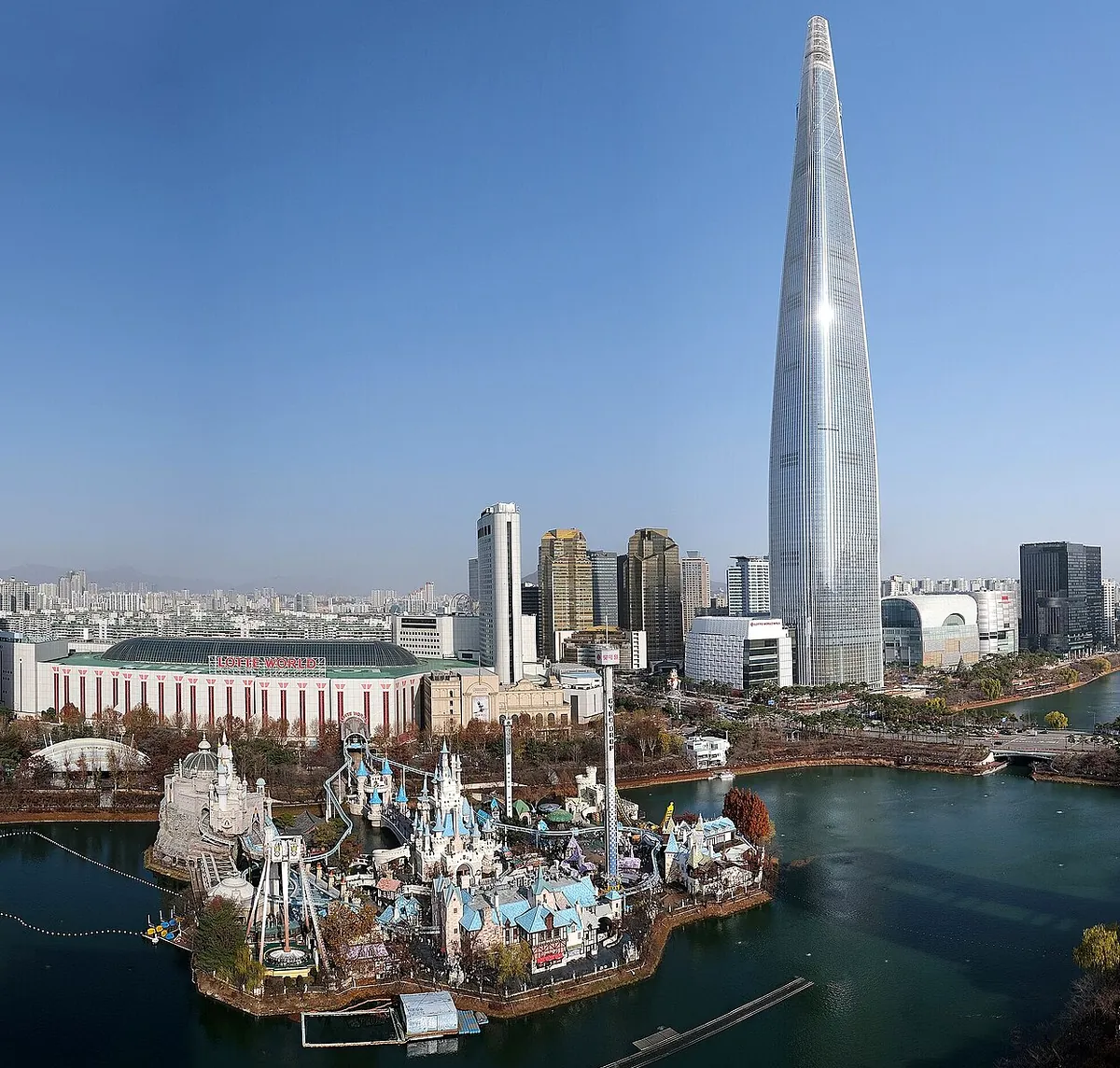
From an urban-design perspective, Shenyang Lotte World (沈阳乐天世界) represents a bold synthesis of futuristic South Korean metropolitan aesthetics and northern Chinese monumentalism. Rising prominently across the Liaoning Plain—birthplace of the Qing dynasty and home to historic Shengjing—this megaproject stands as a striking architectural emblem of the new century. Rather than functioning as a standalone amusement park, it was conceived as a complete multi-functional mixed-use complex backed by an estimated investment exceeding three trillion won, or nearly three billion US dollars. Across a massive gross floor area surpassing one million square meters, the entire development operates as a self-sufficient urban oasis seamlessly integrating retail shopping centers, upscale hotels, office towers, and a central theme park core.
The exterior architectural language creates a crisp dialogue between long-span prestressed reinforced concrete structures and sleek facades clad entirely in high-performance, heat-insulating reflective tempered glass. Slender skyscrapers rise cleanly into the Shenyang sky, mirroring the shifting drama of northern clouds from dawn to dusk. Multi-layered reflective curtain walls serve far more than modern visual appeal; they provide an essential engineering solution that deflects intense summer solar radiation while minimizing indoor heat loss during freezing winters. Sleek metallic trim lines running vertically up the towers bear the minimalist yet razor-sharp signature of South Korean architectural firms, forming an ensemble that feels both commanding and harmonious within Northeast Asia’s vast urban fabric.
The crowning achievement of the entire development lies in the engineering feat of its Indoor Theme Park—a monumental showcase of artificial microclimate control. To overcome Shenyang’s famously harsh winters, when biting northern winds routinely plunge temperatures below -20°C, architects spanned the entire entertainment zone with an immense, ultra-heavy-duty steel dome. Engineered through complex stress-distribution algorithms, an intricate lattice of load-bearing alloy trusses supports tens of thousands of square meters of specialized heat-resistant skylight glazing. This colossal dome functions as a resilient ecological shield, flooding every corner with natural daylight while completely sealing off the interior atmosphere from blizzards and sub-zero chills—maintaining mild spring-like comfort all year round.
Stepping across the threshold of the grand concourse reveals a breathtaking multi-tiered visual realm where contemporary structural engineering meets European fairy-tale motifs. The interior floor plan is organized into concentric stepped levels that guide visitor flow effortlessly across distinct experiential zones. Extraordinary ceiling clearance enabled engineers to weave thrilling roller-coaster tracks high beneath the structural dome before plunging down into artificial canyons calibrated down to the millimeter of vibration. Complex mechanical and electrical systems—from fresh-air circulation and warm-air pressurization units to high-output theatrical lighting rigs—are cleverly concealed behind castle ramparts and sculpted cliff faces. This seamless union of billion-dollar scale and climate-adaptive design makes the interior an awe-inspiring realm impervious to the elements outside.
As sunset settles over historic Huanggu—a district steeped in memories of the Later Jin’s rise and old Fengtian’s dramatic transformation—the Lotte Town urban complex and Shenyang Lotte World shed their daytime formality to don dazzling evening attire. The transition from day to night unfolds like an enchanting overture where millennia-old Liaodong heritage meets contemporary entertainment architecture. From afar, towering commercial spires serve as nocturnal beacons clad in multi-layered reflective glass and cutting-edge matrix LED contour lighting. The moment tens of thousands of lights ignite in unison, the facades transform into a colossal canvas reflecting vibrant color spectra down onto Qishan Road, turning the district into a mesmerizing labyrinth of light.
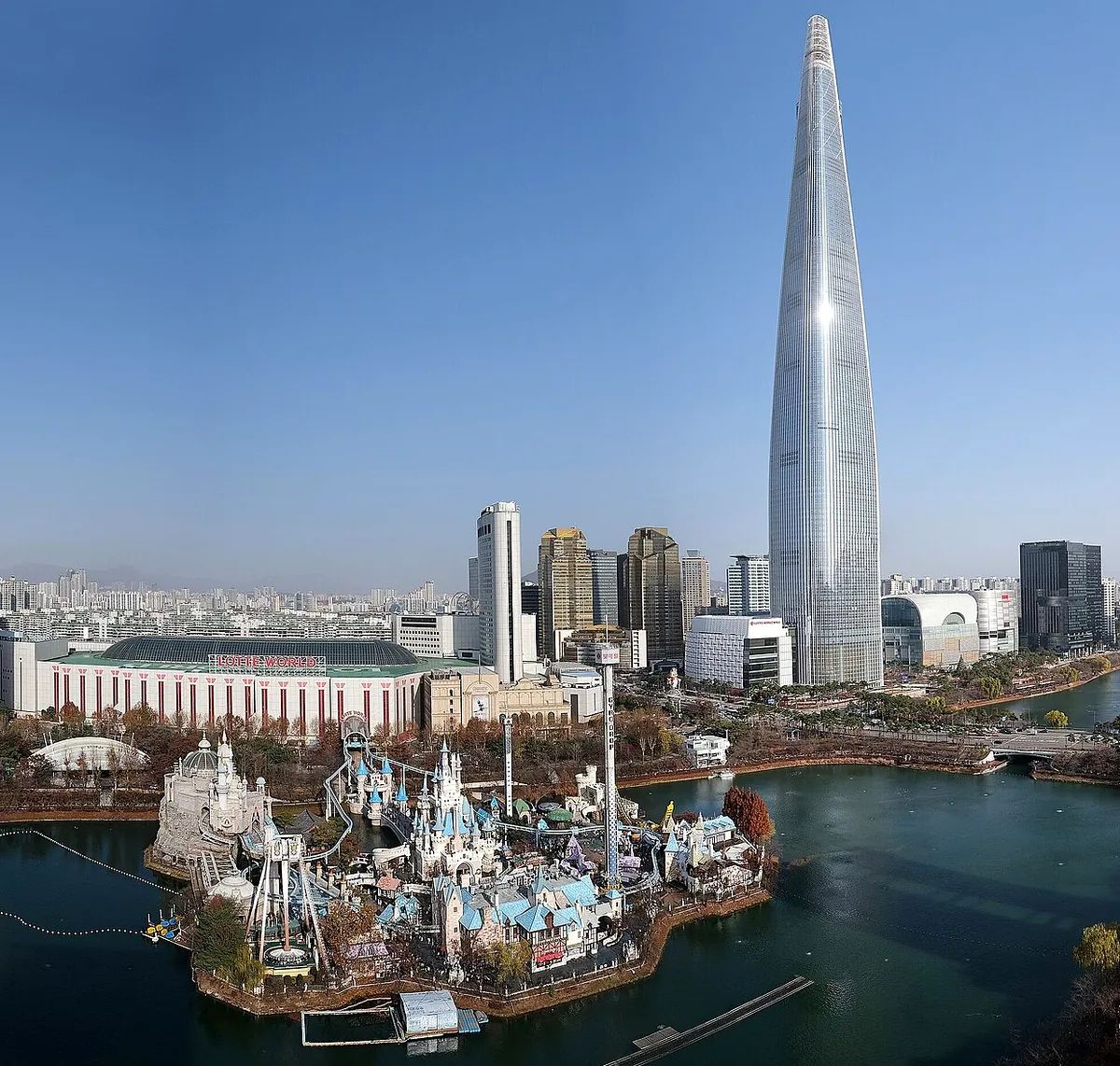
Inside one of the region’s premier indoor entertainment venues, evening energy is elevated by visual spectacles and live performances calibrated to exact optical angles. Regardless of freezing northeastern winters or dry winds sweeping across the plains, the enclosed space beneath the massive glass dome sustains a perpetual festival atmosphere. Three-dimensional projection mapping paired with surround-sound acoustics brings fantastical stories to life across sculpted rock faces and fairy-tale castles. Luminous night parades glide along winding walkways as dancers clad in costumes studded with thousands of optical lights move in choreographed harmony—creating a shimmering river of radiance like the Milky Way descending to earth. Here, lighting artistry goes beyond technical display to stir genuine wonder, blurring the boundary between everyday reality and imagination.
Evening entertainment throughout the mixed-use complex soon flows outward into the authentic local nightlife of Shenyang’s residents as night deepens. After hours of visual excitement, visitors naturally gravitate toward dining and retail zones woven throughout the complex to savor genuine Dongbei flavors. Charcoal smoke begins rising from sizzling grills fragrant with cumin-spiced lamb skewers, mingling with the rich aroma of famed Goubangzi smoked chicken—glazed golden-brown and infused with herbal recipes dating back to the Qing dynasty. The clinking of ice-cold snow beer glasses blends with the hearty laughter of warm, straightforward Liaoning locals, painting a vivid portrait of everyday life.
Cultural crossroads shine just as brightly in bowls of chewy Xita cold noodles bathed in crisp, sweet-and-tangy broth that balances the richness of smoky grilled meats. Thanks to this vibrant interplay, nights in Huanggu District never grow cold—living on as a spirited symphony uniting Lotte Town’s sleek technological glow with the generous, welcoming soul of a historic northern city that keeps travelers enchanted late into the evening.
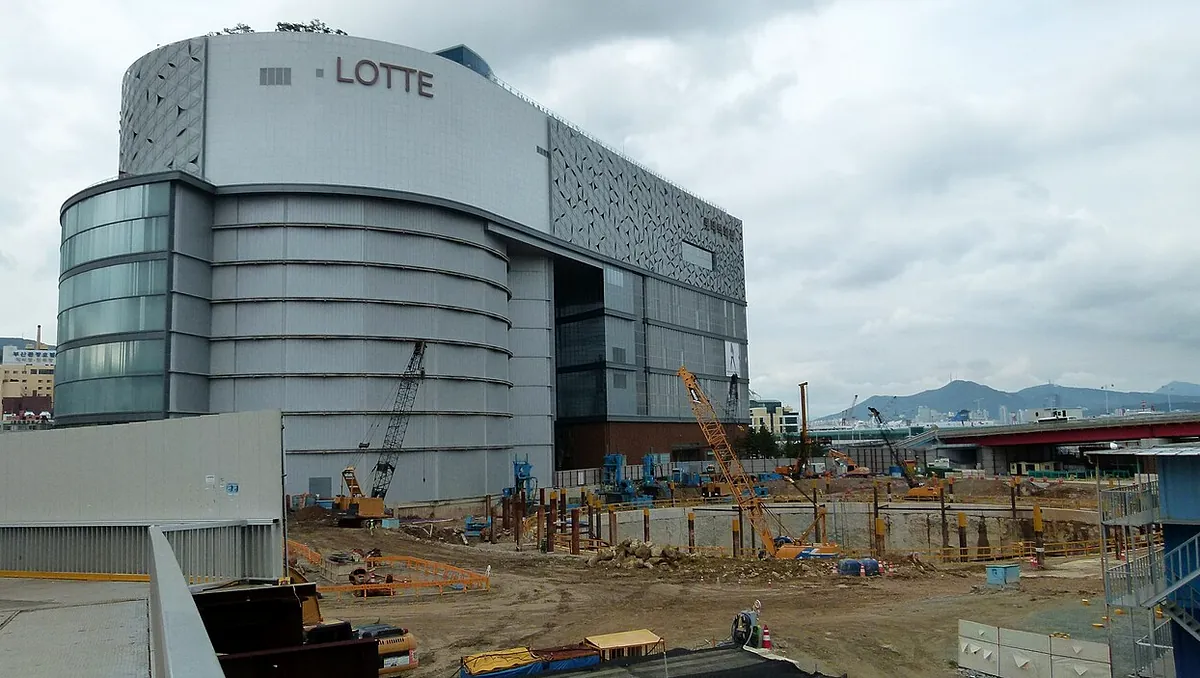
Set at the heart of China’s northeastern “White Mountain and Black Water” region, Shenyang’s culinary tradition offers far more than a welcome pause after exploring Lotte World—it unfolds like a living chronicle of cultural fusion linking Manchu imperial courts, Han migration traditions from the historic “Chuang Guandong” era, and the bold flavors of the ethnic Korean community. Harsh northern winters blanketed in snow shaped a hearty, warming cuisine built around energy retention and balancing cold weather. Along bustling boulevards and tucked inside historic lanes around Huanggu and Tiexi districts, travelers are effortlessly drawn by charcoal smoke fragrant with herbs, roasted meats, and traditional grain spirits.
Among old Fengtian’s most celebrated heirloom delicacies, Laobian Dumplings hold undisputed pride of place with nearly two centuries of unbroken history. Founded in 1829—the eighth year of Emperor Daoguang’s reign during the Qing dynasty—master chef Bian Yougui pioneered a signature filling technique known as bianxian, lightly stir-frying minced meat with rich marrow-bone broth and aromatic spices before wrapping rather than using raw meat. Steamed in pinewood baskets or boiled in bubbling water, silky, paper-thin dough wrappers encase a deeply savory filling so tender it melts on the tongue, releasing a burst of rich, fragrant broth. Across generations of change in the former capital, fifth- and sixth-generation inheritors have preserved this craft intact, turning every steaming platter into a proud intangible cultural heritage of China’s snow country.
Closely tied to the Manchu Qing dynasty’s golden era in Shenyang is the traditional Manchu copper hotpot, a royal court specialty embraced wholeheartedly in everyday life. At the center of the table stands a gleaming copper pot heated by glowing charcoal, its tall chimney radiating comforting warmth against the biting chill outside. Rather than relying on fiery chili heat, the broth is simmered cleanly from marrow bones, goji berries, red dates, and dried sea cucumber for a refined, deeply savory sweetness. The soul of the pot lies in fine julienned Dongbei fermented napa cabbage, simmered alongside paper-thin slices of Mongolian lamb and Manchu pork belly. The crisp, refreshing tang of pickled cabbage cuts effortlessly through rich meat, paired with dipping sauces of sesame paste, fermented red bean curd, chili oil, and pickled garlic for a feast at once regal and rustic.
Just a short ride from Lotte World, Shenyang’s food scene takes on vibrant character in the Xita (West Tower) district, epicentre of Shenyang-style barbecue deeply influenced by Korean culinary heritage. Mesh grills set over glowing peat-charcoal braziers crackle continuously as marbled beef strips sizzle over the heat. Meats are meticulously marinated using family recipes combining pureed Asian pear, rice wine, pungent minced garlic, and nutty toasted sesame seeds. Seared lightly on the outside yet juicy within, each slice is wrapped in crisp green perilla leaves with raw garlic, green chili, and a dollop of savory-spicy soybean paste—awakening every sense in a single bite.
Local flavor lingers memorably in Northeastern Chicken Stewed with Wild Mushrooms, a pinnacle of rustic home-style cooking. The dish brings together firm, free-range mountain chicken and wild mushrooms hand-foraged from the vast primeval forests of the Changbai Mountains. Simmered slowly for hours inside thick earthenware pots, earthy forest mushroom aromas infuse every golden piece of chicken and cling to chewy, translucent sweet-potato glass noodles. Every rich spoonful warms the spirit while capturing the genuine, open-hearted hospitality of northern China inside modern Shenyang.
Shenyang’s climate blends coastal and northeastern continental characteristics with four distinct seasons, shaping markedly different experiences throughout the year. May through October is widely considered the best window to visit, when mild temperatures and crisp golden sunshine sweep across the avenues of Huanggu District—ideal for leisurely strolls through open-air heritage landmarks before stepping into the vibrant spectacle of Lotte World. Conversely, travelers captivated by northern winter magic will find December through February transformed into a sparkling wonderland of ice and snow. In sub-zero temperatures, pairing outdoor skiing on suburban slopes with entry into Lotte World’s warm, climate-controlled glass-domed kingdom creates an unforgettable seasonal contrast.
Reaching this entertainment complex in the historic heart of Shengjing is effortless thanks to Shenyang’s modern, reliable public transit network. From Shenyang Taoxian International Airport, express airport buses and light-rail connections link rapidly to the city center. Even faster and more convenient is the Shenyang Metro: Line 2 carries passengers straight to Qishan Road Station or Shenyang North Station, just a short walk from the complex gates. For families traveling with heavy luggage, licensed city taxis and local ride-hailing apps operate readily with transparent metered fares, ensuring smooth, stress-free transfers between heritage landmarks and entertainment zones.
Visiting Liaoning’s provincial capital is easier than ever thanks to flexible, welcoming border-transit policies. A major highlight for international travelers is the 144-hour Visa-Free Transit policy available at key Liaoning ports of entry, allowing eligible travelers holding confirmed onward tickets to a third country or region to enter and stay up to six full days within the province without applying for a visa in advance. That timeframe provides ample room to explore everything from Mukden Palace and the Qing imperial tombs at Zhaoling to Lotte World’s themed zones. Alternatively, Approved Destination Status (ADS) group visas arranged through reputable tour operators streamline entry procedures without cumbersome financial paperwork.
A rewarding journey also calls for staying alert to common commercial tourism traps. Hard-won travel experience shows the value of avoiding suspiciously cheap package tours that subsidize low upfront prices by herding travelers for hours through overpriced jade, silk, or herbal shops. Choosing transparent, strictly no-shopping itineraries protects every precious hour of your trip—leaving you free to admire sweeping domed architecture, enjoy thrilling rides, and savor authentic local specialties like famous Dongbei dumplings and sizzling barbecue without forced retail detours.
To turn your exploration of this historic yet thoroughly modern northern metropolis into an effortless, memorable getaway, traveling with a trusted operator is always a smart move. You can explore detailed sightseeing itineraries, quality hotel accommodations, and curated entertainment experiences through an all-inclusive tour package so you can set off with complete peace of mind.