Viewed through the lens of history and cultural geography, Wulingyuan (武陵源) is far more than a towering geological wonder rising amid the skies of Hunan—it is a living stone chronicle recording the rise and fall of northern imperial dynasties. The earliest administrative trace of this rugged mountain realm dates back to 221 BC, when Qin Shi Huang unified the Six States and incorporated these remote peaks into Qianzhong Commandery. By the Western Han Dynasty, under Emperor Gaozu (Liu Bang), territorial boundaries were reorganized to formally establish Wuling Commandery. This secluded highland of abyssal gorges and thousands of mist-veiled sandstone pillars inspired Eastern Jin poet-recluse Tao Yuanming to pen his immortal masterpiece *”Peach Blossom Spring”*. In the imagination of classical literati, the name Wuling transcended mere administrative geography to become an eternal symbol of a tranquil hidden paradise far removed from the strife and turmoil of the mortal world.
Across the Tang and Song dynasties, this rugged borderland bore historic names such as Qingchi and Guzhou, serving as a natural frontier outpost separating Central Plains civilization from indigenous mountain tribes inhabiting deep, untamed forests. It also became the stage for dramatic social upheavals tied to ethnic minority heritage. During the transition between the Southern Song and Yuan dynasties, the charismatic Tujia chieftain and general Xiang Dakun rallied the Tujia people in armed rebellion against harsh feudal rule and crushing taxation. Proclaiming himself “King Xiang, Son of Heaven,” Xiang Dakun established an impregnable stronghold amid sheer vertical cliffs to protect local villagers. Though the uprising was ultimately crushed in tragedy, the indomitable spirit of the Tujia leader remained etched forever into the soul of the mountains—leading generations thereafter to rename the majestic range where his forces stood Tianzi Mountain (Son of Heaven Mountain), passing down his legend through the ages.
During the Ming and Qing dynasties, the central court governed the region through the hereditary Tusi chieftaincy system. Wulingyuan’s isolated geography was partitioned and administered directly by prominent Tusi clans of the Tujia, Miao, and Bai peoples. This semi-autonomous governance acted as a protective shield against large-scale external assimilation, preserving animist beliefs, mountain spirit rituals, and traditional daily life centered around stilted Diaojiaolou wooden houses clinging to steep slopes. Stone fortresses and Tusi watchposts guarded every narrow mountain pass leading into the valleys, keeping Wulingyuan a secluded, enigmatic world largely beyond imperial reach for centuries.
The march of time carried this mysterious highland into the modern era through milestones of global stature while safeguarding its primeval beauty intact. Beginning in 1982, Zhangjiajie National Forest Park was officially established across dense old-growth woodland, earning the distinction of becoming China’s very first national forest park. In 1988, broader natural and administrative boundaries were designated to form the Wulingyuan Scenic and Historic Interest Area. The surreal beauty of more than three thousand quartz-sandstone pillars and its ancient ecosystem propelled the region onto the world stage when UNESCO inscribed Wulingyuan as a World Natural Heritage Site in 1992. Its unmatched geological significance was reaffirmed in 2004 with induction into the Global Geoparks Network—completing an epic transformation from a remote, forbidding mountain wilderness into an irreplaceable natural treasure of humanity.
Nestled in the rugged mountains of northwestern Hunan Province, straddling the administrative boundaries of Wulingyuan District and Cili County, this sacred landscape lies between 29°16′ and 29°24′ N latitude and 110°22′ and 110°41′ E longitude. Through traditional East Asian geomancy, Wulingyuan enjoys an ideal “water-gathering, wind-sheltering” configuration, where the great dragon vein of the Wuling Mountain Range coils gracefully before settling into a dramatic basin. Encircling outer ridges form a natural screen blocking harsh northern winds, while a dense web of valleys retains rich moisture from mountain streams—generating year-round seas of mist embracing the stone spires and cultivating an atmosphere of serene seclusion far from worldly clamor.
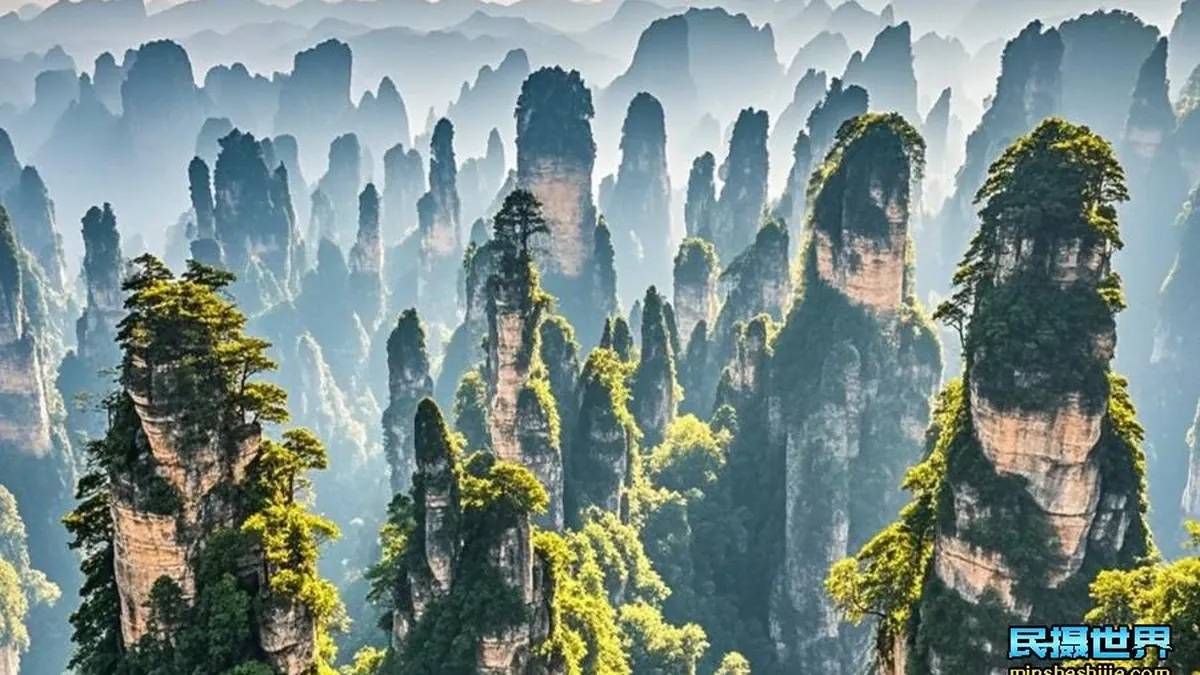
Wulingyuan’s geomorphological map represents an unprecedented geological marvel written beginning roughly 380 million years ago during the Devonian period of the Paleozoic era, when this entire region lay beneath a deep sea accumulating thick layers of pure quartz sand. Powerful tectonic uplift during the Yanshanian orogeny in the Jurassic and Cretaceous periods thrust the ancient seabed skyward into a continental plateau fractured by vertical joint networks. Over millions of years of relentless groundwater seepage, surface runoff, and physical weathering, the colossal quartz-sandstone massif was carved apart into a labyrinth of more than 3,000 towering pillars rising 200 to 400 meters high. Composed of over 75 percent quartz mineral content, these vertical spires possess extraordinary mechanical durability to withstand millennia of storms—forming the planet’s only quartz-sandstone pillar forest of its kind.
The ecological heart of the scenic complex unfolds within Zhangjiajie National Forest Park, where dramatic elevation tiers create enchanting scenic routes. At its center rises Huangshizhai (Yellow Stone Village), a vast flat-topped mesa soaring over one thousand meters above sea level like an open-air sky deck commanding panoramic vistas across the stone forest. Winding along the canyon floor beneath this natural citadel is Golden Whip Stream (Jinbianxi), a crystal-clear mountain brook meandering over seven kilometers between sheer vertical cliffs—mirroring Golden Whip Rock thrusting straight skyward like a gilded whip in a tranquil symphony of emerald water and ancient stone.
Venturing deeper into the Yuanjiajie sector, the terrain plunges into dizzying abysses punctuated by solitary stone towers floating amid drifting mist. Most iconic among them is Qiankun Pillar—also known as the Southern Sky Column—a towering spire hundreds of meters high with a slender base and a broader crown topped with gnarled pines, which inspired the floating Hallelujah Mountains in contemporary science-fiction cinema. Nearby, nature carved through a sandstone ridge to form the First Bridge Under Heaven, a natural stone arch spanning two peaks hundreds of meters above a yawning chasm. Complementing nature’s rugged drama is the 326-meter glass Bailong Elevator bolted directly onto a sheer cliff face, whisking visitors skyward past skyscraper heights in under two minutes into a realm above the clouds.
Wulingyuan’s scenic choreography reaches its aesthetic summit at Tianzi Mountain, commanding the highest elevations with clusters of slender spires resembling a forest of calligraphy brushes dipped into the sky. Its greatest magic lies in the dance of mountain clouds: after morning mist or summer rain, billowing seas of cloud surge up from valley depths, submerging mountain bases until only jagged peaks emerge like countless islands across an endless white ocean. This scenic arc culminates dramatically at Zhangjiajie Grand Canyon, where a 430-meter glass-bottomed bridge suspended 300 meters above the gorge links opposing cliffs—uniting primordial geology, protective geomancy, and bold modern engineering into a landscape at once untamed, mystical, and sublime.
Tucked among Wulingyuan’s towering sandstone spires, the vernacular architecture of the Tujia people opens a remarkable dialogue between human ingenuity and rugged karst terrain. The crowning achievement of traditional habitation here is the stilted Diaojiaolou house (吊脚楼), a masterpiece of timber joinery shaped over centuries of life deep in the mountains. Backing against steep rock faces or overhanging winding streams, Diaojiaolou structures adapt directly to natural slopes to minimize earthmoving and preserve fragile geology. Supported by sturdy hardwood stilts joined entirely with precision mortise-and-tenon carpentry without a single iron nail, cantilevered upper floors project gracefully into midair beneath mossy clay yin-yang roof tiles or thick palm-bark thatch designed to insulate against heat, shed torrential storms, and dispel the damp mountain mists of Xiangxi.
The interior layout of each Diaojiaolou reflects Tujia cosmology and close-knit family traditions. Levels are organized by clear function: the airy ground level shelters farm tools and livestock; the warm main living floor centers on an ever-burning hearth symbolizing continuity and kinship; and the upper loft stores dry grain reserves. Wide wrap-around verandas edged with intricate wave-and-cloud wooden balustrades provide bright workspaces for Tujia women weaving brocade while serving as a breezy threshold connecting home and nature. From afar, gently curving gray-tiled roofs blend seamlessly into emerald forest slopes as though grown organically from the rock rather than imposed upon the valley.
Balancing rustic indigenous charm is monumental modern infrastructure that positions Wulingyuan at the forefront of engineering in harmony with nature. Its most celebrated mechanical marvel is the Bailong Elevator, holding the Guinness World Record at 326 meters tall along a vertical sandstone cliff in Yuanjiajie. Combining a 154-meter shaft bored straight through solid quartz rock with a 172-meter exposed steel-and-glass tower, Bailong lifts passengers from valley floor to cloud-level ridge in under two minutes—relieving strenuous multi-hour mountain climbs while minimizing human impact on fragile old-growth woodland.
Aerial connectivity across Wulingyuan is further elevated by cloud-piercing cableways at Tianzi Mountain and Huangshizhai, spanning deep chasms over thousands of meters to reveal sweeping panoramas of the stone pillar forest. Not far away, the Zhangjiajie Grand Canyon Glass Bridge bridges opposing cliff rims with multi-layered structural glass panels, standing as an open-air architectural triumph pushing the boundaries of global bridge engineering. Supporting these landmark structures is smart destination management—from real-time crowd-monitoring sensors safeguarding heritage sites and zero-emission electric shuttle buses linking transfer hubs to international multilingual signage—showcasing cutting-edge innovation while preserving the timeless serenity of Peach Blossom Spring.
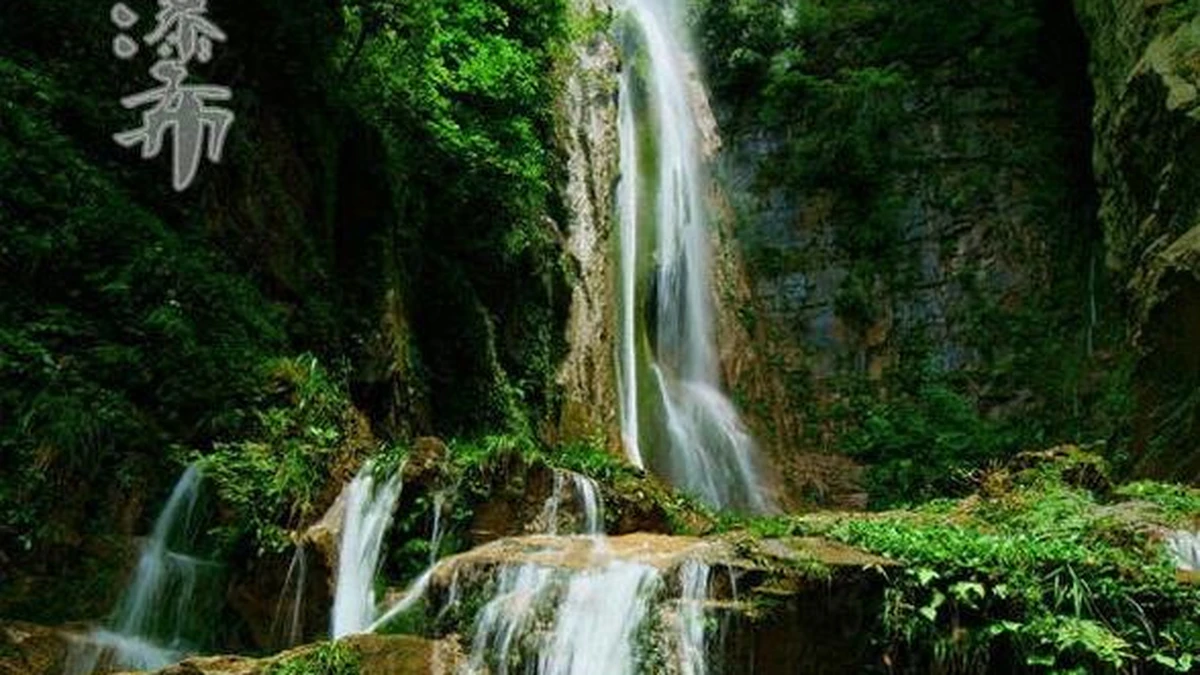
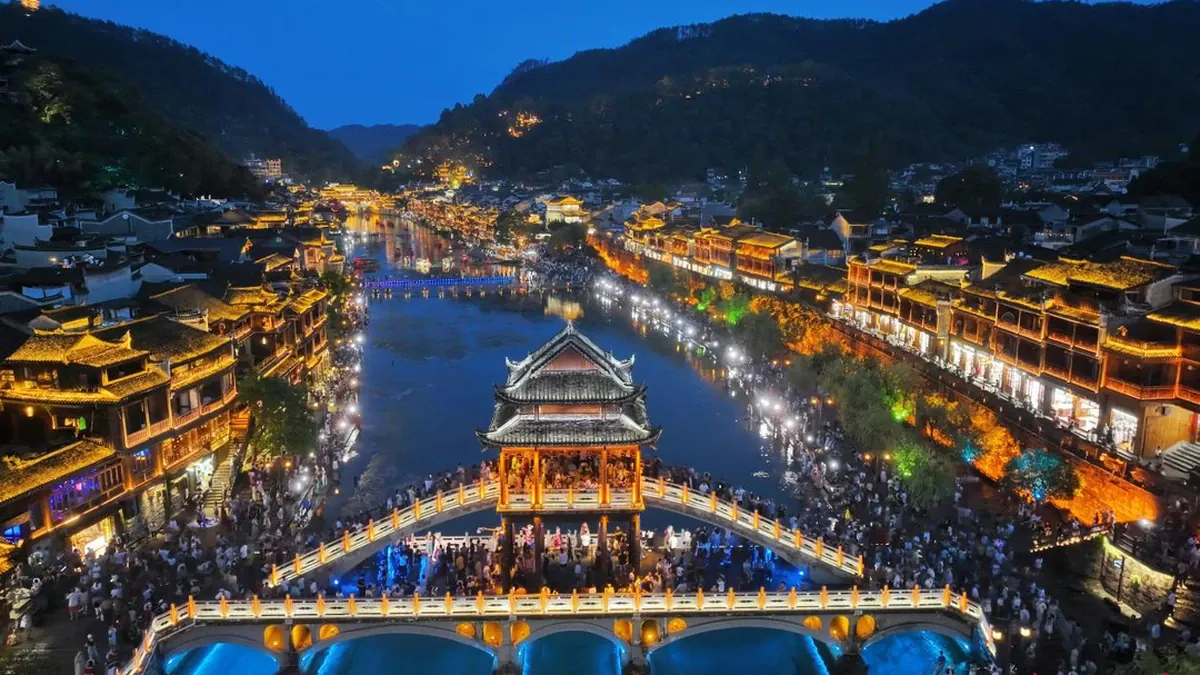
As crimson twilight fades behind soaring sandstone pillars, Suoxiyu Valley nestled at the foot of Wulingyuan sheds its daytime stillness to don a dazzling evening mantle of light and sound. The mythical realm of the Tujia people does not sleep at sunset; instead, it awakens through the fusion of contemporary stagecraft and millennia-old intangible cultural heritage. Nightfall transforms million-year-old sedimentary cliffs into colossal natural backdrops for grand open-air theatrical spectacles, carrying travelers across the threshold between waking reality and the mystical dreamscape of Xiangxi’s mountains.
The pinnacle of nocturnal entertainment shines in large-scale live productions such as *”Tianmen Fairy Fox”* and the acclaimed folk spectacular *”Charming Xiangxi.”* Spanning thousands of square meters of open-air stage equipped with multi-dimensional laser projection, 3D water curtains, and concert-grade surround sound, these shows turn drifting mountain mist into luminous ribbons of light. Epics of indigenous mountain peoples unfold vividly—from primeval Maogusi dances in woven grass garments reenacting ancestral land clearing and the deeply moving Tujia “Crying Marriage” ritual before a bride’s wedding day, to eerie legends of Xiangxi’s mysterious corpse-walking lore amid deep forests. Far more than audiovisual spectacle, each scene honors deeply rooted folk traditions woven into the cultural soul of highland Hunan.
Leaving the illuminated amphitheater, visitors step into the lively pulse of local heritage streets, centered on Xibu Pedestrian Street stretching along a crystal-clear river. Under carefully calibrated architectural lighting, clusters of fir-wood Diaojiaolou stilted houses glow enchantingly with layered upturned eaves mirrored in shimmering water. Thousands of crimson silk lanterns hanging along wooden balustrades cast warm halos through cool mountain mist, conjuring a half-real, half-ethereal fairyland where smooth time-worn flagstones lead walkers back into romantic antiquity far removed from modern urban hurry.
An evening in Wulingyuan reaches full sensory delight only when accompanied by hearty mountain cuisine infused with woodsmoke warmth. Amid lilting reed-pipe melodies and crisp bronze drumbeats played by Tujia performers in silver-threaded brocade attire, mouthwatering aromas rising from bubbling Sanxiaguo clay hotpots over glowing charcoal beckon travelers indoors. This signature stew combines aged cured pork belly, tender beef tripe, and dried tofu simmered in fiery, numbing Xiangxi chili broth, paired with fragrant roasted Baogu corn liquor. Warm amber light from charcoal braziers, lively laughter over shared cups, and the gentle chime of Miao silver ornaments weave an unforgettable nocturnal harmony keeping the mountain spirit warm amid drifting clouds.
Tucked among sky-piercing sandstone columns and year-round drifting mists, Wulingyuan’s culinary identity distills centuries of survival wisdom shared by the Tujia and Miao peoples. Cool, damp highland weather shaped a bold gastronomic philosophy defined by three signature pillars: fiery chili heat, bright fermented sourness, and deep hearth woodsmoke. Visiting this region delights not only the eyes with dramatic peaks, but also the palate through rustic mountain feasts bursting with untamed local character.
The supreme emblem of highland preservation and culinary craft is Tujia cured bacon—known locally as Tujia Larou (土家腊肉). During cold winter months, Tujia families select prime slabs of pork belly, rub them generously with coarse salt, Sichuan peppercorns, and black cardamom, and hang them high above hearth fires burning year-round. Unlike industrial smoked meats, authentic Tujia bacon absorbs fragrant smoke slowly from aged pinewood blended with sun-dried tangerine peels. Over months of curing, the fat turns translucent amber while the lean meat deepens to mahogany, concentrating pine resin and subtle citrus aroma. Thinly sliced and stir-fried with early spring mountain bamboo shoots or green garlic stalks, every bite delivers a snappy chew and balanced savory richness that revives weary hikers after steep climbs.
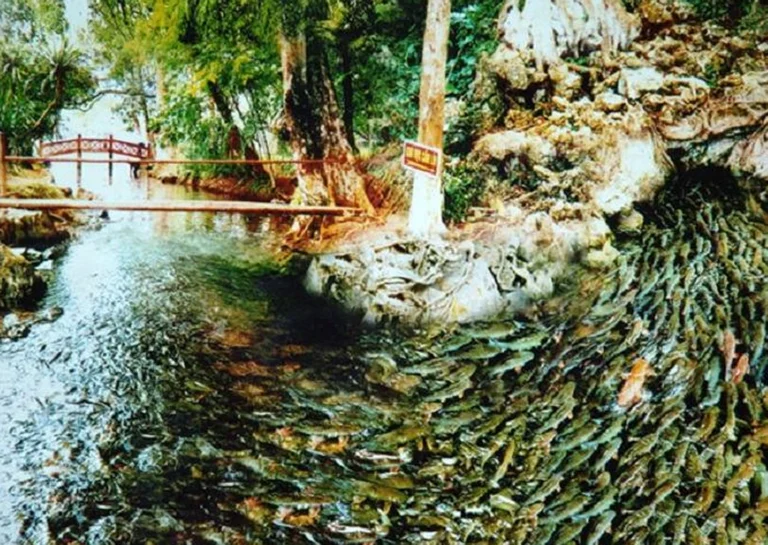
Alongside smoky cured delicacies, Wulingyuan’s cuisine celebrates pristine cold-water fish from icy mountain gorges. Taking center stage on highland tables is steaming Zhangjiajie catfish hotpot—prepared with tender cold-stream fish caught in crystal waters like Golden Whip Stream. Cleaned carefully to preserve the pure sweetness of snow-white fillets, the fish simmers in bone broth enriched with fiery fresh chilies, crock-fermented sour bamboo shoots, and cliffside mountain herbs. Bubbling vigorously with tangy-spicy aroma, the delicate flesh melts effortlessly on the tongue with zero muddy aftertaste. Pairing ideally with the hotpot is a plate of crispy fried stream shrimp cakes (小炸鱼)—tiny wild freshwater shrimp coated in golden cornmeal batter and flash-fried until shattering crisp and nutty.
No culinary exploration here would be complete without bamboo-tube rice (竹筒饭), a humble yet culturally rich mountain specialty. Fresh young bamboo joints still brimming with sap are cut from hillside groves, packed with spring-water-soaked upland glutinous rice mixed with wild forest shiitake mushrooms and diced cured bacon, and roasted slowly over glowing embers. Turned steadily by hand until the outer bamboo chars and releases sweet grassy steam, splitting the tube reveals chewy, glistening rice wrapped in a delicate inner bamboo membrane—infused with savory mushroom richness and the pure essence of wild mountains.
Concluding a highland feast, travelers raise warm cups of Eucommia bark tea (杜仲茶) or sip amber Tujia herbal-fermented sweet rice wine. Harvested from precious Eucommia trees growing wild along Wulingyuan’s limestone slopes, roasted bark brews into an amber infusion prized for strengthening joints and dispelling damp chill. With each warming sip of woody herbal tea or smooth sweet rice wine, fatigue from climbing tens of thousands of stone steps melts away—leaving calm appreciation for a culinary heritage as enduring as the peaks themselves.
Exploring the ethereal realm of Wulingyuan rewards a keen understanding of Xiangxi’s shifting mountain seasons. The finest times to visit fall during two transitional windows: spring from April to June and autumn from September to November. From mid-spring into early summer, gentle rain showers drape the valleys in moisture, condensing into billowing seas of cloud weaving around towering sandstone columns like Tang-dynasty ink-wash paintings. Conversely, autumn brings crisp dry air and crystal-clear skies illuminating slopes ablaze with golden sweetgum and crimson maple foliage. Seasoned travelers wisely avoid China’s National Day Golden Week in early October and Lunar New Year holidays, when cableways at Tianzi Mountain and the Bailong Elevator experience heavy domestic crowds.
Modern transportation has made reaching this grand scenic area remarkably convenient. From Vietnam, travelers can board direct scheduled or charter flights landing at Zhangjiajie Hehua International Airport, located roughly thirty kilometers from the scenic area. By rail, China’s high-speed network links Changsha South Station to Zhangjiajie West Station in just two hours aboard G- or D-series bullet trains. Travelers preferring overland rail journeys can cross via Huu Nghi International Border Gate in Lang Son or Mong Cai in Quang Ninh, connecting from Nanning by high-speed rail through Guizhou straight into the heart of Hunan. The park generally welcomes visitors daily from 7:00 AM to 6:00 PM through five strategic entrances, with Wulingyuan Gate (Wujiayu) and Zhangjiajie National Forest Park Gate serving as the primary arteries.
Navigating quartz-sandstone terrain laced with thousands of stone steps winding through deep gorges calls for thoughtful personal gear. Sturdy hiking shoes with deep-lugged non-slip rubber soles are indispensable for protecting ankles and preventing slips on damp, moss-covered flagstones beside Golden Whip Stream. Dress in adaptable layers—combining a moisture-wicking base layer with a windproof, water-resistant outer shell—to handle noticeable temperature swings between shaded canyon floors and exposed ridges at Yuanjiajie. Trekking poles significantly ease knee strain on long descents, while a reliable power bank is essential since cool air above 1,000 meters combined with frequent photography drains phone and camera batteries faster than usual.
Entry procedures for international travelers are notably streamlined through group visa policies sponsored by accredited tour operators, alongside individual consular visas. Once past biometric security gates, the living heritage of Tujia and Miao communities welcomes visitors through bold Xiangxi flavors. After hours exploring forest trails, nothing satisfies quite like gathering around a hearth for signature Tujia Sanxiaguo—spicy clay-pot stew of beef tripe, pork belly, and tofu infused with numbing Sichuan pepper—paired with traditional smoked Larou bacon and warming herbal rice wine.
To preserve pure sightseeing enjoyment and absorb Wulingyuan’s deep cultural layers without distractions, prioritize itineraries committed to a strict no-forced-shopping standard. Transparent schedules free from mandatory stops at jade, silk, or herbal medicine outlets protect your precious hours for untouched nature. For travelers dreaming of experiencing this legendary fairyland firsthand, choosing a thoughtfully structured, reputable all-inclusive Zhangjiajie tour package unlocks the smoothest gateway into Wulingyuan’s timeless masterpiece of nature.