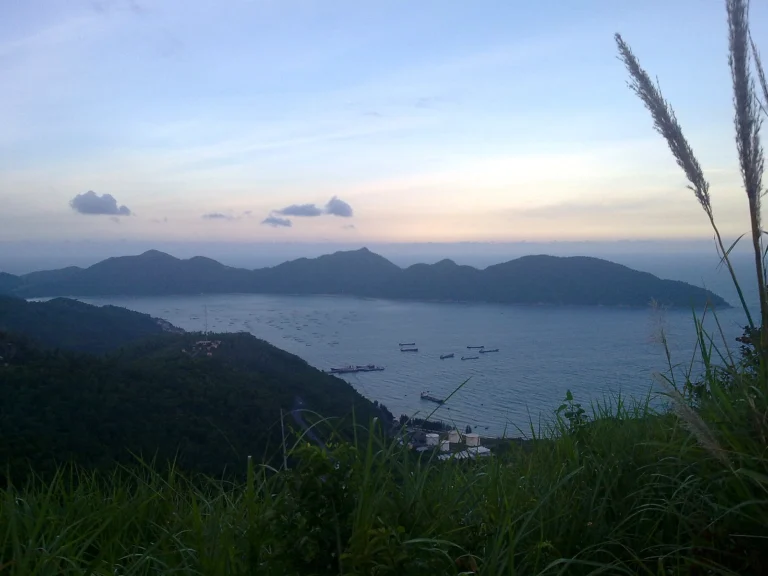
Nestled beneath the majestic shadow of the Four Sisters Mountain Range (Thần Sơn Tứ Cô Nương) in Xiaojin County, Ngawa Tibetan and Qiang Autonomous Prefecture, Shuangqiaogou (Song Kiều Câu) unfolds like a grand, resonant epic about the eternal harmony between magnificent nature and a millennium of Tibetan history. Since ancient times, this valley has served as a naturally perilous defense stronghold and a vital gateway connecting the fertile Sichuan Basin to the expansive highlands of Qinghai-Tibet. Every geological layer and blade of grass here preserves the traces of tireless migrations, the steady hoofprints of pack horses along ancient trails, and the indomitable spirit of indigenous tribes through all the vicissitudes of war and time.
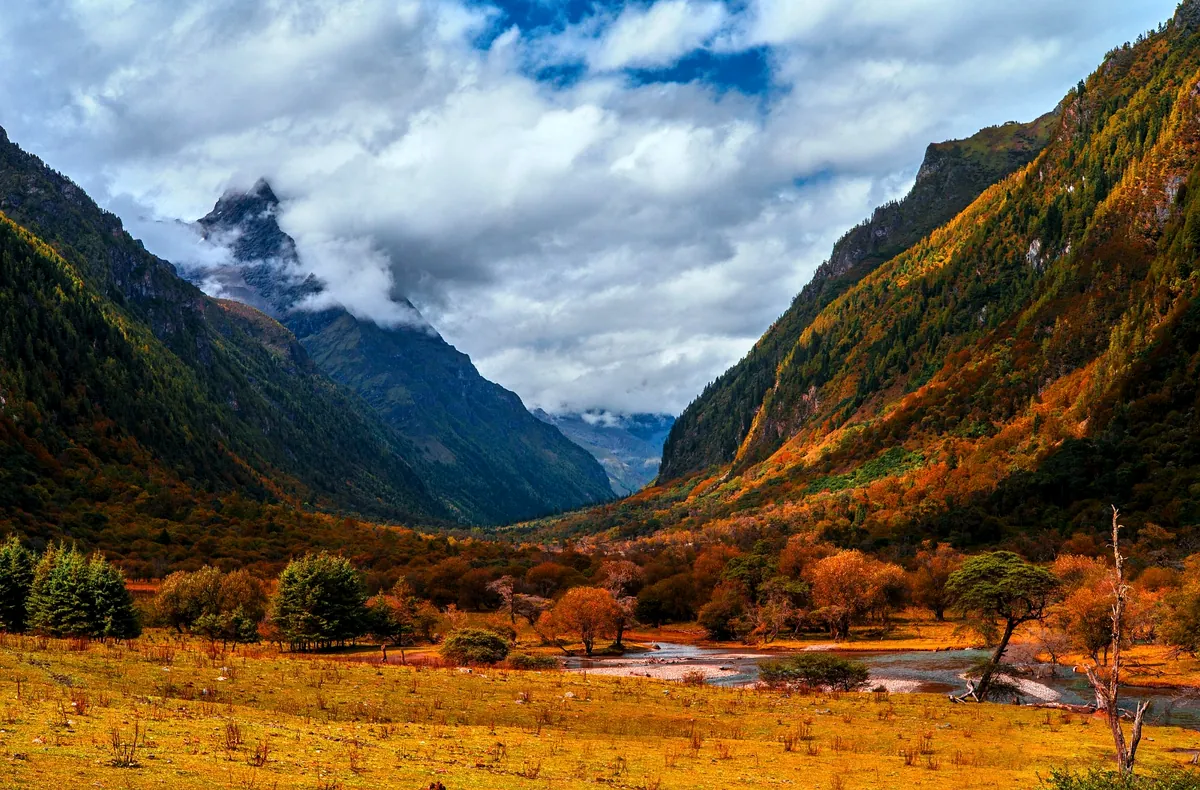
Gazing at the panoramic view of Shuangqiaogou across the open landscape, travelers cannot help but be overwhelmed by a breathtaking masterpiece of nature framed by towering rock walls rising straight up into the sapphire highland sky. In the vibrant peak of autumn, the virgin forests don a magnificent palette of gold and orange, creating a striking contrast against the cold, millennia-old grey granite cliffs. In the foreground, a crystal-clear stream originating from eternal glaciers meanders quietly, winding through soft meadows, reflecting dreamy scenery, and carving a wondrous tranquility deep within the remote mountains.
The name Shuangqiaogou originates from two ancient wooden bridges carved by ancestors from thousand-year-old pine and fir trunks and natural slate, spanning the roaring, ice-melt waters that divide the valley floor. In the cultural folklore of the Jiarong Tibetans—the oldest indigenous inhabitants of the Xiaojin strip—these two rustic wooden bridges were not merely structures for crossing treacherous waters, but also sacred metaphorical boundaries marking survival limits between mountain settlements and local chieftains’ territories. Since the rise of the Tubo Kingdom in the 7th century, large-scale migrations from the upper reaches of the Yalong River brought Tibetan Buddhism and indigenous Bon religion to blend into every stone and leaf, shaping a deeply distinctive local cultural identity.
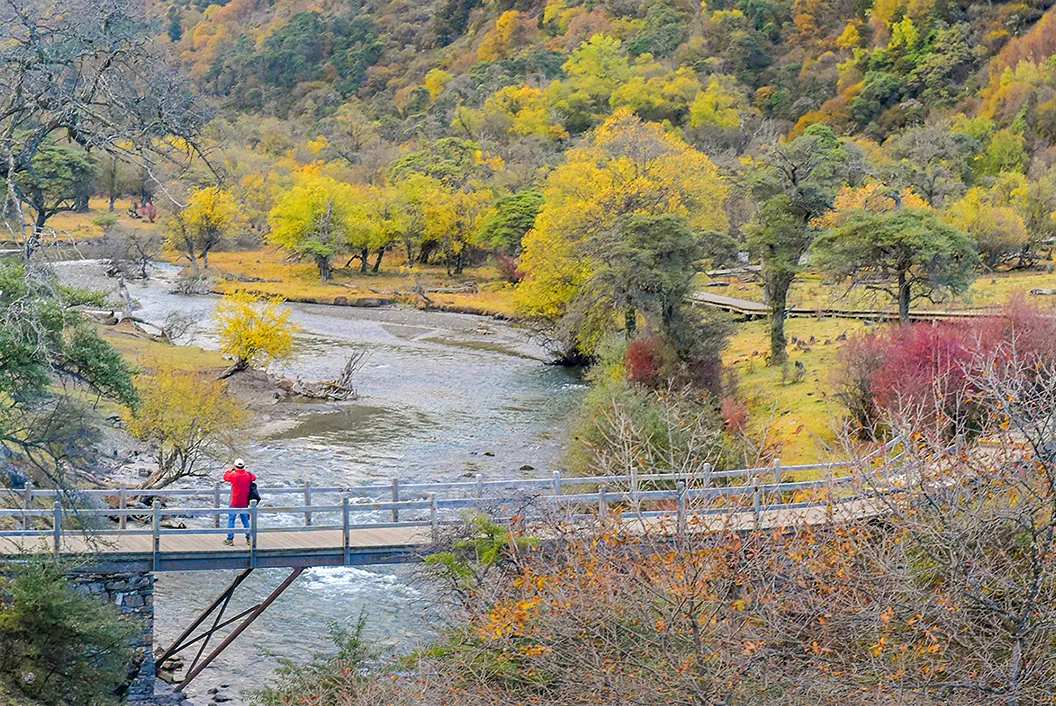
Entering the Qing Dynasty, particularly during the Qianlong reign in the latter half of the 18th century, the Xiaojinchuan region and the gorges surrounding Shuangqiaogou became the epicenter of the fierce Jinchuan Campaigns, one of the most intense military pacification efforts in feudal history. To dismantle the hereditary chieftain system and consolidate the centralized power of the imperial court, Emperor Qianlong mobilized tens of thousands of elite Eight Banner and Green Standard troops deep into the perilous mountains of the Four Sisters peaks. The imposing stone watchtowers (diaolou) standing on the cliffside around the valley bear tragic witness to the fierce resistance of Tibetan warriors before this land was officially integrated into the administrative rule of the northern dynasty.
Alongside the fiery upheavals of time, Shuangqiaogou also preserved a crucial position as a branching artery along the legendary Ancient Tea-Horse Road. Starting from the boundless green tea plantations of Ya’an, brave tea porters traversed countless perilous mountain passes, following the streams around the Shuangqiaogou valley to transport tea bricks up to the plateau in exchange for warhorses, furs, and precious high-mountain herbs. This enduring trade over centuries not only nourished the local economic life but also transformed the valley into a vibrant cultural crossroads, where the echoing bells of pack horses and prayers for peace still linger and reverberate among the majestic surrounding cliffs.
Shuangqiaogou valley has been sculpted over millions of years by tectonic crustal movements and persistent Quaternary glacial erosion, creating a classic, expansive U-shaped glacial valley. The terrain here transitions sequentially from an altitude of 2,900 meters at the valley entrance, soaring up to 3,840 meters where it touches the realm of eternal snows. According to traditional feng shui concepts harmonized with the indigenous worldview of early Aba residents, the valley holds an exceptional geomantic property of “harboring wind and gathering Qi.” Two rugged mountain ranges embrace the valley like giant arms, cradling the eternally winding, crystal-clear glacial meltwater stream and nurturing a magnificent ecological arc stretching from virgin forests and lush green meadows to boundless granite cliffs piercing the clouds.
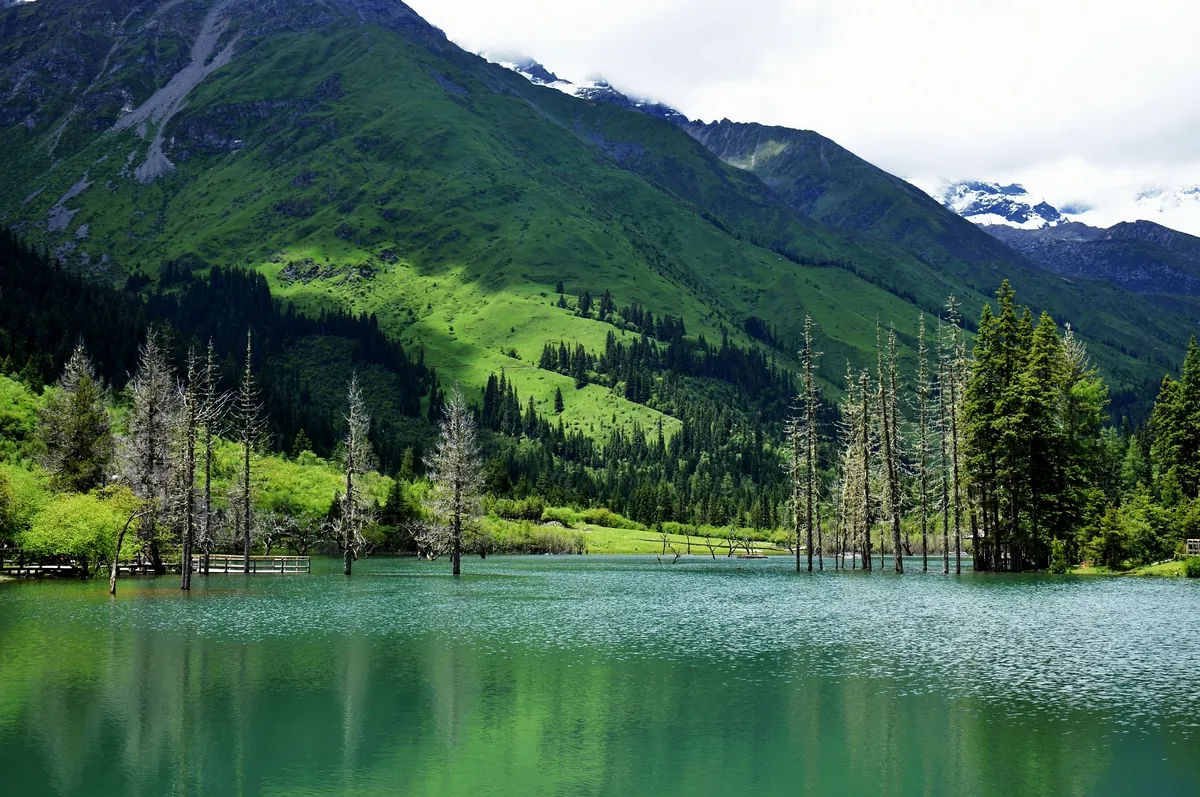
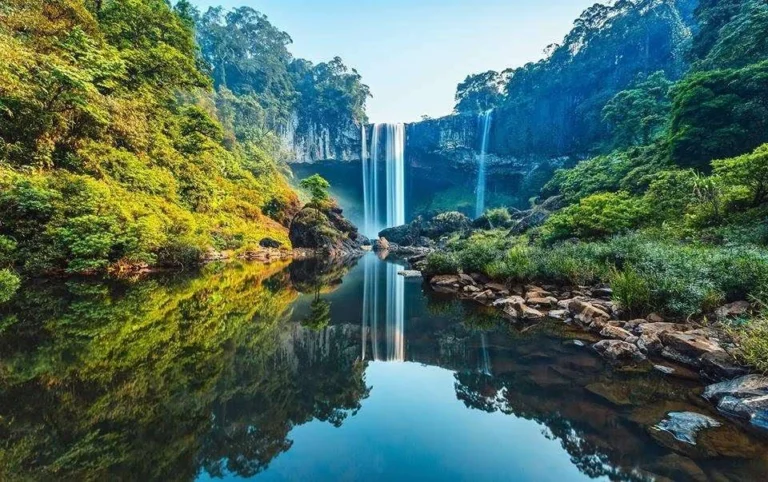
The most poetic and contemplative highlight of this geomorphological epic is the serene landscape of still waters mirroring the cloudy sky, where weathered tree trunks stand tall amidst the calm, jade-green surface. Pure water condensed from glacial rivers inadvertently transforms into a giant mirror, accentuating the rugged trunks reaching straight into the air. Just behind this surreal scene, the majestic mountain range stretches out with grass-covered slopes and vast expanses of pine and cypress forests, creating a natural scenery that is both wistfully romantic and brimming with vitality amidst the plateau’s profound silence.
Delving deep into the vertical layers of space, Shuangqiao Valley showcases a rare, perfect natural zoning plan in the mountainous terrain of western Sichuan. The ecological infrastructure belt below an altitude of 3,200 meters is densely covered by mixed coniferous forests, where ancient dragon spruce and red pines stretch upward to embrace the misty layers condensing every morning. Rising past the 3,800m mark (Note: translating directly as 3,500m), the open landscape transitions into serene alpine meadows, where winding streams irrigate mossy wetlands and dwarf vegetation adapted to harsh climatic conditions. Reaching the peak threshold of 3,840m, plant life yields to the majestic beauty of weathered sedimentary rocks, moraine gravel fields, and permanent ice towers glistening under the brilliant sunlight.
Under the lens of landscape feng shui, the circulating water veins throughout the valley floor act as the vital life force nourishing the entire Aba microclimate. The flow originates from the melting of millennial snow on high peaks, filtering through natural layers of granite gravel before rushing into wide, calm river bends. The mountain ranges on both sides resemble the Green Dragon on the left and the White Tiger on the right, strictly guarding the area; at times narrowing to form tight gorges that accelerate the current, and at other times expanding into tranquil water-gathering marshlands, symbolizing the accumulation of auspicious energy and the eternity of all things. The refreshing microclimate and continuous valley wind currents constantly regulate humidity, turning this glacial basin into a living geological museum, affirming the miraculous craftsmanship of nature forged through countless shifts of time.
Spanning an impressive total length of 34.8 kilometers, Shuangqiao Valley unfolds a deep, narrow valley space featuring the characteristic geomorphological structure of the eastern margin of the Qinghai-Tibet Plateau. The entire scenic area is positioned as a large-scale ecological planning project, where modern construction infrastructure must yield and blend completely into the ancient glacial topography and sheer limestone cliffs. Instead of massively expanding motorized roads that disrupt the landscape, the design strategy here focuses maximally on the standardization of a single lifeline transportation route, harmoniously combining underground engineering solutions and sustainable hydrological revetments to adapt to harsh weather conditions and torrents rushing down from eternal snow peaks.
An aerial angle captures the panoramic view of an infrastructure construction site for water conservancy and reinforced canal diversion, testifying to the massive workload required to fortify the valley against flash flood hazards during the thaw season. Sturdy reinforced concrete structures are meticulously cast along the drainage channel routes, alongside industrial cranes busily transporting materials amid a chaotic foundation of rocks and soil. Surrounding the project are the dark tile roofs of the local residential community, clearly reflecting the infrastructural transformation where contemporary water management projects act as the backbone protecting both the residents’ lives and the tourism corridor against fierce nature.

Standing out amidst the open space of the canyon is the indigenous architectural language of the Jiarong Tibetan people, preserved for centuries with masterful stone-masonry and wood-joining techniques. Traditional houses here are typically built from locally sourced slate and snow-pine timber, with walls thick at the bottom and thin at the top to create a sturdy stance against geological tremors and plateau gales. The ground floor serves as a winter shelter for livestock, the second floor is a cozy living space with a central fireplace smoking year-round, while the top floor is dedicated to a solemn shrine room and a drying yard for agricultural produce. The white lime borders framing the wooden windows carved with the auspicious Eight Treasures motifs not only ward off evil spirits but also create a warm visual highlight against the backdrop of snowy white and solemn coniferous forests.
The methodical investment in operations is clearly demonstrated through the establishment of a closed-loop eco-tourist bus route, acting as a red thread stringing together the scenic spots distributed along the length of the valley. Visitors are continuously transferred from an altitude of nearly 2,900 meters to over 3,840 meters above sea level, stopping sequentially at minimalist transfer stations designed to minimize the carbon footprint as much as possible. The first stop at Ginseng Fruit Meadow opens up a gentle wetland prairie, where meandering streams wind between ancient tree roots and abundant ginseng fruit root vegetation. The route continues to lead to direct viewing angles of the sharp peaks of the Siguniang Mountain range, before ending at Buḍa la Lake (Pudala Lake) – a mirror-flat body of water nestled at the foot of towering cliffs reminiscent of the Potala Palace carved into nature.
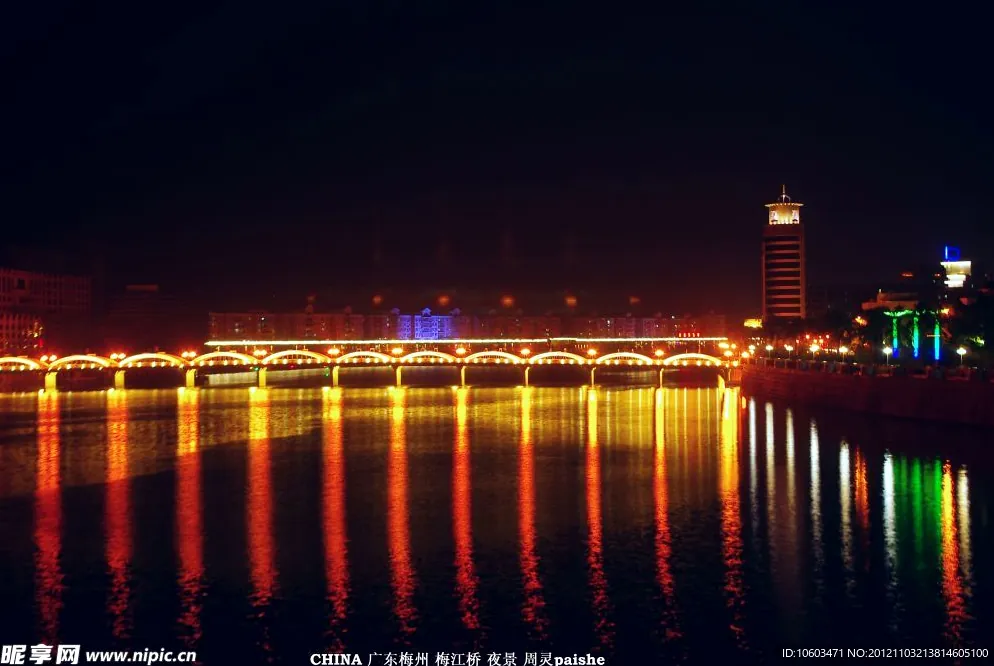
Each stop along this 34.8-kilometer journey is equipped with natural wood-lined viaduct systems stretching for kilometers, allowing visitors to leisurely stroll and sightsee without trampling on the fragile moss and sub-snow vegetation mats. The seamless coordination between modern technical infrastructure, scientific route planning, and indigenous humanistic architectural values has shaped a civilized tourism space, fully honoring the pristine magnificence of the Shuangqiao Valley scenic spot.
In stark contrast to bustling tourist hubs overflowing with neon lights and mechanized performance technology, the nightlife in Shuangqiaogou unfolds in a live setting entirely choreographed by nature itself. As dusk gradually withdraws from the towering cliffs of the Hengduan Mountains, a blood-red afterglow blankets the Red Rock Beach valley and quietly gives way to deep night. Here, there are no thousand-person water-music stages or flashy laser shows; the “performance” of Shuangqiaogou begins with absolute silence, as primeval darkness envelops the towering belts of fir forests and everlasting glaciers.
The nocturnal vitality of this land finds warmth in the traditional lifestyle of the Jiarong Tibetan ethnic group living around the foothills. At the base of sturdy stone watchtowers built using a thousand-year-old dry-stone masonry technique without mortar, crackling campfires banish the piercing cold typical of plateaus higher than 3,000 meters. Travelers stopping by local rest stops or nearby Tibetan villages can immerse themselves in the rustic Guozhuang dance. Rhythmic footsteps moving in a circle on packed earth, the jingle of silver ornaments, and birdsong-like melodies echoing without amplification fully capture the spirit of gratitude toward the mountain gods and nature dating back to primeval times. Amidst the evening smoke carrying the rich scent of burning pine, the fiery kick of clear barley wine (qingke wine) and warm, creamy butter tea bring people closer together, creating a humble, human harmony in the midst of the wild, vast mountains.
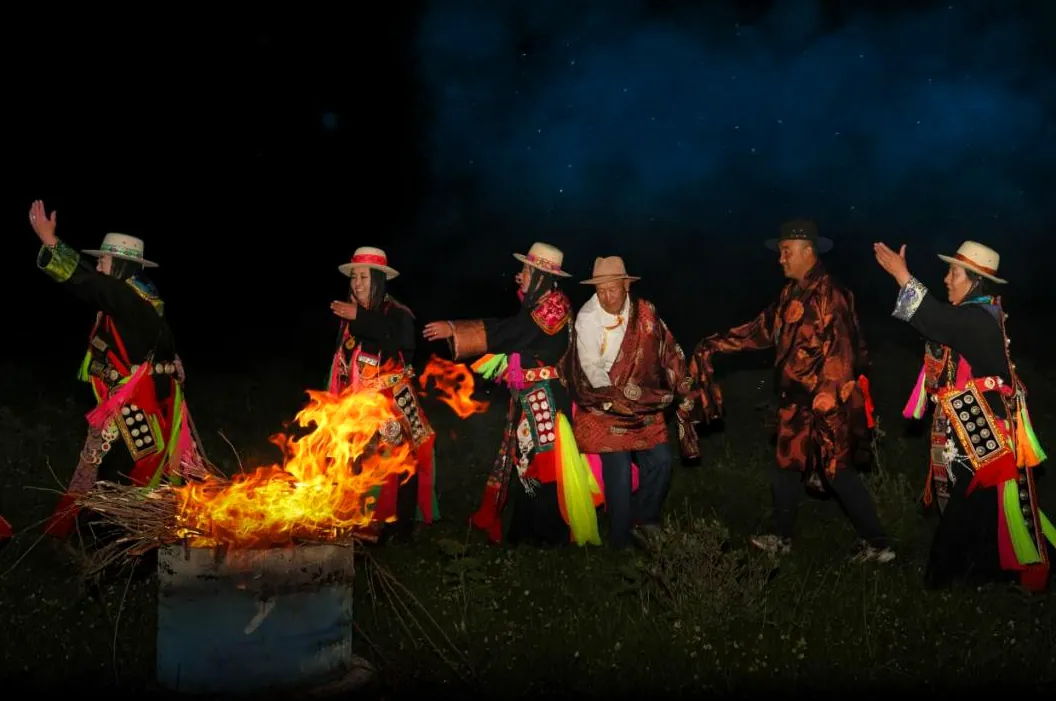
As the fires slowly die down and people drift off to sleep, the universe’s most breathtaking lighting art officially takes over the sky of Shuangqiaogou. Thanks to its elevation ranging from 3,200 meters to 3,840 meters above sea level—where the air is extremely thin, dry, and completely free from light pollution by major cities—the valley becomes a magnificent natural observatory. Amidst a silence broken only by the gurgling of melting glacial streams winding through sea buckthorn bushes, the night sky appears like a mysterious velvet carpet studded with millions of diamonds. The pristine Milky Way stretches across the sky, pouring a sparkling silver waterfall over the peaks of Sun and Moon Treasure Mirror and the Eighteen Gods Waterfall, painting an astronomical canvas with breathtaking visual depth.
During full moon moments suspended high in the sky, Shuangqiaogou takes on an indescribably ethereal appearance. Pure moonlight shines down, casting a magical silver patina over the icy slopes of Mount Amitabha’s peak, transforming rugged limestone formations into towering divine statues deep in frosty meditation. The sharp contrast between the darkness of the deep gorge and the silvery light reflecting off the snow-capped peaks creates a captivating natural light sculpture. It is an art of silent performance, where travelers look up to contemplate human insignificance before the cyclical laws of the sun and moon, gathering priceless tranquility that few earthly places can offer.
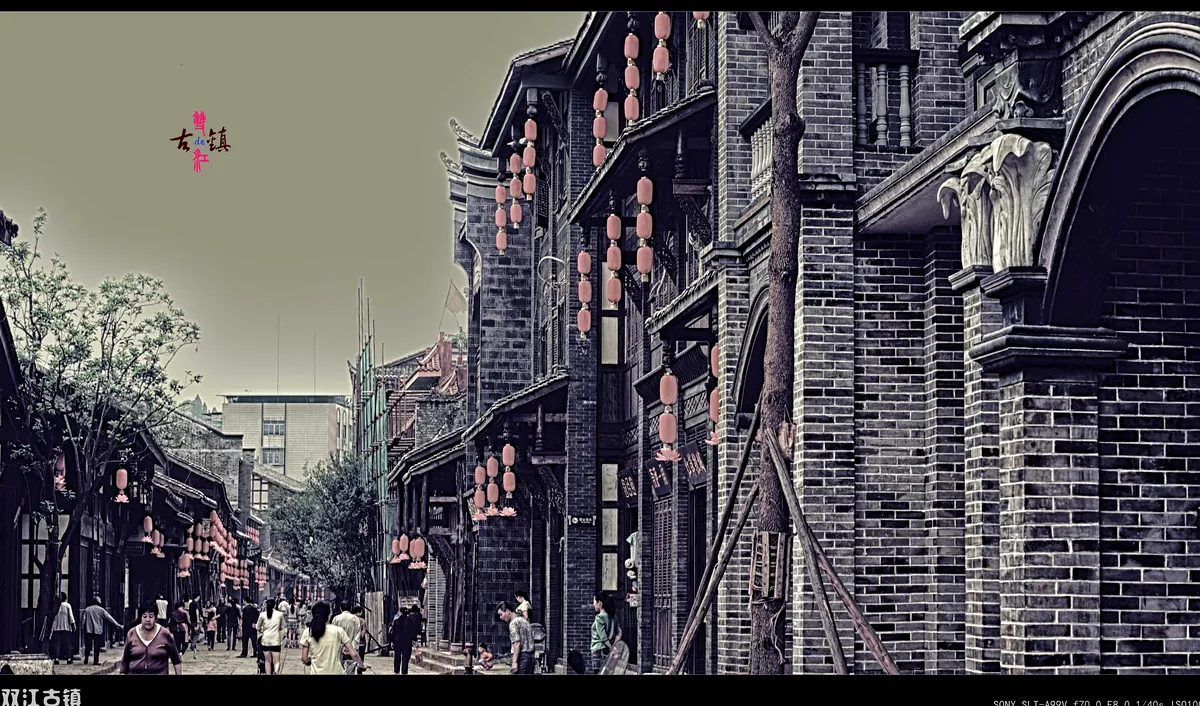
Stepping out of the snowy valleys of the Shuangqiaogou scenic area to return to the ancient settlements in Mount Siguniang town or the surrounding Xiaojin County, visitors immediately immerse themselves in an atmosphere rich with local life. The ancient street corner appears serene with sturdy dark brick-and-stone houses, their dark tiled roofs adorned with rows of red lanterns hanging along closely packed streets. Under the dim, misty twilight, crowds stroll slowly on rustic stone sidewalks, their gazes drawn to traditional food stalls steaming with heating smoke and the fragrant aromas of heirloom delicacies.
The culinary culture of the Jiarong Tibetan ethnic group in the land of Shuangqiaogou is deeply shaped by the harsh natural conditions of the region bordering the Qinghai-Tibet Plateau, where the average altitude exceeds 3,000 meters above sea level. In the freezing subpolar temperatures and thin oxygen density, the dietary habits of the local residents go beyond mere sustenance, evolving into a method of internal ecological balance. Every dish is calculated to maximize calorie intake, utilizing high-energy animal protein, fats from butter and dairy, and natural fermented starches, creating a culinary identity that is wild yet exceptionally refined and nutrient-rich.
The most prominent feature in the traditional menu of these grand mountains is products made from Yak meat—the iconic animal tied to the livelihood of plateau communities. Fresh yak tenderloin, after being thoroughly cleaned, is sliced thick, marinated with raw rock salt, pungent Sichuan peppercorns, and wild mountain herbs, then naturally air-dried over kitchen rafters or in the cold steppe wind for weeks to create the legendary dried yak beef. When tasted, the firm meat fibers offer a springy texture; the slower you chew, the more intense the original sweet flavor bursts forth, blending with a subtle hint of pine smoke. Additionally, yak hotpot cooked in a copper pot is the ultimate warming choice for nights when temperatures plummet below freezing. The broth is simmered for hours from beef bones and marrow combined with matsutake mushrooms, tiger paw mushrooms, and snow ginseng harvested from cliff faces, creating a shimmering, miraculously sweet broth. Dipping tender fresh beef shank slices into it instantly revitalizes travelers’ energy.
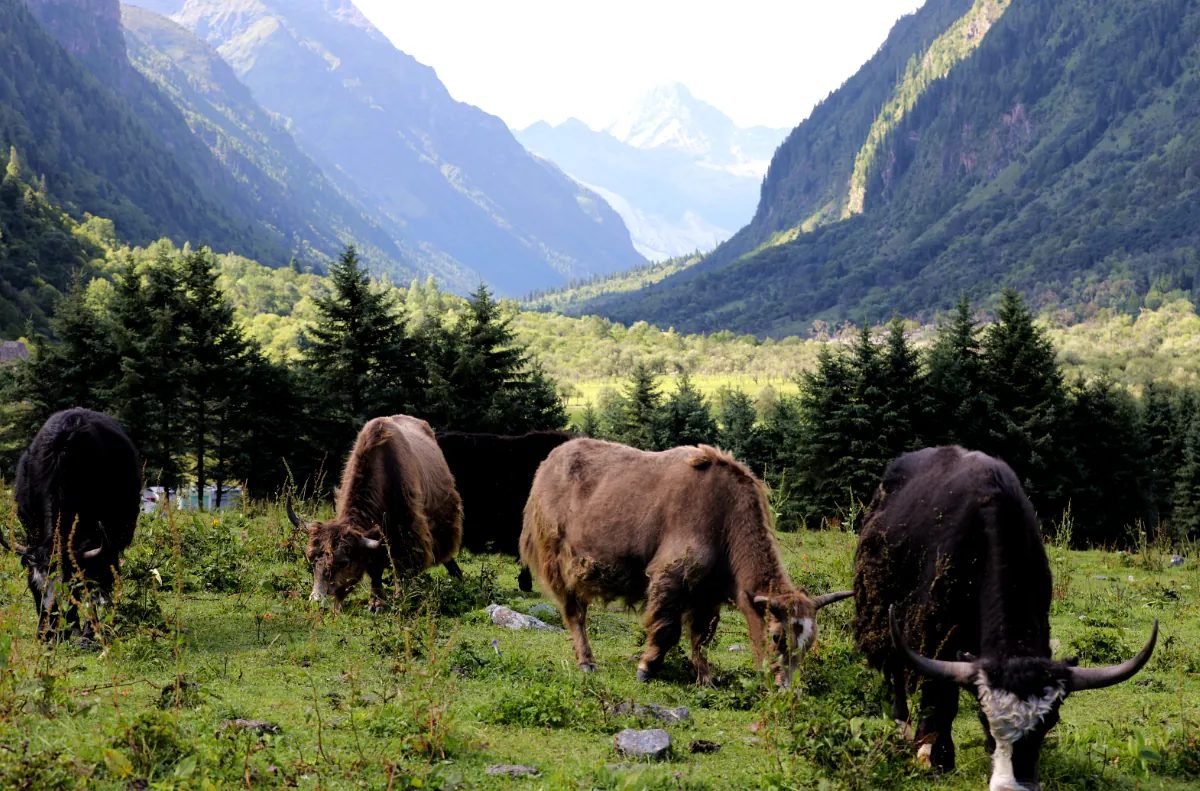
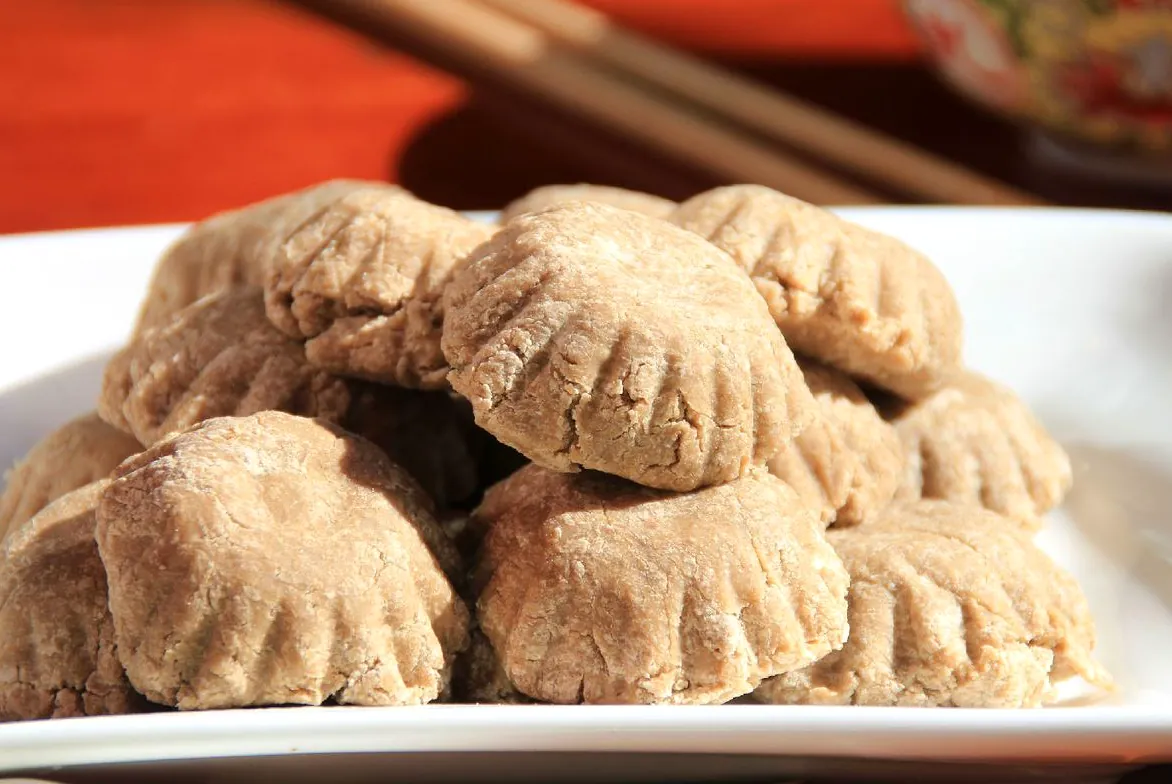
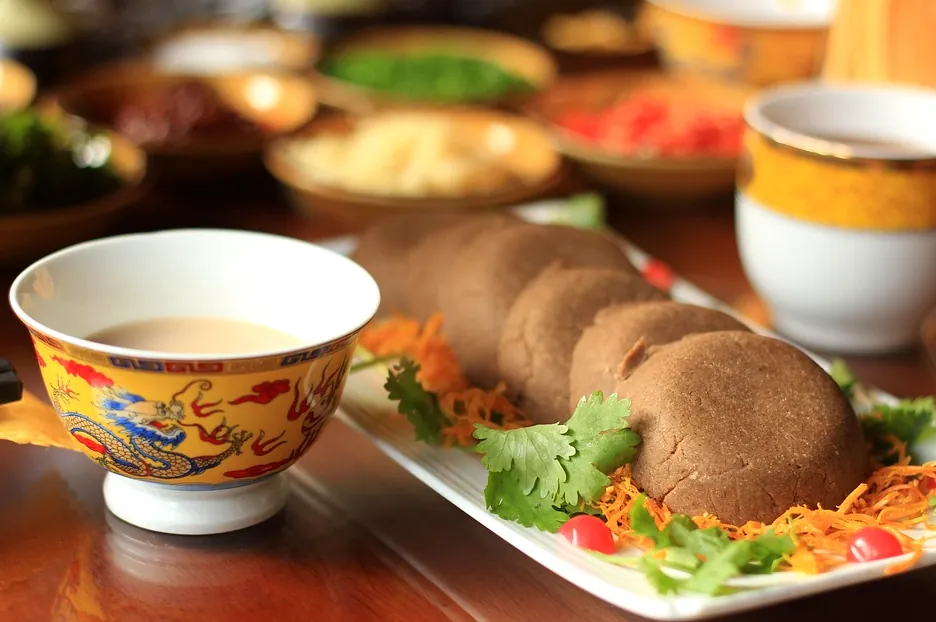
Along with beef, Tsampa cakes and butter tea serve as the soul of every Tibetan family meal around Mount Siguniang. Highland barley grains after harvest are thoroughly winnowed, pan-roasted to a golden brown in an iron wok, and then manually ground into a light amber-colored fine powder. When dining, guests pour a generous amount of hot butter tea into a birch wood bowl, sprinkle Tsampa powder on top, and skillfully use their fingertips to knead it into small, bite-sized portions. The rich, creamy flavor of whipped yak butter combined with the pure, rustic taste of roasted barley creates a wholesome source of nourishment, helping the body quickly adapt to the thin air pressure and bone-chilling cold of the high mountains.
Concluding the sensory experience in the snow-covered valley, nothing is more poetic than raising a cup of traditionally brewed highland barley wine by the hearth of a stilt house. The wine boasts a honey-like golden hue, a gentle alcohol content, and a delicate sweet flavor that lingers on the tip of the tongue before warming the entire body with a profound, comforting aftertaste. The culinary culture of Shuangqiaogou, through every fiber of smoked meat, bowl of rich butter tea, or sip of strong wine, fully conveys the resilience and boundless hospitality of people who live their lives intertwined with soaring clouds and pristine snow.
Leaving behind the bustling pace of life in the Sichuan plains to venture deep into the Shuangqiaogou Valley is a spectacular transition in both geographical landscapes and physical experiences. To overcome the winding mountain passes along the slopes of Xiling Snow Mountain and adapt to the progressively thin air at altitudes above three thousand meters, preparing a calm mindset alongside a diet that instantly warms the body is paramount. Before officially beginning the trek through the majestic ecological tiers, stopping by a small highland eatery to savor the rustic cuisine of the locals is the ultimate therapy to awaken the senses.
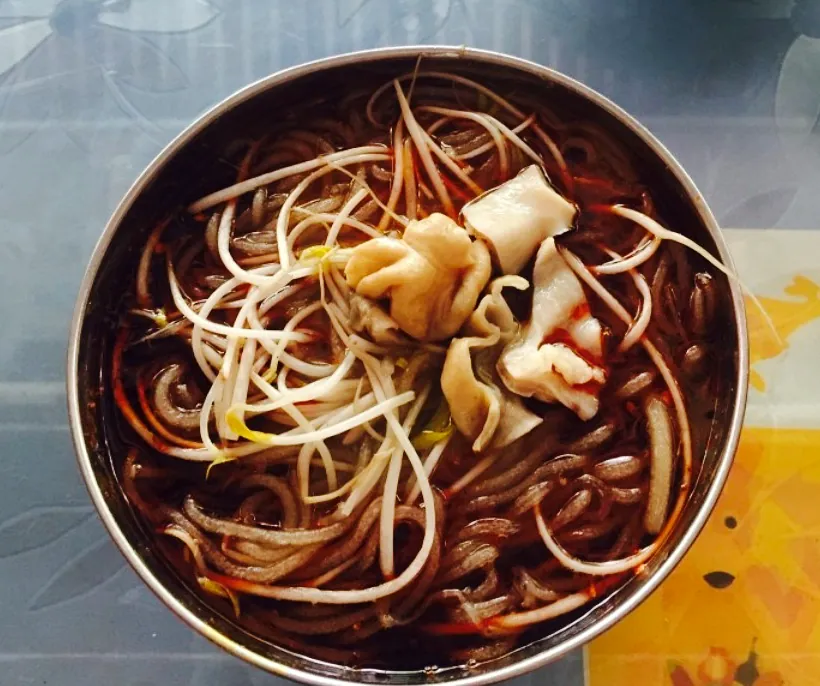
A vivid representation of this cozy, down-to-earth charm is a steaming bowl of noodle soup served in the shiny stainless steel bowls characteristic of mountain roadside eateries. Emerging from beneath the golden-brown, herb-scented broth are chewy, dark-colored noodles made from highland bitter buckwheat, paired with crisp, refreshing white bean sprouts and tender, delicately prepared pork offal. Every spoonful of hot soup, with its slight spiciness on the tip of the tongue, not only banishes the characteristic biting cold of the alpine snow winds but also promptly restores durable energy to long-distance travelers before setting off.
Regarding access routes, the Shuangqiaogou gorge is located about two hundred and twenty kilometers northwest of downtown Chengdu city. Travelers can depart from Chadianzi Bus Station via intercity buses running from Chengdu to Xiaojin or opt for a private car charter service for a flexible schedule. Today’s arterial route has become much more convenient thanks to the nearly eight-kilometer-long Balang Mountain tunnel piercing through the mountain core, shortening travel time to about four to five hours. The scenic area is open to visitors daily from 08:00 to 17:00, with the last internal ecological shuttle bus usually departing from the entrance at 15:00. To ensure visitor flow is scientifically regulated and to avoid long queues at the physical ticket counters, international tourists are advised to pre-book sightseeing tickets along with transfer bus tickets through digital tourism platforms using a valid passport.
The sudden elevation change from five hundred meters in the Sichuan Basin up to 3,840 meters at the final destination of Red杉林 (Hongshan Lin) in Shuangqiaogou is a physiological challenge that cannot be taken lightly. Altitude sickness may occur with symptoms of mild headaches, shortness of breath, or localized insomnia. Therefore, the golden rule on the first day of setting foot in Mount Siguniang town is to maintain a slow breathing pace, limit strenuous physical activity, abstain from alcoholic beverages, and avoid taking excessively hot or long baths. Travelers should prepare altitude adaptation supplements containing Rhodiola rosea herbs, carry a personal compressed oxygen canister, and always keep a thermos of warm water on hand to sip in small amounts along the way.
The gorge’s climate is heavily marked by alpine monsoon characteristics with massive day-night temperature swings, requiring clothing to follow the multi-layer principle. The innermost layer should be moisture-wicking synthetic thermal wear, the middle layer wool or insulating fleece, and the outermost layer a windproof and waterproof jacket. Additionally, ultraviolet radiation levels on rocky slopes and snowfields are constantly extremely high, making broad-spectrum sunscreen, moisturizing lip balm, wide-brimmed hats, and polarized sunglasses mandatory protective gear. Meticulously preparing every technical detail will turn the trip into an unforgettable memory, paving the way for those who cherish the dream of experiencing an authentic journey through the Mount Siguniang Tour amidst boundless green mountains and white snow.