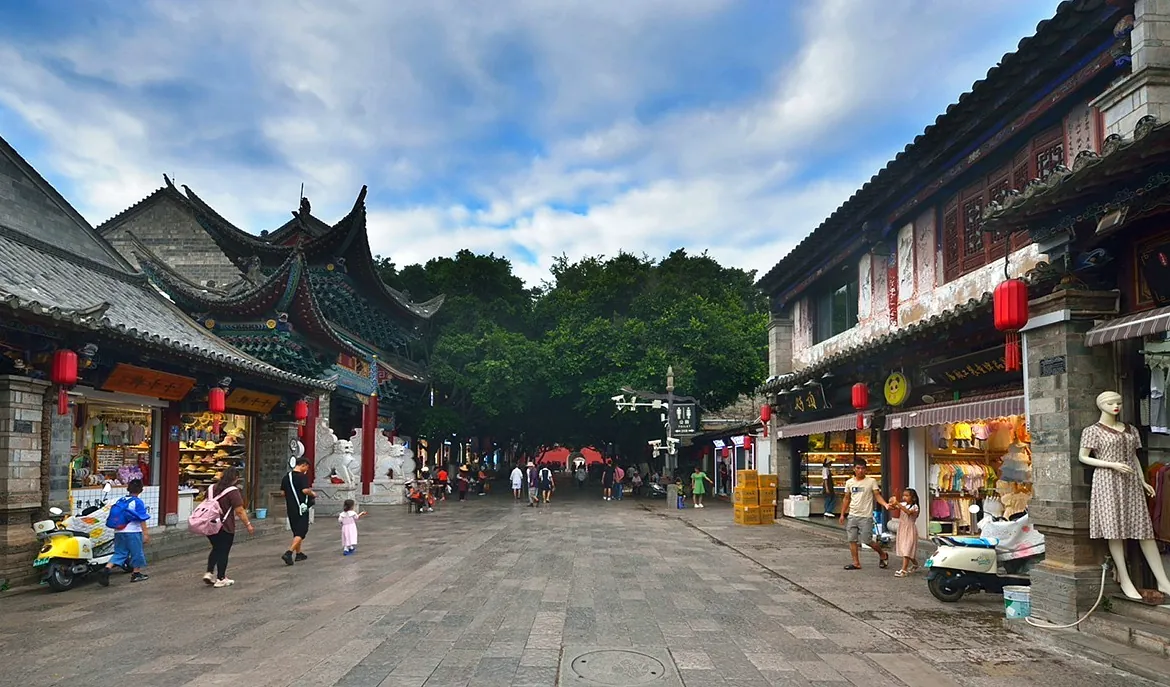
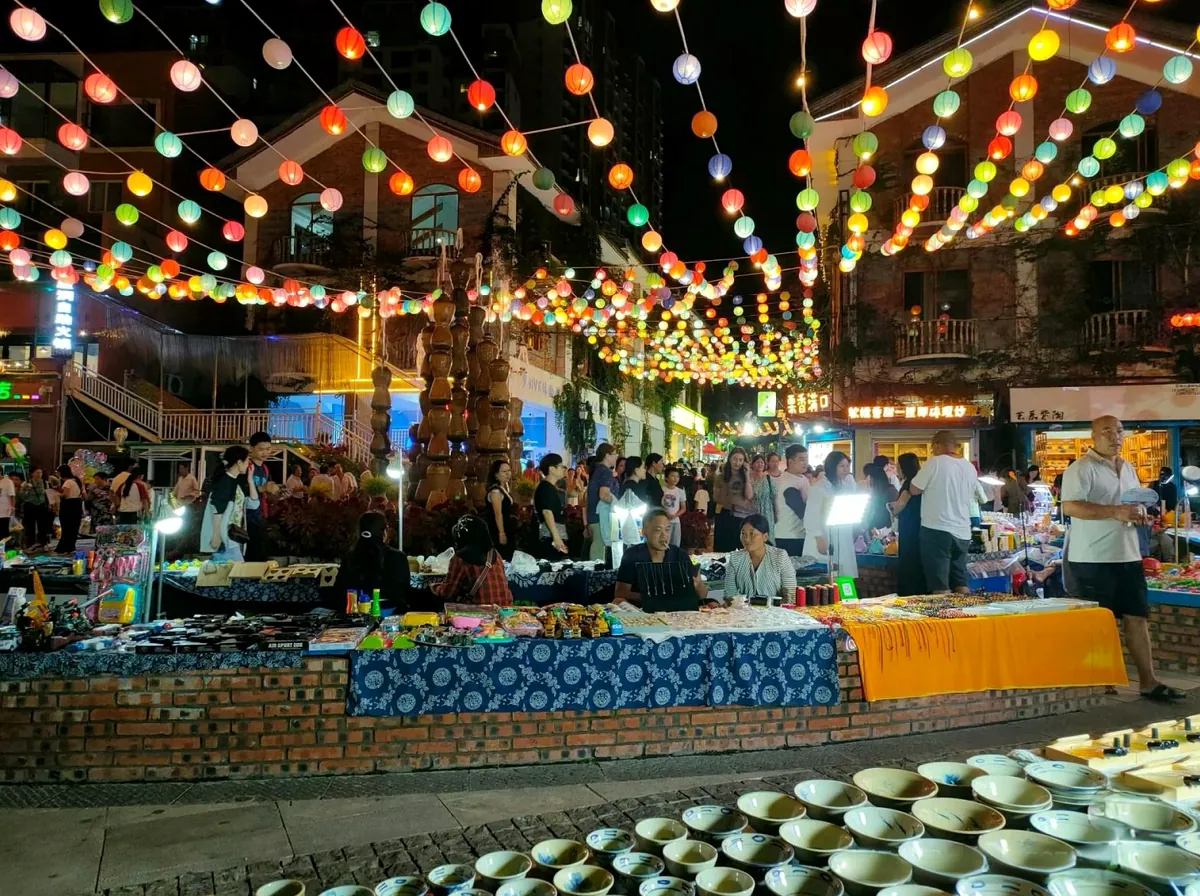
Nestled in the fertile basin south of the Red River, Lin’an Ancient Town unfolds as a magnificent heritage landscape where thousand-year-old fortifications blend seamlessly with an enduring, vibrant pulse of life. Standing guard at the central gateway is the majestic Chaoyang Tower, with its three elegant, curved-roof tiers—a structure as imposing as the Tiananmen Gate of the South, casting its reflection upon blue stone slabs polished by the passage of time. The serene atmosphere of the ancient city walls contrasts beautifully with the brilliant glow of lanterns from the Zitao Night Market, where every street corner, yin-yang tiled roof, and rustic ceramic stall brings to life the glorious memories of a land once renowned as a beacon of culture in the South.
Tracing back over twelve centuries, the origins of this ancient city began during the Tang Dynasty, specifically in the fifth year of the Yuanhe era (810 AD) under the Nanzhao Kingdom. At that time, the local people began constructing rammed-earth fortifications named Huili—which, in the ancient Yi language, means “great sea”—to guard the rugged frontier and regulate the water sources of the fertile basin. Through more than three hundred years of rise and fall during the Song Dynasty under the Dali Kingdom, Huili gradually transformed into a bustling military and commercial hub of the Diannan region, gathering local residents and merchant caravans traveling along the Ancient Tea Horse Road.
A fundamental historical turning point that changed the status of the land occurred in the 13th century when the Mongol Yuan army pacified the Southwest. In the thirteenth year of the Zhiyuan era (1276) under Emperor Kublai Khan, the Lin’an Circuit was officially established, marking the deep integration of this sub-region into the administrative structure of the Central Plains empire. During the Ming Dynasty, in the fifteenth year of the Hongwu era (1382), the Ming Taizu Emperor Zhu Yuanzhang established the Lin’an Prefecture and implemented a massive military agricultural colony policy, mobilizing tens of thousands of soldiers and scholars from the Jiangnan, Jiangsu, and Zhejiang regions to reclaim and guard the land. This wave of intellectual migration brought with it the full essence of Confucianism, garden architectural arts, and the Northern court lifestyle, transforming Lin’an from a primitive military outpost into the “Pillar of Diannan”—a land of renowned culture with a grand Confucian Temple, producing many top scholars and doctors of the Southwest.
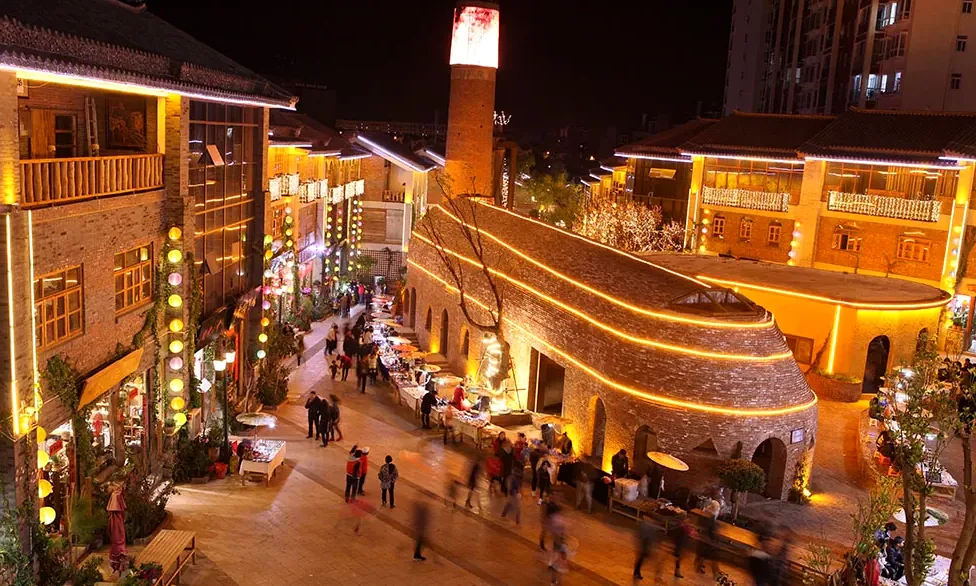
Parallel to the rise and fall of dynasties was the flourishing of local handicraft culture, originating from the Song and Yuan Dynasty pottery kilns in the nearby Yuanyao village. By the Ming Dynasty and reaching its peak in the Qing Dynasty, the unique purple pottery technique blended perfectly with the elegant character of the migrant scholars, shaping the famous Zitao school, which features calligraphy and painting carved directly onto damp clay bodies. While centuries of historical change have erased the footprints of the old horse caravans, the heartbeat of the ancient capital remains intact, transforming the thousand-year-old pottery heritage and culinary traditions into the bustling Zitao Night Market—a place that fully captures the soul of a miniature capital nestled in the mountains.
Impressively situated in the heart of the fertile alluvial basin of the Diannan plateau, Lin’an Ancient Town is surrounded by a picturesque landscape deeply imbued with traditional East Asian Feng Shui philosophy. The terrain utilizes the rolling northern mountain ranges as a solid “Black Tortoise” support, while the southern side gently opens up to a panoramic view of lush green valleys and the gentle “Vermilion Bird” plains. This secluded basin topography not only acts as a screen against cold winds sweeping down from the northern plateau but also creates a microclimate that is mild and cool year-round, gathering the vital energy of heaven and earth to nurture the prosperity of the city through nearly a thousand years of change.
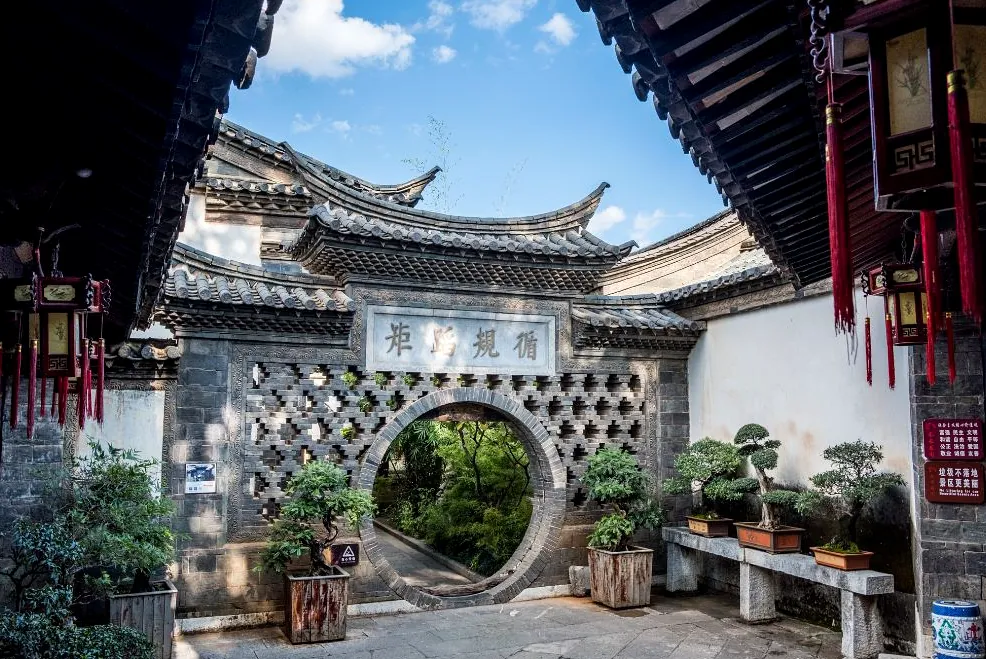
Observing the entire complex, the layout of Lin’an appears sharp with its system of somber ash-grey yin-yang tiled roofs, intricately interwoven between traditional ancient buildings and stone arches that have stood the test of time. The large blue-stone paved streets, polished by generations of residents, reflect a soft light, leading through fishbone-patterned alleys and spreading toward the gentle slopes by the river—where the rhythm of the Zitao Night Market harmonizes with the water. Each sturdy paving stone, mossy wooden veranda, and warm string of lanterns not only describes a meticulous architectural order but also clearly depicts the harmonious stance of the ancient town amidst the expansive natural landscape.
One of the most distinctive features in the ancestors’ terrain planning at Lin’an is the underground hydrological network and the system of hundreds of wells densely distributed throughout every nook and cranny. From the Ming to the Qing Dynasty, famous ancient wells such as Daban, Banglong, and Jiaqing were precisely constructed at natural energy points, serving to regulate the “qi” and sustain the entire urban population. Underground currents flowing through limestone sediment layers create fresh, alkaline-rich water, which not only gives the local grilled tofu its famous savory flavor but also provides the perfect humidity, combined with the alluvial clay from the Lu River, to craft the smooth, unglazed Zitao pottery.
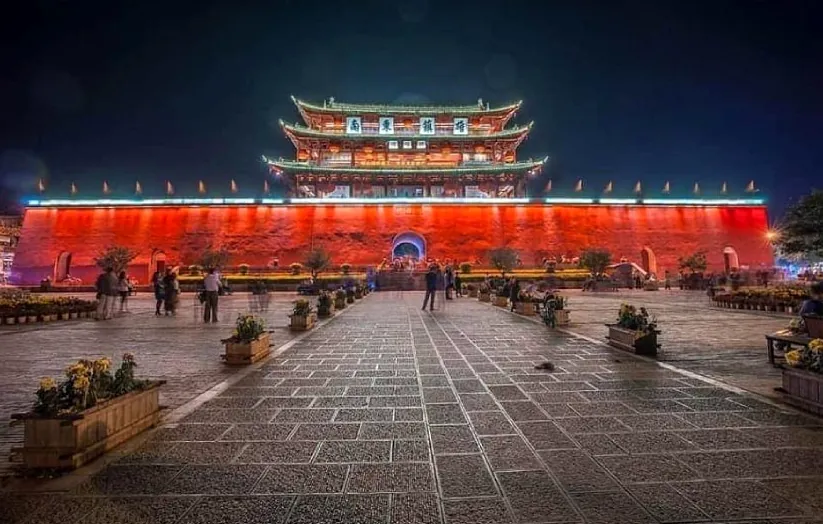
Lin’an’s transport network strictly adheres to the principle of harmony between man and nature, taking the Zhaoyang Tower city gate as the landmark to welcome the eastern dawn and extending along a straight, central thoroughfare. The urban space is harmoniously distributed from administrative buildings and solemn temples to artisanal guilds, then gently transitions into a natural landscape buffer zone featuring lotus ponds, water reservoirs, and pristine streams. This waterfront junction serves as the natural open space of today’s Zitao Night Market, where ancient kilns and rows of handicraft kiosks lean against the winding water stream, forming an ecological strip that is both intimately tied to centuries of pottery history and pulsating with the lively vibe of a riverside market town.
The natural ecosystem surrounding Lin’an is a magical intertwining of ancient karst topography and lush native vegetation green all year round. Majestic camphor trees providing shade, weeping willows reflecting by stone bridges, and rammed-earth walls covered in creeping vines create an absolute aesthetic balance with the solemn gray of stone and fired bricks. By leaning against the hillside’s slope, utilizing natural water flows for drainage, and completely preserving the sacred well springs, Lin’an’s master plan has resolved the isolation of a frontier market town, turning it into a living ecological museum reflecting the wisdom of predecessors in living in harmony with nature.
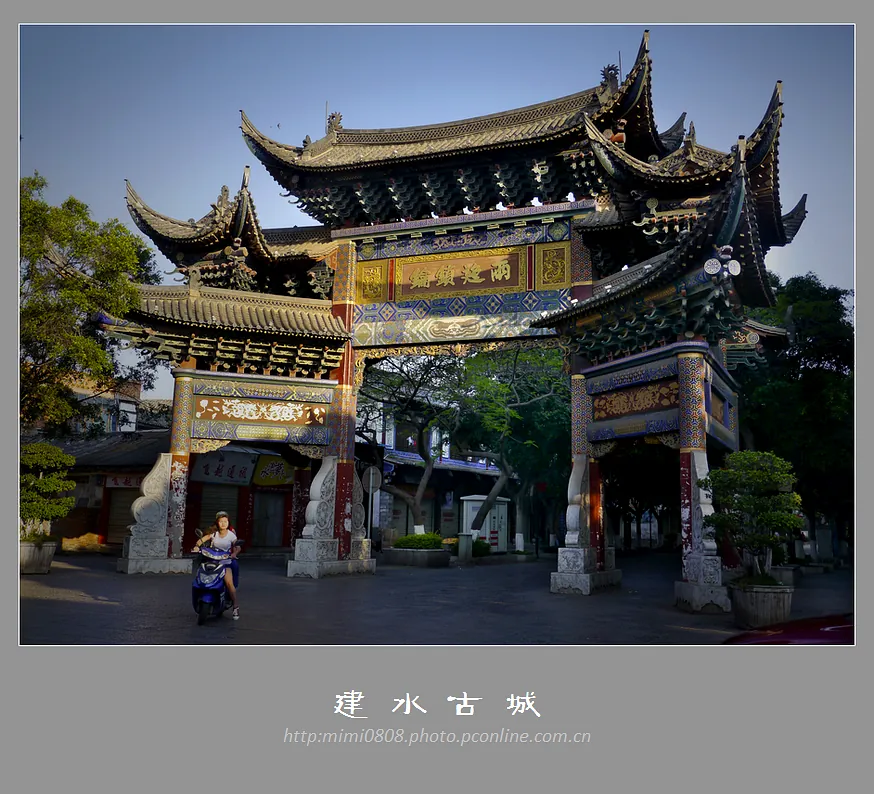
Viewed from an overall spatial perspective, the structure of Lin’an Ancient Town is a standard intersection between early Ming military fortification thinking and southern Confucian feng shui philosophy. Originating from the construction of city walls to expand the southern frontier in the twenty-second year of the Hongwu reign, the urban landscape was shaped along a strict east-west axis. Guarding the eastern gateway is the Zhaoyang Tower – a magnificent predecessor structure built nearly three decades before the Tiananmen Gate in Beijing. The towering structure stands on a massive bluestone foundation pierced by arched passageways, supporting a three-story wooden pavilion with an intricately interlocked multi-layered dougong bracket system, opening up four curved eaves reaching gently toward the four directions of the sky. Traditional timber mortise-and-tenon techniques without iron nails, combined with solid ironwood load-bearing columns, create enduring stability through hundreds of major and minor earthquakes in the frontier region.
Delving into the network of crisscrossing alleys paved with water-polished bluestone flags, native residential architectural standards reveal absolute symmetry through “three courtyards and one screen wall” and “four-sided courtyards with five skylights” layouts. The most typical representative of Southern Dian residential architecture is the Zhu Family Garden – an elaborate family residence and garden complex painstakingly built over the final three decades of the Qing Dynasty. Covering an area of over twenty thousand square meters with a pure construction footprint exceeding five thousand square meters, ancient artisans skillfully arranged two hundred and fourteen rooms and forty-two interlocking courtyards following an “ink-wash labyrinth” structure. Every exquisitely carved wood partition featuring flowers and birds of the four seasons, every gray stone screen blocking the entrance, and even the moss-tinted grayish-black yin-yang tiles adhere to principles of thermal insulation, skylight breeze capture, and perfect microclimate regulation against the arid highland plateau climate.
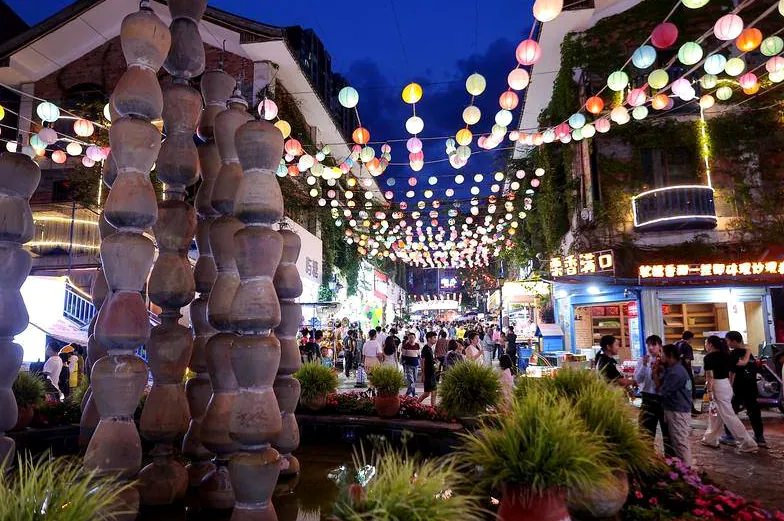
The expansion of urban cultural space toward the northwest forms a unique development axis connecting history with contemporaneity: the Zitao Night Market grand landscape. Nestled peacefully along the banks of the Huanwen River and adjacent to the ancient pottery kiln ruins of Wanyao Village, this area is the result of urban reconstruction and cultural industry preservation strategies with actual infrastructure investments scaling up to hundreds of millions of yuan. The space is planned to stretch over one thousand meters along the ecological landscape corridor, vividly recreating the remains of ancient terraced clay dragon kilns. Planners have restored and renewed pedestrian streets paved with ancient fired gray bricks, interwoven with open artisan workshops, creating a seamless route for visitors to observe firsthand the entire crafting process of the renowned five-colored clay pottery.
At night, the Zitao Night Market comes alive with brilliant wall-embedded artistic lighting systems simulating the fiery hues of thousand-degree pottery kiln arches. Hundreds of stalls are standardized in architectural aesthetics using raw wood materials, indigo-dyed fabric awnings, and transparent tempered glass walls, displaying vases, teapots, and Zitao inkstones hand-polished with river pebbles. This open spatial structure preserves the bustling nature of traditional East Asian street markets while maintaining neatness and ventilation with tea-tasting zones, local food courts, and open-air folk performance stages. The seamless fusion between the thousand-year solemn tranquility of Lin’an’s ramparts and the bustling, sophisticated charm of the Zitao night market creates a multi-layered architectural entity, positioning it as an exemplary model of heritage preservation coupled with night-time economic revitalization.
}
As dusk slowly falls over the upturned eaves of Zhaoyang Tower—a magnificent gate tower erected in the twenty-second year of the Hongwu era during the Ming Dynasty—the ancient town of Lin’an begins its magical transformation of color and sound. The artistic lighting system, meticulously calculated for every angle of the ancient architecture, illuminates the towering three-story wooden structure, highlighting the majestic horizontal plaque against the night sky. At the base of the fortress, crowds flock to the polished blue-stone paved streets of the ancient town, where tens of thousands of red silk lanterns simultaneously burst into light, casting a glow on every mortar joint and moss-covered wall. This unveils an enchanting atmosphere reminiscent of a historical film recreating the bustling urban prosperity of ancient Diannan.
The most vibrant focal point of Lin’an’s night is the Zitao Night Market, nestled gently along the shores of the serene Wulong Lake. The night market spans over a kilometer, harmoniously connecting the waterfront landscape with rows of architecture mimicking traditional Ming and Thanh dynasty mansions. Here, modern lighting does not overshadow the nostalgic charm; instead, warm yellow LED strips and handmade lanterns are skillfully arranged to honor a famously prized native treasure: Jianshui Zitao pottery, one of the four famous pottery types of the populous nation. Under the gentle yellow light reflecting from the lake’s surface, each piece of pottery—with its dark brown, liver-red, or deep purple hues—shines with a jade-like smoothness, thanks to traditional burnishing techniques using river pebbles and animal hides. Local artisans sit beside pottery wheels, demonstrating the “intaglio and relief” technique, using small carving knives to etch calligraphy and wash paintings into the damp clay body, then filling the grooves with contrasting colored mud to create vivid works of art that captivate countless admiring visitors.
Alongside the tranquil world of handicrafts, the nightlife along Wulong Lake is enlivened by live-action shows and outdoor visual arts. The live-action performance combines 3D mapping light technology projected directly onto a massive water screen in the middle of the lake, recreating a millennium-long journey of exploring the Lin’an Prefecture lands—from the fiery red flames in ancient Dragon Kilns to the resilient footsteps of horse caravan teams along the Ancient Tea Horse Road. Interwoven with cutting-edge laser lighting effects are authentic folk performances, where the rustic melodies of “Jianshui Xiaodiao” blend with the sounds of the erhu and lively xor dances performed in the vibrant brocade costumes of the Yi and Hani ethnic groups, creating a sacred connection between a glorious past and a vibrant present.
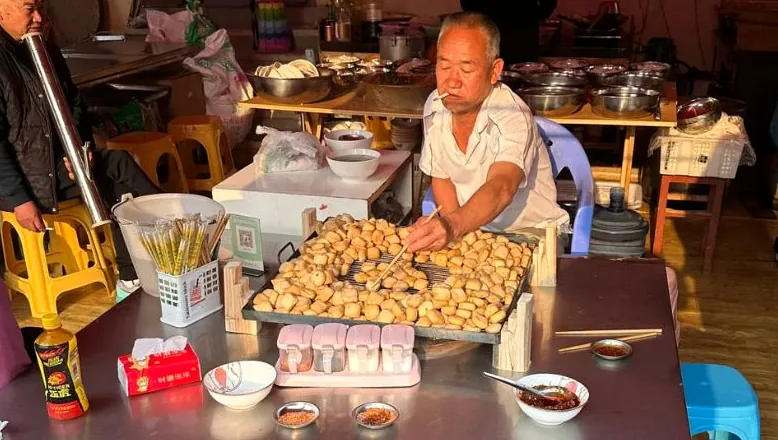
The enduring vitality of Lin’an’s night lingers in the culinary smoke thick with the scent of firewood and fermented soybeans. Scattered throughout the corners of the Zitao Night Market are the legendary Jianshui grilled tofu stalls. This dish is made from the pure, sweet water of the six-hundred-year-old Da Bantai ancient well, with square tofu blocks the size of a matchbox grilled on wire racks placed over glowing charcoal brazier pots. Guests sit gathered on low stools around the stoves, as vendors briskly flip the plump, golden-brown tofu pieces, dropping a dried corn kernel into a small ceramic bowl to keep track of how many pieces the diners have enjoyed—a rustic billing custom that has persisted for centuries. Sipping a warm cup of Pu’er tea brewed from a Zitao teapot with exceptional heat retention, and listening to cheerful laughter mingling with music by the waterside, visitors feel as though they are shedding all worldly worries to dissolve into the purest urban flavors of this fairytale land.
The journey to explore the culinary and cultural roots of Lin’an ancient town leads visitors into a labyrinth of flavors forged through hundreds of years of diplomatic history and bustling trade. Far more than just a place to enjoy rustic flavors, every corner of the ancient street and every blazing stall at the Zitao Night Market carries a profound Confucian culinary philosophy combined with the free-spirited lifestyle of southwestern mountain dwellers. From the billows of charcoal smoke carrying the aroma of fermented soybean paste to the sizzling sounds of pungent spices characteristic of Diannan, the culinary picture here is a living extension of daily life fully preserved through the ups and downs of time.
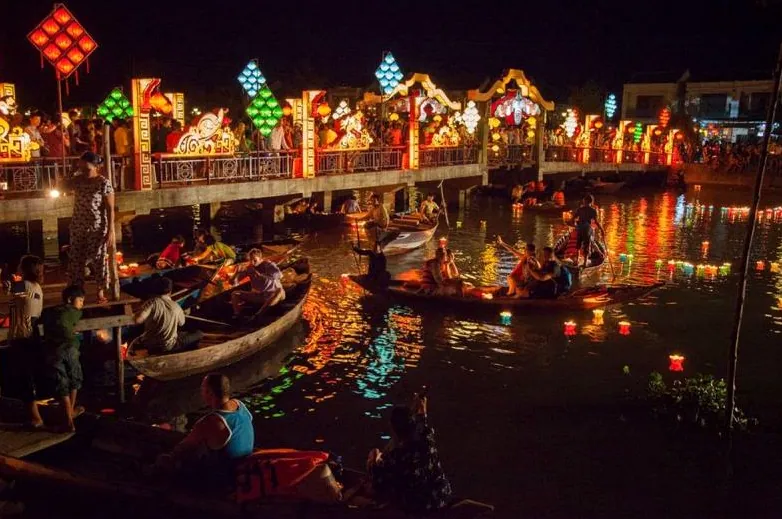
As darkness blankets the waterfront, the shimmering scenery opens up an enchanting space with wooden boats carrying visitors gliding smoothly across the rippling river, reflecting hundreds of bright light rays from colorful handmade lanterns. Along the promenade and across the winding pedestrian bridge adorned with sparkling lights, visitors leisurely watch the tranquil flow of life drifting on the azure water. The fusion of warm red and yellow hues from classical lantern strings with the leisurely paddling on the river weaves a deeply nostalgic atmosphere, setting the stage for diners to step into an enchanting nocturnal culinary journey.
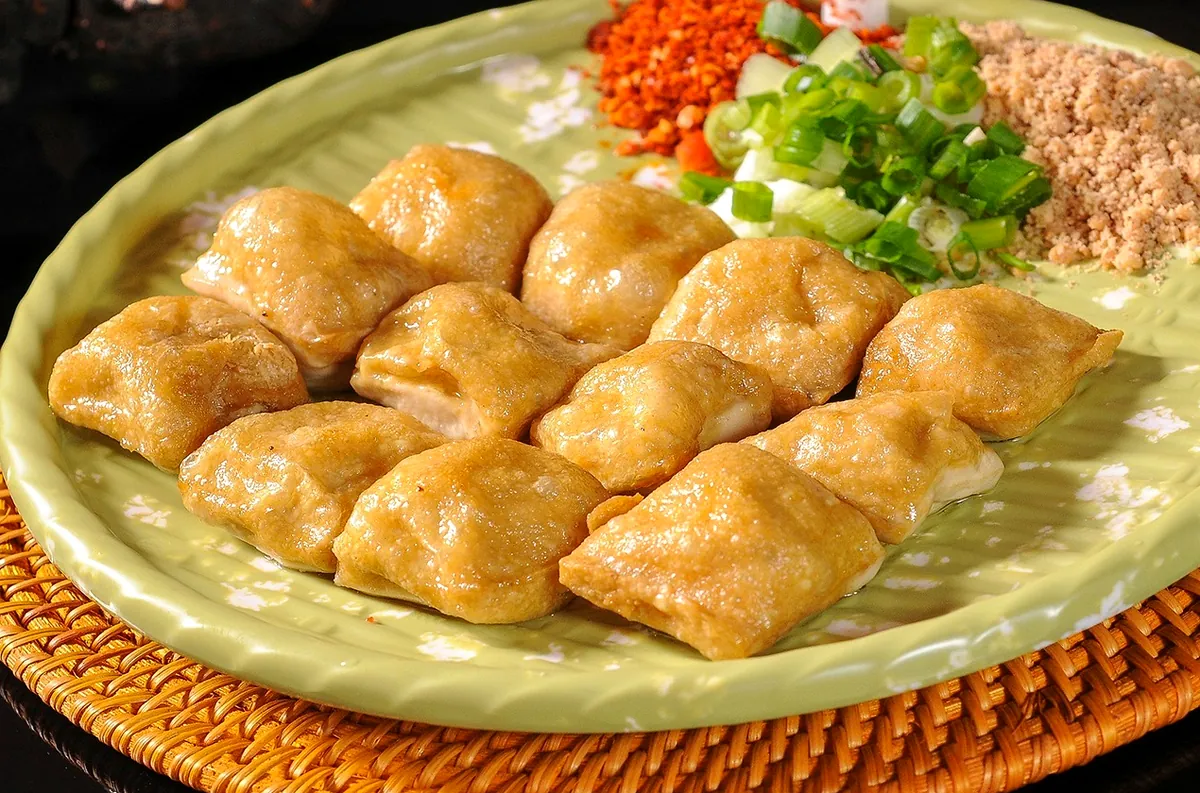
Leading the map of renowned flavors in this ancient land is Lin’an grilled tofu, a culinary masterpiece closely linked to the ancient Daban well, which dates back to the Hongwu era of the Ming Dynasty. The sweet, natural groundwater, rich in alkaline minerals flowing from ancient limestone veins, is the key secret behind the creamy, soft, and pure aroma of each small, square block of tofu. After natural fermentation, the tofu is neatly arranged on iron grates over glowing charcoal; the chef skillfully flips each piece until the outer skin puffs up, turns a golden hue, and releases a rich, savory fragrance. A charming local custom involves using dried corn kernels to count how many pieces of tofu each diner has enjoyed, accompanied by a dipping sauce meticulously crafted from spicy chili paste, finely ground Sichuan peppercorns, and fragrant sesame oil.
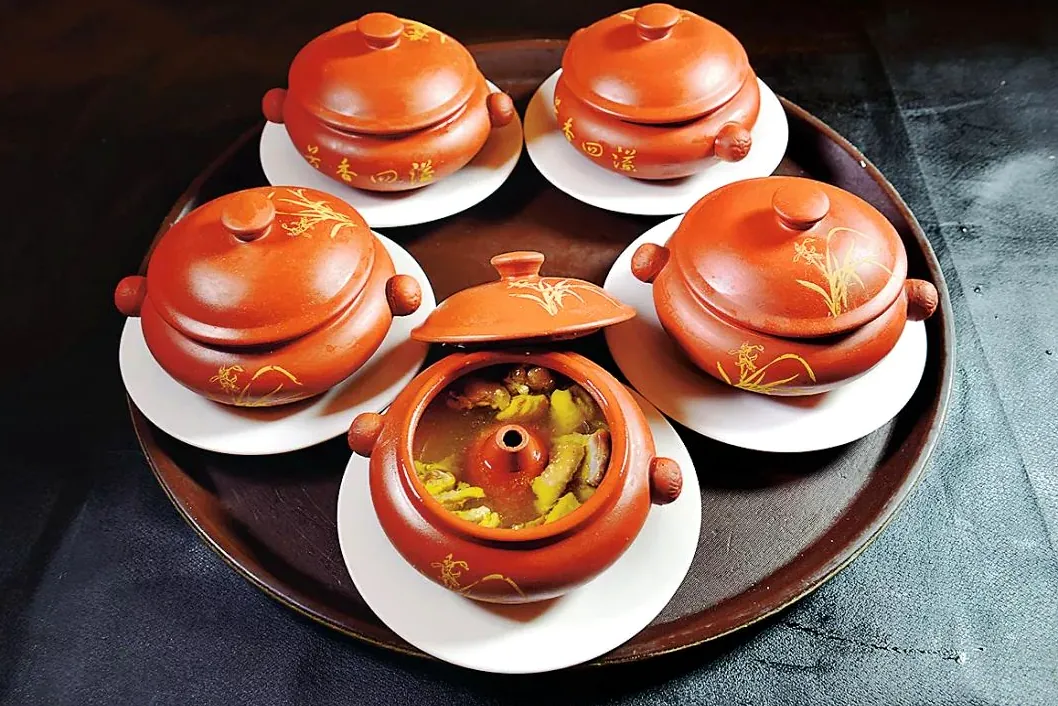
The pinnacle of culinary art combined with local heritage craftsmanship is the steamed chicken in purple pottery (Zitao). Crafted from the famous fine red clay of ancient mines, this special steam-pot features a conical steam pipe rising from the center of the pot’s base. Free-range chicken is chopped into square pieces, marinated with premium Panax notoginseng, amomum, and goji berries, then neatly placed into the pottery pot without adding a single drop of water. After three to four hours of steaming over a low flame, pure steam condenses through the ceramic spout, extracting the full essence of the chicken and herbs to create a broth that is crystal clear, naturally sweet, and exceptionally nutritious.
Strolling through the bustling Zitao night market, which stretches for hundreds of meters along the brightly lit canal, the fusion of street food explodes with countless traditional flavors. Bowls of “crossing-the-bridge” rice noodles arrive steaming hot with broth simmered from marrow bones and old hen for over eight hours, topped with a thin layer of oil to maintain a temperature above 90 degrees Celsius, which gently poaches thinly sliced tenderloin, mushrooms, and fresh, chewy rice noodles. Scattered among the rustic pine stalls are skewers seasoned with tongue-numbing Seven-Star chili, savory chrysanthemum cakes, and pots of ancient Pu-erh tea brewed in bamboo tubes, all weaving together into an endless culinary symphony that captivates every traveler.
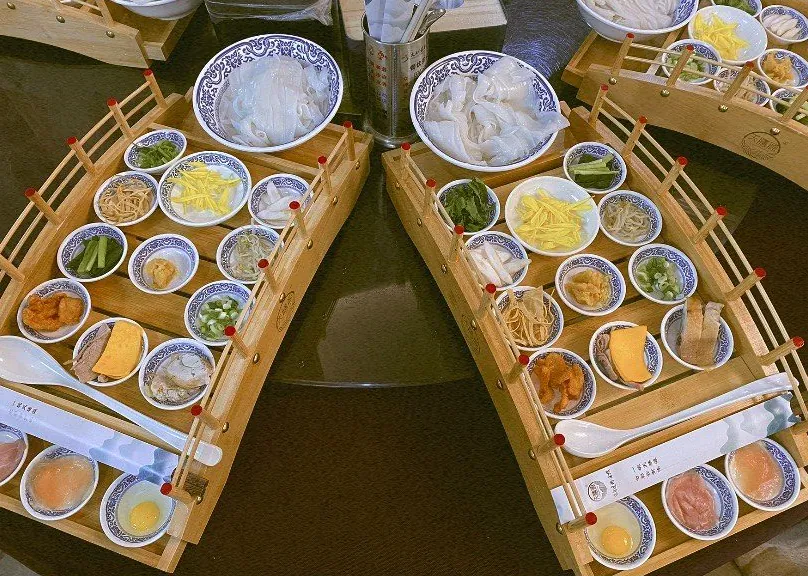
The journey to the ancient capital of Lin’an and the vibrant life of the Zitao night market begins at the northern border gate. Travelers from Vietnam typically choose the land route via the Lao Cai International Border Gate to Hekou, completing immigration procedures with a border pass or a standard tourist visa. From Hekou North Station, a modern railway line connecting the Mengzi–Jianshui artery brings visitors to the ancient city in less than two hours, gliding past the rolling hills of the Yunnan-Guizhou Plateau. Upon arriving at Jianshui Station, a system of public buses, taxis, and specialized small electric vehicles will take guests directly to the ancient city gates, where the blue stone slabs have been polished smooth by centuries of weathering.
The rhythm of life in this cultured land is clearly defined by the cycle of the sun and moon. Major historical sites such as the magnificent Chaoyang Tower, the solemn Jianshui Confucius Temple, or the grand Zhu Family Garden are generally open to visitors from 8:00 AM and close their gates as dusk falls around 6:00 PM. Conversely, the Zitao night market, located along the poetic Guangci Lake, only truly awakens as the sunset fades. From 6:30 PM until midnight, hundreds of stalls under weeping willow branches and red lantern arches light up simultaneously, creating a magical space that blends traditional pottery culture with the bustling atmosphere of street food.
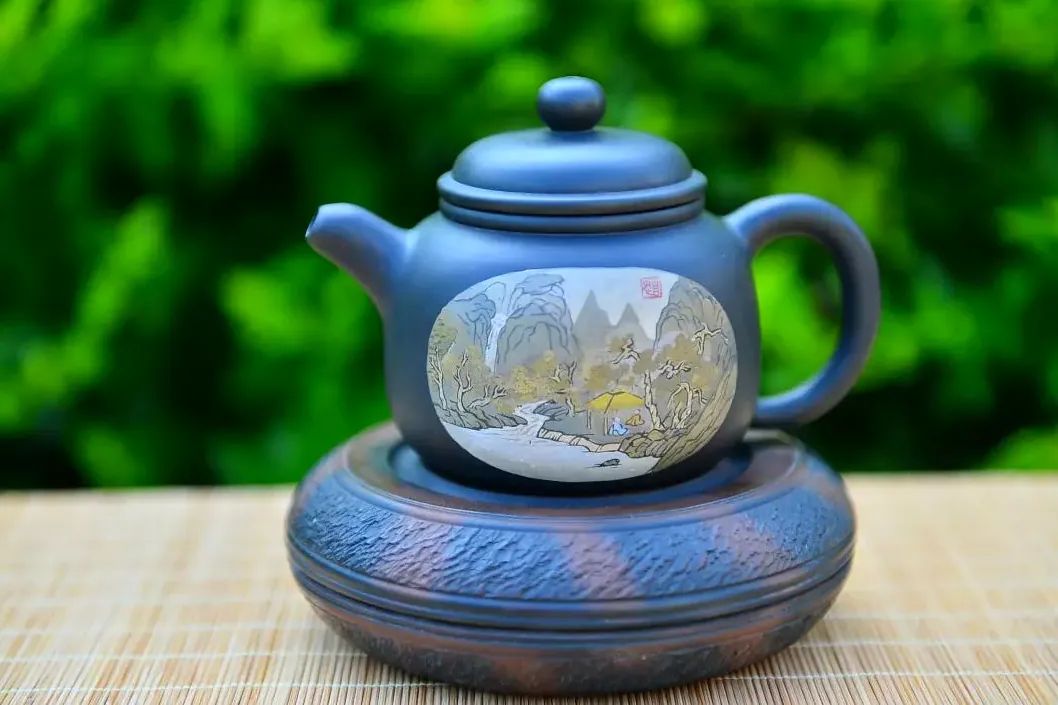
When wandering through this paradise of famous purple pottery, savvy travelers should equip themselves with a few tips to identify authentic handmade Zitao pieces. The five-colored clay sourced from the Yanling Valley, after being fired in ancient dragon kilns and polished with riverbed pebbles, possesses a natural smoothness without the need for glaze, emitting a clear, chime-like sound when tapped. Carefully observe the exquisite calligraphy and painting engravings, as well as the artist’s seal, to distinguish them from mass-produced industrial molds. Interspersed among the craft stalls are charcoal grills serving puffed Banting well tofu dipped in spicy Sichuan chili powder, or steaming pots of chicken soup that retain the pure, sweet essence of local herbs.
To ensure a seamless journey, travelers are advised to prepare a domestic e-payment application linked with an international payment card in advance, as most small vendors at Zitao Night Market operate cashless, though carrying a small amount of local currency as backup remains necessary. The terrain of Linh An Ancient Town is largely paved with uneven bluestone slabs, making comfortable walking shoes the optimal choice, accompanied by a light jacket to fend off the characteristic chill of the highlands when night falls. To fully experience both the historical depth and culinary colors without worrying about border paperwork or route planning, travelers can consider booking a professional all-inclusive tour package to enjoy a stress-free and emotionally enriching journey.