Nestled amidst the towering limestone gorges of the Qiandongnan region, Zhenyuan Ancient Town has accumulated over 2,280 years of poignant cultural and historical sediment. The origins of this land were first recorded in the 30th year of King Zhao Xiang of Qin (277 BC), or according to historical records from the 5th year of Emperor Gaozu of Han (202 BC), when the central imperial court officially established Wudao County under the jurisdiction of Qianzhong Commandery. This ancient administrative decision marked the first milestone in establishing the territorial sovereignty of the Huaxia dynasties along the Wuyang River basin. Throughout the turbulent periods from the Three Kingdoms to the Jin Dynasties, this territory alternated under the strategic administration of Jingzhou and Jiaozhou, serving as a military outpost deep within the rugged lands of the southern indigenous tribes.
The authoritative name “Zhenyuan” officially appeared on the political map in the 8th year of the Xuanhe era (1126) under Emperor Huizong of Song, when the court established Zhenyuan Prefecture, or according to supplementary historical sources, in the 6th year of the Baoyou era (1258) during the Southern Song Dynasty. The two characters “Zhenyuan” carry a profound military and political meaning: using the power of arms to pacify, soothe, and guard the remote and treacherous frontiers. Entering the Ming Dynasty, the ancient town reached the pinnacle of its strategic importance when the Ming founder, Zhu Yuanzhang, recognized it as a vital transportation bottleneck connecting the Central Plains with the Southwest. In the 22nd year of the Hongwu era (1389), the court ordered the construction of a solid stone wall surrounding the majestic Shiping Mountain. This large-scale defensive structure defined a unique dual spatial configuration that persisted for centuries: the Prefecture City, located entirely on the north bank of the Wuyang River, served as the civil administrative center, while the Guard City, standing tall on the south bank, functioned as a military garrison for elite troops.
By the 11th year of the Yongle era (1413), when the Ming Dynasty officially established the Guizhou Provincial Administration Commission, Zhenyuan was upgraded to Zhenyuan Prefecture. It quickly became a vital logistics hub on the “Dian-Qian Ancient Road”—a brilliant artery of the Southwestern Silk Road connecting Sichuan and Guizhou directly to Yunnan, and onward to Burma and India. During the Qing Dynasty, in the 8th year of the Yongzheng era (1730), the illustrious Viceroy of Yun-Gui, Ortai, rebuilt the large-scale postal station network, officially turning the Wuyang River into a strategic waterway. This water transport route seamlessly connected the Yangtze River basin through Dongting Lake and the Yuan River, winding through steep gorges to deliver military supplies, salt, and silk directly into the heart of the Guizhou and Yunnan basins.
It was this precarious “flanked by rivers, guarded by mountain passes” position that turned Zhenyuan into a crucible for the fierce upheavals of the times. Throughout the period from 1855 to 1872, it became the epicenter of the Miao Uprising led by Zhang Tumei, creating a bloody 17-year stalemate against the battle-hardened Xiang Army under Zeng Guofan. The stone walls and the waters of the Wuyang were once stained red with the blood of battle, so intense that the great novelist Wu Jingzi, in his masterpiece “The Scholars,” dedicated three full chapters to describing the intricate military maneuvers and the extreme ruggedness of Zhenyuan’s terrain.
Despite constant warfare, this land remained a gathering place for the spiritual energy of brilliant scholars and philosophers. In the spring of 1508, on his bitter journey of exile to Longchang, the great thinker Wang Yangming stopped by the Wuyang River. At the hanging architectural complex of Qinglong Cave, he engaged in discussions with local scholars, sparking the first seeds of his famous School of Mind philosophy and leaving behind immortal inscriptions carved into the thousand-year-old cliffs. More than three centuries later, the upright Imperial Commissioner Lin Zexu also stayed in the ancient town twice: once in 1842 on his way to exile in the Xinjiang frontier, and again in 1847 when he was appointed Viceroy of Yun-Gui. His sharp memoirs in the “Zhenyuan Diary” and his heroic poem “On the Way to Zhenyuan” forever etched into history the image of an ancient city proudly rising amidst the mountain mist, embodying both the military spirit and the cultural depth of a southern frontier region.
Draped in the sediment of over two thousand years of history, Zhenyuan Ancient Town is located in a rugged karst limestone valley in Zhenyuan County, within the Miao and Dong Autonomous Prefecture of Southeast Guizhou, Guizhou Province. In ancient geographical records, this place has always been hailed as the most strategic throat of the Southwest, serving as a hinge connecting the fertile Central Plains with the majestic Yunnan-Guizhou Plateau, extending its commercial and military influence down to the Indochinese Peninsula. The sturdy anchor of this entire land is the Shiping Mountain range, standing like a natural wall reaching straight into the blue sky. The sheer cliffs of Shiping Mountain not only shield against northern cold fronts but also create a majestic “back-cushion” position, turning the basin space into an isolated, formidable, and expansive natural fortress.
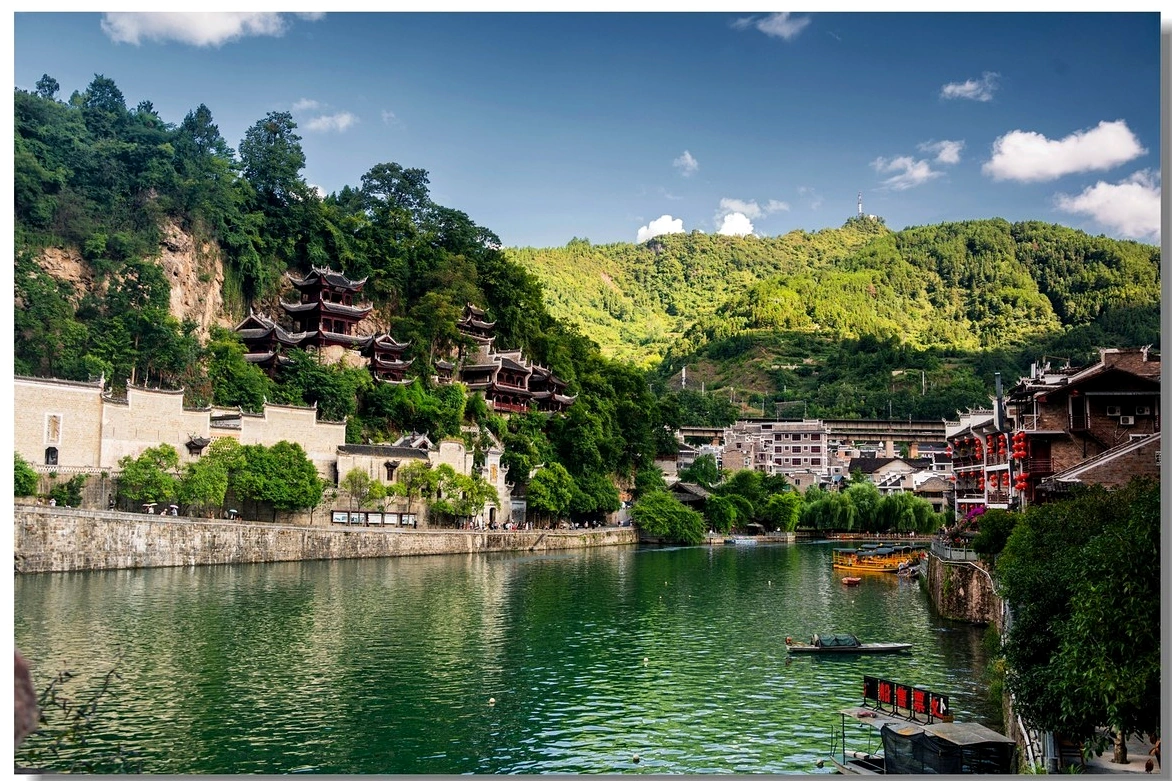
The unique feature that earned it the title “Taiji Ancient Town” stems from the exquisite combination of natural formation and profound Taoist feng shui philosophy. The Wuyang River, with its clear blue water, winds through karst gorges, curving into a soft “S” shape that divides the urban space into two dual halves, much like the Yin-Yang Bagua diagram. The ancients followed this natural terrain to plan the landscape: the north bank belongs to the Yang part, where government offices, prefectural yamen, Confucian temples, and political life spaces with masculine energy are concentrated; while the south bank corresponds to the Yin part, arranged as a defensive guard city, military barracks, and grain warehouses with a solid stone wall system. The “front court, back cushion” structure, with its back leaning against sturdy stone mountains and its face towards the water flow connecting the Yangtze-Yun-Gui trade network, gave Zhenyuan a comprehensive offensive and defensive advantage by both water and land through many ups and downs of war.
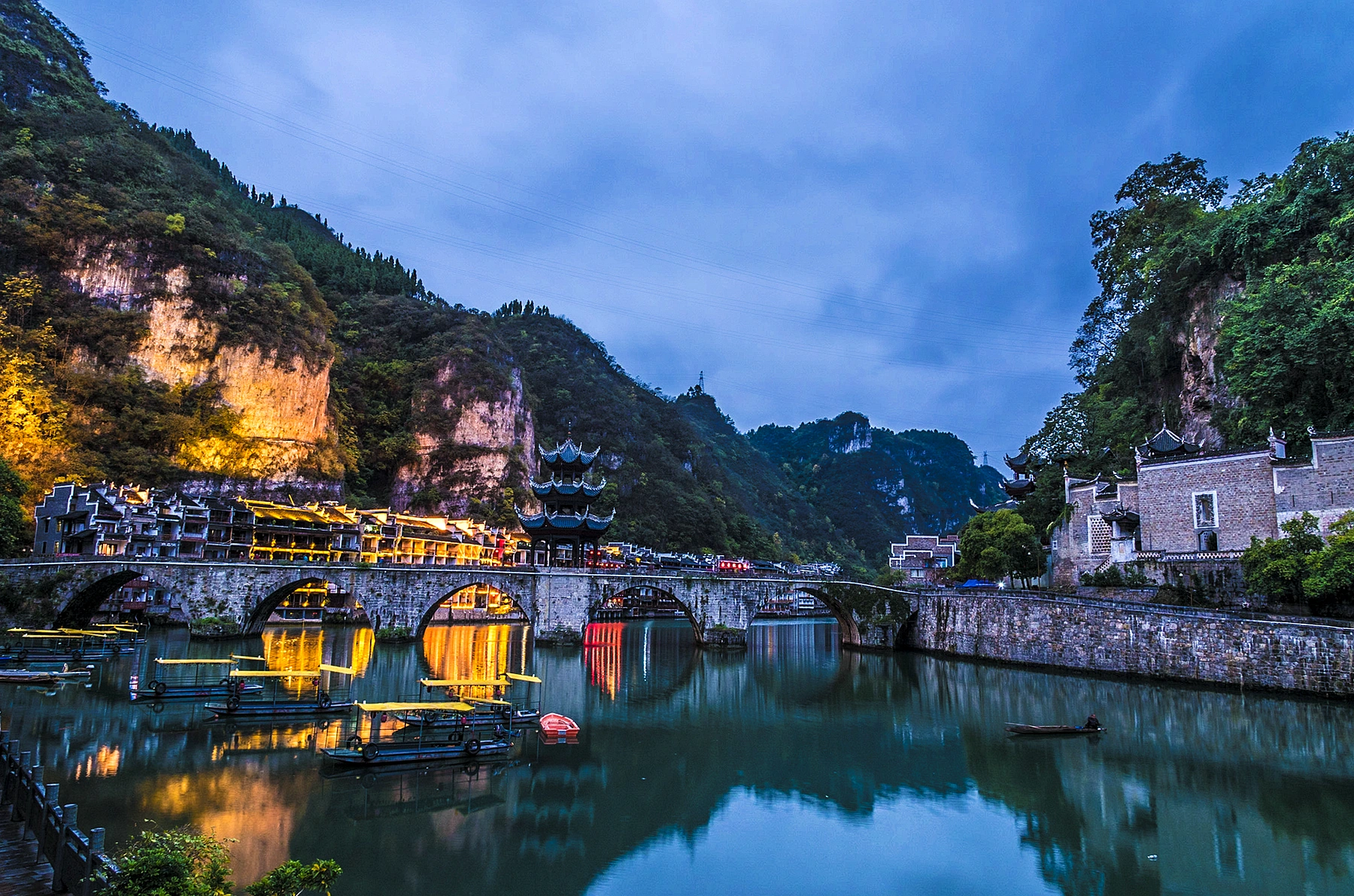
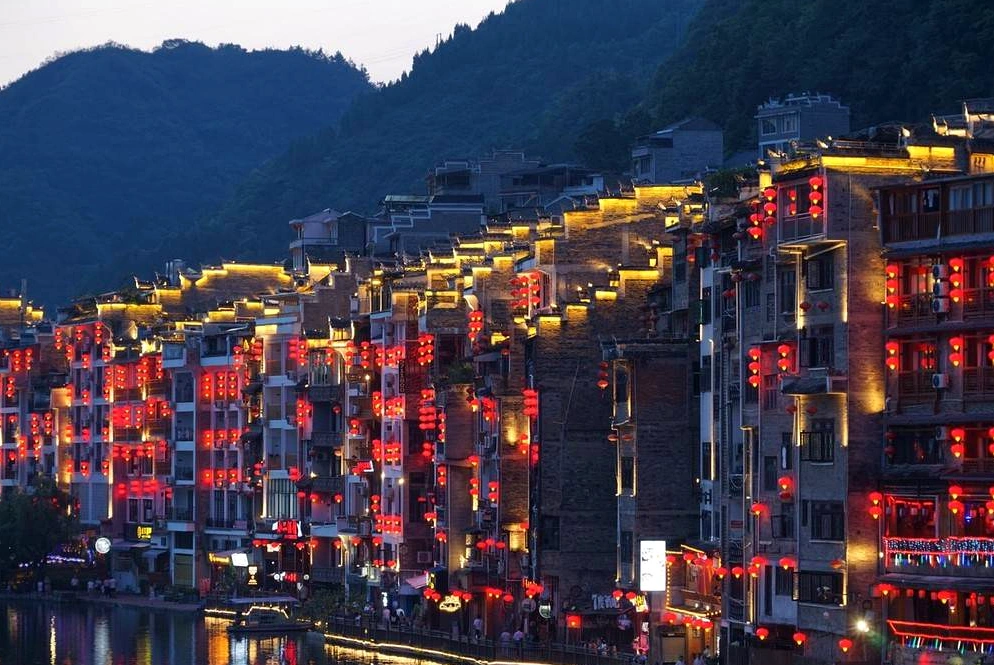
As dusk falls, the entire riverside ancient town glows with a shimmering, ethereal beauty. Traditional multi-story houses, clustered along the slopes, simultaneously light their vibrant lanterns, casting warm amber reflections onto the calm, turquoise water. Standing out in the landscape is an ancient stone bridge with sturdy arched spans crossing the river, backed by towering mountains that loom silently under the night sky. Small boats anchored quietly by the water’s edge weave a picturesque landscape painting—at once solemn, poetic, and serene.
Looking down from the heights of Shiping Mountain, the harmony between nature and human creation in Zhenyuan stands as a pinnacle of traditional Eastern landscape planning. Here, humanity does not seek to alter the terrain but instead nestles into the folds of limestone and the flow of the river. The Wuyang River valley maintains a mild microclimate year-round, blanketed in morning mist and refreshed by clean air circulating from pristine canyons. Every blue-stone paved alley and every step leading down to the water follows the principles of “gathering energy and concealing wind” (tụ khí tàng phong), allowing the ancient town to retain its vitality through thousands of years of history, becoming a quintessential heritage site in the mountains of Southeast Guizhou.
Renowned as one of China’s most vivid cliff-side architectural museums, Zhenyuan Ancient Town boasts a treasure trove of over 160 historical sites densely distributed along the rugged limestone canyons. The town’s spatial structure reflects the ingenious design of ancient architects who skillfully utilized the natural mountain and river landscape to form both a military fortress and a bustling commercial hub. Unconstrained by the rigid grid patterns common in Northern plains, the overall layout here flows rhythmically with the contours of Shiping Mountain and the gentle curves of the river, creating a multi-layered composition with spectacular transitions between sheer cliffs, ancient mansions, and the crystal-clear river.
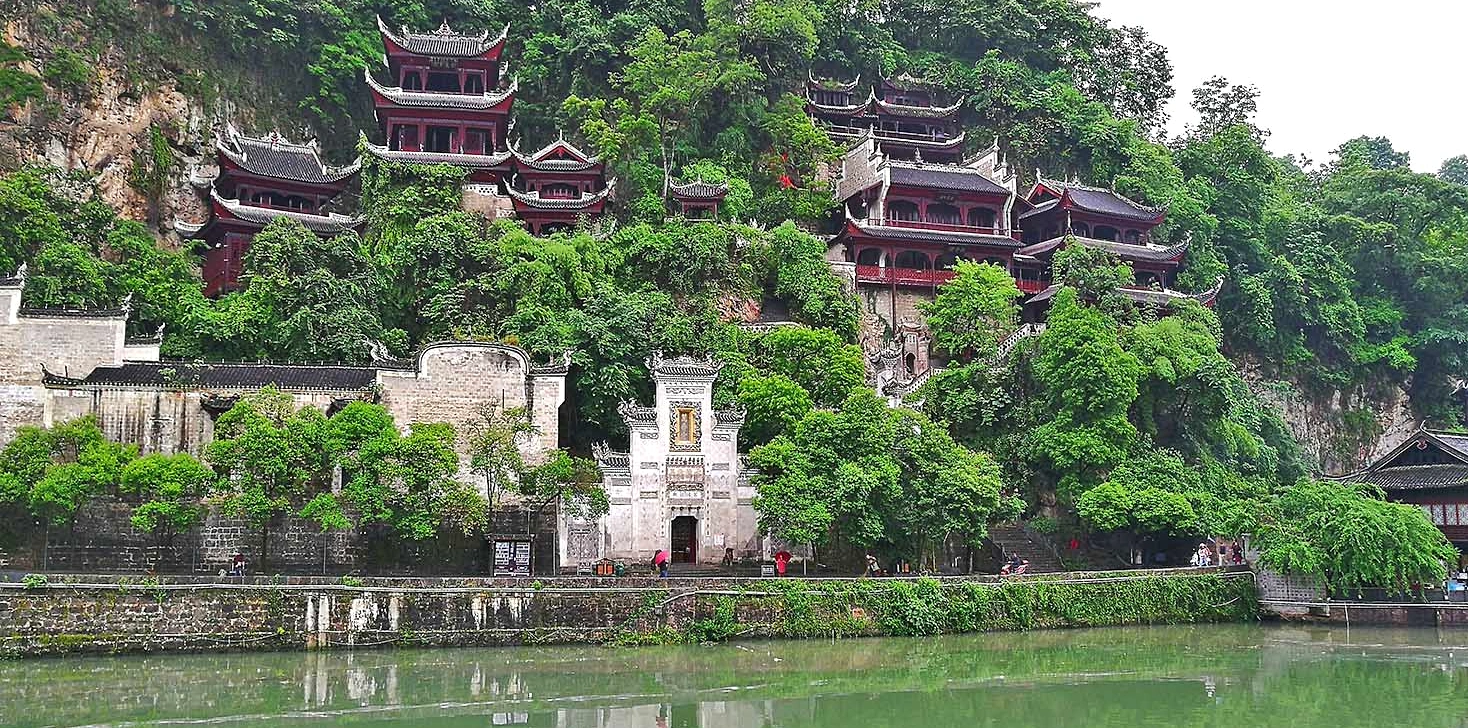
The pinnacle of mountain construction craftsmanship is fully crystallized in the Qinglong Cave scenic complex, covering over 21,000 square meters and perched precariously on vertical rock faces. To overcome the extreme slopes and seismic risks of the mountainous region, ancient artisans precisely combined sophisticated Lingnan carpentry techniques, cantilever beam systems anchored deep into the rock, and the traditional Miao “Diaojiaolou” (stilt house) structure. This construction marvel also represents the rare “Three Teachings Harmonized” (Tam Giáo Đồng Nguyên) model in East Asian cultural history, where solemn Buddhist temples, mysterious Taoist shrines, and Confucian halls dedicated to sages are arranged side-by-side on the ancient cliffs, bearing witness to an era of profound ideological harmony.
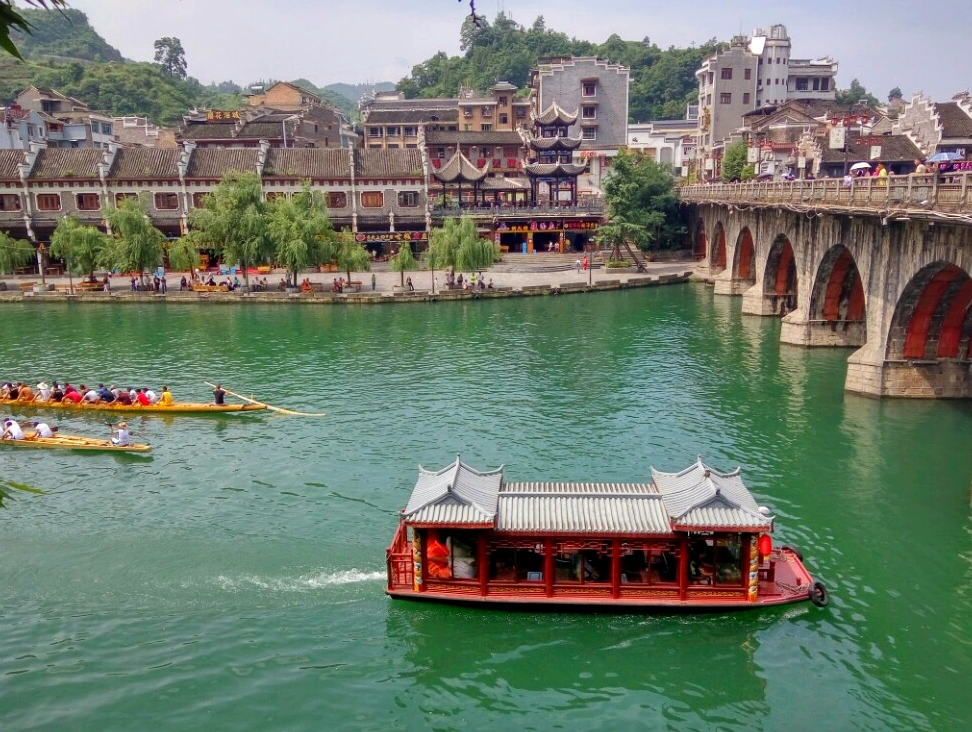
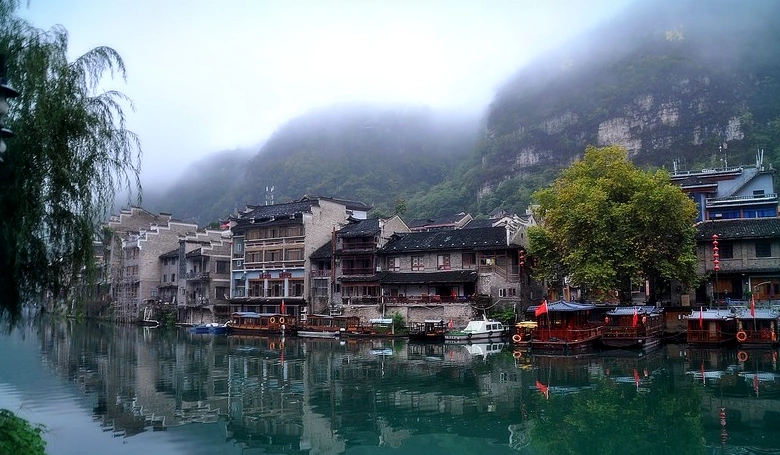
Standing out amidst the picturesque landscape is the ancient stone bridge with its sturdy arches spanning the jade-green river, connecting the two sides of the heritage site. Resting firmly on the bridge is the three-story Kui Xing Pavilion, its elegant curved eaves reflecting clearly on the calm water surface alongside traditional houses scattered along the banks. The backdrop reveals towering limestone mountains shrouded in wispy clouds, creating a perfect landscape painting where the boundary between human craftsmanship and the grandeur of nature seems to have merged into a single entity.
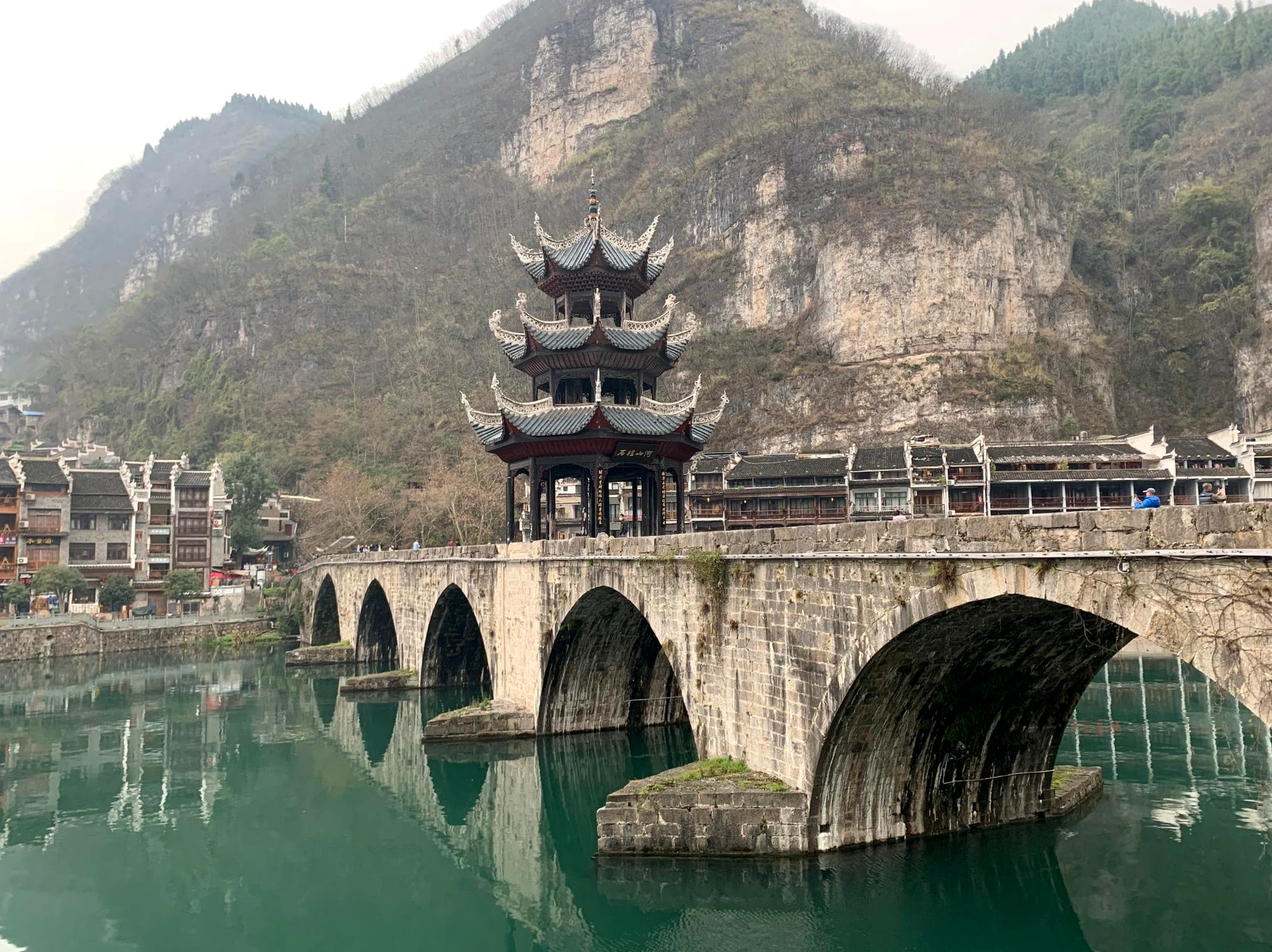
Commissioned in the 21st year of the Hongwu reign (1388) during the Ming Dynasty, this seven-span stone Zhusheng Bridge once served as a vital military and commercial artery, connecting the two key administrative districts: the Prefecture side and the Garrison side. Stepping across the bridge into the old quarters, visitors will lose themselves in the quiet, deep alleys like Four-Direction Well or Renyi Alley, where every step is cushioned by smooth, cool blue stones. Flanking the alleys are towering “horse-head” firewalls (Mã Đầu Tường), a detail distilled from the elegant Huizhou architectural style, yet reinforced to provide fire protection and withstand the harsh mountain winds of Guizhou.
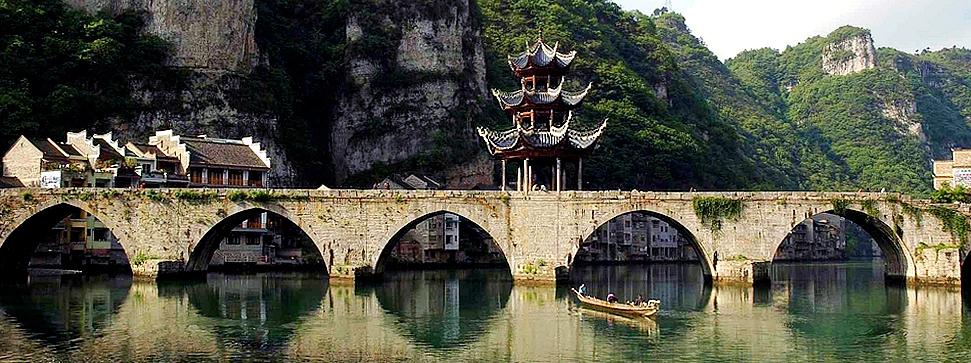
The scale of the complex and its comprehensive preservation have established Zhenyuan as a shining heritage gem, officially recognized by national authorities as a 5A-level (AAAAA) Scenic Area on January 7, 2020. Investment resources and restoration efforts here strictly adhere to the principle of respecting the original structure, while tightly controlling modern development density to ensure the cultural landscape of the cliffs remains untarnished. Every wooden beam, stone slab, and intricate carving on the roof eaves is carefully positioned and protected, maintaining the integrity of a military fortress and bustling river port that has stood for over two thousand years.
As the sunset fades behind the Shiping Mountain range, the Ancient Town of Zhenyuan sheds its daytime tranquility to undergo a spectacular transformation into a magical capital of light in the heart of Guizhou. The Wuyang River, winding in a Tai Chi pattern that separates the Prefecture City and the Guard City, now becomes a giant mirror, capturing the essence of modern lighting art harmoniously blended with the soul of ancient architecture. A sophisticated system of architectural contour lighting runs along the fire-wall parapets, curved roof eaves, and wooden verandas, turning the entire river valley into a magnificent painting of lanterns, where time seems to stand still between reality and dreams.
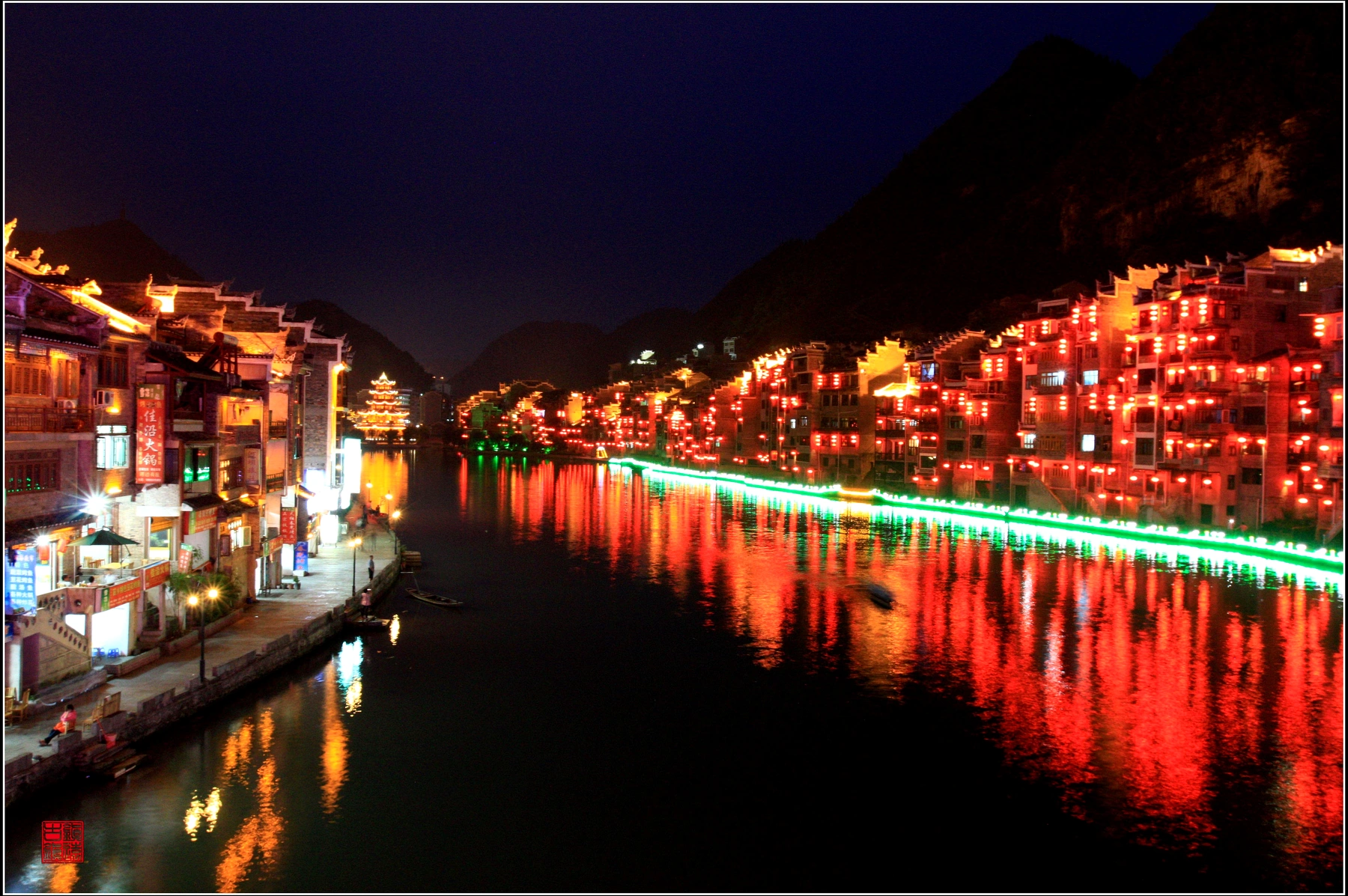
Gazing at the riverside ancient town at night, visitors will be overwhelmed by the cluster of multi-story ancient buildings nestled closely together along the rocky banks of the clear water. The entire structure is brilliantly illuminated by hundreds of traditional red lanterns and warm golden light strips, casting a magnificent glow that is perfectly reflected on the calm river surface. Every carved detail on the wooden railings and the Ming-Qing era window lattices sparkles, creating a striking contrast with the imposing, solemn silhouettes of the limestone mountains standing guard behind the fortress.
The most striking highlight of the nocturnal visual space is the Qinglong Cave ancient architectural complex and the Zhusheng Bridge. The Qinglong Cave, a complex of Confucian, Taoist, and Buddhist temples perched precariously on the cliffs of Zhonghe Mountain, is artistically illuminated, making the red-pillared pavilions look like a palace floating in the silent night sky. Just below, the seven-arched stone Zhusheng Bridge stretches across the water, supporting the three-story Khuiting Pavilion, which glows with a brilliant golden hue. The reflection of the bridge arches and the lights on the Wuyang River creates perfect circles of light that drift gently, weaving a majestic and ethereal scene rarely found elsewhere.
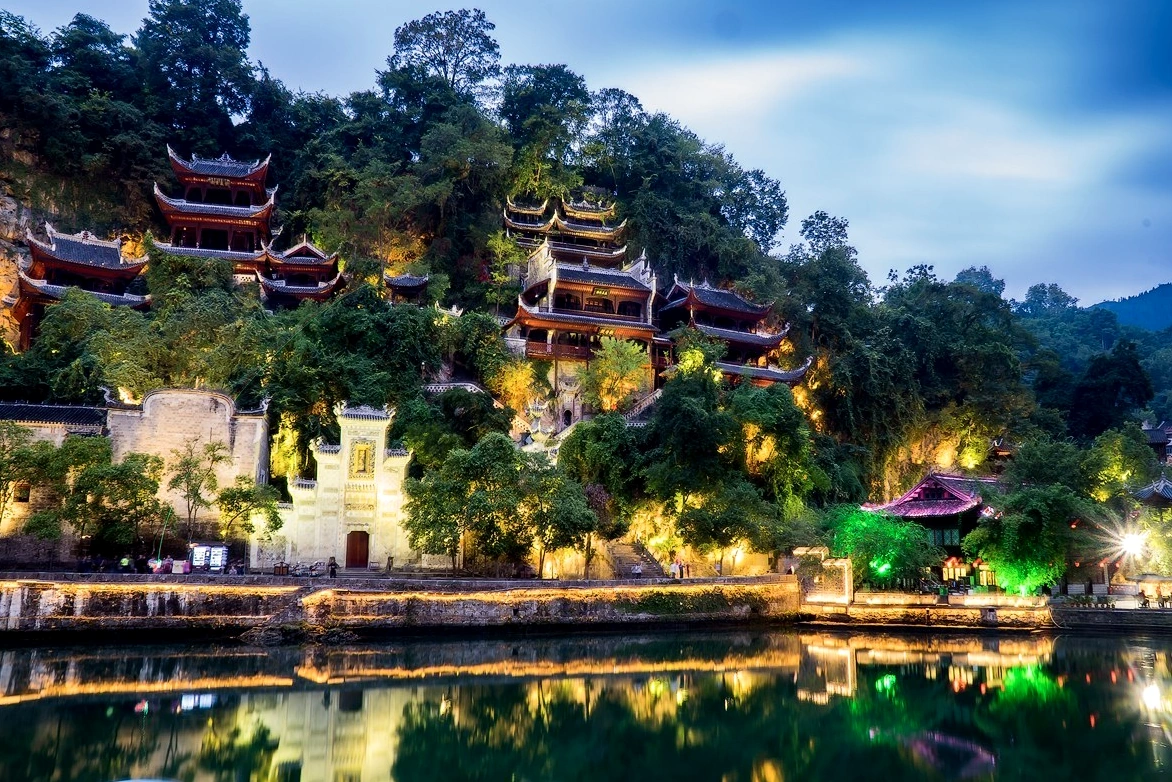
The most rewarding experience to fully absorb the soul of Zhenyuan’s night is to take a wooden boat ride along the Wuyang River, with costs ranging from 60 to 80 RMB per trip. As the boat gently parts the clear water, drifting along the soft S-curve, the rhythmic sound of oars blends with the high-pitched notes of bamboo flutes and the poignant folk songs of Miao girls echoing between the cliffs. Drifting through the night river, visitors can also personally release shimmering flower lanterns carrying wishes for peace, watching them form trails of light drifting slowly downstream, like thousands of stars fallen into the mortal world.
The nightlife in Zhenyuan Ancient Town is vibrant yet never chaotic, preserving the elegant charm characteristic of a mountain border town. Along the two ancient streets flanking the Fu and Wei districts, a series of traditional teahouses, rustic wooden cafes, and bars infused with local culture remain brightly lit to welcome travelers. Here, amidst the melodic sounds of folk instruments and the fragrant aroma of fermented glutinous rice wine, visitors can easily spot groups of people dressed in flowing Hanfu or the silver-adorned attire of Miao maidens, their ornaments jingling as they stroll along the stone pathways. The soft golden glow of lanterns reflecting off ancient stone walls, combined with a thin mist hovering over the water, creates a cinematic atmosphere that leaves a lasting impression of a magnificent and enchanting Zhenyuan in every traveler’s heart.
Located at the vital water and land crossroads of the Qiandong region, Zhenyuan’s cuisine is not merely a fusion of wild mountain ingredients but a harmonious blend of unique flavors crystallized from centuries of migration among the Han, Miao, and Dong ethnic groups. The locals adhere to a culinary philosophy based on four core pillars: tangy sourness, numbing spice, freshness, and aromatic richness. An ancient proverb passed down through generations here—that one who has not tasted the sour and spicy flavors has not truly experienced the essence of life—perfectly reflects the soul of the kitchens nestled along the emerald Wuyang River.
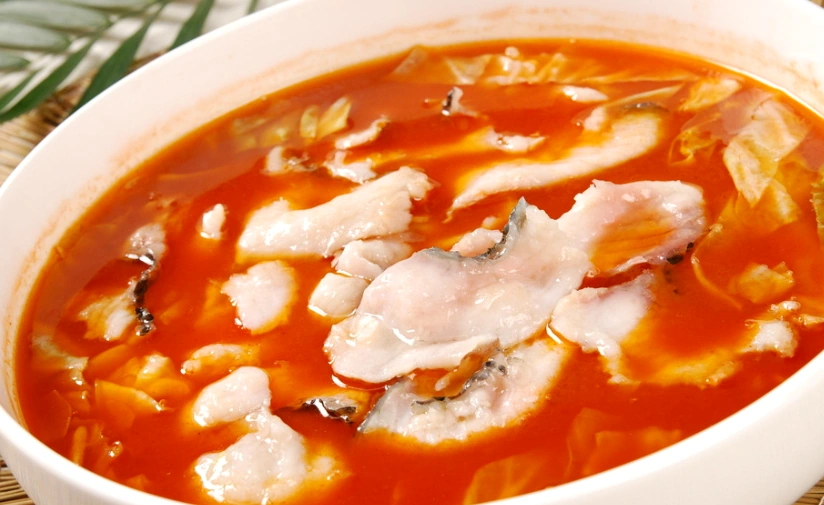
The pinnacle of Zhenyuan’s traditional culinary art is fully embodied in the famous sour fish soup, a heritage nurtured by the skilled hands of the ancient Miao people. The renowned broth is meticulously crafted by fermenting natural rice water into a cool, tangy starter, then simmered with wild tomatoes harvested from the limestone slopes of Qiandong. Fresh carp or catfish, just pulled from the depths of the Wuyang River, are added to the bubbling broth, blending perfectly with the bright red hue of crushed chili peppers and a few drops of Litsea cubeba oil distilled from wild mountain pepper seeds. As the hot steam rises, the refreshing sourness and the ginger-like, tingling heat of the Litsea cubeba immediately awaken the senses, making the sweet, tender fish melt on the tongue without a hint of fishiness.
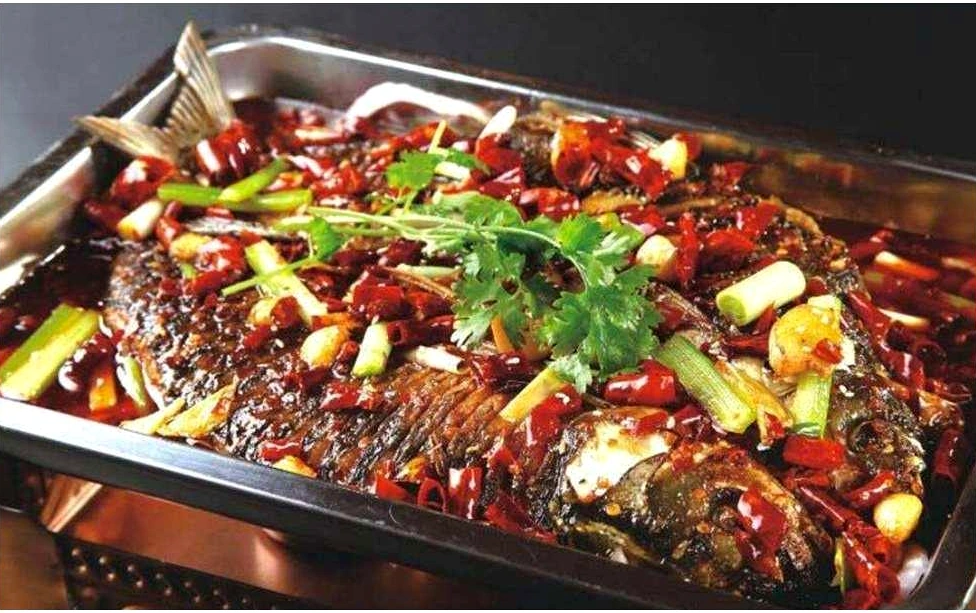
Beyond the famous sour soup, travelers should not miss the grilled fish with tofu, which is deeply rooted in the river culture. Fresh stream fish are clamped onto bamboo sticks and grilled over glowing charcoal until charred, then braised in a cast-iron pan with a rich, spicy chili sauce and blocks of soft, creamy tofu. The pure mineral water filtered from the heart of Taiping Mountain has gifted this land with a renowned tofu-making craft, resulting in the Zhenyuan Taoist Tofu, which features a crispy fried exterior and a silky, snow-jelly-like interior; a light dip in fragrant, golden-roasted North Guizhou chili powder is enough to captivate any palate. This essence extends to the refreshing morning tofu noodle soup and the savory blood sausage and sticky rice dish, where black glutinous rice mixed with pig blood is fried until crispy and stir-fried with the Dong people’s smoked kitchen-hanging meat.
A feast of Qiandong flavors would not be complete without the famous Yang Balao wine, distilled according to the secret traditional recipe of the Yang family. The wine is fermented from dozens of deep-forest herbs through multiple distillation stages, boasting a bold alcohol content of 45 to 52 percent, yet it goes down smoothly, leaving a warm, comforting sensation in the throat without causing dizziness. More discerning connoisseurs might choose to raise a glass of the legendary Moutai wine from Guizhou province, taking a sip of its spicy, sweet intensity followed by a bite of salty smoked meat, clearly feeling the generous and rugged spirit of a borderland once forged in fire and smoke.
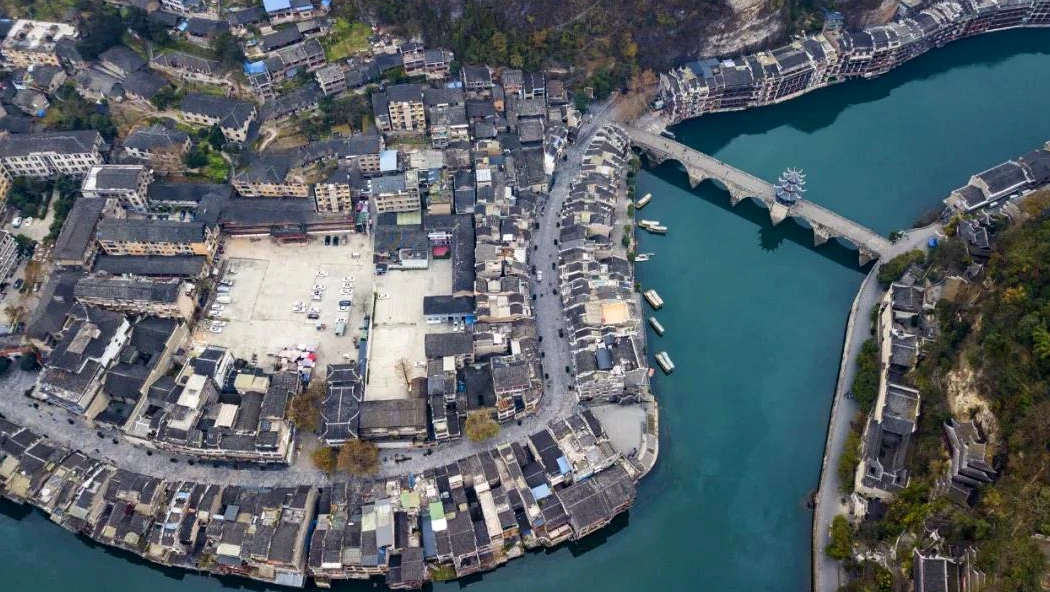
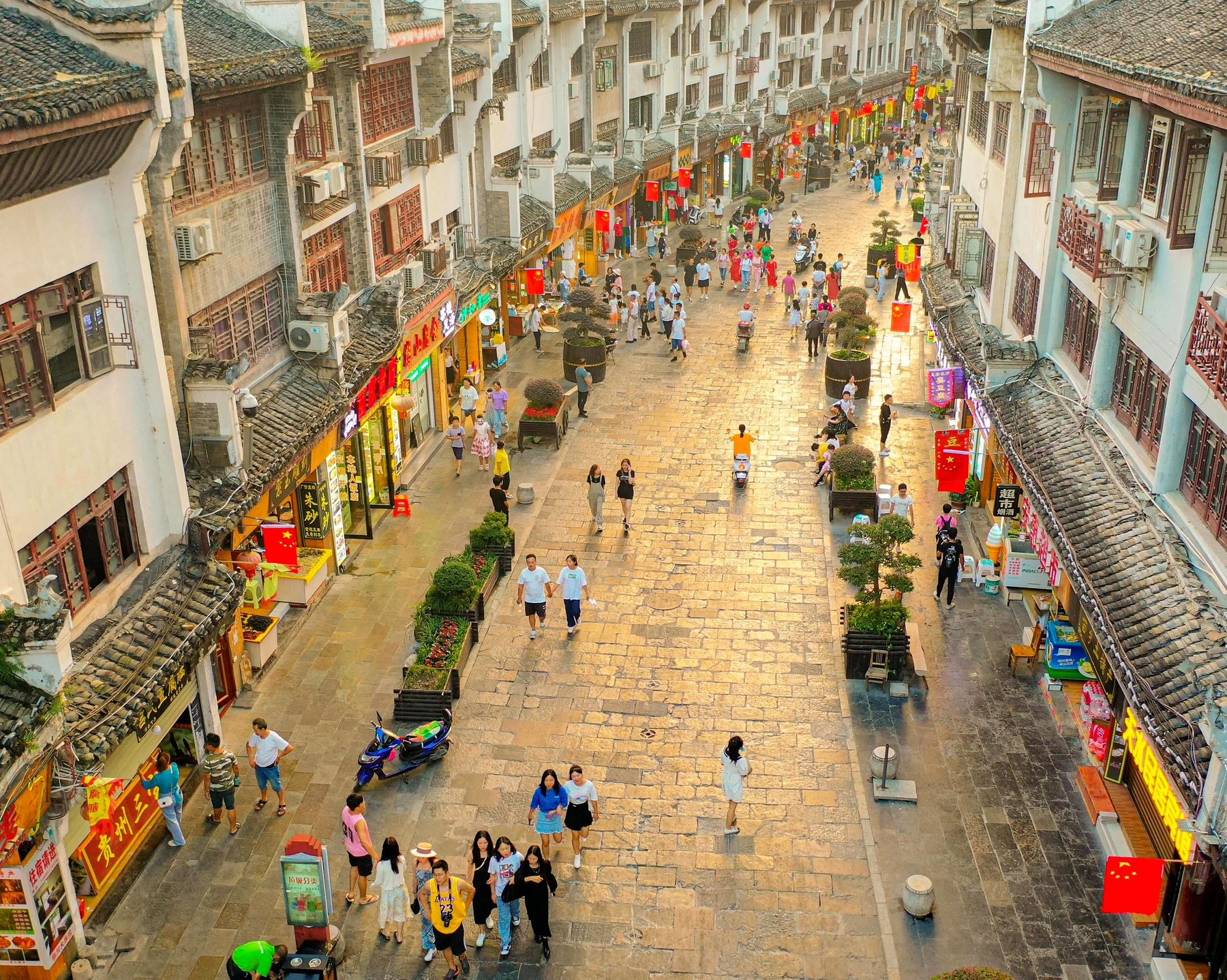
Looking down from above, the central pedestrian street of Zhenyuan Ancient Town appears like a bustling, vibrant ribbon nestled beneath layers of mossy, ancient yin-yang tiled roofs. The flat slate-paved road is crowded with people strolling and shopping, punctuated by electric carts gliding smoothly past traditional wooden houses adorned with high-flying national flags and colorful signs. The evening haze blends with the spicy aroma of seasonings wafting from traditional eateries on both sides of the street, creating a vivid and mesmerizing urban space in the heart of this thousand-year-old heritage site.
Experiencing Zhenyuan’s cuisine is not merely about satisfying the hunger of a long-distance traveler; it is a journey of refined cultural contemplation. Every piece of Wuyang fish, every humble block of tofu, and every drop of fragrant herbal wine carries the story of the diligence, talent, and open-heartedness of the ancient town’s residents through all the ups and downs of history.
Navigating your way to Zhenyuan Ancient Town requires a solid understanding of the Qiandongnan mountainous transport network to optimize your travel time and effort. For international travelers, flying into Guiyang Longdongbao International Airport Guiyang (airport code KWE, approximately 230 km from the ancient town) is the most popular option, opening up opportunities to utilize the convenient 144-hour visa-free transit policy or enter via land borders such as Hekou or Friendship Pass with a group tourist visa. From Guiyang North, the fastest and most comfortable way to travel is by taking the Hu-Kun high-speed railway, which takes only about 48 to 55 minutes to reach Sansui Station. Right at the Sansui station square, 42 km from the ancient town, shuttle buses are available with high frequency, taking passengers through winding mountain roads in 45 to 50 minutes for a fixed fare of 25 RMB per trip. Conversely, those who love the nostalgic charm of traditional K-trains can choose a route running directly to Zhenyuan Station, located just 2.5 km from the heart of the heritage site, making it very convenient to catch a taxi or take a leisurely stroll into the center.
Unlike many ancient towns that have become enclosed commercial hubs, the space of Zhenyuan Ancient Town is completely open, welcoming travelers to freely explore both banks of the Wuyang River 24/7 without needing an entrance ticket. This openness creates a very authentic local atmosphere, where the boundary between visitors and locals is almost blurred. However, to support the conservation of national heritage sites scattered throughout the area, the management board applies separate fees for individual attractions. Tickets to visit the magnificent Qinglong Cave cliff architecture complex cost about 45 RMB per person; the trail leading to the top of Shibingshan Mountain to touch the ancient fortress ruins costs about 30 RMB. As night falls, a Wuyang River cruise, with ticket prices ranging from 60 to 80 RMB per person, is a worthwhile investment to enjoy a magical light feast, where the silhouettes of the Diaojiaolou stilt houses shimmer on the turquoise water.
To fully grasp the profound beauty of this heritage region within a limited timeframe, a meticulously designed 24-hour golden itinerary will guide every step of your discovery. Early in the morning at 06:00, when the mist still clings to the peak of Shibingshan, hiking up will reward you with an invaluable panoramic view of the S-shaped bend of the Wuyang River, resembling a Bagua diagram embracing the two banks of the ancient town. By 09:00, take time to explore the magical levels of the precarious Qinglong Cave as the sunlight illuminates the sheer cliffs. Entering the quiet 14:00 hour, travelers should wander into the mossy depths of the Sifangjing ancient alley, which preserves the pristine daily life of local residents through thousand-year-old wells. The 17:30 sunset is the perfect moment to gather at Zhusheng Bridge to watch the golden twilight paint the ancient stone arches, before closing the journey at 19:30 with a gentle night boat ride between banks glowing with red lanterns.
Beyond sightseeing, field experience requires travelers to remain vigilant against common commercial traps found in popular tourist destinations. Be extremely cautious of offers for unusually cheap tours or “0-dollar tour” schemes, as these often hide forced itineraries to visit artificial Miao silver shops with inflated prices, or Miao medicine clinics that use scare tactics to profit from patients. The top priority should always be “No Shopping” sightseeing programs to ensure an authentic and respectful cultural experience. At the same time, installing e-wallets like Alipay or WeChat Pay linked to international payment cards will help resolve payment issues for services and local snacks without cash barriers. For a seamless, safe, and culturally insightful trip, booking an all-inclusive Guizhou tour will provide absolute peace of mind, allowing you to leisurely capture the ancient soul of this land in your memories.