Stretching along the gentle Yong River at the gateway of Lingnan, the land of Nanning was once known as Yulin Prefecture during the Qin and Han dynasties, later transforming into the prosperous Yong Prefecture during the Tang and Song eras. Since ancient times, this region has been a vibrant settlement for the ancient Baiyue community, most notably the Xiou and Luoyue branches from the Warring States period. Amidst the confluence of Southern wet-rice agricultural civilization and the orthodox ideologies of the Central Plains, this land has nurtured a rich repository of anthropology, rituals, and bronze-casting metallurgy. Built upon this heroic ancient foundation, the Guangxi Museum of Nationalities stands as a testament to the enduring cultural evolution of China’s southwestern frontier.
Beyond preserving memories of the ancient Baiyue period, Guangxi is the shared home of twelve long-standing indigenous ethnic groups, including the Zhuang—who make up approximately thirty-two percent of the autonomous region’s population—alongside the Han, Yao, Miao, Dong, Mulao, Maonan, Hui, Yi, Shui, Gelao, and notably, the Kinh people in the Wanwei Golden Beach area of Dongxing. To create a living “cultural gene bank” that preserves this diverse identity, the government of the Guangxi Zhuang Autonomous Region approved a regional-level museum planning policy in 2001. This strategic decision paved the way for the collection, restoration, and archiving of over fifty thousand to fifty-five thousand precious artifacts related to anthropology, costumes, musical instruments, and traditional customs.
Construction officially began in February 2006, undergoing nearly three years of rapid technical development with key investments from both central and local budgets. By December 2008, the project completed its basic components and began trial operations, becoming an iconic structure to celebrate the 50th anniversary of the Guangxi Zhuang Autonomous Region under the guidance of General Secretary Hu Jintao and Regional Chairman Ma Biao. On International Workers’ Day, May 1, 2009, the museum officially opened its doors to the public. With its superior academic stature and massive collection, the National Cultural Heritage Administration of China officially ranked it as a National First-Grade Museum in May 2017—the most prestigious classification standard in the mainland museum ecosystem—while also recognizing it as a National 4A-level Tourist Attraction.
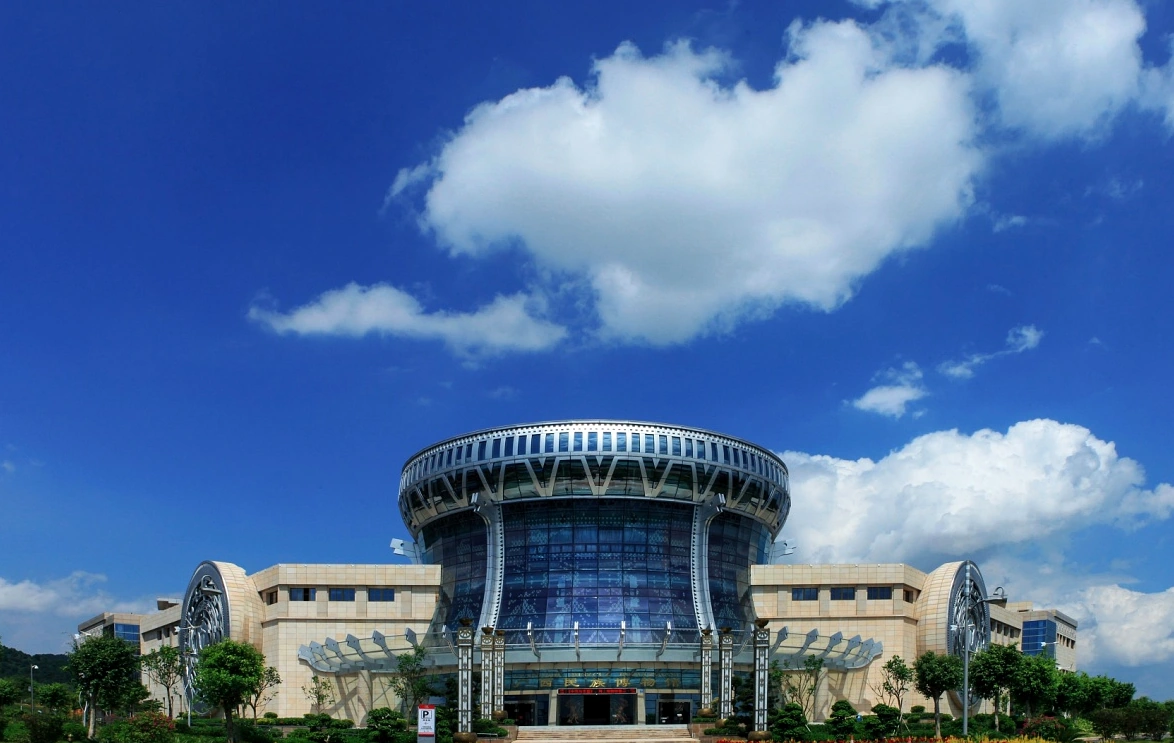
Viewed from above, the museum appears as a massive contemporary architectural complex, seamlessly blending advanced construction techniques with the soul of traditional Southern aesthetics. The most striking visual highlight is the prominent circular glass structure combined with fluid geometric lines on the main building, evoking the image of ancient Luoyue bronze drums. This entire large-scale project is enveloped by lush green hills and vibrant native vegetation, offering an expansive view toward the modern skyline of Nanning city, shimmering under the drifting clouds.
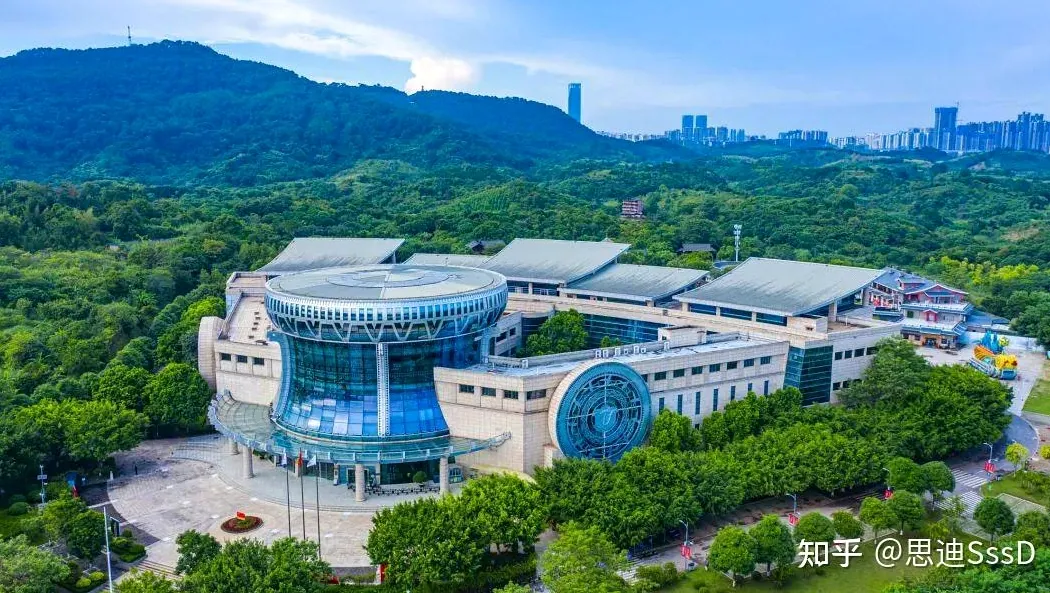
The harmony between the Lingnan landscape and the magnificent architecture has turned the museum into a bridge connecting a thousand years of history with the rhythm of the new era. Every stone slab, glass surface, and carved detail here carries a story about the coexistence and identity formation of the Zhuang people and their neighboring ethnic groups, affirming its position as a leading anthropological research center in Southwest China.
Located at the geographical coordinates $22^circ 46’15” N, 108^circ 23’48” E$, at No. 11 Qinghuan Road in Qingxiu District, Nanning City, the Guangxi Museum of Nationalities occupies a prime location at the gateway where natural ecology meets the thousand-year cultural flow of Guangxi. This land has historically been part of the ancient Yong Prefecture, a gathering place for the essence of the indigenous peoples of the Lingnan region. The museum’s planned space is situated on a gentle, fertile plain, opening up an expansive view that is both detached from the hustle and bustle of modern urban life and fully embraced by the abundant vitality of the Southern land and sky.
According to traditional East Asian Feng Shui, the site enjoys the rare and prestigious “Back to the mountain, facing the water” position, where Yin and Yang intersect and mountains and water converge. Behind the museum lies the Qingxiu Mountain National Scenic Area, with its dense vegetation acting as a sturdy “Black Tortoise” shield, channeling sacred dragon veins and serving as a green lung to regulate the air for the entire heritage campus. The front of the building faces directly toward the fertile banks of the gentle Yong River, where the water curves softly like a silk ribbon, carrying abundant water energy that symbolizes the accumulation of wealth, the gathering of positive energy, and eternal endurance.
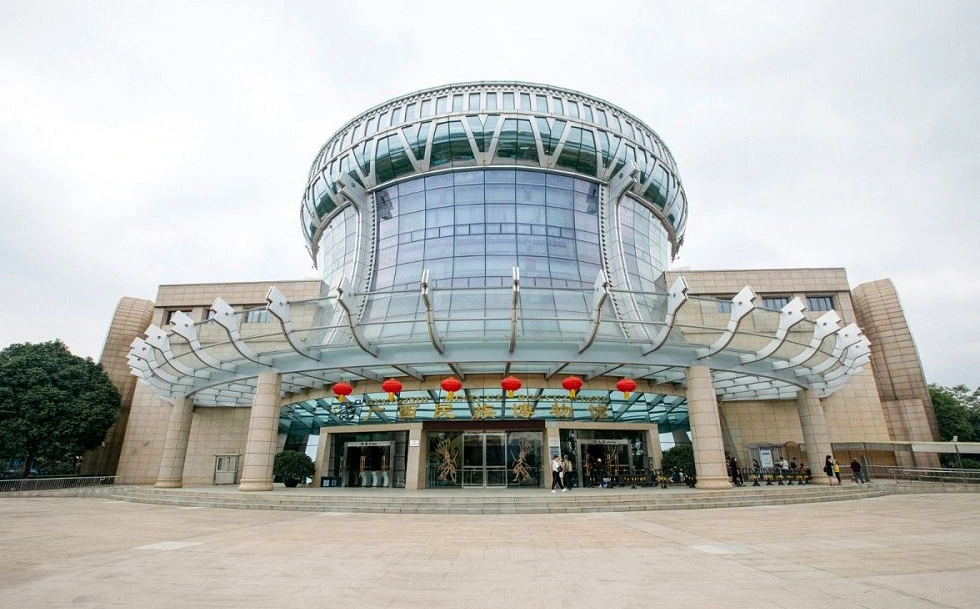
Present within this picturesque landscape is an impressive modern architectural block, highlighted by a large circular glass dome that reaches upward to capture natural light and expand the airy lobby space. The building’s facade is supported by a system of majestic pillars, combined rhythmically with elegant stylized fan-shaped decorative details running along the eaves, simulating the soft beauty of indigenous culture. The main entrance is vibrant with the deep red of traditional Chinese lanterns, creating a warm, solemn, and hospitable visual highlight amidst the breezy natural setting.
Beyond its perfect feng shui structure, the natural landscape surrounding the museum resembles a magnificent, vast tropical paradise. Lush green lawns, dense palm groves, and layers of native vegetation blend harmoniously from the mountain slopes down to the banks of the Yong River. Thanks to the protection of the Qingxiu Mountain ecosystem and the refreshing mist from the river, this area enjoys a perfect, mild microclimate. Cool breezes circulate year-round through the leaves, bringing a sense of peace and transcendence to anyone who sets foot here to explore.
The magical interaction between pristine nature and human ingenuity has transformed this land into a sanctuary that preserves the vibrant memories of the Zhuang community. Rather than imposing a rigid concrete block onto the landscape, the architects skillfully turned the museum into an organic part of the mountain and river, where the spirit of the wilderness and the pulse of the silt-rich waters merge as one. Every step taken along the riverbank or along the tree-lined paths at the foot of the mountain invites visitors to touch a profound stillness, preparing their minds fully before embarking on a journey to admire the thousand-year-old treasure trove of artifacts.
Standing impressively on the picturesque land along the Yong River, the Zhuang Ethnic Museum occupies a spacious campus of up to 130 acres (approximately 86,600 square meters), with a total floor area reaching 33,000 square meters. At first glance, the structure creates an overwhelming visual impact with a bold design language that rhythmically combines the ancient and the contemporary. The central architectural block is stylized after the silhouette of the Dong Son – Wanjia Ba bronze drum, classified as the classic Heger I type, cleverly blending with the shape of the mythical Kunpeng bird proudly cutting through the waves and soaring amidst the green mountains and blue waters of the Lingnan region. The undulating curves on the vaulted roofs perfectly reflect the structure of traditional stilt houses (Ganlan), while being adorned with cloud-thunder patterns and the feather-dance motifs characteristic of the ancient Baiyue people.
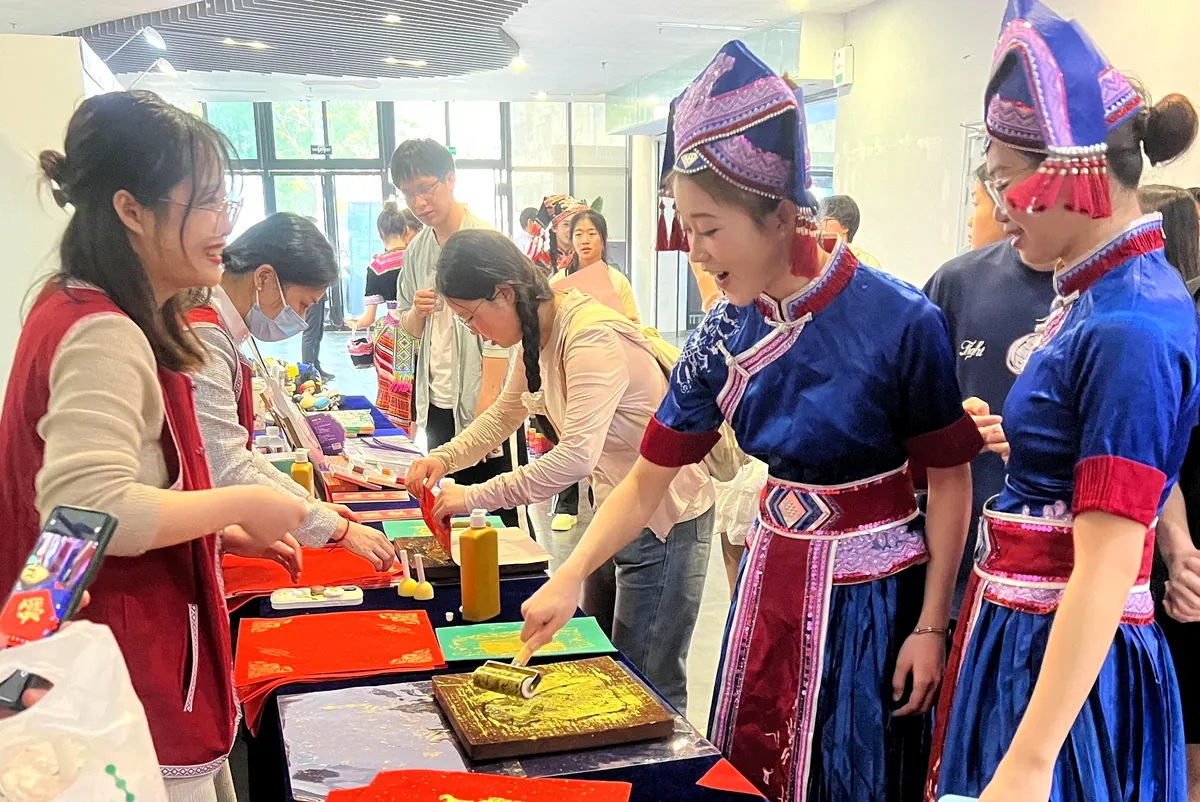
Stepping through the grand hall, the exhibition space on the first floor unfolds a vivid humanistic picture of the 12 ethnic groups that have coexisted on the land of Guangxi for millennia. The highlight here is the 1:1 scale reconstruction of real-life settings, providing an incredibly authentic experience for visitors. From the vibrant, romantic atmosphere of the Zhuang people’s throwing-ball festival, the sacred initiation rituals marking the maturity of Yao men, the lively Miao flower-dance festival with the sounds of leaf-flutes, to the dragon boat racing tradition of the Jing community in Wanwei, all appear incredibly vivid, clearly outlining the enduring undercurrent of indigenous culture.
Moving to the second floor, travelers feel as if they have stepped into a grand cathedral of history with a thematic exhibition titled “Echoes of Bronze,” representing the thousand-year resonance of copper and bronze. This is home to one of the world’s most massive collections of ancient bronze drums, featuring 345 rare artifacts spanning the Spring and Autumn, Warring States, Han, Tang, Song, Yuan, Ming, and even Qing dynasties. Holding the place of honor in the room is the museum’s crown jewel: the Beiliu Bronze Drum, with a surface diameter of up to 165 centimeters and a weight exceeding 300 kilograms. This is the largest bronze drum surface ever unearthed in archaeological history, showcasing the pinnacle of metal casting techniques with intricately carved patterns of birds holding fish and naval battle scenes.
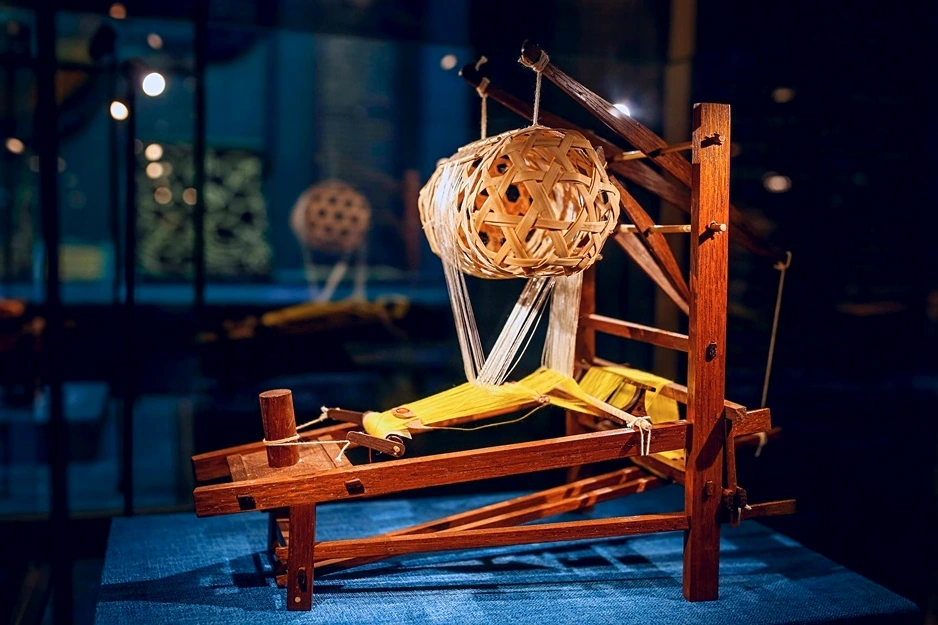
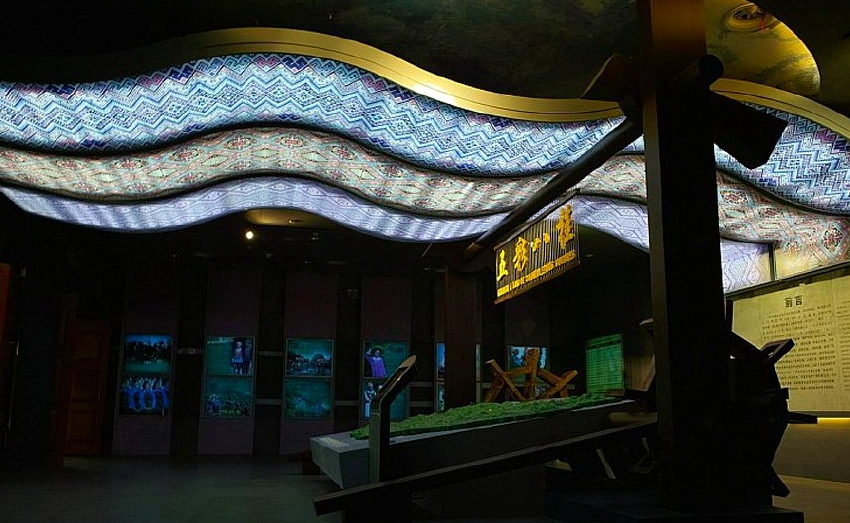
The third floor of the museum shifts the experience toward the delicate nature of craftsmanship through the “Zhuang Brocade” exhibition space. Honored as one of the four great brocades of Chinese textiles, the Zhuang Brocade shines here alongside over 18,600 traditional costumes and embroidered products from local ethnic groups. Researchers have the opportunity to see massive wooden looms that require two artisans to operate in rhythm to create sophisticated swastika patterns or stylized floral motifs, a testament to the perseverance and profound aesthetic sense of women through the generations.
Leaving the indoor exhibition halls behind, the outdoor landscape unfolds as serene and poetic as a picturesque ink wash painting. Along the pathway bordering the tranquil lake and lush green lawns, a traditional architectural complex steeped in East Asian charm emerges, featuring cascading layers of gracefully upturned yin-yang tiled roofs. Paired with this solemn, ancient elegance is a massive, towering modern museum building on the left wing, creating a contrasting yet harmonious visual dialogue. In front of the spacious courtyard, the plaza is paved with decorative patterns of magnificent concentric circles, guiding visitors deeper into a deeply indigenous ecological space.
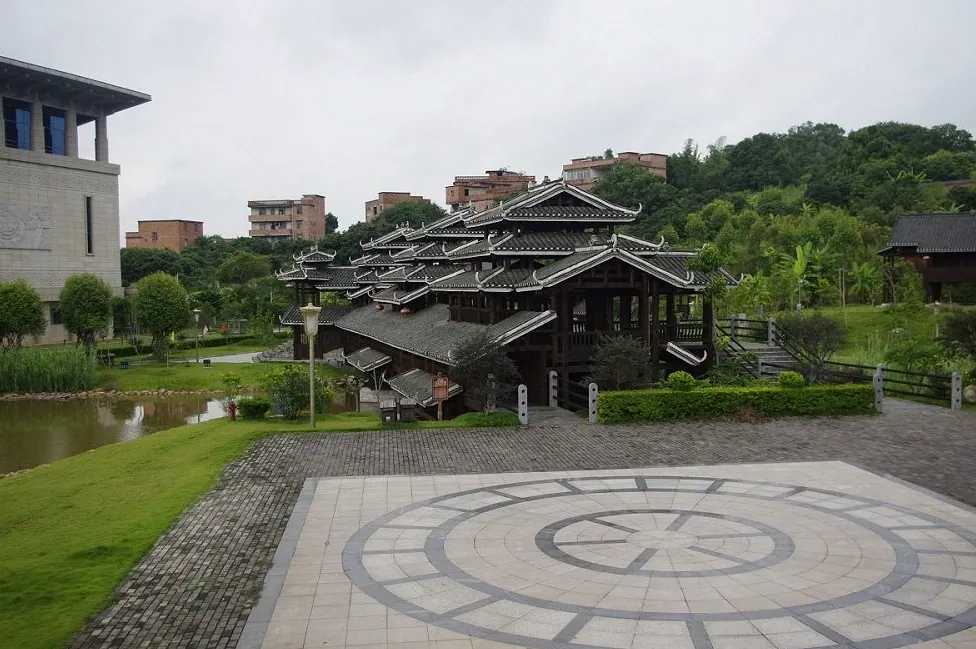
This outdoor campus is none other than the Eco-Museum Complex, which brings to life the concept of living preservation for intangible heritage and local architecture. Beneath the shade of ancient trees, experts have meticulously restored prototypes of Zhuang wooden stilt houses, multi-tiered pointy Drum Towers, the renowned Wind and Rain Bridge of the Dong people assembled with intricate wooden mortise-and-tenon joints without a single metal nail, alongside the cozy vaulted rammed-earth houses of the Dao ethnic group. The intertwining of the modern museum main hall and the scenic eco-museum creates a multi-dimensional spatial structure, where visitors can simultaneously admire top-tier archaeological heritage and breathe in the pristine atmosphere of traditional daily life amidst the natural scenery of the Lingnan region.
As dusk gradually falls over the southern bank of the Yong River, the Zhuang Ethnic Museum closes the doors to its artifact exhibition rooms after five o’clock every day, only to immediately awaken a completely novel visual art space. Under the quiet veil of night, the entire magnificent architectural block lights up brilliantly thanks to a sophisticated, elaborately programmed artistic lighting system. Artistic LED light strips trace every curved contour of the Kunpeng dome roof, vividly recreating the legendary silhouette of a giant bird spreading its wings wide across the open sky, while highlighting each carved detail simulating the sun and Lac bird motifs of ancient bronze drums. The calm surface of the Yong River mirrors the dazzling glow like a giant mirror, reflecting the building’s silhouette like a luminous jade glowing amidst the vibrant green ecological belt along the bank.
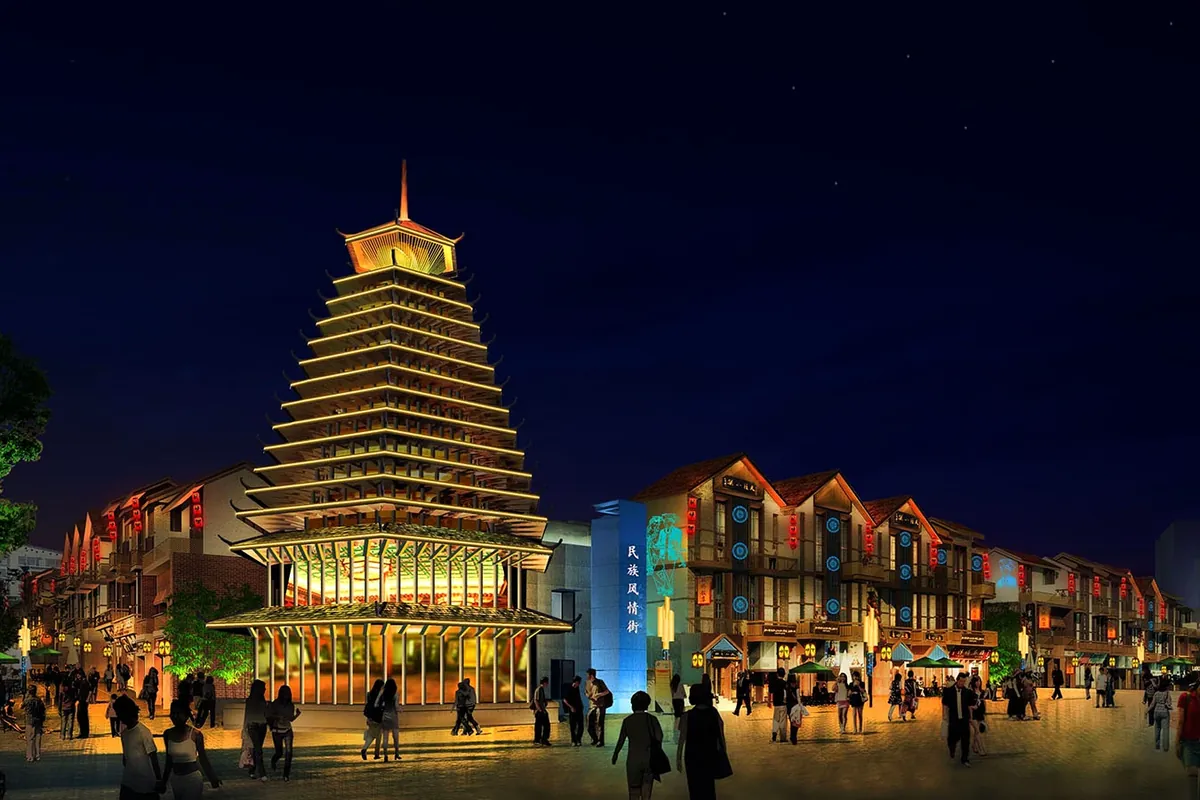
Outside the museum grounds, the bustling nightlife atmosphere comes even more alive in the expanded cultural style street, where past and present harmonize under warm beams of light. Nestled peacefully amidst grandeur at the center is a multi-tiered pagoda built in traditional pavilion style, brightly illuminated from its base all the way to its soaring spire piercing through the starlit night sky. Lying along both sides of the flat stone-paved street are rows of ancient houses bearing the style of classic Chinese architecture with gracefully curved red tiled roofs, standing out beneath rows of warmly casting lanterns and a blue sign bearing the characters “民族风情街” (Ethnic Custom Street). Crowds leisurely stroll beneath the ornate tower, admiring the intricate craftsmanship of each upturned roof ridge and immersing themselves in the poetic, authentic local lifestyle.
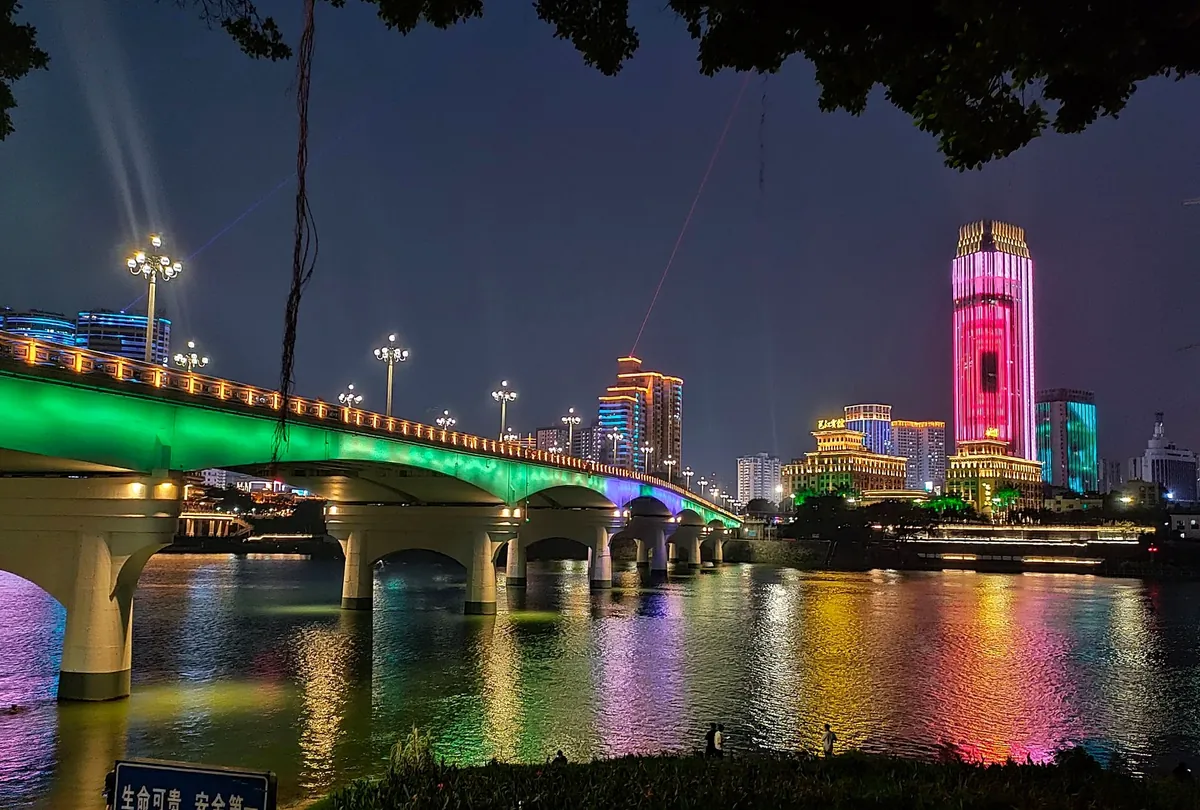
From the riverside outdoor campus, the view extends to the proud Liangqing Bridge spanning across the Yong River. This modern bridge is equipped with a magical color-changing lighting system, continuously shifting shades from deep purple, sapphire blue to golden yellow, painting a brilliant rainbow stripe connecting both banks like a traditional painting. The breezy strolling route along Qinghuan Avenue is tied to the distinctive night scenery of Nanning city, ranging from the glittering sight of cruise ships gliding on the Yong River waters when the city lights up, to the serene, ancient beauty of the Three Streets and Two Alleys (San Jie Liang Xiang), which preserves centuries-old street food culinary essences and Lingnan architectural flavors.
During lively festive seasons—especially the grand Sanyuesan festival on the third day of the third lunar month or within the framework of the annual CAEXPO Fair—the outer grounds of the museum and the adjacent Qingxiushan Scenic Area truly transform into a large-scale outdoor living stage. Under the magical glow of stage lighting and the flickering warmth of glowing bonfires, the smooth, soulful melodies of Then singing, accompanied by the crisp strumming of the ethnic *tinh* lute by Zhuang folk artists, echo across both riverbanks. Evening galas showcasing the traditional costumes of the twelve ethnic brother groups in Guangxi—adorned with shimmering silver jewelry, five-color embroidered scarves, and modest indigo garments—create a vibrant living heritage symphony, perfectly preserving the timeless, profound soul of the Lingnan region.
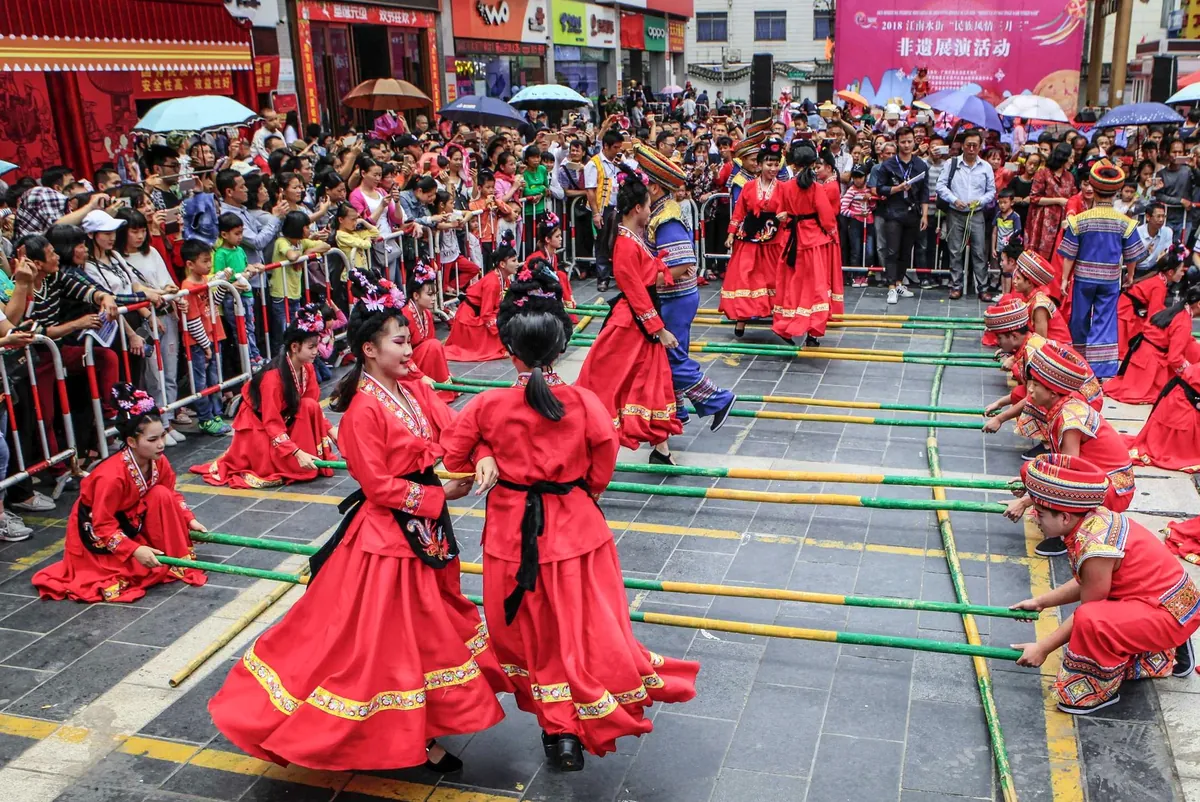
The cuisine of the thousand-year-old Yongzhou land is not merely a combination of ingredients and spices, but a map of memories deeply reflecting the harmony between the people of the South and the humid subtropical climate. To dispel the winter chill and stimulate the senses, the Zhuang people and local residents have created a unique culinary style where crisp sourness, fiery spiciness, and natural fermented aromas reign supreme. The pinnacle of local street food philosophy is crystallized in a bowl of Nanning Laoyou noodles, an intangible heritage delicacy associated with the story of steadfast camaraderie. Over the flickering flames of a deep cast-iron wok, the chef sautés minced garlic, jet-black fermented black beans, and fiery bird’s eye chilies until fragrant, before tossing in pickled bamboo shoots from a clay jar to stir-fry briefly with thinly sliced lean pork tenderloin or fresh pork offal. Drenched in a boiling, bone-broth soup, each strand of soft, smooth rice noodles absorbs the warm, sour, and spicy flavors, radiating intense steam that helps diners sweat out the cold and awaken their senses amidst the foggy weather.
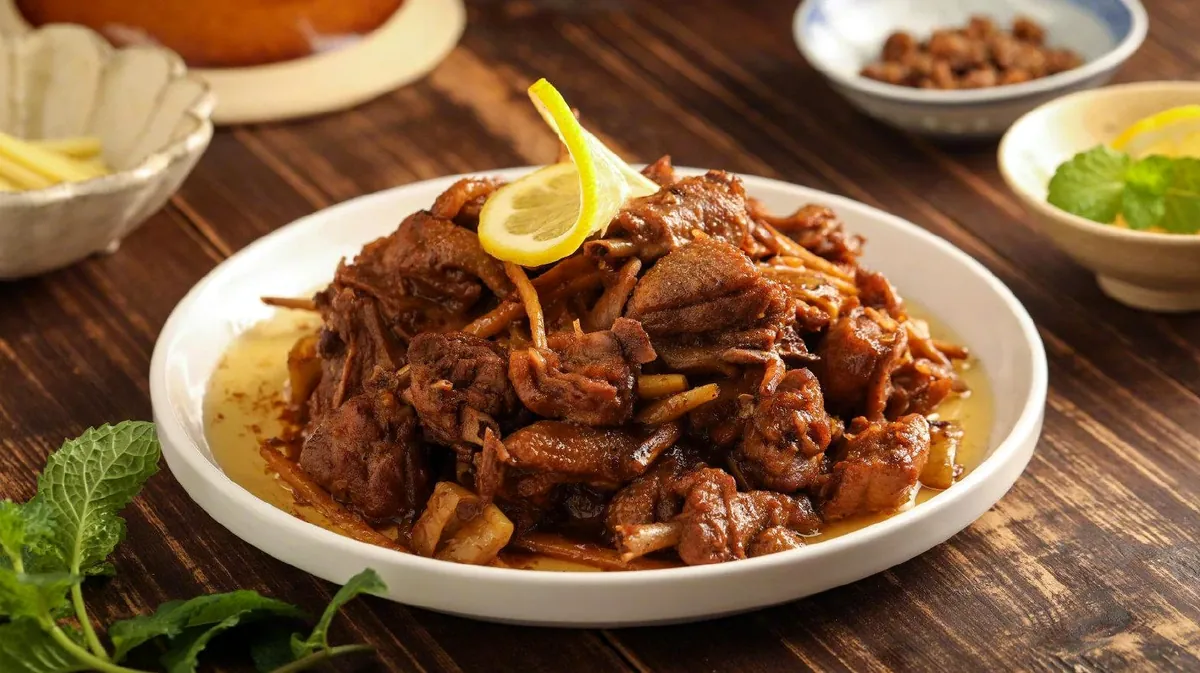
Leaving behind the steaming bowl of noodles on the urban streets, the traditional culinary picture continues to guide food connoisseurs to the Wuming Valley, the cradle of the renowned lemon duck. Unlike common preparation methods like crispy roasting or plain boiling, free-range pasture duck is chopped into square chunks and simmered over low heat with *chennian chanh zi*—lemon fruits pickled in sea salt for many years until their skins turn a deep amber shade. The wondrous fusion of mashed salted lemon pulp, shredded pickled ginger, and crunchy sour chilies completely neutralizes the richness of the poultry fat, leaving a refined, mellow sour aftertaste that deeply penetrates every flavorful meat fiber. In addition, the flowing Yong River also generously bestows fatty, sweet-fleshed catfish, which locals cook into soup with naturally fermented bamboo shoot pickles, creating a river fish soup that is deeply sweet and texturally crisp. This lingering aftertaste is extended by the charming presence of Liuzhou snail noodles, where spicy river snail broth combined with cardamom, crispy fried bean curd sheets, and crunchy sour bamboo shoots captivates anyone who dares to try it.
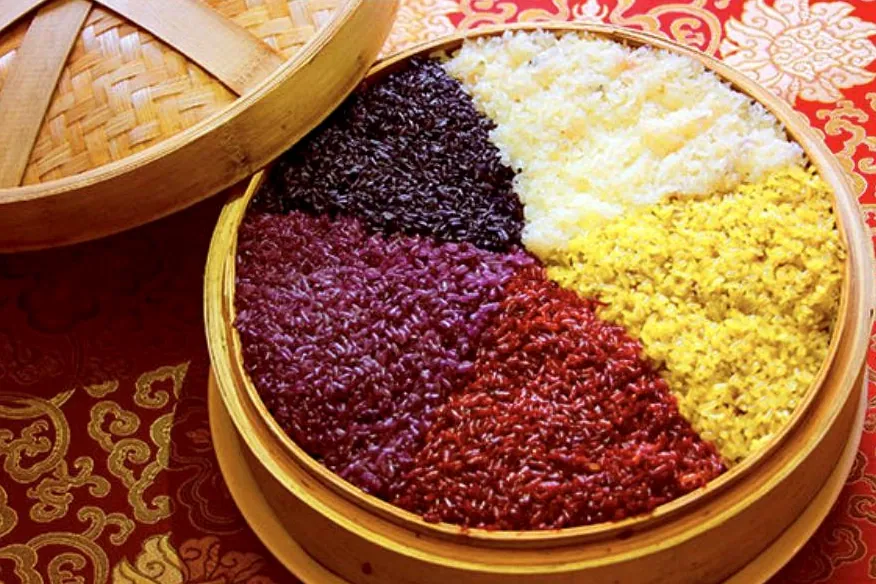
If stir-fried and cooked dishes represent rustic daily life, Zhuang five-color sticky rice is the sacred ritualistic culinary essence, an indispensable soul during the traditional Sanyuesan festival. The five shades of black, yellow, purple, red, and white on the sticky rice platter not only symbolize the five elements of heaven and earth generating one another, but also form an exquisite harmony of indigenous knowledge regarding deep-forest herbs. Zhuang women skillfully use orchid leaf decoction to create a mysterious pitch-black shade, radix dichroae flowers for a radiant bright yellow, deep indigo leaves for a rich dark purple, boiled perilla leaves to extract a vibrant bright red, blended with naturally round, snow-white upland glutinous rice grains. The sticky rice is steamed in a wooden steamer over a wood fire, radiating the pure, intoxicating fragrance of wild plants, remaining tender, glossy, and carrying age-old aspirations for bountiful harvests and family well-being.
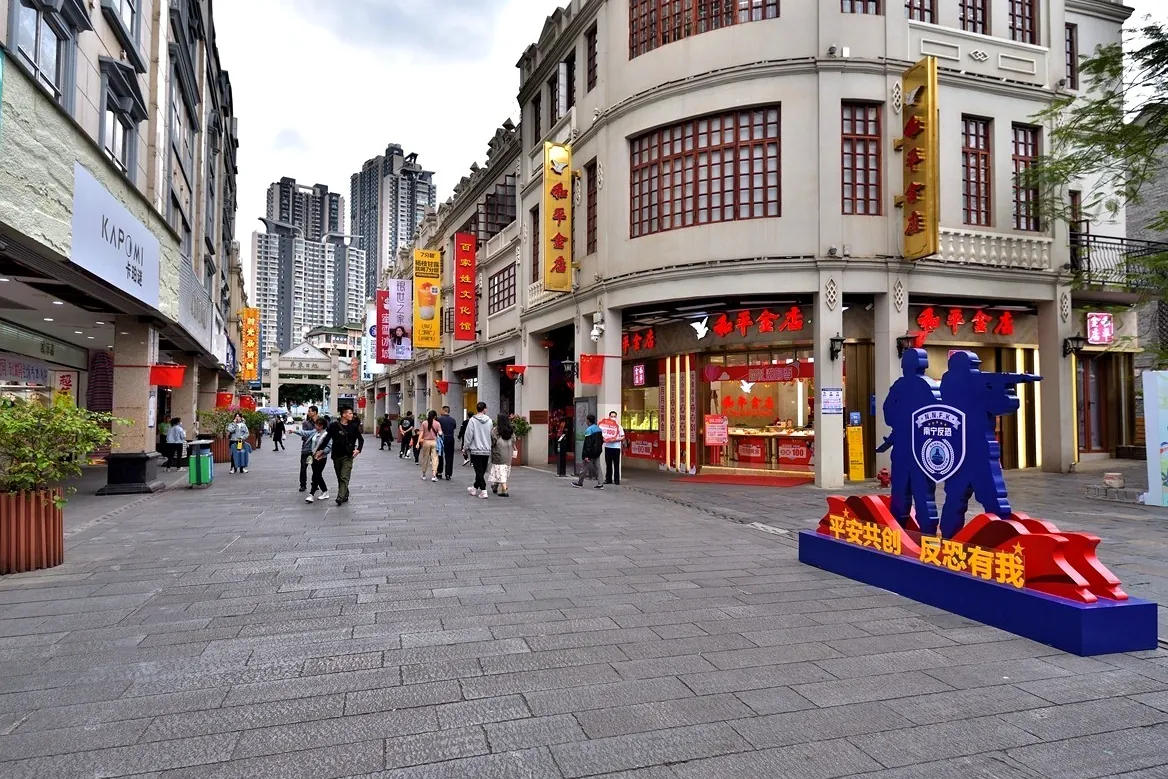
Leaving the museum space to immerse in real life, visitors will encounter the soul of local cuisine vividly manifested along bustling pedestrian streets bearing the architectural imprint of ancient Qilou buildings. On both sides of the stone-paved avenue, the ground floors of the ancient shophouses nestled beneath rain-and-shine-sheltering archways bustle with pedestrians visiting stores like KAPOMI or the Hoa Binh gold shop. In the distance rise modern high-rise buildings, harmoniously contrasting with the security propaganda sculpture featuring prominent blue and red tones in the foreground, creating an exquisite picture of intersection between the memories of an ancient trading port and the breath of contemporary prosperity.
The eateries nestled beneath the mossy eaves of the old quarter always leave a profound and unforgettable impression on the palate. The sizzle of frying pans fragrant with fermented black beans, the sharp, distinct aroma of sour bamboo shoots rising in the morning mist, and the vibrant colors of herb-infused sticky rice go far beyond mere food. They form a living chronicle of the lifestyle, resilient adaptability, and warm hospitality of the people in fertile Guangxi.
To make your pilgrimage to the heritage land along the Yong River complete and formal, travelers should thoroughly understand the operational guidelines and access routes to the Guangxi Zhuang Museum. This academic space is open daily from 09:00 to 17:00, officially stopping entry admissions at 16:00, and is regularly closed every Monday for artifact preservation and restoration work. Implementing the state’s public cultural welfare policy, the museum offers free general admission for citizens from all walks of life and international visitors alike. However, security screening at the main gate is extremely strict, requiring international travelers to present their original, valid passport for electronic identity scanning via automated turnstile systems before entering the grand lobby.
The cross-border journey from Vietnam to the capital of Nanning is currently very convenient thanks to a synchronized transport infrastructure network. Departing from Hanoi, passengers can travel along the CT01 expressway, covering 170 km in about two and a half hours to reach the Huu Nghi (Friendship) International Border Gate. After completing exit and entry procedures at Youyi Guan (Nam Quan Gate), the route continues onto the Nanyou Expressway (G7201), passing through the majestic landscapes of Chongzuo to reach downtown Nanning—a 198 km stretch taking just another two hours and fifteen minutes. For travelers departing from the northeast, the route from Mong Cai International Border Gate through Dongxing via the Fangdong Expressway (G7511) and onto the Lanzhai Expressway (G75), stretching 180 km, also provides a smooth two-hour driving experience. Alongside high-speed highways, the international joint-transport train T8701/8702 connecting Gia Lam station to Nanning station, or modern HSR high-speed rail lines departing from Pingxiang directly to Nanning East station, are also nostalgic and safe choices. Once positioned in downtown Nanning, the most convenient method is to use Metro Line 3 with its signature purple theme, stopping at Qingxiu Mountain or Qingxiu Avenue station, then catching public bus W8 or a taxi to travel about 3.5 km winding along the tree-lined embankment of Qinghuan Road to reach the exhibition area gate.
A distressing blind spot that genuine cultural enthusiasts must be highly cautious of is the distorted commercialization driven by substandard, cheap tour operators. A common tactic of these budget-slashing tours is to turn this top-tier cultural institution into a perfunctory “space-filler” stop, rushing visitors through a superficial 30 to 40-minute tour that prevents them from absorbing any archaeological value. The remainder of the itinerary is abruptly swapped for harsh consumer traps in enclosed centers—ranging from staged electrocardiogram readings to scare visitors about their health conditions and pressure them into buying overpriced memory foam mattresses ranging from 10,000 to 35,000 yuan (equivalent to 35 to 120 million VND), to psychological manipulation tricks selling high-tech bamboo charcoal razors, baseless prescription traditional medicine pharmacies, or the classic script of a jade shop owner’s son appearing to “express gratitude and form brotherhood” in order to clear out fake gemstones. Wisely rejecting these uncultural shopping mazes and resolutely dedicating a full two and a half to three hours to stroll through the museum is the only true way to show respect for the thousand-year-old treasures of the Baiyue region.
To optimize your field trip experience, visitors should prepare modest, polite attire suitable for an ethnic spiritual space and choose comfortable, flat-soled shoes with good traction. This is because the entire interior architectural layout of the museum is paved with flat natural granite slabs spanning tens of thousands of square meters, which can easily cause foot fatigue if walking continuously. Right at the central reception desk, do not hesitate to rent a multilingual Audio Guide device—an excellent support tool that brings deep sediment layers hidden beneath Lac Viet bronze drum patterns or vibrant Zhuang brocade weavings to life step by step during your research. To ensure your journey of tracing the origins of the Lingnan rivers and mountains is organized thoughtfully and professionally with dedicated, deep dive durations completely free of forced shopping, readers can refer to standard itineraries via our specialized all-inclusive tour package tailored specifically for souls who cherish humanistic values.