Occupying a vital throat-like strategic position connecting the Sichuan Basin and the Jing-Chu plains, the land of Yichang has been revered since ancient times as the “Throat of Chuan and E.” It serves as the brilliant cradle where two ancient cultures, Ba and Chu, intertwined, forging a humanistic heritage that is at once solemn and heroic. The Zigui area within Yichang is forever renowned as the birthplace of Qu Yuan, the genius poet of the Warring States period who cast his stirring, heart-wrenching epics such as “Li Sao” into the Miluo River. Through countless vicissitudes, the marks of war have etched the harshest strokes of Chinese history into this place. In 278 BC, the Qin general Bai Qi led an army to attack Chu, burning down the Chu capital of Yiling and officially establishing Yiling County, laying the first administrative brick for a vital military city on the banks of the Yangtze River.
During the turbulent Three Kingdoms period, Yiling became the central stage determining the fate of the three rival forces: Wei, Shu, and Wu. In 222 AD, corresponding to the second Zhangwu year of Zhaoliedi Liu Bei of the Shu Han state and the first Huangwu year of Sun Quan of Eastern Wu, the historic Battle of Yiling shook the annals of history. Commander Lu Xun on the banks of the Eastern Wu fortifications employed a brilliant fire strategy, burning down the Shu coalition’s camps stretching over seven hundred miles and burying all of Liu Bei’s morale and ambitions for revenge. This catastrophic defeat at Yiling not only forced the Shu Han emperor to retreat in deep grief to Baidi City where he passed away, but it also officially solidified the tripartite balance of the Three Kingdoms, which remained as steadfast as a monolith for decades to come.
Entering the Sui, Tang, and Song dynasties, this perilous land was named Xiazhou, transforming into a haven that recorded the footprints of exiled scholars and wandering poets. In the autumn of the third year of Jingyou (1036), the great master Ouyang Xiu was demoted due to his remonstrance with the imperial court and appointed as the Magistrate of Yiling. During his turbulent official years here, he and fellow scholars cultivated an elegant poetic lineage amidst the mountains. Later, the brothers Su Shi and Su Zhe, along with their father Su Xun, stopped their boats while traveling to the imperial capital for examinations, leaving their exquisite calligraphy inscribed on the cliffs of the Three Travelers’ Cave (Sanlu Dong), turning this ancient cave into an immortal literary pilgrimage site for a thousand years.
By the final feudal dynasty, the name of this region underwent a crucial turning point of eternal symbolic significance. In 1735, the thirteenth year of the Yongzheng reign of the Qing Dynasty, the Yongzheng Emperor issued an edict upgrading Xiazhou to Yichang Prefecture. The name “Yichang” was crystallized from the profound blessing of “suitability for home and family, peace and prosperity,” embodying the aspiration for a land of enduring peace, stability, and thriving development. However, the winds of the modern era soon blew across this port city when the Chefoo Convention was signed in 1876. Just a year later, in 1877, Yichang officially opened for international trade, swiftly welcoming diplomatic missions and consulates from the British and Japanese Empires to establish riverside commercial rights.
The most heroic and tragic chapter in Yichang’s history was written in the autumn of 1938 during the fierce war of resistance against Japanese militarism. Faced with the imminent fall of vital eastern cities, industrialist Lu Zuofu and the Minsheng Company organized a historic campaign known as the “Yichang Evacuation” or the “Orient’s Dunkirk.” In just forty days and nights under heavy carpet-bombing, the nation’s entire industrial machinery, defense resources, cultural treasures, and tens of thousands of intellectuals were rapidly transported upstream along the Yangtze River through perilous gorges to the safety of the Chongqing rear, before the city fell to the Japanese army in 1940.
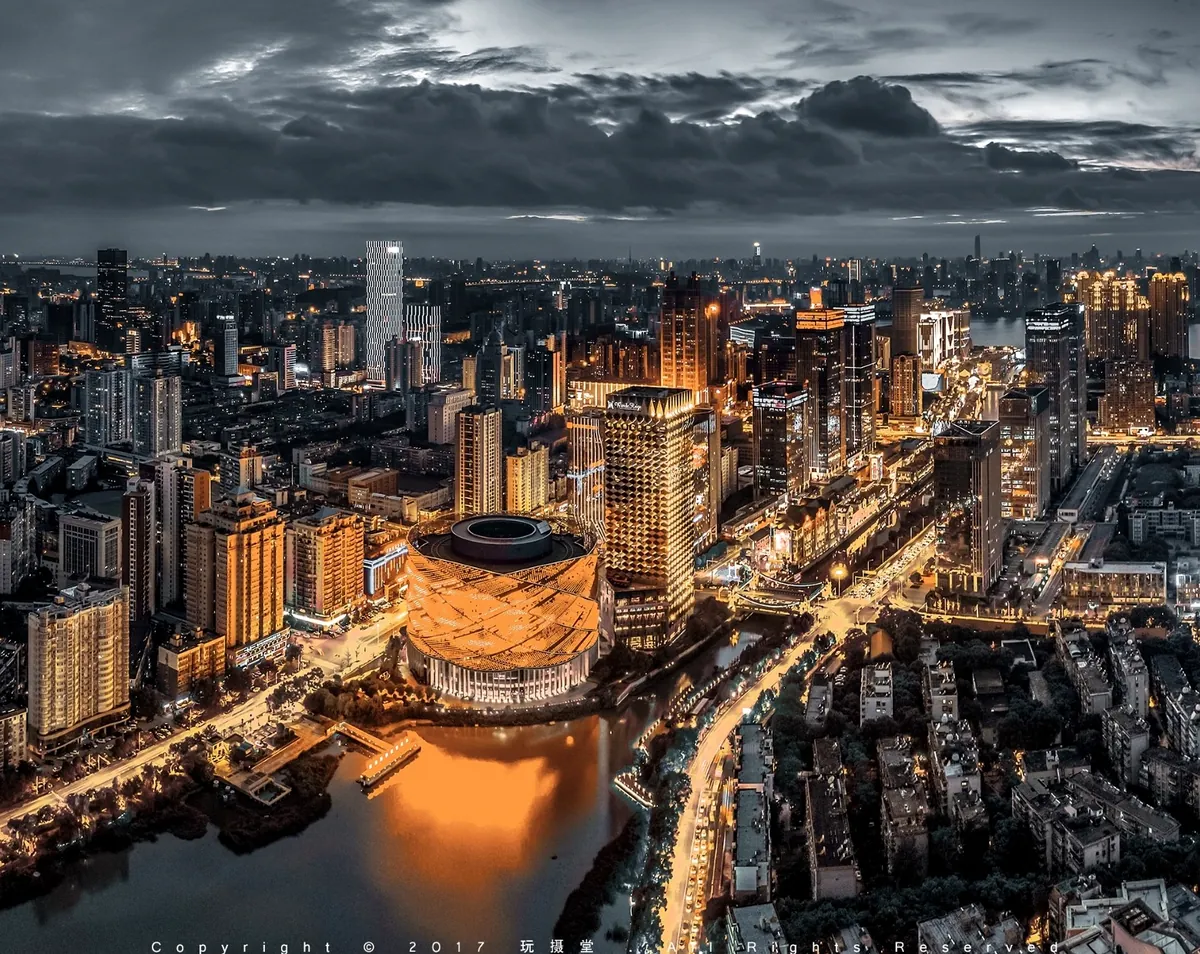
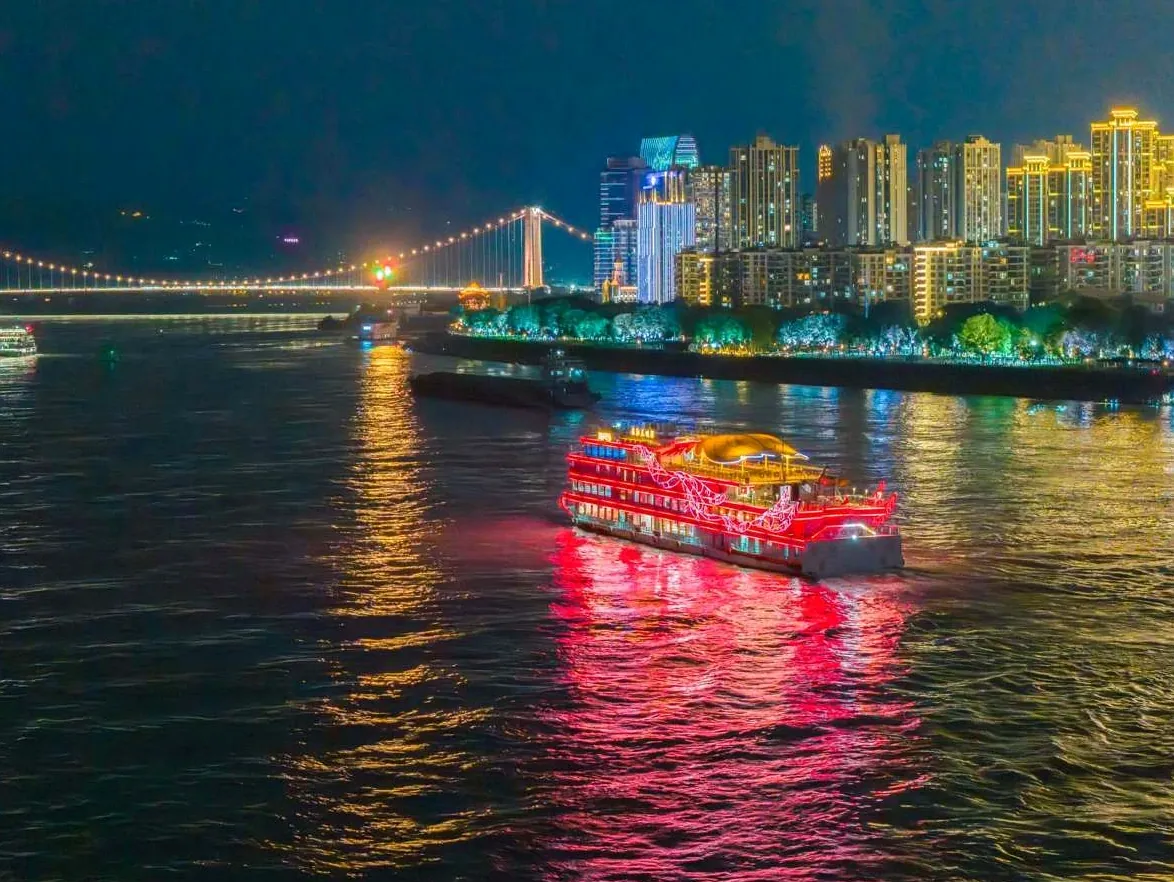
Viewed from the sky as night falls, the modern cityscape of Yichang emerges in magnificent splendor with a cluster of soaring skyscrapers glowing brilliantly in myriad lights. Standing out amidst this opulent space is a unique circular architectural structure with intricate facade patterns, proudly and impressively gracing the shores of a tranquil lake that mirrors the shimmering multi-layered halos. A network of bridges and arterial roads winds and intertwines like ribbons of spun gold through the core area, outlining the profile of a dynamic economic center that fully inherits the brilliant millennium-old civilization along the Yangtze River.
From the fiery battle embers along the gorge during the Three Kingdoms to the modern epic of industrial evacuation, Yichang has overcome all the scars of history to rise as one of the most prosperous cities in the Central Chinese Plain. The Yangtze River continues to roll through millennia of shifting sands, sheltering a land that carries both the proud spirit of ancient generals and the liberated, erudite aura of the countless poets who have passed through.
Under the lens of traditional geomancy and modern tectonic geology, Yichang possesses an unparalleled geographical position as it guards the natural transition point between the second and third topographic steps of the Chinese mainland. This serves as the spectacular hinge transitioning from the fertile, rugged Sichuan Basin down to the vast expanse of the Jianghan Plain, while also acting as a clear hydrological boundary dividing the rushing upper reaches from the tranquil middle reaches of the great Yangtze River. Nestled among towering mountain ranges and receiving abundant vital energy from the winding great river, this land resembles a giant funnel converging dragon veins, transforming the once-perilous Ba-Shu mountain passes into a plain that opens up a gateway to the vast Central Plains.
The dramatic terrain here is fully showcased through the famous Three Gorges, with Yichang entirely claiming Xiling Gorge—the longest, most perilous gorge and the eastern gateway to this entire natural wonder. Towering limestone cliffs millions of years old stand vertically on both banks like giant swords cleaving straight into the clouds, creating a narrow corridor that challenges the courage of generations of sailors navigating rapids and whirlpools. Connected to this majestic space is the northwestern ecological belt stretching out to the Shennongjia National Nature Reserve—a UNESCO World Heritage site featuring dense primeval forests preserving countless rare flora and fauna, blending with the mystical ethereal aura of the legendary Wudang Mountains to form a lush green screen shielding the entire lower basin.
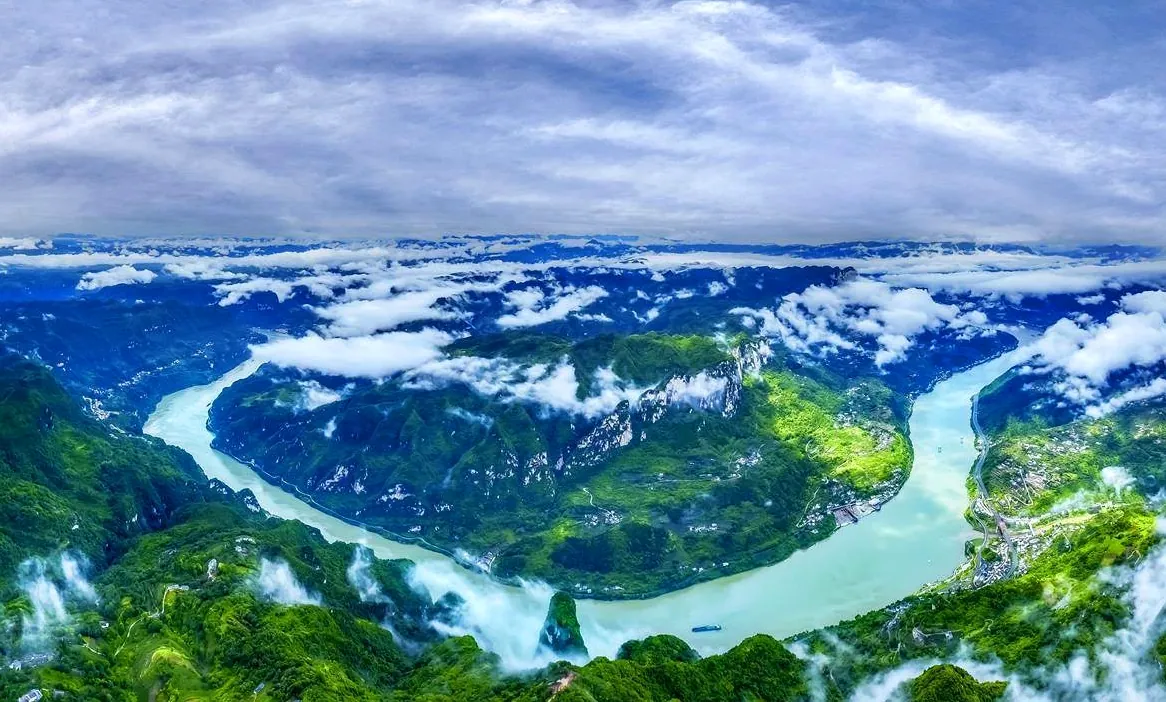
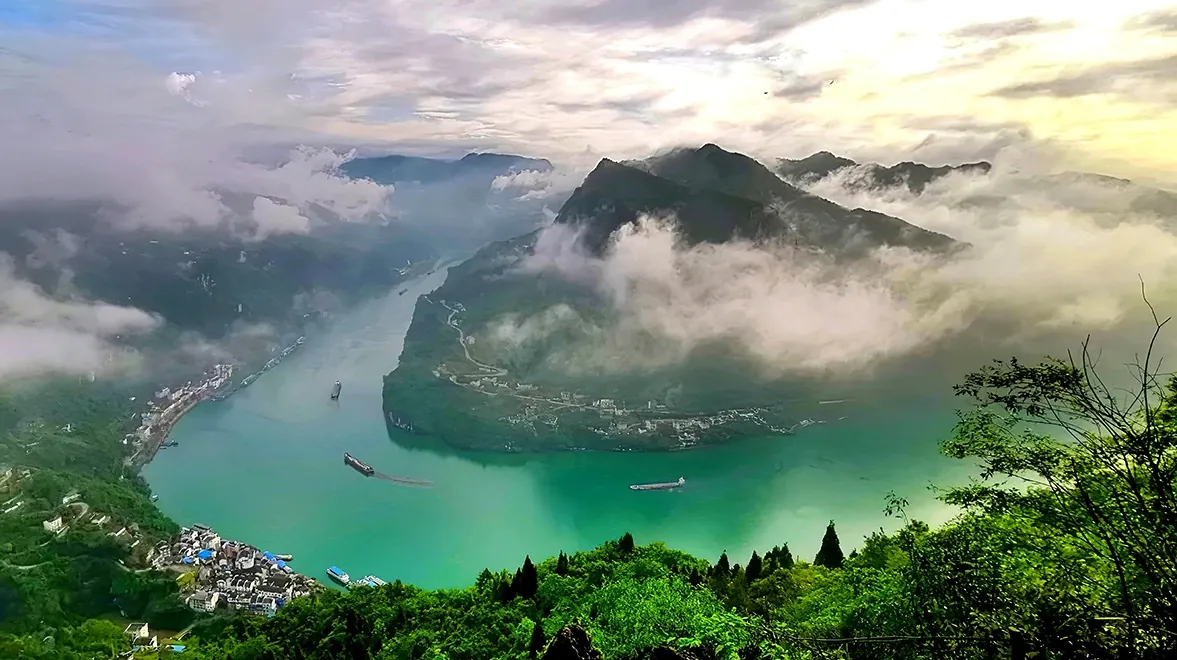
From an expansive bird’s-eye view, the mighty river emerges like a soft jade-green silk ribbon winding through layers of majestic, lush dark-green mountains. Pristine morning mists gently drift around the towering, magnificent peaks, appearing and disappearing to create a sublime, Zen-inspired natural landscape in the mortal realm. Along the gentle riverbanks, clusters of ancient villages and towns nestle closely together, dotted with a few sailing boats or vessels slowly cutting through the azure waters, painting a picture of a peaceful, rustic lifestyle harmonizing with the boundless heaven and earth.
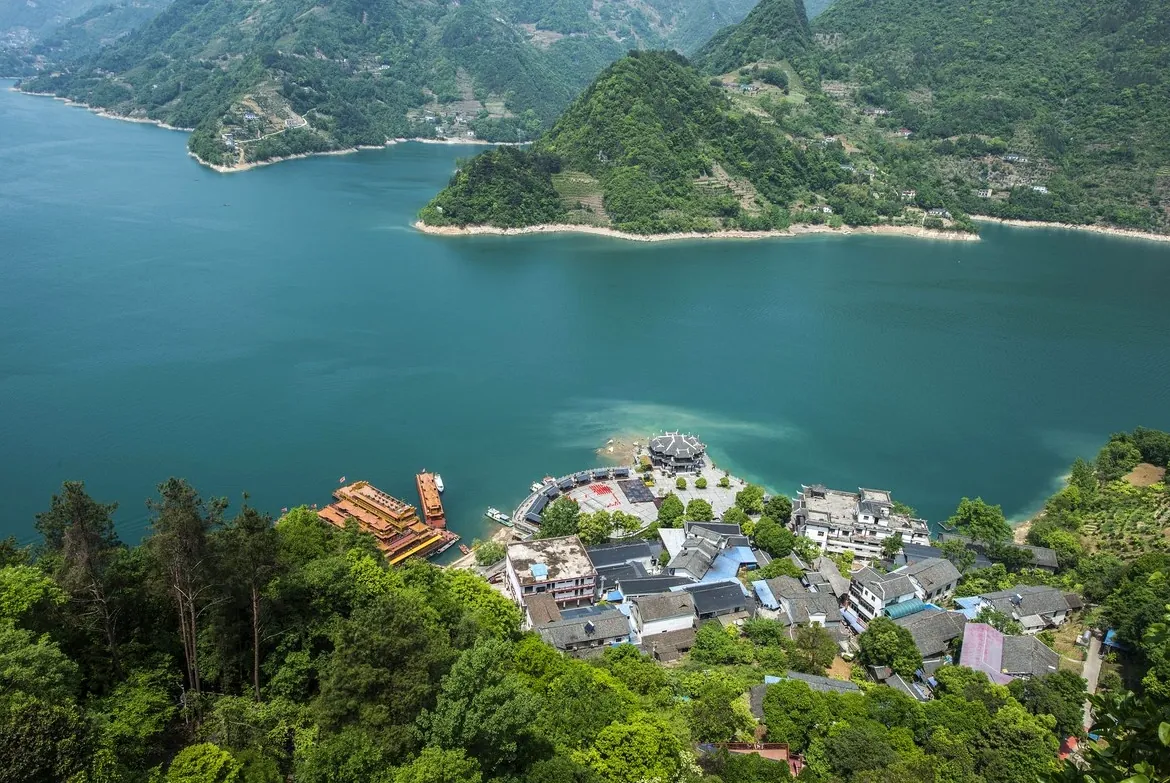
If northern Yichang carries the majestic aura of grand mountain ranges, its southern buffer zone reveals the exquisite and pristine beauty of the Qingjiang River watershed. The water here reaches top-tier ecological standards, crystal clear to the point where underground streams and riverbed vegetation can be seen, meandering through gray karst geological formations to create natural masterpieces such as the Three Gorges Tribe scenic area or the towering fault lines of the nearby Enshi Grand Canyon. The synergy between deep gorges, mystical underground caves, and dense evergreen vegetation turns Yichang into a living geological museum, where the resonance of stone and the fluidity of water have harmonized for hundreds of millions of years.
The spatial structure of Yichang is a magnificent fusion of mega-engineering and the rugged geomorphology of a scenic mountainous region. Right at the gateway of Xiling Gorge, the monumental Three Gorges Dam stands tall as a pinnacle symbol of Mega Brutalism Engineering. With a dam wall height reaching 185 meters and a length spanning 2,309 meters, the project consumed up to 27.2 million cubic meters of concrete to harness the surging Yangtze River. This colossal volume reshapes the entire regional hydrology and skyline, creating a vast reservoir stretching deep into the gorges while showcasing the unrivaled capability of modern engineering to conquer nature.
Closely tied to the giant dam are globally groundbreaking hydro-mechanical wonders. The Three Gorges Ship Lift, the world’s largest, operates a massive water chamber that hovers vessels weighing up to 3,000 tons across a 113-meter water level difference in just 40 minutes, resembling a massive open-air elevator nestled within the cliffside. Running parallel is the Five-tier ship lock system operating on the principle of communicating vessels, regulating fleets of ultra-heavy cargo ships overcoming roaring rapids in a 3.5 to 4-hour cycle. Connecting urban districts and opening economic arteries across both banks of the Yangtze are spectacular cross-river bridges, notably the Xiling Suspension Bridge with its large span, the vibrant orange Yiling Bridge, the sturdy Zhihui Bridge, and the engineering marvel of the Yihuan Railway Bridge crossing one of the planet’s most complex karst terrains.
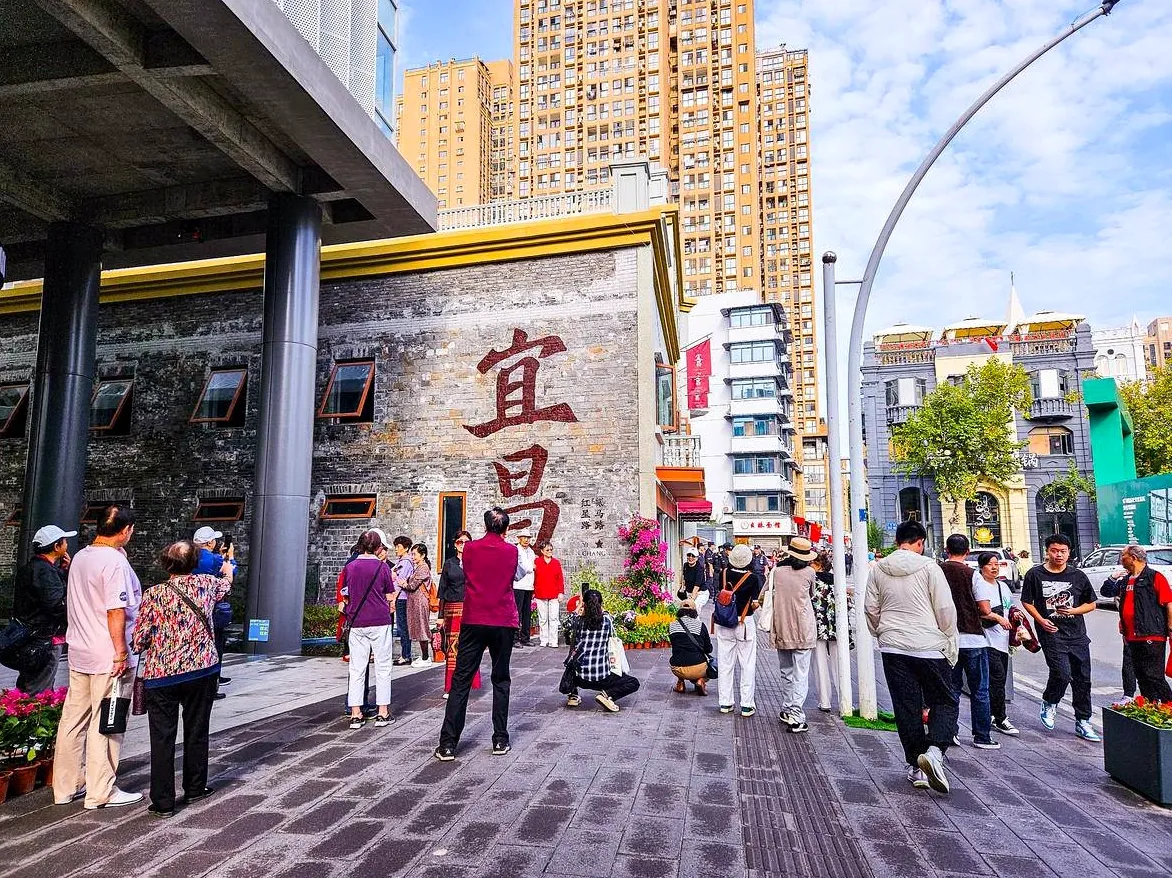
Beyond these timeless megastructures, Yichang’s urban landscape also bears a charming integration of past imprints and contemporary prosperity. On a bustling street corner where pedestrians leisurely stroll past leafy trees, an old brick building retaining decades of weathered character becomes a visual focal point, featuring the bright red Chinese characters “宜昌” deeply carved into its nostalgic wall. Right beside this quiet structure stand fresh high-rise buildings reaching straight up into the sky alongside gracefully curved street lamps, creating an intriguing visual juxtaposition between historical memory and the modern developmental breath of this riverside city.
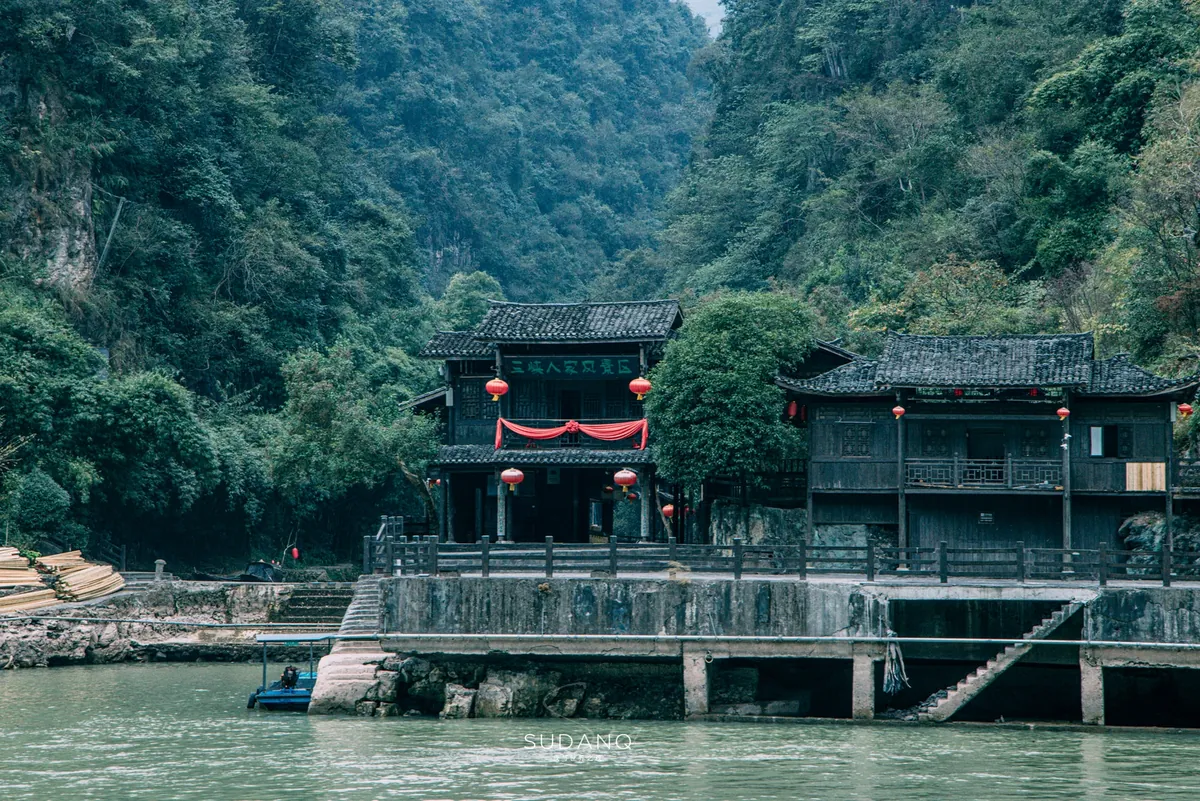
In stark contrast to the reinforced concrete scale of industrial projects is the rustic traditional local architectural philosophy found at the Three Gorges Tribe Cultural Reserve. Here, the Diaojiaolou (吊脚楼) stilt house complex of the Tujia ethnic minority stands as a living testament to their ingenious ability to adapt to the terrain. Perched precariously on steep limestone cliffs facing directly toward the Yangtze River, these stilted houses use absolutely no iron nails; instead, they are joined together using highly sophisticated traditional wood-mortise techniques. Wooden columns firmly anchored into rock crevices support the entire floor structure extending beyond the slope, creating a well-ventilated space underneath to perfectly accommodate the hot, humid microclimate, heavy mists, and moisture of the basin region. Their mossy yin-yang tiled roofs, carved wooden railings, and gracefully protruding eaves not only completely solve the challenge of habitation on perilous slopes but also organically blend into the breathtaking, boundless natural scenery of the Xiling landscapes.
As night falls over the Three Gorges valley, Yichang sheds the quiet dignity of its ancient fossilized rocks to don a brilliant mantle woven from a 206-million-yuan urban nightscape project. Following the planning blueprint of “One belt, one strip, five zones” stretching along Riverside Avenue, over 400 intelligent lighting nodes activate simultaneously, transforming both banks of the great river into a vibrant luminous voyage. The majestic Mazi Mountain on the opposite shore becomes a colossal natural canvas adorned in mystical turquoise and purple hues, harmoniously contrasting with the solemn antiquity of the Qing-dynasty Zhenjiang Pavilion and the millennia-old Natural Tower reflecting upon the water. The artistic lighting system, programmed to rhythmically mimic breaking waves, turns the entire riverside urban landscape into an endless, shimmering scroll of festive lights.
The heartbeat of the city’s nightlife is further elevated by the nighttime cruise experience along the Yangtze River. Standing out amidst the rippling waves is the cultural warship “Chu Feng Hao,” the first waterway vessel to integrate a theater stage themed around Chu culture, cruising up and down the Yangtze. Here, the epic visual performance “Nine Songs of Yiling” guides visitors through nine heroic chapters, reenacting the poignant trackers’ chants of ancient Yiling boatmen, the soaring spirit of the great poet Qu Yuan, the deep frontier sorrows of the legendary beauty Wang Zhaojun, and the triumphant mastery of the water spirits by the magnificent Three Gorges Dam. The climax of this nocturnal visual feast is a light art performance featuring a fleet of up to 5,000 drones, weaving countless mythological motifs and historical symbols brightly across the breezy night sky.
Leaving the main river axis to venture into the tranquil valleys, travelers are once again immersed in the live-action grand musical “Dreaming of Xake.” Set amidst untouched natural canyon terrain, the show employs cutting-edge 3D mapping projection, laser water screens, and immersive surround sound to awaken the profound love legends of the Tujia ethnic group. Under the moonlight stretching across the cliffs, ancient stilted wooden houses, creaking waterwheels, and traditional Ba dances merge into one, blurring the boundary between the pristine natural scenery and a wondrous, millennia-old dreamscape.
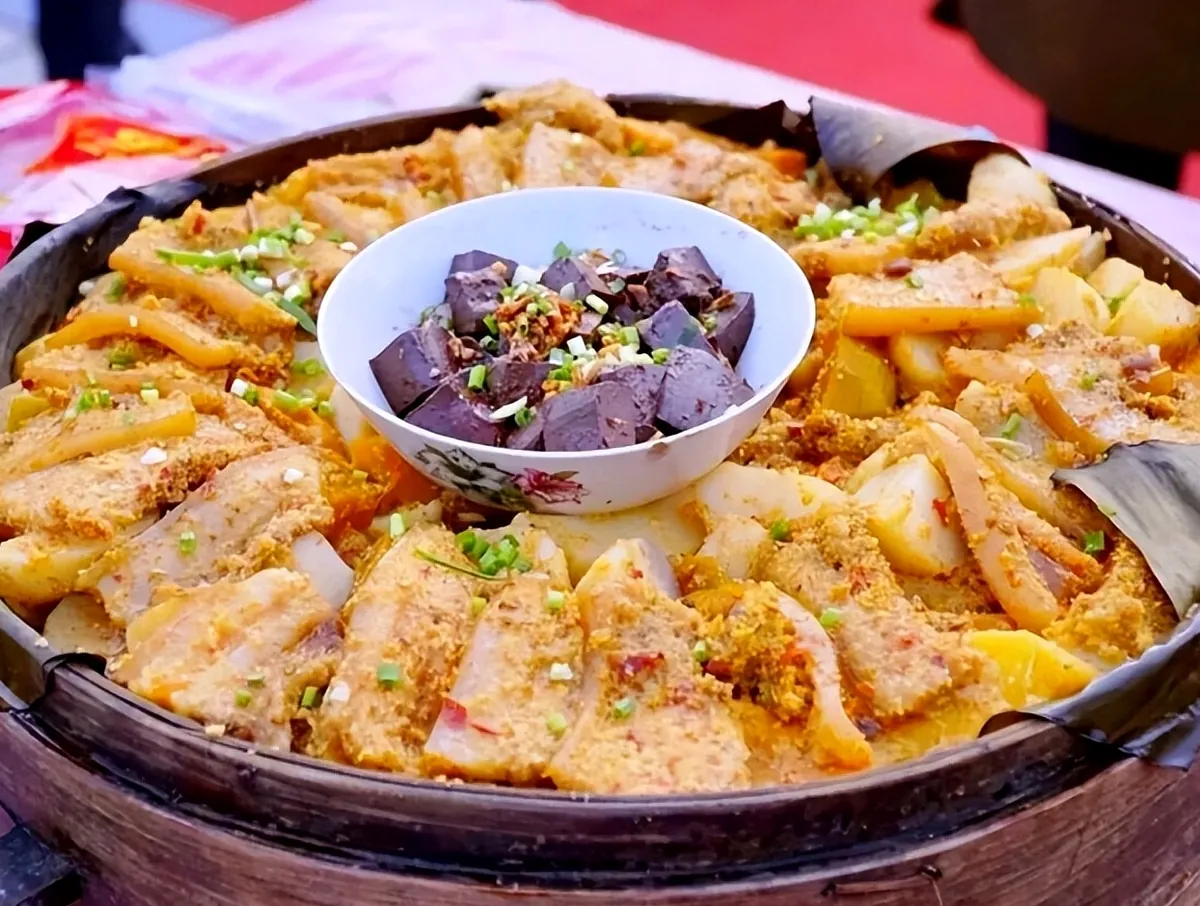
After hours of soaring visual arts, Yichang’s nightlife lingers in travelers’ memories with the smoky, comforting flavors of a traditional Tujia feast served in a stacked steam basket. Inside a rustic, oversized bamboo steamer still curling with fragrant steam, neatly arranged rows of thick-cut pork belly coated in golden toasted rice powder alternate with layers of tender, melting taro and chewy pork skin infused with fresh scallion oil. Reigning majestically at the center of the steamer is a small ceramic bowl holding smooth, dark steamed pig’s blood pudding, garnished with finely chopped scallions and intensely aromatic fried shallots, creating a rustic yet utterly complete culinary symphony of the Bashu land.
Yichang’s nightscape is thus not merely a display of avant-garde lighting technology, but a seamless intersection of millennia-old heritage depth and vibrant contemporary vitality. From the resonant Chu poetic melodies drifting over the Yangtze waves to the warm, inviting aroma of the traditional feast beside the stilted house hearth, every fleeting moment beneath the Yiling moonlight settles into deep-seated memories, cementing the city’s status as a top-tier cultural and nocturnal tourism center along the middle reaches of the great river.
Peacefully nestled at the strategic gateway connecting the fertile Sichuan Basin with the affluent Jianghan Plain, Yichang boasts a distinctive culinary map marked by profound cultural synthesis. The local flavor is a harmonious blend of the liberal, sophisticated culinary culture of the thousand-year-old Chu state, the characteristic numbing spiciness of Shu, and the raw mountain cooking techniques of the indigenous Ba and Tujia peoples. The currents of the Yangtze River not only enrich the soil and pave the way for commerce, but also provide an abundance of aquatic life combined with deep forest produce, shaping robust yet comforting dining habits that help residents proudly adapt to the humid climate of the gorge valleys.
Reigning at the most prestigious position in Yichang’s aquatic culinary landscape is the Qingjiang fish, raised in the crystal-clear, cool underground waters of the Qingjiang reservoir system. Thanks to this pristine environment, Qingjiang fish boasts thick, naturally firm flesh, a deep, clean sweetness, and virtually no fine bones. Local chefs have transformed this ingredient into countless masterpieces, most famously the stone-pot grilled Qingjiang fish with spicy peppercorns or braised with silky soft tofu at long-standing eateries along Riverside Avenue, such as Nv Ba Wang. The steaming fish pot over glowing charcoal embers, submerged in a broth vibrant with chili oil, Sichuan peppercorns, and wild mountain pepper, delivers an immediate sensation of rich, melt-in-the-mouth fish meat paired with a refreshing, tingling spice that awakens all the senses.
Leaving the river currents to venture deep into the highland villages, Tujia smoked pork embodies the culinary memory of generations tied to the fire and smoke of the mountain folk. The Tujia people select the finest fresh pork belly, coat it generously with coarse salt, dried chili, and cardamom, and then air-dry the surface. The core element that gives the dish its top-tier quality is the continuous smoking process for thirty to forty-five days over a kitchen hearth, using entirely fresh pine and cypress branches and leaves. The gentle warmth and precious wood essential oils slowly permeate, turning the pork fat transparent like amber, while the deep red lean meat is imbued with rich aromas. When stir-fried with wild bamboo shoots or sliced leeks, each delightfully crunchy slice of meat bursts with a rich, savory, and creamy flavor that is never greasy, reminiscent of the wild pine resin of the vast mountains.
The rustic charm of Yichang’s street food is captured in the Yiling radish cake, a famous snack with a history of over a hundred years in the ancient markets. Although named a dumpling, this cake is actually made from a smooth, wet-ground mixture of rice flour and soaked soybean flour. Artisans use a long-handled semi-circular iron ladle to scoop a thin layer of batter, place finely shredded white radish—squeezed dry and seasoned with spicy chili powder, Sichuan pepper, and scallions—in the center, cover it with another thin layer of batter, and drop it into a deep wok of boiling oil. The cake puffs up and turns golden-brown, its outer crust delightfully crispy and shattering in the mouth, revealing a sweet, moist, and delightfully spicy radish filling.
In addition, the daily life of Yichang locals is always associated with steaming bowls of spicy radish noodles in the morning mist at Daozhou Food Street, or the refreshingly sour and spicy Lianglu Zigui noodles bearing the deep cultural imprint of the patriotic poet Qu Yuan. To make the culinary feast even more complete, locals often sip warm glasses of Dangyang glutinous rice wine, shimmering with a mild sweetness, or raise a cup of meticulously brewed, richly spicy Jinlei wine. The warm alcohol of heaven and earth blends perfectly with the spicy seasonings and the richness of fish and meat, perfectly portraying the free-spirited and kind character of the people at the gateway of the Three Gorges.
The canyon climate of Yichang features a distinct monsoon-influenced subtropical climate, meaning the timing of your trip largely determines the quality of the entire voyage. The ideal time to admire this landscape painting is during two seasonal transitions: from April to May, when spring fills the valley, the weather is cool, and the Yangtze River is crystal clear, reflecting mossy stones; or from September to November, when autumn colors brightly dye the sheer cliffs of Xiling Gorge. In contrast, peak summer months from June to August often bring sweltering temperatures exceeding 35 degrees Celsius and high humidity, but in return, travelers have the chance to witness the magnificent spectacle of the Three Gorges Dam opening its floodgates in a roaring white torrent—an artificial wonder as powerful as thunder shaking the earth.
Modern transportation infrastructure turns the gateway of Yichang into a smooth central hub in central China. Travelers starting from major economic centers can land at Yichang Sanxia International Airport, a 4E-standard aviation port capable of handling wide-body aircraft with a dense network of domestic and international routes. If choosing the railway, Yichang East Station serves as a strategic junction on the Hanyi high-speed rail line connecting the capital of Wuhan, allowing high-speed trains to cover the nearly 300-kilometer distance in just one hour and forty-five minutes. Once in the city center, public transportation, BRT buses, and cruise ship networks seamlessly connect Gezhouba Port, the Three Travelers’ Cave, and the hydroelectric dam scenic area.
Amidst the maze of local tour operators, travelers must be especially vigilant against cheap tour traps, also known as “Zero-dollar tours.” These abnormally discounted journeys usually trade sightseeing time for hours of exhausting stops at mandatory shopping stations, where passengers are swarmed by sophisticated marketing tactics for Shennongjia herbs, jade, and metallurgical blades. The civilized choice that preserves the historical experience to the maximum is to register for pure sightseeing tours, locally known as “Chunwan tuan” (pure play tours). This is a model that guarantees zero commercial shopping stops, dedicating all time for travelers to immerse themselves in the majestic natural scenery and humanistic values of ancient Bashu.
A technical note that cannot be ignored is the experience of riding a ship through the Three Gorges Ship Lift—the world’s largest vertical ship-lifting facility in scale and tonnage. Since the number of daily operations is strictly controlled to ensure maritime safety, visitor tickets are always scarce and must be booked in advance through official travel channels. The feeling of sitting on a vessel weighing thousands of tons as the hydraulic lift chamber slowly elevates you to the height of a forty-story building in over ten minutes is a unique, once-in-a-lifetime magnificent moment that anyone visiting Yichang longs to experience.
Furthermore, preparing electronic payment methods is an essential requirement for every traveler entering the country. Yichang has nearly transitioned into a cashless society with digital transaction rates exceeding ninety-nine percent, covering everything from street vendors selling boiled water chestnuts and braised river catfish in the old town to the water bus system. International visitors need to install and verify their passport identity on e-wallet applications such as Alipay or WeChat Pay, while directly linking them to international credit cards like Visa or Mastercard before departure. Exchanging a small amount of Chinese Yuan cash remains necessary as a backup for emergencies in remote canyon areas, but scanning QR codes will be the universal key to making your journey as smooth as possible.
To fully enjoy the profound beauty of this riverhead land without worrying about immigration procedures or complex service bookings, travelers can proactively refer to our all-inclusive tour package, designed intensively to bring a complete, safe, and culturally rich exploration of the Three Gorges canyons.