The cultural sediment of Zhouzhuang Ancient Town traces its deep origins back to the Spring and Autumn and Warring States periods, when this fertile land was still the fiefdom of Yaocheng within the territory of the State of Wu, bearing the rustic name Zhenfeng Li. The turning point that gave the ancient town its definitive name occurred in 1086 during the Yuanyou reign of the Northern Southern Song Dynasty, when the devout scholar Zhou Digonglang decided to donate over two hundred mu of his family’s agricultural estate to construct Quanfu Temple. Deeply moved by the sage’s boundless generosity, local villagers unanimously renamed the region Zhouzhuang, later commonly referred to as Zhouzhuang. Following the tumultuous shift when the Southern Song court relocated its capital to Lin’an (modern-day Hangzhou), bustling economic activity surged into the southern Yangtze River basin, elevating Zhouzhuang from a peaceful hamlet into a prosperous satellite commercial town.
The most brilliant era in the ancient town’s history is inextricably bound to the rise of legendary tycoon Shen Wanshan—whose given name was Shen Fu and courtesy name Zhongrong—during the late-Yuan and early-Ming dynasties in the fourteenth century. Endowed with extraordinary commercial acumen, Shen Wanshan fully leveraged the interconnected canal network flowing from Bailian Lake and Dianchi Lake through the Liusha River straight out into the East China Sea, turning Zhouzhuang into a thriving inland port transshipping exquisite silks, fine ceramics, food staples, and prized teas destined for international markets. Legend holds that the immense wealth accumulated from maritime trade enabled him to independently finance the construction of one-third of the magnificent Nanjing city wall. Although the political volatility and intense suspicions of Ming Emperor Zhu Yuanzhang ultimately drove the Shen family into bitter exile, the golden commercial foundations he painstakingly built served as a rock-solid springboard for the water town’s prosperity across more than six centuries that followed.
Entering the Ming and Qing dynasties, Zhouzhuang consolidated its status as one of the most prosperous silk-weaving and handicraft hubs in the entire Jiangnan region, with over sixty percent of the ancient architectural structures standing today having been built during this flourishing period. The ancient town’s renown extended far beyond East Asian historical chronicles, bursting onto the international stage in 1984 thanks to a celebrated oil painting titled “Reminiscence of Hometown” by master artist Chen Yifei. This painting captured the melancholic, nostalgic charm of the Twin Bridges and was acquired by American billionaire Armand Hammer as a gift for Chinese leader Deng Xiaoping, introducing Zhouzhuang to the world under the title “Number One Water Town in China.” Continuing this glorious trajectory, the ancient town was subsequently honored with the UNESCO Asia-Pacific Heritage Conservation Award, successfully submitted for World Heritage consideration, and granted China’s highest 5A-grade scenic designation.
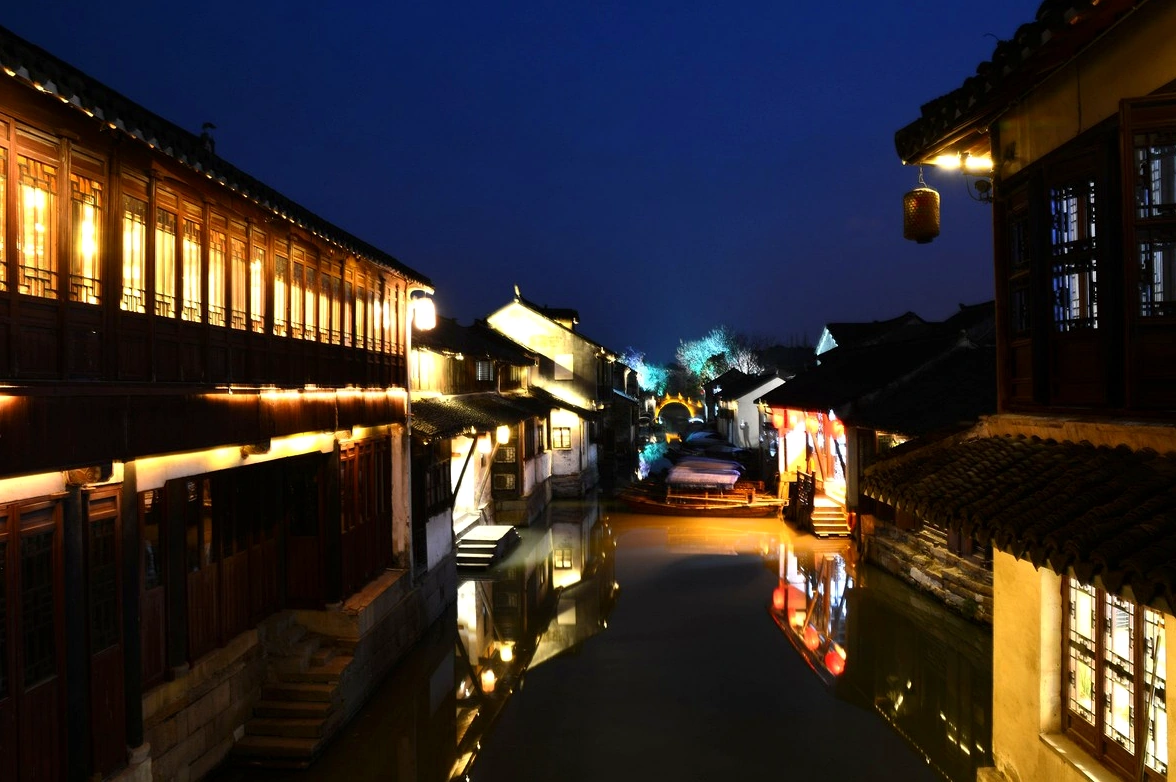
When night falls, the breathtaking natural scenery of the traditional water town glows with brilliant illumination across ancient, contemplative buildings casting their reflections upon winding canals. Countless warm lanterns are lit along moss-dappled yin-yang tiled roofs, casting golden radiance onto mirror-still waters like embedded gold and jade. At the foot of millennial stone steps, rustic wooden boats gently moor close together in the tranquil ambiance, creating a serene, half-real, half-dreamlike tableau of the Jiangnan fairyland at night.
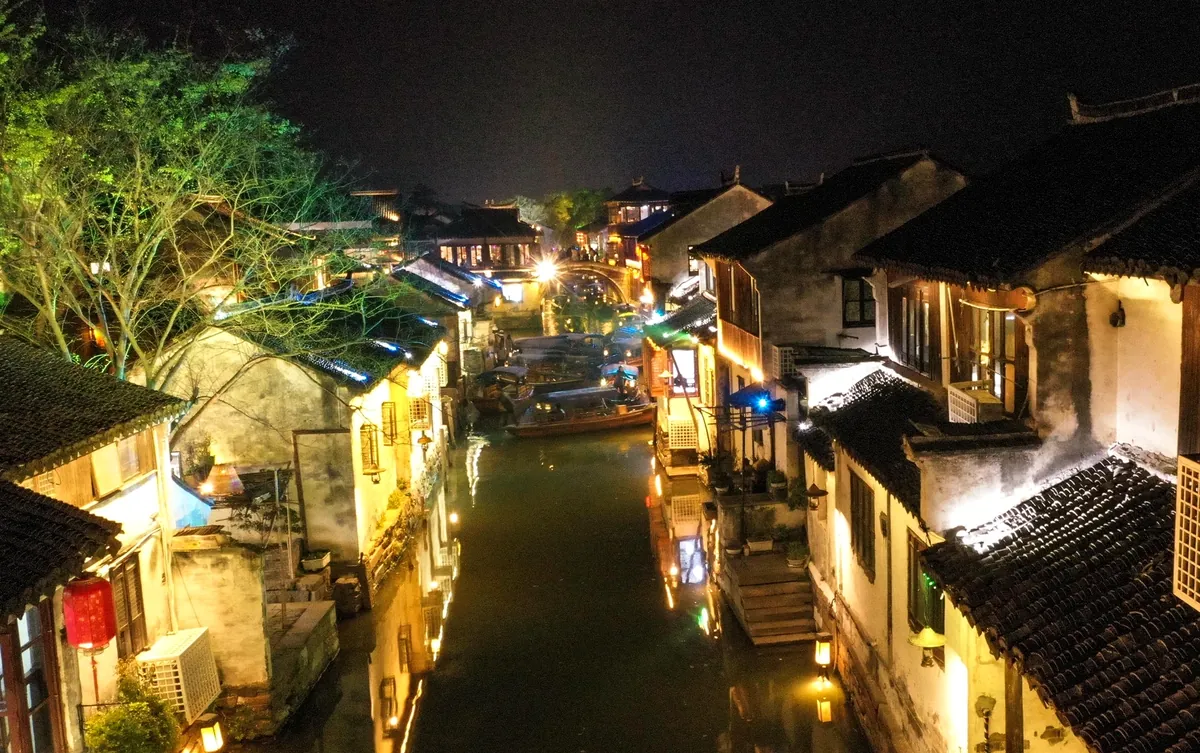
Reflecting upon a millennium of ebb and flow, Zhouzhuang’s endurance lies not in massive defensive ramparts, but in the resilient bond linking humanity, waterways, and wooden residences through countless dynastic trials. Every granite flagstone polished smooth by ancient footsteps and every waterway carrying the silk cargo boats of the Shen family of old retains the living breath of history, transforming this destination into a living ancient classic of southern riverine civilization.
Tucked away south of Kunshan City under the administration of Suzhou City, Jiangsu Province, Zhouzhuang Ancient Town occupies an auspicious geographical position right at the golden triangular core of the fertile Yangtze River delta. From this coordinate, the ancient town lies roughly 60 kilometers east of bustling downtown Shanghai, about 38 kilometers southeast of famed ancient Suzhou, and at an ideal distance of 70 to 120 kilometers for direct connections to Jiaxing and Hangzhou in Zhejiang Province. This focal position among silk capitals and premier commercial ports of the Jiangnan region does not turn Zhouzhuang into a noisy transit station; instead, nature’s masterly arrangement has endowed this land with an isolated topography resembling a jade jewel hidden among myriad waves.
Viewed through traditional East Asian feng shui principles, Zhouzhuang enjoys an exceptionally rare “surrounded by lakes” (荡湖环抱) formation. The ancient town sits within a natural low-lying basin, sheltered and nurtured by a vast surrounding lake system highlighted by Bailian Lake (白莲湖) to the west, the sprawling Dianshan Lake (淀山湖) to the southeast, and adjacent Baixian Lake. In form feng shui, water symbolizes abundant wealth, and Zhouzhuang’s water-gathering terrain serves as a textbook emblem of “wealth-gathering waters.” These massive bodies of water act like a natural ecological filter, keeping the soil fertile while forming a protective aquatic barrier isolating the ancient town from worldly turmoil. Across a millennial history spanning the Song, Yuan, Ming, and Qing dynasties—when the fires of war repeatedly leveled many neighboring towns—Zhouzhuang survived miraculously intact and peaceful, floating like a pure white lotus blossom upon the lake waters.
Natural hydrology acts as more than a protective barrier; it creates a vital circulatory pulse for the entire residential settlement. A network of waterways from surrounding lakes winds deep into the heart of the ancient town, dividing and connecting land strips through an intersecting “Well” (井) shaped grid. This exceptional “internal connection and external outflow” water-transport mechanism allows boats carrying silk, grain, and local ceramics to navigate freely to all major commercial ports along the coast without obstruction. Every creek and river branch in Zhouzhuang fulfills a dual function: serving as a public transit corridor while doubling as a natural flood-drainage and microclimate-regulation system for hundreds of moss-covered homes across the centuries.
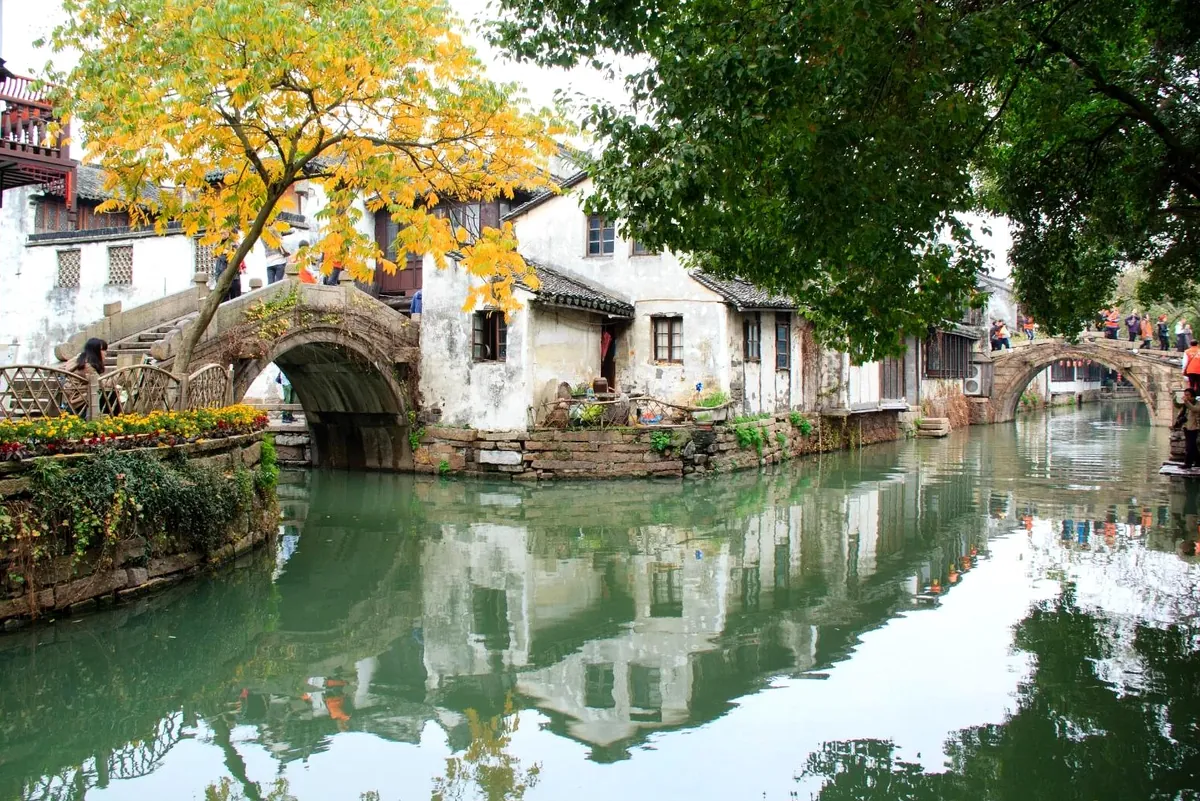
The interaction between massive surrounding lakes and interior waterways distills the soul of what is celebrated as the “Number One Water Town in China”—praised by Western visitors as the quiet Venice of the East. Abundant humidity rising from Dianshan Lake and Bailian Lake combined with low-lying terrain creates characteristic refraction and morning mist year-round. At early dawn, soft blue mist drapes across ancient stone arch bridges, cloaking riverside willow branches and blue-black tiled roofs in an otherworldly, contemplative beauty. As evening arrives, sunset paints the water red, while cool breezes drifting off the lakes sweep deep into narrow alleyways—completing a vivid, profound, and timeless Jiangnan landscape.
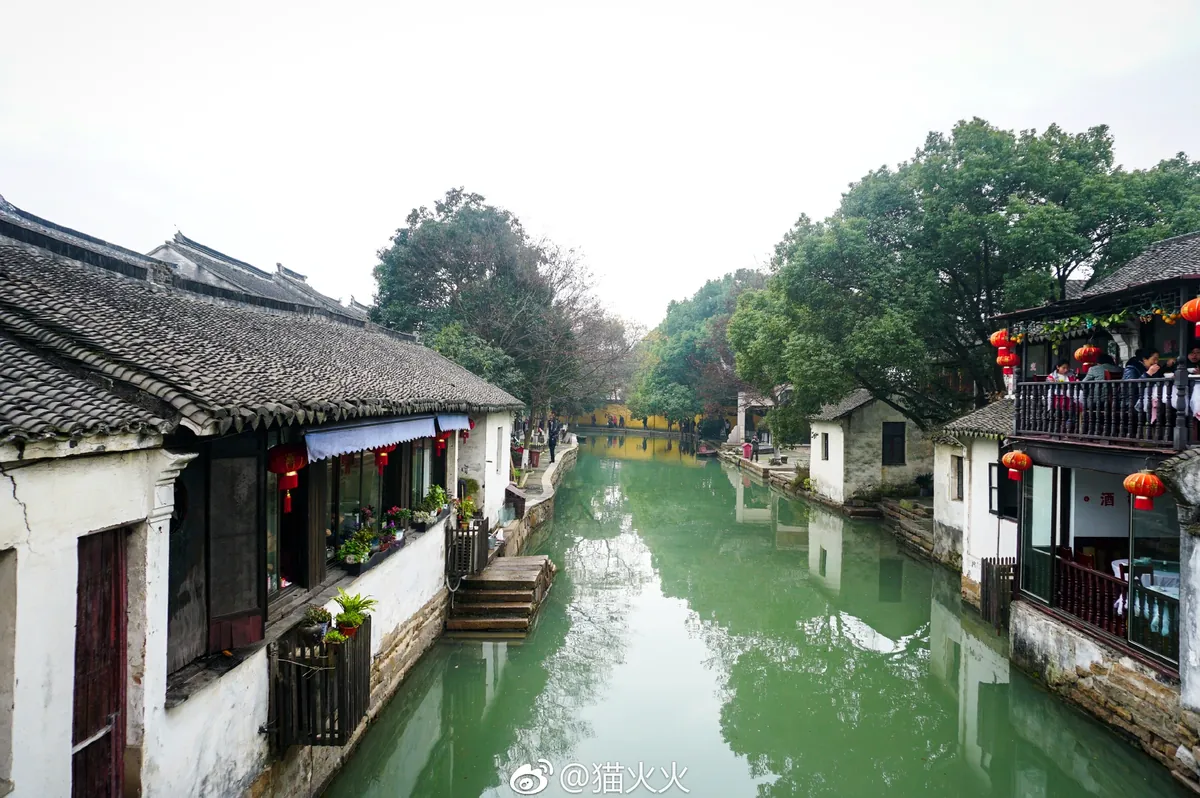
Zhouzhuang Ancient Town’s spatial master plan represents the pinnacle of residential art in Yangtze River delta water towns, operating normatively on a “Well” (井字型水系) grid network. Four natural rivers intersect to form a backbone dividing neighborhoods, turning waterways into bustling commercial boulevards while narrow flagstone alleys serve strictly as secondary paths. A signature layout feature here is the “shop in front, port in back” model (front doors opening onto streets for trade, rear doors leaning against canal edges for private docks). Every canal-side home features projecting waterside platforms and stone steps leading directly down to the channel, allowing silk- and tea-laden boats to moor and unload cargo straight into rear storehouses—defining an enclosed, convenient, and deeply romantic southern waterfront lifestyle.
Blending rigorous Hui-style architecture with the open spirit of river towns, Zhouzhuang’s architectural vocabulary stands out through its aesthetic standard of “white walls, black tiles, soaring eaves.” Pristine whitewashed walls streaked with moss contrast sharply against dark-grey and black yin-yang tiled roofs, accentuating gracefully curving eaves shaped like swallows’ wings soaring against the sky. The unifying thread of this urban space consists of 14 ancient stone bridges spanning canal branches, among which the most celebrated is the Twin Bridges (known as Shuangqiao or Key Bridge). Built during the Wanli reign of the Ming Dynasty, the Twin Bridges is an ingenious perpendicular combination of the stone arch Shide Bridge and the stone beam Yong’an Bridge. This staggered configuration forms the shape of an ancient feudal bronze key, becoming the classic visual emblem of the ancient town.
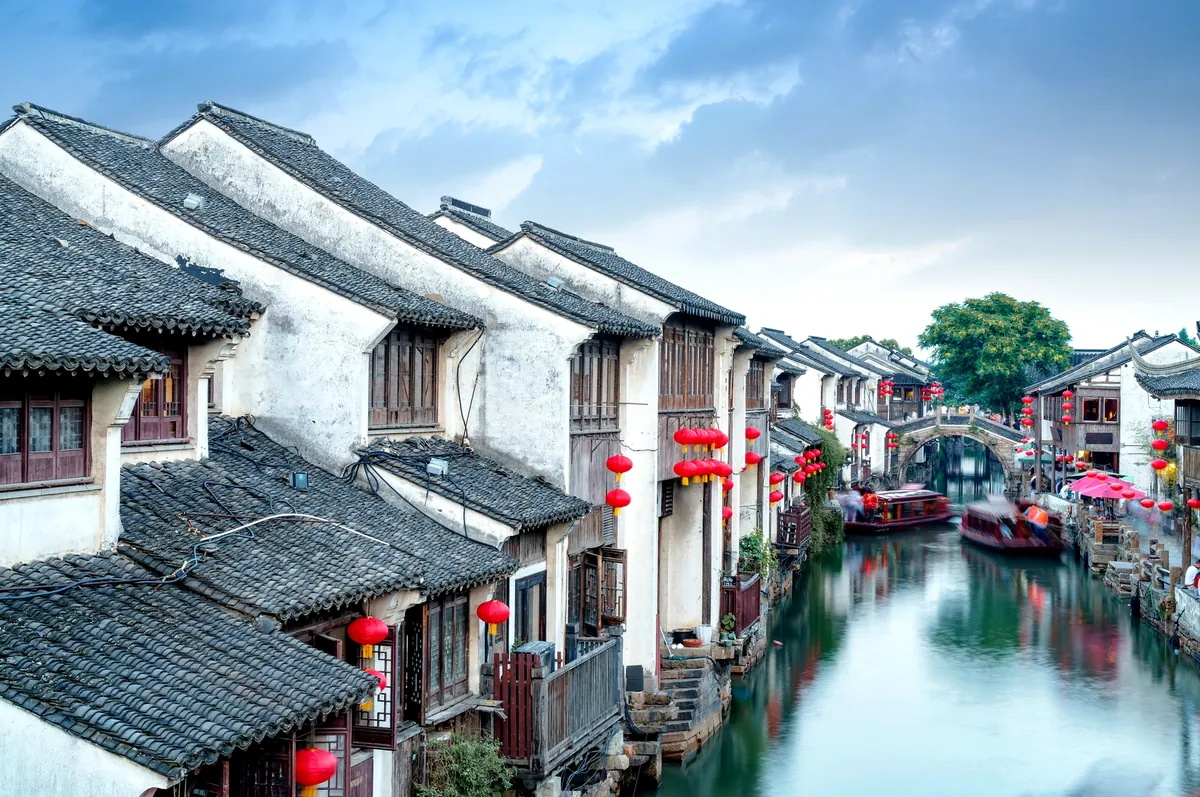
If stone bridges sketch the town’s skeleton, grandiose private mansions supply its architectural soul—typified by Shen Hall, the magnificent residence of tycoon Shen Wanshan’s descendants built during the Qing Dynasty. Spanning over 4,000 square meters with more than 100 rooms, the estate is laid out symmetrically along a central axis exceeding 100 meters, comprising 7 courtyards and 5 ornate gate towers. From the waterside dock welcoming boats, spaces lead into the splendid central Jishan Hall featuring exquisite carved fir timber columns. The apex of Qing Dynasty carving craftsmanship concentrates at the towering brick-carved archway (Zhuan Diao Men Lou), where master craftsmen transformed individual fired bricks into three-dimensional reliefs depicting historical legends, flora and fauna, and auspicious beasts.
Alongside Shen Hall’s grandeur, Zhang Hall stands as an outstanding representative of late-Ming residential architecture featuring over 60 delicately decorated rooms. The estate preserves a rare water-land structural masterpiece in folk architecture, encapsulated by the proverb: “Sedans pass grandly through the front door, boats glide smoothly through the heart of the house.” A subterranean branch canal winds beneath the main hall into an open-air boat basin in the rear courtyard, allowing sampans to turn around right inside the residence to welcome family members. Zhouzhuang’s cultural footprint continues to linger at Milou—an elegant wooden wine pavilion by the canal where patriotic scholars of the Nanshe literary society once gathered for passionate poetry salons—and solemn Quanfu Temple reflecting across the lake, completing the heritage architectural masterwork of a millennial water town.
As sunset dips below the surface of Bailian Lake and gives way to gathering darkness, Zhouzhuang Ancient Town undergoes a breathtaking transformation between reality and illusion. From 6:30 PM to 9:00 PM nightly, the water town escapes the somber mood of a millennial ink-wash painting to don a dazzling garment woven from refined lighting art. Thousands of red silk lanterns suspended beneath yin-yang tiled eaves wind along fire-break gable walls and waterside balconies, illuminating simultaneously. Their radiant red glow reflects onto dark, mirror-flat waters, creating the illusion of an ancient imperial palace floating suspended. Warm lantern light intertwines with modern architectural accent lighting, honoring the classic curves of the Twin Bridges and centuries-old stone bridges, transforming every quiet alley and winding river bend into an enchanting visual art masterpiece.
The shift of night also marks peak operation for the nighttime economy, contributing over 65% of the ancient town’s experiential tourism revenue. Unlike the rushed, frantic pace of modern commercial cities, nightlife here is nurtured by refined, culturally rich serenity. The most cherished experience for any traveler is stepping aboard hand-rowed wooden boats, gliding smoothly across shimmering waters. Amid contemplative silence broken only by the rhythmic splash of oars and water parting, boatmen who double as folk artists sing classical Kunqu opera numbers or recite melodic Wu dialect ballads. Soft, sweet, and graceful southern accents resonate beneath stone bridge arches, touching the listener’s deepest emotions and carrying the wandering mind back to festive Ming and Qing Dynasty lantern nights.
The pinnacle of lighting art and nighttime culture culminates in the spectacular outdoor live-action music dance drama titled *Four Seasons of Zhouzhuang*. Staged on open-air waters with scale among the finest in the Jiangnan region, the production is a benchmark fusion of intangible cultural heritage and cutting-edge multimedia technology. The vast water stage utilizes the natural river, riverside historic homes, and calm lake surface as a dynamic backdrop, where 3D mapping technology vividly recreates water-town scenery across changing seasons. Audiences witness a living folk painting depicting farmers plowing in early spring, maidens rowing boats to pick lotus flowers on sunny summer days, golden autumn harvests of heavy rice crops, and joyous winter festival gatherings welcoming the Lunar New Year amidst prosperous snow.
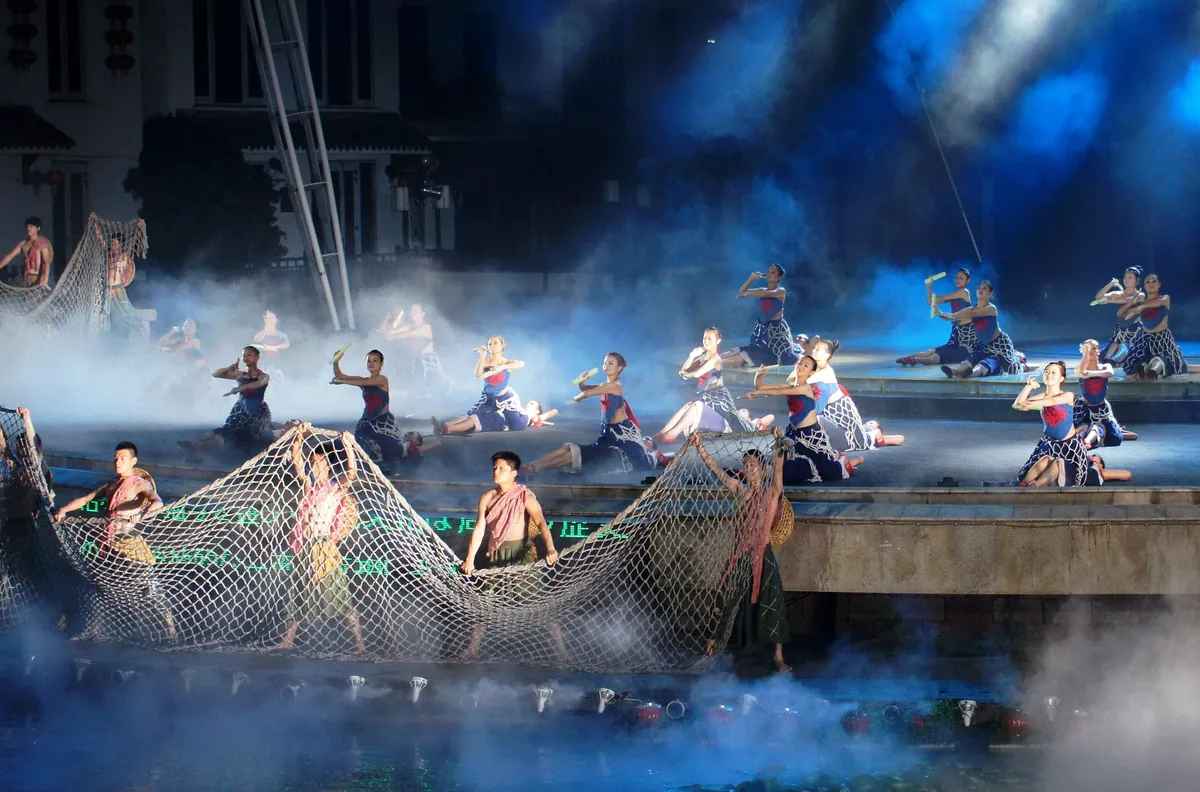
Most notably, the most dramatic and heroic chapter of the performance revives tycoon Shen Wanshan’s legendary rise to wealth—the fabled financial wizard of the late-Yuan and early-Ming dynasties. Through advanced visual techniques, high-powered lasers combined with magical water mist, Shen’s maritime trade voyages carrying silk, ceramics, and tea across the seas are portrayed with breathtaking grandeur. The seamless fusion of hundreds of performers in authentic period costumes, rousing ethnic symphonic music, fireworks, and cascading waterfalls weaves an overwhelming cultural epic. Far more than mere entertainment, *Four Seasons of Zhouzhuang* awakens a millennial historical memory, transforming Zhouzhuang’s nights into an immortal art sanctuary etched deeply into the visitor’s heart.
Stepping across mossy stone bridges, Zhouzhuang Ancient Town’s culinary heritage lingers not only visually across mossy roofs and oar strokes, but sinks deep into the traveler’s soul through fragrant heirloom cooking. Food culture here represents an exquisite harmony between tycoon Shen Wanshan’s lavish Ming-dynasty aristocratic lifestyle and pristine fresh aquatic bounty harvested from surrounding lake networks. Every dish served on elmwood tables carries southern elegance, preserving statecraft historical legends while echoing rustic benched-waterway life across a thousand years.
Reigning supreme atop Zhouzhuang’s culinary heritage is Wanshan Pig Trotter, also known as Wanshan Tizhi—a renowned imperial delicacy tied to tycoon Shen’s witty repartee before Emperor Zhu Yuanzhang. This celebrated dish demands rigorous ingredient selection from plump hind trotters of local pigs, simmered continuously in large earthenware pots for eight to twelve hours. The braising stock fuses over ten secret herbal spices with pure rock sugar and renowned Suzhou soy sauce. When ladled onto stoneware plates, the trotter boasts a glossy amber-red hue glistening with rich juices; the skin is so meltingly soft it trembles like jelly, and lean meat is cooked down until it detaches effortlessly from the bone without a knife. A single bite releases deep, lingering meat sweetness blending with melting richness, leaving a warm, nutty aftertaste without a trace of heaviness.
Alongside the imperial richness of elite banquets, Zhouzhuang treats the world to pristine natural gifts known as the Water Town Three Whites (Shui Xiang San Bai), the delta’s three finest aquatic treasures. First is *Bai Shui Yu* (white water fish), a slender freshwater fish with fine silver scales whose sweet, tender flesh rivals silken tofu; local river chefs simply steam it cleanly with a few ginger slices, native pork lard, and yellow rice wine to honor its pure natural freshness. Next is *Bai Xia* (white shrimp), crystal-clear river prawns with paper-thin shells and a snappy, crunchy bite, traditionally prepared as *Zui Xia* (drunken prawns) steeped in strong Shaoxing wine so the prawns are intoxicated before dining, or simply blanched quickly and dipped in aged ginger vinegar. The final jewel of the trio is *Yin Yu* (icefish), slender, translucent, boneless fish stir-fried with farm fresh eggs to yield golden, fragrant scrambled fish cakes fragrant with the fresh breeze of early seasonal winds blowing across the sprawling lake.
Zhouzhuang’s culinary culture leaves a deep impression through refined dim sum and rustic tea rituals passed down over centuries. Wanshan Cake, a celebrated imperial tribute pastry of old, is made from finely pounded glutinous yellow-flower rice flour masterfully blended with rich pine nuts, walnuts, roasted black sesame, and fragrant autumn osmanthus—delivering a sweet, nutty, and refined flavor. Meanwhile, Grandma Tea culture at small riverside teahouses during hazy afternoon hours reflects the pure soul of the water town. Local grandmothers steep premium Biluochun green tea capturing Dongting Mountain essences, brewed with sweet ancient-well groundwater. Each sip of green tea, slightly astringent with a sweet finish, enjoyed alongside crunchy peanut brittle or crispy golden stinky tofu dipped in spicy chili, makes time stand still across v-shaped wooden window lattices by the river.
To touch the fairyland dream of Jiangnan’s Number One Water Town, approaching Zhouzhuang from modern metropolitan centers has become effortless thanks to synchronized infrastructure. The optimal and fastest route for travelers is utilizing the Jing-Hu or Shanghai–Nanjing intercity high-speed rail lines to alight at Kunshan South Station (昆山南站). Departing from Shanghai Hongqiao Station, bullet trains take just 17 to 25 minutes for a fare of 24.5 RMB, while journeys from Suzhou shorten to 11 to 15 minutes for 15 RMB. Right outside Kunshan South Station hall, visitors easily board public bus route 133 or dedicated tourist shuttle L1 straight to the ancient town gate in 60 to 75 minutes for an economical fare of 4 to 6 RMB. Alternatively, travelers favoring unique urban transit can take Shanghai Metro Line 11, transfer at Huaqiao intermodal station to Suzhou Metro Line 11, and catch a shuttle bus. For those driving private cars, the S58 Expressway (Shanghai–Changzhou) features a dedicated exit named Zhouzhuang Exit, bringing motorists straight to the complex’s peripheral parking lot.
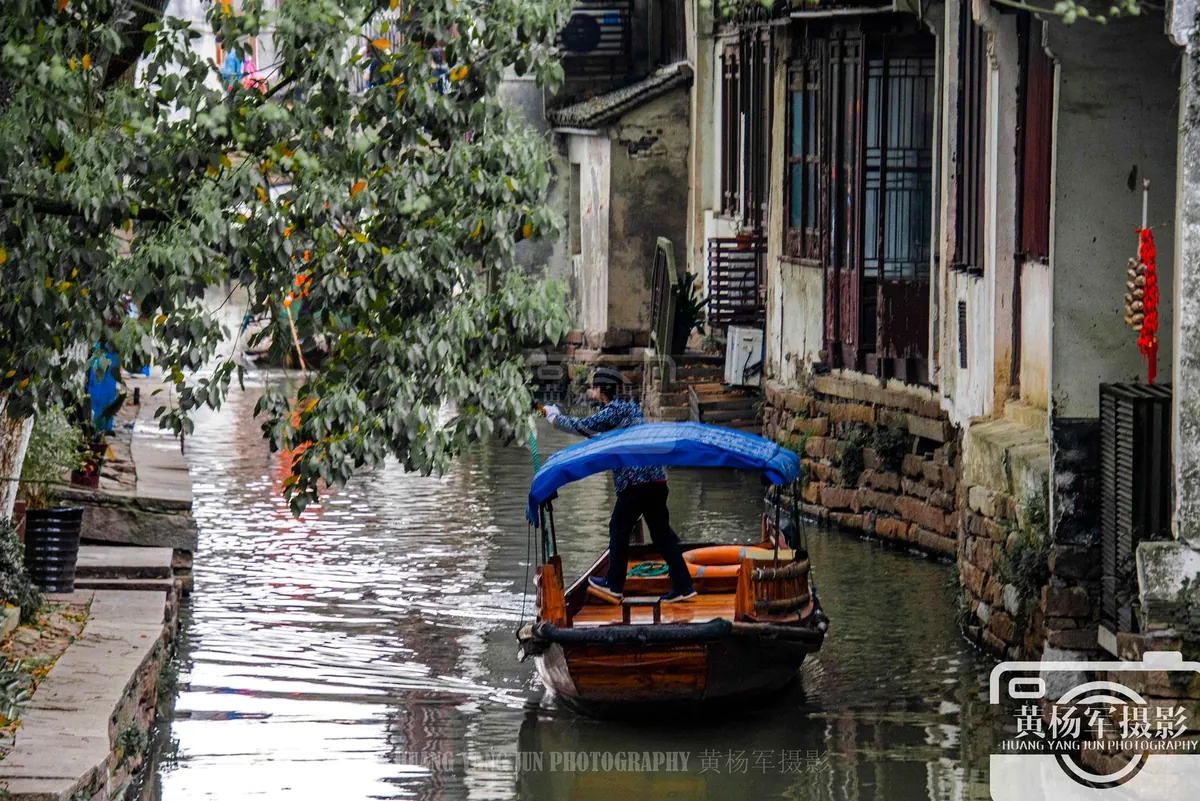
Upon arrival at the reception zone, standard sightseeing admission is priced at 100 RMB per person, granting free exploration of public heritage sites, millennial stone bridges, and elite aristocratic courtyards. However, the soul of a water-town excursion truly reaches fulfillment when boarding hand-rowed wooden boats for a fare of 220 RMB per boat accommodating up to six passengers. Boatmen wearing conical straw hats stroke oars rhythmically and chant traditional Kunqu ballads, guiding you through deep, hidden creeks. The most valuable field tip from professional photographers and cultural scholars is timing your visit across two golden windows. The first falls between 6:00 AM and 7:30 AM, when early mist lingers over mossy tile roofs, wooden shutters remain closed in contemplative silence, and calm canals mirror weeping willows before the town wakes up. The second begins after 6:30 PM, when sunset yields to thousands of glowing red lanterns casting magical reflections across rippling water, transforming the entire space into a living historical painting.
Heritage appreciation remains poetic yet demands vigilance against commercial traps. The most common pitfall involves super-cheap or “zero-dollar” tour packages on the market that routinely slash actual time in Zhouzhuang below ninety minutes under blazing midday sun, forcing visitors to turn back before even beholding the Twin Bridges. Worse yet, many operators substitute destinations by rerouting travelers to free derivative towns like Mudu, Dangkou, or Fengjing, before packing itineraries with three to four mandatory shopping stops such as Jiangnan silk mills, Longjing tea houses, rubber mattress warehouses, or overpriced jade museums. To safeguard pure appreciation, the wisest approach is choosing itineraries committed to a strict No-Shopping standard, or taking advantage of the 144-hour visa-free transit policy linking the Shanghai–Jiangsu–Zhejiang economic triangle. Spending a night at a boutique Ming- or Qing-dynasty courtyard resort hidden within the ancient town’s core allows travelers to deeply absorb the tranquil millennial pulse of the water town.
The seamless fusion of sedimentary history, rustic gastronomy, and peaceful riverside life has made the Number One Water Town an indispensable bridge across opulent East China journeys. To enjoy the ancient town’s pristine beauty without logistical worries or unexpected costs, explore the detailed itineraries crafted within the Beijing – Hangzhou – Zhouzhuang Ancient Town – Shanghai Tour Package to realize high-standard cultural exploration.