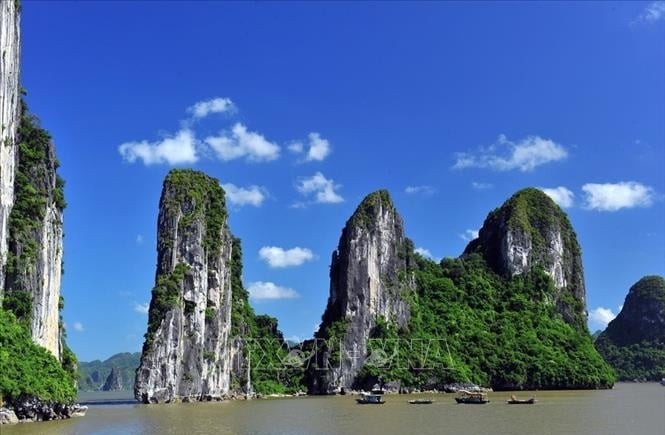
Ha Long Bay is one of the most famous natural wonders in the world, located in Quang Ninh Province, Vietnam. Ha Long Bay features about 2,000 limestone islands with bizarre and beautiful shapes, creating a majestic and poetic landscape. Ha Long Bay has also been affirmed for its world-class aesthetic value.
You may be interested in:
Majestic and breathtaking scenery with thousands of large and small limestone islands, mystical caves, and beautiful beaches
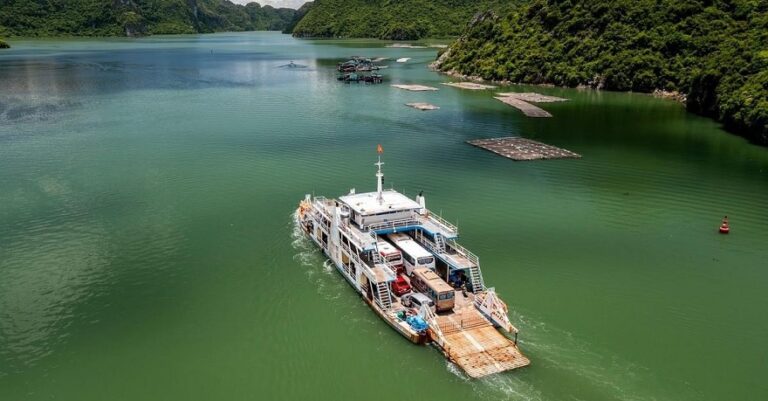
This is the factor that makes Ha Long Bay so attractive. Viewed from an overall perspective, the beauty of Ha Long Bay is a harmonious combination of mountain contours, sea, sky, water colors, and cloud hues. The dark blue limestone islands stretching across emerald green water create a majestic, breathtaking waterscape like the quintessence arranged by creation over centuries. The crystal-clear high sky reflects onto the sea surface like a giant mirror. White clouds drift gently like floating flowers in the air. Brilliant golden sunlight or reddish sunsets make the landscape even more shimmering and romantic.
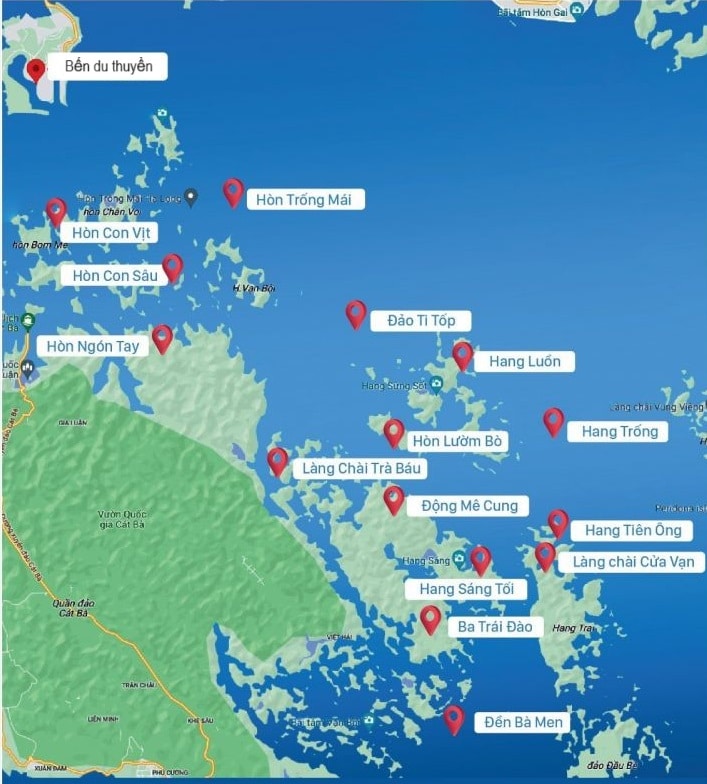
Each island bears a different shape—sometimes resembling a dragon, a turtle, a chicken, a horse… sometimes a man, a woman, a young girl… sometimes a head, a hat, a bell… The islands also have various names according to their shapes or legends, such as Dau Go (Wooden Stake), Dinh Huong (Incense Burner), Ga Choi (Fighting Cocks), Trong Mai (Drum and Female), Titov, Ngoc Vung (Jewel Island)… Each island carries its own distinct beauty and interesting story.
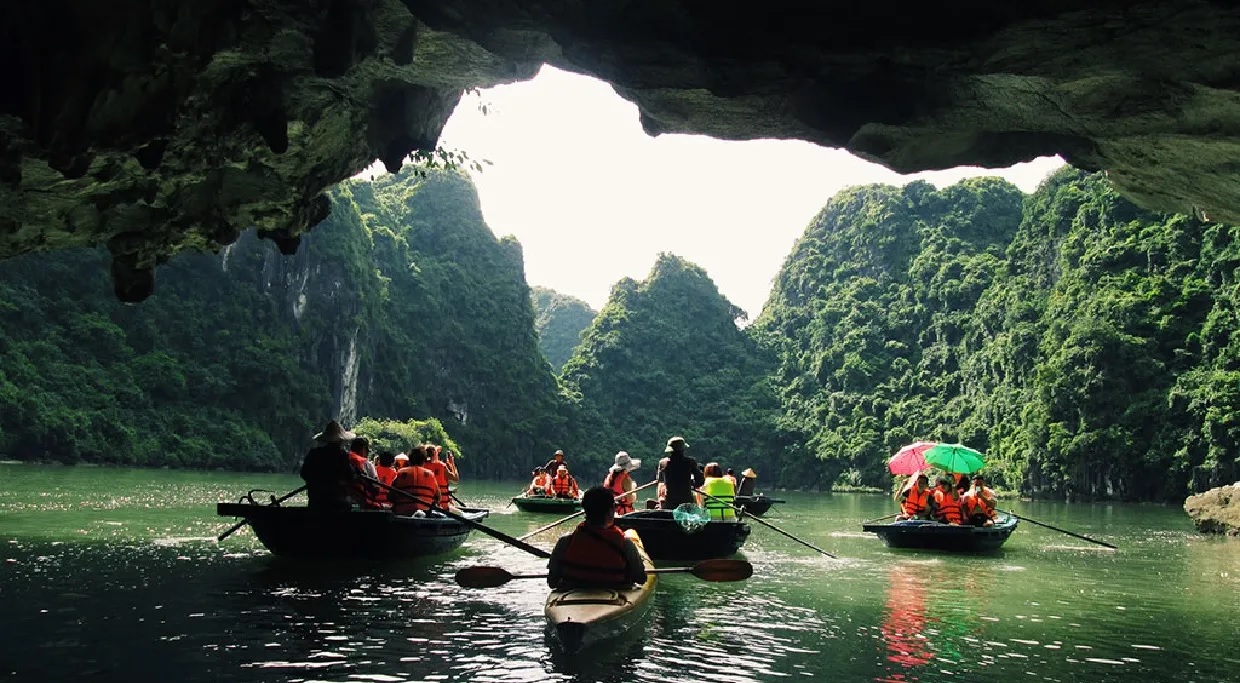
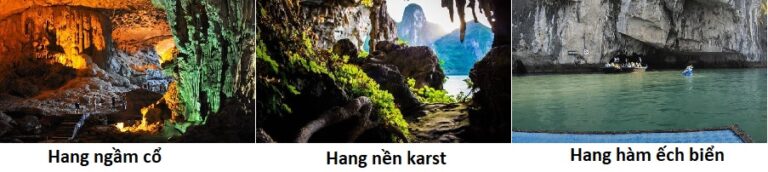
In addition, Ha Long Bay also boasts a system of mystical and unique limestone caves. There are about 59 discovered and named caves. Each cave has a different space and structure, with winding stalactites and stalagmites creating wondrous images. There are wide and deep caves like Thien Cung (Heavenly Palace), Dau Go, Sung Sot (Surprise)… there are small and short caves like Trinh Nu (Virgin), Trong (Drum)… there are caves accessible by boat or swimming in like Luon, Ba Ham… there are caves reachable by climbing high up like Tien Ong, Titov… Each cave also has a story or legend associated with its name and shape.
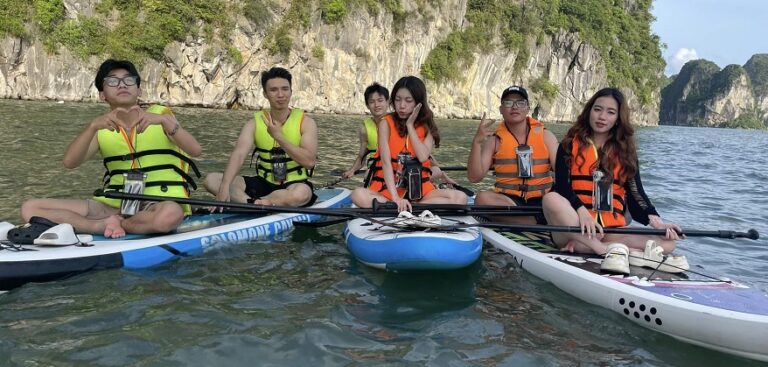
Not only that, Ha Long Bay also possesses beautiful and pristine beaches. There are about 100 large and small beaches scattered across the islands. The beaches usually feature smooth white sand and clear blue seawater. Some famous beaches include Titov, Quan Lan, Minh Chau, Ngoc Vung… Besides swimming, visitors can also participate in water sports such as diving, kayaking, boating… or simply watch the sunset over the sea.
The richness and diversity of limestone landforms: stone pillars, caves, coastline, coral reefs, sandy beaches…
Ha Long Bay is the result of Earth’s tectonic processes over billions of years. This is one of the regions with the development of complex and rich limestone landforms: stone pillars, caves, coastline, coral reefs, sandy beaches…
Ha Long Bay is one of the areas with the most complex and richest developments of limestone landforms in the world. The limestone landforms were formed through processes of corrosion, erosion, precipitation, and the activity of marine organisms over millions of years. Some characteristic limestone landforms can be mentioned as follows:
- Stone pillars: These are tall and vertical limestone pillars, which can have various shapes such as cylinders, cones, wheels… Stone pillars are formed due to the corrosive process of seawater and wind creating cracks and grooves on the rock surface. These cracks and grooves widen over time and separate rock blocks from one another. Stone pillars are the most common limestone landform in Ha Long Bay, creating a breathtaking and unique landscape.
- Caves: These are large openings in limestone blocks, which can vary in size and depth. Caves are formed by the corrosive process of seawater and groundwater creating holes piercing through rock blocks. Inside the caves, stalactites and stalagmites may develop due to the precipitation of CaCO3 from groundwater. Caves are mystical and attractive limestone landforms for visitors to Ha Long Bay.
- Coastline: These are sandy or pebbly shores along the coast or around islands. The coastline is formed by the accumulation of sand or gravel brought by sea waves. Coastlines are limestone landforms that create a comfortable and romantic space for visitors to Ha Long Bay.
- Coral reefs: These are biological structures created from living coral species attached to underwater limestone blocks. Coral reefs are formed through the activity of coral species secreting CaCO3 to build their skeletal frameworks. Coral reefs are limestone landforms holding high ecological value and creating life for many marine species.
- Sandy beaches: These are small sandy patches located between limestone blocks or inside caves. Sandy beaches are formed by the accumulation of sand brought by wind or sea waves. Sandy beaches are limestone landforms that create beautiful and striking scenery for visitors to Ha Long Bay.
UNESCO’s recognition of the aesthetic value of Ha Long Bay
In 1994, the core zone of Ha Long Bay was recognized by UNESCO as a World Natural Heritage Site for its aesthetic value (criterion vii), and was re-recognized for the second time for its outstanding global geological-geomorphological value (criterion viii) in 2000. This event marks the importance of Ha Long Bay in the international context, while affirming Vietnam’s responsibility in preserving and promoting this heritage.
The process of UNESCO recognizing the aesthetic value of Ha Long Bay took place as follows:
- On December 21, 1991, the Vietnamese Government permitted the compilation of the Ha Long Bay dossier for submission to the World Heritage Committee for review. This was an important initial step to affirm the stature and value of Ha Long Bay on an international scale. To compile the dossier, the Ha Long Bay Management Board coordinated with domestic and foreign agencies, units, and experts to perform tasks such as: investigating, researching, collecting, synthesizing, and compiling scientific information on Ha Long Bay; establishing conservation and sustainable development plans for Ha Long Bay; designing and printing dossiers according to UNESCO’s requirements.
- In 1993, the scientific dossier on Ha Long Bay was completed and forwarded to UNESCO for review. The dossier consisted of 3 main parts: Part I: General introduction to Ha Long Bay; Part II: Outstanding values of Ha Long Bay; Part III: Conservation and sustainable development plan for Ha Long Bay. Among them, Part II was the most important part, highlighting the outstanding global value of Ha Long Bay in terms of aesthetics according to the criteria of the International Convention concerning the Protection of the World Cultural and Natural Heritage. Accordingly, Ha Long Bay was evaluated as a unique landscape on earth, a masterpiece of nature, possessing a delicate combination of sculpture and painting, composition and color, grandeur and charm, poetics.
- During the process of finalizing the Ha Long Bay dossier, UNESCO successively sent expert delegations to Quang Ninh to survey, guide, research, and appraise the dossier on-site. The expert delegations provided comments and recommendations to further perfect the dossier. The expert delegations also made positive remarks and affirmed the global value of Ha Long Bay.
- On December 17, 1994, during its 18th session in Phuket, Thailand, the World Heritage Committee inscribed Ha Long Bay onto the World Natural Heritage list for its outstanding aesthetic value. This was a great achievement of the Ha Long Bay Management Board along with domestic and foreign agencies, units, and experts who made efforts to compile the dossier. This is also an honor and pride for Quang Ninh in particular and Vietnam in general, having a natural heritage recognized and honored by the world. This is also a motivation to continue protecting and promoting the value of Ha Long Bay in the future.
- After being recognized as a World Natural Heritage site for its aesthetic value, Ha Long Bay attracted many domestic and international tourists to visit and explore. This is a great opportunity to develop tourism, promote the image and brand of Quang Ninh in particular and Vietnam in general. However, this is also a major challenge regarding the protection and management of Ha Long Bay against negative impacts from tourism and other economic and social activities.
- To maintain the World Natural Heritage title, Ha Long Bay must meet UNESCO’s criteria on integrity, conservation, and effective management. At the same time, Ha Long Bay must also demonstrate sustainable development, harmonizing heritage protection with economic and social development. To achieve this, the Ha Long Bay Management Board has implemented many measures such as: formulating and implementing master plans, plans, and policies related to Ha Long Bay; strengthening inspection, monitoring, and handling of violations; raising community awareness and responsibility in heritage protection; cooperating with domestic and international organizations to mobilize resources and exchange experiences; reporting periodically to UNESCO on the conservation and development status of Ha Long Bay.
- Besides its aesthetic value, Ha Long Bay also holds outstanding global geological and geomorphological values. This is one of the regions with the development of the most complex and rich limestone landforms in the world. The limestone landforms were formed by Earth’s tectonic processes over billions of years. Ha Long Bay is one of the areas with sea level changes throughout Earth’s evolutionary process. Therefore, Ha Long Bay is living evidence of global climate change. To have this value recognized, the Ha Long Bay Management Board continued to compile and submit a scientific dossier on Ha Long Bay to UNESCO in 1999. After review and appraisal, UNESCO recognized Ha Long Bay as a World Natural Heritage site for the second time in 2000 for its geological and geomorphological values. Thus, Ha Long Bay has become one of the natural heritages with two criteria recognized by UNESCO, which is a great honor and responsibility for Quang Ninh and Vietnam.
This event created a great resonance in the international community, attracting the attention and interest of tourists from all over the world. Ha Long Bay has become a symbol of Vietnamese tourism, contributing to promoting the image and brand of the country. At the same time, this event also poses higher challenges and requirements for the management, protection, and sustainable development of Ha Long Bay in the future.
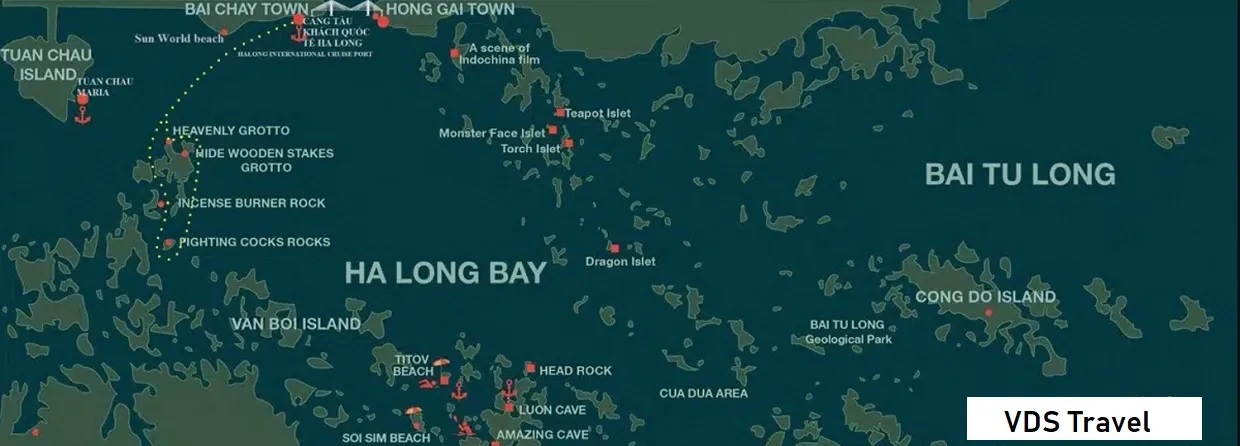
Destinations where visitors can experience the aesthetic value of Ha Long Bay
| Routes | Price | Sightseeing points |
|---|---|---|
| VHL1 | 310,000 VND/person | Thien Cung Cave – Dau Go Cave – Cho Da Islet (Dog Stone) – Ba Hang Cave – Dinh Huong Islet (Incense Burner) – Trong Mai Islet (Fighting Cocks) |
| VHL2 | 310,000 VND/person | Soi Sim Beach – Titov Island – Sung Sot Cave – Tung Sau Lagoon – Me Cung Cave – Bo Nau Cave – Luon Cave – Drum Cave – Virgin Cave – Ho Dong Tien Cave |
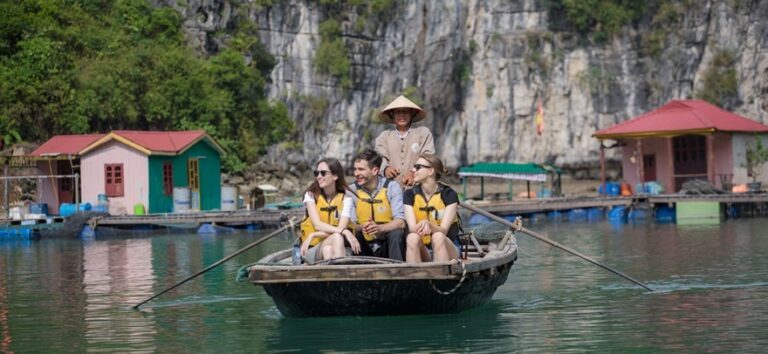
| VHL3 | 260,000 VND/person | Cua Van Floating Cultural Center – Tien Ong Cave – Ba Ham Lake – Ba Men Temple – Ang Du – Bamboo Forest |
| VHL4 | 260,000 VND/person | Co Cave (Thien Canh Son) – Thay Cave – Cap La Cave – Vung Vieng – Tung Ang ecological area – Cong Do Island – Hon Xep Park |
| VHL5 | 310,000 VND/person | Thien Cung Cave – Dau Go Cave – Cho Da Islet – Ba Hang – Dinh Huong Islet – Trong Mai Islet – Gia Luan Pier (Cat Ba – Hai Phong) |
| VHL6 | 150,000 VND/person/trip | Chan Voi Islet – Ba Cua Lagoon – Tung Lam Island – Cap Bai Islet (final point of the journey adjacent to Gia Luan, Lan Ha Bay – Hai Phong) |
| VHL7 | 600,000 VND/person | Sightseeing Ha Long Baying following itineraries VHL1-2-3-4 (only applicable for exploration cruises) |
| VHL8 | 70,000 VND/person/trip | Tuan Chau International Passenger Port – Ha Long International Passenger Port – Nam Cau Trang Port |
Above is all information about the Aesthetic Value of Ha Long Bay; we hope the article brings you useful information. If you have the need to rent a boat to Ha Long Bay to visit and experience the beauty of Ha Long Bay, please contact us for more details