The Gulf of Tonkin is one of the world’s largest and scenic saltwater gulfs, situated between Vietnam and China as a northwestern arm of the East Sea (South China Sea) within the Pacific Ocean. Spanning roughly 126,250 km², it measures around 310 km across at its widest point and about 207 km at its narrowest. Relatively shallow—with an average depth under 60 meters—it receives the Red River as its primary river inflow.
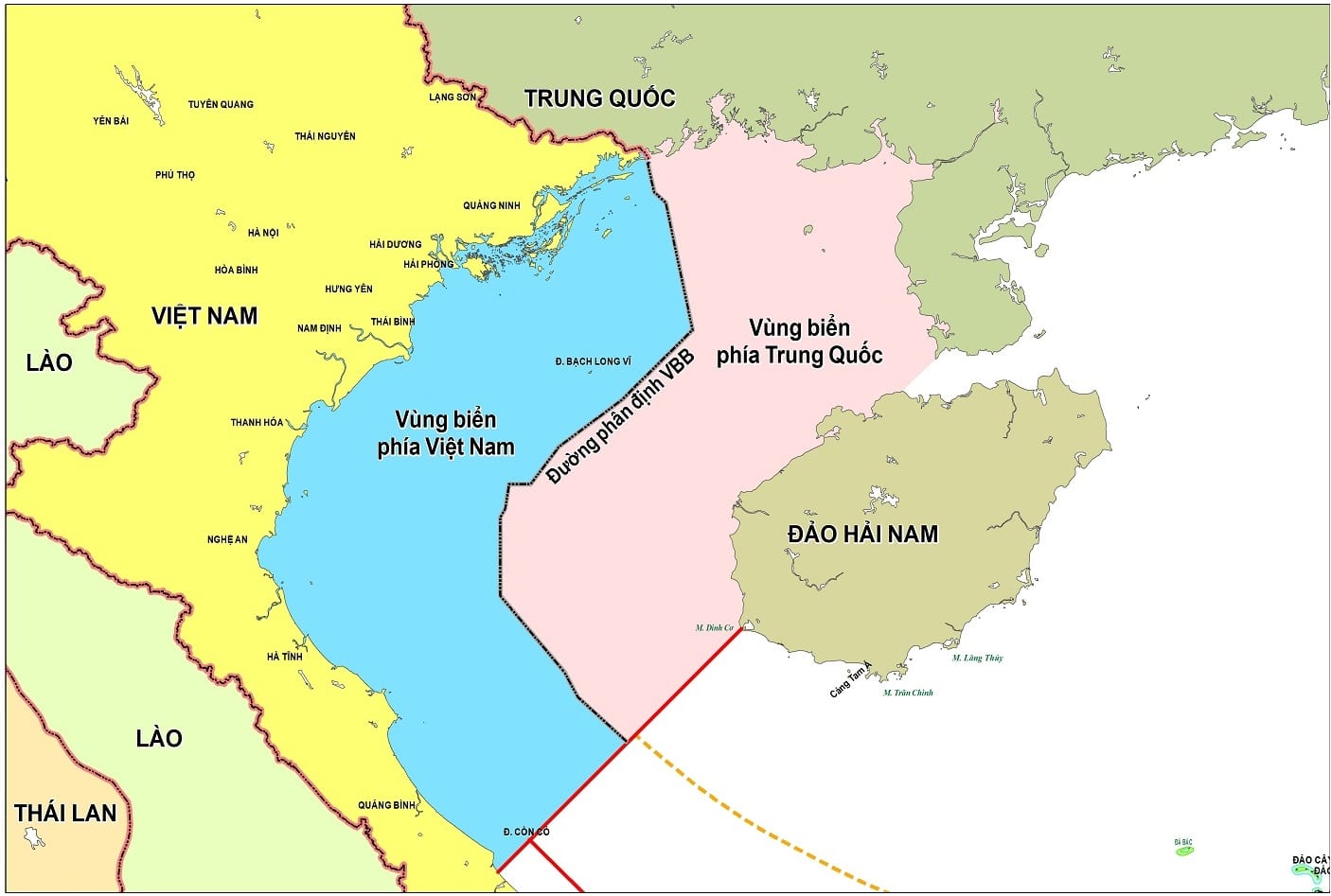
Positioned along northern Vietnam, the gulf is bordered by China to the north, Laos to the west, and the open East Sea to the east. It connects to surrounding waters through two main openings: Qiongzhou Strait (35.2 km wide between China’s Leizhou Peninsula and Hainan Island) and the main mouth defined roughly along a line from Con Co Island in Quang Tri Province, Vietnam, to Oanh Ca Cape on Hainan Island, China—spanning about 110 nautical miles (roughly 200 km), with roughly 763 km of coastline along Vietnam and 695 km along China.
Boundaries of the Gulf of Tonkin in the East Sea across 10 coastal provinces of Vietnam—Quang Ninh, Hai Phong, Thai Binh, Nam Dinh, Ninh Binh, Thanh Hoa, Nghe An, Ha Tinh, Quang Binh, and Quang Tri—and Guangxi and Hainan in China.
Terrain around the Gulf of Tonkin is varied and complex. To the west and northwest lie northern midlands and mountain ranges stretching from the northern border with China toward western Thanh Hoa Province; to the south lies the Red River Delta—Vietnam’s second-largest river delta after the Mekong Delta, covering roughly 15,000 km² (about 4.5% of the country’s land area); and to the east lies the Northeast region with coastal hills and low mountains fringed by islands and archipelagos—home to nearly 3,000 islands across Ha Long Bay, Bai Tu Long Bay, Cat Hai Island, Cat Ba Archipelago, and Bach Long Vi in Vietnam, along with smaller islands in the northeast such as Weizhou and Xieyang in China.
In international literature, the Gulf of Tonkin is commonly referred to as the Gulf of Tonkin (Tonkin Gulf) or Beibu Gulf.
Gulf of Tonkin: The standard English name widely used in international sources.
Beibu Gulf: The name commonly used in Chinese English-language publications.
The historical name “Tonkin” derives from terms for “Eastern Capital” associated with Hanoi. During the 17th and 18th centuries, European accounts used it for northern Vietnam under Trinh rule north of the Gianh River, and from 1883 to early 1945 it referred to the French protectorate of Tonkin in northern Vietnam.
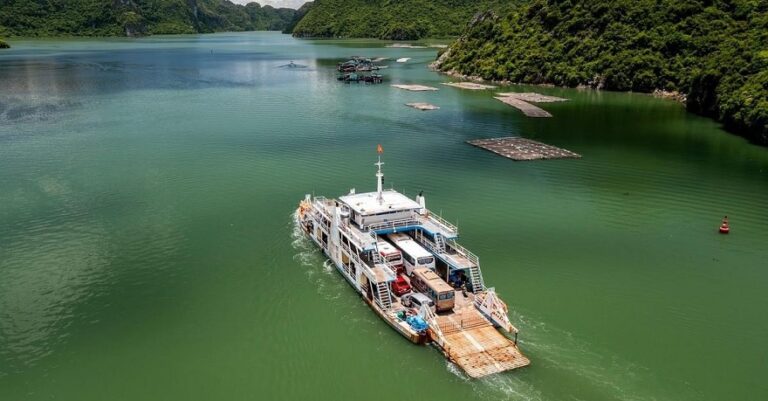
Scenic view of the Gulf of Tonkin
Historical Events: The Gulf of Tonkin Incident
1. What Was the Gulf of Tonkin Incident?
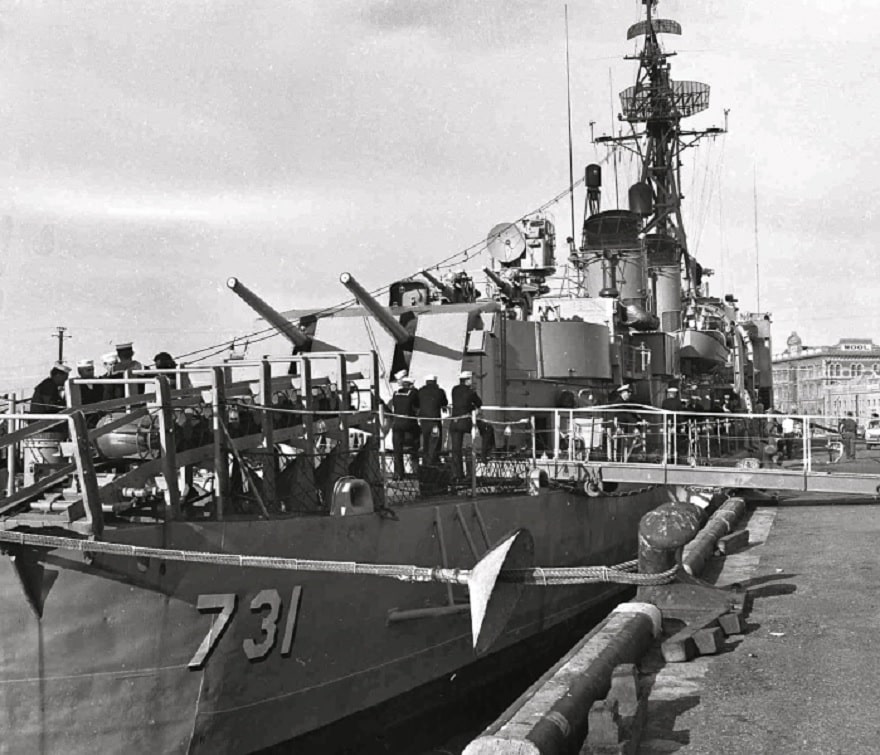
The Gulf of Tonkin incident was a pivotal 1964 flashpoint tied to U.S. escalation in Vietnam under President Lyndon B. Johnson. According to official U.S. accounts at the time, on August 2, 1964, the U.S. destroyer USS Maddox encountered North Vietnamese patrol boats in the Gulf of Tonkin, followed two days later by reports of a second engagement involving USS Maddox and USS Turner Joy. Citing these reports, Johnson sought the Gulf of Tonkin Resolution from the U.S. Congress authorizing military action in Southeast Asia without a formal declaration of war.
Background leading up to the Gulf of Tonkin Incident in August 1964
Subsequent historical investigations and declassified records revealed major flaws and misrepresentations in how the second reported attack on August 4, 1964, was portrayed—showing that USS Maddox had been conducting intelligence operations near coastal raids under covert programs while radar and communications interpretations on August 4 were far less clear-cut than presented at the time, even as administration leaders moved swiftly to justify escalation.
The Gulf of Tonkin incident marked a major turning point in the Vietnam War, leading to sustained U.S. bombing campaigns in the north (such as Operation Rolling Thunder) and large-scale ground troop deployments in the south, while sparking intense debate and opposition both internationally and within the United States.
2. Background & Causes
Following the First Indochina War and the 1954 Geneva Accords, Vietnam was temporarily divided into northern and southern zones pending planned reunification elections. As Cold War tensions hardened, the United States backed Ngo Dinh Diem’s government in South Vietnam and opposed Viet Minh/communist expansion, while insurgency and armed conflict escalated in the south by the late 1950s.
Political instability deepened in South Vietnam amid governance challenges and rural unrest, culminating in the coup and assassination of Ngo Dinh Diem in November 1963, followed shortly by the assassination of U.S. President John F. Kennedy. Despite increased U.S. advisory assistance, political fragility and military strain persisted in South Vietnam.
By August 1964, the Johnson administration increasingly favored stronger U.S. military measures to stabilize South Vietnam and pressure North Vietnam. U.S. naval destroyers including USS Maddox and USS Turner Joy patrolled the Gulf of Tonkin in connection with coastal operations, setting the stage for the August 2 and August 4 reports—with doubts later emerging over whether a second attack actually took place on August 4.
Following the reports of a second attack, President Johnson requested congressional authorization to respond to armed attacks and deter further aggression in Southeast Asia. Congress passed the Gulf of Tonkin Resolution overwhelmingly, granting broad authority that lawmakers largely expected would be exercised with ongoing consultation.
The Gulf of Tonkin incident and resulting resolution served as the primary pretext for major U.S. military escalation in Vietnam. In early 1965, Johnson authorized Operation Rolling Thunder—beginning February 13, 1965, and running into 1967—alongside the first major deployments of U.S. combat ground forces to South Vietnam.