If you are a Buddhist devotee, or simply want to learn about our country’s sacred historical relics, you certainly cannot miss Ngoa Van Pagoda Hermitage. This is one of the important relics located in the sacred realm of Truc Lam Yen Tu Buddhism, commemorating Buddha Emperor Tran Nhan Tong, the founder of the sect. Additionally, Ngoa Van Pagoda Hermitage boasts the breathtaking beauty of pristine nature, alongside vibrant and meaningful tourism and festival activities. Let’s explore Ngoa Van Pagoda Hermitage with us through the following article.
See more: Top 9 Most Sacred Pagodas in Quang Ninh
Location of Ngoa Van Pagoda Hermitage
Ngoa Van Pagoda Hermitage is situated in An Sinh and Binh Khe communes, within Dong Trieu town, Quang Ninh province. This is one of the oldest and most sacred pagodas in Quang Ninh, located in the sacred realm of Truc Lam Yen Tu Buddhism. The pagoda lies on the southern slope of a high peak belonging to the Yen Tu Mountain range, whose classical name is Bao Dai Son or Dragon Scale Mountain, or Dragon Encirclement as local residents call it today. This mountain stands about 800m above sea level, shaped like a soaring dragon. The complex is divided into 4 zones with 15 different tower and pagoda clusters, including: Ngoa Van, Da Chong, Ba Bac, Thong Dan – Do Kieu. Among them, Ngoa Van Pagoda sits at the midpoint and attracts the highest number of visiting tourists.
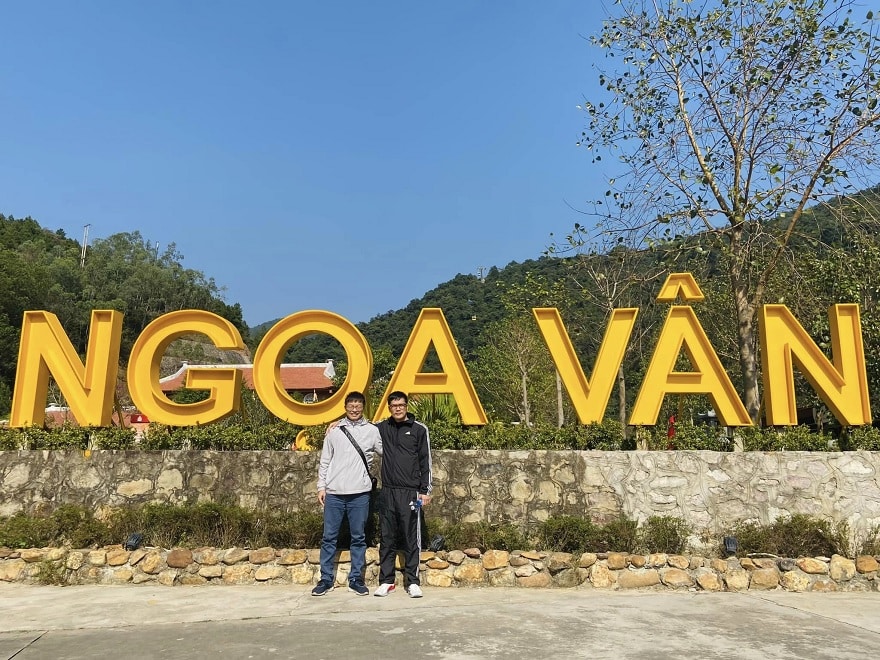
Ngoa Van Pagoda
Perhaps you did not know, Ngoa Van Pagoda is also called Ngoa Van Hermitage pagoda, signifying a temple located amidst the clouds. This location sits over 500m above sea level; from the temple, you can gaze straight out over distant rolling mountains where white clouds wend around every early morning. Not stopping there, the temple also “leans” back against the Ngoa Van peak, year-round blanketed by layers of clouds, while in the distance flows the winding Cam River, as pretty as a fairyland painting bestowed by nature.
With its ideal coordinates, in every season of the year, Ngoa Van Pagoda possesses distinct characteristics creating breathtaking beauties that mesmerize visitors. Especially during early spring, extending from the first lunar month until March. At this time, local weather is quite pristine and mild, neither too hot nor too cold. Furthermore, this period hosts numerous vibrant and meaningful festivals such as the Ngoa Van Spring Festival, carrying impressive wishes for peace and smooth, fulfilling pilgrimage journeys.
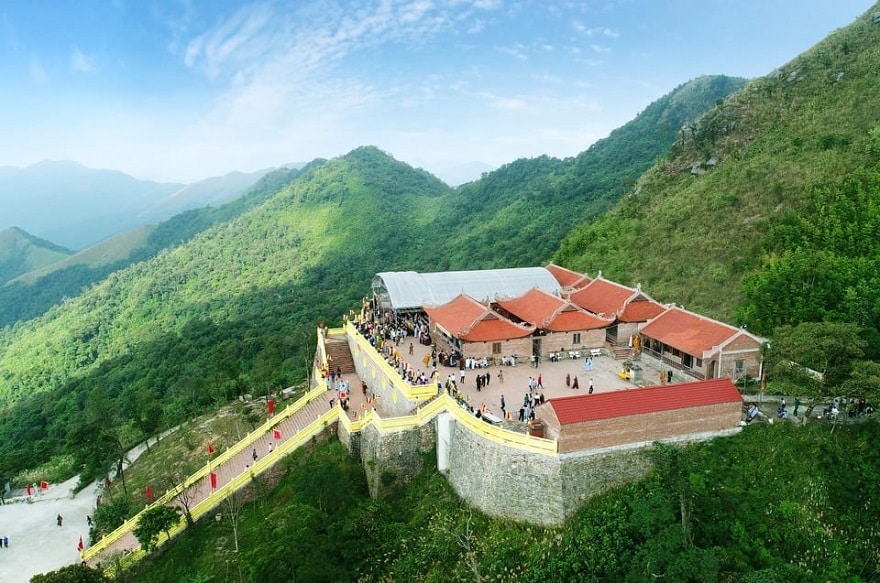
Ngoa Van Pagoda – Spring excursion and Buddha pilgrimage destination every spring
Beyond that timeframe, you can also visit and sightsee around the Ngoa Van area during other occasions throughout the year. Most notably, the Vu Lan Filial Piety Festival is organized annually on the 15th day of the 7th lunar month. This serves as an occasion for visitors to express gratitude toward parents, ancestors, and the departed.
Formation History and Architecture of the Pagoda
Ngoa Van Pagoda Hermitage is an ancient Buddhist architectural work located atop Ngoa Van peak of Bao Dai Mountain, within the Yen Tu range, An Sinh and Binh Khe communes, Dong Trieu town, Quang Ninh province. This is where Buddha Emperor Tran Nhan Tong practiced and entered Nirvana in 1308. Following the Buddha Emperor’s passing, subsequent generations rebuilt Ngoa Van hermitage and other architectural structures to worship the Buddha and practice the Dharma. Today, it represents a large pagoda-tower complex arranged across 3 tiers on Bao Dai Mountain, comprising Ngoa Van hermitage, Trung Ngoa Van Pagoda, and other relics.
According to historical records, from the very early days of seizing and consolidating national power, the Tran Dynasty relied upon Buddhism, adopting Yen Tu as their base. During his ascetic practice on Yen Tu Mountain, Tran Nhan Tong chose Ngoa Van hermitage on Bao Dai peak as his meditation retreat. According to the Complete Annals of Dai Viet, in May 1307, the Truc Lam Great Master (the Buddha Emperor’s religious title) ascended to practice at a hermitage atop Ngoa Van—a mist-shrouded peak year-round on Bao Dai Mountain within the sacred Yen Tu range. On November 1, 1308, Buddha Emperor Tran Nhan Tong entered Nirvana at Ngoc Van hermitage (now located in An Sinh and Binh Khe communes, Dong Trieu town, Quang Ninh province).
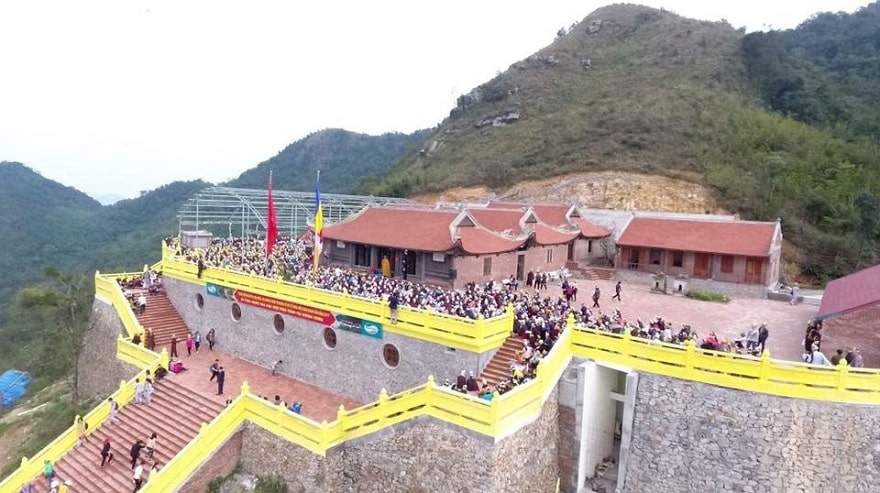
Architecture of Ngoa Van Pagoda Hermitage
Following the passing of the first Truc Lam patriarch, subsequent generations rebuilt Ngoa Van hermitage to worship him, while also constructing pagodas and other religious architectural structures to worship the Buddha and practice the Dharma. Today’s Ngoa Van relic site is a large pagoda-tower complex arranged in 3 tiers on Bao Dai Mountain.
The lowest tier features a total of 15 relics situated at the mountain foot, including the Tan Long ancient primeval forest, Thong Dan, Phu Am Tra, Do Kieu, Da Chong boulders, Ba Bac steps, etc. These relics interconnect via a winding path ascending gradually toward the mountain peak. These architectural works bear the imprints of Vietnamese feudal dynasties, alongside anecdotes and legends associated with Buddha Emperor Tran Nhan Tong.
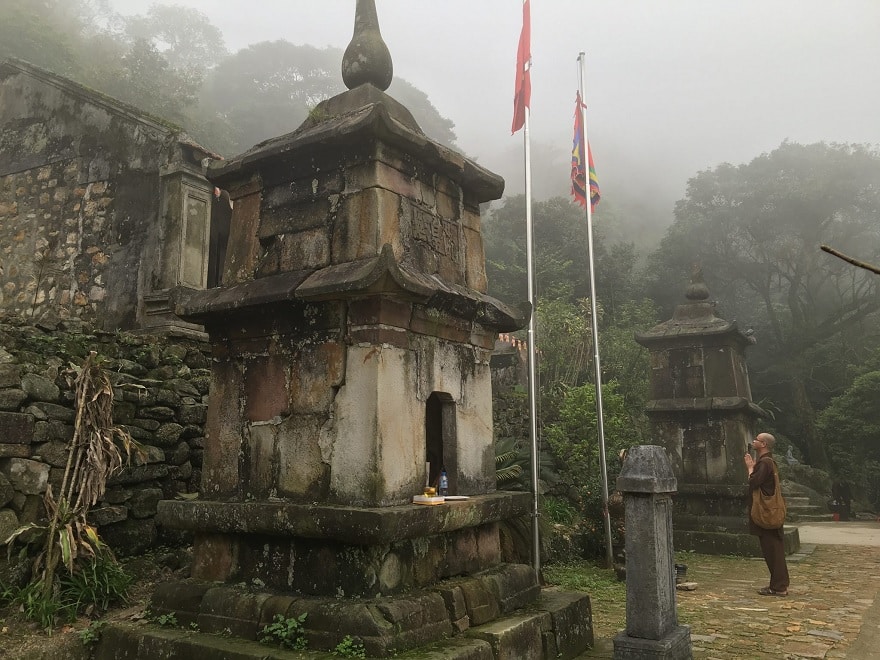
The first zone is a flat area near the mountain peak, spanning nearly 1,000 m2
The 2nd tier of the relic area is Trung Ngoa Van Pagoda, located on the southern slope of Bao Dai Mountain. Having been restored and built upon old temple foundations in 2014, modern Trung Ngoa Van represents a spacious pagoda featuring “Er” shape architecture (mimicking Ngoa Van Pagoda built during the Later Le Dynasty) comprising two main halls: the Front Hall (Tien Duong) and Rear Hall (Hau Duong). The Front Hall worships Shakyamuni Buddha and predecessors; the Rear Hall worships Buddha Emperor Tran Nhan Tong and Truc Lam patriarchs. Trung Ngoa Van Pagoda also serves as the central area for the Ngoa Van spring festival (taking place from the 9th day of the first lunar month through the end of the third lunar month annually). Important festival rituals such as spring opening ceremonies and prayers for national peace and prosperity are organized at Trung Ngoa Van Pagoda.
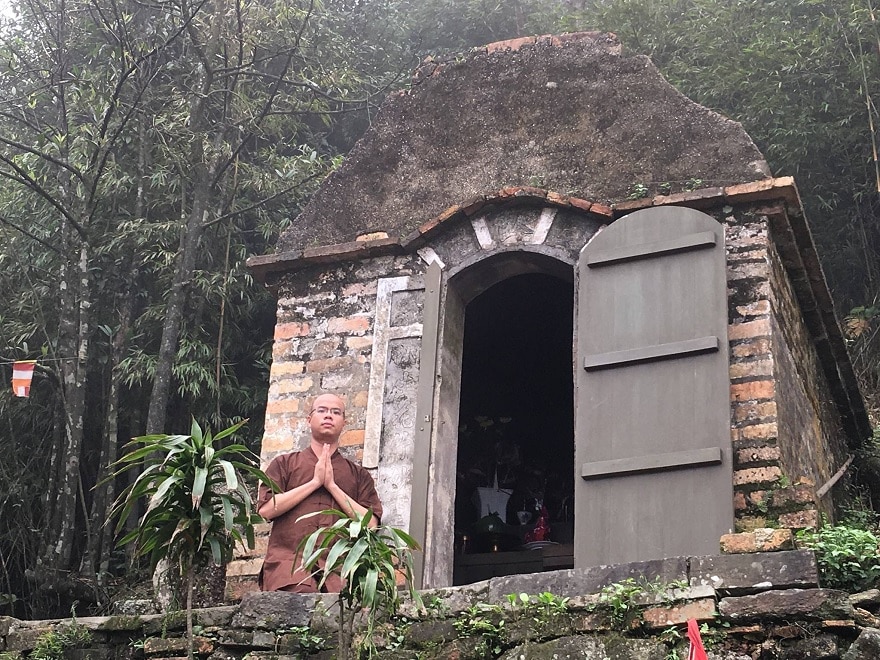
The 2nd zone is a brick-walled house with arched doorways and collapsed roofs
The 3rd tier, also the highest tier of the Ngoa Van relic site, was praised by ancients: “Vạn cổ anh linh tự/ Tứ thời cảnh sắc tân” (Translation: “Eternal sacred temple/ Four seasons fresh scenery”). This is Ngoa Van hermitage, where Buddha Emperor Tran Nhan Tong entered Nirvana. Inside Ngoa Van hermitage sits an altar supporting a bronze statue of Buddha Emperor Tran Nhan Tong in the Nirvana posture. Crafted from pure bronze, the statue stands 1.2m high, 0.8m wide, weighing about 300kg. The statue is regarded as a masterpiece of Vietnamese sculpture art from the Tran Dynasty, expressing the Buddha Emperor’s serenity, majesty, and wisdom.
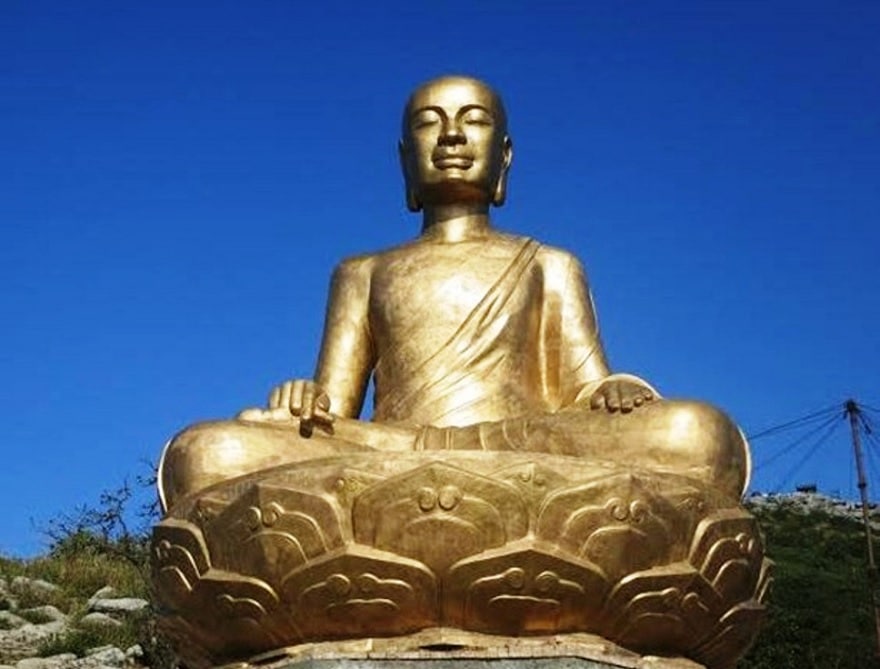
Sacred statue of Buddha Emperor Tran Nhan Tong at the 3rd zone of Ngoa Van Pagoda
Flanking the statue stand two steles recording the Buddha Emperor’s practice and Nirvana process. One stele is written in Chinese characters, while the other is in Nom script. These represent the oldest surviving steles of Vietnamese Buddhism. The Chinese character stele, called the Holy Virtue Saint Ancestor Stele, was inscribed in 1308 by Zen Master Huyen Quang—one of the three patriarchs of Truc Lam Yen Tu Zen. The Nom script stele, also called the Holy Virtue Saint Ancestor Stele, was inscribed in 1319 by Zen Master Phap Loa—another patriarch of Truc Lam Yen Tu Zen. These two steles record pivotal events in the Buddha Emperor’s life while reflecting his thoughts and soul, alongside those of Truc Lam Yen Tu patriarchs.
Beside Ngoa Van hermitage stands the Buddha Emperor Tower, preserving a portion of Buddha Emperor Tran Nhan Tong’s sarira. The square-architecture tower stands 14m high, featuring 8 corners and 8 faces. Each face features a triangular window with exquisite decorative motifs. The Buddha Emperor Tower symbolizes the eternity and nobility of Buddha Emperor Tran Nhan Tong.
Tips for Visiting Ngoa Van Pagoda Hermitage
You should visit the pagoda in spring, from the 9th day of the first lunar month through the end of the third lunar month, as this period hosts numerous vibrant and unique temple festivals, such as the Ngoa Van spring festival, national peace prayers, Buddha Emperor Tran Nhan Tong memorial ceremonies, etc. You can also visit during other festival occasions throughout the year, such as the Vu Lan festival on the 15th of the 7th lunar month, Buddha’s Birthday on the 15th of the 4th lunar month, Quan Am festival on the 19th of the 2nd, 6th, and 9th lunar months, etc., to experience the spiritual and cultural atmosphere here.
To reach the pagoda, you can choose between walking or taking the cable car, each option carrying its own advantages and disadvantages:
Walking: You can walk from Trai Loc cable car station No. 1, An Sinh commune, along a winding path spanning about 3 km. This option suits travelers loving natural and cultural experiences. You will admire lush green forests, crystal-clear streams, and soaring mountain peaks. You will also visit small relics at the mountain foot associated with Buddha Emperor Tran Nhan Tong’s life and practice. These relics include: Tan Long ancient forest, Phu Am Tra, Do Kieu, Thong Dan, Da Chong boulders, Ba Bac steps, etc.
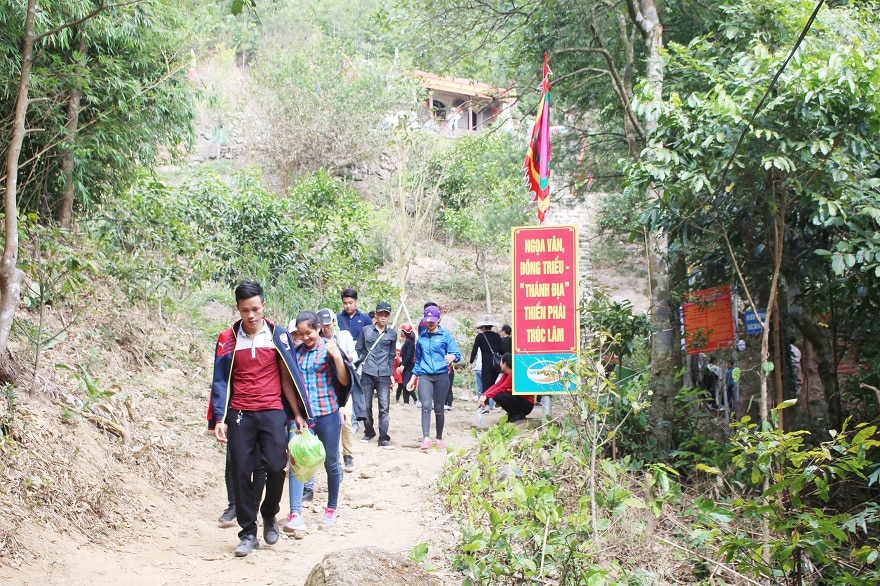
The 3km path ascending to Ngoa Van Pagoda
Taking the cable car: You can ride the cable car from Trai Loc station No. 1 to the terminal station near Trung Ngoa Van Pagoda. This option suits those wanting to save time and energy. You will sit inside cabins accommodating 10 people per cabin, admiring rolling mountain scenery from above. The cable car ride takes about 15 minutes, priced at 120,000 VND/one way or 220,000 VND/round trip. Children under 1.2m ride free when accompanied by adults. Certain other beneficiaries like Heroic Vietnamese Mothers, wounded/sick veterans, monks, and nuns also receive free tickets per regulations.
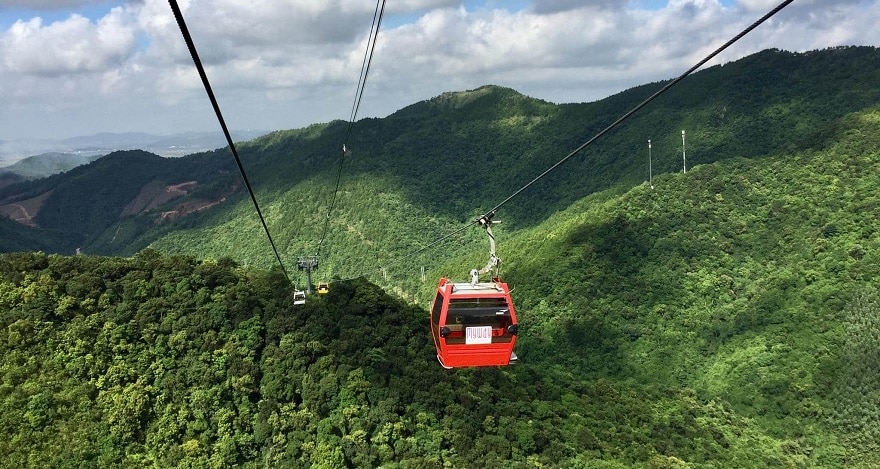
Ngoa Van Cable Car
When visiting Ngoa Van Pagoda Hermitage, you can join numerous engaging and meaningful tourism activities, such as:
Pilgrimage and worship: You can offer incense and donations at the pagoda’s architectural works, such as Trung Ngoa Van Pagoda, Ngoa Van hermitage, Buddha Emperor Tower, etc. You will learn about the history and culture of Truc Lam Yen Tu Buddhism, while praying for peace and happiness for yourself and your family.
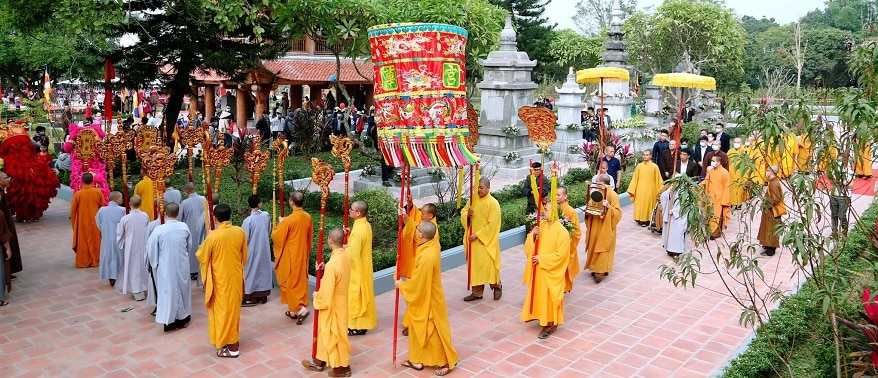
Pilgrimage ceremony at the Pagoda
Joining festivals: You can participate in the vibrant and unique temple festivals, such as the Ngoa Van spring festival, national peace prayers, Buddha Emperor Tran Nhan Tong memorial ceremonies, etc. You will interact and learn about local culture, alongside enjoying traditional art and sports activities like ca tru singing, cheo opera, boat racing, etc.