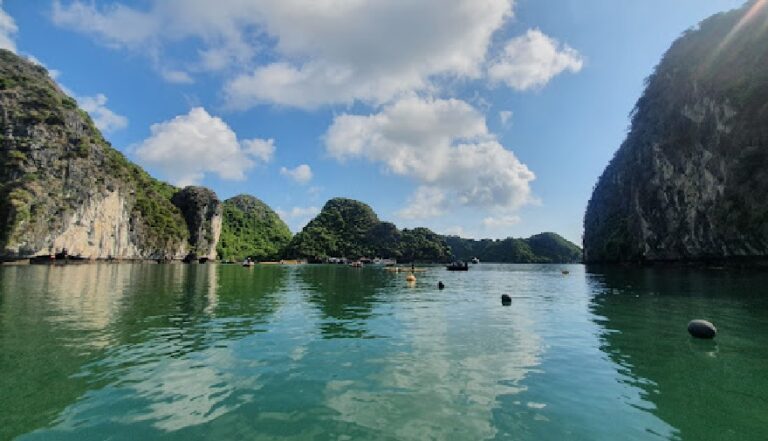
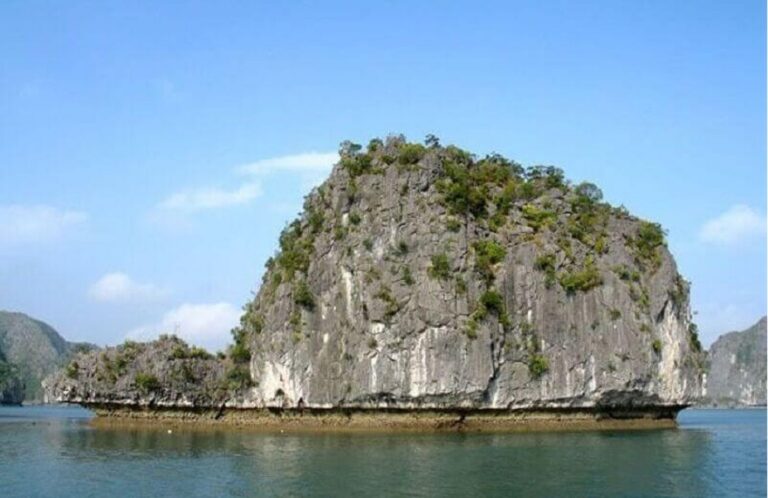
Located on scenic Cat Ba Island in Hai Phong City, Cat Ba National Park is a premier natural landmark of Vietnam. Recognized by UNESCO as a World Biosphere Reserve, the park showcases remarkably diverse ecosystems where primeval forest on limestone karst, coastal mangroves, and colorful coral reefs beneath the sea converge.
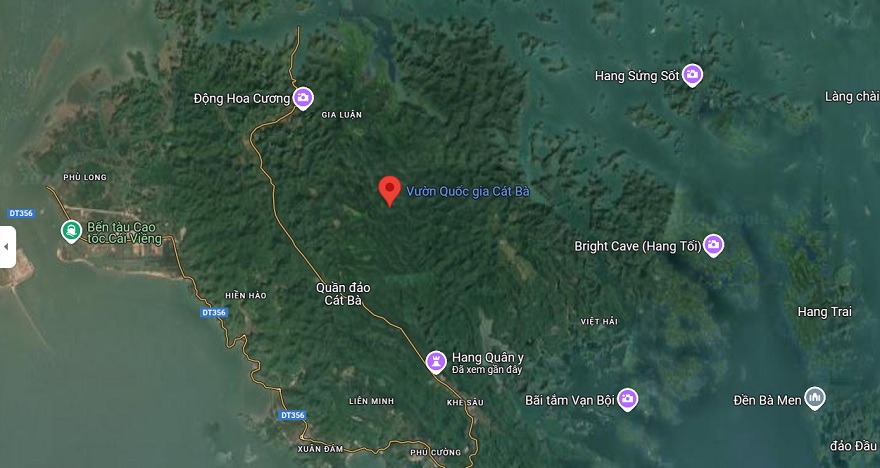
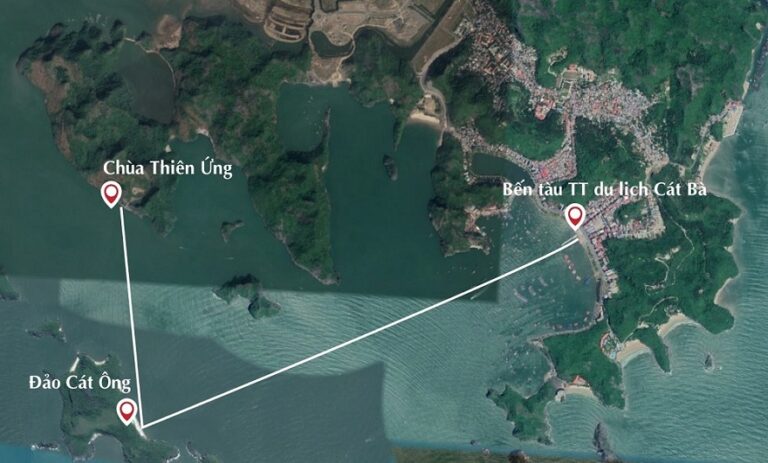
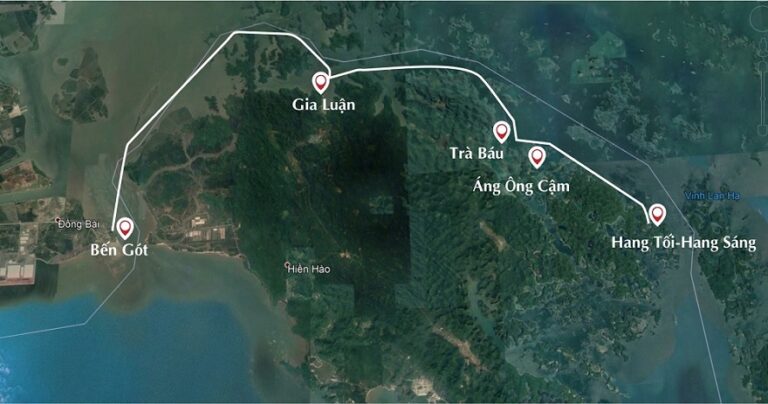
Geographic location map of Cat Ba National Park near famous Ha Long Bay attractions displayed on Google Maps
Cat Ba National Park is not only home to thousands of rare plant and animal species, but also an ideal retreat for travelers who love exploring nature and seeking tranquility. Thanks to its convenient location near Ha Long Bay, visitors can easily combine both celebrated natural wonders in a single trip. Join VDS Travel on a journey into Cat Ba National Park to discover the natural wonders bestowed upon this island sanctuary.
Overview of Cat Ba National Park
1. Geographic Location and History of Formation & Development
Cat Ba National Park sits on Cat Ba Island in Cat Hai District, Hai Phong City, roughly 14 km northeast of central Cat Ba Town along the trans-island road from Gia Luan Ferry Pier to the town center. With an average elevation of about 150 meters above sea level and a total area of 26,240 hectares—comprising 17,040 hectares of island land and 9,200 hectares of marine waters (per the Ministry of Natural Resources and Environment)—the park covers a substantial share of the island, creating a broad green expanse surrounded by the sea. This distinctive geography gives Cat Ba unique scenery and ecological character.
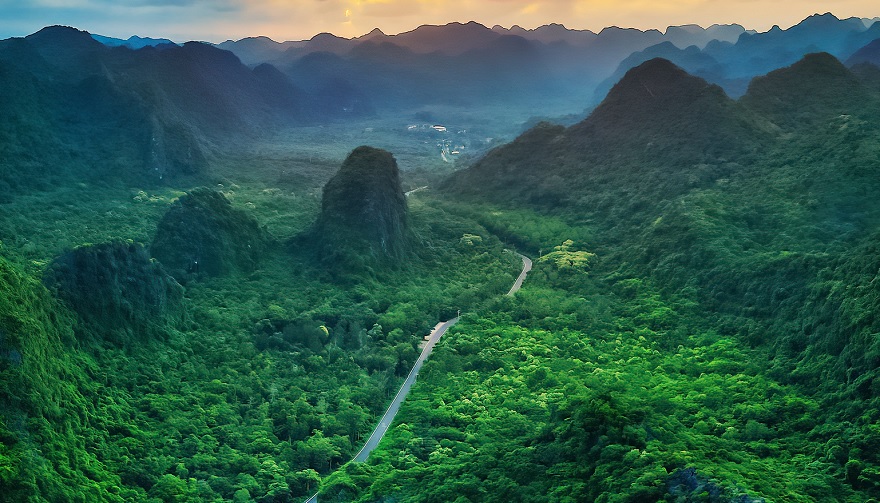
Trans-island road across Cat Ba
Cat Ba National Park was established under Decision No. 79/CP dated March 31, 1986, issued by the Chairman of the Council of Ministers, initially covering 15,200 hectares across the administrative areas of Gia Luan, Phu Long, Hien Hao, Xuan Dam, Tran Chau, and Viet Hai communes and Cat Ba Town, ringed by rivers and sea. This zoning aimed to protect and develop the region’s diverse ecosystems. Beyond its national park status, Cat Ba was recognized by UNESCO as a World Biosphere Reserve in 2004 in acknowledgment of regional biodiversity conservation efforts.
Over the years, the national park has worked continuously in nature conservation, scientific research, and sustainable eco-tourism. Notably, in 2023, Ha Long Bay – Cat Ba Archipelago, encompassing Cat Ba National Park, was inscribed by UNESCO as a World Natural Heritage Site—becoming Vietnam’s first inter-provincial/municipal World Natural Heritage recognition and marking a major milestone in safeguarding the country’s natural heritage.
2. Ecosystems
- Tropical rainforest: Shaped by a humid tropical monsoon climate, Cat Ba hosts more than 700 plant species—including valuable timber trees, dense lianas, and lush undergrowth—providing vital habitat for wildlife such as the rare endemic Cat Ba langur.
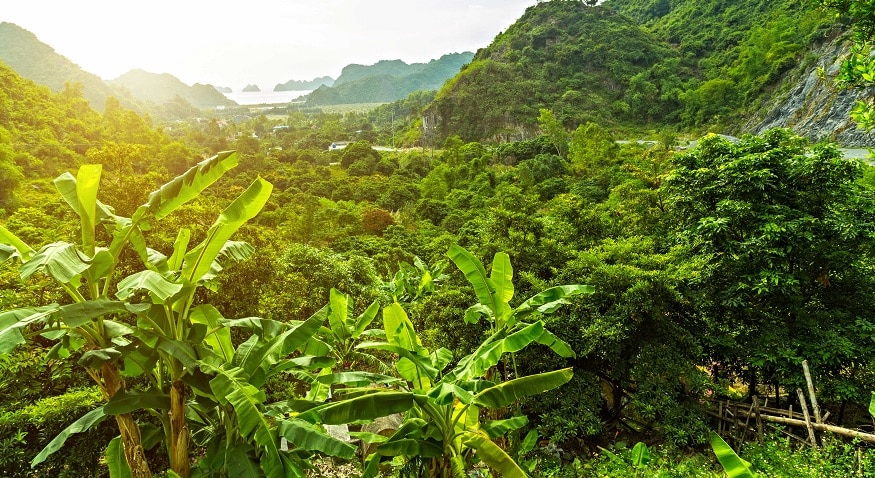
Tropical forest ecosystem
- Limestone karst mountains: Towering limestone ridges give Cat Ba dramatic, distinctive scenery, while limestone caves hold geological and historical intrigue and shelter bats and organisms adapted to low-light environments.
- Mangrove forests: Coastal mangroves play an essential role in protecting shorelines, preventing erosion, providing habitat for aquatic species, and hosting migratory birds.
- Coral reefs: Cat Ba’s waters support nearly 1,500 marine species, including hard and soft corals that form a colorful underwater world appealing to snorkelers and divers exploring the sea.
In addition, Cat Ba National Park features intertidal zones, saltwater island lakes, bays, and enclosed karst lagoons (*tung* and *ang*), forming a rich ecological complex of high conservation value that draws nature lovers from around the world.
A Haven of Biodiversity
1. Fauna
Cat Ba National Park shelters a remarkably rich and varied fauna with rare species found nowhere else. Recorded species total 2,320 flora and fauna—including 282 forest animal species, 538 benthic marine species, 196 marine fish species, 771 terrestrial plant species, 23 mangrove plant species, 75 seaweed species, and 177 coral species.
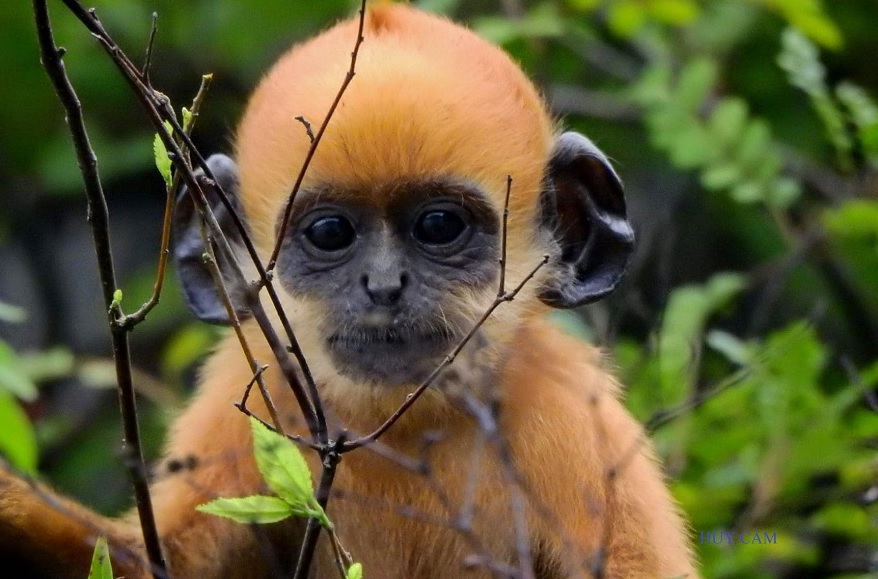
Cat Ba langur (Trachypithecus poliocephalus) with roughly 70 individuals remaining
Most notably, Cat Ba is the sole habitat in the world for the Cat Ba langur (*Trachypithecus poliocephalus*), a rare endemic primate severely threatened by hunting and habitat loss with roughly 70 individuals remaining. Easily recognized by its golden-gray coat and dark face ringed with white around the eyes, the Cat Ba langur lives mainly in limestone forests, alongside other notable rare species such as:
- Cat Ba black squirrel (*Callosciurus inornatus*): An endemic squirrel of Cat Ba Island distinguished by its solid black fur. Living in trees and feeding largely on fruit, seeds, and insects, its population has declined sharply due to habitat shrinking and hunting.
- Mainland serow (*Capricornis sumatraensis*): Featuring a dark brown coat and long, curved horns, this agile mountain ungulate inhabits steep limestone terrain in herds, browsing on grass, leaves, and fruit, and requires strict protection.
- Rhesus macaque (*Macaca mulatta*): A familiar macaque species in Vietnam whose Cat Ba population carries distinctive traits, sporting a yellowish-brown coat and long tail while moving in troops and occasionally foraging near the shore.
- Cat Ba tiger gecko (*Goniurosaurus catbaensis*): A gecko found only on Cat Ba, small in size and brightly marked with yellow and orange patterns along its back. Living in caves and rock crevices and feeding on insects, it is a rare reptile of high scientific value.
Cat Ba also hosts diverse bird species—such as spotted doves, woodpeckers, and shamas—alongside reptiles including geckos, lizards, and rat snakes. Protecting this biodiversity safeguards a precious treasure for both Vietnam and future generations worldwide.
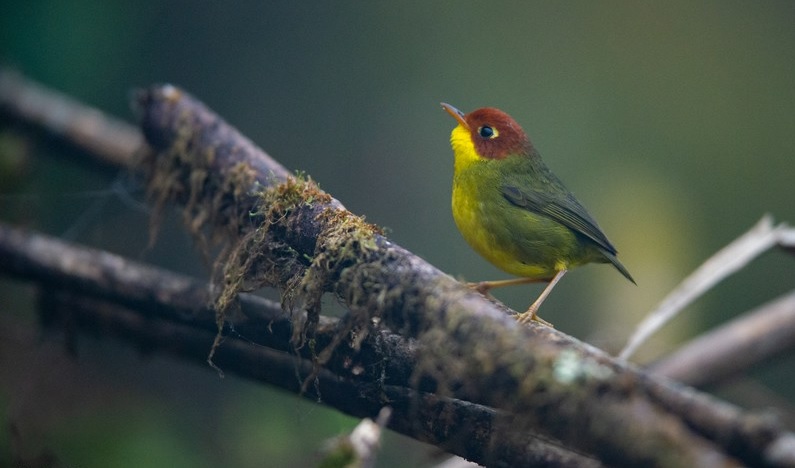
Chestnut-headed tesia (Cettia castaneocoronata)
2. Flora
Cat Ba National Park is equally rich in plant life. Across varied terrain from limestone karst and tropical rainforest to mangroves, it supports 1,585 forest plant species—including tree species otherwise known mainly in the Himalayas—alongside 30 mangrove plant species, 102 seaweed species, and 400 phytoplankton species, with many rare endemics. Notable plants include *trai ly* (*Garcinia fagraeoides*), Burmese rosewood (*lat hoa* / *Chukrasia tabularis*), *lim xet* (*Peltophorum tonkinense*), stone oak (*Lithocarpus* spp.), *go trang* (*Sindora tonkinensis*), and *cho dai* (*Annamocarya sinensis*). Especially famed is *kim giao* (*Podocarpus fleuryi*), a rare timber listed in the Vietnam Red Data Book, prized in historical lore for utensils believed to react in color—shifting from pale yellow to dark brown, black, or reddish-brown—when exposed to certain toxins, growing slowly in limestone evergreen forest with trunks typically around 30 cm in diameter.
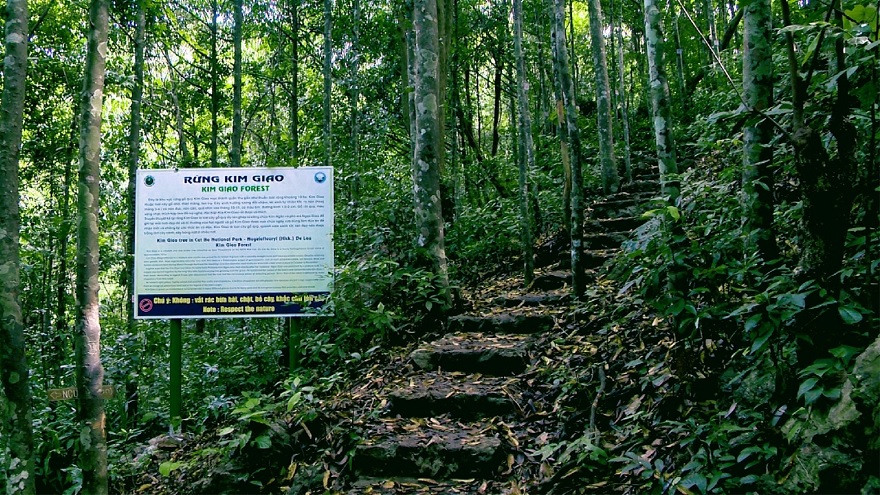
Kim Giao Forest on Cat Ba
Cat Ba National Park’s diverse flora enhances scenic and tourism appeal while playing a vital role in environmental protection, microclimate regulation, and preserving rare genetic resources for science.
How to Get to Cat Ba National Park
Step 1: Travel by boat or ferry from Hai Phong or Ha Long toward Cat Ba Island. You can choose between major ferry/boat routes:
Two main ferry routes serve the crossing: Dong Bai (Hai Phong) – Cai Vieng and Tuan Chau (Ha Long) – Gia Luan. While the Dong Bai route reaches Cat Ba more quickly, the Tuan Chau crossing passes through Ha Long Bay so travelers can take in views of Ha Long Bay and Lan Ha Bay along the way.
Ferry Fares & Crossing Times to Cat Ba
| Ferry Route | Passenger / Vehicle | Fare (VND/trip) | Crossing Time |
|---|---|---|---|
| Dong Bai – Cai Vieng | Foot passenger / bicycle / cargo bike | 10,000 – 12,000 | 30 minutes |
| Motorbike | 45,000 | 30 minutes | |
| Car | 350,000 – 450,000 | 30 minutes | |
| Tuan Chau – Gia Luan | Passenger | 60,000 (adult) | 60 minutes |
| Motorbike | 80,000 | 60 minutes | |
| Car under 9 seats | 300,000 | 60 minutes |
Step 2: Travel by motorbike or taxi from Cat Ba Town to Cat Ba National Park.
From Cat Ba Town, you can rent a motorbike or take a taxi to Cat Ba National Park. Motorbikes are convenient and budget-friendly—available at guesthouses or rental shops in town for roughly 150,000 VND per day—while taxis from operators such as Mai Linh, Taxi Group, or Cat Ba Taxi offer comfort and safety at around 15,000 VND per km. Located roughly 15 km from town along a paved road, the park takes about 30 minutes to reach.
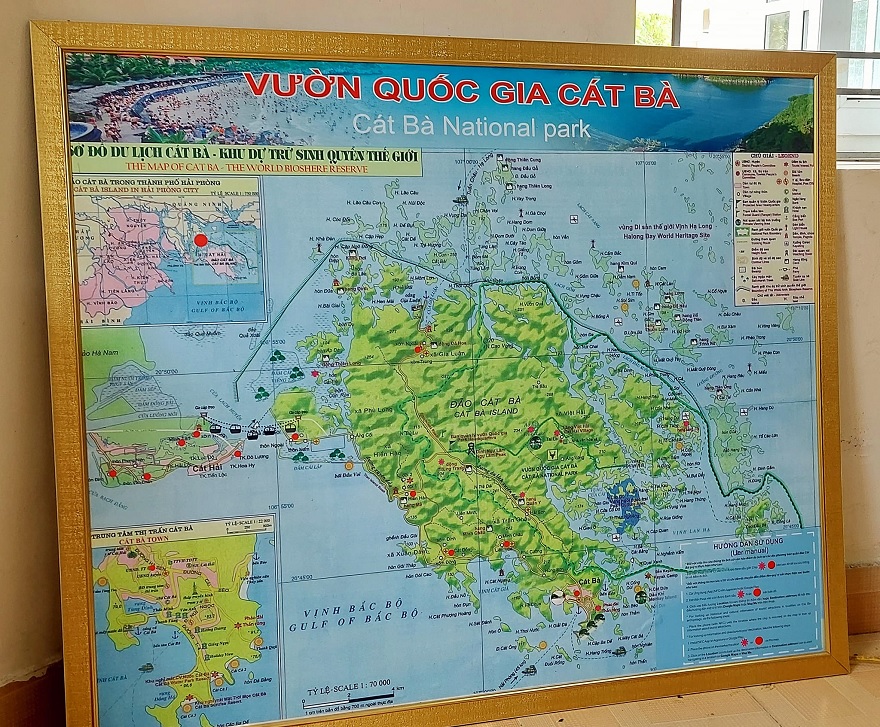
Cat Ba travel map – World Biosphere Reserve
Memorable Experiences in Cat Ba National Park
Beyond nature conservation, Cat Ba National Park is an inviting playground for outdoor enthusiasts and explorers. With varied terrain spanning mountains, forests, and sea, visitors enjoy options such as:
1. Hiking & Trekking
The park features trails of varying difficulty winding through primeval forest, caves, and mountain ridges—including popular routes toward Kim Giao Peak, Ngu Lam Peak, forest trails leading toward Lan Ha Bay, and Hospital Cave (*Hang Quan Y*).
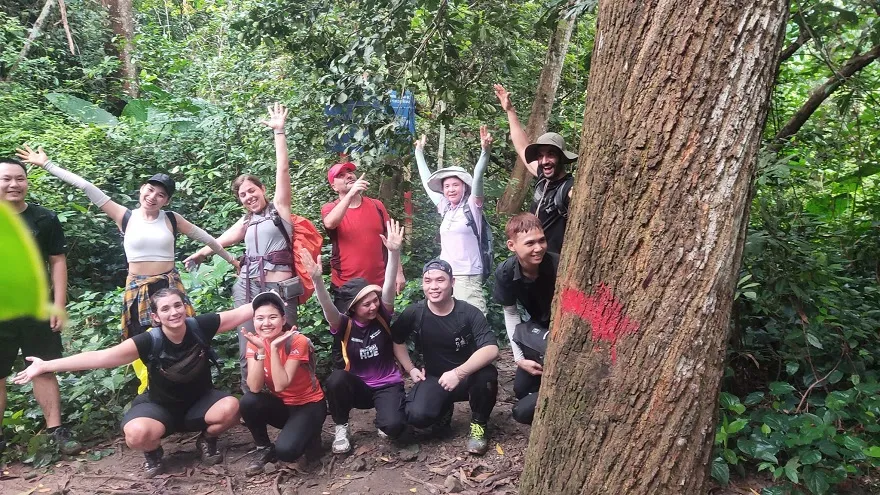
Trekking is one of the highlights when visiting Cat Ba National Park
Note: Purchase the appropriate route admission ticket before starting your trek. Full-route tickets are typically 160,000 VND for adults and 80,000 VND for children, while the Park Center – Kim Giao Peak – Ngu Lam Peak – Trung Trang Cave route is typically 120,000 VND for adults and 60,000 VND for children.
2. Climbing & Summit Hikes
Sheer limestone cliffs in Cat Ba National Park draw adventurous hikers and climbers seeking rugged natural challenges—especially ascending Ngu Lam Peak (331 meters), Cat Ba’s highest summit, for sweeping panoramic views over Lan Ha Bay.
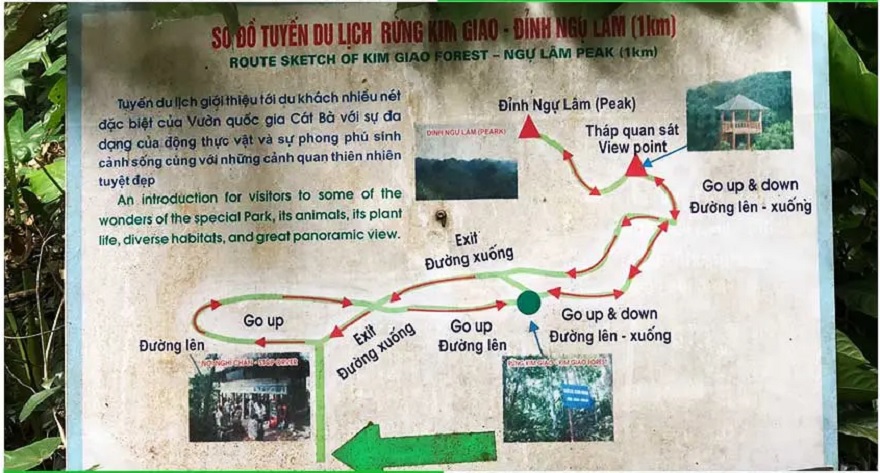
Trail map for Kim Giao Forest – Ngu Lam Peak
3. Exploring Ao Ech (Frog Pond)
Ao Ech lies along the trekking route from Cat Ba National Park’s center toward Viet Hai Village, roughly 6 km from the park center. Reaching it requires walking through primeval forest and rolling slopes—an adventure that adds to Ao Ech’s unspoiled appeal.
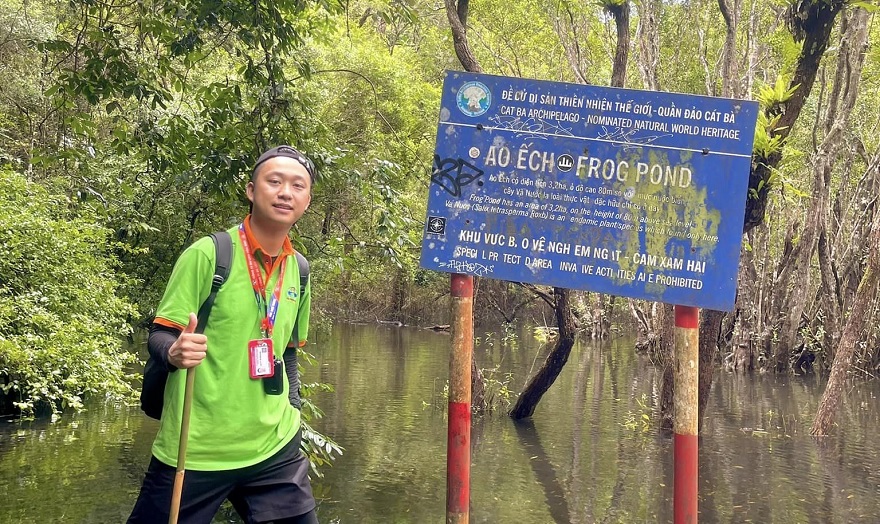
Ao Ech area
Amid quiet forest surroundings, Ao Ech looks like a calm green oasis with clear water reflecting trees and sky. Visitors can rest beside the pond, enjoy fresh air, listen to birdsong and frogs, and—with luck—spot rare birds and small wildlife coming down to drink.
Ao Ech is also a great spot to observe native Cat Ba forest plants, framed by shady old-growth trees and lush undergrowth dotted with wildflowers.
4. Exploring Caves
While Cat Ba is renowned for rare natural heritage, its caves also served as sheltered defensive and wartime bases during past resistance wars—most notably Hospital Cave (Hang Quan Y), a former field hospital built inside limestone caverns that remains largely intact decades later.
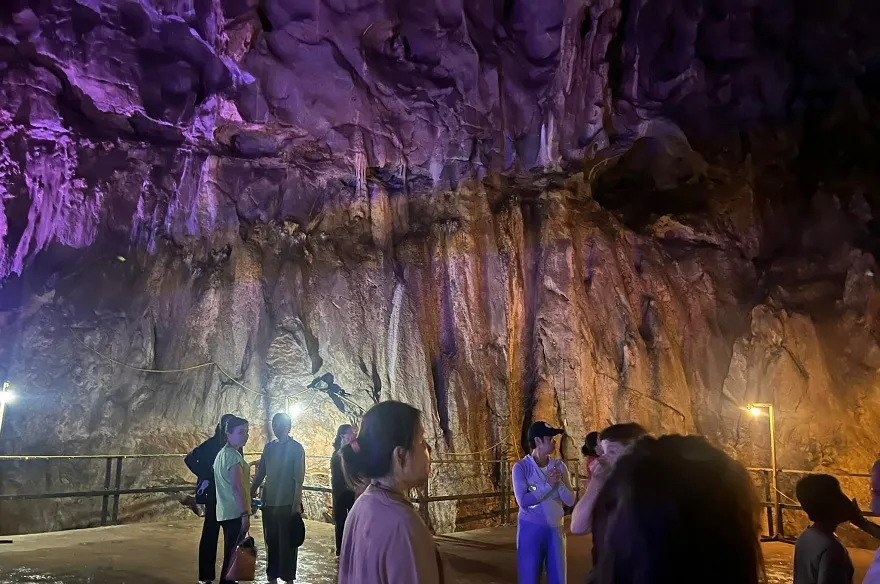
At Hospital Cave, dramatic rock formations also form a memorable highlight for visitors
Visitors can also explore Trung Trang Cave, Hoa Cuong Cave, and Thien Long Cave with striking stalactites and stalagmites, alongside historic resistance caves tied to wartime local administration.
5. Ancient Viet Hai Fishing Village
Tucked inside Cat Ba National Park, Viet Hai Fishing Village offers a peaceful, rustic setting framed by primeval forest and emerald Lan Ha Bay—an inviting retreat far from city bustle.
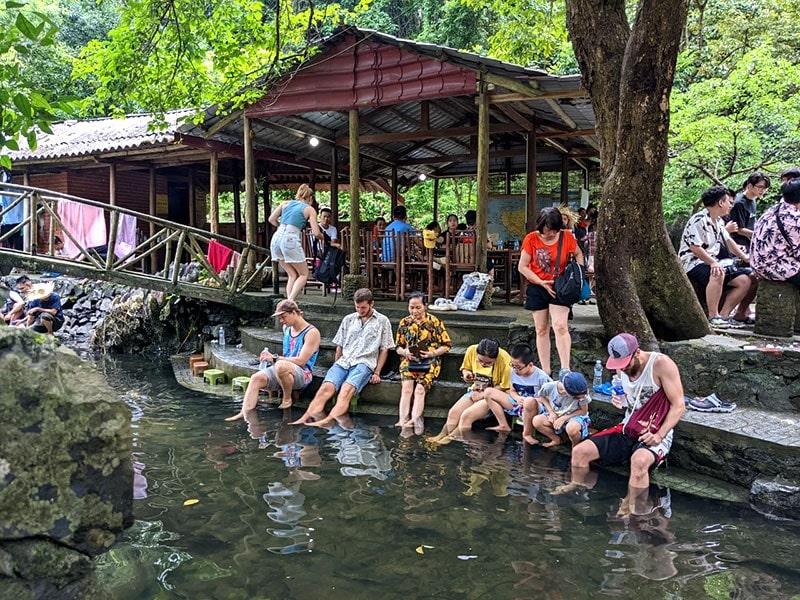
Eco-friendly experiences at Viet Hai Fishing Village
In Viet Hai, you can experience simple coastal life and local traditions—strolling quiet village lanes past modest homes near the water, watching fishing activities, or joining locals in hauling nets and rowing boats.
In the evening, enjoy fresh seafood caught locally, gather beside a warm hearth to hear stories of the sea, and soak in the welcoming spirit of the fishing village.
Cat Ba National Park is an ideal destination for travelers seeking unspoiled nature, calm surroundings, and memorable outdoor discoveries. Plan a visit soon to experience the majestic landscapes, rich biodiversity, and coastal culture of Cat Ba Island!