Nestled amid the majestic natural scenery of Cat Ba Island (Hai Phong), Hospital Cave emerges as a mysterious and captivating historical landmark. Not only does it boast untouched beauty with enchanting stalactites, but this cave also preserves heroic stories from a valiant period in the nation’s fighting history.
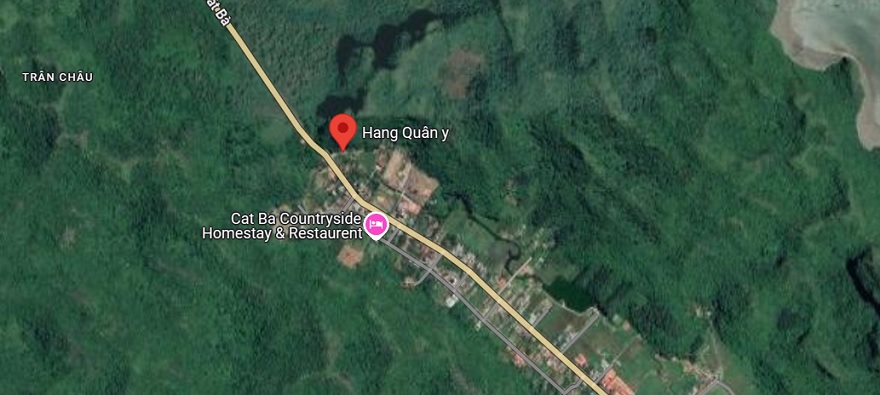
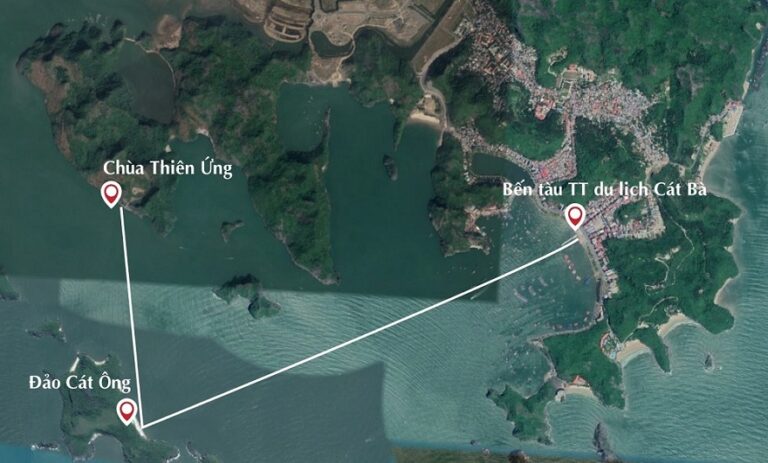
Location of Hospital Cave on Google Maps
A journey to explore Hospital Cave on Cat Ba will take you back in time to the fierce years of the resistance war against America, while letting you admire the grand beauty that nature has bestowed upon this place. Join us as we set out on this exciting exploration!
Hospital Cave: From Military Medical Hospital to Tourist Attraction
Situated halfway up a mountain along the trans-island road leading toward Cat Ba National Park, about 7 km from Cat Ba Town, Hospital Cave (also known as Hung Son Cave) lies in Hai Son Hamlet, Tran Chau Commune. It is called Hung Son Cave because during the resistance war against the Mongol-Yuan invasion in the Tran Dynasty, a general named Hung Son came here to join local soldiers and residents in setting up a base to fight the invaders.
During the resistance war against America for national salvation, our Party and State anticipated that enemy forces would bomb the North to cut off supplies to the South. Cat Ba was chosen to build a base because at that time Cat Ba Island was the gateway port of Hai Phong and a stationing point for Naval Unit 126, the force transporting supplies to the southern battlefield aboard the “Unnumbered Ships.”
To counter the American war of destruction, the military and people across the Cat Ba archipelago took advantage of natural caves to build a field hospital inside the limestone mountain, serving as a shelter from bombs and bullets for residents of surrounding communes and towns. With its favorable location and spacious area, Hung Son Cave was selected and renovated over two years (1963–1965). In August 1964, when the United States deliberately provoked Vietnam using the Gulf of Tonkin incident, Hung Son Cave officially went into operation and was renamed Hospital Cave. The cave was used to care for wounded and sick soldiers and operated for 10 years, from 1965 to 1975, until the war against America ended.
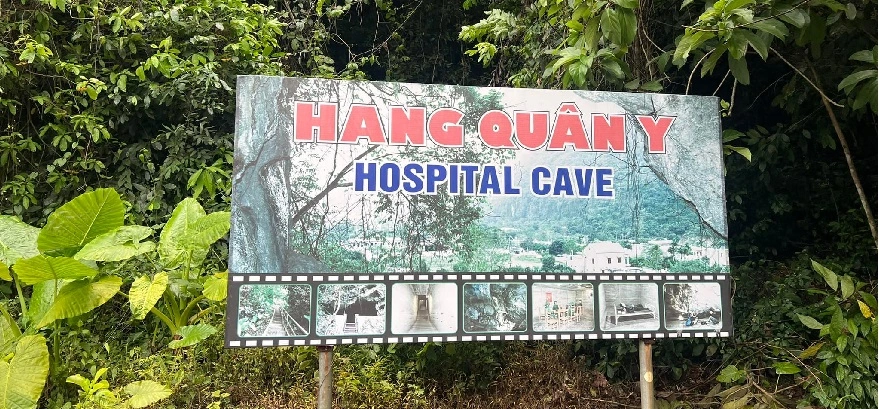
Hospital Cave signboard
Hospital Cave was built entirely of reinforced concrete, with materials transported by local troops and civilians using human labor. Although constructed inside a cave, it still met the requirements of a field hospital. The cave is about 200 m long and divided into 3 separate levels, comprising 17–20 rooms of varying sizes with a total floor area of around 2,000 m² and a maximum capacity of 200 people during wartime. However, during peak periods, capacity could reach 1,000–2,000 people. Notably, despite being a temporary hospital, it was fully equipped with functional rooms such as operating rooms, treatment rooms, and recovery rooms, meeting many medical needs at the same time.
- Level 1: Main area comprising 14 functional rooms.
- Level 2: Film screening and physical fitness testing area.
- Level 3: Reception hall, guard room, and officers’ room.
During the resistance war, Hospital Cave—as well as the entire residential area of Cat Ba—had no grid electricity, so only oil lamps were used for medical treatment and daily life. Because it lay deep inside the mountain, the cave was frequently dark, damp, and full of mosquitoes. From 1970 to 1972, with generators supplied by the Soviet Union, living conditions there improved.
After the war against America ended, this special field hospital completed its historical mission and all specialized equipment was moved away. However, the entire interior structure of Hospital Cave remains intact to this day. Because of its sturdy and safe setting, locals often choose it as a shelter during storms and floods. Today, to serve visitors and tourism, local authorities have upgraded and renovated the site with simulated wartime artifacts and brought grid electricity into the cave, making it convenient for travelers to visit and explore.
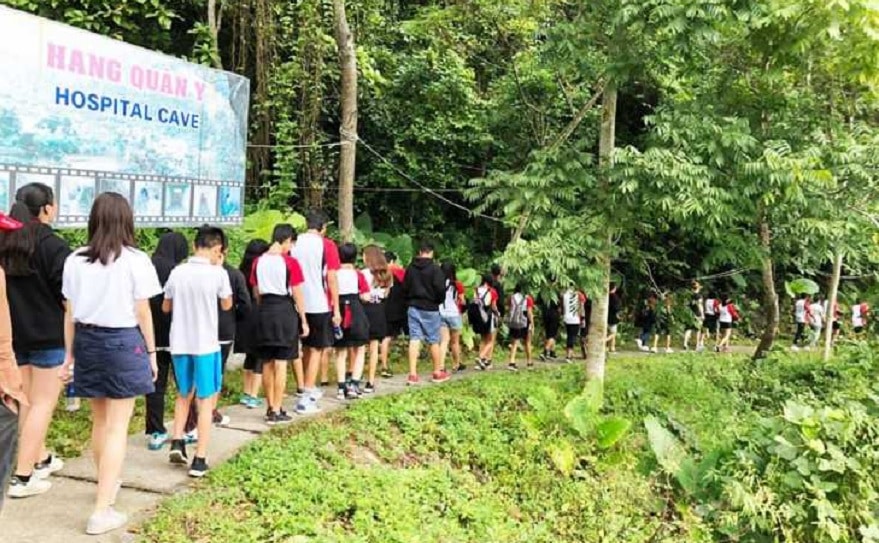
Entrance path to Hospital Cave
To enter Hospital Cave, visitors need to buy an admission ticket priced at 80,000 VND per adult and 40,000 VND per child (under 1.2 m). This ticket price includes both the entrance fee to Cat Ba National Park and admission to Hospital Cave. Visitors can buy tickets at the ticket counter at the gate of Cat Ba National Park or at the entrance to Hospital Cave.
Hospital Cave opens to visitors at 8:00 AM and closes at 5:00 PM every day of the week. Each day, Hospital Cave allows a maximum of 500 visitors inside, with a maximum stay of 30 minutes per group. Visitors should arrive early to avoid waiting in long lines.
Hospital Cave Ticket Prices and Opening Hours
For a trip exploring this wartime cave, checking how to visit and what admission costs apply is an important preparation step. Below are details on two common options to help you plan your experience at Hospital Cave:
Option 1: Independent visit
With this option, you travel on your own to Cat Ba National Park, where Hospital Cave is located. Then, you buy tickets directly at the counter to enter. Popular sightseeing routes that include Hospital Cave and nearby spots in the National Park follow fee rates set under Resolution No. 06/2024/NQ-HĐND of the Hai Phong City People’s Council, effective August 1, 2024. Details are as follows:
- Buy tickets directly at the counter: ticket prices apply to the route including Hospital Cave (usually also covering Kim Giao Forest and Ngu Lam Peak)
- Adults: 80,000 VND/person
- Children: 40,000 VND/person
- Note: Hospital Cave welcomes visitors daily from 7:00 AM to 5:00 PM.
Option 2: Join a tour (especially overnight cruises on Lan Ha Bay – Cat Ba)
Many Cat Ba itineraries—especially overnight cruises on Lan Ha Bay—often combine visits to highlights inside the National Park, including Hospital Cave. When choosing this option, cave admission fees are usually bundled into the overall tour cost, offering convenience so travelers don’t have to worry about buying individual tickets. This option suits anyone who wants a neatly arranged trip with a complete itinerary and all-inclusive services. For detailed advice on cruises that visit Hospital Cave, please contact VDS Travel for thorough consultation.
See more: Lan Ha Bay Cruise Tours
Exploring Hospital Cave
The cave has two main entrances on the east and west sides. The path up to the cave was originally built as a movable wooden ladder so it could be easily dismantled or destroyed when an enemy landing was alerted, thereby keeping the cave’s location secret and protecting those inside. The staircase has been repaired many times, yet it is still made of wood to preserve its historical significance.
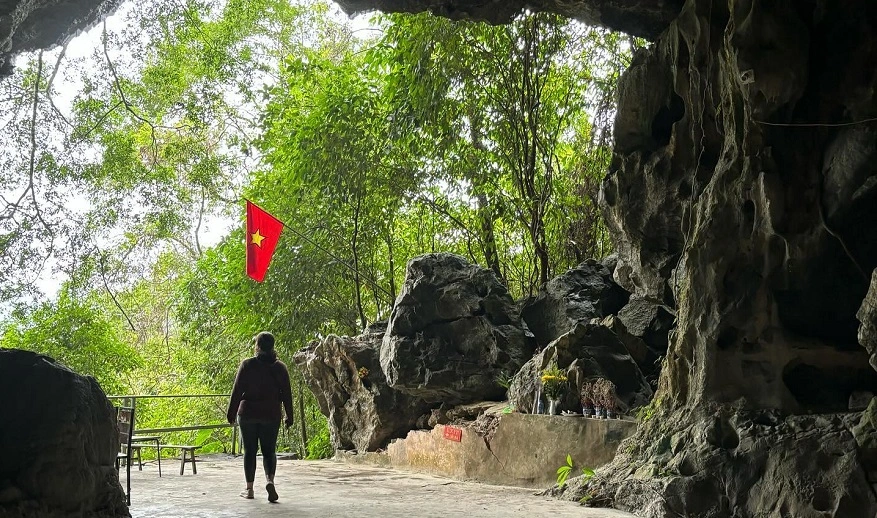
Entrance to Hospital Cave still preserving its wild look with mountains, forest, and stalactite formations
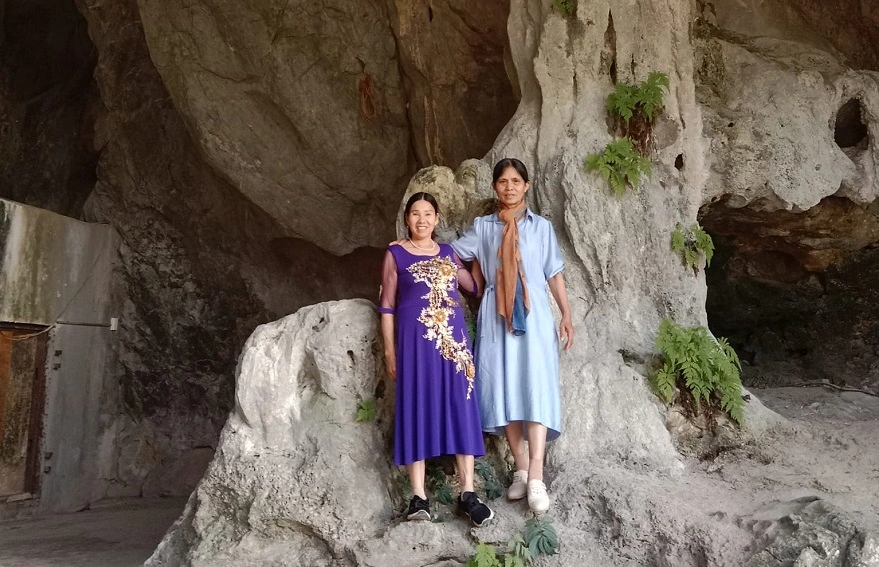
Giant stalagmites and stalactites at Hospital Cave
Climbing up the steps, visitors will come across a solid iron door about 15 cm thick with 4 secondary iron bolts and 1 main bolt, which can only be opened from the inside. Notably, this door is fixed in place with thick, sturdy steel designed to withstand enemy bullets and B40 rockets. This steel door was one of the items supplied by the Soviet Union, and its special feature is a convex outer surface so that incoming bullets would deflect to either side.
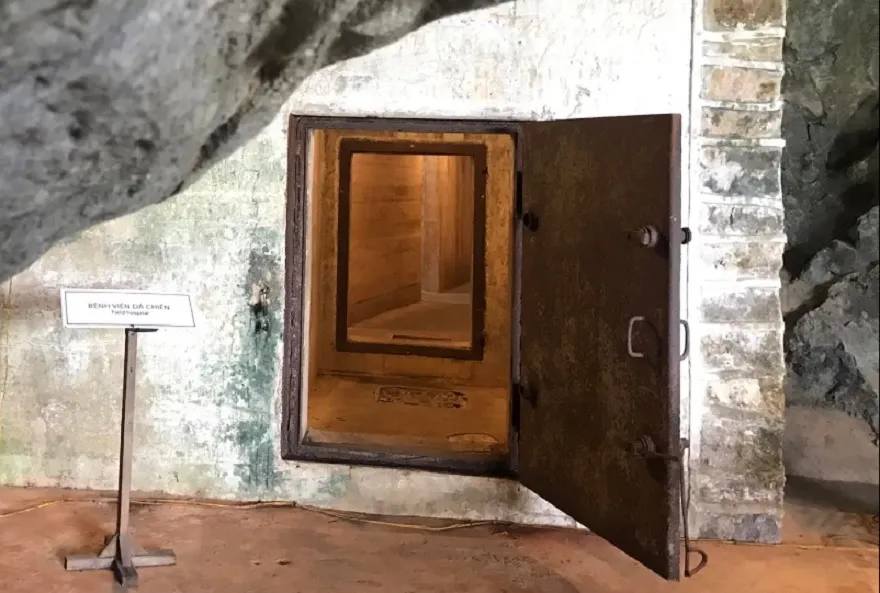
Steel door supplied by the Soviet Union
Hospital Cave is about 200 m long, and visitors take around 30 minutes to tour the entire cave. Over 60 years, the cave has undergone several improvements for tourism, yet it basically retains its original untouched character. Today, the cave has 3 levels, but only levels 1 and 2 are open to visitors. Level 3 is not yet open for tourism because of its slippery terrain and safety risks.
As soon as you pass through the sturdy door, a long, deep corridor of an impressive field hospital welcomes you. Because the cave has been adapted for tourism, a lighting system has been carefully installed to make walking easier. The first room visitors encounter is the duty room, which handled guard duties and communication between people outside and inside the cave.
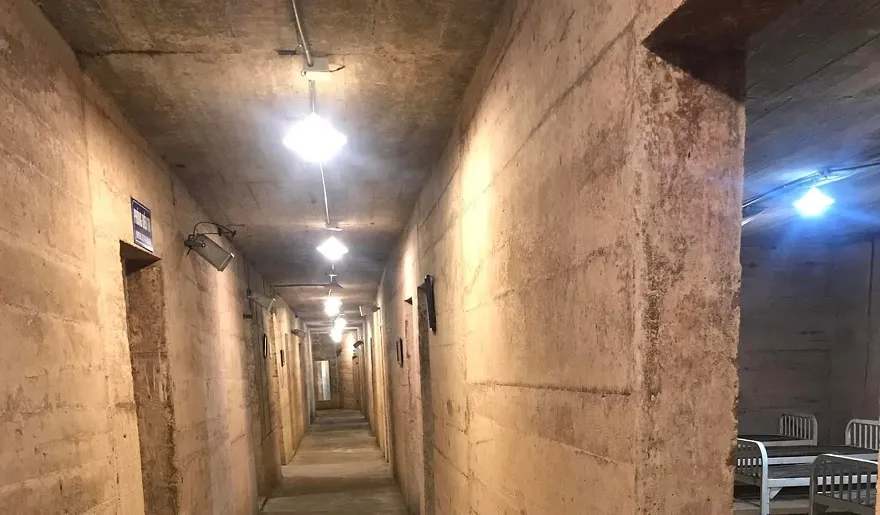
Corridor area wired with electricity to serve visitors
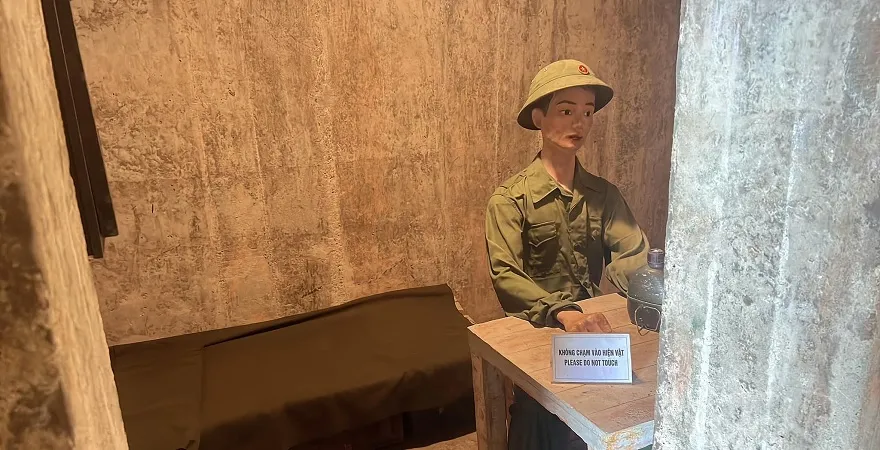
Duty room
Next is the logistics room, where a Hoang Cam stove once stood with a clever underground smoke-venting flue system. This design kept cooking discreet so smoke wouldn’t give away the position to enemy forces. However, after the war, the Hoang Cam stove was dismantled and has not been reconstructed.
Because Level 1 was designed for medical care, a small room was arranged as a medicine depot to store pharmaceuticals and medical supplies for treating wounded and sick soldiers in the hospital. Alongside it are treatment rooms divided into two types: rooms for minor injuries and rooms for severe injuries, serving different levels of casualties. Currently, Hospital Cave has 6 treatment rooms in total.
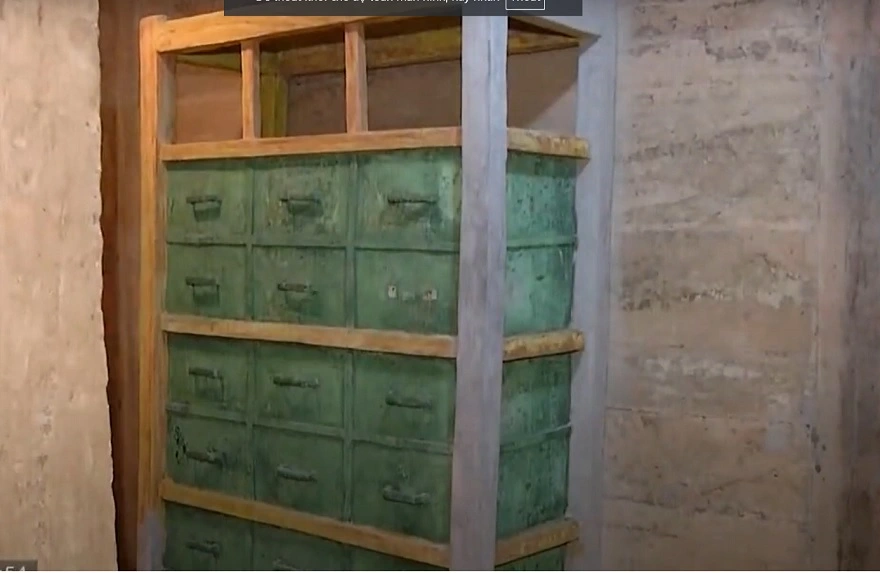
Medicine depot
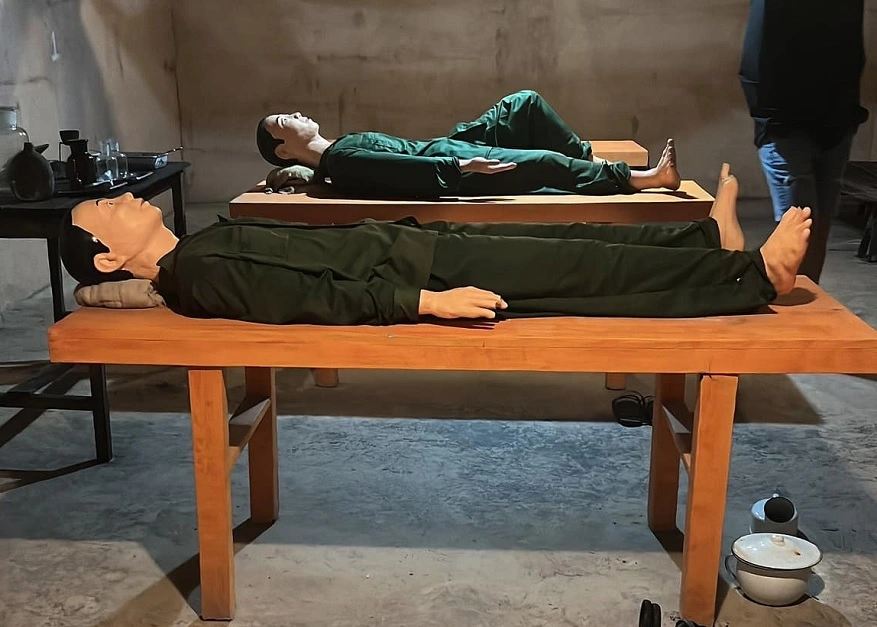
Treatment room
Walking deeper inside, visitors reach the largest room on Level 1. It once served as a meeting room, briefing room, or consultation room for doctors in the field hospital. Here, when our troops spotted enemy aircraft, alerts were sent outside via a 2W radio supplied by the Soviet Union, which had a communication range of 500–1,000 m.
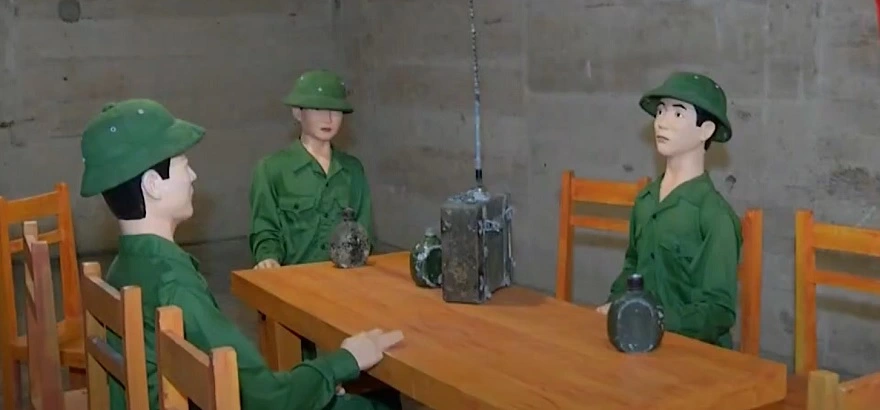
2W radio with a communication range of 500–1,000 m, a communications device supplied by the Soviet Union and used by our troops for lookout communications
In particular, this room also hosted cultural performances, singing, and dancing between medical staff and island residents during holidays and festivals. The room holds about 40 people. Along the corridor of Hospital Cave, visitors will see photographs hung on the walls depicting the daily life, work, and combat of our military and people during the resistance war, helping visitors picture the atmosphere of that era more vividly.
Right by the stairs leading to Level 2 is the water tank room, the second-to-last room on Level 1. It was specially built with a passage up to Level 2 to guard against enemy advances, create an escape route, and also serve as a spot for a surprise counterattack when conditions allowed.
Room types on Level 1
| No. | Room Name on Level 1 |
|---|---|
| 1 | Surgical doctors’ rest room |
| 2 | Patient room |
| 3 | Emergency operating room |
| 4 | Rehabilitation room |
| 5 | Assembly hall |
| 6 | Medicine dispensing room |
| 7 | Medicine storage room |
| 8 | Doctors’ rest room |
| 9 | Domestic water tank |
| 10 | Restroom |
| 11 | Shower room |
| 12 | Reception room |
| 13 | Kitchen |
| 14 | Guard room |
Level 2 of Hospital Cave is the widest space, holding 200–300 people. It was used for many different purposes. During wartime, Level 2 served both as a rehabilitation space for wounded and sick soldiers after treatment and as a place for daily physical conditioning. Thanks to its spaciousness, performing art troupes from the city would occasionally visit to put on shows and screen films to boost morale for patients, medical staff, and locals.
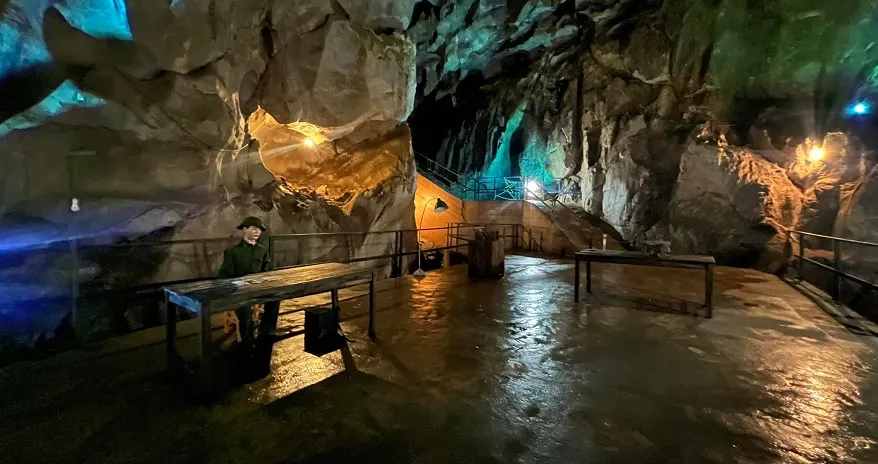
Assembly hall, also the widest room at Hospital Cave
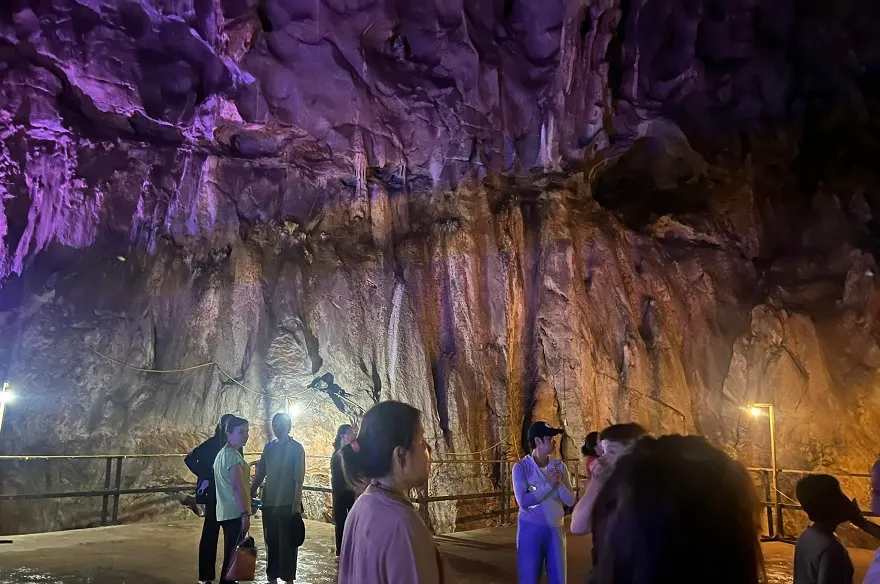
At Hospital Cave, the enchanting stalactite system is also an impressive highlight for visitors
The terrain on Level 2 is rather uneven and was used for training and physical fitness tests for soldiers. Notably, Level 2 also has a very low section where our troops once practiced crawling and creeping under low cover.
For safety, Level 2 was built with a secret escape route for wounded and sick soldiers as well as medical staff, helping them get out if the cave came under enemy attack. In addition, another secret passage connected Level 2 to Level 3—where important military meetings were held. Today, some escape routes have been sealed off to ensure visitor safety during tours.
Meanwhile, Level 3 was built with an emergency escape exit leading out to the adjacent mountainside and a secret meeting room for military commanders. However, right after the war ended, the door to this room was sealed for reasons of military secrecy, and Level 3 is currently not open to tourists.