Ha Long Bay is one of the natural wonders of the world, twice recognized by UNESCO as a World Natural Heritage site. With more than 1,900 limestone islands and caves formed millions of years ago, it forms a majestic and eye-catching seascape. Ha Long Bay is also home to many rare species of flora and fauna, and is deeply tied to numerous legends and the history of the Vietnamese people.

Experience visiting Ha Long Bay

To help visitors explore all the distinctive highlights of Ha Long Bay, tour operators and the Ha Long Bay Management Board have designed several different bay sightseeing routes suited to each traveler’s needs and interests. Among them, Sightseeing Route No. 3 is an appealing and unique itinerary offering unforgettable experiences of Ha Long Bay’s natural scenery and local culture.

Overview of Ha Long Bay Sightseeing Route No. 3

Sightseeing Route No. 3 is officially named Tourist Port – Marine Cultural Conservation Center Area. It lets visitors explore well-known spots in Ha Long Bay such as Cua Van Floating Cultural Center (Cua Van Fishing Village), Tien Ong Cave, Ba Ham Lake, and Ba Men Temple, while giving travelers a closer look at local life and daily activities like fish farming, net mending, or enjoying fresh seafood.

Among the five Ha Long Bay sightseeing routes, Route 1 and Route 2 cater to mainstream travelers and are the most popular choices, so shared day boats ranging from 48 to 500 seats are readily available. Meanwhile, Route 3 and Route 4 are categorized as upscale sightseeing routes geared toward upper-middle-class travelers and international visitors from Japan, South Korea, and Europe. This route suits travelers who want to stay overnight on the bay and explore fishing villages and the lifestyle and culture of local communities, as Routes 3 and 4 delve deeper into Ha Long Bay’s culture and history rather than focusing purely on sightseeing like Routes 1 and 2.

Therefore, if you want to explore Route No. 3, an overnight cruise tour on Ha Long Bay is recommended. If you are short on time and only want a single-day trip, chartering a private boat is the best option. When chartering a private boat, costs and itinerary details are as follows:

  • Route 3 attractions: Cua Van Floating Cultural Center, Bamboo Forest (Rung Truc) area, Tien Ong Cave, Ang Du, Ba Ham Lake, and Ba Men Temple.
  • Tour duration: 6–8 hours
  • Private boat charter rate: 4,000,000–5,000,000 VND/boat (for a 48-seat boat, the smallest size available, excluding sightseeing tickets at 240,000 VND/person)
  • Overnight Ha Long cruise price: 2,000,000–3,000,000 VND/person (3- to 5-star cruises)

Highlights on Ha Long Bay Route 3
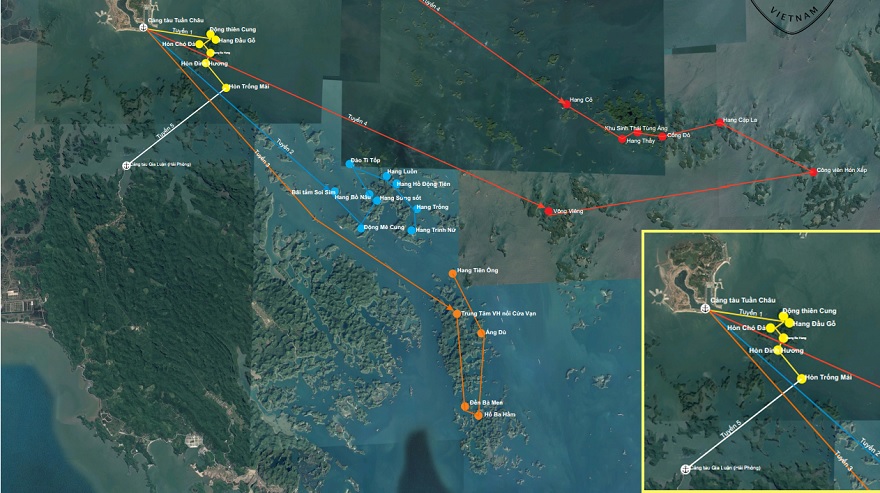
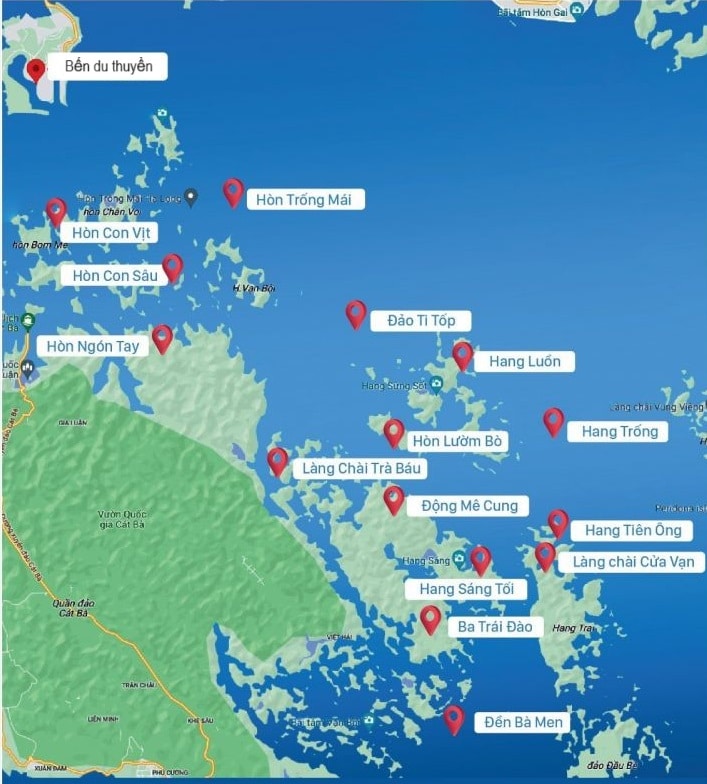
Map of Ha Long Bay Route 3

Map of Ha Long Bay Route 3

Departures for this route leave from tourist ports in Ha Long City, including Tuan Chau International Tourist Port and Ha Long International Cruise Port. Because these two ports sit in different locations, day boats departing from each port approach the attractions in roughly opposite sequences. For instance, boats leaving Tuan Chau International Tourist Port usually visit Tien Ong Cave last, whereas boats departing from Ha Long International Cruise Port often stop there first since it is closest to that port. Below, VDS Travel introduces each stop along the route for your reference.

1. Cua Van Floating Cultural Center (Cua Van Fishing Village)

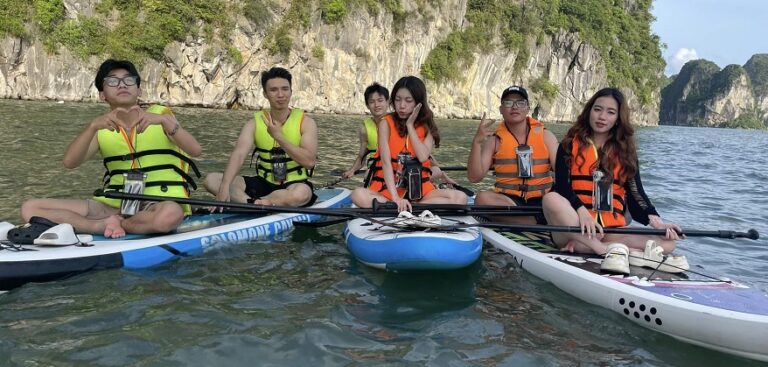
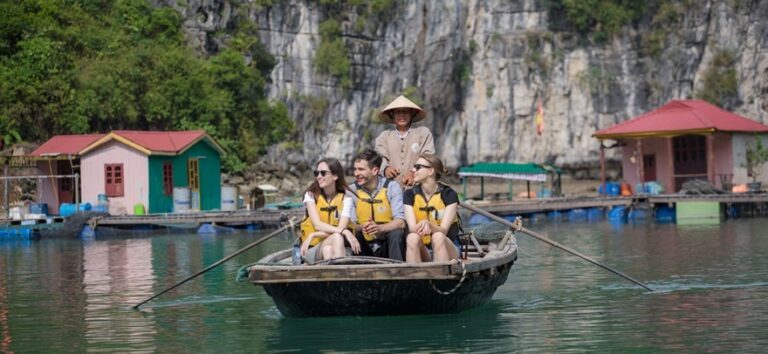
Cua Van Fishing Village is listed among the 16 most beautiful fishing villages in the world, set on a small sheltered bay framed by towering limestone mountains. Roughly 176 households live and fish on the bay here. Visitors can observe local daily life—such as fish farming and net mending—or enjoy fresh seafood, as well as go kayaking or ride a traditional bamboo rowboat to explore surrounding caves and bamboo groves.
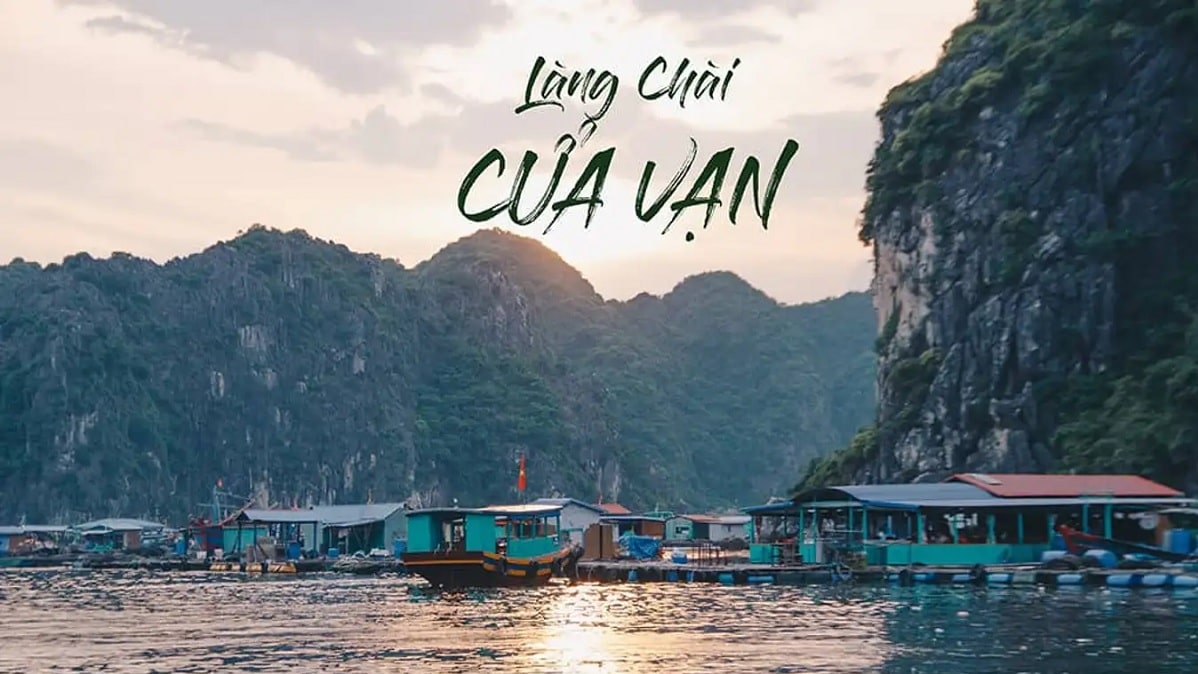
Cua Van Fishing Village

Cua Van Fishing Village

Cua Van Floating Cultural Center is a project launched in May 2006 to preserve and promote the cultural heritage of Cua Van Fishing Village. It is part of the Ha Long Ecomuseum project (the first ecomuseum in Vietnam and Southeast Asia), funded by the Norwegian Agency for Development Cooperation (NORAD).
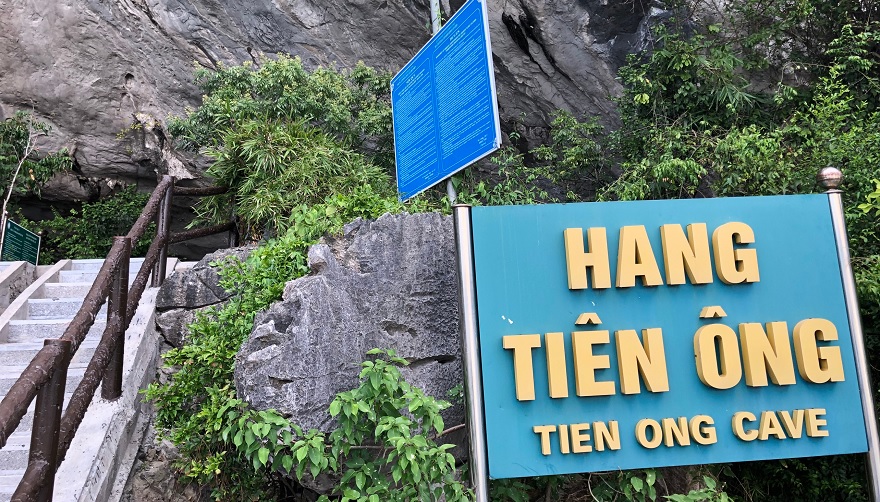
2. Tien Ong Cave

Tien Ong Cave is a wide, deep cavern measuring about 156 m long and sitting 5 m above sea level. Located on Cai Tai karst island roughly 18 km from Tuan Chau Port, it is divided into two chambers by a massive stalactite formation and filled with unusually shaped stalactites that make visitors feel as though they have stepped into a fairyland.

Entrance area of Tien Ong Cave

Entrance area of Tien Ong Cave

Tien Ong Cave draws visitors not only for its natural beauty, but also for its historical and cultural significance. It was inhabited by ancient Vietnamese people belonging to the Soi Nhu culture on Ha Long Bay, dating back 8,000–10,000 years. Numerous artifacts—including stone tools, bone implements, and pottery—have been unearthed inside, proving human life existed out at sea thousands of years ago. An archaeological display area inside the cave helps visitors learn more about ancient Ha Long culture.

3. Ba Ham Lake

Ba Ham Lake is a system of three saltwater lagoons linked by three long, narrow cave tunnels inside an enclosed marine bay on the northwestern corner of the Dau Be island chain, the southernmost island of Ha Long Bay. Ba Ham Lake lies within the strictly protected core zone of the Ha Long Bay World Natural Heritage site, more than 25 km from the tourist port.

Ba Ham Lake

Ba Ham Lake

Ba Ham Lake boasts unspoiled, tranquil scenery surrounded by sheer limestone cliffs, with clusters of fantastically shaped stalactites hanging from the cave ceilings and clear water teeming with marine life. At high tide, the connecting tunnels flood, sealing off Ba Ham Lake into a secluded sanctuary. To visit Ba Ham Lake, travelers must wait for low tide and glide through the tunnels by bamboo rowboat or kayak to enter each lagoon, taking an average of 45 minutes per visit. Boat rides cost around 50,000 VND per person by agreement.

4. Ba Men Temple

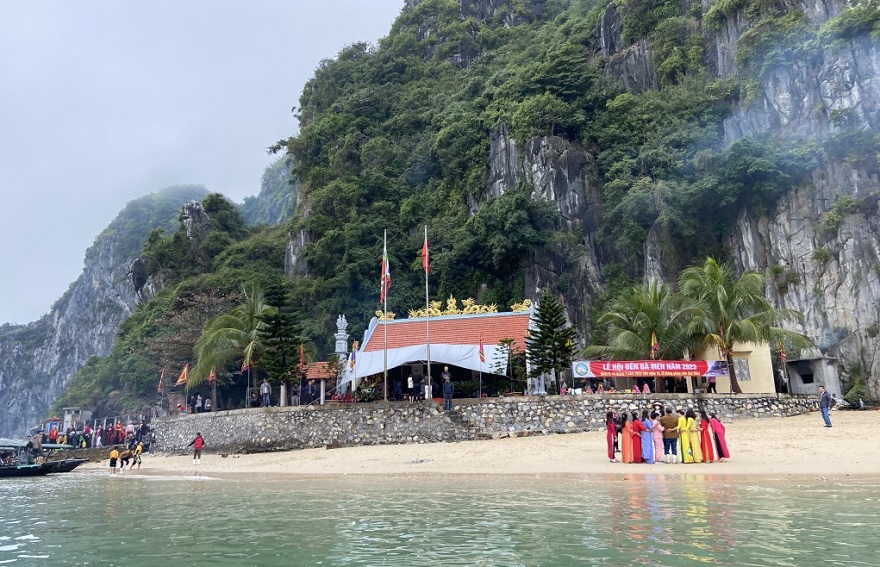
Ba Men Temple is an ancient, sacred shrine on Dau Be Island in the core zone of Ha Long Bay. Also known formally as Duc Chua Ba, the temple was built to worship Lady Men (Ba Men), one of six women who drowned at sea on a late winter day long ago. According to local fishermen’s lore, Lady Men was the eldest in the group, admired for her capability and kindness. Her body drifted into a sheltered cove on Dau Be Island, where fishermen buried her, built a shrine, and revered her as a protective goddess for seafarers.

Ba Men Temple

Ba Men Temple

Built at least 200 years ago in a J-shaped (“Dinh”) architectural layout, Ba Men Temple sits on a sandy bank 3 m above the island’s base, facing a wind-sheltered cove where fishing boats anchor side by side. Inside the temple stands a female statue about 40 cm tall wearing a pale yellow headscarf, with a porcelain incense burner placed in front.

5. Bamboo Forest Area (Rung Truc)

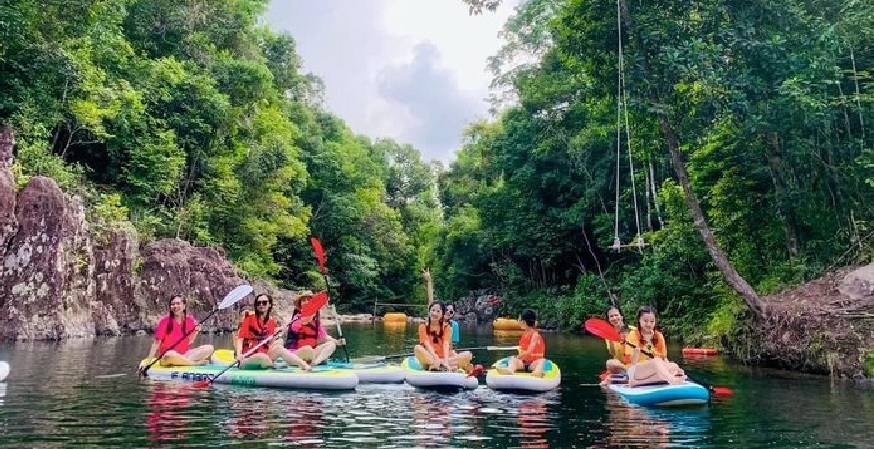
Bamboo Forest is a scenic valley dominated by slender bamboo groves whose arching stalks form cool natural corridors. Spacious and airy, the valley is an ideal habitat for golden monkeys. Currently, Bamboo Forest is not open to visitors, though in the future this area—together with Cua Van Floating Cultural Center—is set to become an appealing ecotourism highlight on Ha Long Bay.

Boating and walking to explore Bamboo Forest in Ha Long Bay

Boating and walking to explore Bamboo Forest in Ha Long Bay

6. Ang Du

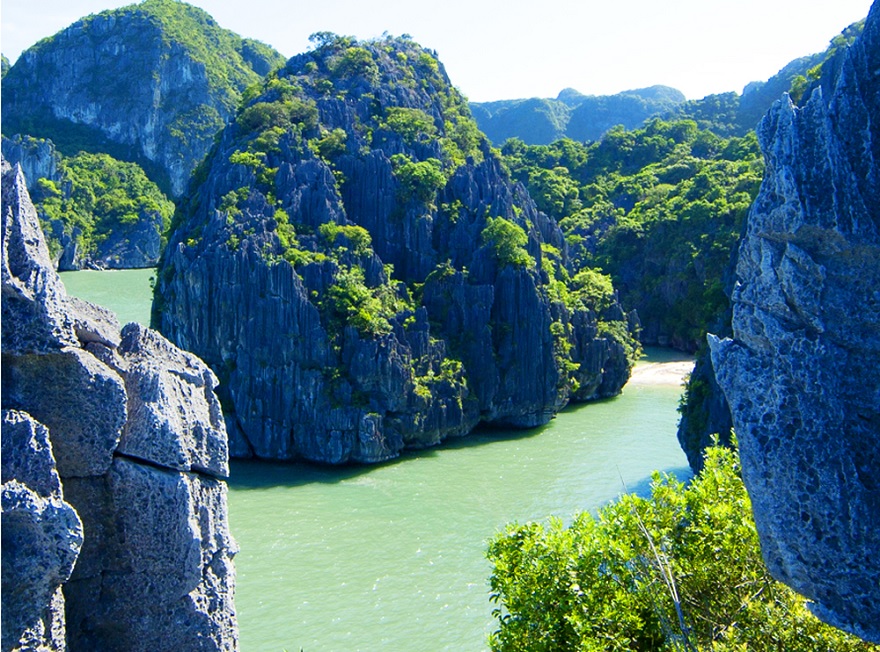
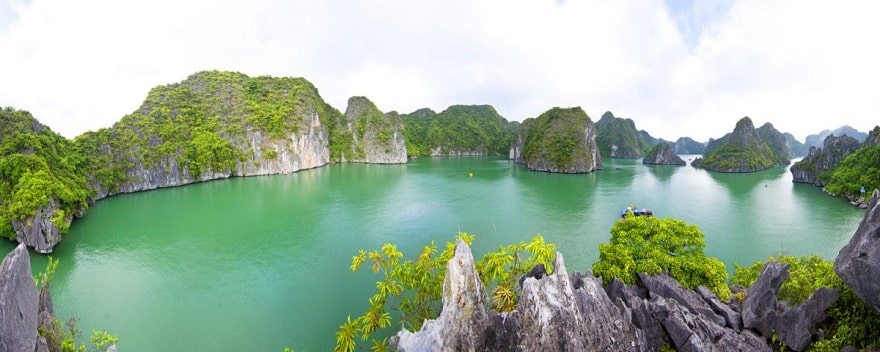
Tucked amid towering limestone islands, Ang Du is a mysterious enclosed lagoon in Ha Long Bay. Forming a self-contained ecosystem covering nearly 2 hectares ringed by massive rock formations, Ang Du preserves rich, untouched biodiversity and shelters many rare plant and animal species. It also offers visitors a serene, relaxing atmosphere as they gaze over its calm waters, making it a promising destination earmarked for future ecotourism development.

Ang Du area in Ha Long Bay

Ang Du area in Ha Long Bay

Ha Long Bay Sightseeing Route No. 3 is a captivating and distinctive itinerary offering unforgettable experiences of Ha Long Bay’s natural beauty and human culture—an ideal choice for travelers seeking to discover the heritage and roots of Ha Long Bay.