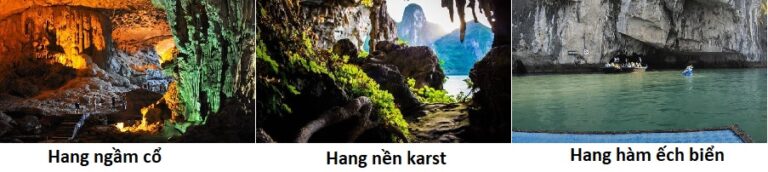
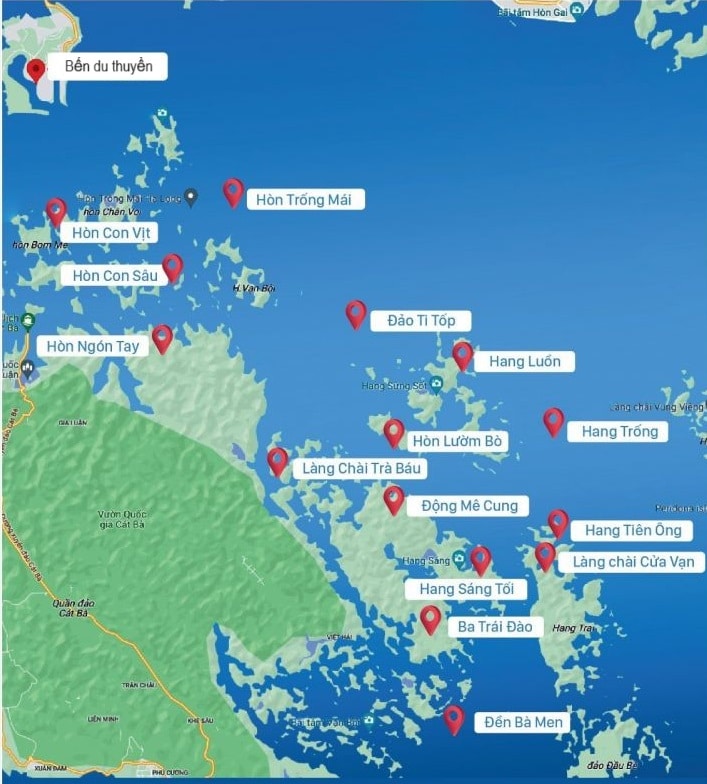
Route 1 sightseeing on Ha Long Bay is considered a classic journey and a popular choice for anyone wanting to discover the famous beauty of this world natural wonder. This route brings visitors to signature Ha Long Bay destinations such as Thien Cung Cave with its enchanting beauty, Dau Go Cave with captivating historical stories, and Stone Dog Islet (Hon Cho Da) or Incense Burner Islet (Hon Dinh Huong) with their unique shapes.
Route 1 appeals not only for its breathtaking natural scenery, but also because it suits all types of travelers. From families with young children and seniors to adventure seekers, everyone can find fun and relaxation on this trip. Designed with a moderate length and minimal travel time between stops, it focuses on sightseeing and experiences, promising a gentle and memorable outing.
In this article, let’s explore Ha Long Bay Route 1 in detail—from attractions, activities, and ticket prices to useful tips for a complete sightseeing trip.
Introduction to Ha Long Bay Sightseeing Route 1
Sightseeing Route No. 1 is officially named Tourist Port – Van Canh Scenic Park Conservation Center Area. It is the shortest sightseeing route on Ha Long Bay, taking about 4 hours and fitting travelers on tight schedules. Stops along Route 1 cluster near the port with little travel time, making it great for families with children and older adults. According to statistics from the Ha Long Bay Management Board, Routes 1 and 2 account for over 97% of day trips on Ha Long Bay. Despite its short duration and minimal transit, this route still gives visitors the chance to admire the wonder’s most prominent icons.
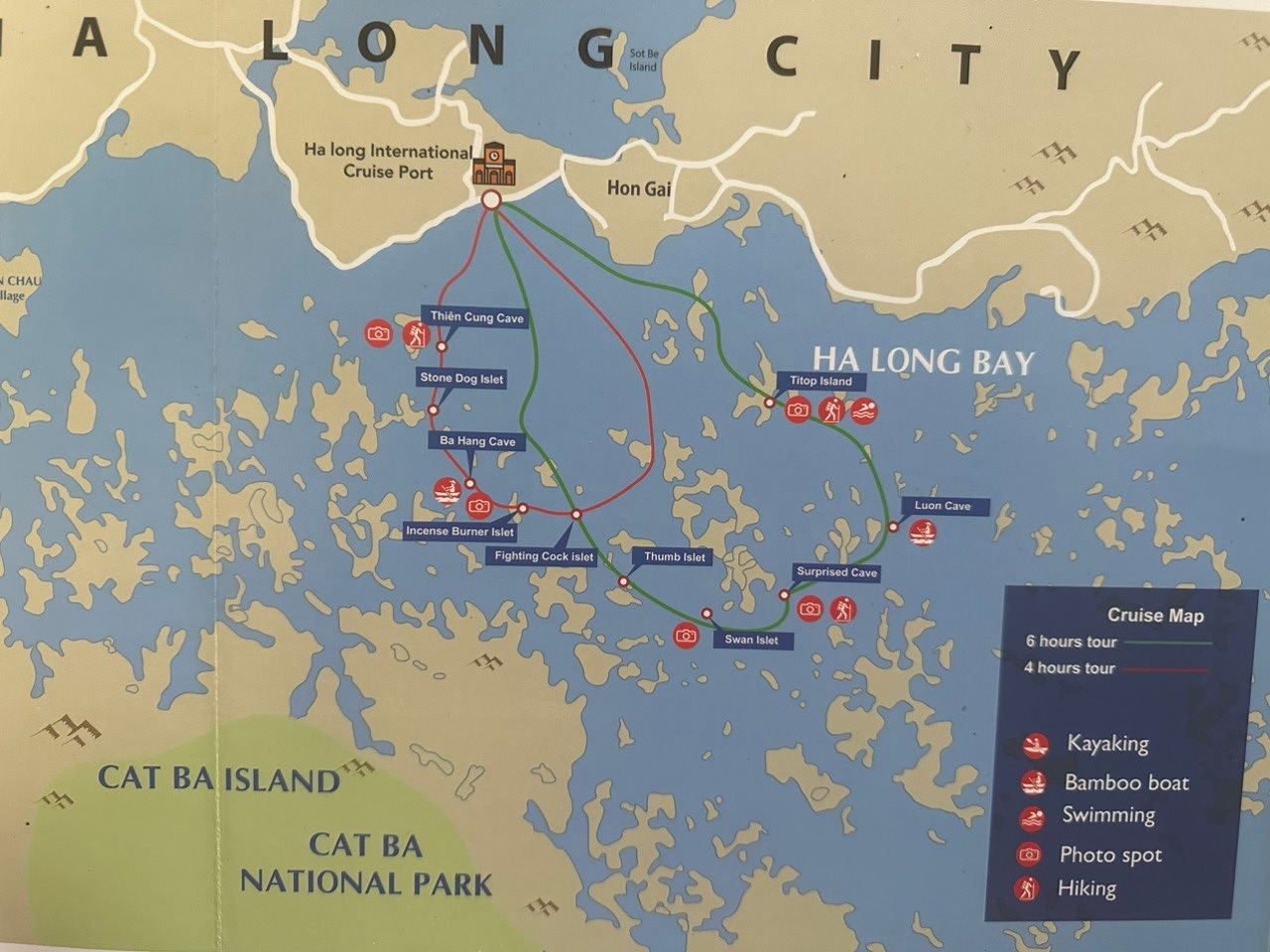
Routes 1 and 2 departing from Ha Long International Cruise Port
-
t
- CAttractions on Route 1: Tourist Port – Thien Cung Cave – Dau Go Cave – Stone Dog Islet – Ba Hang Cave, Incense Burner Islet – Fighting Roosters Islet.
- Tour duration: 4 hours
t
How to Do Ha Long Bay Route 1
To join a Ha Long Bay Route 1 trip, visitors need to book a boat and buy sightseeing tickets. Currently, two main ports serve travelers for this route: Ha Long International Passenger Port and Tuan Chau Port.
-
t
- Ha Long International Passenger Port: Located right in the center of Ha Long City, convenient for travelers getting around.
- Tuan Chau Port: Situated on Tuan Chau Island about 20 km from the city center, Tuan Chau Port is a large, modern port facility.
t
Ticket prices and schedules:
Sightseeing ticket prices for Route 1 generally include port entry and boarding fees, varying by boat type, time of year, and service provider, though most visitors on this route choose a 48-seat boat. Currently, sightseeing tickets at the port are sold at a uniform rate of 310,000 VND; however, at this rate visitors will not cover every single stop listed on Route 1, as boats select and publicly post their stops at the port.
| Private Boat Charter Price List | ||
| Departure Port | Duration | Route 1 Sightseeing Itinerary |
| Tuan Chau Port | 3 hours | Thien Cung Cave – Dau Go Cave – Stone Dog Islet – Incense Burner Islet – Fighting Roosters Islet |
| Ha Long International Port | 4 hours | Stone Dog Islet – Incense Burner Islet – Ba Hang – Fighting Roosters Islet – Thien Cung Cave – Dau Go Cave |
Beyond fixed boats and routes sold at the port, travelers can choose dedicated sightseeing tours with our service to explore the full Route 1 journey. For details on Ha Long Bay sightseeing ticket and boat prices, please see [Ha Long Bay Sightseeing Ticket and Boat Price List].
Highlights Along Ha Long Bay Route 1
Ha Long currently has two main departure points: Tuan Chau International Tourist Port and Ha Long International Cruise Port. Because these two ports sit in different locations, boats departing from each approach the stops in roughly opposite order; however, because Tuan Chau Port is closer to Sightseeing Route No. 1, during peak periods it offers up to 4 time slots instead of 3 like Ha Long International Cruise Port. Below, VDS Travel introduces the stops on the itinerary for your reference.
1. Thien Cung Cave
Thien Cung Cave is one of the largest and most beautiful caves on Ha Long Bay, covering about 10,000 m². Discovered in 1993 when a local fisherman took shelter inside during a storm, it features majestic rock formations resembling animals, plants, flowers, and fairytale figures, and is tied to legends and folklore such as the story of the Dragon Prince and May.
Located on Dau Go Island, Thien Cung Cave is reached by climbing roughly 100 stone steps. Stretching about 130 m with a fairly intricate layout of layered stalactite partitions in striking shapes, paired with colorful lighting it creates an enchanting, dreamlike scene like a celestial palace. Inside are three main chambers, each with its own style and character.
2. Dau Go Cave
Dau Go Cave sits 27 m above sea level and covers about 5,000 m², with an entrance 17 m wide and 12 m high. Shaped by tectonic shifts two million years ago, the cave contains rich, unique rock formations. According to folk accounts, Dau Go Cave was also a strategic site in Vietnam’s history of resisting foreign invaders, once used to hide wooden stakes during the resistance against Mongol invaders in the 13th century.
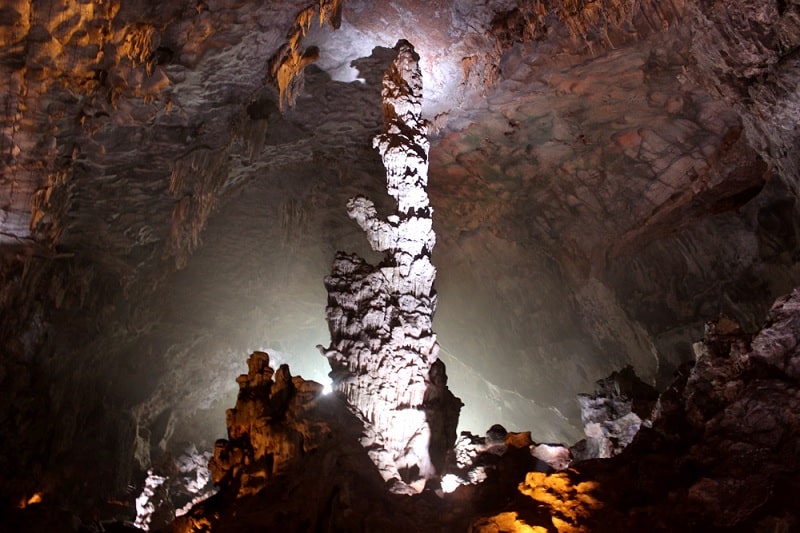
Giant rock column inside Dau Go Cave
To enter Dau Go Cave, visitors transfer to a small boat and pass through a narrow entrance. Inside, they can admire works of natural art carved over millions of years by water and wind. First featured in a French magazine in 1938, it was remarked upon as a cave of wonders.
3. Stone Dog Islet (Hon Cho Da)
This rock formation shaped like a sleeping dog sits in southwestern Ha Long Bay. Stone Dog Islet is one of Ha Long Bay’s icons, loved by many visitors for photos. Local legend says Stone Dog Islet was the Dragon King’s loyal dog tasked with guarding Ha Long Bay; when the Dragon King returned to heaven, the dog fell asleep and turned to stone.

4. Fighting Roosters Islet (Hon Ga Choi / Hon Trong Mai)
Fighting Roosters Islet sits in southwestern Ha Long Bay, about 5 km from Bai Chay beach and in front of Incense Burner Islet—a convenient vantage point from afar or from a tour boat. Shaped like two giant chickens (a rooster and a hen) standing about 10 m tall with wings spread across the open water, the two gray-white rocks are coated in green moss that contrasts vividly with the turquoise sea. From a distance, poised precariously on tiny bases supporting heavy bodies, it looks as though a strong wave could topple them at any moment—yet they have stood tall between sky and sea for hundreds of millions of years, and those small bases only make them more captivating.
5. Incense Burner Islet (Hon Dinh Huong)
Incense Burner Islet is one of Ha Long Bay’s most recognizable islets, drawing visitors with its unique shape and spiritual meaning. Resembling a giant incense burner roughly 12 meters tall perched on four small stone legs, it was shaped by weather and Earth’s crustal movements over millions of years.
Incense Burner Islet is a symbol of Ha Long Bay tourism and Vietnamese travel, regarded as a masterpiece of nature turning inanimate stone into a vivid, meaningful image. It also reflects nature’s wonders as its appearance shifts with the tide: at low tide, its base emerges like a protective bastion guarding boats, fishermen, and travelers, while at high tide, its base is submerged so it looks like a sacred offering presented to heaven and earth.
6. Ba Hang
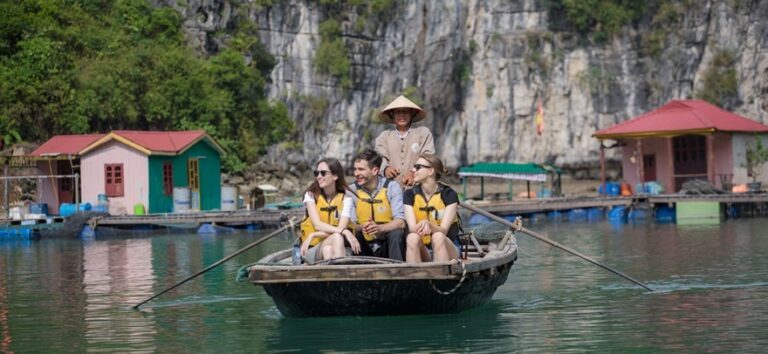
Ba Hang was once an ancient fishing village home to poor fishermen facing many natural hazards. Thanks to care from the Party and State, residents were resettled on land with stable housing and new livelihoods rowing boats for visitors exploring Ba Hang. Today, Ba Hang has become an ecotourism spot that brings income to locals and helps protect Ha Long Bay’s environment. Located about 3 km south of Tuan Chau International Tourist Port, you can hire a rowboat steered by locals or paddle a kayak yourself to experience Ba Hang’s scenic surroundings.
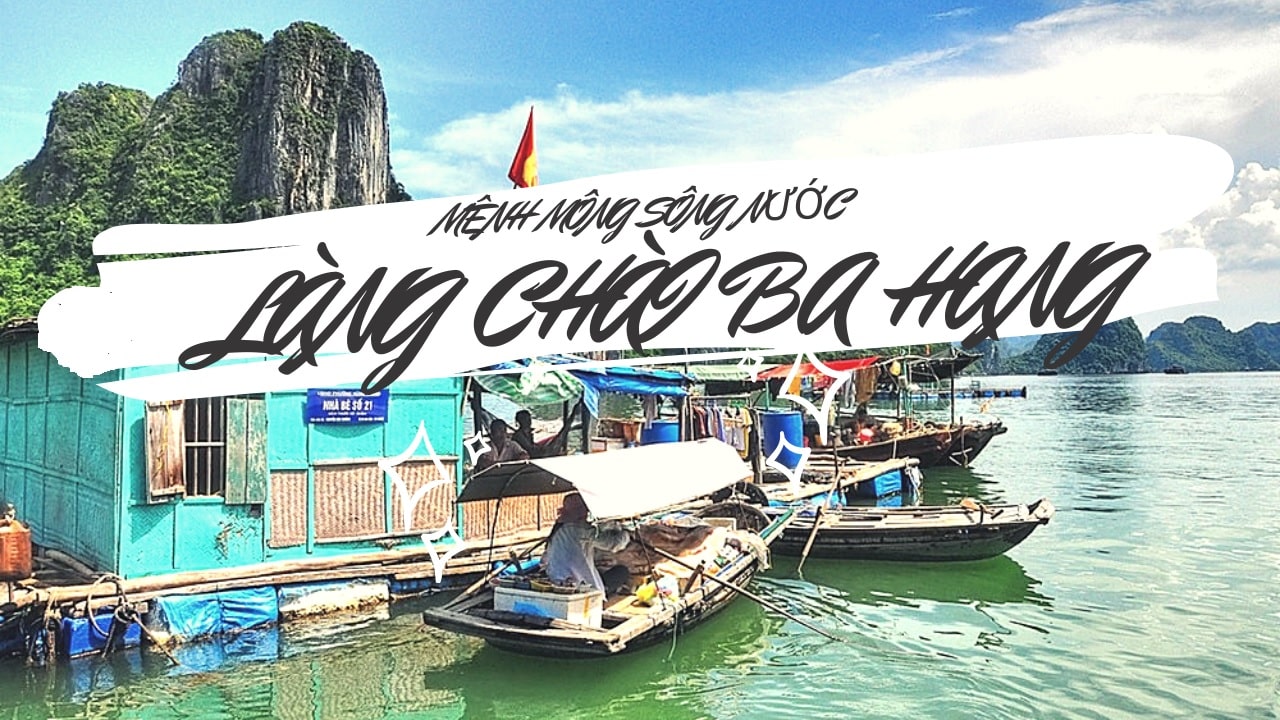 Ba Hang Fishing Village[/caption>
Tips & Notes When Visiting Ha Long Bay Route 1
To make your Ha Long Bay Route 1 trip even more complete and memorable, keep these practical tips and notes in mind:
Ideal time to visit:
-
t
- Spring (February–April) and autumn (September–November): The two best times to visit Ha Long Bay, offering cool weather, little rain, and calm seas ideal for getting around the bay.
- Summer (May–August): Peak season with more day trips available, though stops like Sung Sot Cave and Thien Cung Cave get very crowded—especially on weekends.
- Winter (December–January): Cold weather with possible drizzle and fog that can reduce visibility.
t
t
Essential items to pack:
-
t
- Sunscreen: Protects your skin from sun exposure.
- Hat and sunglasses: Shade you from the sun and keep you comfortable outdoors.
- Comfortable footwear: Suited for walking and climbing stairs inside caves.
- Camera: Captures memorable moments across Ha Long Bay.
- Drinking water: Keeps you hydrated, especially on hot, sunny days.
- Motion sickness medication (if needed): Helpful in case you get seasick.
t
t
t
t
t
Booking tickets and choosing a boat:
-
t
- Book in advance: Especially during peak season, reserve boat tickets and sightseeing tours early for good availability and pricing.
- Pick a suitable boat type: Depending on your needs and budget, you can choose a standard tour boat, speedboat, or cruise boat.
- Research the travel company: Choose reputable, licensed operators to ensure service quality.
t
t
Safety notes:
-
t
- Follow safety rules: Always wear a life jacket when boarding, stay within permitted areas, and don’t litter.
- Move carefully: Watch your step climbing cave stairs and walking on boat decks.
- Protect the environment: Do not throw trash into the sea and help keep public areas clean.
t
t
A few quick tips:
-
t
- Go in the morning: Morning weather is usually cooler with great light for photos.
- Bring light snacks: Handy in case you get hungry mid-trip.
- Ask your guide: If you have any questions, don’t hesitate to ask your tour guide for answers.
t
t
Ha Long Bay Route 1 is truly a great choice for anyone wanting to explore the quintessential highlights of this wonder. With a short itinerary focused on magnificent caves and unique limestone islets, Route 1 delivers a well-paced yet fulfilling experience—and because it requires little transit, it suits everyone from seniors to children so the whole family can enjoy Ha Long Bay’s grandeur together. Ready for your Ha Long Bay Route 1 adventure? Book a Ha Long Bay sightseeing tour today to experience the best of the bay! And if you want to explore other sides of Ha Long Bay, be sure to check out more appealing sightseeing routes [here]