Border Marker 1297, a sturdy pillar on the nation’s frontier, stands as a sacred landmark marking the country’s sovereignty. Beyond its historical significance, Marker 1297 is an enticing destination for those who love exploration and conquest. In this article, VDS Travel will share essential information about Marker 1297 with you.
Articles you may be interested in:
Where is Border Marker 1297 located?
Border Marker 1297 is one of Vietnam’s important border markers, located in Bac Xa commune, Dinh Lap district, Lang Son province. Built in 1999, this marker is the result of the negotiation and signing of the Land Border Treaty between Vietnam and China in the same year. This treaty resolved disputes over 227 km² of the border, with each side receiving approximately 50% of the disputed area.
In reality, Marker 1297 is a system consisting of one main marker, numbered 1297, located at an altitude of 821.18m above sea level, and four auxiliary markers: 1297/1 (841.44m), 1297/2 (909.88m), 1297/3 (948.45m), and 1297/4 (1020.71m). All are small, single auxiliary markers made of granite, placed on mountain peaks within Bac Xa commune. Among them, marker 1297/4 is the highest, standing at 1020.71m above sea level, and is also the most visited by tourists.
How to get to Border Marker 1297
Although Marker 1297 is located in Lang Son province, it is relatively close to Binh Lieu district, Quang Ninh province. In fact, travelers coming from areas such as Quang Ninh, Hai Phong, or Hanoi will find it much more convenient to travel via the route from Binh Lieu to Marker 1297 than to travel to Lang Son first. Because of this, many people mistakenly believe that Marker 1297 belongs to Binh Lieu, but in reality, it is in Lang Son—please keep that in mind! However, we will introduce both routes for you to consider and choose from.
For travelers coming from the Binh Lieu area (Quang Ninh), you can follow the Border Patrol road from Hoanh Mo border gate (see map below); it is only about 35km to Marker 1305. For those who wish to visit Marker 1305 first, it will require a slight detour, and the distance from the parking area at the foot of Marker 1305 to Marker 1297 is over 24km.
This route is paved with concrete, making it accessible for both motorbikes and cars (under 29 seats). However, the road is relatively narrow, only about 3m wide, winding along the mountainside with steep drops on one side. Therefore, those unfamiliar with the terrain or inexperienced drivers should be extremely careful to avoid unfortunate incidents. Because of this, even though the distance is not too far—only about 35km—it takes over an hour to drive. In return, this route is considered the most beautiful border patrol road in Vietnam. If you set off early in the morning, around 4-5 AM, you will be able to admire the ethereal beauty of this place. At this time, clouds from the Chinese side of the border spill over, creating a scene that feels like stepping into a magnificent, otherworldly space.
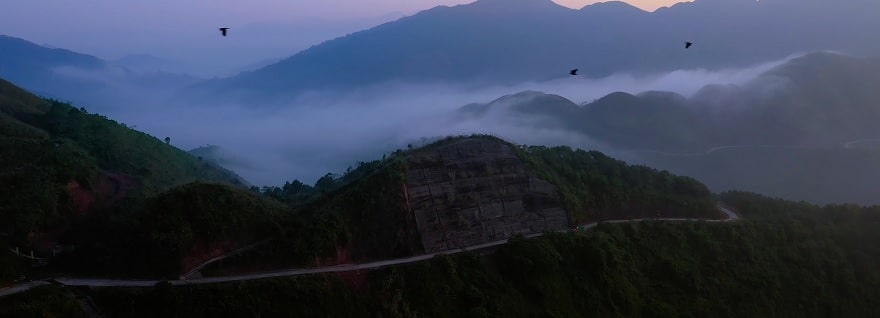
The border patrol road leading to marker 1297 in the morning
For travelers coming from Lang Son city, you can travel along National Highway 4B to Dinh Lap town, then turn onto National Highway 31 to Bac Xa commune. From there, follow the main road of the commune to reach Marker 1297. However, the route from the city center to Marker 1297 is relatively long, about 110km according to Google Maps (see map below), and the road is quite challenging, no less so than the route from Binh Lieu. Therefore, few people choose this route unless they are already in provinces bordering Lang Son.
Regardless of the route you take, you will still need to park your vehicle at the foot of the slope and walk up to the marker. This path is relatively narrow, paved with concrete, and about 1km long. The path to Marker 1297 is not as steep as the one to Marker 1305, so it attracts quite a lot of visitors, and both the elderly and children can conquer it. However, please note that to reach Marker 1297, you must have permission from the border guards. Their morning working hours begin after 7:00 AM, so if you arrive earlier, you will have to wait.
What’s at border marker 1297?
It is said that while you visit border marker 1305 to conquer the “dinosaur backbone”, you head to border marker 1297 to admire the wild reed flowers. Indeed, at border marker 1297, travelers can not only explore the Vietnam – China border and marvel at the majestic mountain ranges, but also admire the wild reed flowers—a wild plant that grows abundantly in high mountainous regions, standing 1-2 meters tall with white or pale yellow blossoms. These reed flowers bloom from October to the end of November every year, stretching across the hillsides of the border region, shimmering in the sunlight, and making the natural landscape here even more poetic.
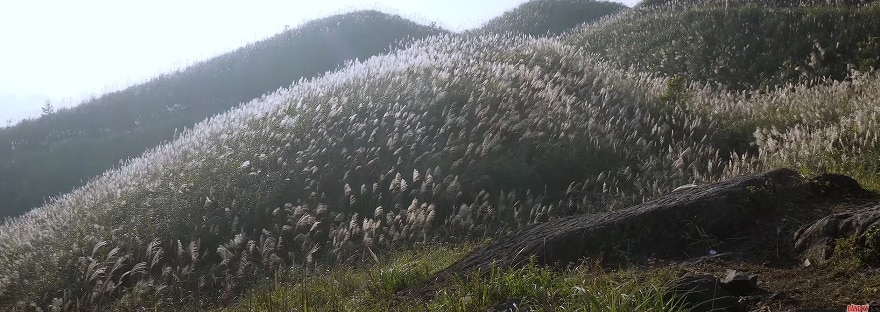
Wild reed flower paradise at border marker 1297
Here, visitors can encounter wild reed flowers almost everywhere, from cliff sides and forest edges to the roadsides. The flowers bloom, releasing tiny white seeds that are carried away by the wind to propagate, creating a special charm for this border region. Because of this natural beauty, the trail leading to border marker 1297 has been given a very romantic name by backpackers—”reed flower paradise”.
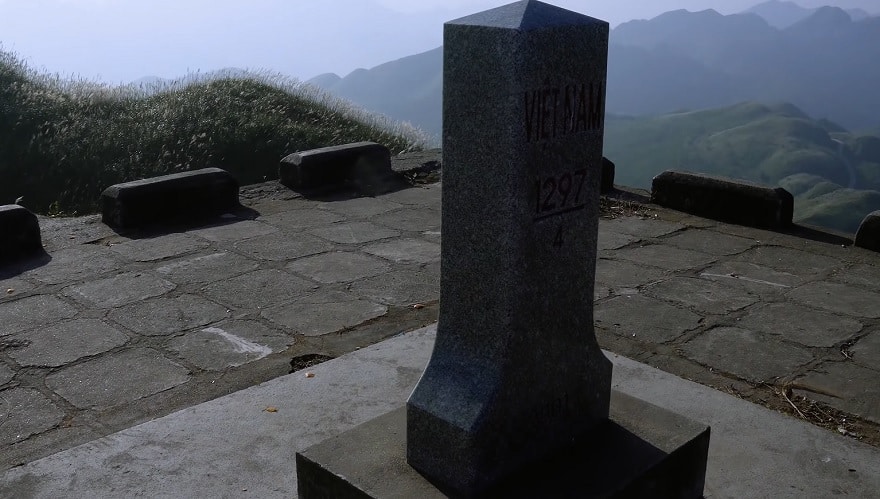
Border marker 1279/4
Additionally, when climbing up to border marker 1297, visitors can easily spot a parallel path. That is the road leading to the border marker on the Chinese side, and these two paths meet at the peak of the marker. Looking towards China from the peak area, travelers will see a tens-of-kilometers-long mountainous border fence built by China to prevent illegal entry or smuggling.
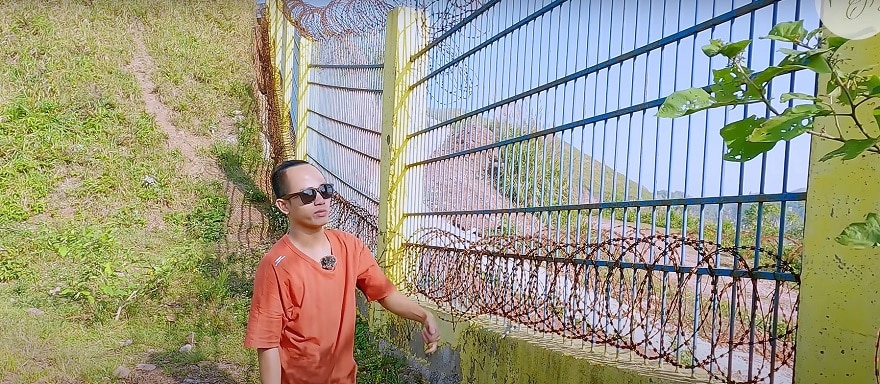
Vietnam-China border fence in Quang Ninh (Nen Vlog)
Above is all the information about border marker 1297. If you are looking to book a Binh Lieu tour to explore the border markers here, please contact VDS Travel to receive many attractive promotional offers!