Legends of old tell of Dragon Cave Pagoda
A mountain shaped like a crouching unicorn
Upon a blooming lotus throne the King ascended
Shimmering in the radiant glow of white misty clouds
Nestled atop a hill shaped like a crouching qilin (mythical unicorn), Lan Pagoda—known today as Truc Lam Zen Monastery—was historically one of the most important temples within the pagoda-and-stupa network of the Truc Lam Yen Tu Zen sect. The fame and grandeur of Lan Pagoda have been passed down through Vietnamese folklore in the saying, “The gate of Lan Pagoda, the courtyard of Muong Pagoda, and the rice fields of Quynh Pagoda,” celebrating its grand entrance, expansive courtyard, and vast lands.
See also: Top 9 Most Sacred Pagodas in Quang Ninh
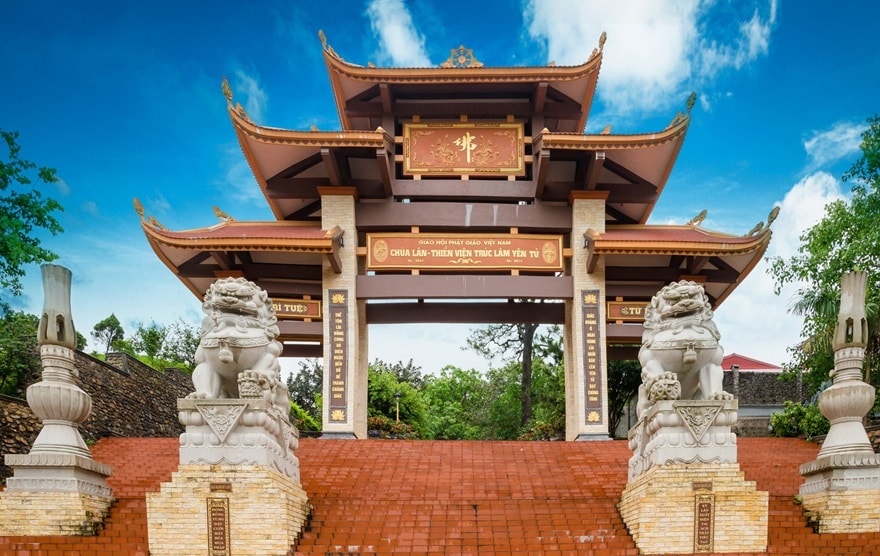
Truc Lam Yen Tu Zen Monastery
History of Truc Lam Zen Monastery
Originally known as Lan Pagoda, the complex is today called Truc Lam Yen Tu Zen Monastery, or Long Dong Tu in Sino-Vietnamese characters, located in Nam Mau Village, Thuong Yen Cong Commune, Uong Bi City. These three names originate from the following traditions:
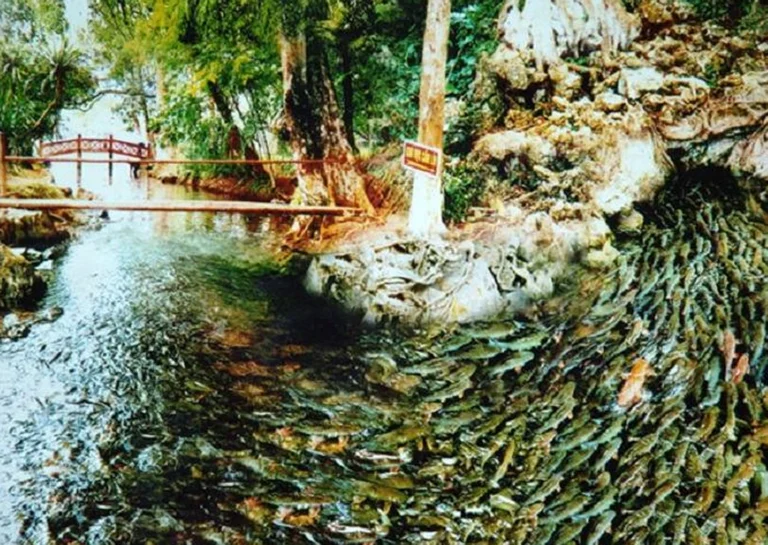
First is Long Dong Tu, meaning “Dragon Cave Pagoda.” This name dates back to when King Tran Nhan Tong embarked on his spiritual journey into Yen Tu. Pausing here to rest, he dreamed that he was riding a dragon into a cavern. Inside the cave lay a crystal-clear lake covered in blooming golden lotuses emitting a sweet fragrance. The dragon carried him around the lotus ponds, where the blossoms radiated a brilliant aura accompanied by melodious music drifting from every leaf. He was then placed upon a lotus throne—at which exact moment the King awoke. Lingering fragrance still hung in the air, music echoed in his ears, and a group of ground dragons suddenly appeared out of nowhere. Consequently, this site came to be revered as a dwelling place of dragons, and the temple established on this land was named Long Dong Tu—Dragon Cave Pagoda.
Sunlight now shines upon Dragon Cave
While Ho Bang Stream flows full and clear
The second name is Ky Lan Monastery, as locals commonly referred to this Buddhist sanctuary as Ky Lan Pagoda—or Lan Pagoda for short—because its setting along the Yen Tu Mountain range resembles a crouching qilin when viewed from afar. Finally, it is named Truc Lam Yen Tu Zen Monastery after the native Vietnamese Zen school founded by King Tran Nhan Tong.
Lan Pagoda was established by Truc Lam Dieu Ngu—King Tran Nhan Tong—shortly after he renounced the throne to enter monastic life in the year of Ky Hoi (1293). It soon became Ky Lan Institute, serving as a major center for Dharma teaching and monastic ordination within the Yen Tu temple complex, second in importance only to Hoa Yen Pagoda. Many eminent Zen masters served as abbots and lectured here, including King Tran Nhan Tong himself.
In the Tam To Thuc Luc (Chronicles of the Three Patriarchs), which records the lives and teachings of the three founding patriarchs of Truc Lam Zen, there is a detailed account of King Tran Nhan Tong’s Dharma lecture at Ky Lan Institute on the 9th day of the first lunar month in the year of Binh Ngo (1306), where he preached and directly answered questions from the monastic community. Across surviving Buddhist records, only two of Tran Nhan Tong’s lectures were transcribed: the first delivered at Liem Pagoda in Hai Duong, and the second right here at Ky Lan Pagoda, where the Second Patriarch Phap Loa and Third Patriarch Huyen Quang also frequently came to expound the sutras.
Architecture of Truc Lam Yen Tu Zen Monastery
Following the Tran Dynasty, Lan Pagoda remained renowned under an unbroken lineage of Zen masters. During the Le Dynasty, Zen Master Chan Nguyen—credited with revitalizing Vietnamese Buddhism—compiled seminal works including Thien Tong Ban Hanh, Kien Tanh Thanh Phat, and reprinted the Tue Trung Thuong Si Ngu Luc right inside the main hall of Ky Lan. During the resistance war against the French, the pagoda was almost completely burned down, leaving behind only its stupa garden of roughly 23 stupas, including three ancient ones: Vien Minh and Vien Quang flanking the main hall, and the celebrated Tinh Quang Golden Stupa, built by royal decree of the Le court in 1726. Enshrined behind the Patriarchs’ Hall are the sacred relics of Most Venerable Tue Dang (Patriarch Chan Nguyen), an enlightened master honored by the Le Dynasty with the title Sangha Supreme Patriarch Chinh Giac. To the left of Tinh Quang Stupa stands a 700-year-old ancient banyan tree with a lush canopy and sprawling roots so vast that dozens of people joining hands could not encircle them. It is impossible to tell where the main trunk originally emerged from the earth; one cluster of aerial roots has completely enveloped an adjacent persimmon tree, making it look to visitors as though persimmon branches are sprouting straight out of the banyan trunk. Alongside the stupas and ancient artifacts, this venerable banyan tree stands as a living historical witness and a rare natural treasure.
To honor ancestral traditions and preserve and promote the Truc Lam Zen school, a solemn groundbreaking ceremony to rebuild Lan Pagoda – Truc Lam Yen Tu Zen Monastery was held on January 19, 2002. The project was initiated by Most Venerable Thich Thanh Tu, Abbot of Truc Lam Monastery in Da Lat, with generous contributions from monastics and Buddhist laypeople both in Vietnam and abroad.
Coinciding with the birthday of Enlightened Emperor Tran Nhan Tong on November 11, 2002, Lan Pagoda – Truc Lam Yen Tu Zen Monastery was officially inaugurated across an area of nearly 5 mau (roughly 1.8 hectares). Constructed with modern materials while faithfully preserving the classical aesthetic of traditional Vietnamese pagodas, the architectural complex includes the Main Hall, Patriarchs’ Hall, Drum Tower, Bell Tower, Monks’ Quarters, Meditation Hall, Dharma Propagation Hall, and Arhat Hall. Its layout is airy and serene, featuring modern Vietnamese script (Quoc Ngu) on its horizontal lacquered boards and parallel couplets.
“Buddhism clearly charts the path from rebirth to liberation;
Zen cuts straight across without ranks to ultimate truth.”
Today, Lan Pagoda houses several remarkable and priceless treasures. Inside the Main Hall sits a bronze statue of Shakyamuni Buddha weighing nearly 4 tons—the largest bronze statue in Yen Tu today. Another extraordinary centerpiece is a statue of Bodhidharma carved from fragrant South American rosewood, standing 3.2 meters tall on a pedestal measuring 0.65 meters high and 0.95 meters wide. Weighing approximately 3.2 tons and featuring exquisite carvings, the statue rests behind the Main Hall in front of the Shrine of the Three Truc Lam Patriarchs, donated through the sincere devotion of Buddhist followers. In the monastery’s front courtyard stands a red granite “Wish-Fulfilling Gratitude Sphere” measuring 1.595 meters in diameter and weighing 6.5 tons, quarried from An Nhon in Quy Nhon. Set atop a 4-ton square stone pedestal inside an octagonal water basin surrounded by eight lotus-petal planters symbolizing the Noble Eightfold Path, the orb has been certified by the Vietnam Guinness Book of Records as the largest wish-fulfilling stone sphere in Vietnam.
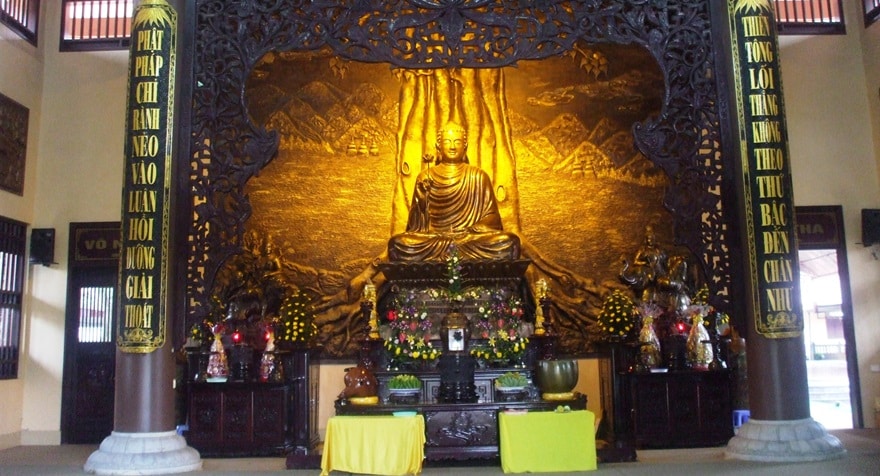
Nearly 4-ton bronze statue of Shakyamuni Buddha at Lan Pagoda
Inside the Arhat Hall is an intricately carved wooden ensemble of the Eighteen Arhats, each depicted with distinct postures and expressive features. This wooden collection brings to mind Tay Phuong Pagoda and the famous poem by poet Huy Can: “O Arhats of Tay Phuong Pagoda, today society has set forth on a new path; I look upon your sculpted faces and see them brighten, dispelling the twilight shadows and scattering the mist.”
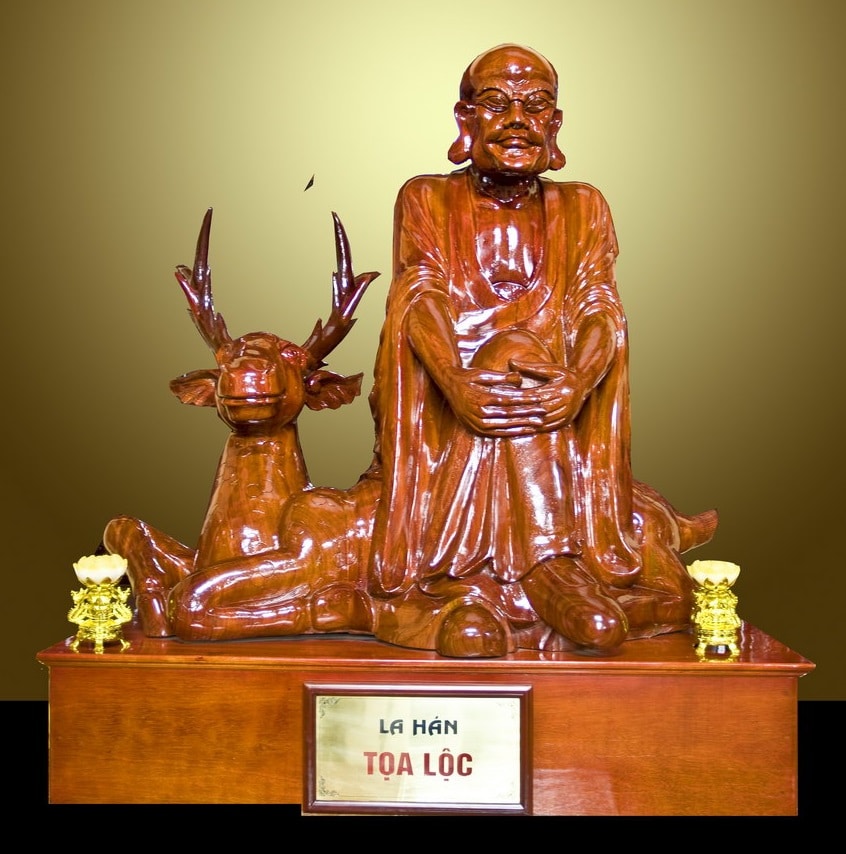
Arhat Statue
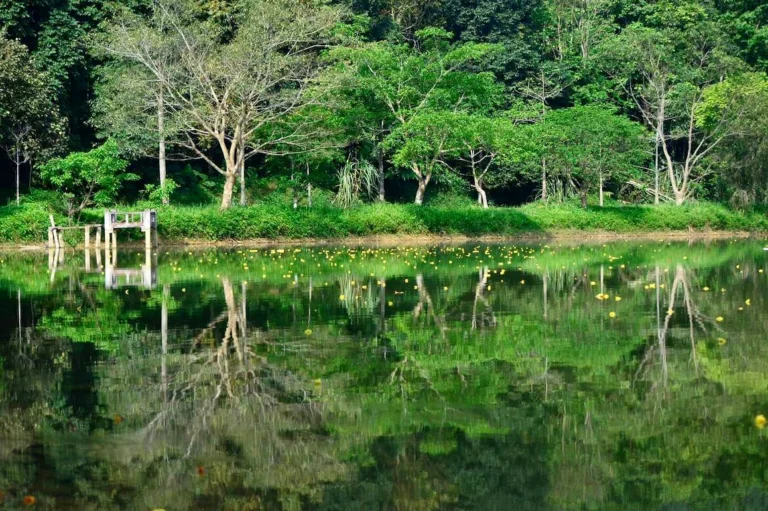
Notably, the monastery boasts the expansive and airy Dharma Propagation Hall (Trang Phap Duong), a two-story structure spanning 4,000 square meters that was inaugurated in 2012. Standing in front of the hall is a 14-meter-tall granite statue of Avalokiteshvara (Quan Am), the largest granite Bodhisattva statue in Vietnam. Before the statue lies the Tranquil Mind Lake (Ho Tinh Tam), framed by spacious, serene grounds. Visiting the monastery, taking in the scenery, and gazing across the calm waters of the lake fills every traveler with a deep sense of purity and inner peace.
See also: 1-Day Yen Tu Tour