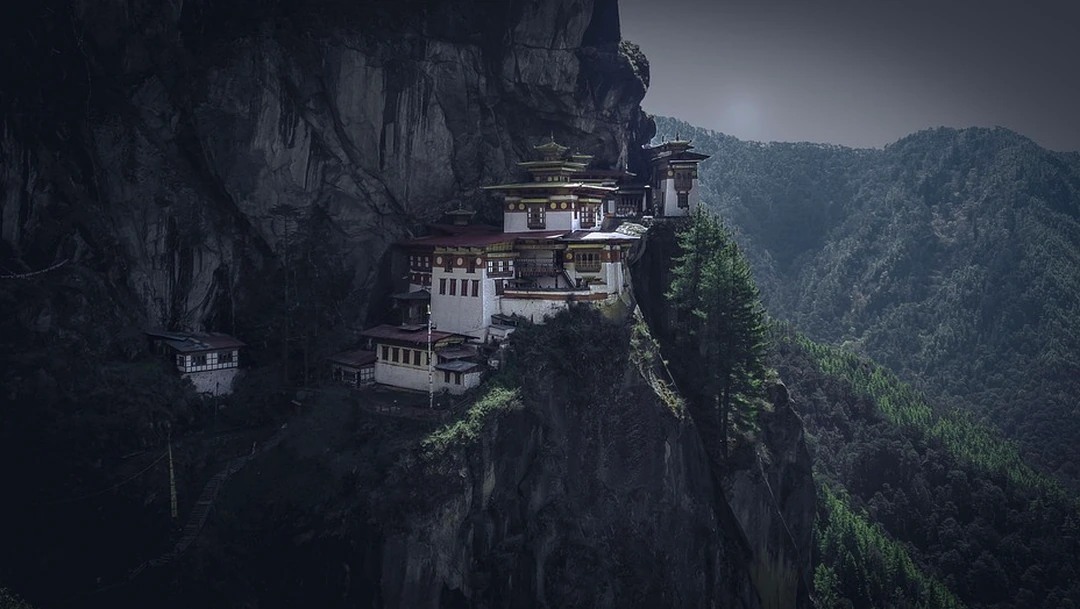
Perched precariously atop a sheer granite cliff at 3,120 meters above sea level, looking straight down over the mist-shrouded Paro Valley, the Paro Taktsang monastery complex is known in Tibetan texts as Taktsang Palphug, carrying the sacred meaning “The Jewel Cave of the Tiger’s Nest Gathering Auspiciousness and Supreme Bliss.” The history of this sacred power place begins with one of the most majestic and profound legends of Eastern Vajrayana Buddhism in the 8th century. At that time, the great master Guru Padmasambhava (or Guru Rinpoche) crossed treacherous snow peaks from Singye Dzong riding on the back of a fierce, radiant tigress—none other than the secret consort manifestation of the wisdom dakini Yeshe Tsogyal. Touching down on a perilous rock ledge suspended in mid-air, he manifested his awe-inspiring wrathful form Dorje Drollo, brandishing a vajra to subdue all eight classes of demons and local spirits ruling the Himalayas and transforming them into protective forces of the Dharma. The master entered deep meditation for three years, three months, three weeks, and three days inside the secluded Pelphug Cave, turning a wild, formidable crag into an enduring spiritual root that anchored Tantric Buddhism deep within the consciousness of the Land of the Thunder Dragon.
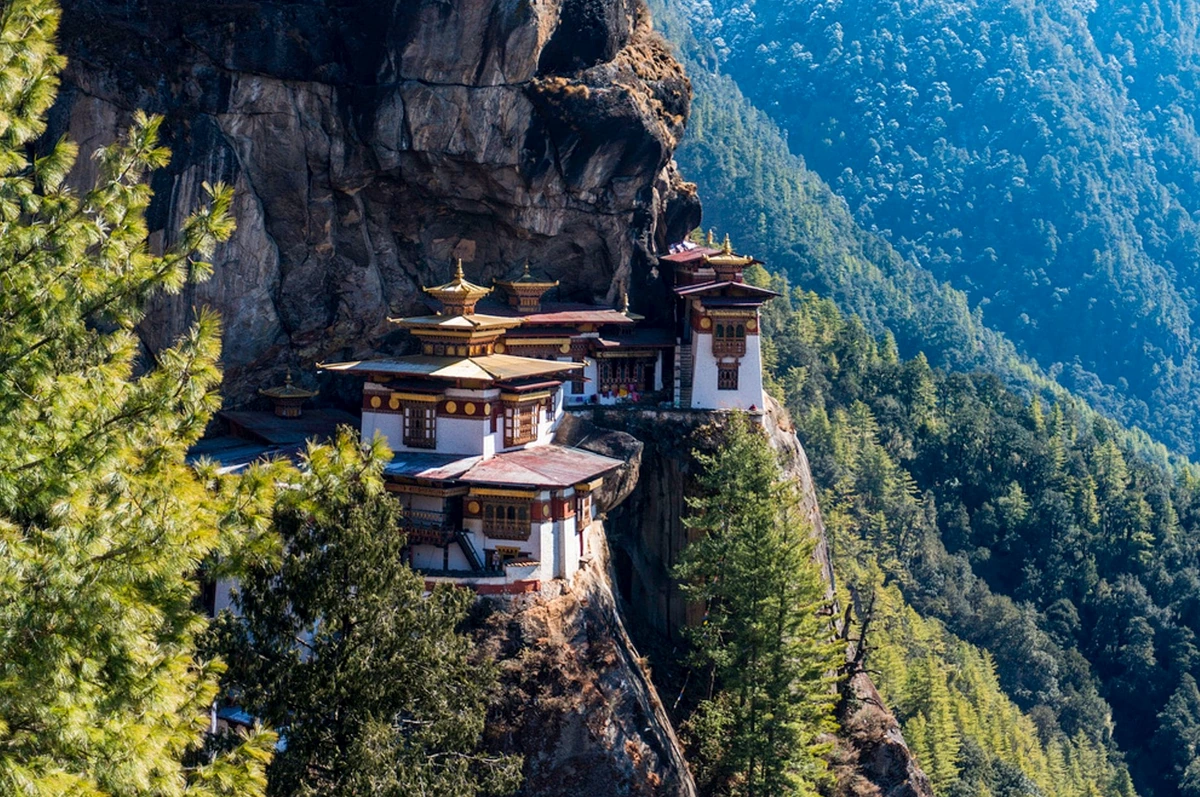
From a serene meditation hermitage high in the mountains, Taktsang Palphug’s transformation into a grand monastic complex carrying strong politico-religious institutional weight truly took place in the late 17th century. In 1692, under the brilliant rule of Gyalse Desi Tenzin Rabgye—the fourth temporal regent of the Kingdom of Bhutan—the first stone of the great undertaking was formally laid on the dizzying precipice. This construction was not merely a masterpiece of worship, but a firm declaration of national unity and the supremacy of the Drukpa Kagyu lineage, carrying forward the great work of unifying the country left behind by Zhabdrung Ngawang Namgyal. Despite the harsh obstacles of rugged terrain, Desi Tenzin Rabgye mobilized extraordinary human resources alongside the most skilled master craftsmen of the era to carve out a multi-tiered complex of temples and shrines hugging the cliff as if growing straight from the bone and marrow of the sacred mountain. Every thick rammed-earth wall and every cypress timber truss joined with intricate mortise-and-tenon joints without a single iron nail reflects unmatched craftsmanship and an astonishingly steadfast faith among the highland people.
Even so, the ebb and flow of history tested the imperishability of this sacred site through severe trials. The most poignant catastrophe occurred on April 19, 1998, when a fierce fire broke out unexpectedly in the main sanctuary, consuming nearly all of the ancient timber structure, priceless murals, and sacred statues centuries old, leaving a desolate scene covered in ash along the sheer rock face. Faced with such a profound loss to the nation’s spiritual destiny, King Jigme Singye Wangchuck personally inspected the site and directly led an unprecedented nationwide restoration campaign. With an unwavering spirit of preservation and supreme devotion, vast quantities of precious timber, sandstone, and gold leaf were carried up steep stone steps amid mist and clouds through the persistent human effort of monks, artisans, and mule trains. After years of painstaking reconstruction faithful to 17th-century archival drawings, Paro Taktsang was consecrated and grandly reopened in 2005. This miraculous rebirth not only restored an ancient architectural masterpiece intact, but also stood as living proof of the Bhutanese people’s resilience and undying flame of devotion against all vicissitudes of time.
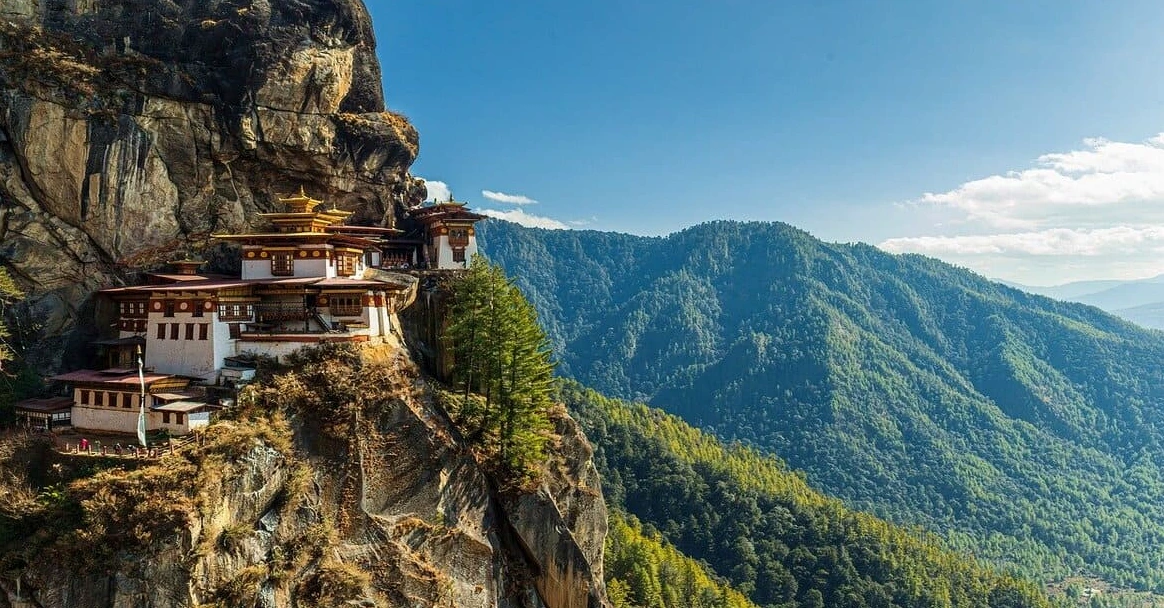
Clinging to the exact coordinates 27°29′30″N 89°21′40″E, Paro Taktsang monastery commands a sheer granite ledge at 3,120 meters above sea level, creating a majestic sight like a lotus blossom blooming from a perilous cliff face. Looking up from the floor of the Paro Valley at 2,580 meters, travelers see the monastery complex like a tiny eagle’s nest anchored to the mountain ridge, gazing straight down a dizzying drop of more than 900 meters shaded by green pines. This tranquil setting is wrapped year-round in drifting white clouds rising from the valley, making the boundary between the visible earthly realm and a transcendent pure land seem to dissolve in every quiet breath of the Himalayas.
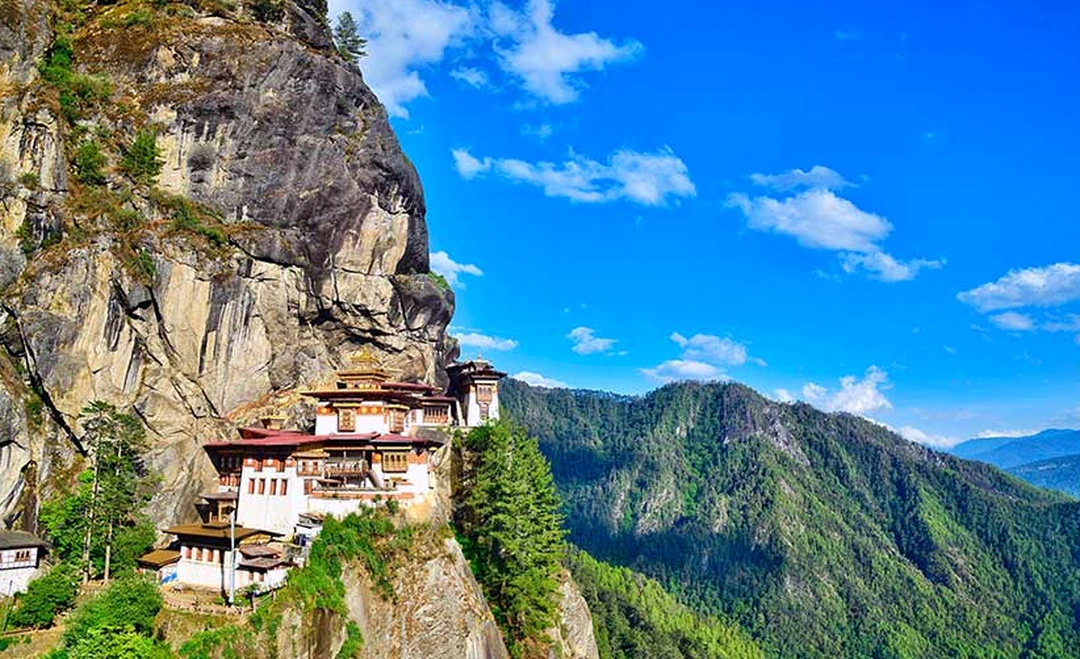
In terms of geomantic geography according to Tibetan Tantric Buddhism, Paro Taktsang’s site is regarded as one of the supreme sacred energy-gathering spots in the Land of the Thunder Dragon. The complex sits nestled within a giant horseshoe-shaped rock amphitheater composed of metamorphic gneiss interlaced with ancient granite veins. This natural arc acts as a grand screen, completely shielding the structures from fierce storm winds howling down from the northwest off eternal snow peaks. In particular, the dark rock mass with its expansive surface area serves as a massive passive thermal reservoir, absorbing intense daytime solar radiation and slowly releasing warmth at night to ease the bone-chilling cold of the sub-alpine highland after dusk.
Building and shaping a complex of temples on a plane nearly perpendicular at 90 degrees is an unmatched feat of traditional Bhutanese construction engineering. By making use of protruding natural rock ledges and crevices carved into the mountainside, ancient master builders created sturdy foundation anchors from rubble stone combined with local clay mortar. Sanctuaries, meditation chambers, and walkways are tightly linked through refined wooden mortise-and-tenon joinery without any metal nails, giving the structure micro-elasticity to adapt to frequent seismic tremors along the Himalayan tectonic belt. Paths between temple clusters are chiseled straight into the rock or carried across precarious wooden bridges spanning chasms, turning the entire structure into a living entity seamlessly integrated with the rugged terrain without disturbing the primeval balance of the sacred mountain.
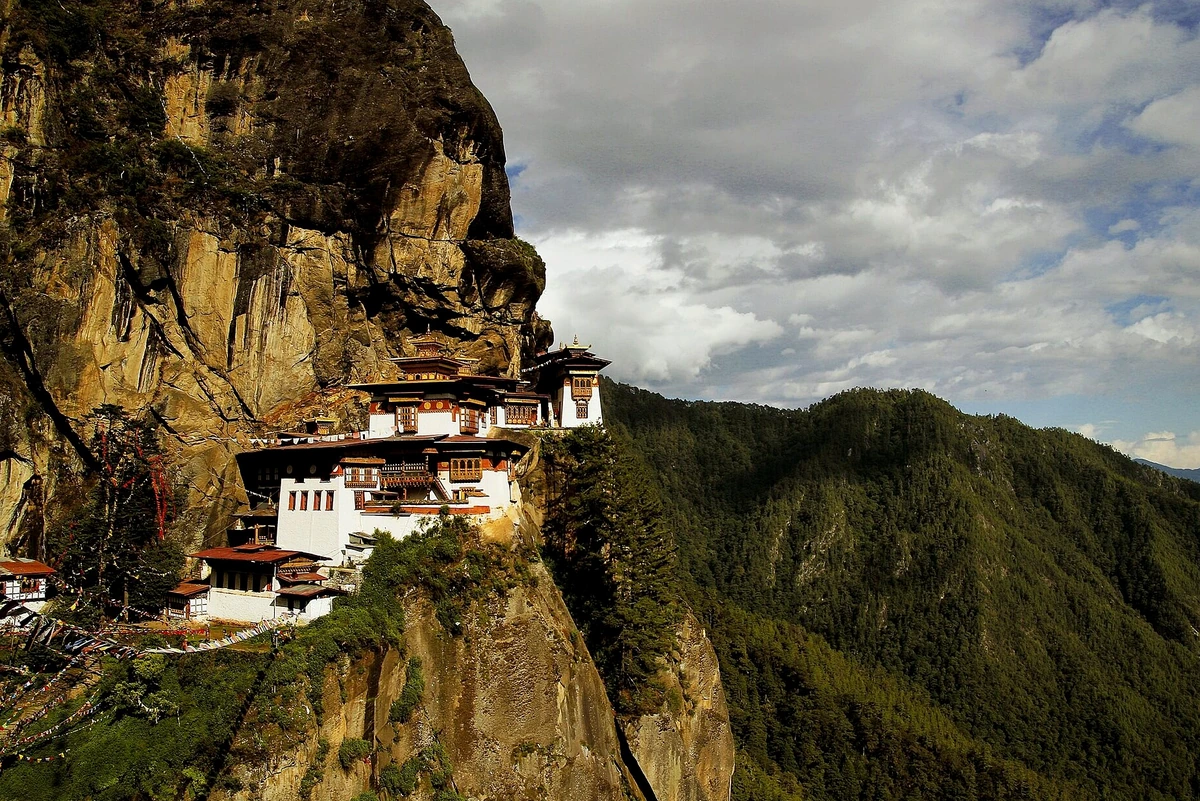
The natural scenery surrounding the monastery opens a captivating journey of stratified ecological transition that transforms dramatically with every meter gained uphill. From the lower valley floor, the trail leads through vast temperate forests of native Himalayan blue pine, whose slender, soft needles sway in the breeze, mingled with the quiet silhouettes of ancient hemlock trees draped in mossy lichen. Higher up near the three-thousand-meter mark, vegetation gradually shifts into a rugged yet vibrant sub-alpine ecosystem. Every spring, the slopes of Taktsang awaken as wild rhododendrons burst into vivid crimson and rose blooms, lending an otherworldly touch of grace against the cool gray granite.
This secluded and isolated ecosystem also provides safe refuge for rare high-altitude wildlife. Beneath hidden rock recesses, agile Himalayan gorals with sure hooves navigate steep drops, appearing and disappearing amid swirling mist. High in the mountain winds, flocks of Himalayan black crows wheel around the gilded finials of the monastery. In the mind of local practitioners, this intelligent bird is not merely a wild creature, but the living manifestation of the Protector Jarog Dongchen—the raven-headed deity safeguarding the continuity of the Dharma and preserving the purity of the sacred cliff.
Viewing Paro Taktsang from the valley gorge, anyone is struck by the extraordinary architectural mastery of ancient Bhutanese artisans. The monastery complex stands proudly on a sheer granite ledge at 3,120 meters above sea level, where the slope drops almost vertically into the abyss below. It is considered a pinnacle of cliffside vernacular construction, turning an ostensibly impregnable setting into an enduring stronghold. Where conventional load-bearing foundation trenching is impossible, Bhutanese master builders—revered as pawo—applied deep indigenous wisdom to conquer millennia-old solid granite.
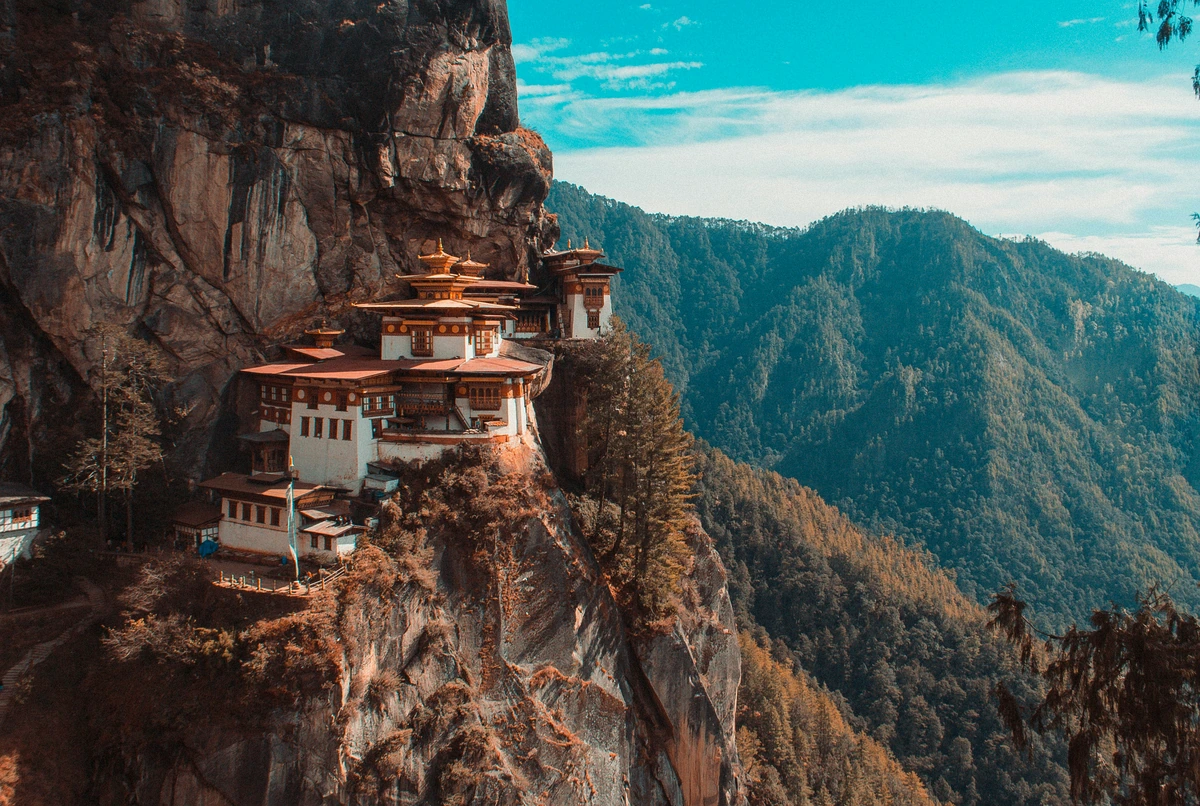
This feat began with pawo carefully searching out natural rock fissures to drill deep into the stone, then anchoring heavy pine and oak beams to form a cantilevered foundation jutting into open space. This supporting framework carries the full weight of thick walls built from locally quarried granite bound with pliable mud mortar. For interior partition walls within the monastery, Bhutanese builders used the traditional sa-pa rammed-earth technique, kneading fine clay with chopped straw and livestock tail hair to increase resilience and prevent cracking amid seismic tremors and harsh Himalayan temperature swings. All flooring, crossbeams, and intricately carved window frames are milled from local blue pine, emitting a fragrant resinous scent and displaying remarkable resistance to wood-boring insects across centuries of mountain weather.
In scale, Paro Taktsang is a complex comprising four main temples (lhakhang) and eight nearby meditation caves, closely connected by narrow, dizzying stone stairways and wooden balconies clinging to the mountainside. Each temple serves a distinct liturgical role and holds its own artistic value. Thongdrol Lhakhang is renowned for its Thousand Buddhas mural covering the wall face, painted entirely with natural mineral pigments and organic plant dyes that retain rich color depth and sacred presence through the passage of time. Beside it, Demchog Lhakhang exudes a mysterious, solemn atmosphere, set up as an inner contemplative retreat for practitioners of advanced Tantric practices, where natural light is carefully restrained to guide the mind into tranquil absorption.
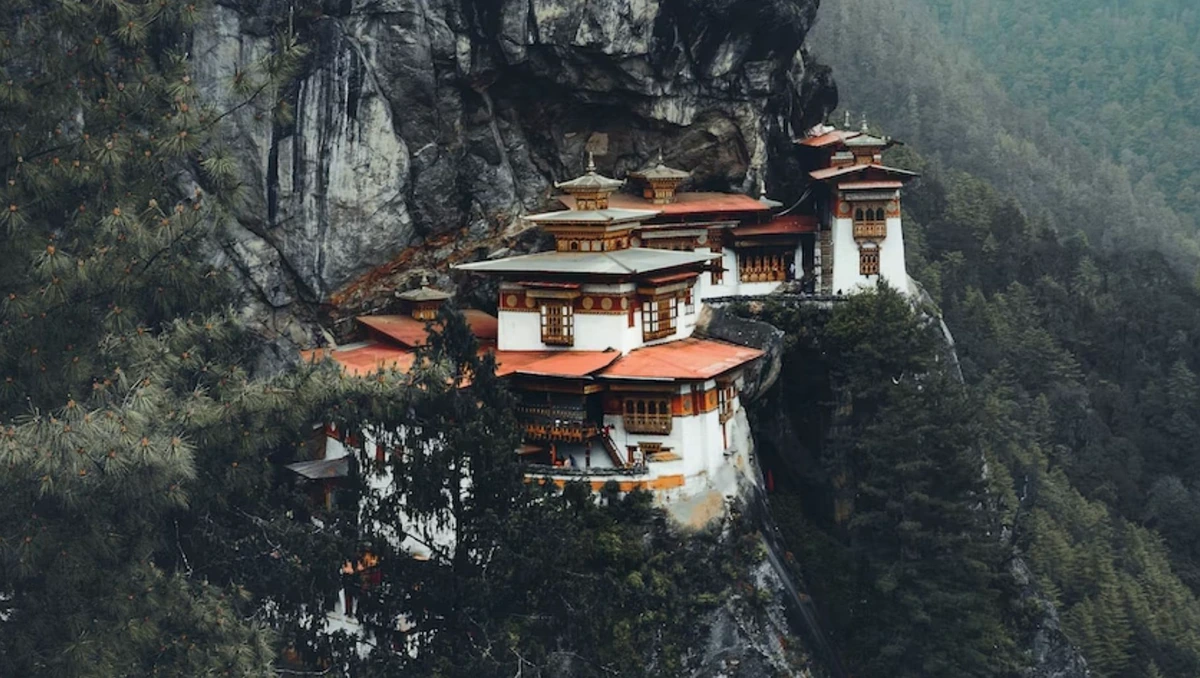
The spatial heart and supreme spiritual source of the entire complex is Pelphug Cave, where Guru Padmasambhava meditated when first bringing the light of the Dharma to the Land of the Thunder Dragon. Deep inside the cool rock cavern, a sacred spring trickles gently from a granite fissure alongside a revered self-arisen statue of Avalokiteshvara (Chenrezig) venerated across generations. Right next to this original retreat is Guru Sungjonma Temple, a dignified shrine housing the famed statue of Guru Rinpoche. According to tradition, the statue once spoke sacred words while being transported here from Punakha monastery, affirming supreme protection for all of Bhutan. The harmony between clever cantilevered joinery, rustic sa-pa rammed earth, and deep shrine symbolism elevates Paro Taktsang beyond an ordinary building into a jeweled lotus blooming on a sheer cliff in an earthly Buddha realm.
As the last rays of sunset fade behind the layered snow peaks of the Paro Valley, Paro Taktsang sheds the daytime bustle of pilgrims and enters a deeply mysterious transformation. At 3,120 meters above sea level, dramatically poised on a towering granite cliff, this sanctuary stages no grand spectacles with mechanical effects or high-tech laser projections like commercialized tourist sites. Instead, the finest “performance” at the tigress’s lair is the majestic harmony between the quiet Himalayan night, the flickering dance of sacred flames, and otherworldly Vajrayana chants, turning the entire complex into a lone spiritual lighthouse shining along the invisible border of sky and earth.
In strict observance of royal heritage conservation decrees and the indigenous Buddhist philosophy of respecting the dwelling places of all beings, high-powered artificial floodlights are strictly kept out of Paro Taktsang’s serene setting. The visual staging here is religious minimalism at its finest. The monastery’s exterior receives only soft, warm light cast from specialized fixtures discreetly tucked into natural rock recesses, just enough to highlight the sharp contrast between deep red wall bands known as marser—an authoritative hue symbolizing energy that subdues obstacles—and pure white kikhar lime trim representing unwavering bodhicitta. When night falls, the architecture looks like an organic form emerging from the mountain, half-floating amid drifting mist and half-rooted deep in ancient stone.
The heart of this nighttime visual art lies tucked inside the sacred shrine rooms. Beneath time-darkened timber ceilings, an enchanting glow is woven by hundreds of butter lamps, called karme in Tibetan, cast in brass engraved with auspicious motifs. Fueled by traditional yak butter or pure vegetable oil, the flames of the karme lamps burn steadily, releasing a rich, savory aroma mingled with fragrant juniper smoke. Warm golden light flickers with breezes slipping through wooden cracks, illuminating the solemn faces of Protectors on age-patinated Thangka paintings and creating a half-real, half-ethereal visual space that leads visitors straight into a wondrous pure land.
The monastery’s night rhythm truly begins once the heavy wooden gates are bolted shut, returning absolute stillness to the thirteen cliffside shrines. That is when the legendary spiritual resonance of ascetic monks rings out, replacing every worldly sound. Low, undulating chanting in the evening service blends with Tantric ritual instruments to create a deeply resonant field of energy. Meter-long copper dungchen horns sound deep, booming notes that strike the cliff face and echo down into the thousand-meter gorge like the roar of the thunder dragon Druk. Weaving through that primeval resonance are the crisp, rapid clashes of brass bub cymbals and the powerful, deep beats of the nga drum, as if dispersing the darkness of ignorance.
Joining this sacred chant is nature’s unending soundtrack: wind whistling sharply through narrow fissures in the granite cliff, subterranean waterfalls whispering through stone, and ancient pine forests rustling far below in the gorge. Looking toward the cliff from afar, visitors see only a steady pinpoint of light suspended beneath a starry sky, with no trace of modern clamor—only an timeless symphony of devotion and enduring wild nature.
The pilgrimage through towering pine forests to behold Paro Taktsang on its granite cliff is not only a tempering of the spirit, but also an entry into a distinctive mountain culinary world where survival wisdom in a harsh highland climate meets unpretentious Vajrayana Buddhist spirit. Set at an average elevation above 2,200 meters in the valley basin, the foundation of every meal in Paro begins with Paro red rice, known locally as jowo. Nourished by mineral-rich glacial meltwater from the Himalayas and enriched by highland air across cold months, these plump, glossy reddish-brown grains release a nutty, chestnut-like aroma when cooked, offering a chewy texture and clean energy that helps pilgrims stay warm against biting winds.
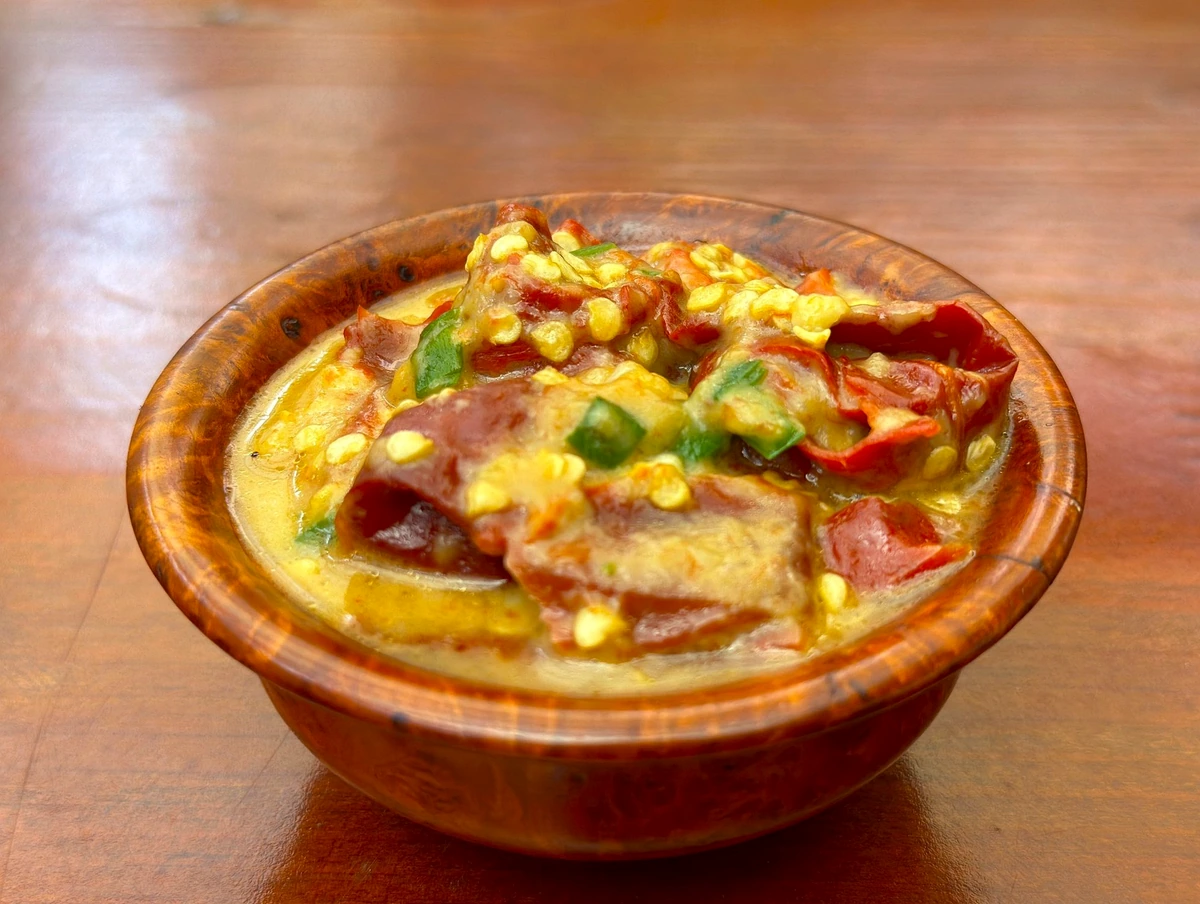
Holding pride of place at the soul of Paro’s culinary map is the national dish Ema Datshi. Bhutanese people regard chili not merely as a seasoning, but as a staple vegetable in everyday life. Juicy green chilies or sun-dried red chilies are slit lengthwise and simmered with heirloom datshi cheese fermented from local cow or yak milk. The initial fiery heat is quickly balanced by the rich, savory, gently tangy melt of the cheese, creating a bold harmony that awakens every sense. Alongside it, Kewa Datshi offers a gentler variation for those seeking comfort, with tender high-slope potatoes simmered in rich butter and melted cheese to warm the stomach after a strenuous climb.
To endure winters when snow blankets the high passes, Paro’s food preservation craft gave rise to the famed Shakam Pa. Prime cuts of autumn beef or yak meat are hung above the hearth to air-dry naturally in cold mountain drafts and pine-wood smoke over many months, locking in firm, deep flavor. When prepared, the dried shakam meat is cut into thick chunks, simmered tender, and stir-fried with whole dried chilies, sliced white radish, and aromatic mountain garlic into a protein-rich dish. Around winter solstice or the traditional Lomba New Year celebration, Paro tables feature Hoentay dumplings. These crescent-shaped dumplings wrap a savory filling of finely chopped dried radish greens, spinach, rich yak cheese, and crushed walnuts in rustic dark buckwheat dough, then steamed piping hot or pan-seared crisp on a hot stone.
Along the steep climb toward the cliff sanctuary, a stop at Taktsang Cafeteria at 2,940 meters opens a contemplative culinary space halfway up to the clouds. Gazing through wooden frames carved with mandala motifs at the monastery suspended at 3,120 meters, visitors are served a steaming bowl of salted butter tea, suja. This sacred drink is made by boiling mature black tea leaves for hours, pouring the brew into a cylindrical wooden churn called a bandhu, adding rich yak butter and a pinch of rock salt, and plunging rhythmically until blended into a velvety foam. Sipping warm suja alongside crisp puffed rice zaw or nutty roasted barley flour tsampa, guests observe the graceful etiquette of Driglam Namzha—receiving the bowl with both hands and bowing slightly—taking in genuine mountain hospitality and the peaceful energy of the kingdom in the clouds.
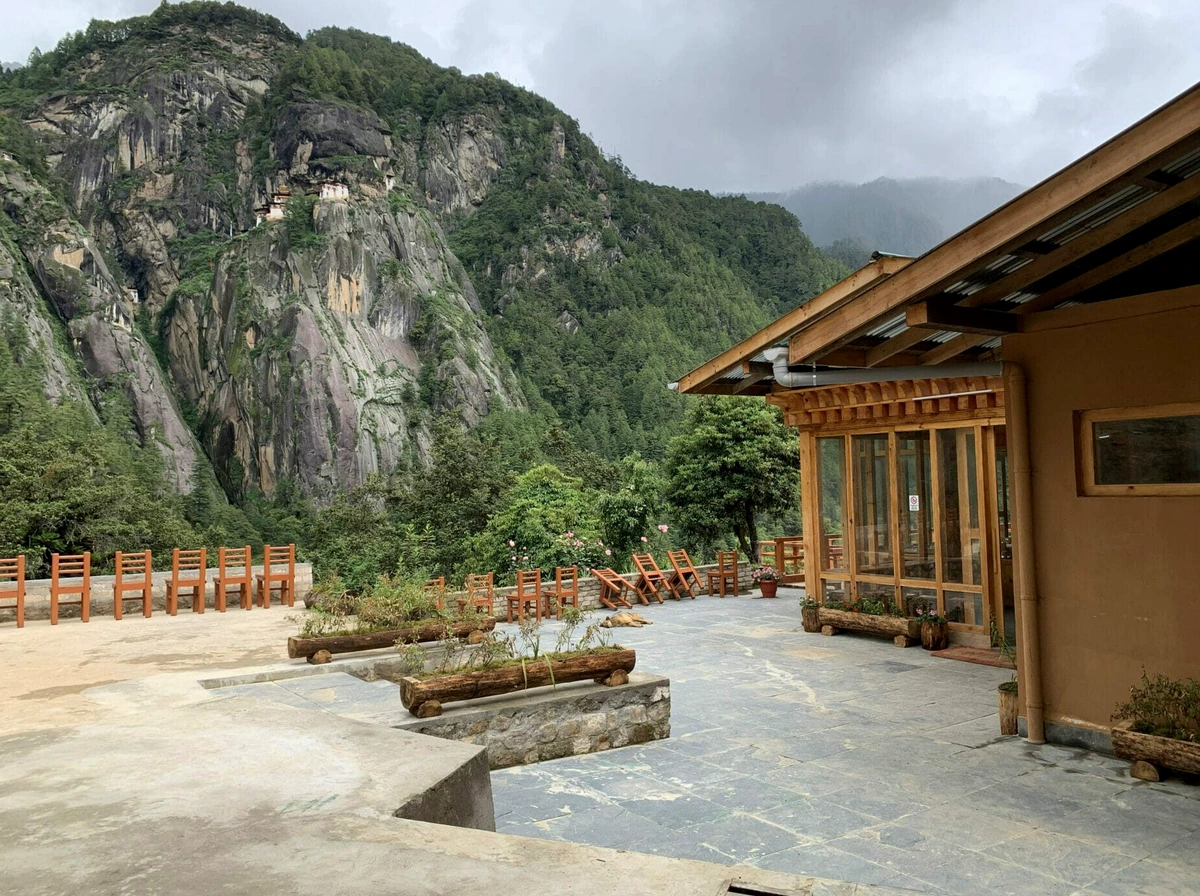
The pilgrimage to spiritual patron Paro Taktsang starts from the fertile Paro Valley, where a paved road winds alongside the scenic Paro Chhu river for roughly twelve kilometers northward. The final point for motorized vehicles is the Taktsang parking lot nestled among green pines at about 2,600 meters above sea level. From this marker, motorized access ends completely, giving way to the rugged trail leading up to 3,120 meters. To cover the gently graded climb of more than four kilometers, visitors can build stamina on foot or hire local pack ponies to ride up to the halfway tea stop. However, the sturdy ponies serve visitors one way uphill and stop at Taktsang Cafeteria; the remaining stretch and the rocky descent into the gorge followed by the climb back up to the monastery must be completed on foot.
The monastery gates open to welcome visitors on a strict schedule aligned with the monastic routine, running from 8:00 AM to 1:00 PM, closing briefly for monks to take lunch and meditate, and reopening from 2:00 PM to 6:00 PM daily. Regarding formalities and costs, visiting is tied to the Sustainable Development Fee (SDF) policy administered by the Department of Tourism of Bhutan to protect heritage and pristine environments, alongside an entrance ticket strictly checked at the checkpoint below the mountain. This ticket is required before crossing the suspension bridge over the sacred waterfall and entering the main gate of the cliff sanctuary.
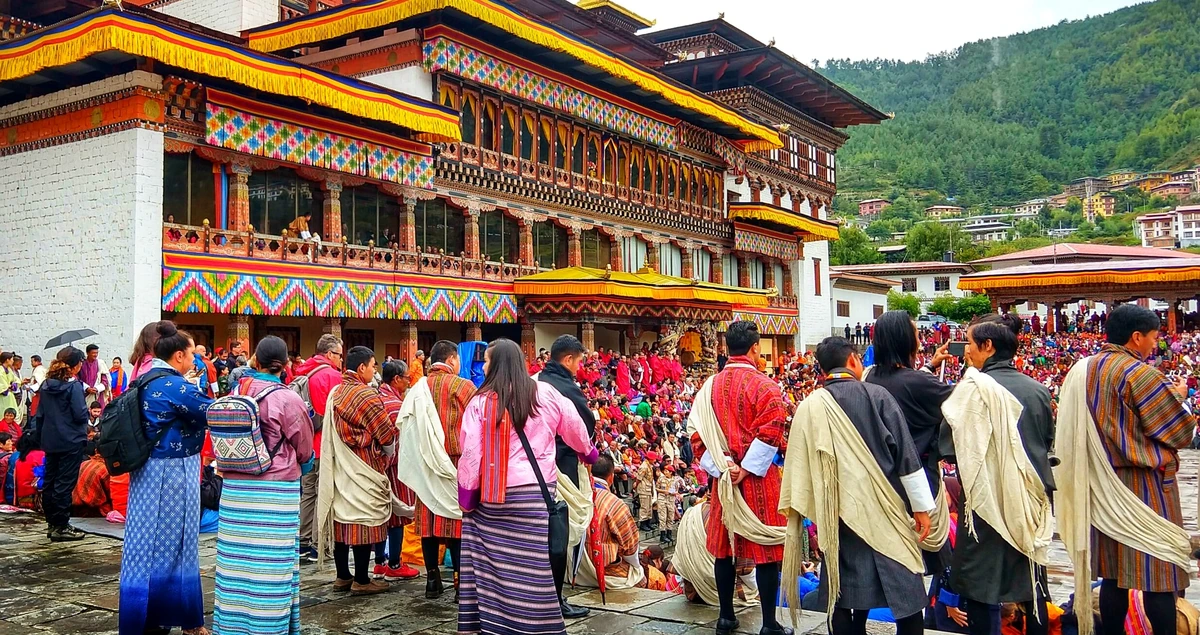
Because Paro Taktsang is one of the kingdom’s most sacred hearts, the traditional code of conduct and etiquette Driglam Namzha—dating back to the seventeenth century—is observed very strictly here. Pilgrims must show full respect through attire: local men wear the formal gho and women wear the modest kira; international visitors must wear long-sleeved collared shirts and full-length trousers covering the ankles. Sleeveless tops, shorts, short skirts, or open-collared t-shirts are turned away at the monastery. Upon stepping onto the oak verandas of the shrines, all hats, head coverings, and footwear must be removed outside. In particular, to preserve undisturbed serenity, monastery authorities strictly prohibit photography, filming, or using electronic devices inside the shrine rooms; all phones, cameras, and backpacks must be deposited in secure lockers at the gatehouse before viewing the statue of Guru Padmasambhava.
A vital tip shared by wise mentors and seasoned guides is to begin trekking at 6:00 AM, while mist still lingers through the ancient pine canopy. Setting out at first light not only helps travelers avoid harsh midday sun and growing crowds, but also offers the chance to watch early sunbeams pour golden light across the towering granite. Even more remarkably, reaching the sacred heights early in the morning allows the mind to settle amid echoing horns and conch shells, deep chanting, and fragrant incense during the monks’ early morning prayers. For a fulfilling and peaceful pilgrimage across the Buddhist land, packing well-gripped hiking shoes, trekking poles, and following a well-planned itinerary within a quality Bhutan tour will help travelers touch the timeless serenity of Taktsang’s stone lotus.