The ICONSIAM Bangkok complex occupies a strategic position along the banks of the Chao Phraya River in the Khlong San district of Bangkok, the capital of the Kingdom of Thailand. The Chao Phraya River, whose long history is deeply intertwined with the rise and development of the Siamese dynasties, serves as a vital waterway artery and the city’s core spatial landscape axis. Situated directly across from the central business districts of Silom and Sathorn, the complex forms a symmetrical counterpart across the water, linking the historic Rattanakosin Old Town with contemporary financial hubs. The local terrain is characterized by alluvial soil deposited over centuries and is directly influenced by the tidal patterns of the Gulf of Thailand, requiring highly complex foundation engineering solutions during the construction of major large-scale landmarks. The overall elevation of the entire complex was meticulously calculated based on the historical flood levels of the Chao Phraya, ensuring resilience against climate change and rising sea levels while creating a seamless transition between waterfront and land-based transit spaces.
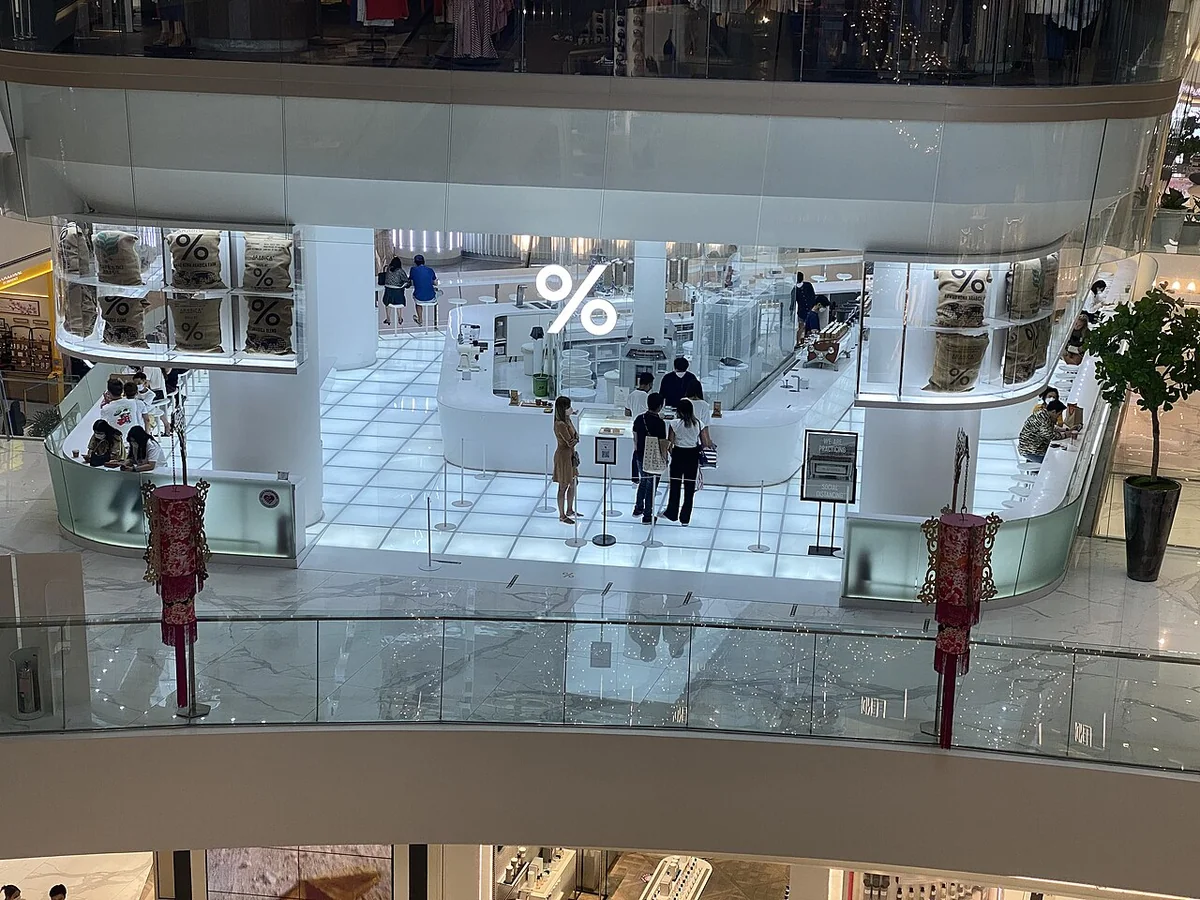
An impressive view at the ICONSIAM Bangkok complex.
From an urban history perspective, Khlong San and its surrounding areas were once bustling trading ports dating back to the Ayutthaya period and the early founding era of the Chakri dynasty. These shores witnessed vibrant commerce from merchant vessels arriving from China, India, Persia, and European nations, laying the foundation for Bangkok’s multicultural identity. Prior to the development of ICONSIAM, the site was occupied by riverside factories, logistics warehouses, and long-standing working-class communities deeply tied to riverine life. The decision in the early 21st century to redevelop this area into a commercial and cultural center of national stature marked a pivotal turning point in Bangkok’s urban regeneration strategy. Municipal authorities and private investors set forth a vision to transform this riverfront stretch into a new growth pole—relieving congestion in Siam Square and Sukhumvit while inspiring national pride by redefining riverside public space in a modern spirit that still honors traditional roots.
The chronological milestones of ICONSIAM’s inception and development span more than a decade of strategic planning. Officially announced in the mid-2010s, the project emerged as a massive joint venture among three of Thailand’s leading conglomerates: Charoen Pokphand Group, Magnolia Quality Development Corporation, and Siam Piwat. Construction took place amid demanding riverside engineering challenges, requiring thousands of deep bored piles driven into the earth to guarantee structural stability for its high-rise towers. The grand opening took place in late 2018, marking the largest private-sector commercial capital investment in Thai history up to that time. The arrival of the complex immediately generated powerful momentum, reshaping the capital’s tourism and economic landscape, attracting millions of international visitors, and establishing itself as one of Southeast Asia’s premier new iconic destinations in the second decade of the 21st century.
The greatest crisis and challenge ICONSIAM faced in its brief operational history was the onset of the global COVID-19 pandemic in early 2020. The sharp downturn in international tourism and strict social distancing measures confronted the retail complex with existential tests regarding revenue and operational continuity. Rather than scaling back operations, however, management leveraged this period to execute sweeping digital transformations, integrate e-commerce platforms, and reconfigure interior spaces to meet new public health standards. Its resilience and rapid post-pandemic recovery demonstrated the enduring vitality and solid standing of the development within Bangkok’s urban economy, turning it into a model for the agile adaptation of multifunctional public spaces during times of global crisis.
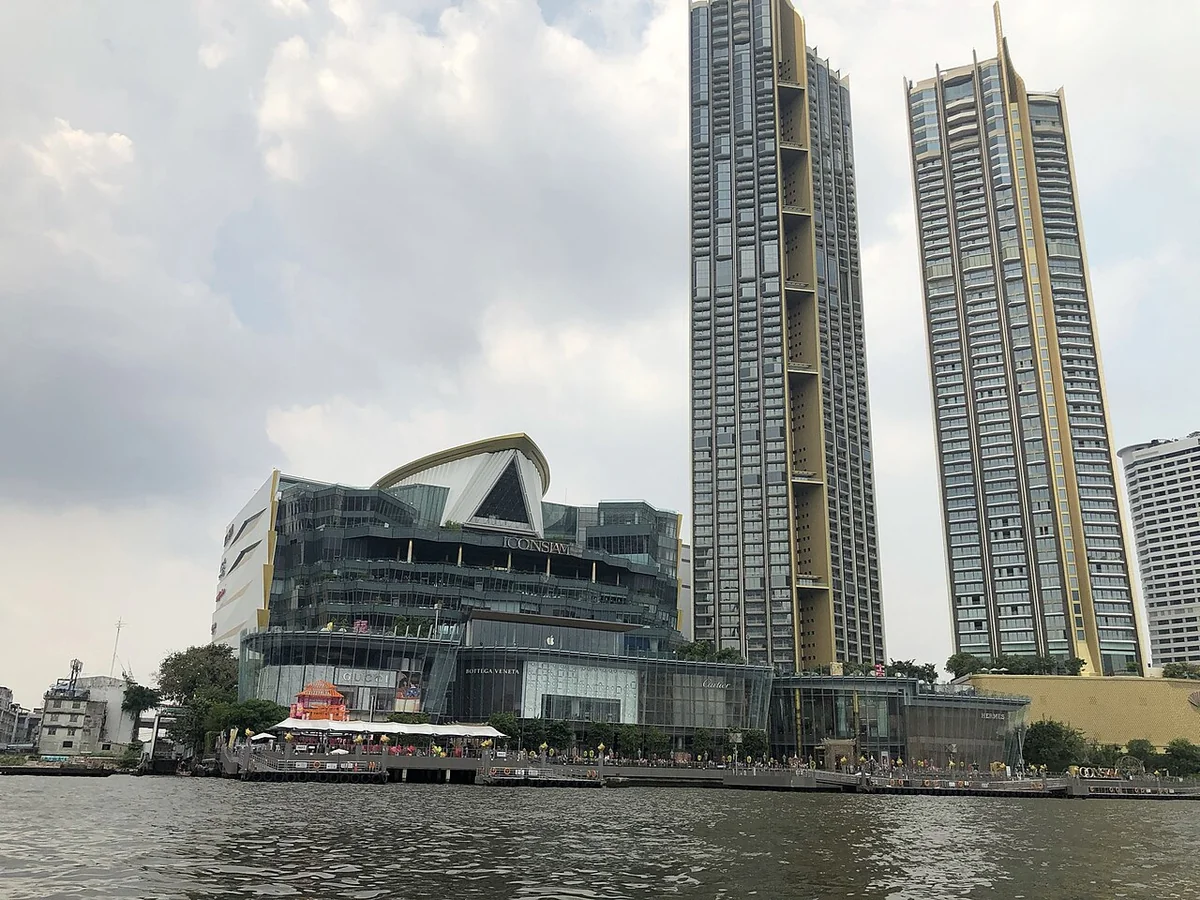
In terms of national symbolic stature, ICONSIAM transcends the boundaries of an ordinary commercial structure to stand as a bold statement of Thai culture and national pride. The architectural design of its two soaring skyscrapers—Magnolias Waterfront Residences and The Residences at Mandarin Oriental—draws inspiration from the graceful drape of traditional Thai silk wrapped around the body, expressing fluid elegance alongside unwavering strength against the open expanse of the Chao Phraya River. The building’s monumental curved glass facade, stretching over three hundred meters, creates a striking visual presence that reflects the shifting light of the Bangkok sky throughout the day. The fusion of cutting-edge Western engineering with traditional handcrafted sculptural elements by local artisans has produced a celebrated work of public architectural art honored with numerous prestigious international awards.
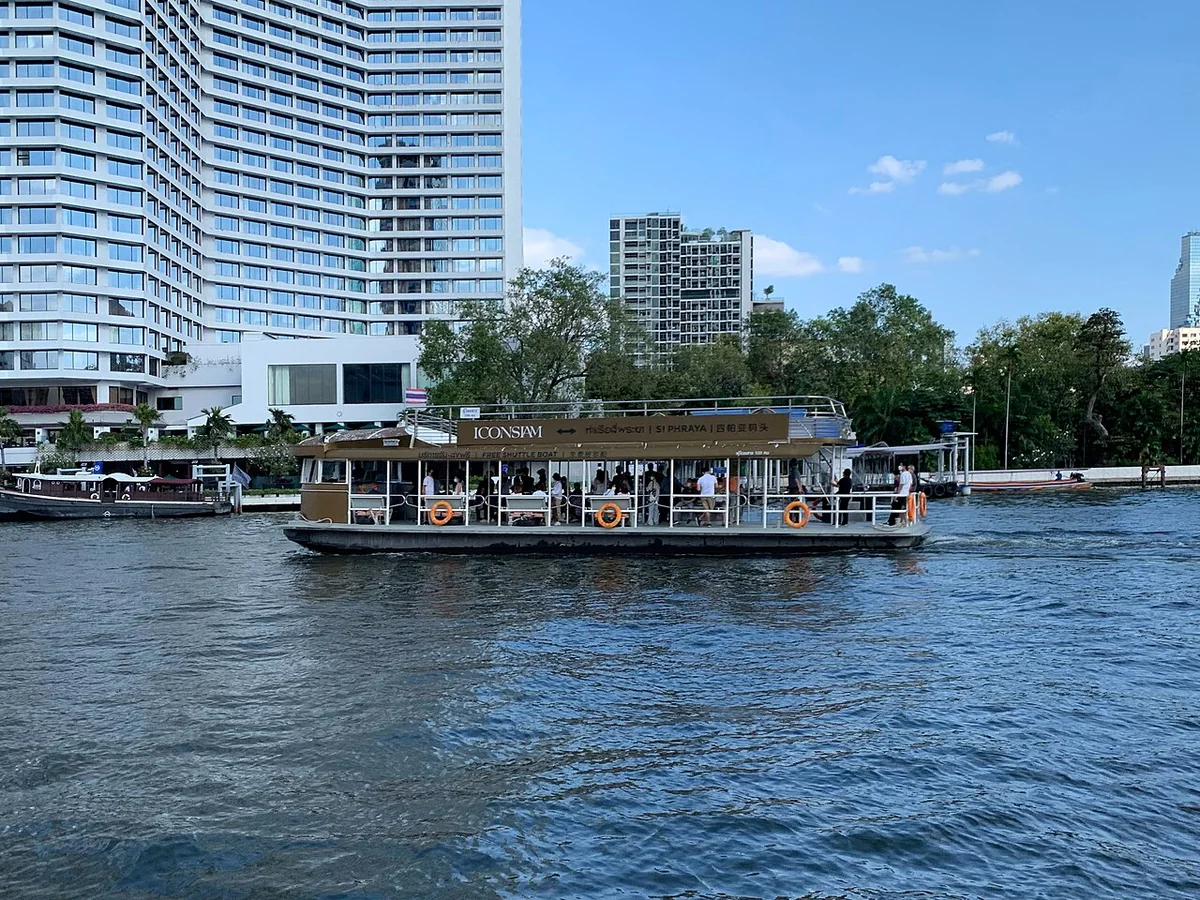
Architectural highlights and experiential spaces at the ICONSIAM Bangkok complex.
The cultural influence of the complex is vividly expressed through the integration of art and heritage spaces into a modern economic framework. The ground floor is designed as an indoor floating market named SookSiam, bringing together local products, traditional cuisine, and signature performing arts from all seventy-seven provinces of the Kingdom of Thailand. This represents a large-scale effort to preserve and celebrate indigenous culture amid globalization, creating an immersive educational space for both domestic residents and international travelers. Bringing traditional artisans from rural provinces into the heart of the capital to demonstrate their craftsmanship has helped bridge the divide between urban popular culture and rural heritage, affirming the complex’s role as a living museum of Thai culture.
Furthermore, the complex is home to True Icon Hall and the River Museum Bangkok, world-class cultural institutions dedicated to hosting global touring art exhibitions and major economic and political summits. The introduction of these venues has elevated Bangkok into a premier destination for Asia’s MICE (Meetings, Incentives, Conferences, and Exhibitions) industry. Outdoor sculptures by world-renowned contemporary artists line the riverside promenade, fostering a cross-border artistic dialogue between Eastern traditions and Western visual sensibilities. This powerfully reinforces the notion that commercial spaces can successfully carry out missions of cultural diplomacy and heritage conservation.
Viewed through the lens of future urban planning, ICONSIAM serves as the nucleus of the Thai government’s Chao Phraya riverside economic corridor development strategy. Seamless multimodal connectivity—linking express riverboat piers, the BTS Gold Line automated people mover, and rapid bus transit—has comprehensively solved accessibility challenges for a complex designed to accommodate tens of thousands of visitors daily. The spillover effect of this landmark has catalyzed infrastructure development along the Thonburi (west) bank of the Chao Phraya, an area once considered less developed than the central eastern bank. Land values, artisanal enterprises, and hospitality services in Khlong San have experienced dramatic growth, fundamentally transforming the macroeconomic profile of a vast urban district.
The synthesis of strategic geography, historic development, resilience in the face of crisis, and national cultural symbolism establishes ICONSIAM Bangkok as a benchmark for successful 21st-century strategic urban planning. The complex has moved well beyond the definition of a conventional retail space to become a vital socio-cultural institution, where the golden heritage of a historic river converges with the technological and architectural future of the Kingdom of Thailand on the world stage.
The ICONSIAM Bangkok complex originated from a strategic vision to reshape the Chao Phraya riverfront landscape, shifting the commercial and cultural center of Thailand’s capital toward the historic west bank in Khlong San. Developed through a joint venture among Thailand’s foremost diversified conglomerates—Charoen Pokphand Group, Magnolia Quality Development Corporation, and Siam Piwat—with an initial investment exceeding fifty-four billion baht, it stands as one of the largest private-sector developments in the history of Thai urbanization. Master planning began with the acquisition of riverfront land boasting hundreds of meters of water frontage, a prime location strategically positioned to link traditional water transit routes with modern public transportation such as the Skytrain Gold Line. Land clearance and foundation works commenced a decade ago, demanding highly intricate soft-soil stabilization techniques due to the thick alluvial geology of the lower Chao Phraya basin, which is directly exposed to tidal fluctuations and strong seasonal flood currents.
In terms of physical scale, ICONSIAM encompasses a gross floor area of 750,000 square meters spread across a site exceeding fifty hectares, integrating luxury retail complexes, arts and cultural venues, and towering residential skyscrapers. Defining the skyline of the complex are two iconic residential towers: Magnolias Waterfront Residences, rising 317 meters across seventy floors, and The Residences at Mandarin Oriental, standing 279 meters tall with fifty-two floors. An eight-story retail podium accompanied by deep subterranean technical basements is engineered on a multifunctional multi-level model to optimize public and commercial space. Designed to welcome both mass-market visitors and ultra-high-net-worth clientele, ICONSIAM boasts a daily capacity of hundreds of thousands of guests, supported by multimodal transport infrastructure including dedicated riverside express piers, pedestrian skybridges connecting directly to the elevated rail station, and underground parking accommodating thousands of cars and motorcycles.
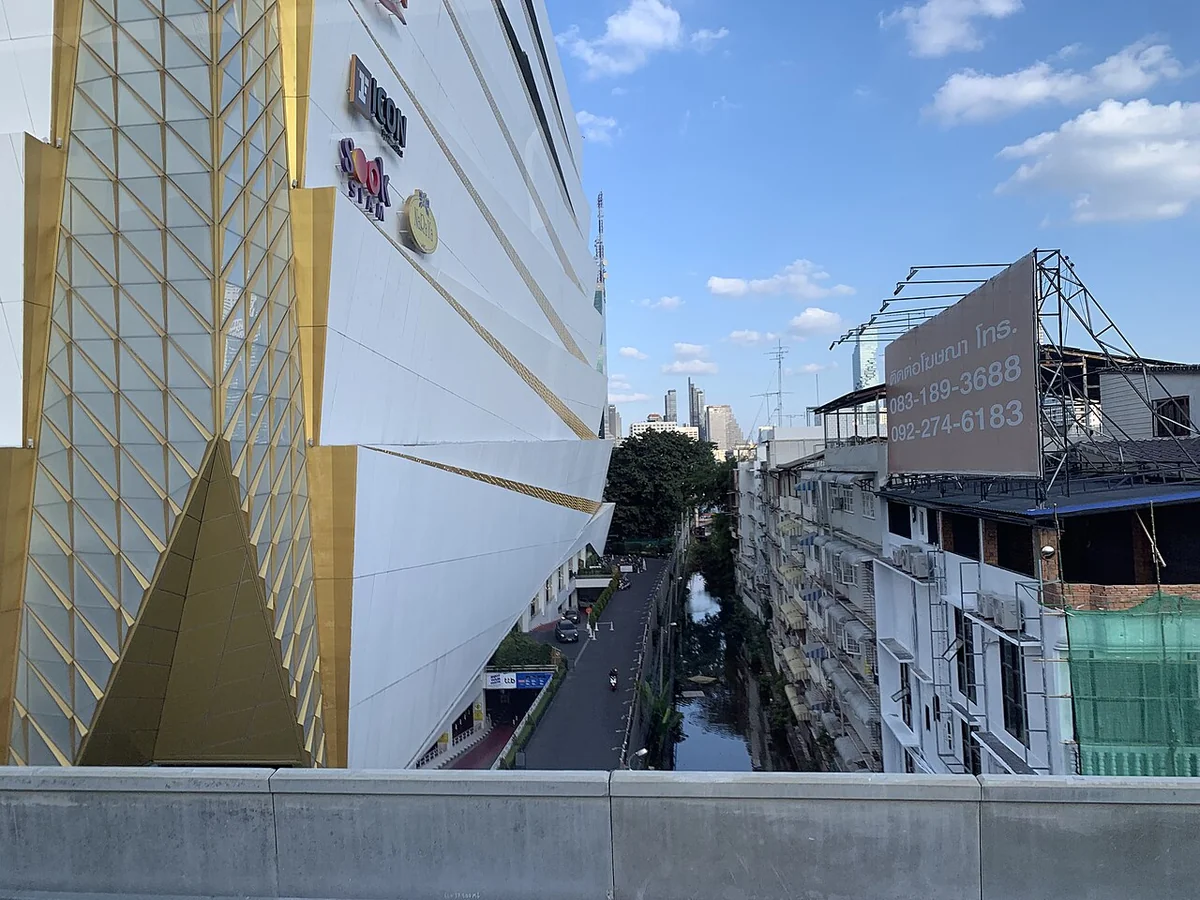
A captivating corner drawing crowds of visitors at the ICONSIAM Bangkok complex.
ICONSIAM’s architectural philosophy represents a harmonious synthesis of traditional Thai identity and world-leading supertall construction engineering, executed by premier international architectural firms in collaboration with local artisans. The massing of the retail podium is modeled after the graceful contours of the traditional Thai Sabai shawl, with flowing curves embracing the waterfront facade overlooking the Chao Phraya River. To bring this intricate architectural envelope to life, engineers deployed comprehensive Building Information Modeling (BIM) alongside an ultra-lightweight, high-strength spatial steel frame system. The exterior facade is clad in the largest seamless curved tempered glass panels ever installed in Southeast Asia, spanning multiple stories without joints to reflect natural daylight by day and transform the building into a luminous ribbon of light by night. Executing this glazing feat required absolute precision in factory fabrication and specialized anti-sway tower crane installation techniques engineered to withstand strong winds sweeping off the river.
Behind that modern glass facade lies a scientifically planned system of functional zones that captures the full cultural, artistic, and commercial tapestry of the entire Kingdom of Thailand. The ground floor of the complex is dedicated to SookSiam, an indoor floating market spanning tens of thousands of square meters that brings together the finest culinary traditions, handicrafts, and folk culture from all 77 provinces of the country. Here, mechanical ventilation and air-conditioning systems are meticulously engineered to replicate an outdoor atmosphere while maintaining maximum comfort for continuous crowds, complete with artificial canals, traditional wooden stilt houses, and temple architecture restored to original scale. The upper retail levels are clearly segmented by product tier, ranging from the IconLUXE zone—home to the world’s leading luxury brands with bespoke storefronts designed by global architects—to spaces showcasing consumer goods, technology, and contemporary performing arts schedules.
The construction materials used at ICONSIAM underwent rigorous selection, adhering to international green building standards to achieve LEED Gold certification for energy efficiency. Natural marble imported from Italy and Spain paves the main concourses, paired with legally harvested teakwood from mature plantations in Northern Thailand to clad walls and ceilings in the heritage-inspired spaces. The interior lighting system utilizes smart LED technology throughout, automatically adjusting brightness based on the amount of natural daylight filtering through the glass facade to minimize electricity consumption. A high-strength prestressed reinforced concrete structural frame is engineered to withstand regional seismic activity as well as heavy dynamic loads from large-scale public events frequently hosted across the indoor and outdoor plazas.
The complex’s supporting technical infrastructure also meets the standards of a self-contained micro-metropolis, featuring dedicated independent electrical substations and a closed-loop wastewater storage and treatment system that recycles water for landscape irrigation and air-conditioning cooling. Spanning over 10,000 square meters along the riverfront, the outdoor plaza known as River Park houses Southeast Asia’s longest multimedia water feature, utilizing state-of-the-art hydraulic controls and laser lighting technology to stage water-and-light shows that draw tens of thousands of spectators every evening. The integration of open river-facing spatial planning, long-span column-free structural engineering in the central event halls, and contemporary vernacular architectural language has made ICONSIAM a landmark testament to the 21st-century execution capabilities of Thailand’s construction and architecture industries.
Stretching across an expansive footprint along the banks of the Chao Phraya River in Bangkok, the ICONSIAM retail and cultural complex stands as a monumental architectural work reflecting contemporary thinking on redefining urban space through traditional heritage. The project was conceived with the vision of creating a new national icon where the royal history and spiritual culture of the Kingdom of Siam converge, are preserved, and are reimagined through a modern architectural lens. Rather than imposing the sterile industrial aesthetic commonly seen in 21st-century shopping centers, leading Thai architects and master artisans conducted deep research into classical fine arts—from Northern teak woodcarving motifs to the porcelain mosaic work of royal temples—infusing every detail of the building with profound layers of cultural meaning.
Stepping inside the complex, the spatial layout is clearly structured yet retains a fluidity modeled after the rhythm of the Chao Phraya River. The SookSiam zone on the ground floor serves as a living cultural museum, where Thailand’s four main regions—North, Central, East, and South—are recreated in miniature through authentic prototypes of stilt houses, shrines, and traditional floating markets. Here, intricate woodcarving, age-old silk weaving techniques, and ceramics are authentically demonstrated in stalls operated directly by artisans from across the provinces. Every pillar, vaulted ceiling, and lighting fixture has been carefully calibrated to mimic natural sunlight filtering through tree canopies or beneath the eaves of ancient temples, evoking an atmosphere that feels both nostalgic and distinctly contemporary.
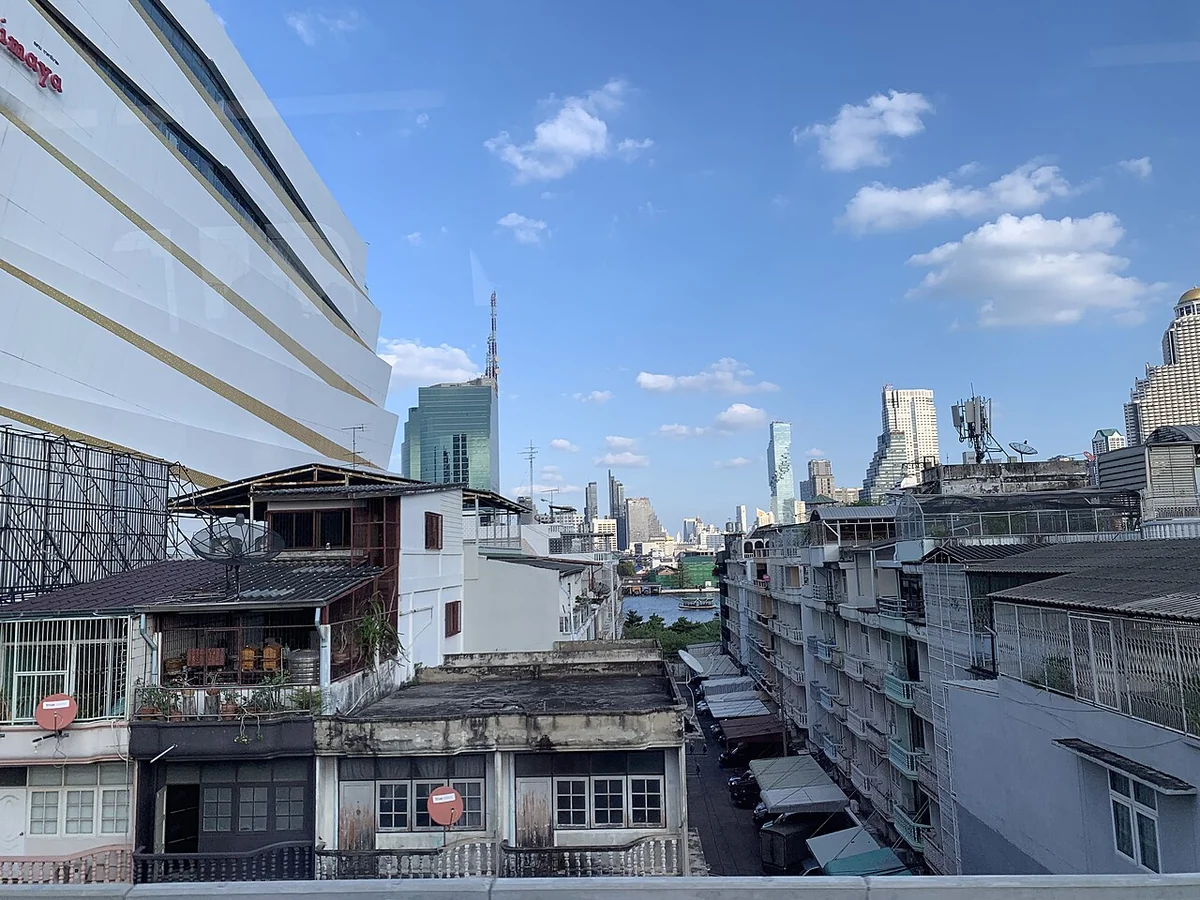
A close-up look at the unique design details inside ICONSIAM Bangkok.
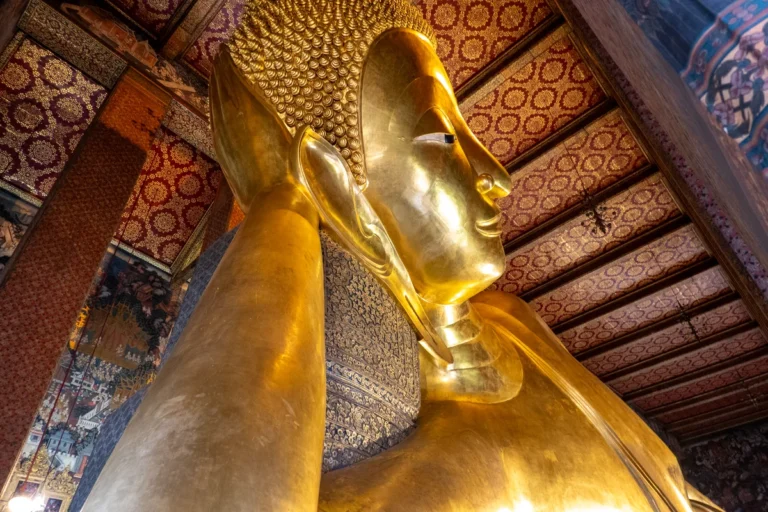
The most significant spiritual centerpiece of the entire complex is the Buddhist shrine reverently positioned in the central zone, enshrining rare Buddha images of immense historical and artistic value. Crafted in the artistic styles of the Sukhothai and Ayutthaya periods, these statues embody Theravada Buddhist philosophy through their compassionate gaze, serene smile, and graceful contours symbolizing complete enlightenment. Surrounding the shrine, large-scale murals depicting the Jataka tales of the Buddha’s past lives were hand-painted by master artists trained in the royal fine arts tradition, using natural mineral pigments such as gilded lacquer, jade green, and vermilion. Beyond serving as a place of worship for locals, this space functions as a sanctuary for studying religious art, where visitors can contemplate centuries of interplay between indigenous beliefs and Indian Buddhist philosophy.
Ascending to the upper levels, the architectural style transitions into a minimalist geometric language while preserving symbolic motifs through high-strength tempered glass and cast aluminum, evoking the graceful folds of a traditional Sabai shawl drifting in the breeze. At the time of completion, structural engineers employed the largest curved glass installation technique in Southeast Asia, enveloping the entire building in a transparent shell that floods the interior with daylight while maintaining optimal thermal insulation. The juxtaposition of modern materials with gilded decorative accents modeled on traditional Kranok patterns across the main structural columns creates a striking visual dialogue between past and future—uniting cutting-edge 21st-century engineering with ancient royal artistic heritage.
Located on the top floor of the complex, the art gallery and national treasures exhibition space represents the pinnacle of heritage conservation within a commercial setting. It regularly hosts curated exhibitions showcasing royal artifacts, traditional attire from the Chakri dynasties, and bronze and stone sculptures dating back to the Dvaravati and Lopburi periods. Each artifact is accompanied by detailed scholarly annotations on its dating and metallurgical or carving techniques, giving viewers a deep understanding of its historical context. The gallery layout strictly adheres to international museum standards for humidity, lighting, and temperature control, ensuring these priceless treasures remain safely preserved while staying widely accessible to art lovers from around the world.
Feng shui philosophy and Buddhist cosmology were also subtly woven into the master floor plan of the development. The Chao Phraya River is regarded as a vital water-dragon artery bringing vitality and prosperity to Bangkok, and the complex’s architecture is oriented to channel this energy through expansive open courtyards facing directly onto the water. The outdoor fountain system, equipped with cutting-edge light and sound choreography, recreates traditional Thai dances through graceful jets of water, symbolizing the eternal flow of time and harmony between humanity and nature. This arrangement reflects traditional philosophical concepts of balance among the five elements—metal, water, wood, fire, and earth—expressed through building materials, lush greenery, and architectural lighting.
Ultimately, ICONSIAM Bangkok transcends the boundaries of conventional commercial infrastructure to become a three-dimensional encyclopedia of Thai culture crafted in form and material. Through serious investment in classical art research, meticulous hand-carved detailing, and a sustainable urban planning vision, the complex has succeeded in fostering an intergenerational cultural dialogue. Core values of Siamese architectural artistry from centuries past continue to thrive, evolve, and shine in a fresh guise, cementing Bangkok’s status as a premier cultural and artistic capital in Southeast Asia in the era of global integration.
The passage of time at ICONSIAM along the Chao Phraya River unfolds like a multifaceted urban tableau, where the traditional daily rhythms of local residents blend seamlessly into the modern pulse of Bangkok. As the first light of dawn filters through a thin mist shimmering over the water, the building’s colossal glass structure begins to catch the morning glow, signaling the start of a bustling daily cycle. The early morning hours offer a relatively tranquil atmosphere as long-tail boats laden with fresh produce, flowers, and daily necessities glide up and down the river, docking at the adjacent piers. Artisans and vendors begin setting up in the indoor floating market, a cultural space recreating the architecture of Thailand’s four regions. The rhythmic pounding of mortars grinding spices, the gentle trickle of water from landscaped streams, and the fragrant aroma of fresh herbs fill the air, creating a deeply authentic start to the day that draws crowds of locals arriving for a traditional breakfast of steaming hot soups and heritage-style Thai milk tea.
The vibrant rhythm and visitor atmosphere at ICONSIAM Bangkok.
As the sun climbs higher toward midday, activity within the complex reaches peak intensity with an influx of visitors arriving from everywhere, including international travelers and Bangkok’s urban intelligentsia. At this hour, the tempo takes on the energy of digital transformation and global commerce as high-end international luxury houses and contemporary art galleries open their doors. Down on the ground floor, the riverside heritage zone sustains its vibrant energy through live handicraft demonstrations. Silk weavers, woodcarvers, and potters patiently work through each step in full view of the public, turning the floor into a living museum of tangible cultural heritage. Visitors can closely observe every stitch embroidered onto traditional textiles or the precision with which artisans carve delicate lotus blossoms out of soap, gaining a deeper appreciation for Thai craftsmanship and the spirit of cultural preservation at the heart of Southeast Asia’s most dynamic metropolis.
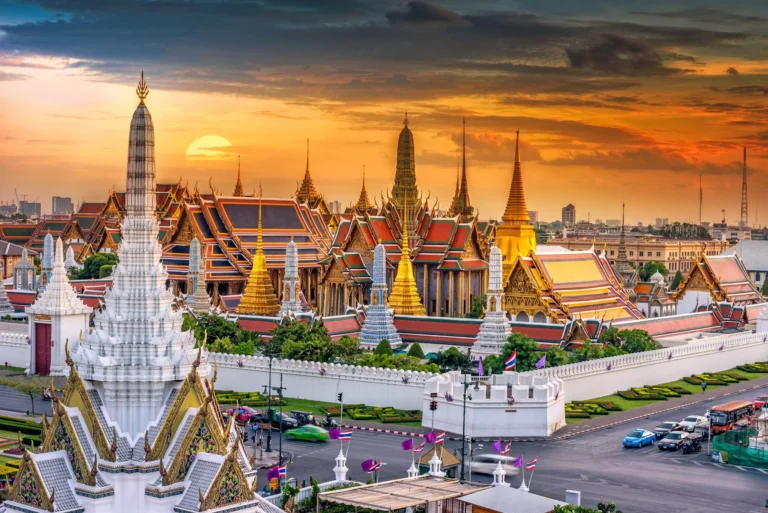
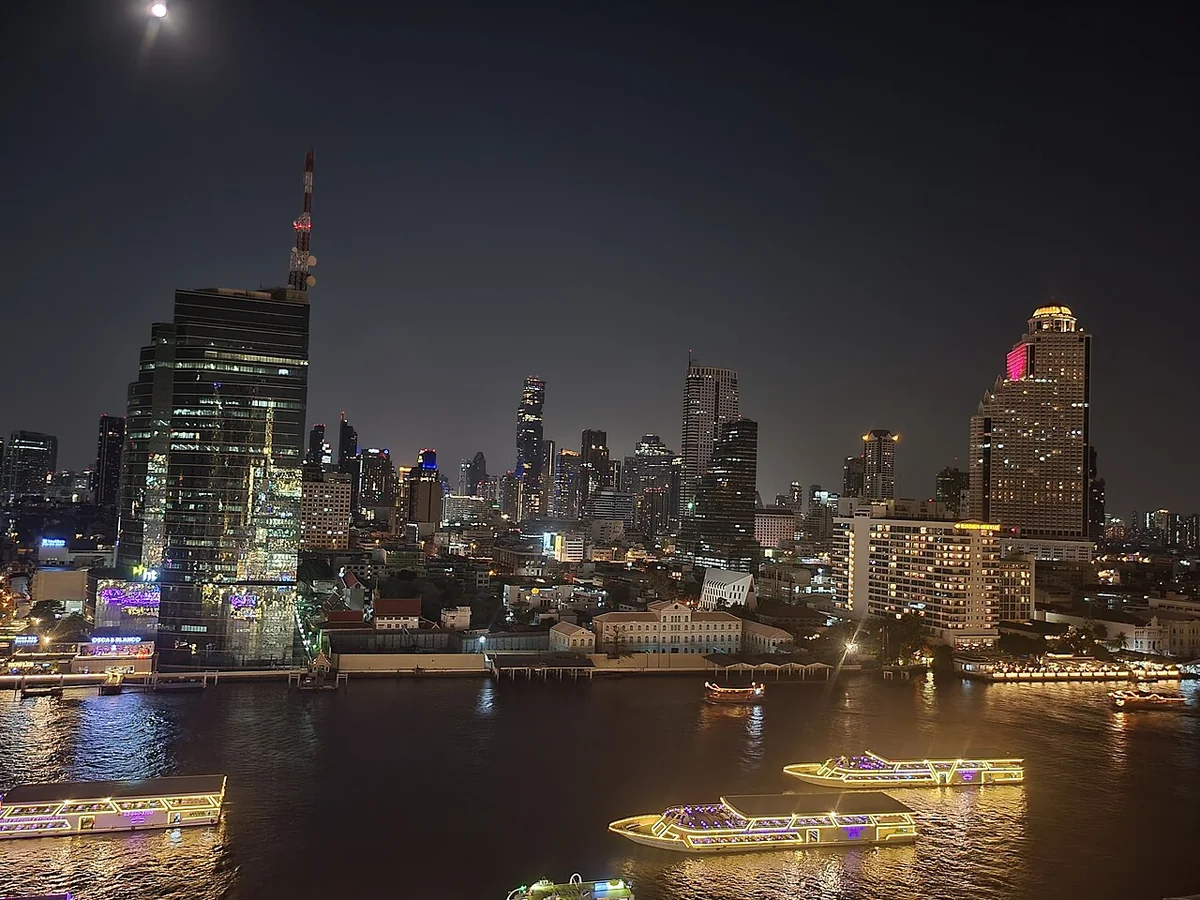
Afternoon gives way to twilight as Bangkok’s sky turns a brilliant amber-gold, casting reflections across the Chao Phraya River that create a breathtaking visual panorama. This is the ideal time of day to experience the complex’s premier vantage points, particularly the outdoor terraces and elevated restaurants. From these lookouts, sweeping panoramic views open up across the winding expanse of the historic river, where heavily laden cargo barges glide past futuristic skyscrapers. The visual contrast between ancient temples crowned with glazed ceramic roofs on the opposite bank and sleek modern glass-and-steel towers imparts a vivid sense of historical depth. Travelers and locals alike often choose this hour to linger along the railings, feeling the cool river breeze blowing in from the Gulf of Thailand and watching the city’s pace slow just slightly before nightfall transforms Bangkok into a dazzling nocturnal spectacle.
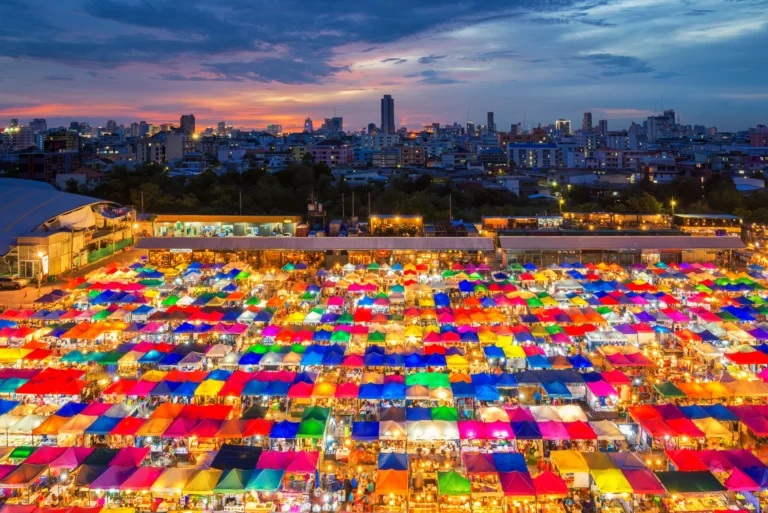
As night falls, the complex undergoes a complete transformation under a multi-colored artistic lighting system, emerging as one of the most vibrant nightlife hubs in the city. The centerpiece that captures every gaze is the grand multimedia water feature combining synchronized lights and sound along the riverfront. Towering jets of water erupt to the rhythm of traditional music blended with contemporary beats, narrating the history and evolution of the Kingdom of Thailand across the ages. Thousands of spectators gather along the riverside steps, watching intently as the streams of water shift colors in time with the melody, creating an exhilarating and unifying community atmosphere. This spectacle is more than just a display of visual technology; it stands as a symbol of the thriving nighttime economy in the Thai capital.
Inside the evening dining zones, the lively energy continues through well-organized street food stalls housed within air-conditioned comfort. Visitors have the opportunity to savor signature dishes from every region of the country, ranging from the fiery green papaya salad of the Northeast to the rich, coconut-infused curries characteristic of the South. Performing arts such as classical Lakhon dance and Khon masked dance-drama take turns on small stages throughout the cultural zone, offering deep aesthetic experiences for those eager to explore royal court traditions. The sounds of traditional instruments like the roneat xylophone and bronze gongs resonate amidst contemporary architecture, creating a unique cultural fusion that reflects the openness and remarkable adaptability of local heritage in an era of global integration.
The vibrant exploratory experience here is further elevated by major festivals held year-round in accordance with both the Thai lunar and solar calendars. During occasions such as the Songkran water festival or the Loy Krathong lantern festival, the complex becomes a focal point for large-scale traditional rituals. Locals dressed in colorful traditional attire gather to float banana-leaf and fresh-flower krathongs down the Chao Phraya River, praying for peace and prosperity. The solemnity of religious ceremonies combined with the jubilation of festive activities fosters a deeply communal cultural ambiance. Participating in these events allows visitors not merely to observe from the sidelines, but to truly immerse themselves in the rich spiritual life of the local people, gaining an understanding of profound humanistic values passed down through generations in this land.
The most coveted viewpoints here are not confined to outdoor public areas; they are also ingeniously integrated into the architectural designs of rooftop cafes, fine-dining restaurants, and art exhibition spaces on the upper levels. From this ideal elevation, the entire urban landscape along the Chao Phraya River basin unfolds before the eyes, offering a panoramic perspective on Bangkok’s urbanization in the new century. The glow from major bridges spanning the river, the steady stream of traffic along vital arterial roads, and the ceaseless movement of river vessels merge together to form a powerful urban pulse. Observing how the scenery transforms through each hour of the day offers travelers profound insight into the balance between heritage preservation and modern development, cementing its status as a premier international cultural and tourist destination.
Vivid real-world experiences awaiting visitors at the ICONSIAM Bangkok Complex.
Stretching along the left bank of the historic Chao Phraya River in Bangkok, the ICONSIAM commercial and cultural complex does more than redefine modern retail spaces—it masterfully preserves and recreates the culinary flavor map of the entire Kingdom of Thailand. It establishes a unique crossroads where refined royal court culinary arts and centuries-old street food culture coexist under one roof. The allure of the gastronomic ecosystem here stems from the philosophy of balancing five fundamental tastes—spicy, sour, sweet, salty, and bitter—paired with fresh herbs native to Southeast Asia’s terroir. This convergence creates a rich sensory landscape that vividly mirrors Thailand’s distinct cultural sub-regions, from the mountainous North and fertile alluvial Central plains to the coastal South and the arid Northeastern plateau.
The core highlight of ICONSIAM’s culinary architecture is the indoor floating market recreation known as SookSiam, which brings together gastronomic treasures from all 77 provinces of the country. Rather than braving Bangkok’s scorching heat for street food, diners step into a living museum replicating traditional riverside life, complete with teakwood stalls, yin-yang tiled roofs, and wooden boats laden with fresh ingredients moored along man-made canals. Within this space, culinary craftsmanship has been preserved across generations of families, from bone broth recipes simmered for twelve hours to the hand-roasting and grinding of dry spices designed to awaken the maximum aroma of coriander seeds, cumin, and black pepper.
Any exploration of the flavor map here would be incomplete without classic variations of Thai stir-fried noodles, Pad Thai, where individual rice noodles are tossed over high heat with lard, dried shrimp, fried tofu, bean sprouts, and fresh chives, then coated in a sweet-and-sour tamarind sauce simmered with palm sugar and premium first-press fish sauce. The stir-frying technique demands that chefs maintain extreme heat in a cast-iron wok to impart that signature smoky aroma known as “wok hei,” paired with thin egg ribbons and crushed roasted peanuts for textural complexity. Alongside it, hot-and-sour Tom Yum soups assert their culinary supremacy through a delicate infusion of bruised lemongrass stalks, kaffir lime leaves, sliced young galangal, crushed bird’s eye chilies, and fresh lime juice, all melded into a rich shrimp or fish stock.
Moving on to curries, ICONSIAM’s culinary scene showcases the authority of traditional spice-pounding using heavy granite mortars and pestles. Central Thai green curry stands out with its vibrant hue from fresh green chilies and cilantro, combined with thick coconut milk pressed from mature coconuts—reminiscent of Vietnam’s famed Ben Tre variety—creating a velvety richness that coats tender pieces of chicken and crisp young Thai eggplants. Meanwhile, Massaman curry, frequently honored in global culinary rankings, carries strong Islamic cultural influences with dry spices like cinnamon, star anise, cardamom, and nutmeg paired with tender stewed potatoes and roasted peanuts, delivering warm, deep layers of flavor that are milder in heat than standard Thai curries.
The culture of sweets and desserts here also reaches the pinnacle of royal court artistry. Confections made from glutinous rice flour, coconut milk, and palm sugar—such as multi-layered steamed layer cakes, charcoal-grilled cassava cakes, or the water chestnut and lotus seed coconut dessert known as Thap Tim Krob—are meticulously crafted by veteran artisans. The colors of these desserts are extracted entirely from natural sources, such as purple butterfly pea flowers, vibrant fresh turmeric, and fragrant green pandan leaves. Traditional fruit carving is performed live before diners, transforming watermelons, cantaloupes, and ripe mangoes into intricate sculptures steeped in ancient royal aesthetics.
The customs surrounding tea and herbal beverages in this zone reflect a wellness philosophy rooted in traditional Eastern medicine. Thai iced tea, an icon of contemporary beverage culture, is elevated here through the selection of organic black tea leaves from the northern highlands, brewed with star anise and cardamom before being blended with sweetened condensed milk and whole fresh milk to create a creamy richness that balances its signature astringency. Additionally, herbal infusions such as chrysanthemum tea, cogon grass root drink, pure pandan leaf water, and ginseng-pandan brew are served in handcrafted earthenware pitchers, designed to cool the body in accordance with local culinary principles of yin, yang, and the five elements.
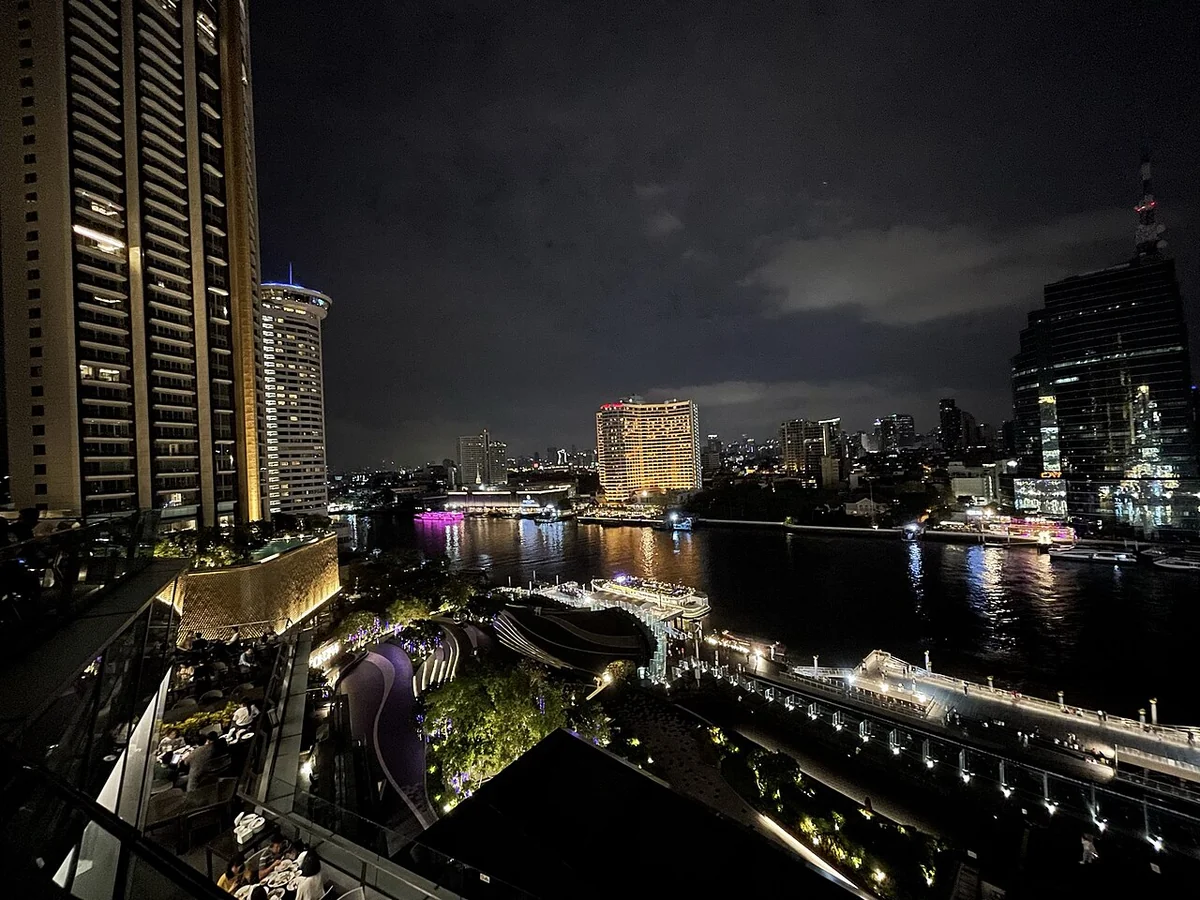
An expansive panoramic view showcasing the modern facade of the ICONSIAM Bangkok Complex.
The lineup of fine-dining restaurants along the riverfront within the complex offers an entirely different lens on Thai cuisine through a neo-classical approach. Renowned chefs apply modern Western culinary techniques to indigenous ingredients, crafting groundbreaking dishes that still preserve their traditional soul. For instance, pan-seared salmon served with reduced red curry sauce or seared foie gras drizzled with sweet-and-sour tamarind glaze stands as a testament to the versatility and adaptability of Thai gastronomy in the era of globalization.
Traditional dining etiquette here also strictly adheres to long-standing social norms. A family or royal-style meal is typically served all at once, with a platter of fragrant steamed jasmine rice placed at the center, surrounded by savory dishes, soups, spicy-sour salads, and fresh vegetables with an array of dipping sauces for everyone to share. Thai diners hold a spoon in their right hand to bring food to their mouth and use a fork in their left hand to push food onto the spoon—never using the fork to spear food directly into the mouth. Chopsticks are reserved exclusively for noodle soups or long stir-fried noodle dishes, reflecting a clear distinction in dining utensils based on the texture of each dish.
The architectural ambiance surrounding the dining areas is thoughtfully designed to maximize the sensory experience for guests. Warm golden light from handcrafted lanterns reflects off the artificial waterways, blending with the lively clatter of pestles pounding spices, the sizzle of hot oil in cast-iron woks, and the distant strains of traditional folk instruments to create a completely immersive atmosphere. Visitors come not merely to taste the food, but to understand the cultural, historical, and anthropological stories behind every ingredient carefully sourced from across the nation.
Taken as a whole, the culinary tapestry at the ICONSIAM Bangkok complex serves as a living chronicle of the Kingdom of Thailand told through flavor. It safeguards age-old culinary secrets handed down through generations while boldly welcoming waves of contemporary creativity. The seamless fusion of refined cooking techniques, formal dining customs, and monumental architecture has transformed this destination into a premier regional hub for culinary exploration and experience, where traditional cultural values are fully celebrated amidst the relentless pulse of the modern world.
Situated on the left bank of the Chao Phraya River in Bangkok, visiting the ICONSIAM commercial complex requires thoughtful preparation in terms of logistics, timing, and cultural awareness to optimize the experience. Accessing this architectural landmark is closely tied to the diverse transit network of a major Southeast Asian metropolis, where the intersection of urban rail systems and river transport creates distinct travel dynamics. Understanding Thailand’s tropical monsoon climate plays a foundational role in determining the ideal time to visit, helping travelers avoid weather-related inconveniences throughout their journey to explore this commercial and cultural icon.
Bangkok’s climate is clearly divided into three main seasons, each bringing distinct temperature and humidity patterns that directly influence both outdoor sightseeing and indoor experiences within the complex. The dry season stretches from November to February, recording mild temperatures ranging from 24°C to 32°C alongside lower humidity than at any other time of year, creating ideal conditions for walking and enjoying riverfront views. Conversely, the hot season from March to May pushes temperatures past 40°C, accompanied by intense solar radiation that can make outdoor activities exhausting, prompting visitors to prioritize staying inside the building’s air-conditioned spaces or venturing out in the late afternoon. The rainy season begins in June and concludes in October, characterized by sudden, heavy afternoon and evening downpours; while rarely lasting all day, these rains can cause localized traffic congestion along major thoroughfares leading toward the west bank of the Chao Phraya River.
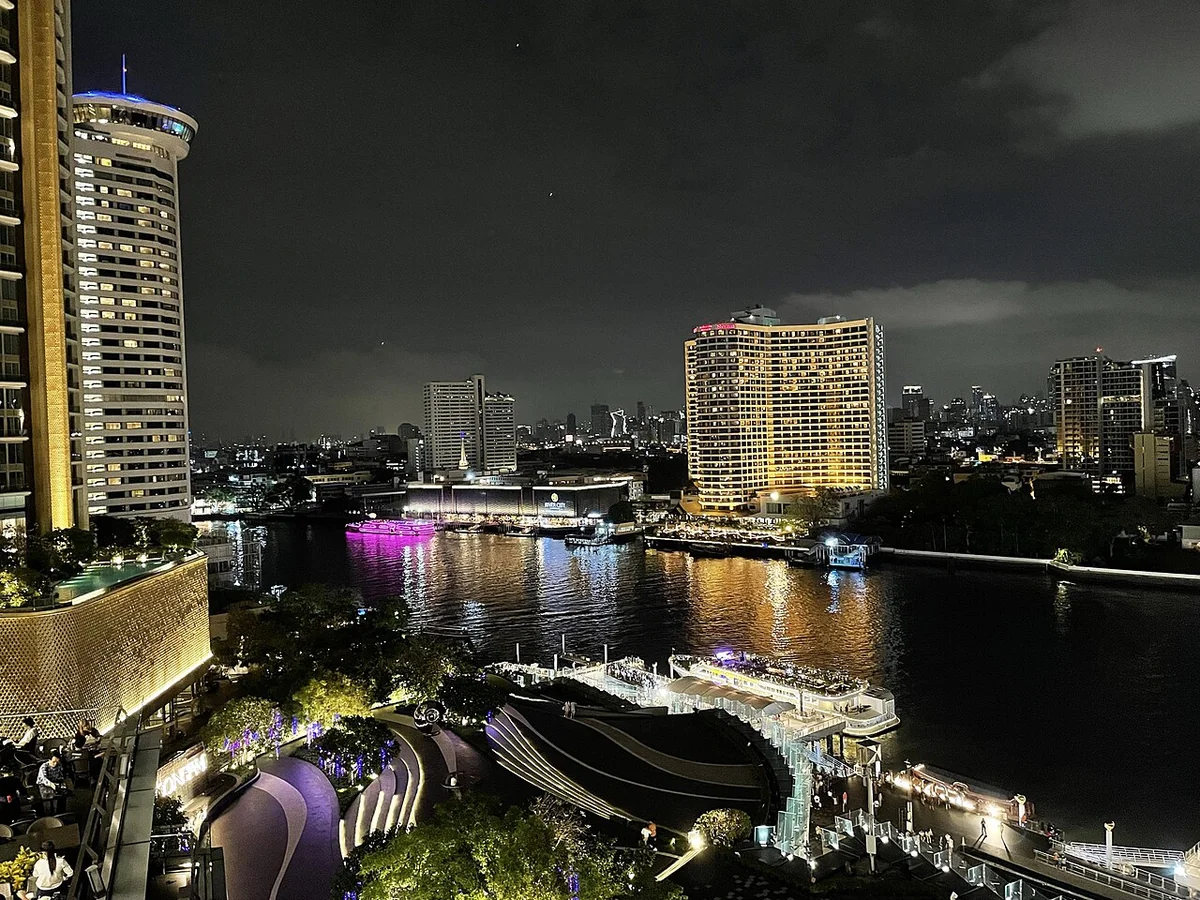
Actual on-site space and visitor reception infrastructure at the Iconsiam Bangkok Complex.
The public transit system serving Iconsiam is regarded as one of the most integrated and efficient networks in central Bangkok, with the Skytrain elevated railway paired with river transport forming its backbone. Travelers departing from commercial hubs like Sukhumvit or Siam can ride the Sukhumvit Line to the Krung Thon Buri interchange station, then transfer to the dedicated Gold Line to arrive directly at Charoen Nakhon station right outside the complex. This option completely eliminates the risk of rush-hour road congestion while offering a panoramic bird’s-eye view of the city’s modern urban planning. In addition, river transport from the central Sathorn Pier offers complimentary or nominally priced shuttle ferries that cross the river to Iconsiam’s private pier in just five to seven minutes, turning the journey there into a scenic riverfront experience characteristic of the Land of Smiles.
Choosing public buses or traditional taxis requires careful timing due to the distinct traffic patterns of urban Bangkok. Bus routes three, six, eighty-nine, and one hundred and eleven all have stops a short distance from the complex, suiting travelers who want to experience everyday local life via budget transit. However, if taking a taxi or ride-hailing car, visitors should avoid rush hours from seven to nine in the morning and from four to seven in the evening, when bridges crossing the Chao Phraya River frequently experience severe bottlenecks. When taking a taxi during peak hours is unavoidable, asking the driver to use toll Expressways is the best way to save time, even though the fare will increase slightly as a passenger-paid expense according to regulations.
The ideal time of day to arrive at Iconsiam starts in the late afternoon, from around four o’clock onward, when solar radiation has eased considerably and natural light shifts to an artistic golden hue. This window makes it pleasant to stroll along the riverside park and watch the rhythm of busy river traffic—cargo barges and tourist boats—before stepping into the indoor floating-market-style traditional food zone on the ground floor. As night falls around six o’clock, the exterior architectural lighting across the building and neighboring high-rises illuminates, highlighting the multimedia water show along the riverfront—featuring Southeast Asia’s longest fountain system—and delivering a vivid visual and auditory spectacle before wrapping up the visit.
Dress expectations for visiting Iconsiam are not as strict as for sacred sites or royal palaces, yet visitors should still observe social norms and indoor microclimate conditions. Because high-capacity air conditioning keeps indoor temperatures steady around twenty-two to twenty-four degrees Celsius to counter the heat outside, travelers should wear layered clothing and keep a light jacket or shawl handy to avoid thermal shock when moving back and forth between indoor and outdoor areas. When exploring open-air art exhibition spaces or traditional cultural displays, neat and modest attire covering shoulders and knees shows respect for the East Asian aesthetic values that project management works carefully to preserve and honor.
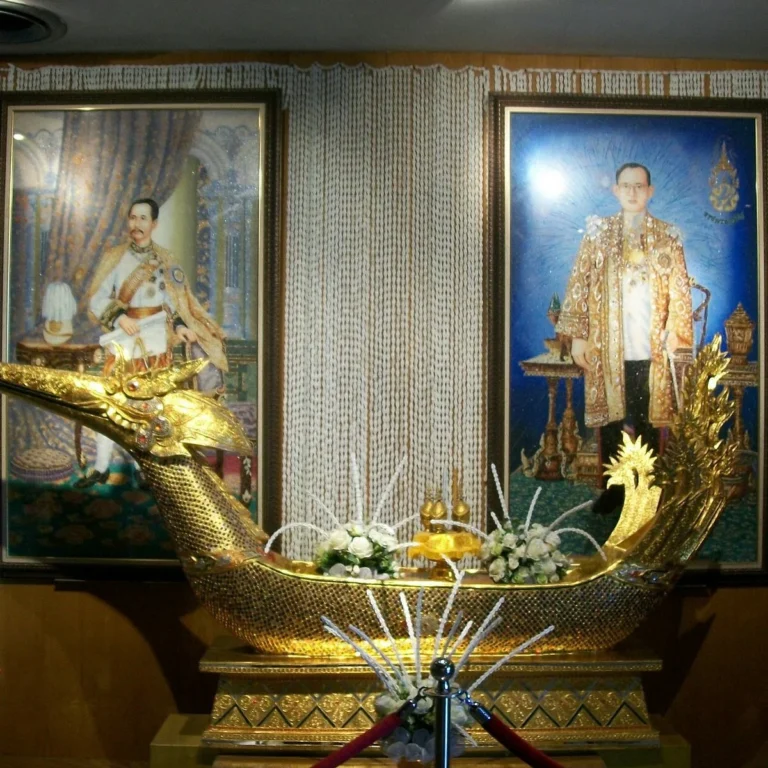
Cultural etiquette and taboos in public spaces in Thailand require strict attention even inside a modern commercial complex. Royal emblems appear in prominent spots throughout the complex, calling for a respectful demeanor and strictly avoiding disrespect, joking, or irreverent photography in front of portraits of members of the royal family. In addition, Buddhist-influenced etiquette values composure, avoiding raised voices, arguments, or displays of anger in public, as such behavior runs counter to local values of harmony and mutual respect. When haggling at the indoor cultural market, bargaining should be done politely and with a smile rather than heated debate, since commercial culture here places high value on amiability and hospitality.
Admission tickets and entry procedures for specialized zones inside Iconsiam require accurate information to avoid unnecessary extra expenses. Most general retail areas, contemporary art displays, the ground-floor traditional food market, and open cultural exhibition halls are free for the public to enter without an admission ticket. However, for certain themed digital entertainment zones, traveling international exhibitions on upper floors, or exclusive experiences in areas reserved for VIP guests, visitors need to buy tickets online through the official app or at the information counter. Checking international tourist promotions with a passport at the Level G information counter ahead of time will help travelers receive shopping discount cards or valuable dining vouchers, optimizing the budget for exploring this urban landmark.