Amidst the swirling currents of Thailand’s economic history, the rubber tree (Hevea brasiliensis) is not merely a plant providing economic value, but also a symbol of the nation’s robust transformation from a rudimentary agricultural base into the era of modern industrialization. The story of the Modern Latex Royal Thai Research Center begins with the very aspiration to elevate that agricultural heritage, where pristine white latex drops are harvested from vast rubber forests in southern Thailand, under the patronage and sustainable development guidance of the royal family. The birth of the center is not simply a milestone in the processing industry, but the crystallization of indigenous knowledge inherited across generations, blending with modern scientific thinking to create enduring values.
Looking back at historical vicissitudes, Thailand’s rubber industry has experienced phases of ups and downs tied to dynastic eras. Under the reigns of enlightened monarchs, particularly with the emphasis on sustainable agricultural development according to the sufficiency economy philosophy, the rubber tree became “white gold” that helped stabilize the livelihoods of millions of farmers. Modern Latex emerged as a solution to the challenge of modernization, where researchers do not merely stop at raw extraction but delve deeply into research and development (R&D) to optimize the molecular structure of rubber latex. The name “Modern Latex” is a declaration of transition, erasing the boundary between traditional farming methods and sophisticated production technology, in order to honor the core values that predecessors painstakingly built.
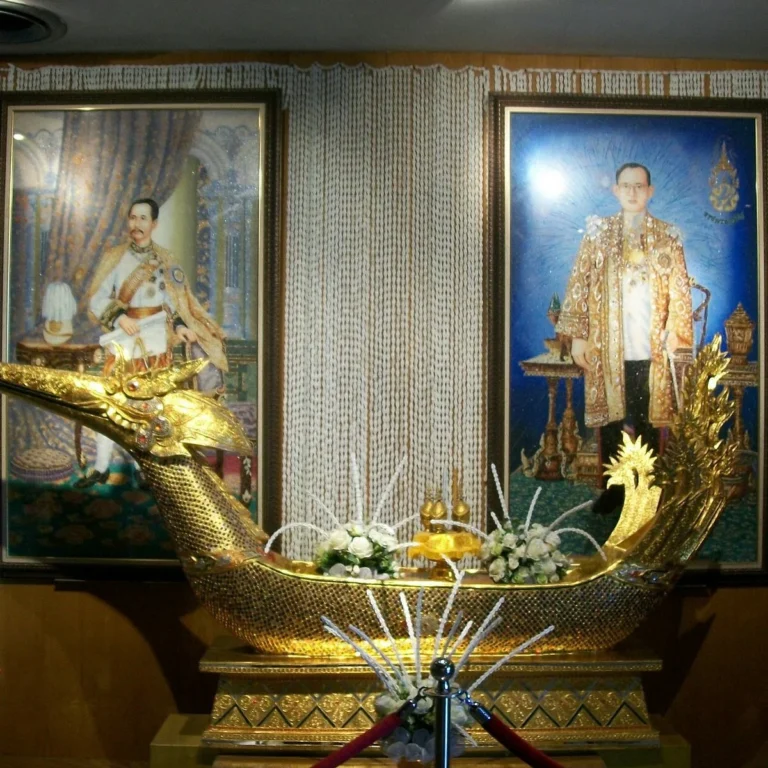
The space of this research center is not just sterile laboratories, but also a living museum of the rubber industry’s history. Precious documents on the introduction of the Hevea brasiliensis tree variety into Thailand from the early 20th century are carefully preserved. Historical figures, from pioneering agronomists to strategic royal officials, have left a deep imprint on every operational process here. They laid the foundation for establishing strict quality standards, turning each natural rubber product into a work of art, a recognized intellectual heritage. The combination of traditional latex extraction techniques—which require the meticulousness and patience of skilled artisans—with modern vulcanization technology has created a closed-loop process, ensuring sustainability and environmental friendliness.
Throughout its development, the center has always maintained a close bond with local farming communities. Stories about harvest seasons and gratitude rituals praying to deities for lush green rubber forests continue to be told as an indispensable part of the corporate culture here. Honoring indigenous knowledge heritage lies not only in research documents but also in how the center preserves rare plant varieties, maintains ecological balance, and ensures that every product bearing the Modern Latex name carries the breath of the land, climate, and soul of the Thai people. This intersection between a glorious past and a technological future has turned this place into a destination not only for those seeking perfect rest, but also a place to contemplate the proud developmental journey of a nation that always knows how to cherish and elevate gifts from nature.
Situated at a strategic coordinate intersecting economic currents and abundant resource sources, the Royal Thai Modern Latex Sleep Center is not merely a research facility, but an architectural entity shaped by Eastern feng shui philosophy blending with modern urban planning thinking. The location of the center is likened by local feng shui experts to an “energy-gathering meridian spot,” receiving vitality currents circulating from the vast rubber forests of southern and eastern Thailand—lands renowned as the kingdom’s “white gold granary.” Placing the center here aims not only to optimize the supply chain of fresh raw rubber latex but also to respect the geographical earth veins, where fertile soil nourishes decades-old rubber trees, creating a sustainable and prosperous ecosystem.
The terrain planning of the center is deployed under an ambitious “Green Space” model, where the boundary between architecture and nature is nearly blurred. Instead of rigid concrete blocks, architects cleverly designed functional zones following the natural slope of the terrain, creating spatial tiers harmonious with the surrounding rubber garden ecosystem. Every pathway and courtyard corner is calculated to retain maximum native vegetation, forming a giant green lung to purify the air and regulate humidity. This connection brings not only aesthetic value but is also a crucial factor in preserving the physical-chemical properties of natural rubber latex, which is extremely sensitive to environmental and temperature fluctuations.
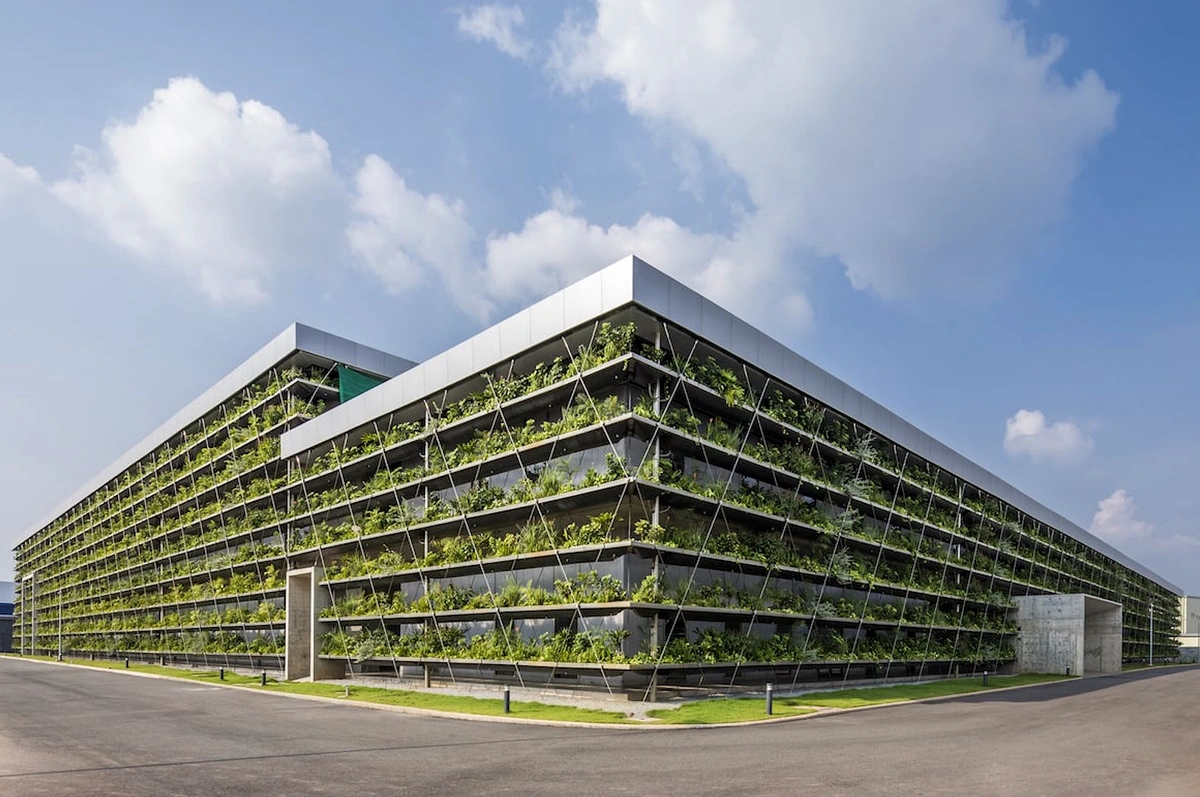
The most distinctive highlight in the architectural language here is the application of Passive Cooling techniques—a smart solution to adapt to Thailand’s harsh monsoon tropical climate. By maximizing prevailing wind directions and designing atrium voids and skylights calculated according to the golden ratio, the structure can self-regulate temperature without relying heavily on artificial cooling devices. Thick walls with natural insulation materials, combined with steeply pitched roof systems, help block direct solar radiation from the sun while creating a stable, cool environment year-round. This is the “golden environment” for preserving rubber latex products, ensuring that every pillow and mattress reaching users retains its full elasticity, durable molecular structure, and the signature natural aroma of raw rubber tree sap.
Stepping into the center’s campus, visitors will feel absolute tranquility, a state of balance that Thai people often call “Jai Yen”—a calm soul. This tranquility stems not only from the verdant green space but also from the rigorous technical processes operated within. Every stage from raw latex reception, purification, to storage is controlled in an environment where humidity and temperature are maintained at optimal levels thanks to smart architectural design. The use of eco-friendly building materials, combined with an open architectural style, optimizes energy and creates a high-class experiential space where humans and nature find a common voice in the journey to find the perfect sleep. This delicate combination of feng shui, terrain planning, and modern architectural engineering has turned this place into a symbol of the intersection between long-standing manual production traditions and advanced scientific technology, affirming its position as a leading sleep research center in the Land of Golden Pagodas.
Stepping into the Royal Thai Modern Latex Sleep Center, travelers not only set foot in a production facility but seem to wander into a sanctuary where modern industrial thinking and indigenous cultural soul intersect. The center’s architecture is shaped in the Modern Tropical Industrial style—a bold design language where the raw texture of steel and exposed concrete is softened by delicately stylized Thai floral motifs. Rubber flower patterns—symbols of the “white gold” of the Land of Golden Pagodas—are meticulously carved on metal partitions, creating a visual rhythm that is both powerful and fluid, recalling the prosperity of the rubber agricultural industry tied to Thailand’s economic history since the opening of trade under the reign of King Rama V.
Impressive and magnificent scenery at the Royal Thai Modern Latex Sleep Center
The spatial structure here is designed according to the Open Plan philosophy, an architectural solution optimizing natural light through skylights and large-format tempered glass walls. This ventilation minimizes energy consumption and creates a continuous convection of vitality, reflecting the mindset of respecting nature that is core to Thai lifestyle concepts. Sunlight filters through tropical trees planted alternatingly within the courtyard, casting shadows on polished concrete blocks, creating an artistic contrasting picture between the stillness of stone and the motion of light. This is a place where every square meter is calculated to serve the operation of precision machinery while retaining the breath of a contemporary art exhibition space.
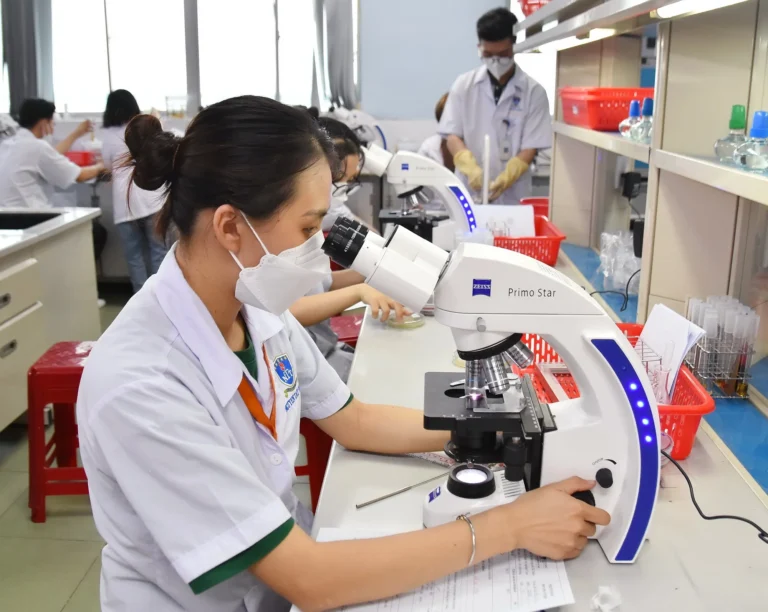
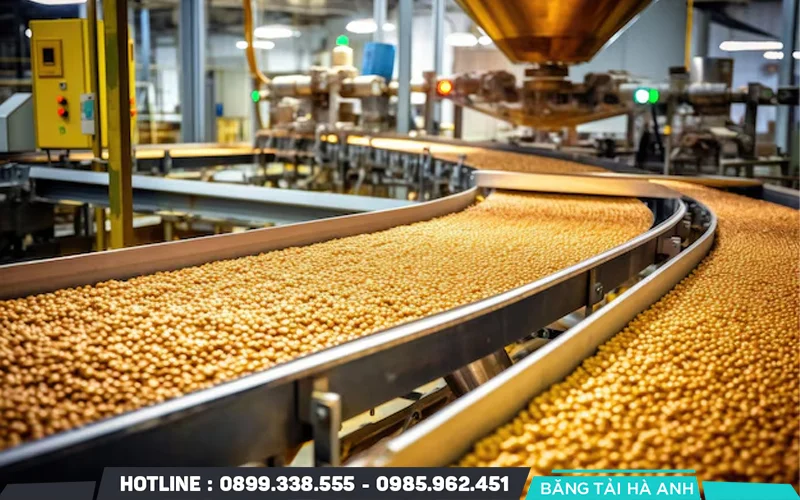
Going deeper inside, the heart of the center is its production system operating under High-Precision Engineering standards. Unlike traditional manual crafting methods that depend heavily on intuition, the process here is a perfect combination of vacuum molding techniques and strict control by electronic sensors. Vacuum molding technology allows for the complete removal of micro air bubbles within the rubber latex structure, ensuring absolute uniformity for each product. Every mattress or pillow leaving the factory must undergo rigorous tests on molecular density and elasticity, simulating the perseverance of ancient Thai artisans in selecting the purest latex drops from rubber forests in the south, where the humid tropical climate creates the world’s highest-quality latex.
The actual scale of the center extends beyond impressive acreage figures to its ability to integrate deep research areas with practical experiential spaces. Areas are scientifically divided, from the material laboratory where experts analyze rubber cell structure, to the molding area where rubber blocks are shaped under high pressure. This combination creates a closed value chain where crafting art is not just a skill but has become a science. Stylized rubber flower motifs appear not only in architecture but are also embossed on product surfaces as a royal imprint, affirming royal standards in every smallest detail. This harmony between concrete, steel, and the softness of natural rubber turns this place into a model industrial architecture symbol, where every born product carries the breath of heritage and future precision.
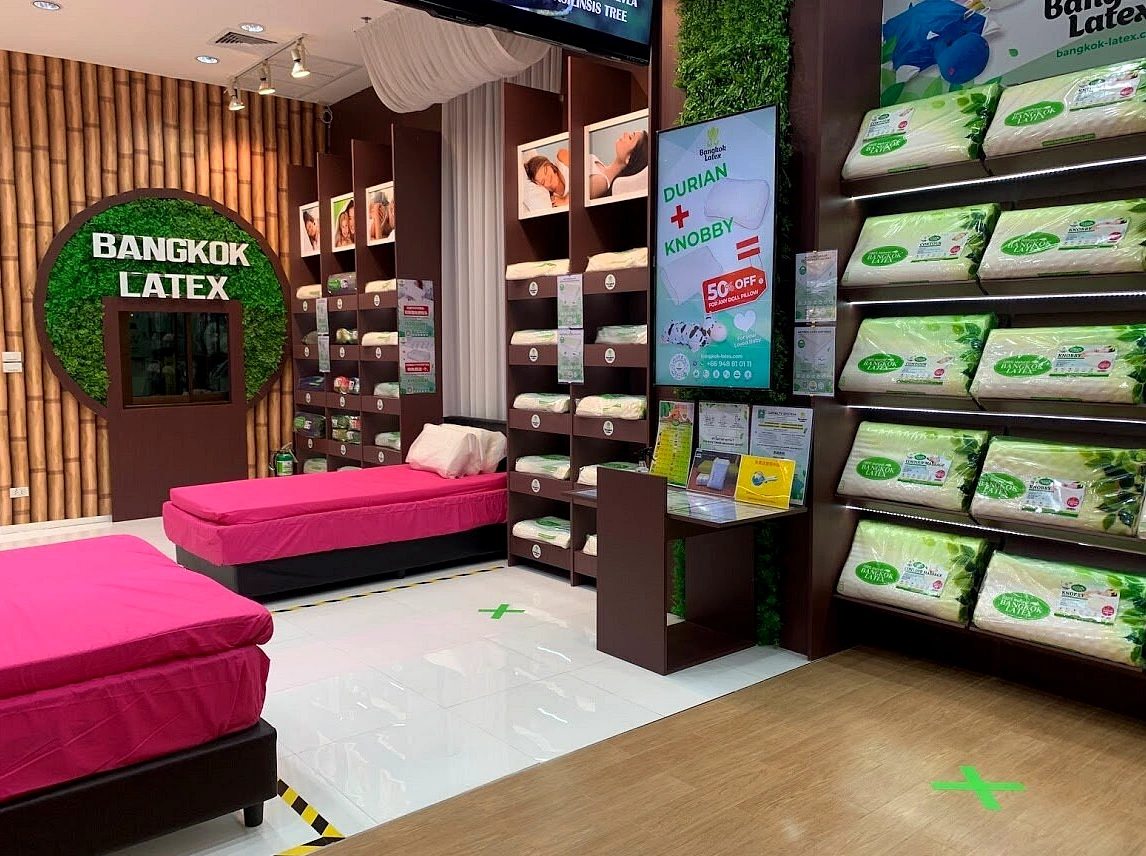
As dusk gradually falls over the vast rubber forests of southern Thailand, the Royal Thai Modern Latex Sleep Center sheds the sternness of a scientific research institute to don an enchanting cloak of visual arts. This transformation is not merely a change in lighting systems, but a philosophical stroll between modern technology and the depth of indigenous culture. The Ambient Lighting system is designed with a characteristic warm color tone, simulating the moonlight spectrum on rubber tree foliage on a full-moon night, creating an absolute relaxing space where every visitor’s step is guided by the philosophy of Sleep Science—a discipline Thais have meticulously studied since the golden age of the Chakri dynasty, when royal healthcare was prioritized.
The tasting space here is planned based on the structure of ancient royal gardens, where tranquility is honored as an art form. In soft light, tea lovers can sip a cup of Nam Dok Anchan herbal tea—the traditional butterfly pea flower tea commonly used in Ayutthaya palaces to soothe the mind and purify the body. The combination of the tea’s elegant flavor and warm lighting creates a perfect state of balance, relaxing and calming the mind. This is a living real-life space where every architectural detail reflects respect for the precious resources nature has bestowed upon the Land of Golden Pagodas.
The most distinctive highlight in the center’s nightlife is the artistic lighting performance program themed “From Latex to Dreams.” This is an elaborately staged live-action performance using 3D Mapping projection technology on the center’s signature architecture, telling the story of white latex drops—the “white gold” that built the prosperity of Thailand’s sleep industry. The story begins at early dawn in plantations, where skilled tappers execute skillful tapping techniques, through rigorous refining processes under the supervision of top experts. Each segment of the program is a historical chapter, deeply reflecting Thai resting culture and slow-living philosophy, where sleep is not just physical recovery but a spiritual connection with Mother Earth.
The lighting art in the program goes beyond technical display; it is a delicate interaction with the audience’s emotions. Moving light strips rhythmically adapt to nature’s breath, simulating the elasticity of natural rubber mattresses, guiding viewers into a wondrous state of relaxation. Using warm, deep color tones combined with traditional musical instruments like the Khim zither or Khlui flute creates a multi-sensory harmony. Viewers feel lost in a realistic dream where the boundary between reality and illusion is erased by peak visual effects. This is how the Royal Thai Modern Latex Sleep Center affirms its position: not only a provider of sleep care products, but a living museum where culture, science, and art blend to honor the value of deep sleep—the golden key to health and longevity according to Thai beliefs for generations.
Learning about the Modern Royal Thai Research Center does not stop at sleep science, but opens up opportunities to further explore southern Thailand—where vast rubber forests have nurtured a deeply distinctive culinary culture. For farmers attached to white sap, cuisine is not merely enjoyment, but essential energy to sustain endurance under the tropical sun. Dishes here crystallize a philosophy of living in harmony with nature, where every ingredient is selected from home gardens, carrying the breath of the land and the meticulousness of generational hands.
Kicking off this famous culinary map is แกงไตปลา (Kaeng Tai Pla) – spicy fish entrails curry, considered the “soul” of southern cuisine. Unlike the mild coconut milk curries of the central region, Kaeng Tai Pla is an enchanting challenge for diners. The combination of fermented fish guts, tongue-scorching dried chili, fresh bamboo shoots, yardlong beans, and pumpkin creates a complex flavor layer, rich to the point of being unforgettable. This is a dish with a long history, once the staple meal of rubber tappers, helping them warm their bodies and stay alert during cold foggy mornings. The dish’s spiciness not only stimulates the palate but symbolizes the upright, strong personality of the local people.
Impressive and magnificent scenery at the Royal Thai Modern Latex Sleep Center
Meanwhile, ข้าวยำปักษ์ใต้ (Khao Yam Pak Tai) – southern herbal mixed rice – brings a delicate low note, balancing the explosion of spicy dishes. This dish is a colorful canvas with rice cooked with fragrant pandan leaves, mixed with dozens of fresh herbs like kaffir lime leaves, banana blossoms, finely chopped yardlong beans, toasted grated coconut, and signature Budu sauce. Each spoonful of rice is a harmony between the herbal sweetness, nutty coconut flavor, and oceanic saltiness from fermented fish sauce. This is not merely a dish, but a folk medicine helping purify the body, reflecting indigenous knowledge on food combinations to maintain enduring health.
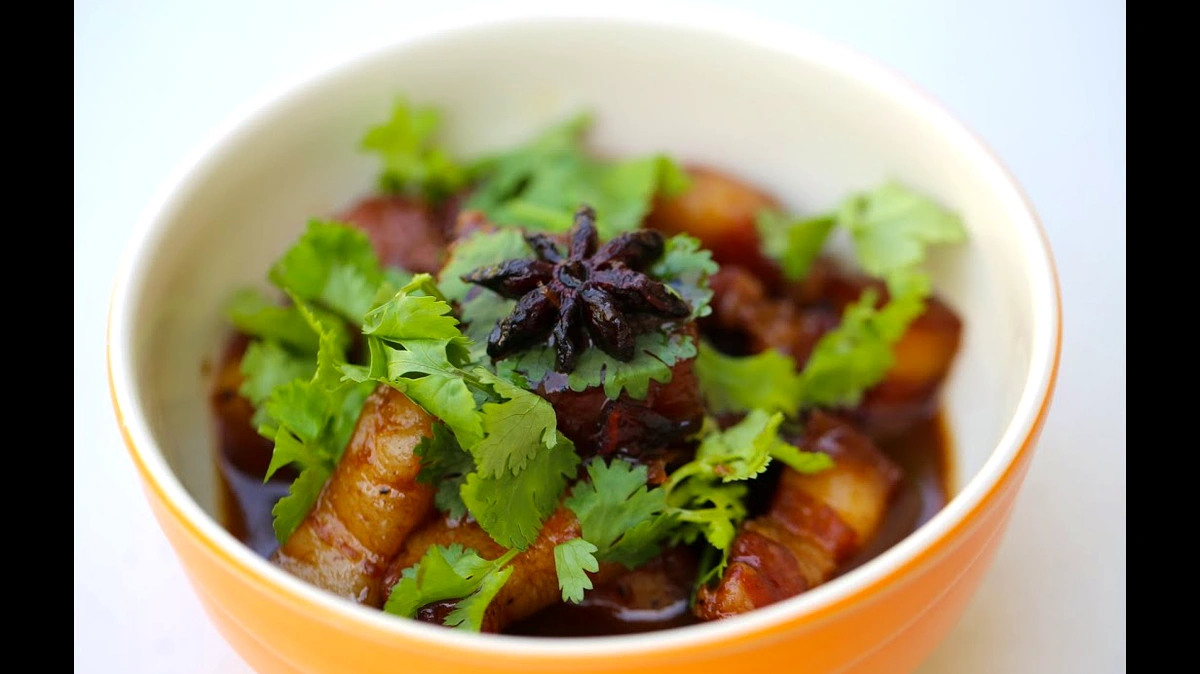
If diners seek comfort in flavor, หมูฮ้อง (Moo Hong) – southern-style braised pork – is the perfect choice. Unlike regular braised pork, Moo Hong is prepared by slow-simmering pork belly for hours with garlic, black pepper, and palm sugar until the meat melts in the mouth, absorbing spices without needing coconut water. This dish carries deep cultural exchange imprints, influenced by the culinary style of Chinese communities settling in southern Thailand centuries ago. The richness and fatty flavor of Moo Hong act like a warm embrace, evoking family meals gathered together after a long hard day of work.
Finally, one cannot miss ผัดสะตอกะปิกุ้ง (Pad Sataw Kapi Goong) – stir-fried stink beans with shrimp and shrimp paste. Sataw beans – also known as bitter beans – are a famous specialty of this land. When stir-fried with fresh shrimp, bird’s eye chilies, and premium Kapi shrimp paste, the beans’ signature pungent flavor disappears, giving way to a nutty, crunchy, highly attractive taste. This dish proves farmers’ creativity in turning wild ingredients into banquet masterpieces. The culinary experience around the research center is not just filling the stomach, but a journey touching cultural depth, where each flavor tells a story of history, resilience, and deep love for the homeland.
The Royal Thai Modern Latex Sleep Center opens to visitors from 09:00 to 18:00 every day of the week, including weekends and major holidays. Due to its nature as a scientific research facility combined with high-end product displays, management recommends visitors contact to book appointments at least 24 hours in advance via official channels. Proactively arranging time avoids overcrowding during peak hours and ensures the professional team is fully prepared, ready to provide in-depth answers regarding natural rubber latex technology, which has become the pride of the Land of Golden Pagodas’ sleep industry.
Regarding transportation, the center’s location lies on arterial roads, conveniently connecting to downtown Bangkok. For independent travelers, using private cars or taxis is the optimal choice. Roads leading here are well-planned and clear, making access easy without traffic obstacles. Departing from bustling commercial areas, travel time may vary depending on urban traffic density, so starting 30 minutes earlier than scheduled is a useful tip to ensure a smooth arrival.
One of the most important points visitors should note is the strict environmental regulations here. Because the center operates under “Clean Room” standards—where rubber products are tested and packaged in absolute sterile conditions—all visitors must strictly follow sanitation rules. Guests should maintain general quiet, avoiding noise that disturbs experts working in the research area. Regarding attire, politeness and neatness are mandatory requirements. Comfortable yet modest, polite outfits not only show respect for the scientific research space but also facilitate movement through production areas requiring maximum flexibility and cleanliness.
Regarding reference costs, visiting the exhibition area and learning about the manufacturing process is typically free of charge for individual guests with prior reservations. However, if visitors require in-depth sleep health consulting services or wish to participate in seminars on royal-standard rubber latex processing technology, auxiliary service fees may apply depending on the experience package. Products here are publicly and transparently priced, commensurate with top-tier quality and rigorous testing processes from top Thai experts. Shopping at the center usually comes with international warranty policies and doorstep delivery services, giving visitors absolute peace of mind when owning premium sleep care products.
To make the trip more meaningful, visitors should spend time carefully observing the rubber cell structure models displayed in the main lobby. These are visual materials helping understand why Thai rubber latex products possess superior elasticity and antibacterial properties—an industrial cultural heritage formed and developed over decades. If visitors wish to combine cultural exploration, shopping, and relaxation at the most iconic destinations of the Land of Smiles, instantly check out the detailed itinerary in the Bangkok – Pattaya 5N4D Tour to enjoy the highest-class and most complete experiences.