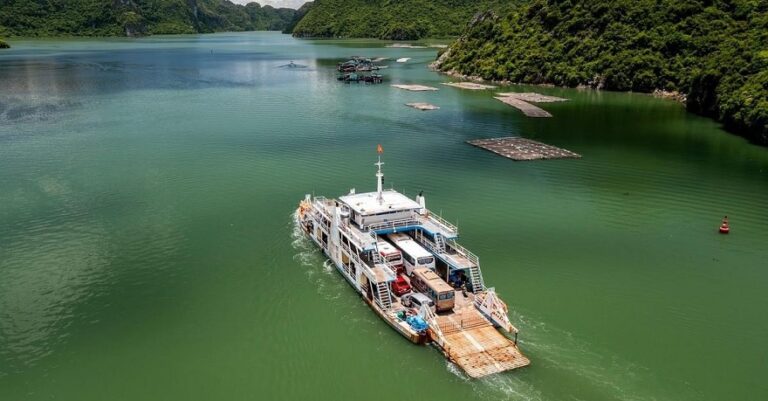
Thung Nai is an attractive tourist destination in Hoa Binh Province, dubbed “Ha Long Bay on land” for its many islands emerging from clear blue lake waters. Thung Nai boasts poetic beauty, harmonizing nature and humanity. You can experience the unique cultural traditions of the Thai and Muong ethnic groups, savor highland specialties, and join plenty of exciting activities on the lake. Thung Nai is an ideal spot to rest, relax, and explore.
Introduction to Thung Nai
Thung Nai is a mountainous commune in Cao Phong District, Hoa Binh Province, covering an area of 36.38 km2 with a population of about 1,617 people (as of 1999), predominantly Muong and Thai ethnic minorities. According to legend, this area was once a lush green valley where herds of deer frolicked freely. Thus, locals named it Thung Nai, combining “thung” (meaning valley) and “lai” (a local variation of “nai,” meaning deer). In 1988, when the Hoa Binh Hydropower Reservoir was built, Thung Nai was flooded, transforming it into a reservoir commune dotted with islands rising out of emerald waters. These undulating islands along the Da River create a distinctive and captivating natural landscape. That is why many people compare this place to an inland Ha Long Bay of the Northwest region. The climate in Thung Nai is fairly cool year-round, with average temperatures ranging from 18 to 25 degrees Celsius, making it ideal for experiential travel.
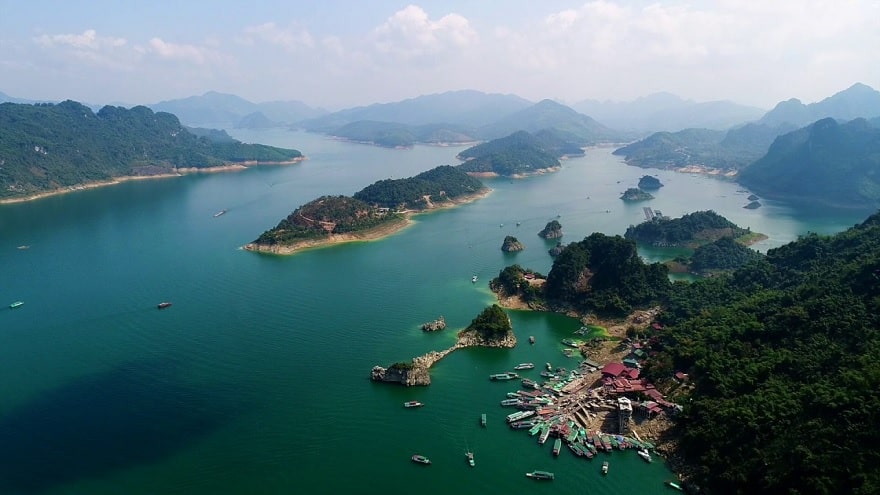
Thung Nai, Hoa Binh
Located about 120 km northwest of Hanoi with convenient road access, Thung Nai can be reached by various means of transport such as motorbike, car, or coach. If traveling by intercity bus, you can purchase tickets at My Dinh Bus Station bound for Hoa Binh. Upon arriving in Hoa Binh, take a taxi or motorbike taxi for the remaining 20 km to Thung Nai. If traveling by private vehicle, take Thang Long Boulevard for cars or the parallel service road (Duong Gom) for motorbikes to reach Hoa Lac. From there, continue along the new Hoa Lac – Hoa Binh Expressway; once you reach Hoa Binh City, follow Tay Tien Road and the directional signs straight to Thung Nai.
Scenery & Tourist Attractions in Thung Nai
Each season brings its own distinct charm here, though summer from May to August is an ideal time to enjoy the fresh, cool air. Spring, meanwhile, is Thung Nai’s most beautiful season, when trees and flowers burst into vibrant bloom and all of nature comes alive. From Thung Nai Port, visitors can admire the vast expanse of Hoa Binh Lake alongside dramatic islands, limestone mountains, and magnificent caves. The scenery resembles a miniature replica of Ha Long Bay, with primeval forests and wooded hills reflected in the crystal-clear lake waters. Thung Nai also preserves many unique cultural traits of its mountain ethnic communities. Travelers can join traditional festivals, savor local delicacies, listen to melodious folk songs, or admire traditional folk art. When visiting, you can also explore famous local attractions such as:
1. Ba Chua Thac Bo Temple
Legend has it that this temple worships two female generals: Lady Dinh Thi Van (of the Muong ethnic group) and a woman of the Dao ethnic group. Under King Le Loi’s reign, the two women helped the army and local people transport food and boats across Bo Waterfall up to Muong Le (Son La) to quell a rebellion. After their passing, their spirits frequently manifested to guide locals safely through the treacherous, fierce rapids before the Da River was dammed. Out of gratitude, the people built a temple in their honor to express reverence and pray for protection while crossing the river. Renowned for its sacredness, Ba Chua Thac Bo Temple is bustling with pilgrims year-round. Its annual festival runs from the 7th day of the first lunar month through the end of the third lunar month.
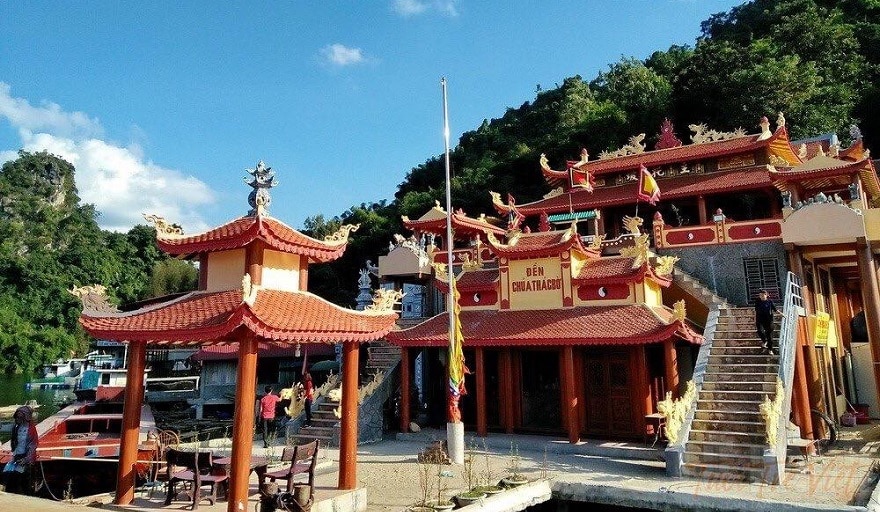
Ba Chua Thac Bo Temple
The temple comprises two sections—one atop Hang Than Hill and the other at the foot of Thac Bo—featuring distinctive architecture that blends harmoniously with nature. To reach the temple, visitors travel on foot and by boat across the Da River, with the boat ride taking roughly 30 minutes. Along the way, you can admire the sweeping panorama of land, water, and sky in Thung Nai, as poetic as Ha Long Bay. In addition to visiting the two shrines dedicated to the Lady of Thac Bo, travelers can also explore the vast, stunning Thac Bo Cave on the same journey.
2. Thac Bo Cave
After visiting Ba Chua Thac Bo Temple, visitors can continue to nearby Thac Bo Cave. The cave leaves a lasting impression with stalactites of myriad shapes and forms, sculpted over hundreds of thousands of years by mineral-rich dripping water—a testament to Mother Nature’s boundless creativity. From the cave entrance, you can gaze out across the entire majestic Da River, taking in natural masterpieces of rolling mountain ranges.
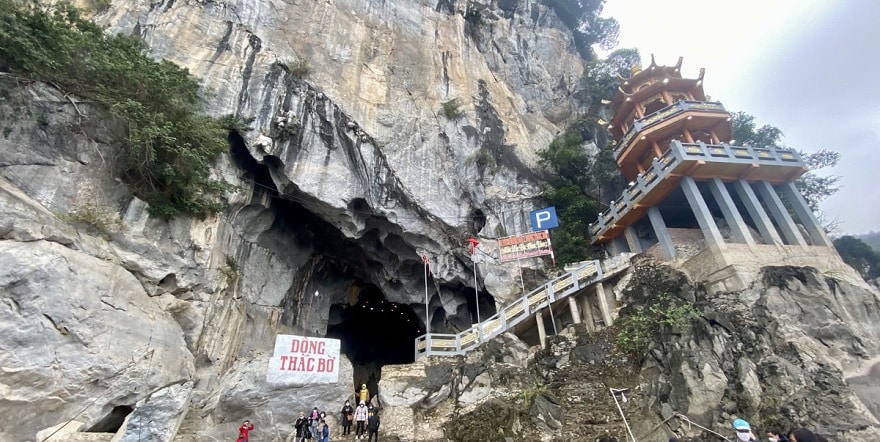
Thac Bo Cave
Thac Bo Cave is a karst cavern set inside a limestone mountain and was recognized as a National Scenic Relic by the Ministry of Culture, Sports, and Tourism in 2008. The cave is divided into three sections: besides the main chamber filled with stalactites, there is a visitor reception area, and ascending about 50 meters leads to a Buddhist worship sanctuary. Inside are altars dedicated to Shakyamuni Buddha, Guanyin Bodhisattva, local guardian deities, and President Ho Chi Minh. Thac Bo Cave is also closely tied to the legend of Ba Chua Thac Bo, the Muong woman who aided King Le Loi against invaders and helped locals navigate the rapids safely, continuing to watch over and bless the local people even after her death.
3. Trach Stream
Many travelers enjoy chartering a motorboat to admire the majestic Da River and visit Ba Chua Temple and Thac Bo Cave, yet few know about another fascinating gem here: Trach Stream and its upstream waterfall. Trach Stream is a clear, cool brook flowing over scattered boulders midstream. To reach it, take a motorboat from Thung Nai Wharf into the Da River reservoir and walk about 1 km further. As you approach from afar, the roaring rush of cascading water seems to urge your footsteps onward. At the base of Trach Stream, the falling water pools into a wide natural swimming basin. Though not overly tall, the waterfall is deeply poetic, with two white torrents plunging down a rocky cliffside to create an enchanting scene.
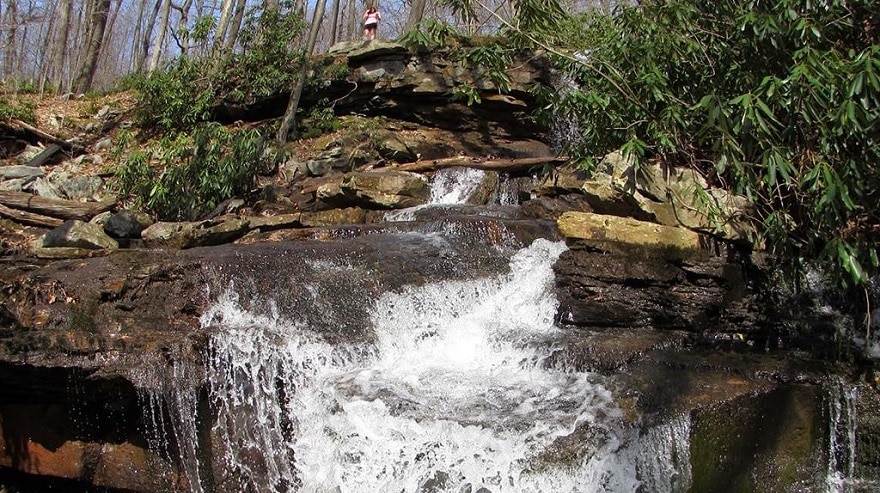
Trach Stream
4. Boating on the Reservoir
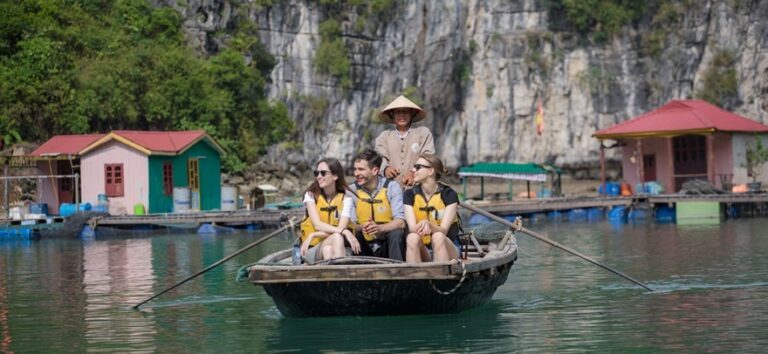
If you have plenty of time and want more freedom and flexibility while exploring Thung Nai, paddling a boat across the reservoir is an unbeatable choice. It is a fun and easy activity even for beginners—just 15 minutes getting used to the boat and oars is enough to get the hang of it. Out on the water, you can paddle leisurely around the Thung Nai reservoir across crystal-clear currents, making it a wonderful way for any visitor to unwind on holiday.
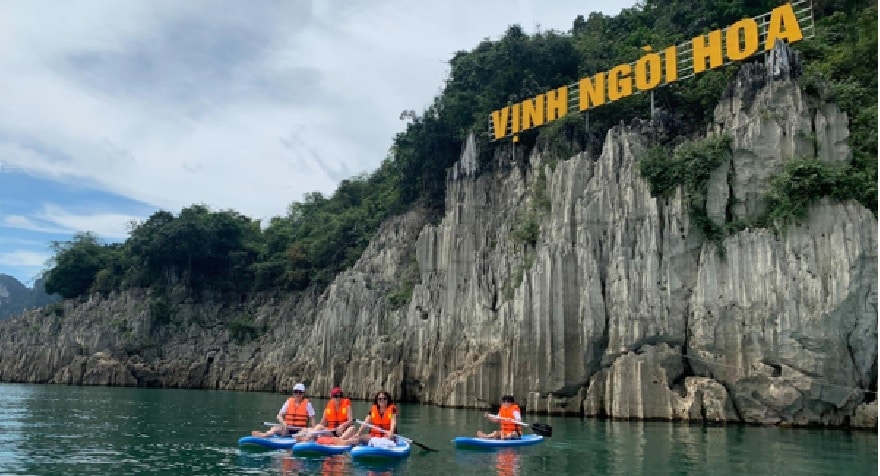
Boating on the Thung Nai reservoir
5. Giang Mo Muong Village
If you prefer not to spend all your time on the water or have extra time to spare, head to Giang Mo Muong Village. Nestled at the foot of Mount Mo, this picturesque and inviting village is home to over 100 Muong households and draws many domestic and international visitors eager to learn about Muong culture and daily life.
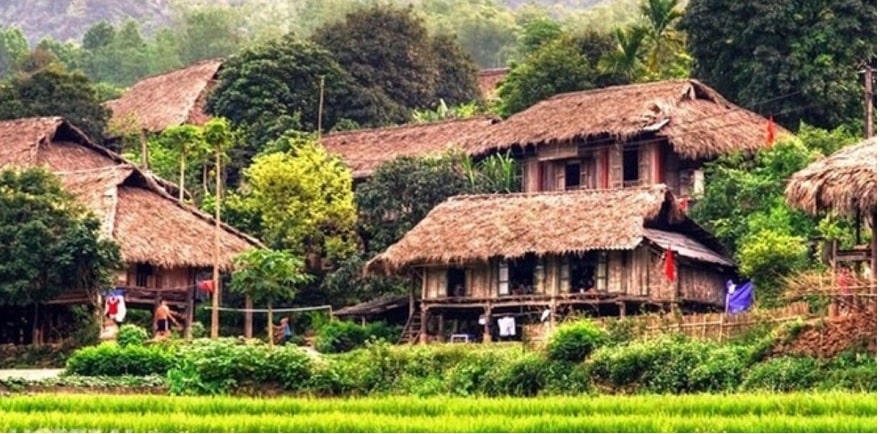
Giang Mo Muong Village
In Giang Mo Muong Village, you can stroll along winding mountainside paths and soak in the peaceful, scenic countryside. You will also have the opportunity to discover the customs, traditions, and everyday routines of the Muong people through interactive cultural exchanges with locals. You can even stay overnight in traditional stilt-house homestays and savor regional specialties like honey-roasted Muong pork, “tao meo” (wild apple) wine, and bamboo-tube sticky rice (“com lam”).
6. Ngoi Village
Ngoi Village is an ancient Muong settlement tucked between forested mountains and Hoa Binh Lake. With no road access, the village can only be reached by boat across the water. It is also known as Bua Dam, which in the Muong language means a flat stretch of land high in the mountains filled with large timber trees. The village is encircled by limestone mountain ranges teeming with rare flora and fauna.
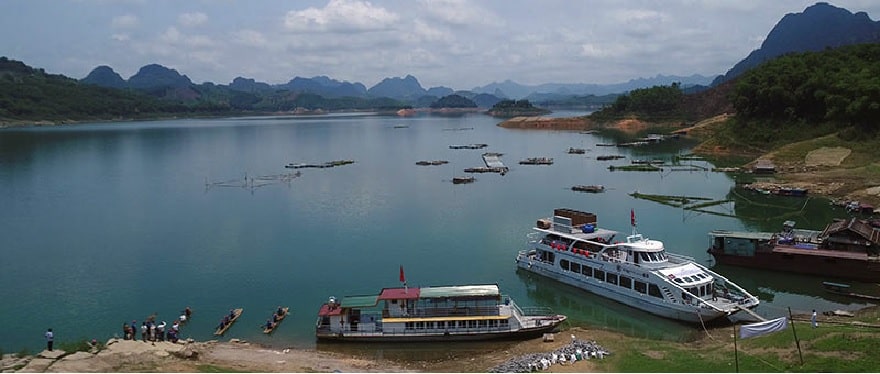
Ngoi Village
Ngoi Village is also famous for its stunning karst caves, ranging from long-explored caverns like Hoa Tien Cave and Bat Cave (Hang Doi) to newly discovered, untouched caves such as Bua Dam Cave. The village is home to 81 Muong households who live in traditional wooden stilt houses and make their living primarily through upland farming and fishing for shrimp and fish.
7. Thac Bo Floating Market
Thac Bo Floating Market is a fascinating highlight in Thung Nai where visitors can witness firsthand the riverine trading life of the Muong people on the Da River. Held only on Sunday mornings from dawn until around 8:00 AM, the market is a hub for trading local produce from the Hoa Binh Lake area, including fresh fish and shrimp, dried shrimp, dried fish, and wild bamboo shoots. Visitors can buy these specialties as souvenirs or sample them right at the market. Thac Bo Floating Market is also a welcoming place to mingle with locals and learn about the distinctive customs and culture of the Muong community.
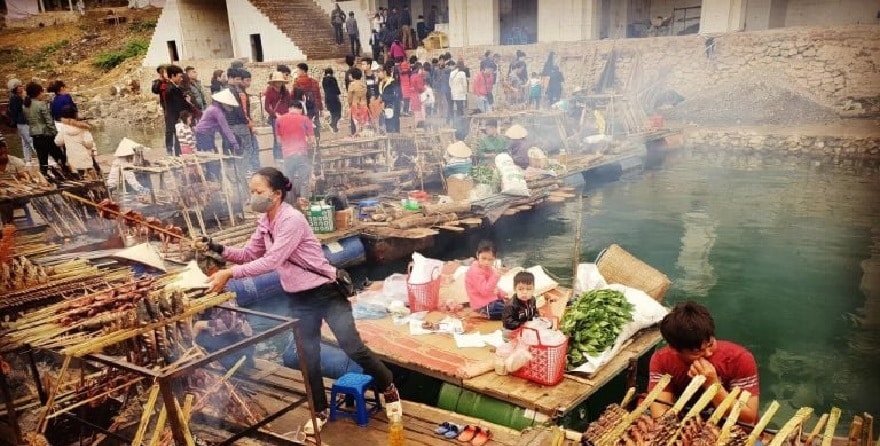
Thac Bo Floating Market
Thung Nai Cuisine
1. Grilled Da River Catfish (“Ca Mang”)
The Da River is renowned for delicious freshwater fish such as “ca thieu” (culter), black carp, and “ca mang” (hemibagrus catfish). While available year-round, they reach peak flavor during the high-water season in September and October. Grilled fish is a signature specialty of the Da River reservoir basin. The fish is cleaned, brined, rubbed with salt all over, and slow-roasted over charcoal for hours. The result is wonderfully aromatic fish with firm flesh, crispy, slightly charred skin, and just the right touch of saltiness. It is served with young dracontomelon (“sau”) leaves, skunkvine leaves (“la mo”), wild betel leaves (“la lot”), and polyscias leaves (“dinh lang”), accompanied by green chili salt for dipping. Dipping the sweet fish into the salt and wrapping it in wild betel leaves removes any fishiness while deepening the flavor—the more you eat, the sweeter it tastes. The smoky aroma of charcoal, savory tang of salt, and subtle fragrance of bamboo and grilled fish make this dish hard to resist.
If you have time, stop by a grilled fish stall along National Highway 6—or especially at the foot of Ba Chua Thac Bo Temple—to enjoy freshly grilled fish piping hot. However, choose fresh fish carefully, as vendors sometimes use frozen fish, which turns mushy and bland. You can tell if a fish was previously frozen by poking it open gently with a skewer: if the flesh still looks red inside even after grilling, it was frozen. Better yet, sit right beside the charcoal stove, grilling and nibbling on the fish paired with a few cups of local rice wine for an unforgettable experience.
2. Muong Pork
Muong pork is a celebrated specialty of Hoa Binh made from the Muong Khuong pig breed, an ancient indigenous breed originating from the high mountains of Northwest Vietnam. Muong Khuong pigs have black coats, small heads, long ears, short snouts, short legs, arched backs, and curly tails. Raised using traditional Muong methods without pens, they roam freely through the forest to forage for food. With a long history, this breed is regarded as a cultural and spiritual symbol of the Muong people. Muong Khuong pork offers abundant lean meat, crispy skin, minimal fat, and rich, nutritious flavor—free of any gamey odor, bruising, mushiness, or dryness when cooked.
Tips for Visiting Thung Nai
- Because mountain temperatures fluctuate throughout the day and evenings get quite chilly, be sure to pack a jacket or warm clothing.
- Thung Nai offers plenty of water-based activities, so bring swimwear to easily enjoy swimming and lake recreation.
- Overnight camping in Thung Nai is also a memorable experience, so pack your camping gear if you plan to camp out.
- Local services in Thung Nai—especially restaurants—remain fairly basic, so it is best to pre-order meals at your accommodation or bring your own food along.