Situated on the left bank of the lower Cai River, the I-Resort Hot Springs Religious Heritage and Hydrothermal Landscape Complex in Vinh Ngoc Commune, Nha Trang City, occupies a geographical coordinate pivotal to both history and geology. In terms of feng shui, the site embodies the quintessential harmony of “mountains and water,” nestled beside ancient limestone ranges and facing the winding, silt-laden flow of the Cai River before it empties into the Dang Xuong estuary. From a tectonic perspective, this terrain sits atop deep faults in the Earth’s crust, giving rise to precious underground thermal mineral pockets that have quietly welled up over millennia.
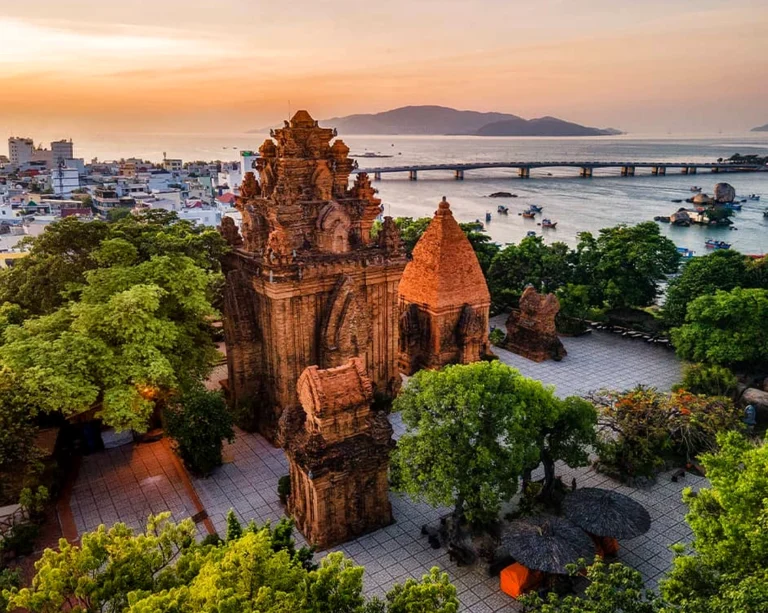
Tracing back through the centuries, this land was once a core part of Kauthara—the most sacred religious center of the ancient Champa Kingdom. To the ancient Cham people, natural hydrothermal springs emerging from the earth were far more than mere geological phenomena; they were revered as sacred “water sanctuaries” (tirtha), closely tied to spiritual purification rituals and the worship of Lord Shiva alongside the Mother Goddess of the Land, Po Nagar. As the southward expansion of Dai Viet progressed under the Revival Le Dynasty and the Nguyen Lords—most notably marked by the establishment of Thai Khang Prefecture in 1653—Vietnamese settlers acculturated and wove indigenous traditions into their own spiritual life. Generations of residents in Chi Lai Canton, Vinh Xuong District, respectfully named these thermal mineral springs “linh tuyen” (sacred springs)—blessed waters bestowing health and prosperity upon riverside villages such as Phu Nong and Xuan Ngoc.
Through successive Nguyen Dynasty reigns from Gia Long and Minh Mang to Tu Duc, this landscape and its hydrothermal resources were formally chronicled in official imperial histories such as the Dai Nam Thuc Luc (Veritable Records of Dai Nam) and Dai Nam Nhat Thong Chi (Comprehensive Gazetteer of Dai Nam) as a testament to the bounty of Khanh Hoa Province. Through royal decrees conferring divine titles, the feudal court officially endorsed the bond between these mineral springs and the worship of local tutelary deities, creating a rich layer of cultural sedimentation. Contemporary press and heritage management agencies surveying the area share a common assessment: this is not merely a conventional eco-resort destination, but a living cultural space that seamlessly unites millions of years of geological value, the imprint of Champa civilization, and the ancestral ethos of living in harmony with nature during the southward expansion.
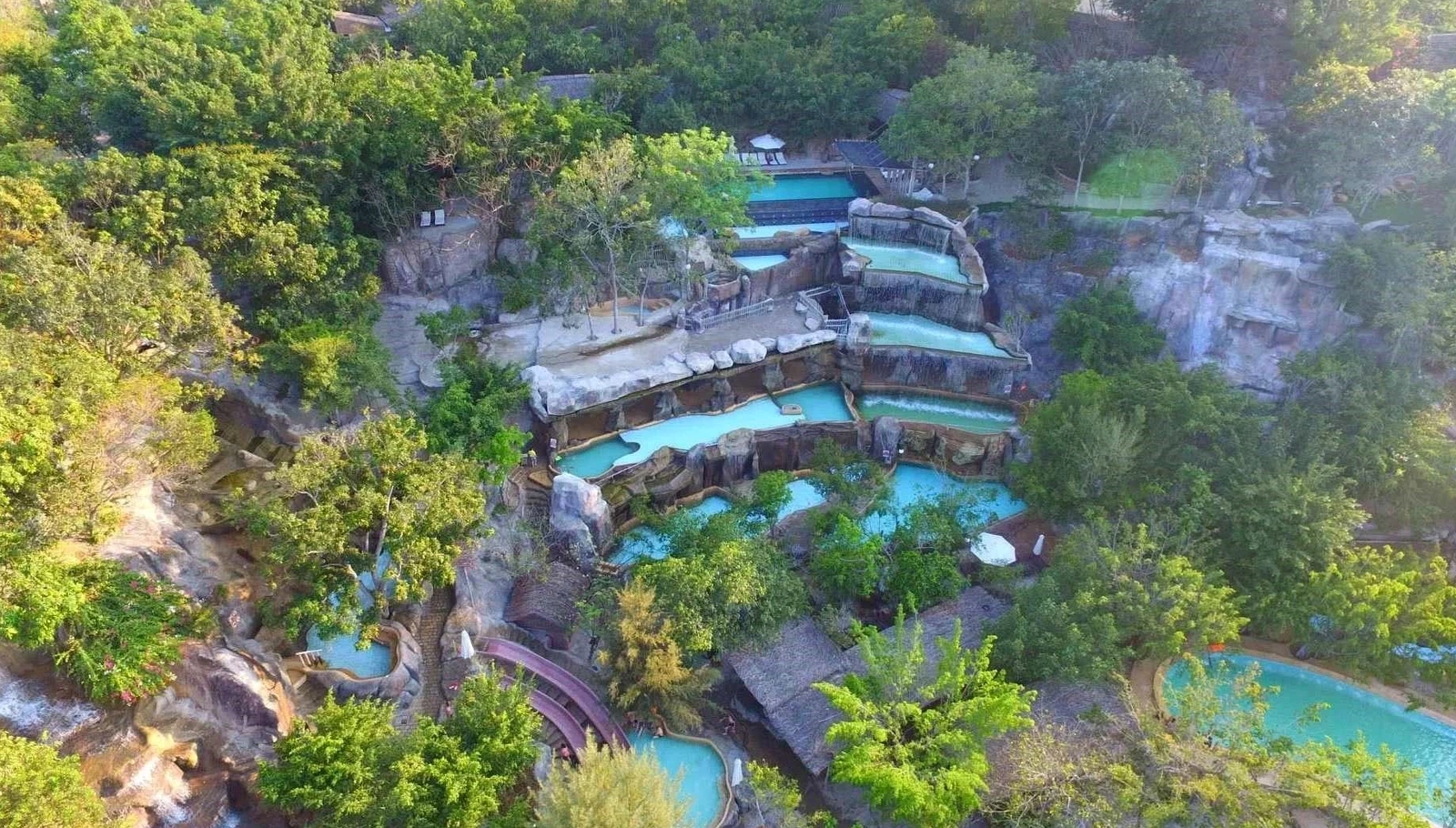
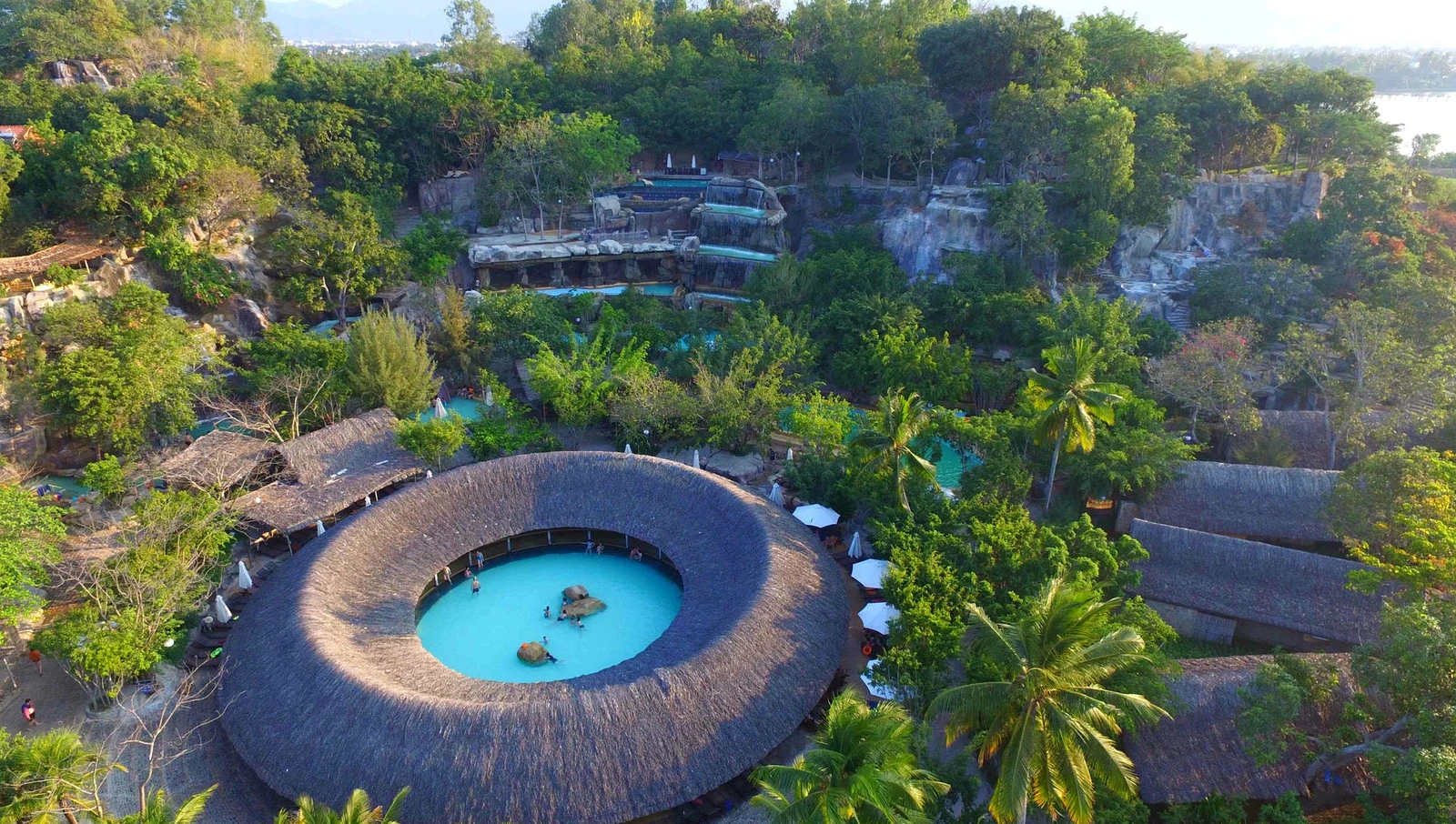
Nestled at the foot of the majestic mountain range embracing the lower Cai River in Nha Trang, the I-Resort Religious Heritage and Hydrothermal Landscape Complex unfolds like a magnificent natural tableau, where untamed nature blends exquisitely with the masterful craftsmanship of contemporary artisans. Standing in stark contrast to modern concrete resorts, this space is shaped by a philosophy of sustainable vernacular architecture, showing utmost respect for the natural topography and historic geological strata of ancient Kauthara. Every corner breathes tradition through the thorough application of rustic materials steeped in the soul of the Vietnamese countryside, such as bamboo, neohouzeaua, nipa palm leaves, natural river cobbles, and handcrafted terracotta bricks. Gently curving thatched roofs nestle beneath lush groves of mature bamboo and towering coconut palms, creating an architectural ensemble that is at once grand and stately yet remarkably intimate and familiar.
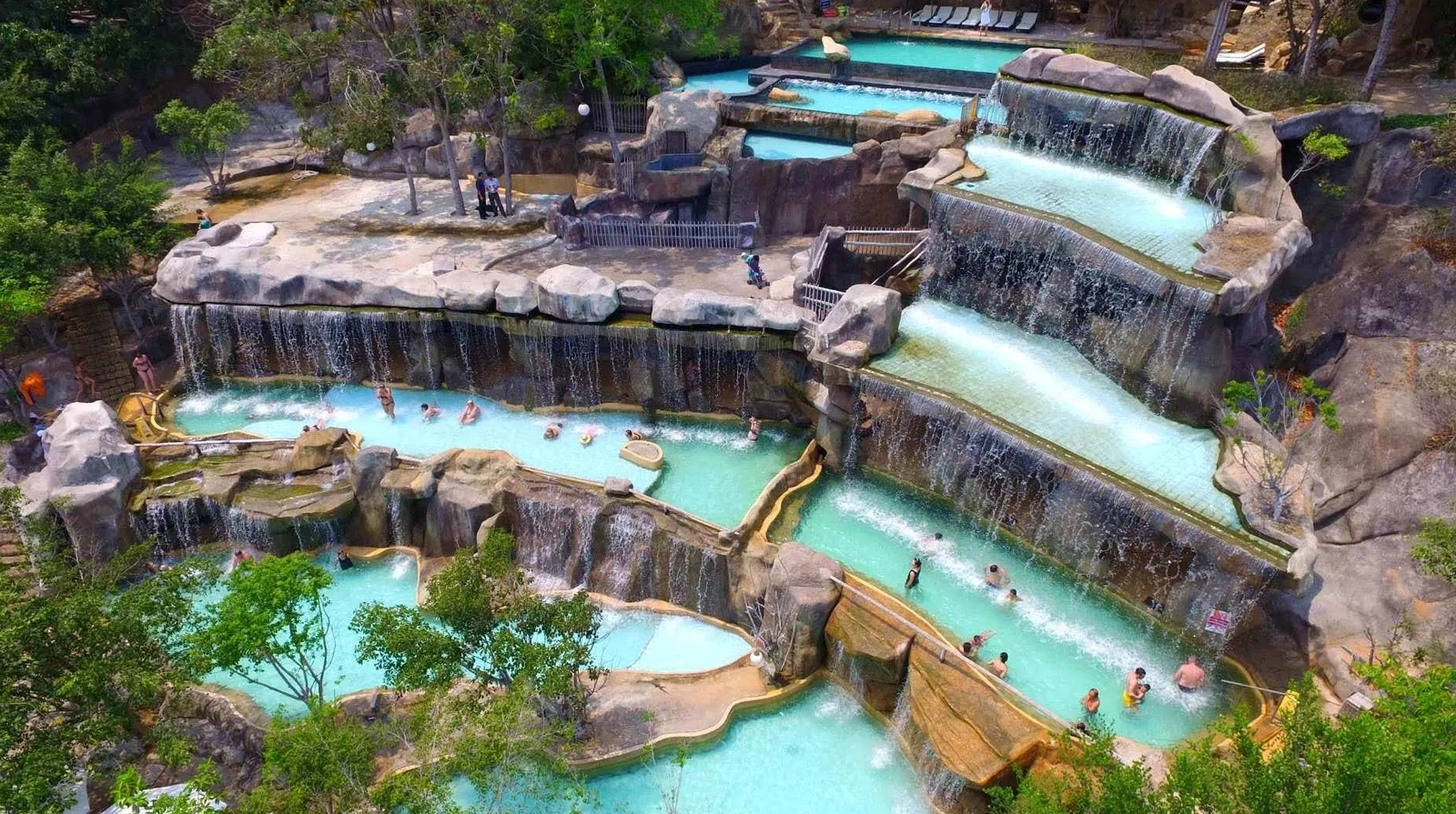
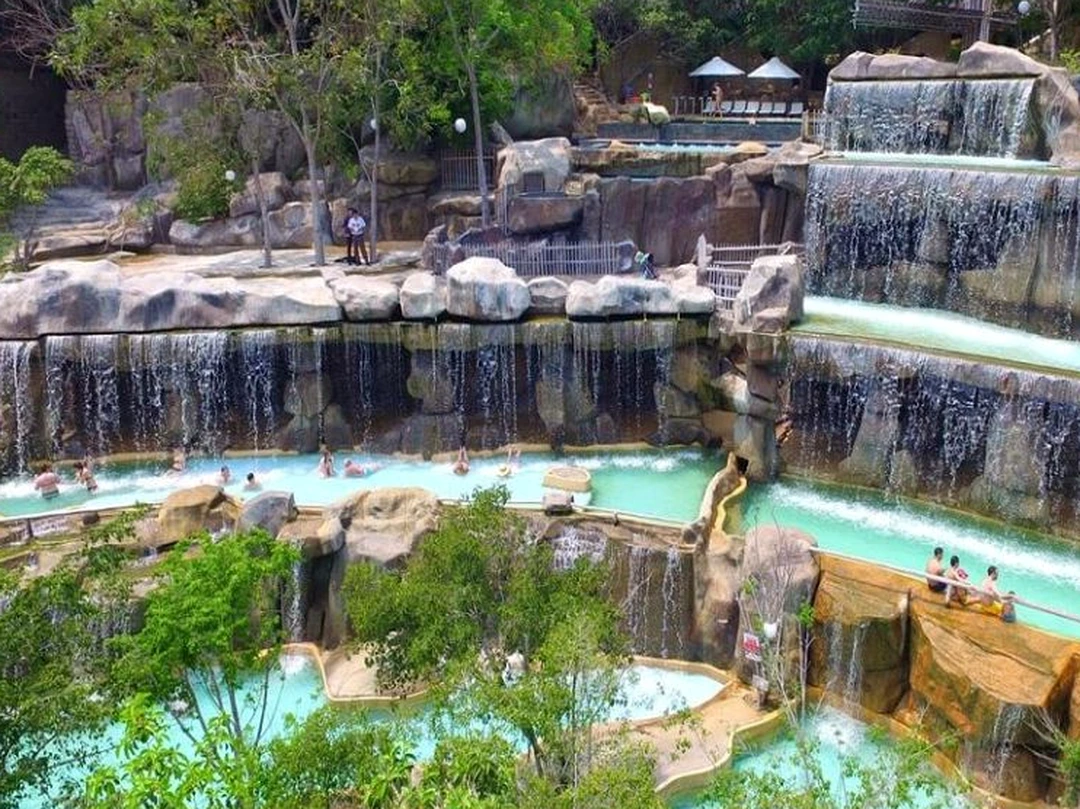
The crowning highlight of the complex’s architectural artistry lies in the seamless marriage of artistic stonework and natural hydrothermal flow. The hot mineral soaking pools are terraced to follow the natural contours of the mountainside, cradling underground spring veins that have surfaced for ages. Here, stone carving avoids any stiff, machine-made rigidity; instead, stones are meticulously hand-hewn to mimic natural rock rapids along the Cai River basin, evoking the sensation that warm mineral waters have flowed through this very spot for thousands of years. The landscape is laid out according to traditional feng shui principles of “backed by mountains, facing water,” simultaneously capturing vital terrestrial energy from deep within the earth and framing sweeping views of the tranquil Cai River drifting lazily toward the open sea, crafting an atmosphere that is serene and sacred yet deeply poetic.
To capture this majestic, nostalgic beauty in full, professional photographers and travel journalists frequently share two unmissable “million-view” photo spots. The first is located at the upper soaking pool area, which commands a breathtaking panoramic vista over the entire emerald Cai River valley at the base of the mountains. The ideal window for photography here is at dawn (from 5:30 AM to 6:30 AM), when wisps of morning mist linger over the steaming thermal waters and the first rays of sunlight filter through bamboo canopies, producing an ethereal, fairyland lighting effect. The second spot sits along the winding cobblestone bridge spanning the landscaped mineral pools and cascading waterfalls. Sunset (from 5:00 PM to 6:00 PM) marks the golden hour when warm amber light bathes the terracotta brick walls and thatched roofs, reflecting off the glassy water surface to yield a nostalgic, contemplative frame rich in Eastern cultural resonance.
Stepping through the gates of the I-Resort Religious Heritage and Hydrothermal Landscape Complex, visitors do not merely enter a modern temperate resort; rather, they feel as though they are traveling back in time to touch the sedimentary wellspring of ancient Champa history and traditional Vietnamese cultural space. The opening experience that awakens all the senses is a mountain trek paired with a scenic boat ride along the lower Cai River in Nha Trang. Seated aboard a rustic wooden boat gliding over cool waters and gazing into the distance, travelers are captivated by the sublime scenery where “mountains and rivers converge.” Undulating mountain ranges embrace the winding river like a soft silk ribbon shimmering in the golden morning sun. Each gentle dip of the oar echoes softly across the tranquil expanse, immersing travelers in untamed nature as they listen to mountain breezes rustling through ancient tree canopies and feel the pulse of heaven and earth bringing stillness to the soul.
Leaving the river behind, the journey guides visitors onward to a serene, reverent spiritual worship space. Tucked beneath shady trees and natural tectonic rock formations, indigenous shrines exude a quiet, solemn beauty. Incense smoke curls gently upward from altars dedicated to local deities, evoking the ancient origins of the “water sanctuary” (tirtha) faith. Standing before this sacred precinct, visitors find their thoughts settling, shedding the bustle and anxieties of urban life. The harmony between heaven and earth, the spiritual vitality of the subterranean thermal springs, and the devotion of worshippers generate a distinctive energy field that leaves everyone feeling at peace, as if cleansed in both body and mind by the sacred waters of their forebears.
The pinnacle of awe and emotional elevation arrives when visitors stand at the highest vantage point of the complex, taking in a sweeping panorama of the Cai River valley and the coastal city of Nha Trang from above. Below lie architectural clusters nestled into the landscape, blending lush foliage, the earthy brown tones of traditional materials, and delicate plumes of rising thermal steam into a magnificent tableau. In the distance stretch peaceful hamlets and verdant rice paddies running along river dikes—a timeless portrait of Vietnamese rural life preserved intact across centuries.
Bringing this deeply moving exploration to a close is an elevated culinary experience celebrating the renowned specialties of the lower Cai River region. Surrounded by open natural scenery, guests savor rustic yet richly flavorful local dishes such as fragrant braised Cai River goby with black pepper, crisp Ninh Hoa grilled pork rolls wrapped in rice paper with wild forest herbs, and fresh seafood caught directly off the coast of Khanh Hoa. Each dish is not merely a union of fresh, wholesome ingredients, but also embodies the dedication and culinary heritage passed down through generations in the Land of Agarwood. Sipping a warm cup of herbal tea while savoring authentic local flavors, visitors experience a profound connection uniting landscape, history, culture, and people—leaving a lingering impression in the heart of every traveler from afar.
Welcoming guests year-round, the I-Resort Nha Trang Religious Heritage and Hydrothermal Landscape Complex remains a must-visit destination where modern wellness therapy meets a thousand-year-old historical and cultural space. To ensure your exploration goes as smoothly and fulfilling as possible, the complex opens daily from 8:00 AM to 8:00 PM, including all public holidays throughout the year. The best time to visit is from January to August, when Nha Trang enjoys dry, sunny, and warm weather—ideal for soaking in the natural hot mineral waters and touring architectural spaces steeped in ancient Champa heritage.
Regarding the latest published ticket prices, the resort offers a wide range of service packages tailored to every visitor’s needs. The basic herbal hot mineral soaking package ranges from approximately 300,000 VND to 450,000 VND for adults and 150,000 VND to 250,000 VND for children, including natural mineral mud baths, soaking in specialized hot mineral pools, and access to water slides and aquatic attractions. For visitors wishing simply to admire the scenery, stroll the grounds, and explore the historical and cultural heritage of the lower Cai River region, management maintains an economical general eco-sightseeing ticket priced at just 60,000 VND to 100,000 VND per visit.
The most convenient route from Nha Trang city center to I-Resort (located in Xuan Ngoc Hamlet, Vinh Ngoc Commune) covers roughly 8 to 10 km. You can travel by motorbike, private car, or tourist bus by crossing Xom Bong Bridge, turning onto 2 Thang 4 Street, and continuing along the Cai River embankment toward Chuyen Bridge or following the riverside concrete road directly to the heritage complex. This route is open and uncongested, offering peaceful views of rural river life transitioning seamlessly from the bustling coastal city to the tranquil countryside.
Furthermore, because this site holds sacred religious and landscape significance dating back to the Champa and Dai Viet eras, visitors are asked to strictly observe the dress code. Neat, modest swimwear is recommended within the mineral and mud bathing zones; however, when moving through general landscaped areas, shrines, or cultural artifact exhibition spaces, guests are required to wear modest, respectful attire—such as a cover-up wrap or full-length clothing—to show reverence for the local spiritual sanctuary.
To enjoy a seamless holiday and take in the full splendor of I-Resort Hot Springs without worrying about transportation arrangements, admission tickets, or itinerary planning, travelers can opt for VDS Travel’s premier all-inclusive Nha Trang tour packages. Every itinerary is thoughtfully timed for photo check-ins when the scenery is at its most radiant, accompanied by knowledgeable local guides and top-tier hotel and dining standards.