Rising majestically along the border between Nagarzê County and Gyantse County in the Tibet Autonomous Region, Karola Glacier (卡若拉冰川) cascades like a colossal silver silk ribbon draped from the summit of Nojin Kangsang—one of the four most sacred snow peaks in the Land of Snows. Formed over millions of years beginning in the Quaternary period, this eternal ice mass preserves the primordial geological memory of the Earth’s crust across every fold of pure white snow. In Tibetan spiritual consciousness, towering Nojin Kangsang is far more than a masterpiece of natural architecture; it is the sacred abode of protective deities, where millennial ice stands as a natural shield safeguarding the peace of the Qinghai–Tibet Plateau across the shifting tides of time.
Viewing Karola Glacier up close from the windswept mountain pass, travelers are immediately awestruck by its massive glacial tongue creeping down from the high summit right to the edge of the gray stone valley floor. Beneath the intense sunlight of the high plateau, tiered walls of ancient ice shimmer in ethereal sapphire-blue hues, laced with deep crevasses and razor-sharp seracs pointing heavenward like drawn blades. The stark visual contrast between the dazzling white of the glacier, the somber gray of slate mountain slopes, and the vibrant colors of *Lungta* prayer flags fluttering wildly in the snow-laden wind composes a surreal, solemn, and boundless panorama.
Far more than a silent natural wonder, Karola is intimately bound to the mountain pass bearing its name—a treacherous yet vital strategic corridor linking sacred Lhasa with the historic power centers of Gyantse and Shigatse. Dating back to the Tang Dynasty from the seventh through ninth centuries, as diplomatic relations blossomed between imperial China and the Tibetan Empire, Karola Pass bore the footsteps of countless travelers, merchants, and Buddhist masters. Mule and horse caravans laden with rock salt, wool, silk, and compressed tea bricks traversed perilous trails beneath the glacier’s shadow, braving bitter cold to sustain economic and cultural lifelines across the mighty Himalayas.
Spiritually, Karola’s snow-blanketed expanse has been steeped in Vajrayana teachings since the dawn of Tibetan Buddhism. Historical chronicles record that in the eighth century, during the reign of King Trisong Detsen, Guru Padmasambhava passed through this region while subduing indigenous mountain spirits, consecrating Mount Nojin Kangsang as a sacred mandala abode of Dharma protectors. From that era onward, the sacred circumambulation pilgrimage (*Kora*) circling the snow peak and Karola Glacier was established as an enduring ascetic path followed by devout believers across generations to purify karmic obstacles and pray for the peace of all sentient beings.
At the dawn of the twentieth century, Karola Glacier also stood witness to a poignant chapter of Tibetan resilience. Right inside the narrow mountain pass beneath the foot of this glacier, fierce fighting erupted in 1904 as Tibetan defenders resisted the British expeditionary force led by Francis Younghusband. Karola’s rugged terrain served as a natural redoubt where the pride of local warriors met eternal ice and snow. In 1996, that tragic epic was immortalized on screen by director Feng Xiaoning in the acclaimed film *Red River Valley* (*Honghegu*). On-location scenes filmed directly at Karola introduced the glacier’s majesty to global audiences while transforming the pass into an enduring natural monument to courage on the Roof of the World.
Positioned right along the natural boundary separating historic Shannan (Lhoka)—the ancestral cradle of Tibetan civilization—from fertile Shigatse, Karola Glacier stands like a monumental screen across the snowy plateau. In indigenous Tibetan geomancy and cosmology, Mount Nojin Kangsang, soaring to 7,191 meters above sea level, ranks among the four supreme sacred mountains, home to the mighty eastern guardian deity. Karola’s glacial ribbon drapes from Nojin Kangsang’s high crest like a colossal auspicious *khata* scarf, forming an eternal geomantic convergence where mountain winds and snow gather vital cosmic energy. Following the dramatic route of National Highway G318, the road winds over breathtaking passes right up to the threshold of this frozen realm, opening onto an isolated landscape of surreal alpine sanctity.
Geomorphologically, Karola Glacier is a textbook valley glacier covering an estimated surface area of roughly 9.4 square kilometers. This immense ice mass has accumulated over millennia from relentless snowstorms battering the summit of Nojin Kangsang, undergoing intense mechanical compression that transforms porous snow layers into dense, crystalline blue ice. Karola’s most remarkable and rare structural feature is its dramatic glacier tongue: curving down the valley trough, the ice snout descends all the way to an elevation of 5,022 meters above sea level. A vertical drop of more than 2,100 meters between the accumulation summit and the glacier terminus creates a sheer, cascading wall of ice suspended right before the traveler’s eyes—delivering an overwhelming visual testament to prehistoric geological forces.
For all its grandeur, Karola’s landscape remains acutely sensitive to shifts in global biosphere temperatures. Under the pressure of climate warming, the glacier’s terminus has been retreating measurably at an average pace of 30 to 40 meters per decade. As ancient ice layers melt and recede toward higher slopes, glacial meltwater collects at the foot of the mountain, forming scattered proglacial ponds nestled amidst rocky moraine ridges. This ongoing geological transformation exposes dark gray bedrock hidden beneath thick ice for tens of thousands of years while underscoring the fragile, dynamic nature of high-altitude cryosphere ecosystems.
To balance travelers’ desire to witness this natural masterpiece with strict ecological conservation imperatives, landscape planning at Karola strictly respects existing geomorphology. Rather than allowing unregulated foot traffic across the ice surface—which causes pollution and mechanical erosion—visitor access is channeled along wooden walkways and dedicated viewing platforms set back safely from the glacier snout. This ecological buffer zone protects fragile young glacial lakes and sparse alpine tundra from human thermal impact while providing sweeping panoramic vantage points where stone, ice, and Tibetan skies merge in timeless harmony.
Viewed through the lens of spatial scale, Karola Glacier unfolds like a surreal natural sculpture stretching across 9.4 square kilometers along the northeastern flank of sacred Nojin Kangsang. Its vertical relief spans a breathtaking elevation drop from the 7,191-meter snow peak down to the glacier terminus at 5,022 meters. This steep incline forms a sheer wall of pure ice where millennia of pressure reveal glowing sapphire-blue strata suspended directly beside the arterial highway linking Tibet’s historic cities. The dramatic contrast between dark granite cliffs and pure white glacial ice highlights a geological monument at once colossal and delicate before shifting continental climates.
Unlike most isolated glaciers deep in the Tibetan interior that require arduous multi-day expeditions, Karola enjoys unmatched accessibility thanks to precision-engineered modern transport infrastructure. The modern railway linking Lhasa and Shigatse completes the journey in roughly 2 hours and 45 minutes, pairing seamlessly with paved arterial highways—notably famed National Highway G318 and Provincial Road S204—built to withstand heavy loads and extreme sub-zero temperature swings. Celebrated by civil engineers as a triumph of mountain roadbuilding, this smooth asphalt highway hugs the snowy mountainside directly past the glacier edge, allowing travelers to behold a world-class glacier up close without strenuous trekking.
Where human infrastructure meets the glacial realm, the main visitor rest stop is neatly laid out beside National Highway G318 with a spacious parking area accommodating overland tour coaches. Beyond practical amenities, the site incorporates local spiritual heritage through a traditional flat-roofed Tibetan shrine (*Lhakhang*) featuring whitewashed stone walls trimmed in deep ochre-red standing serene against mountain winds. Encircling the viewpoint stand tall poles strung with *Lungta* wind-horse prayer flags in five elemental colors fluttering briskly in the snowy breeze, creating a sacred visual focal point that honors plateau geomancy and invites quiet reverence at the threshold of eternal snow.
To further harmonize immersive sightseeing with strict preservation of this pristine natural landmark, future site planning emphasizes low-impact eco-architectural solutions. Planned upgrades focus on elevated timber boardwalks paired with reinforced glass viewing platforms extending outward to offer close-up perspectives of glacial crevasses and ice spires from a safe distance. Supported on metal pilings anchored into permafrost, elevated walkways prevent slips on icy terrain while completely eliminating direct human footsteps on the sensitive glacier tongue—preserving Karola’s unspoiled splendor for generations to come.
Amidst this serene alpine sanctuary above 5,022 meters, Karola Glacier is completely devoid of man-made stage productions or neon-lit nightlife. Extreme high-altitude weather, thin air, and sub-zero temperatures preclude commercial development or overnight lodging right beside the ice. Yet this very absence of loudspeakers and artificial lasers restores Karola to its purest, most majestic essence: a colossal open-air theater of nature where the cosmos choreographs an eternal ballet of sunlight, mountain wind, and silent time.
Karola’s grandest natural spectacle unfolds in full daylight, beginning at dawn over towering 7,191-meter Nojin Kangsang—revered in Tibetan cosmology as the sacred seat of the guardian mountain spirit Nojin Kangwa Sangpo. As the sun crests the plateau horizon, dust-free light pierces the thin atmosphere to illuminate millions of years of compressed glacial ice. A cascading river of pure white ice plunges down from mid-sky, striking a dramatic visual contrast against the weathered reddish-brown Paleozoic shale slopes of the valley below. No stage lighting could ever replicate this pure palette: fresh white snow, deep sapphire hidden inside thousand-year-old crevasses, and earthy ochre stone gleaming brilliantly under golden highland sunbeams.
There is no recorded narration at Karola—only the rush of wind through deep mountain gorges and the low, resonant crack of shifting ice moving millimeters across the ages. Those subtle movements create a tranquil yet commanding rhythm like the timeless breath of Tibet itself. Along the historic pass once traversed by ancient trade caravans and pilgrims, bright midday sunlight turns the glacier surface into a giant mirror reflecting the sky, refracting sunbeams through countless ice crystals into shifting halos as clouds drift across the summit.
As late afternoon shadows lengthen and the final vehicles descend the pass toward lower-altitude towns such as Gyantse or Lhasa before black ice coats the road, Karola enters its most mystical nocturnal act in absolute solitude. High-plateau twilight drapes Nojin Kangsang in ribbons of burnished gold fading into deep rose before velvety night falls. Free from light pollution or urban haze, night beneath Karola Glacier unveils a breathtaking astronomical canvas of millions of stars scattered across black velvet, with the Milky Way arching directly over the luminous ice wall—evoking profound meditative awe at human brevity before nature’s eternity.
Beneath the proud silhouette of snow-crowned Nojin Kangsang and Karola’s eternal ice above 5,000 meters, the regional cuisine of neighboring Gyantse and Shigatse is far more than refined gastronomy—it is a resilient philosophy of survival honed over millennia. In the thin, dry air and year-round chill of the Roof of the World, the body requires dense calories, healthy fats, and balanced mineral salts to counter altitude fatigue and bone-chilling winds. Every traditional dish and drink crafted here reflects pure pastoral heritage, capturing the essence of highland pastures and time-honored preparation methods.
Holding pride of place in everyday Tibetan life are roasted barley *Tsampa* and steaming butter tea (*Po Cha* / *Bod Ja*). To prepare authentic butter tea, locals simmer compressed dark brick tea for hours into a potent concentrate, pour it into a tall wooden churn (*chandong*), and add rich yak butter alongside mineral-rich Himalayan pink rock salt. Vigorous plunging emulsifies fat and tea into a smooth, pale-gold beverage brimming with comforting warmth. Acting like a natural elixir, butter tea soothes chapped lips, steadies circulation, and warms the core against icy glacial gusts. It also pairs inseparably with *Tsampa*—highland barley roasted by hand in hot sand and stone-ground into fragrant flour. Diners mix the flour with hot butter tea and dried *chhurpi* cheese curds right inside their wooden bowl using nimble fingers, kneading small, nutty dough balls packed with sustained energy for crossing high mountain passes.
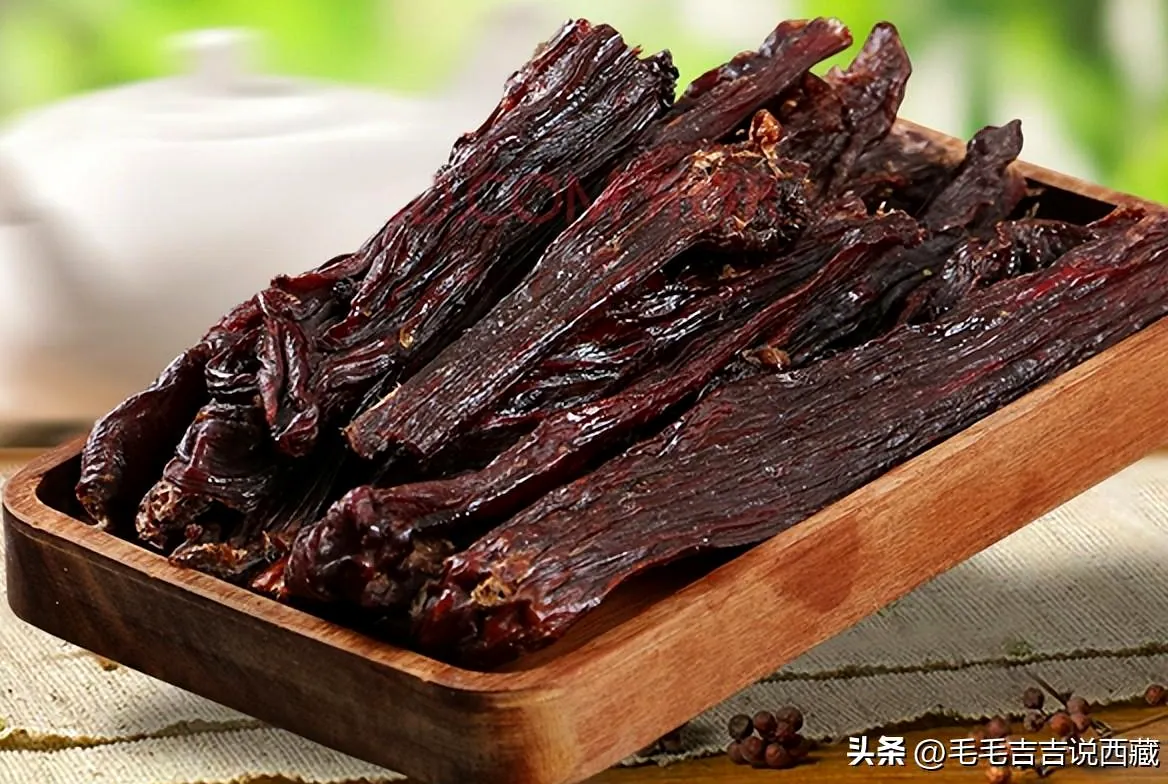
Exploring the snow-fringed lands around Karola remains incomplete without tasting air-dried yak meat, known locally as *Sha-kham*. During harsh winter months when temperatures plunge well below freezing, prime cuts of fresh yak beef are lightly rubbed with rock salt and hung beneath the eaves of sturdy stone homes to cure in dry snow winds and intense high-altitude sunshine. Slow natural curing over several months preserves the meat’s deep crimson color and rich protein without any artificial preservatives. Shaved into paper-thin slices with a pocket knife and chewed slowly, *Sha-kham* releases deep savory sweetness and the clean, wild aroma of alpine grasses.
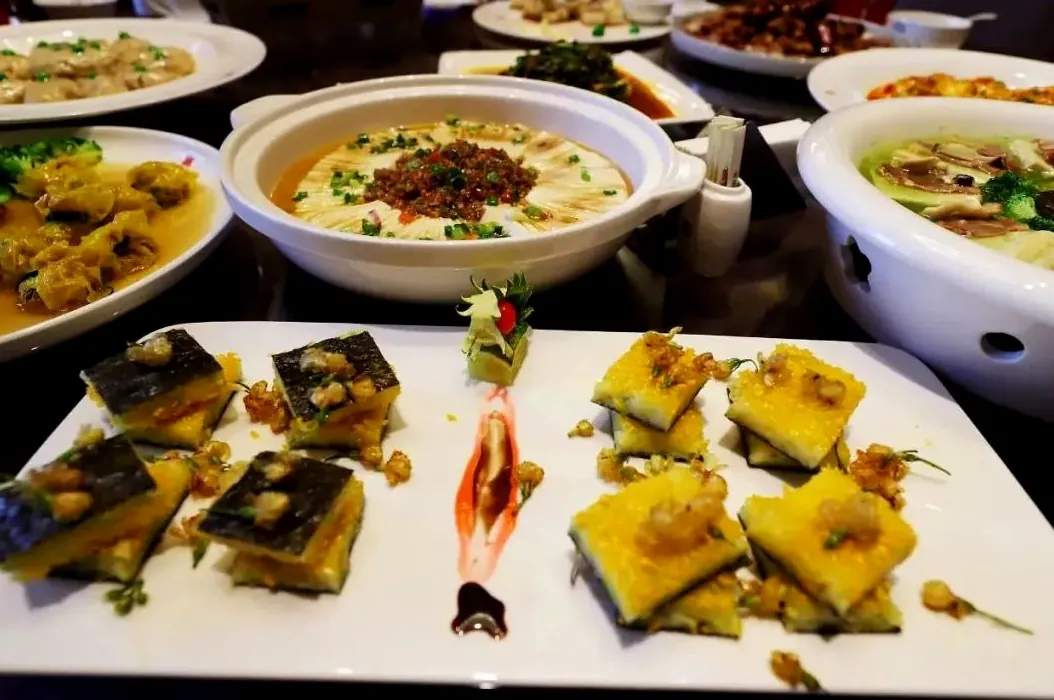
When dusk falls over historic towns along the Gyantse–Shigatse road, hearth-lit kitchens welcome travelers with the comforting aromas of *Thukpa* noodle soup and traditional yak hot pot. Steaming bowls of *Thukpa* combine hand-rolled wheat noodles with rich broth simmered from yak bones and highland mutton, garnished with leeks, wild roots, and warming Tibetan dried chilies. Meanwhile, Gyantse-style yak hot pot brings people together around glowing charcoal-heated copper cauldrons filled with crystal-clear yet deeply flavorful marrow broth, wild snow-mountain mushrooms, and tender Tibetan tofu—offering heartfelt warmth and shelter amidst the frozen plateau.
Visiting Karola Glacier along the Nagarzê–Gyantse border requires careful preparation in both travel documentation and physical readiness. Because the site lies within a regulated area of the Tibet Autonomous Region, international travelers must hold two mandatory permits in addition to a valid Chinese visa: the Tibet Travel Permit (TTP, issued by the Tibet Tourism Bureau) and the Aliens’ Travel Permit (issued by local public security authorities). These permits are inspected rigorously at highway checkpoints along the scenic corridor connecting Lhasa, sacred Yamdrok Lake, and Shigatse, with travel arranged via licensed tour vehicles following winding gorge highways up toward the glacier.
The greatest physical challenge at Karola is Acute Mountain Sickness (AMS), as the viewpoint and parking area sit at a lofty nominal elevation of 5,022 meters above sea level. At this altitude, atmospheric pressure and oxygen concentration drop to nearly half of sea-level levels. Upon stepping out of your vehicle, avoid running, jumping, speaking loudly, or making sudden vigorous movements, which can rapidly trigger severe headaches, shortness of breath, nausea, or acute altitude complications. Move slowly and rhythmically with deep breaths, sip warm water regularly, and keep portable medical oxygen canisters close at hand to support smooth acclimatization.
Weather around massive Nojin Kangsang shifts rapidly, with temperatures consistently running 10°C to 15°C colder than valley towns below and biting winds funneling through the pass. Dress in adaptable layers topped with a windproof, waterproof down jacket. Furthermore, intense ultraviolet reflection off eternal snow and ice can cause snow blindness (photokeratitis) if viewed unprotected. Wearing UV400-rated polarized sunglasses, applying broad-spectrum SPF 50+ sunscreen, and wearing a warm knit hat covering your ears and temples are essential survival precautions.
The viewing area is thoughtfully laid out along the roadside observation stop beside National Highway G318, offering panoramic vistas of the gleaming white glacial tongue cascading down from the summit. Visitors must respect geological conservation rules by remaining strictly on wooden viewing platforms and never climbing over safety barriers onto unstable moraines or crevassed ice edges. Accumulated over millions of years yet retreating steadily under global warming, this fragile cryosphere ecosystem is revered by local Tibetans as a sacred natural monument.
A subtle yet important tip for travelers is staying alert against commercialized roadside traps. At rest stops near the glacier, vendors frequently pitch purported luxury medicinal goods such as Tibetan saffron, Nagqu caterpillar fungus (*Cordyceps*), or Dzi beads at wildly inflated prices and uncertain authenticity. To keep your journey to the Roof of the World pure, unhurried, and worry-free, choosing a transparent, 100% shopping-free all-inclusive China tour package lets you admire this breathtaking glacial wonder with complete peace of mind.