Nestled at the magnificent confluence of the surging Yarlung Tsangpo and the gentle Nyang River on the U-Tsang plateau, Shigatse—known in ancient Tibetan texts as Samdruptse, meaning “the land of fulfilled wishes”—has for millennia held its position as the inviolable spiritual and political heart of the Rear Tibet region. Long before the marks of time cast shadows upon its stone walls, this fertile valley, situated at an altitude of over 3,800 meters above sea level, served as a vital trade outpost and a cradle for the most dramatic transformations in the history of the Land of Snows. It has witnessed the rise and fall of regional monarchies and fierce rivalries between ancient sects, ultimately evolving into a brilliant citadel under the radiant aura of the authoritative Panchen Lama lineage.
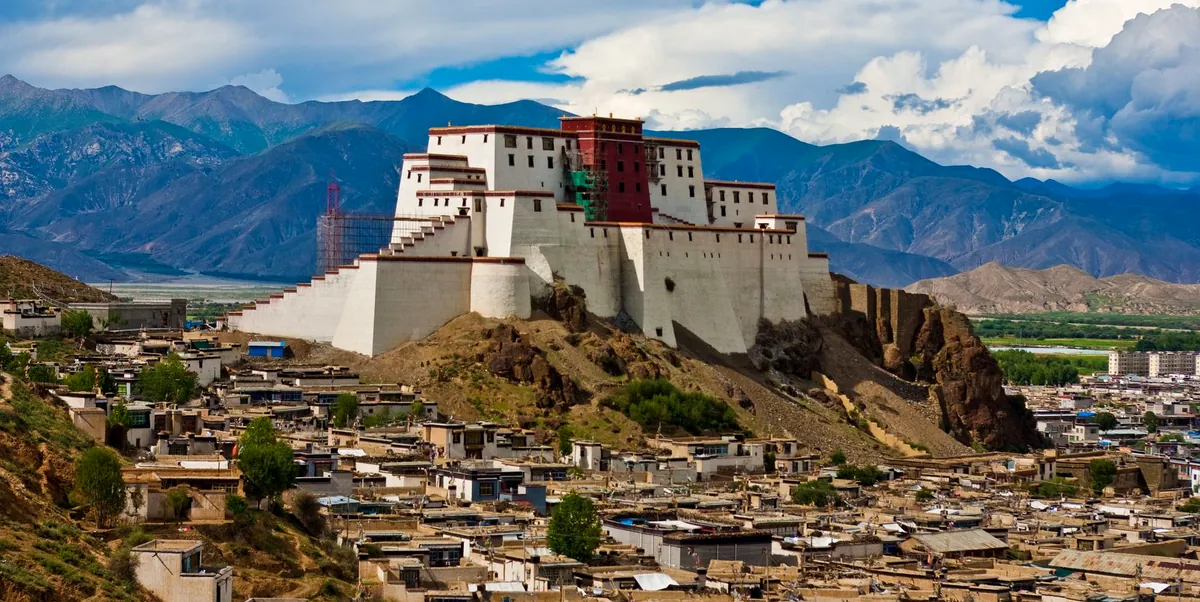
Observing the panoramic view of Shigatse from above, travelers are easily overwhelmed by the majestic Tashilhunpo Monastery complex, which reigns majestically on the slopes of the sacred Drolma Mountain. Its ochre and pristine white walls wind along the grey rocky slopes, highlighted by a system of dazzling gilded roofs reflecting the deep blue plateau sky. The multi-layered architecture with its symmetrical black-framed windows, combined with the kora path at the foot of the mountain, creates a spatial composition that is both solemn and expansive, perfectly capturing the exquisite harmony between human craftsmanship and the rugged terrain of the Himalayas.
Tracing history back to the 14th century, as the Phagmodrupa dynasty weakened, this land witnessed the rise of the Rinpungpa family and subsequently the Tsangpa dynasty, which dominated the region. The Tsangpa kings chose the central rocky hill to build the fortified Samdruptse Dzong—a military and administrative symbol with steep slate ramparts, which served as the inspiration for the later Potala Palace architecture. During the turbulent 16th and early 17th centuries, Shigatse became the fortified headquarters of the Red Hat Karma Kagyu sect, directly opposing the powerful expansion of the Yellow Hat Gelugpa sect in Lhasa. Fierce military clashes along the banks of the Nyang River not only reshaped the boundaries of power but also turned Shigatse into a battlefield that determined the religious destiny of the entire Tibetan region.
A historical turning point occurred in 1447 when Master Gendun Drup, the primary disciple of Tsongkhapa and later posthumously named the First Dalai Lama, personally founded Tashilhunpo Monastery right in the Shigatse valley. By 1642, the political landscape shifted completely when the Khoshut Mongol army, under the command of Gushri Khan, entered to pacify Rear Tibet at the request of the Fifth Dalai Lama, Ngawang Lobsang Gyatso, effectively overthrowing the Tsangpa dynasty. From that fateful moment, Lobsang Chökyi Gyaltsen—the great teacher of the Fifth Dalai Lama—was officially honored as the Fourth Panchen Lama, establishing Tashilhunpo as the eternal seat of the Amitabha Buddha incarnation. Shigatse entered a unique era of dual power, where the Panchen Lamas, on behalf of the spiritual realm, governed both the religious and secular life of the Rear Tibet region.
During the Qing Dynasty’s rule over China, Shigatse continued to face existential challenges from foreign military threats. The climax came in the late 18th century when the Gurkha expeditionary force from the Kingdom of Nepal crossed the Himalayan border, looting Tashilhunpo and directly threatening the survival of the monastic community. Emperor Qianlong immediately ordered a massive army led by General Fu Kang’an to cross thousands of miles of ice and snow into Tibet, repelling the invaders and restoring peace to the Nyang valley. Following this event, the Manchu court and high-ranking lamas established the Golden Urn system to tighten the management of the resident Imperial Commissioners, while further reinforcing the special geopolitical stature of Shigatse. Transcending the historical marks of swords and royalty, Shigatse preserves its ancient soul intact, standing firm as an immortal testament to the human will to survive and the unwavering faith on the roof of the world.
Situated at an average altitude of approximately 3,840 meters above sea level, Shigatse reigns over one of the most fertile alluvial valleys in the legendary Tsang region, where two vital waterways converge: the surging Yarlung Tsangpo flowing from the west and the gentle Nyang Chu tributary winding from the southeast. This terrain is likened in ancient Tibetan geographical texts to a giant jade bowl opening amidst the rugged folds of the Himalayas and the Gangdise mountain range. It is this miraculous intersection of two hydrological systems that has deposited a vast, gently sloping alluvial plain, shattering the stereotype of the barren roof of the world and transforming the Shigatse valley into a fertile granary that nurtures life and supports one of the most sacred spiritual power centers of Vajrayana Buddhism.
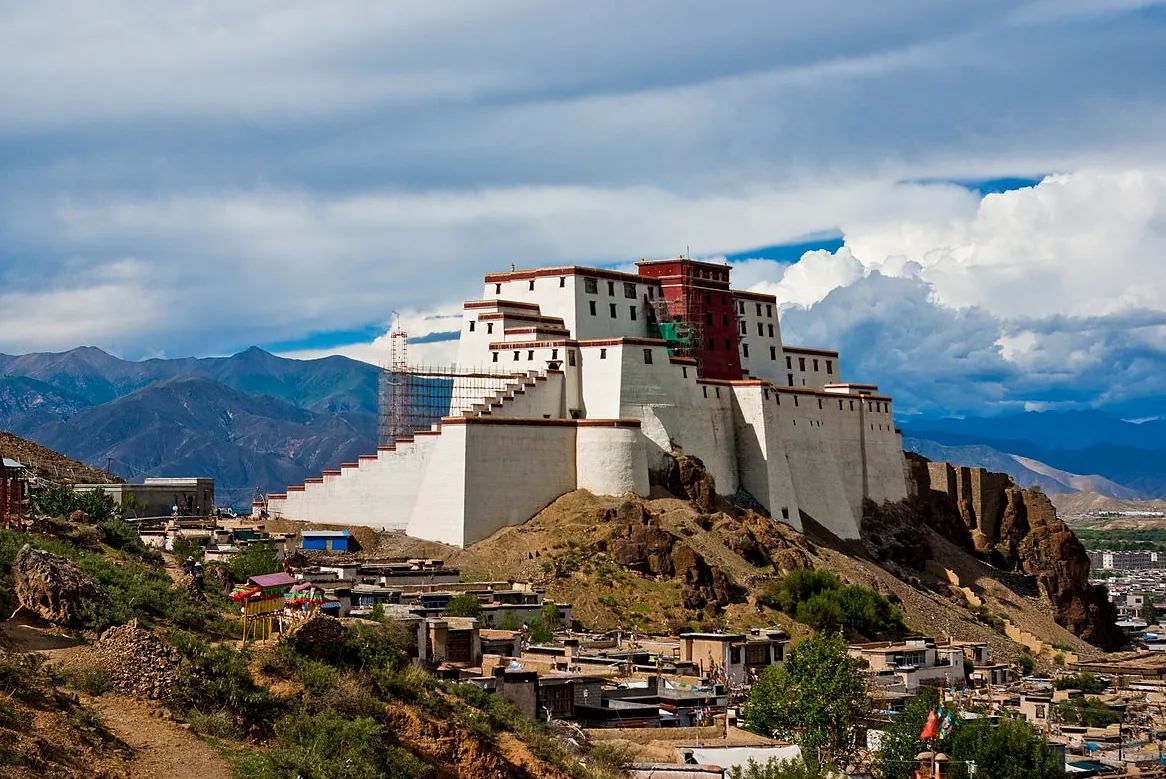
Viewed from above, the natural scenery of Shigatse presents a striking yet harmonious contrast between the wild, expansive openness of earth and sky and human architecture. Resting firmly against the rugged, limestone-grey cliffs of Mount Drolma, the massive monastery complex stands out with its pristine white walls, deep maroon borders, and glittering gilded roofs reflecting the intense sunlight in the thin atmosphere. At the foot of the mountain, the expansive alluvial valley unfolds boundlessly, where the gentle river meanders around emerald-green fields of highland barley, painting a peaceful oasis amidst a magnificent, tranquil, and profoundly serene landscape.
In traditional Tibetan geomancy (Sa-ché), the location of the ancient city and the grand Tashilhunpo Monastery exhibits a flawless alignment with sacred earth-energy principles. Mount Drolma, the embodiment of the compassionate Tara Bodhisattva, acts as a sturdy natural screen shielding the area from bitter northern winds, establishing a textbook “back to the mountain, facing the water” layout oriented toward the gentle Nyang Chu River. Ancient master builders were not only well-versed in geomancy but also deeply understood highland aerodynamics: all major structures were planned in terraced tiers following the natural slopes of the mountain, optimizing solar radiation absorption during harsh winters while completely eliminating the risk of erosion and flooding when spring snowmelt from the mountain ranges rushes into the basin.
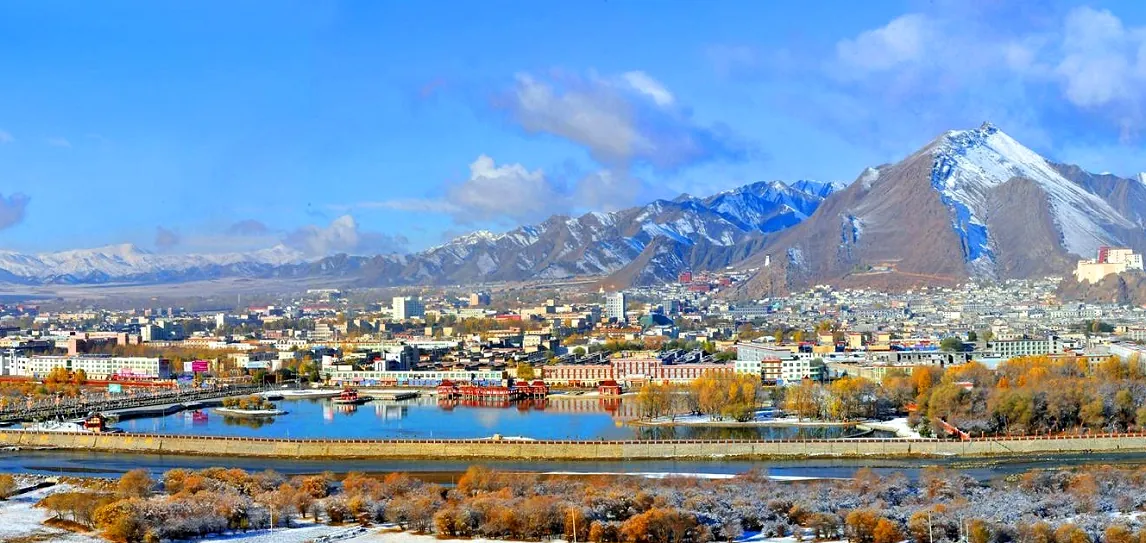
The climate of Shigatse enjoys a rare advantage thanks to its sheltered basin structure, boasting over 3,000 hours of bright daylight annually and significant daily temperature ranges. The alluvial soil deposited by the Nyang Chu River is not only mineral-rich but also fosters lush vegetation that sharply contrasts with the surrounding rocky desert landscape. Along canal banks and river dikes, gnarled ancient weeping willows sway in the breeze, interspersed with endless fields of highland barley that turn a brilliant golden hue with the arrival of autumn. This ecosystem provided abundant food supplies, turning the region into a key agricultural and commercial hub for all of Rear Tibet for centuries.
Regarding the overall regional landscape, Shigatse serves as a strategic gateway connecting the heart of Ü (Lhasa) with the remote borderlands adjoining Nepal and the northern slopes of Mount Everest (Chomolungma). The network of river valleys opened pathways for ancient caravans traversing treacherous snowy passes exceeding 5,000 meters, while the rock-solid terrain of the basin sheltered the city from blinding sandstorms blowing from the northern deserts. Every topographical detail, from the meandering rivers to the gentle slopes of the talus foot-hills, has been transformed into a distinct architectural and cultural masterpiece, making Shigatse not merely a name on a map but truly an orchestrated creation of nature and indigenous wisdom.
The urban landscape of Shigatse stretches across the fertile basin at the confluence of the Yarlung Tsangpo and Nyangchu Rivers, yet the architectural soul and authoritative presence of the entire region are fully defined by the impressive Tashilhunpo Monastery firmly rooted on the slopes of Mount Nyima. Viewed from afar, this architectural complex resembles an independent monastic city sprawling across nearly fifteen hectares, ascending gradually along the natural terrain. The spatial stratification strictly adheres to hierarchical order and Tantric cosmological views, where massive stone structures seamlessly combine fortified defensive functions with sacred ritual spaces, creating an ensemble that feels both solemn and awe-inspiring against the backdrop of the pristine highland sky.
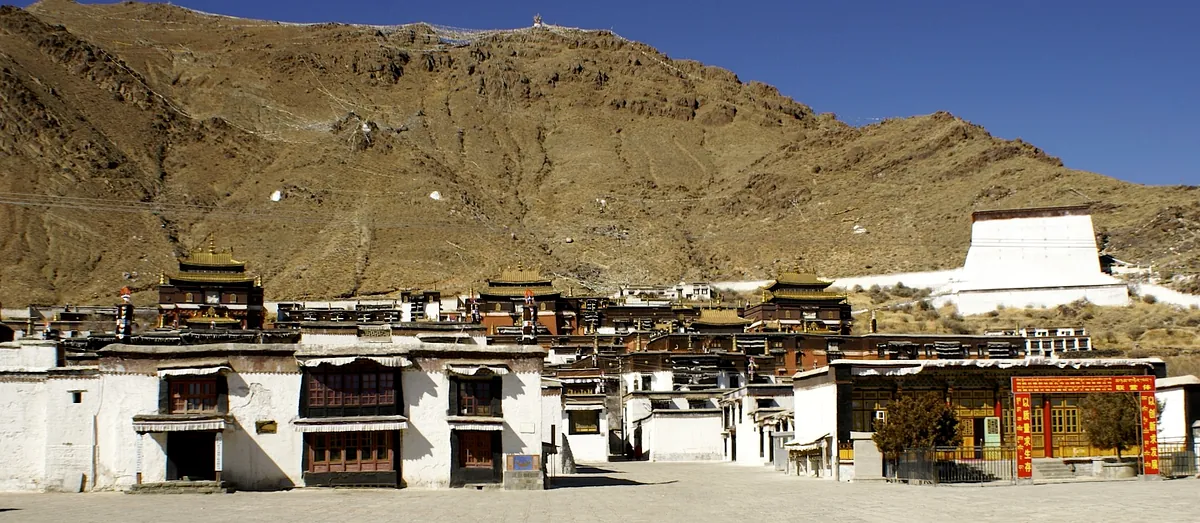
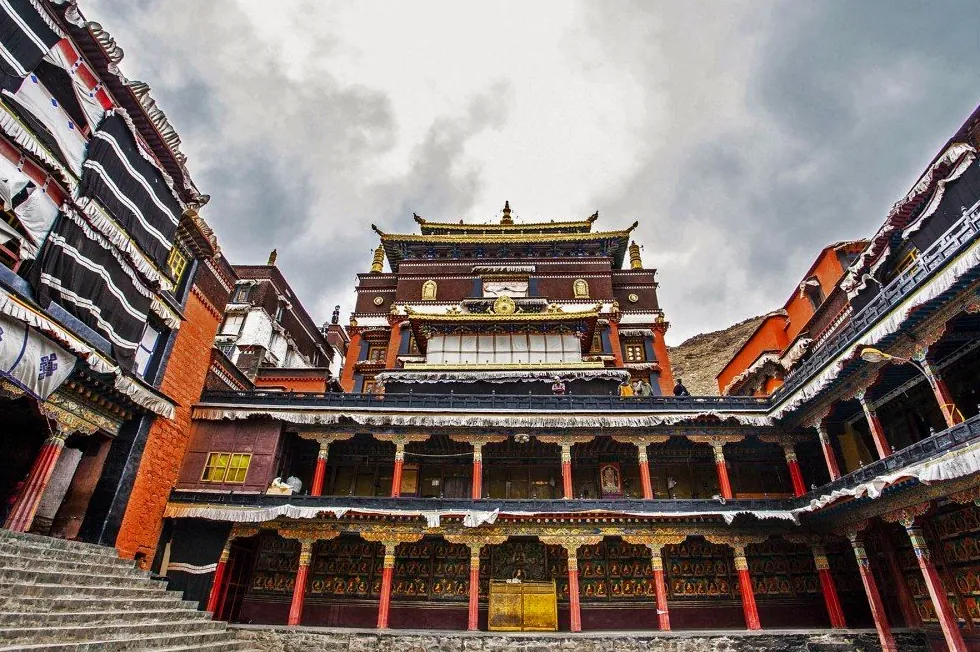
The most precious visual highlight of the monastery complex is the panoramic vista of tiered hall buildings rising resolutely along the barren granite slopes, where sloping snow-white stone walls contrast vividly with the deep crimson of the main sanctuary and the sparkling golden light radiating from the gilded copper rooftops. Under the intense light characteristic of this land close to the heavens, the intricately carved wooden balconies, wind-blocking black-and-white striped curtains, and majestic chortens seem to merge as one with the rugged mountain terrain, capturing the surreal beauty and vibrant vitality of one of Tibet’s most bustling Buddhist centers.
The architectural core of the Tashilhunpo interior is concentrated in the Maitreya Chapel, which houses the world’s largest gilded bronze statue of the Maitreya Buddha seated on a giant lotus throne, commissioned during the reign of the 9th Panchen Lama. This structure is an indigenous engineering marvel featuring a statue height of over twenty-six meters, consuming nearly three hundred kilograms of pure gold and over one hundred tons of cast bronze, adorned with thousands of diamonds, turquoise stones, and premium pearls. The interior space is designed with a five-tiered concentric corridor structure, allowing devotees to perform circumambulation while venerating every sacred detail of the statue—from its toes and monastic robes to its compassionate gaze resting beneath the tranquil dome.
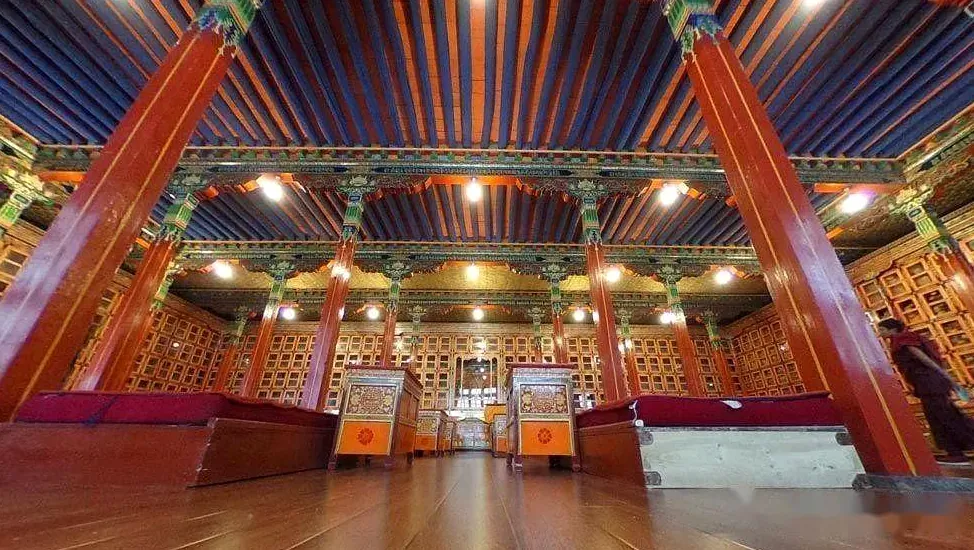
Alongside the Maitreya Hall is a magnificent system of stupa-tombs belonging to successive Panchen Lamas, most notably the Sisum Namgyal Hall, which houses the relics of the fifth through ninth incarnations, as well as the gold-plated grand mausoleum containing the remains of the tenth Panchen Lama. In terms of structural materials, these works inherit the technique of stone stacking without mortar, which has proven absolutely durable through centuries of seismic activity, utilizing a mixture of clay, straw, and butter oil to reinforce wall surfaces against the harsh, freezing climate. The red cedar beam and column systems are precisely mortised, supporting copper-tiled, gold-plated roofs crafted in a fusion of Han-Tibetan architectural styles, with the roof peaks adorned by the Dharma wheel and a pair of majestic kneeling deer welcoming the mountain winds.
Counterbalancing the solemnity of the religious center is the Shigatse Dzong fortress, standing proudly atop a granite hill in the east of the city. It was once the seat of power for the Tsangpa dynasty in the 17th century before serving as the original blueprint for the Tibetans to construct the renowned Potala Palace in Lhasa. The entire network of ancient roads and alleys in old Shigatse functioned as closed kora circuits revolving around these two poles of secular and religious power, creating an ancient, unique urban spatial structure that has endured through the flow of time in the Tsang region.
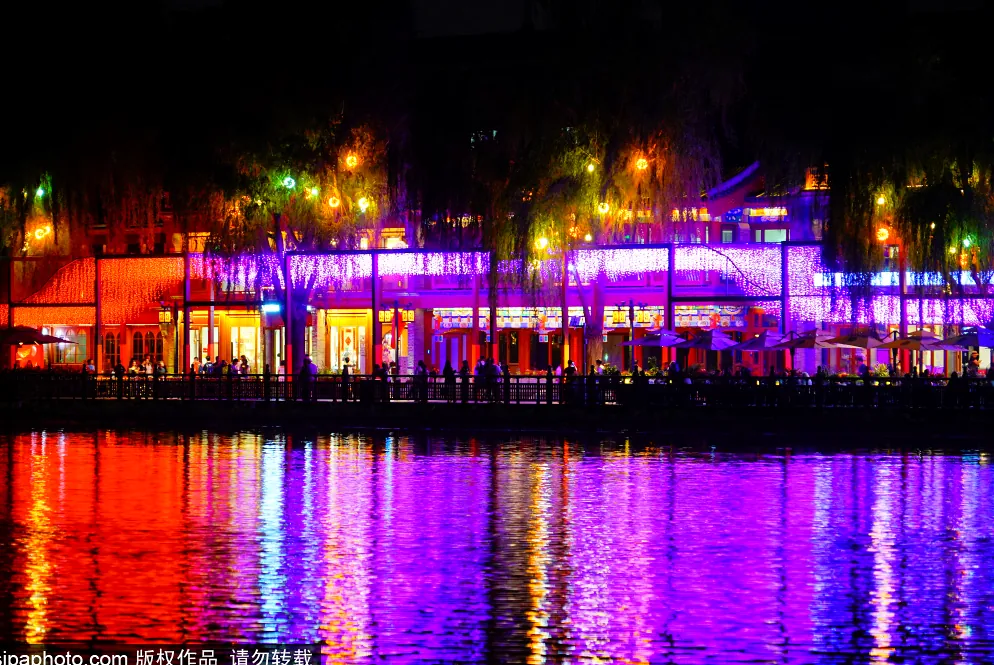
As the sunset gradually fades behind the undulating mountain ranges surrounding the Yarlung Tsangpo River valley, Shigatse sheds its daytime brilliance to don the mysterious cloak of the plateau night. The characteristic cold air at an altitude of over 3,800 meters rushes in, carrying pure breezes from the eternal glaciers. The Shigatse night is not submerged in monotonous darkness but is illuminated by an elaborate symphony of light, where ancient architectural structures and urban life blend into a mesmerizing visual art space in the heart of the fertile Tsang region.
When darkness envelops the valley, the Shigatse Dzong fortress, standing tall on its limestone outcrop, glows brilliantly under an amber-hued artistic lighting system, recreating the majestic silhouette of a miniature Potala Palace against the plateau sky. The thick, reddish-brown rammed earth walls and white lime plaster reflect a warm radiance, contrasting deeply with the deep night sky filled with stars at an altitude of nearly four thousand meters. At the foot of the fortress, ribbons of street lights wind around traditional houses, creating a magnificent visual perspective that intertwines the aura of the ancient Phagmodrupa dynasty with the tranquil breath of a frontier city.
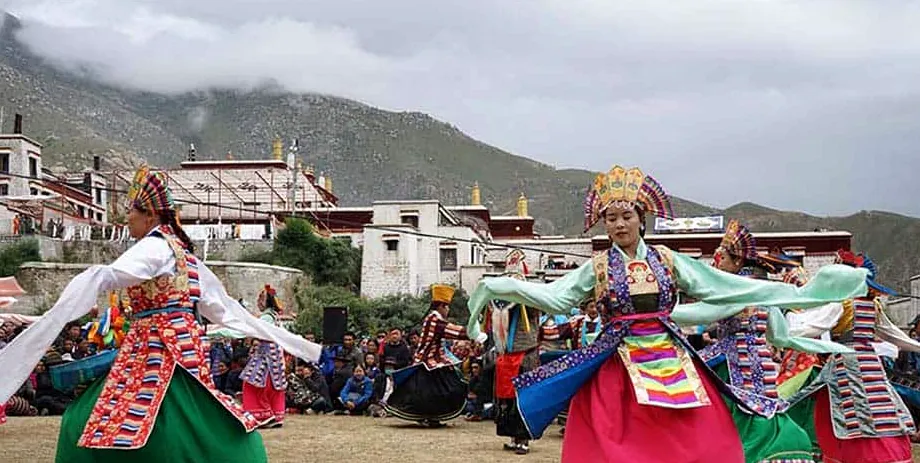
Performing arts and folk theater are the soul that defines the cultural face of this city at night. Shigatse is celebrated as the cradle of traditional Tibetan Ache Lhamo opera, a theatrical art form originating in the 14th century associated with the master Thangtong Gyalpo. In open squares and traditional cultural centers, the deep thrum of drums and the crisp resonance of rolmo cymbals herald the beginning of epic historical tales. Under the shimmering stage lights, performers in five-colored brocade silk costumes and exorcism masks move gracefully, reenacting the love story of Songtsen Gampo or profound moral tales. Alongside large-scale shows, the communal Gorshey dance erupts spontaneously in the square at the foot of the stupa. Groups of locals in warm chuba robes join hands to form large concentric circles, stamping their feet rhythmically on the granite slabs, and singing rustic folk songs that echo throughout the night.
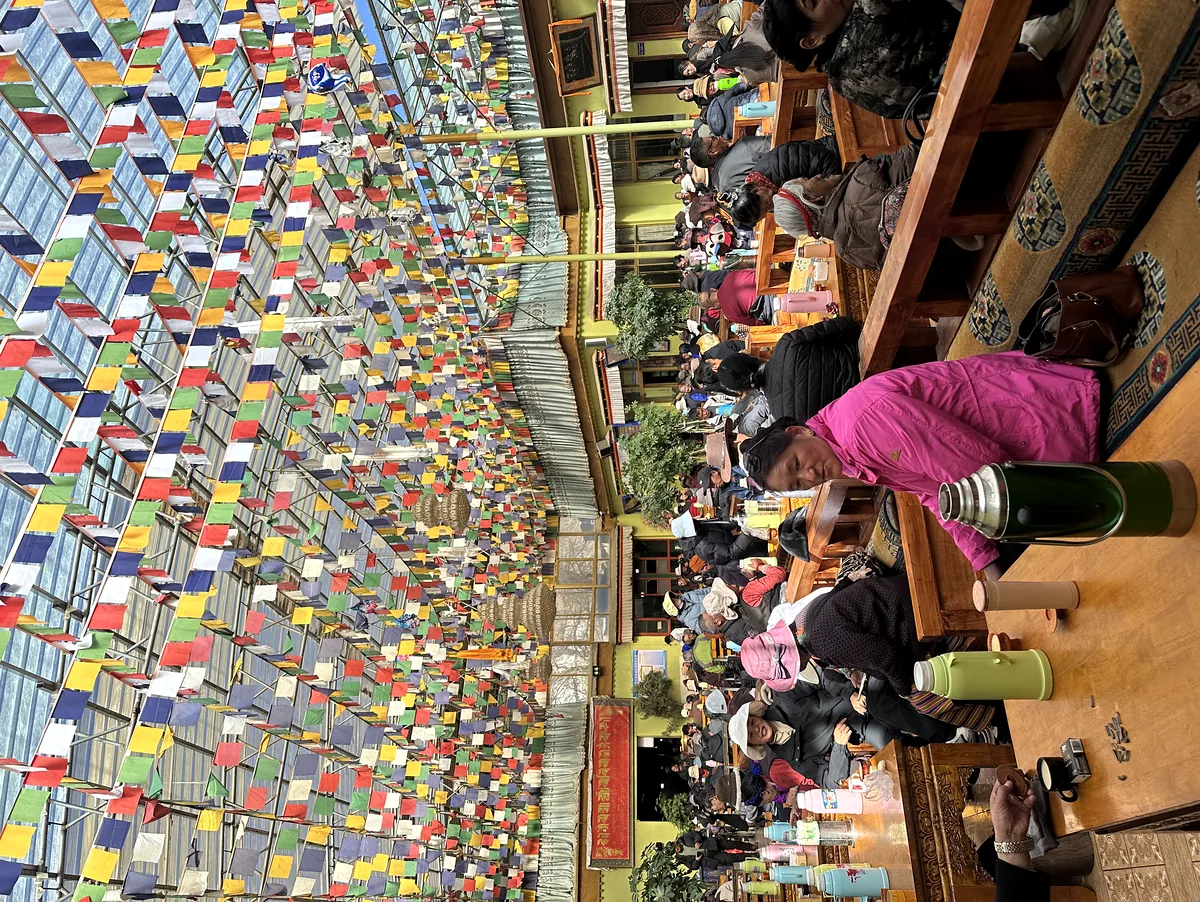
Leaving behind the resounding melodies, the rhythm of the night leads travelers into the quiet depths of culinary and teahouse culture. Along the ancient alleys around the Tashilhunpo Monastery or the Shanghai pedestrian street, butter tea chakhang teahouses are always glowing with warm yellow light, with steam rising to fog the wooden window panes. Locals, Changtang traders, and monks stop by to take shelter by the red fire, sipping bowls of rich po cha churned from yak butter and black tea in a dongmo wooden tube, or enjoying sips of sweet, potent chang fermented from highland barley. Plates of sha momo dumplings, steamed to perfection and fragrant with minced yak meat and herbs, sit alongside bowls of thukpa noodle soup with rich, steaming bone marrow broth, warming the souls of travelers amidst the biting cold of the highlands.
Late night in Shigatse closes in a sense of absolute peace rarely found in bustling cities. As the street lights gradually dim, the plateau sky opens up into an ocean of brilliant stars with the Milky Way stretching across the peak of the sacred Drolma mountain. From afar, in the monastery shrines, the light of yak butter lamps still flickers through wooden lattice windows, maintaining a persistent spiritual source that has illuminated this land for thousands of years of history.
Nestled on the fertile alluvial terrace at the confluence of the Yarlung Tsangpo and Nyang Chu rivers, Shigatse has long been known as the legendary granary of the Land of Snows and the most productive agricultural region in the historical Tsang area. Unlike the harsh, barren nomadic plains of the north, the significant diurnal temperature range and abundant sunshine in the Shigatse valley nurture plump, starch-rich highland barley (qingke) grains. The culinary roots of this ancient religious capital are deeply intertwined with this fertile soil, creating a highland cuisine that is both rustic and energy-dense, embodying the enduring symbiotic philosophy between humanity and the rugged natural environment.
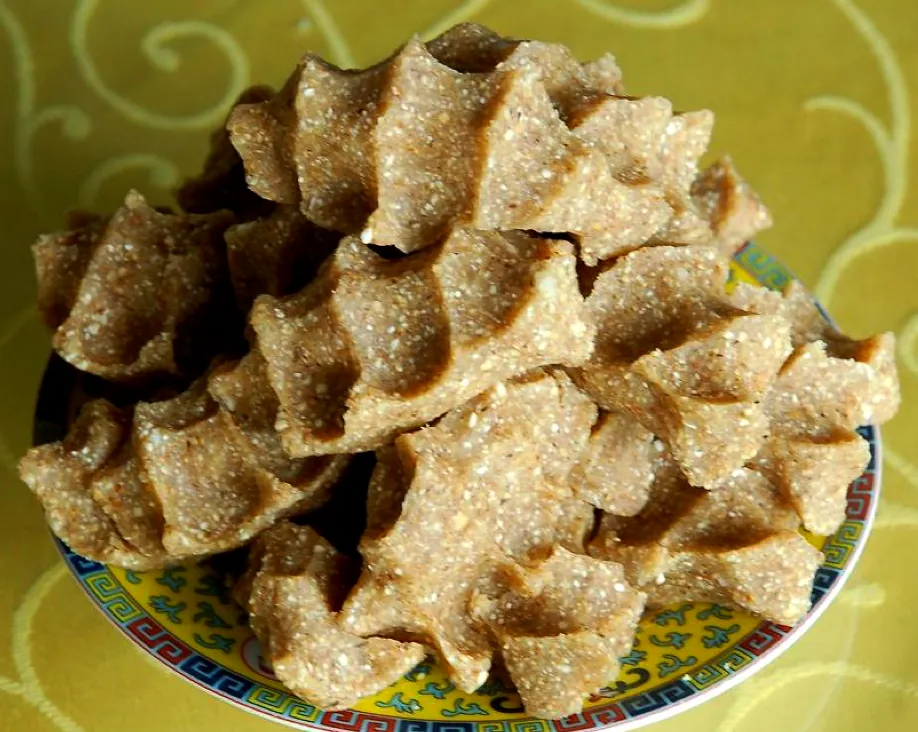
The soul of every traditional meal in Shigatse is Tsampa, roasted barley flour revered as the sacred grain of the snowy mountains. Along the banks of the Nyang Chu River, ancient water-powered stone mills have spent centuries grinding carefully selected qingke grains that have been toasted over hot sand. The slow friction of the stones preserves the nutty, slightly earthy, yet pure aroma of the grain. The people of Tsang enjoy Tsampa with ritualistic reverence: the flour is poured into a rustic birch wood bowl, topped with a splash of steaming, frothy butter tea and a sprinkle of tangy dried chura cheese, then skillfully kneaded by hand into round, firm dough balls. A bite of chewy Tsampa melting in the mouth carries the rich creaminess of yak butter, the subtle astringency of Pu-erh tea, and the lingering sweetness of high-altitude grains.
Beyond grains, the renowned protein source of the Shigatse grasslands comes from the snow yak, a ruminant with firm, muscular fibers beneath its thick coat. When the bone-chilling winds from the Himalayas arrive in late autumn, signaling temperatures dropping below freezing, the locals begin the season of natural air-curing. Yak leg and rib meat are sliced into long strips and hung under breezy eaves or in high, airy kitchen lofts, where the biting wind and dry air draw out natural moisture over several months without the need for salt or smoke. The dried meat shrinks, turns a deep pink, and when shredded, offers a concentrated, savory sweetness with a wild, rustic aroma. During festivals or when hosting honored guests, the traditional feast features the famous Gyurma—a rich yak blood sausage stuffed with barley flour, wild grassland herbs, and minced suet, boiled to perfection in a long-simmered bone broth.

The vibrant pulse of Shigatse city life is best experienced amidst the swirling steam of the old teahouses tucked away near the base of Tashilhunpo Monastery. Here, diners find warmth in Shabaley—golden, crispy pastries filled with minced yak meat and onions that release a burst of savory broth with every bite. Beside them, a steaming bowl of Thukpa features thick, hand-pulled noodles swimming in a rich, hearty broth simmered from herbal yak bone marrow, accented with slices of sweet white radish grown in the nearby Gyantse valley. The teahouse culture is a place where social boundaries dissolve, where lamas, pilgrims in silk robes, and horse traders share pots of sweet tiancha milk tea or cups of rich, buttery po cha.
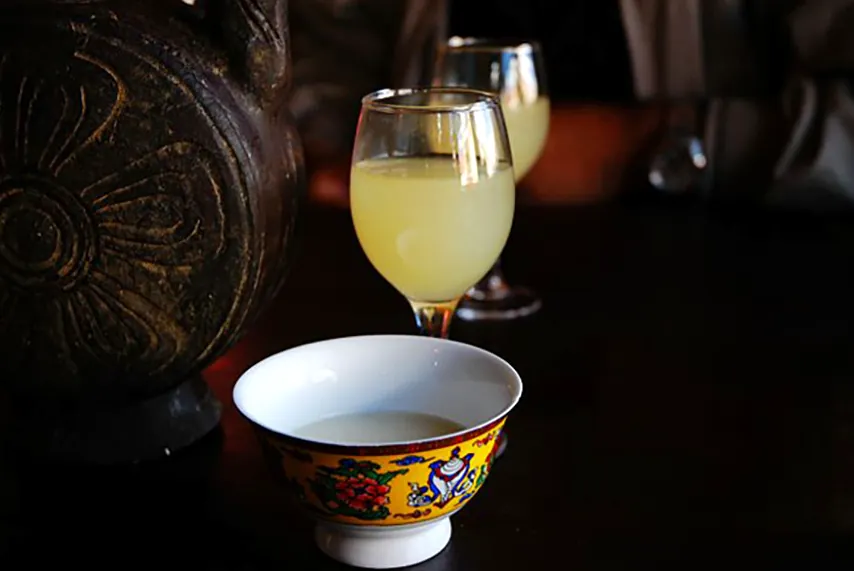
Closing the map of Tsang flavors is a cup of shimmering Chang barley wine, a pure, intoxicating brew naturally fermented from boiled qingke grains mixed with traditional herbal yeast. Chang has a milky, opaque appearance and a refined, sweet-and-sour taste with a slight effervescence from the live fermentation. The Shigatse ritual of drinking follows the strict and respectful rule of Three Sips and One Cup. The host presents a silver cup engraved with snow lotus patterns; the guest takes three small sips, and after each sip, the host graciously refills the cup to the brim, before the guest finishes the entire cup on the fourth sip to express sincere gratitude for the boundless hospitality of this sacred land.
To reach the sacred city of Shigatse, located at an average altitude of over 3,840 meters above sea level, international travelers must strictly adhere to the specific immigration and residency regulations of the Tibet Autonomous Region. In addition to a valid Chinese visa, the journey to explore the Tsang region requires a Tibet Travel Permit (TTP) issued by the Tibet Tourism Bureau. When traveling from Lhasa deeper into Shigatse and its neighboring counties along the Nepal border, visitors are also required to obtain an Aliens’ Travel Permit (ATP) and a Frontier Pass, approved by the local Public Security Bureau. These documents are not issued to individual independent travelers and must be submitted through a licensed travel agency at least 15 to 20 days before departure, along with a detailed itinerary and a mandatory local guide accompanying the group throughout the journey.
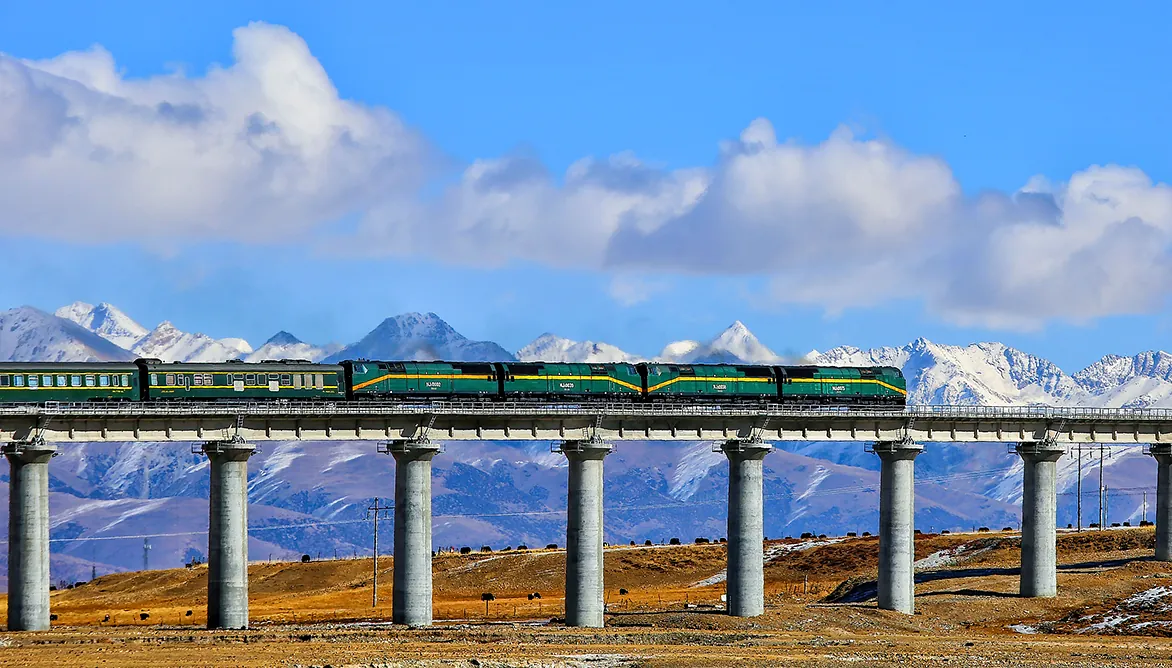
The transportation network connecting Lhasa and Shigatse has been comprehensively upgraded today, creating favorable conditions for travelers to choose a route that suits their physical condition and schedule. The Qinghai-Tibet Railway, extending from Lhasa to Shigatse with a length of 253 kilometers, is the most optimal and smoothest travel method, taking passengers gliding past magnificent gorges along the Yarlung Tsangpo River basin on specialized carriages equipped with pressurization and oxygen supply systems in just about two and a half hours. For souls passionate about pristine scenery, the journey along National Highway G318 combined with Provincial Highway S307 – the classic Friendship Highway route – will open up a sightseeing trip lasting from six to eight hours, winding through the Gampala Pass at an altitude of 4,990 meters to admire the jade silk ribbon of the holy Yamdrok Lake, crossing the Simila Pass to marvel at the eternal Karola glacier, and visiting the Gyantse fortress before heading into the Shigatse basin. In addition, Shigatse Peace Airport, located at an altitude of 3,782 meters, also operates direct flights connecting with Chengdu, serving itineraries that require maximum travel time savings.
When visiting the sacred relics in Shigatse, especially the magnificent Tashilhunpo Monastery – the spiritual power center of successive Panchen Lamas, visitors should note the regular opening hours from 9:00 AM to 5:30 PM, during which some main shrines will temporarily close for a lunch break from 12:00 PM to 2:00 PM for the monks to perform chanting sessions and inner rituals. Admission ticket prices for Tashilhunpo Monastery are listed according to the unified regulations of the heritage management board. In the serene atmosphere of the sanctuary, visitors must walk clockwise around the shrines and stupas in accordance with traditional Kora rituals, maintain modest attire, remove hats, avoid pointing directly at sacred statues or ancient Thangka murals, and strictly refrain from taking photographs inside the inner sanctums housing the world’s largest gilded bronze statue of Jampa, the Future Buddha.
As Shigatse is located on a windy plateau with intense solar radiation and an oxygen content in the air of only about sixty percent compared to the plains, acute mountain sickness (AMS) is a challenge that cannot be taken lightly. Travelers should spend at least two days staying in Lhasa to gradually acclimatize before heading to Shigatse, maintain adequate warm water intake, avoid strenuous exertion, and limit taking overly hot baths during the first few days. Preparing layered clothing to flexibly adapt to day-night temperature fluctuations of up to twenty degrees Celsius, along with UV-blocking sunglasses, high-SPF sunscreen, and cerebral circulation support medication, is a prerequisite. Warming the body with cups of rich, distinctively salty butter tea (po cha), savoring roasted highland barley flour (tsampa), or enjoying a hot bowl of herbal-stewed yak meat soup at traditional teahouses is not only a purely local culinary experience but also an effective folk method to regenerate energy and balance blood circulation amidst the harsh mountainous region.
Thorough preparation regarding legal procedures, transportation plans, and an understanding of local culture will be the key to unlocking a complete pilgrimage. To realize the dream of conquering the mystical land of Rear Tibet safely and professionally, travelers can proactively choose all-inclusive tour packages meticulously designed by a team deeply knowledgeable about the local area.