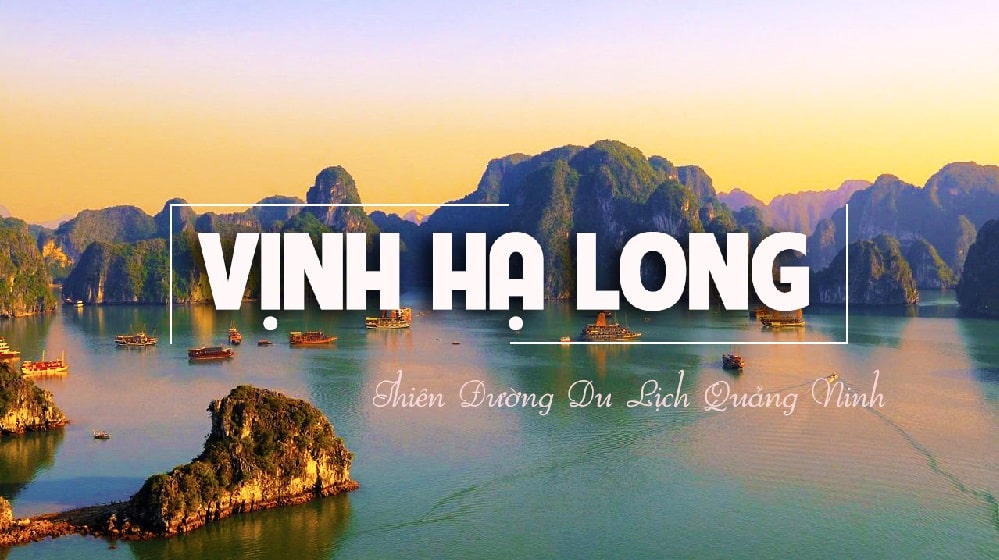
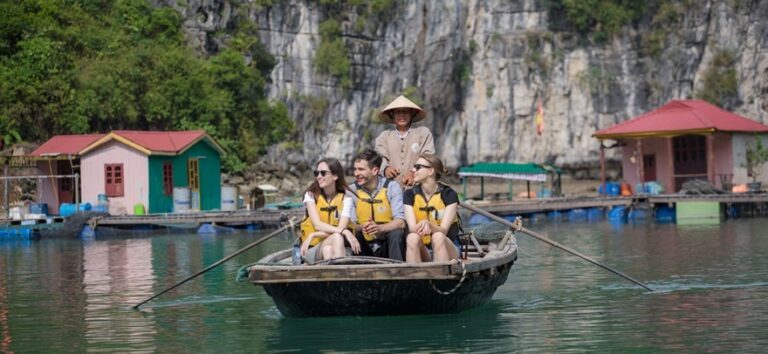
Ha Long Bay is one of Vietnam’s most captivating travel destinations, drawing millions of domestic and international visitors every year. Beyond its breathtaking natural scenery, it holds rich cultural, historical, and biodiversity value. Ha Long Bay has been recognized twice by UNESCO as a World Heritage Site—once in 1994 for aesthetic and landscape value, and again in 2000 for geological and geomorphological value. Explore Ha Long Bay’s key highlights across these historic milestones with us.
Timeline and Process of UNESCO World Heritage Recognition for Ha Long Bay
Ha Long Bay is one of the world’s most famous natural heritage sites, cherished and admired by millions of travelers from home and abroad. Earning World Heritage status required a long, challenging journey—yet one filled with pride and accomplishment for Quang Ninh Province in particular and Vietnam as a whole. This article outlines the process and milestones of UNESCO’s World Heritage recognition of Ha Long Bay from 1991 to 2000.
1991: The Government of Vietnam Authorizes Preparation of the Ha Long Bay Nomination Dossier
Recognizing Ha Long Bay’s global significance and seeking international recognition, on December 21, 1991, the Government of Vietnam authorized the preparation of a nomination dossier for Ha Long Bay to submit to the World Heritage Committee. This marked an essential first step in affirming Ha Long Bay’s stature and value on the world stage.
To compile the dossier, the Ha Long Bay Management Board worked closely with domestic and international agencies, institutions, and experts to survey, research, gather, synthesize, and draft scientific data on Ha Long Bay; formulate sustainable conservation and development plans; and design and print the dossier to UNESCO specifications. This work was carried out over two years, from 1991 to 1993.
The Ha Long Bay nomination dossier comprised two main parts: Part I provided a comprehensive overview of Ha Long Bay’s geography, geology, ecology, history, and culture, while Part II set out a management plan with concrete objectives, principles, and measures. Written in English and French, it included maps, photographs, and reference documentation.
The dossier was submitted to UNESCO in 1993 and reviewed at the 18th session of the World Heritage Committee in Phuket, Thailand, in 1994. After reviewing reports from experts and Vietnamese representatives, the Committee highly commended Ha Long Bay’s universal value and decided to inscribe it as a Natural World Heritage Site for its aesthetic value.
1994: UNESCO Recognizes Ha Long Bay as a Natural World Heritage Site for Aesthetic Value
Upon receiving the Ha Long Bay dossier, UNESCO dispatched expert missions to Quang Ninh to conduct on-site surveys, guidance, research, and evaluation. These experts offered feedback and recommendations to further refine the submission, while offering positive assessments affirming Ha Long Bay’s outstanding universal value.
At its 18th session in Phuket, Thailand, the World Heritage Committee evaluated the nomination dossier after hearing reports from on-site inspection teams. On December 17, 1994, UNESCO inscribed Ha Long Bay on the World Heritage List for its exceptional aesthetic value.
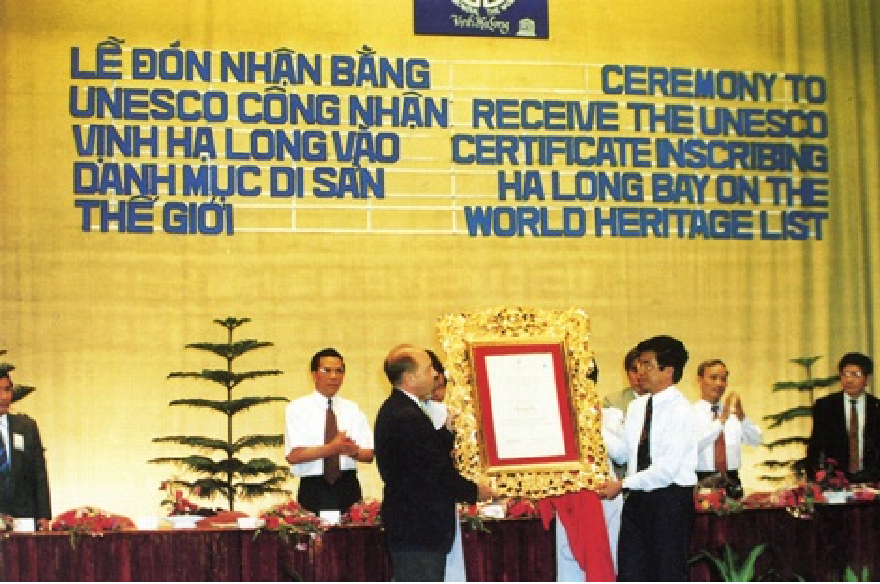
Ceremony receiving the first UNESCO World Heritage certificate for Ha Long Bay in 1994
This milestone was a major achievement for the Ha Long Bay Management Board alongside domestic and international partners and experts who worked to prepare the dossier. It is also a source of deep honor and pride for Quang Ninh and Vietnam, celebrating a natural heritage site recognized worldwide—and an ongoing driver for protecting and sustainably developing Ha Long Bay in the future.
To qualify as a Natural World Heritage Site for aesthetic value, Ha Long Bay met UNESCO criterion (vii), which encompasses sites that:
- Contain superlative natural phenomena or areas of exceptional natural beauty and aesthetic importance;
- Represent areas of unique or outstanding natural beauty and visual appeal;
- Feature exceptional natural beauty shaped by related geological or biological processes.
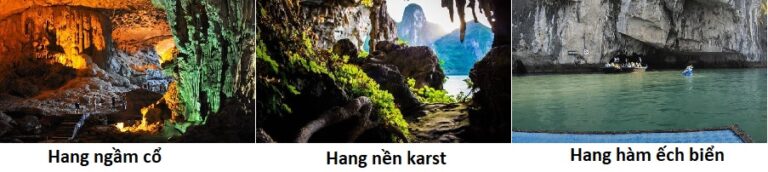
Recognized by UNESCO for its aesthetic value, Ha Long Bay is famed for the distinctive, mystical scenery of thousands of limestone islands forming dramatic, layered seascapes, alongside magnificent caves filled with diverse and striking stalactites and stalagmites. Beyond its rich biodiversity—home to many rare and endemic species—Ha Long Bay also preserves Vietnamese legends, history, and culture, giving it high cultural significance as well.
Read more: Aesthetic and Landscape Value of Ha Long Bay
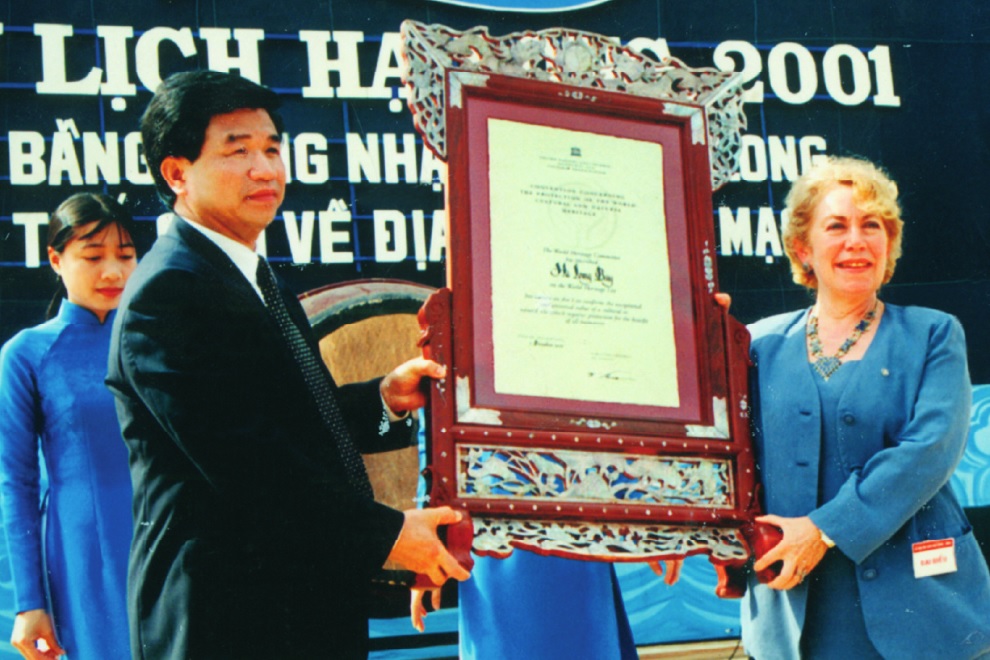
Sustainable Management, Development, and Protection of Ha Long Bay
Ha Long Bay is a priceless natural heritage of Vietnam and the world. The journey toward UNESCO’s second recognition for geological and geomorphological value was long and demanding, yet deeply rewarding for Quang Ninh and Vietnam—built on the collaboration of the Ha Long Bay Management Board and domestic and international experts, and carrying a lasting responsibility for sustainable stewardship.
To develop, manage, and protect Ha Long Bay in alignment with UNESCO standards, Quang Ninh Province has implemented key initiatives, including:
- Developing and implementing plans, strategies, programs, and policies for sustainable tourism overall and Ha Long Bay heritage tourism in particular1. Notable frameworks include: the Master Plan for Quang Ninh Tourism Development to 2020 with a vision to 2030; the Detailed Plan for Managing, Conserving, and Promoting the Value of Ha Long Bay to 2020 (under Prime Minister Decision No. 142/2002/QD-TTg dated December 21, 2002); Provincial People’s Council resolutions on strengthening management, conservation, and promotion of Ha Long Bay World Natural Heritage for 2013–2015 with a vision to 2020; strategic transport infrastructure planning; and the Green Action Plan for Ha Long Bay Tourism for 2019–2025.
- Attracting strategic investors to build synchronized, modern tourism infrastructure and diversify tourism products. Key projects include: the Hai Phong – Ha Long Expressway; Van Don International Airport; Sun World Ha Long Park; Yoko Onsen Quang Hanh ecological hot spring resort; Cat Ba Amatina eco-resort; and the Bai Chay – Tuan Chau tourism complex.
- Carrying out environmental protection measures for Ha Long Bay, such as: building and running conservation, education, and public awareness programs on heritage value; setting environmental standards and codes of conduct for tourism activities on the bay; monitoring and assessing marine water and air quality; treating domestic and industrial wastewater and solid waste; and partnering with domestic and international organizations to protect Ha Long Bay’s environment.
We hope this article provides useful information for your trip. If you need to charter a boat to visit Ha Long Bay and explore this destination, please contact us for full details.