Rising proudly along the northwestern frontier of Yunnan Province, wedged between the majestic Qinghai-Tibet Plateau and the legendary Zhongdian Valley, Shika Snow Mountain has stood for millennia as an immortal emblem in the spiritual consciousness of indigenous highland peoples. In classical Tibetan, the name “Shika” carries profound sacred resonance, denoting a mountain sanctuary where rare red deer take shelter and find peace. Tibetan Buddhist tradition further associates the peak with the “Deer Park where the Wheel of Dharma was Turned,” symbolizing a pure refuge sheltering all sentient beings across the cycles of earthly existence. Far more than a geological marvel soaring 4,449.5 meters above sea level, this sacred mountain acts as a living stone chronicle recording centuries of historical change—from primeval frontier origins to its enduring role as a cultural bridge along East Asia’s vital overland trade arteries.
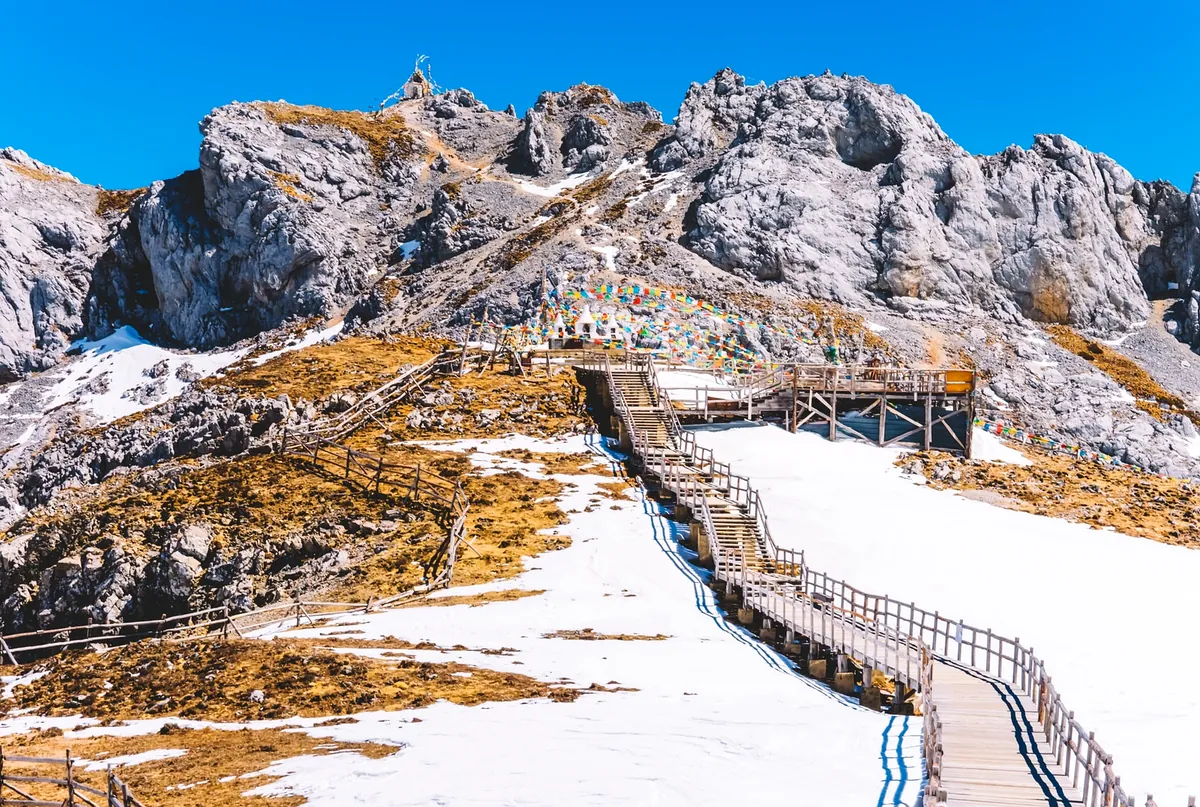
In panoramic view, Shika Snow Mountain radiates stately grandeur, where eternal snowcaps reflect brilliant sunlight down sheer, towering granite slopes. High-altitude flora weaves gracefully among stands of ancient fir, somber cypress, and sweeping alpine meadows that appear and vanish amid billowing mountain clouds swirling across the ridges. The striking visual contrast between pure white snowfields, weathered gray crags, and a boundless sapphire plateau sky composes a breathtaking natural tableau—capturing the serene sanctity bestowed upon this thousand-year-old snow sanctuary.
Tracing history back to the seventh through ninth centuries, during the golden age of the Tibetan Empire (Tubo), Shika Snow Mountain stood as a strategic frontier sentinel guarding the vital corridor linking the Lhasa Plateau with the fertile realms of the Nanzhao and later Dali kingdoms. Its rugged alpine terrain made the range a crucial waystation along the famed Ancient Tea Horse Road. Long mule caravans laden with compressed Pu’er tea and fine silks from the interior climbed steadily toward the high plateau to trade for hardy warhorses, hides, musk, and prized high-altitude medicinal herbs. Passing beneath the shadow of Shika, ancient merchants bowed reverently to offer white Hadag ceremonial scarves and prayers for safe passage, honoring the mountain as a protective guardian against unforgiving weather and treacherous rocky trails.
During the Ming and Qing dynasties, the lands encircling the sacred mountain witnessed profound political and religious transformation. Under the governance of the imperially appointed Mu clan chieftains of Lijiang, Zhongdian blossomed into a vibrant cultural crossroads uniting Han, Naxi, and Tibetan traditions. In 1679—the eighteenth year of Emperor Kangxi’s reign—when the grand Songzanlin Monastery was founded under the guidance of the Fifth Dalai Lama, Ngawang Lobsang Gyatso, with Qing imperial patronage, Mount Shika was venerated as one of the Eight Great Sacred Mountains watching over the royal monastic complex. Imperial decrees and stone inscriptions from the Qianlong and Jiaqing eras still attest to the peak’s inviolable spiritual stature in local belief, revered as the abode of mountain deities regulating wind and rain and bestowing blessings upon frontier communities.
Across centuries of dynastic shifts into the modern era, Shika Snow Mountain has stood unmoved as an eternal witness to the passage of time. Every moss-draped boulder and every gale whistling through deep ravines carries memories of traveling merchants, ascetic lamas, and frontier garrisons of centuries past. Beyond safeguarding priceless historical layers of China’s southwestern borderlands, Shika embodies the philosophical depth of legendary Shangri-La—a realm where humanity discovers complete harmony between awe-inspiring nature and enduring spiritual life.
Crowning the southwestern rim of the Zhongdian Basin in Diqing Tibetan Autonomous Prefecture, Shika Snow Mountain rises like a colossal limestone protective screen shielding the sacred valley of Shangri-La. Through the geomantic worldview of the Qinghai-Tibet Plateau, Shika serves as the “guardian peak” anchoring the southwestern axis, channeling sacred mountain energy from the towering Hengduan Range down into fertile settled valleys. Its Tibetan name carries the auspicious meaning “Mountain of the Precious Deer”—an enduring emblem of peace, longevity, and Buddhist awakening. Sweeping yet rugged contours form a steadfast dragon vein gathering abundant vitality to sustain centuries of prosperity and tranquility in neighboring Dukezong Ancient Town.
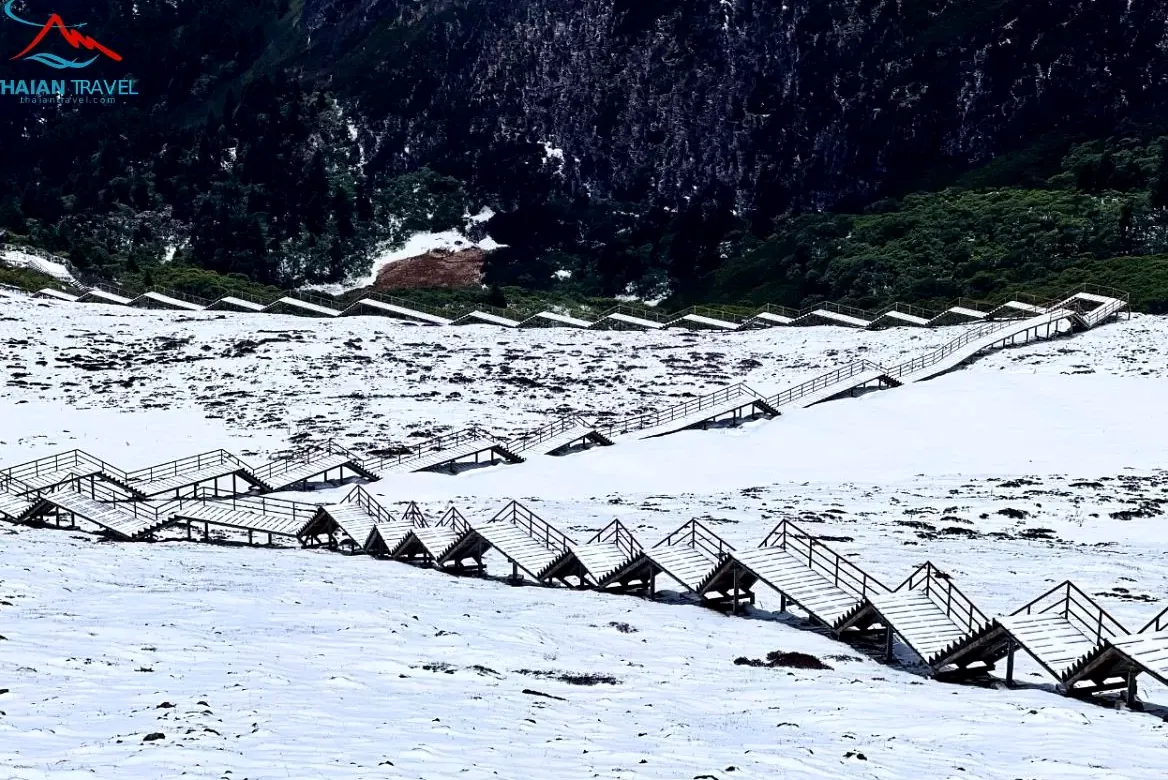
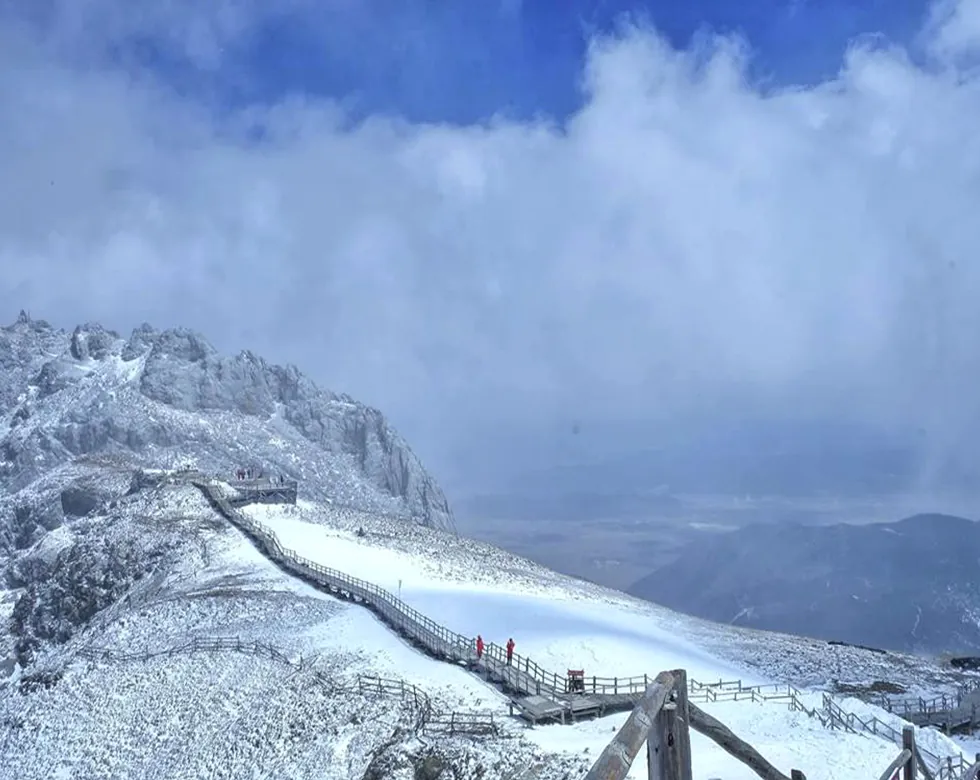
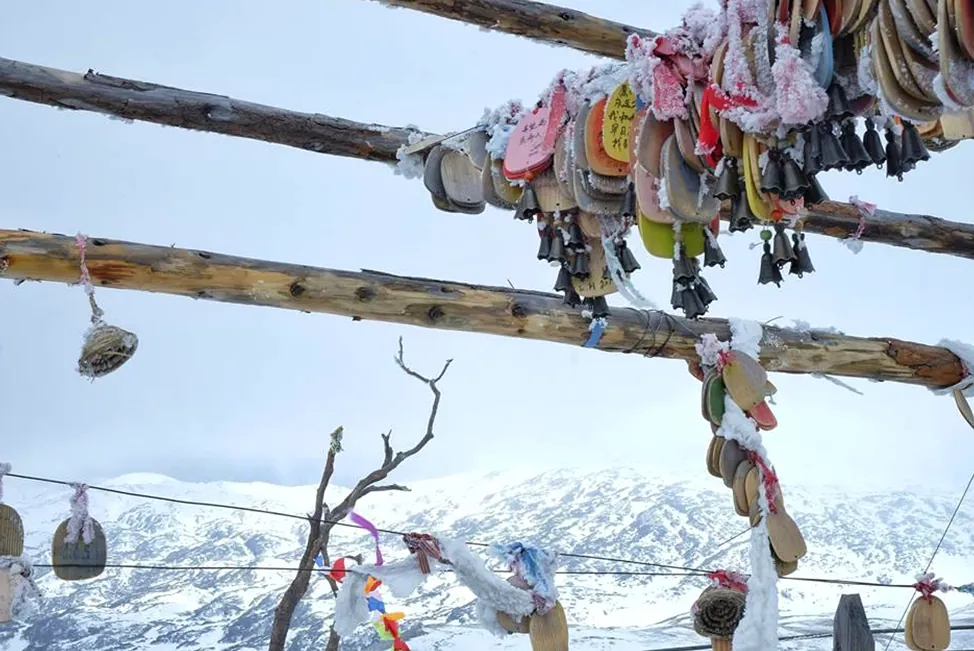
Gazing out from the summit boardwalks above four thousand meters, visitors are captivated by winding cedar walkways threading through seas of drifting cloud and ice-frosted granite slopes. Blankets of pristine snow cling to jagged rock faces in sharp relief against the endless azure sky of the plateau. Punctuating this majestic silence are colorful strings of five-hued Lungta prayer flags fluttering briskly in mountain winds alongside gleaming white Buddhist stupas perched boldly near cliff edges—uniting Tibetan spiritual order with untamed natural grandeur.
Shika’s supreme geomantic distinction lies in its rare privilege as a vantage point uniting the Eight Great Sacred Mountains. Standing atop the 4,449.5-meter summit on clear days, travelers enjoy an unobstructed 360-degree panorama encompassing eight revered Tibetan snow peaks standing like solemn guardian deities: from sacred Meili Snow Mountain and soaring Jade Dragon Snow Mountain in Lijiang to majestic Haba Snow Mountain, the endless Biluo Range, and the distant Three Sacred Peaks of Daocheng Yading in Sichuan. Ringed by eight sacred ranges like a giant eight-petaled stone lotus cradling Shika at its heart, the summit commands one of the most auspicious mountain panoramas in all of Southwest China.
Shika’s natural landscape unfolds across a striking vertical succession of ecological zones spanning over a thousand meters in elevation. Starting at the base around 3,270 meters lies the emerald expanse of Napa/Yila Grassland, where yaks and plateau horses graze peacefully beside traditional wooden Tibetan farmhouses trailing wisps of hearth smoke. Ascending higher enters a dense belt of primeval subalpine forest filled with moss-draped ancient firs and celebrated wild rhododendron groves. In early summer, tens of thousands of wild rhododendrons burst simultaneously into pink, violet, and snow-white bloom, unrolling like a vibrant woven tapestry across limestone slopes.
Approaching the summit ridge, forest canopy yields to stark alpine scree and cushion-plant tundra sculpted by millions of years of frost weathering. Swept year-round by brisk winds that preserve deep snowfields for months on end, this upper zone marks a clear threshold between the mortal valley below and a tranquil celestial realm among the clouds. The seamless progression from open meadow and old-growth forest to eternal snowfields showcases extraordinary biodiversity while echoing traditional Tibetan cosmology of three harmonious realms.
From the sweeping vantage point at 4,449 meters, thermally treated cedar boardwalks contour gracefully along rugged ridges, framing the dramatic geological sculpture of highland Shangri-La. Perpetual snow blankets Paleozoic limestone slopes in vivid contrast to thousands of colorful Lungta wind-horse prayer flags snapping in crisp plateau gales, while timber lookout platforms jutting out over deep chasms let visitors take in rolling seas of cloud and distant snow peaks along the horizon.
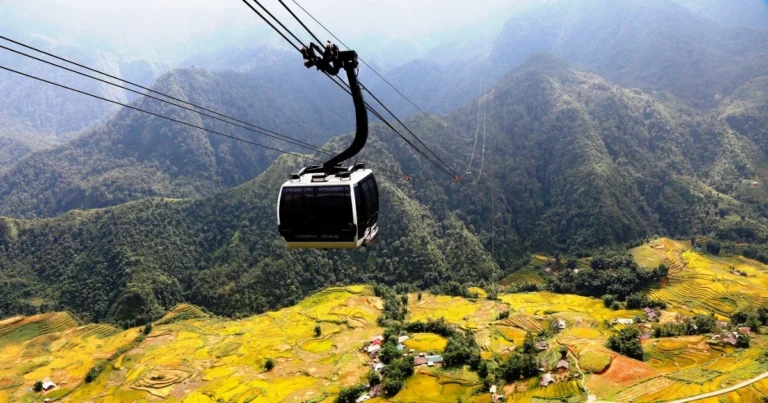
The backbone infrastructure defining the Shika Snow Mountain ascent is its closed-loop two-stage aerial cableway—among the longest and most advanced in northwestern Yunnan. Spanning over 4,190 meters in total length and climbing a vertical rise of 1,179 meters, the gondola glides smoothly from Yila Grassland at 3,270 meters straight to the 4,449-meter summit station. Engineered and installed to exacting Austrian Doppelmayr standards, the high-capacity system transports over a thousand passengers per hour while protecting delicate alpine tundra below by minimizing intermediate support towers across steep terrain.
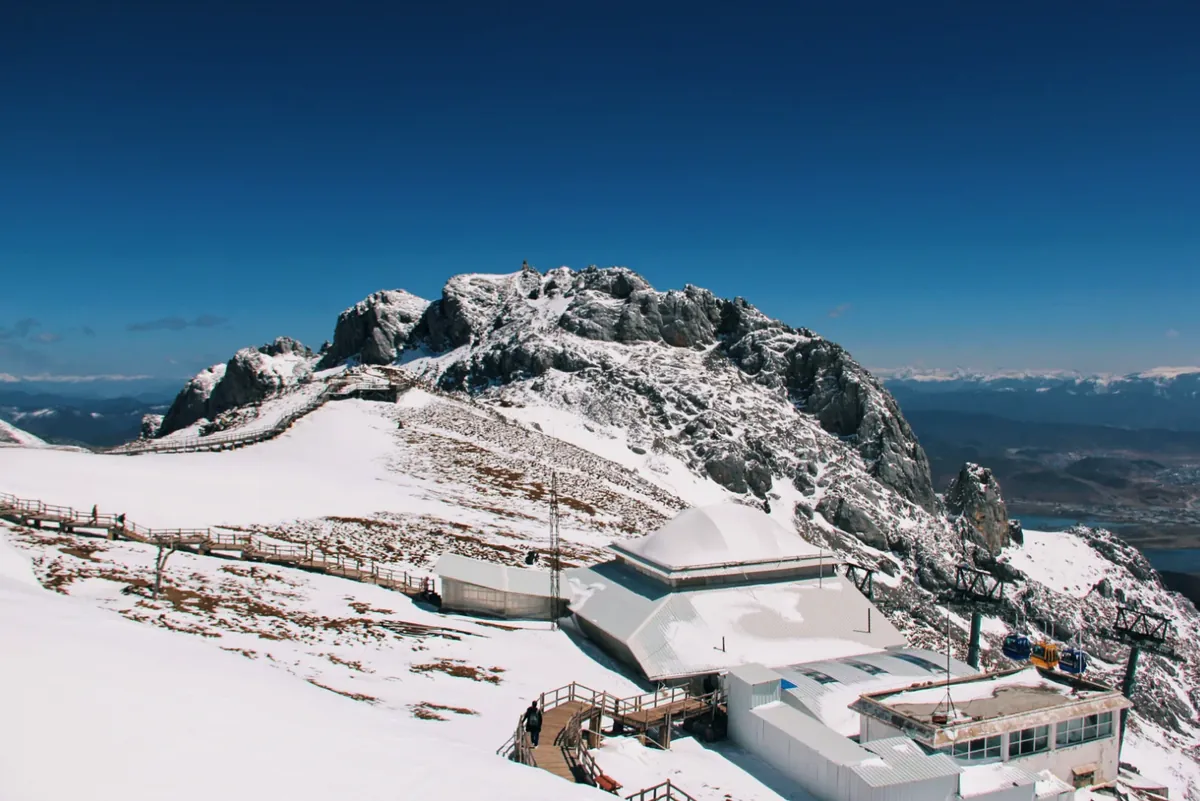
The scenic complex is thoughtfully structured across three distinct ecological and cultural tiers. At the base stands a lower terminal modeled after traditional Tibetan Diaofang stone watchtower architecture, pairing hand-dressed granite masonry with sturdy red-pine framing that blends naturally into the rolling grassland. The mid-mountain transfer station sits at Yaxuela Meadow (roughly 3,750 meters), where primeval fir forest transitions into vast rhododendron slopes; here, service pavilions feature sweeping roofs inspired by sacred Shika deer antlers and house geothermal floor heating alongside medical oxygen lounges helping visitors acclimatize before ascending higher.
The summit zone exemplifies extreme-cold sustainable landscape engineering. Architects constructed an elevated network of alloy-steel walkways clad in thermally modified timber anchored directly into solid bedrock so underlying permafrost remains undisturbed. The main circular viewing deck commands a 360-degree panorama across thirteen sacred snow peaks ringing the mythical Kham region, including mist-veiled Meili and distant Jade Dragon Snow Mountain. Punctuated by hand-stacked Mani stone cairns and gilded bronze prayer wheels, this landmark project transforms modern engineering into a respectful space of cultural reverence where technology defers to sacred nature.
As the final golden rays of sunset leave the ice-frosted limestone cliffs of Shika’s 4,449-meter peak, nightfall descends over Shangri-La like a mystical veil bridging heaven and earth. Sunset glow bathing Mount Shika in crimson gold—revered by Tibetans as the auspicious phenomenon of “Sunlight Illuminating the Golden Peak”—gives way to the deep indigo night of the Diqing Plateau. Below the foothills, quiet stillness awakens through celestial starlight and warm hearth fires, ushering in an evening rich with traditional Kham highland spirit.
Evenings around Shika Snow Mountain shun urban clamor in favor of awe-inspiring natural illumination. Thanks to thin, crystal-clear plateau air and high elevation, the night sky arches overhead like an immense telescope revealing the Milky Way in razor-sharp detail, with stars seemingly within arm’s reach. Black nomadic tents woven from yak hair glow softly with traditional butter lamps, casting warm golden light against snow-clad ridges silhouetted against the deep night sky—conjuring scenes straight from the thousand-year-old Epic of King Gesar.
The beating heart of evening life at the foot of Shika is the traditional Guozhuang circle dance gathered around bonfires fragrant with burning juniper and cypress branches. Far more than staged tourist entertainment, this is an authentic communal celebration led by local residents beneath the open mountain sky. As conch-shell horns and deep bronze Tibetan Dungchen trumpets echo through crisp night air, leaping flames illuminate sheepskin-lined Chuba robes embroidered with silver thread and necklaces of turquoise and red coral gleaming on Kham dancers. Moving in cadence to the plucked strings of the traditional Dongba lute, dancers join hands in an unbroken circle—alternating between graceful, flowing steps like melting snowmelt and spirited stomps echoing galloping plateau horses in tribute to their guardian peak.
Accompanying tireless circle dances are hearty nocturnal flavors warding off high-altitude chill. Over glowing hearths, hammered copper kettles simmer rich yak-butter tea churned with wild pasture butter and plateau rock salt. Hosts welcome travelers with bowls of lightly spiced Qingke highland barley wine paired with air-dried yak jerky redolent of pine smoke and fragrant roasted Tsampa barley cakes—while warm laughter and toasts of “Tashi Delek” echo across the valley, dissolving every boundary between host and guest.
Late into the night, as bonfires settle into glowing embers, tranquil reverence returns to the valley. Fragrant juniper smoke (Sang incense) drifts through cold air alongside the soft murmur of elders reciting the Six-Syllable Mantra while seated in quiet meditation facing Shika’s peak—bringing night at Shika to a serene close uniting authentic folk tradition, human warmth, and boundless alpine stillness.
Above four thousand meters on snow-mantled Shika, indigenous Tibetan culinary culture is far more than daily sustenance—it represents a time-tested philosophy of living in harmony with an unforgiving high-altitude climate. For centuries, nomadic and settled communities beneath the sacred peak have drawn upon pure highland pastures and primeval forests to craft nourishing, wholesome dishes deeply rooted in tradition. Every flavor mirrors the turning of the four seasons, brisk plateau snow winds, and the quiet generosity of Tibetan households across Shangri-La Valley.
Inside traditional wooden kitchens nestled at the foot of Shika, warm hearth fires flicker beside clay stoves as the rich aroma of yak butter mingles with wild mountain herbs. Strips of ruby-red yak meat seasoned with mineral salt hang neatly above smoky rafters or cure in crisp mountain winds, while Tibetan women in traditional wool attire knead roasted barley flour beside steaming copper tea kettles—capturing an enduring portrait of highland self-reliance.
Taking pride of place on every local table are specialties crafted from yak—the revered symbol of the snow plateau. Foremost among them is wind-dried yak jerky, an essential nomadic staple prepared for long winter months. Cut into long strips, rubbed with wild mountain pepper and star anise, and cured naturally in cold, dry highland air, the meat retains rich natural sweetness, satisfying chew, and subtle alpine herb aroma. When families gather against the chill, a bubbling Tibetan yak-meat hotpot simmered from marrow bones, goji berries, Angelica root, and black cardamom warms body and spirit instantly—especially as thinly sliced shank meat cooks in the rich broth and pairs with fiery highland chili dip.
No highland visit is complete without sipping steaming yak-butter tea alongside traditional Tsampa. Brewed from deeply fermented dark Pu’er tea leaves and churned vigorously inside a wooden dongmo cylinder with fresh whole-milk yak butter and a pinch of plateau salt, butter tea achieves a velvety smoothness that boosts circulation, wards off altitude fatigue, and delivers immediate warmth. Always served alongside is Tsampa—the staple soul of Tibetan cuisine—made by mixing nutty roasted highland barley flour by hand with butter tea and dried naizha cheese curds into wholesome, satisfying bite-sized morsels.
In addition, Shika’s primeval forest floor yields a celebrated natural treasure: wild Matsutake mushrooms. Growing naturally beneath dew-kissed ancient red pines during summer and autumn, prized Matsutake caps are prepared simply to honor their pure forest aroma—thick-sliced and seared on hot stone slabs with fragrant yak butter or slow-simmered with free-range highland black chicken. Their crisp, delicate texture and earthy woodland fragrance paired with a sip of locally brewed Qingke barley wine leave an unforgettable impression of Shika’s culinary heritage.
Reaching the 4,449-meter summit of Shika is captured most vividly from the sturdy timber viewing decks crowning the ridge, where the Shika range unfolds in boundless majesty. Beneath crisp morning sunshine on the Diqing Plateau, five-colored Lungta prayer flags snap briskly in the breeze against snow-dusted gray limestone cliffs. One of Southwest China’s longest aerial cableways glides silently across two valley tiers, linking emerald Yila Grassland below with cloud-wrapped sacred summits above in a breathtaking dialogue between pastoral calm and alpine grandeur.
Shika Snow Mountain Scenic Area operates daily from 8:00 AM to 4:30 PM, with ticket windows and uphill gondola boarding typically closing after 3:30 PM to ensure safe descents before dusk. At the heart of the ascent is the modern European two-stage cableway spanning 4,157 meters in total length and climbing over 1,100 vertical meters—carrying visitors from the 3,270-meter base terminal to rhododendron-carpeted Yaxuela Meadow at 3,745 meters before ascending straight to the snowy summit deck.
Located just 7 to 8 kilometers southwest of Dukezong Ancient Town, Shika’s lower station is quick and easy to reach. From downtown Shangri-La or Diqing Shangri-La Airport, a taxi, ride-hail car, or private seven-seat charter takes only 15 to 20 minutes at very reasonable rates. During peak travel seasons, Public Bus Route 9 and dedicated shuttle buses also depart regularly from the county bus terminal and the South Gate of the Ancient Town, offering a scenic ride across expansive Yila Grassland.
Because the cableway lifts passengers rapidly from 3,200 meters to nearly 4,500 meters in roughly forty minutes, acute altitude sickness poses a real consideration for lowland visitors. To let your body acclimatize smoothly, spend at least one full restful day in Shangri-La town before ascending, sip warm butter tea or fresh ginger tea, and consider taking Rhodiola rosea supplements ahead of your trip. While strolling Shika’s summit boardwalks, walk slowly, breathe deeply, avoid running or sudden exertion, and carry a medical-grade portable oxygen canister alongside a windproof down parka to stay warm.
Alongside securing a valid Chinese tourist visa for entry through international gateways such as Kunming or Chengdu, stepping onto this sacred snow mountain calls for genuine respect for Tibetan traditions. Keep quiet reverence near mountain-spirit altars, never step over Mani stone cairns inscribed with sacred mantras, walk clockwise around Buddhist stupas, and avoid touching summit prayer flags. For a seamless journey with expert support on permits, transfers, and gradual altitude acclimatization, booking an all-inclusive China tour package ensures a smooth, deeply enriching experience in eternal Shangri-La.